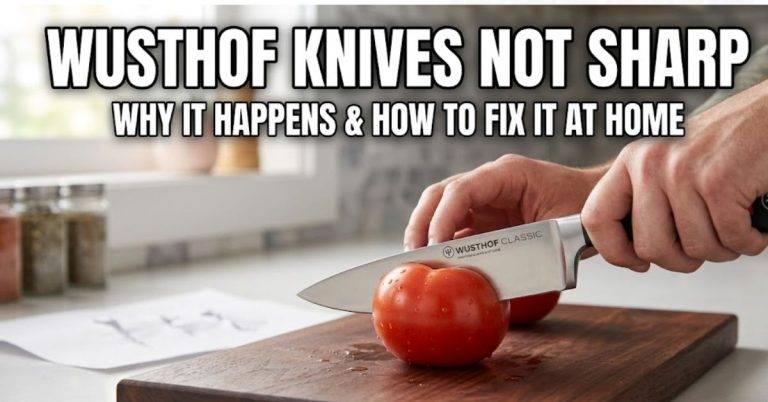
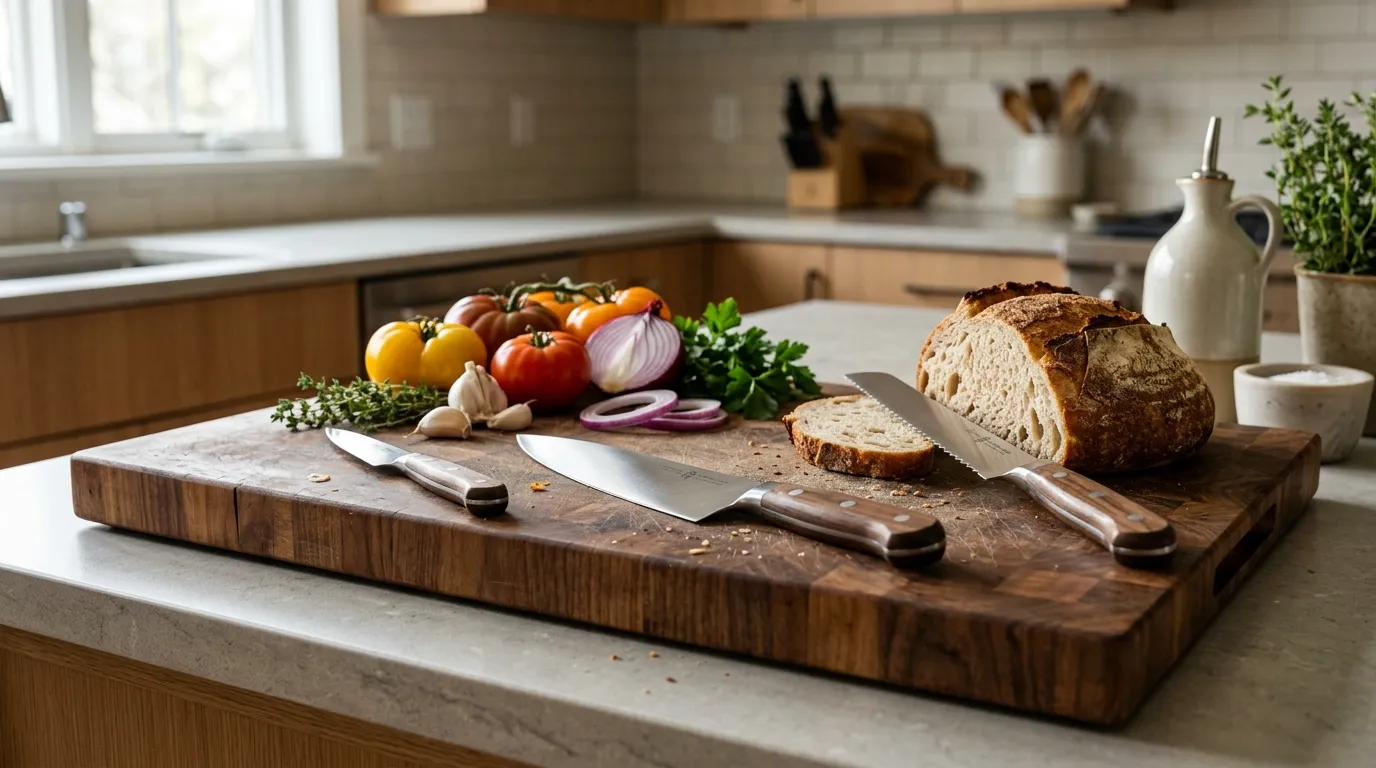
Buy a sharp chef’s knife that fits your hand, tasks, and budget.
I wrote this Kitchen Knife Buying Guide after years of cooking at home and in busy lines. A good knife is a partner, not a purchase. Here you will learn the types, steels, shapes, and care that matter. This Kitchen Knife Buying Guide stays honest, simple, and practical so you can buy once and love it for years.
What Matters Most: Fit, Function, and Edge
Start with how you cook. Then match the knife to your tasks. A blade that fits your hand will feel safe and fast.
Key things to check:
- Fit. Use a pinch grip. Your fingers should feel secure. No hot spots.
- Function. Pick a style that suits your cuts. Slice, rock, or chop.
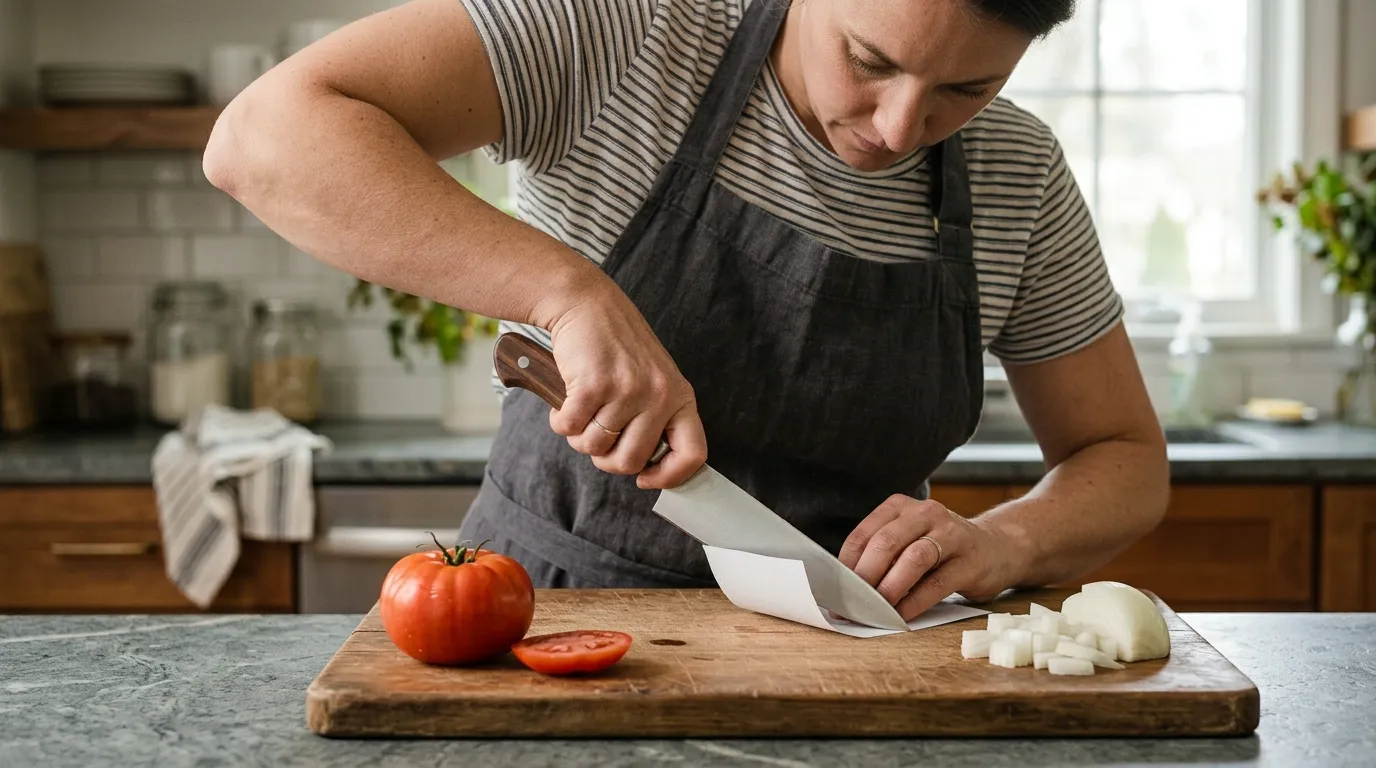
- Edge. Look for clean, even bevels. The edge should bite into paper and tomato skin.
- Balance. The blade should not tip or fight you. Aim for neutral balance at the pinch.
- Steel. Harder steel keeps an edge longer. Softer steel is easier to sharpen.
Quick test list I use in stores:
- Paper test. It should slice clean without tearing.
- Tomato test. It should pierce skin with no pressure.
- Onion dice. It should glide and track straight.
- Food release. Watch if slices fall off or stick.
This Kitchen Knife Buying Guide helps you trust your hands. Your grip and your cuts will tell you more than specs.
Essential Knife Types You Actually Need
You do not need a giant set. Start small and smart.
Must-haves:
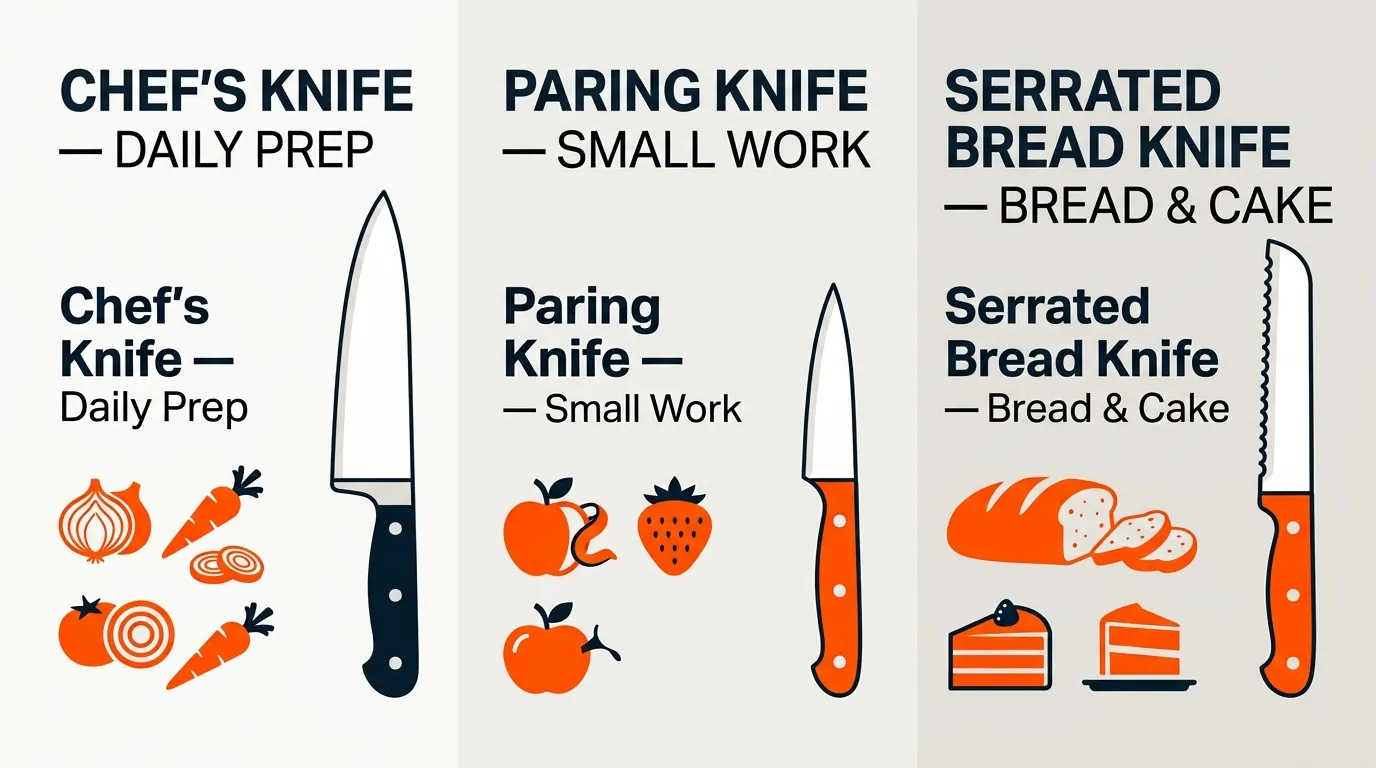
- Chef’s knife or gyuto, 8 to 10 inches. The daily driver for most prep.
- Paring or petty knife, 3 to 4.5 inches. For small work and detail.
- Serrated bread knife, 9 to 10 inches. For bread, cake, and tough skins.
Nice-to-haves:
- Santoku. Great for push cuts and straight chopping.
- Nakiri. A veggie slicer that makes even cuts easy.
- Boning or fillet knife. For meat and fish work.
Budget tip:
- Buy one great chef’s knife first. Add the others as you learn.
In this Kitchen Knife Buying Guide, I suggest a simple three-knife kit. It covers 95% of home cooking.
Blade Materials and Steel 101
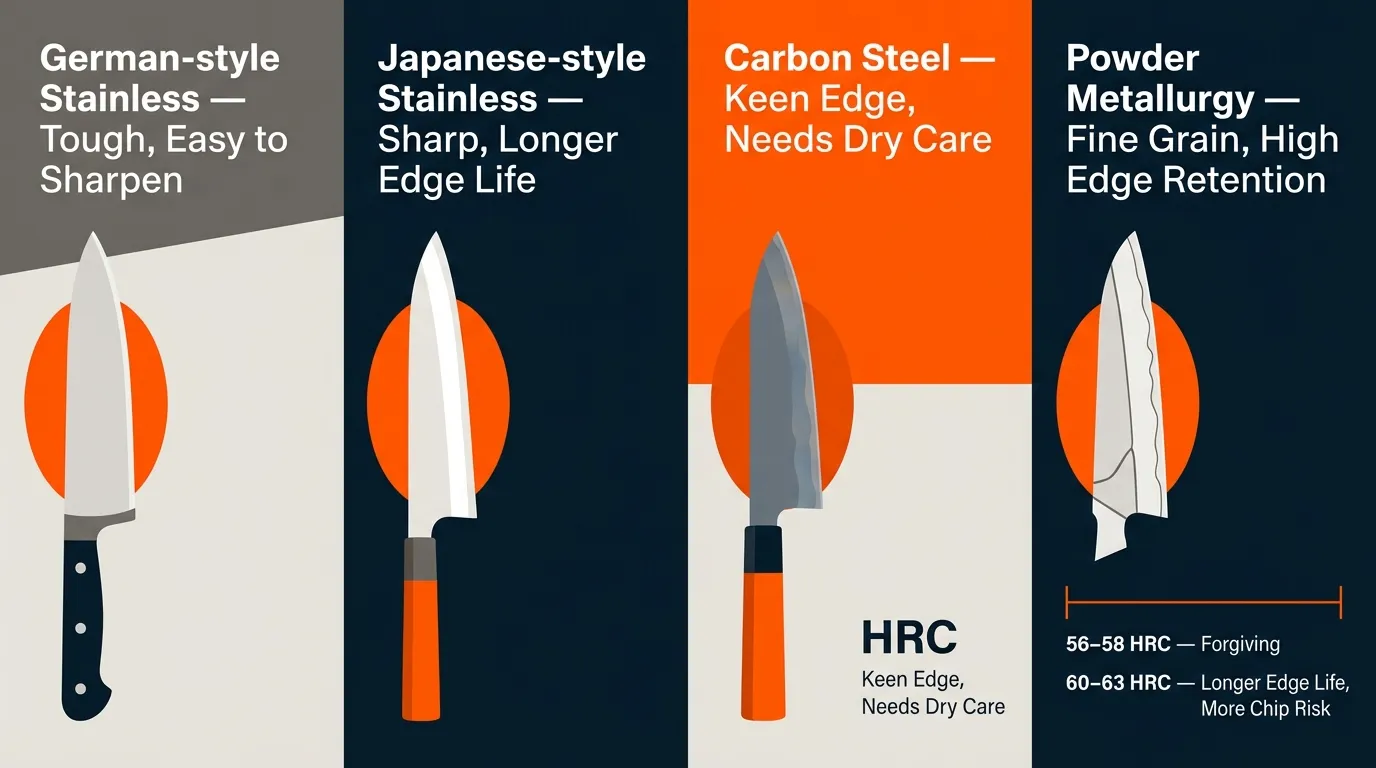
Steel affects sharpness, edge life, and care. Here is a short map.
Common options:
- German-style stainless. Often around HRC 56–58. Tough and easy to sharpen. Good for bones and rough work.
- Japanese-style stainless (VG-10, AUS-10, SG2). Often HRC 60–63. Sharper and longer edge life. More brittle if abused.
- Carbon steel. Takes a keen edge and sharpens fast. Forms a patina. Needs dry care to avoid rust.
- Powder metallurgy steel. Very fine grain. Great edge retention. Often higher cost.
What HRC means:
- HRC is Rockwell hardness. Higher HRC means longer edge life and more chip risk.
- 56–58 HRC is forgiving.
- 60–63 HRC is laser sharp but needs kinder boards and better habits.
Coatings and cladding:
- Damascus or layered cladding can aid food release.
- A single bevel or hard core can feel like a razor.
This Kitchen Knife Buying Guide leans on facts and field use. Pick steel that fits your habits, not your wish list.
Western vs Japanese Profiles and Grinds
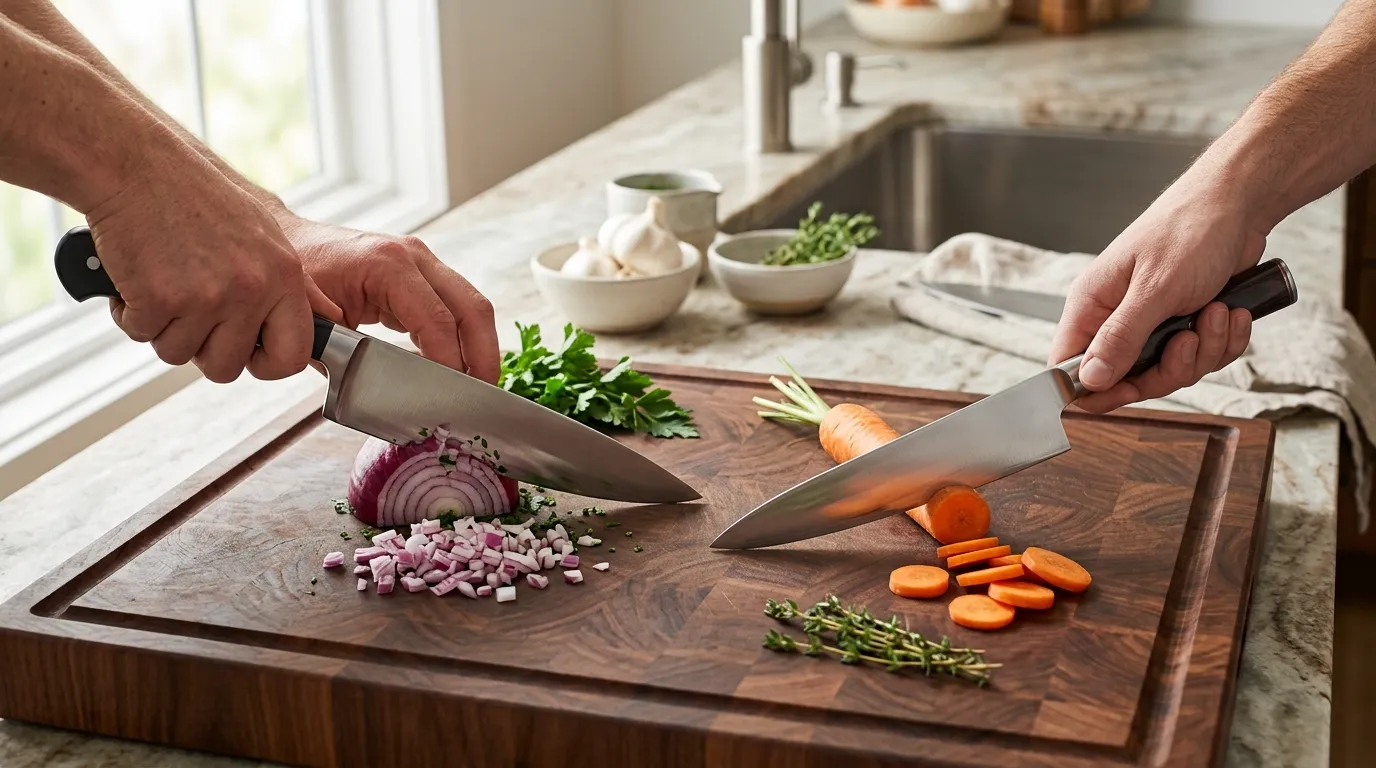
Shape changes how a knife moves.
Western traits:
- Curved belly for rocking cuts.
- Thicker spine and a full bolster at the heel.
- Edge angle often near 20 degrees per side.
Japanese traits:
- Flatter belly for push and pull cuts.
- Thinner spine and laser feel.
- Edge angle often near 12–15 degrees per side.
Grind notes:
- Double bevel is common and easy to maintain.
- Single bevel is very sharp and task-focused. It needs skill to sharpen.
- Granton dimples can help food release.
Our Kitchen Knife Buying Guide keeps it simple. If you rock chop, go Western. If you push cut, go Japanese or hybrid.
Handles, Balance, and Ergonomics
A good handle disappears in your hand.
Handle types:
- Western handle. Heavier, shaped with contour. Often full tang.
- Wa (Japanese) handle. Light and nimble. Shifts balance forward.
Materials:
- Stabilized wood and pakkawood feel warm and resist water.
- G10 and Micarta grip well when wet.
- Simple polymers are tough and low care.
Fit tips from the line:
- Try a wet grip if you can. It should not twist.
- Check the balance point at the pinch. It should feel neutral.
- Avoid sharp edges at the heel or spine. They cause hot spots.
This Kitchen Knife Buying Guide reminds you to trust comfort first. If it feels right, you will use it more.
Size, Weight, and Balance Testing
Length:
- 8 inches works for most cooks.
- 10 inches gives reach and speed for big prep.
- Short blades suit tight boards and small hands.
Weight:
- Heavier knives power through squash and big cuts.
- Lighter knives feel fast and reduce fatigue.
At-home tryouts:
- Slice paper, tomatoes, herbs, and onions.
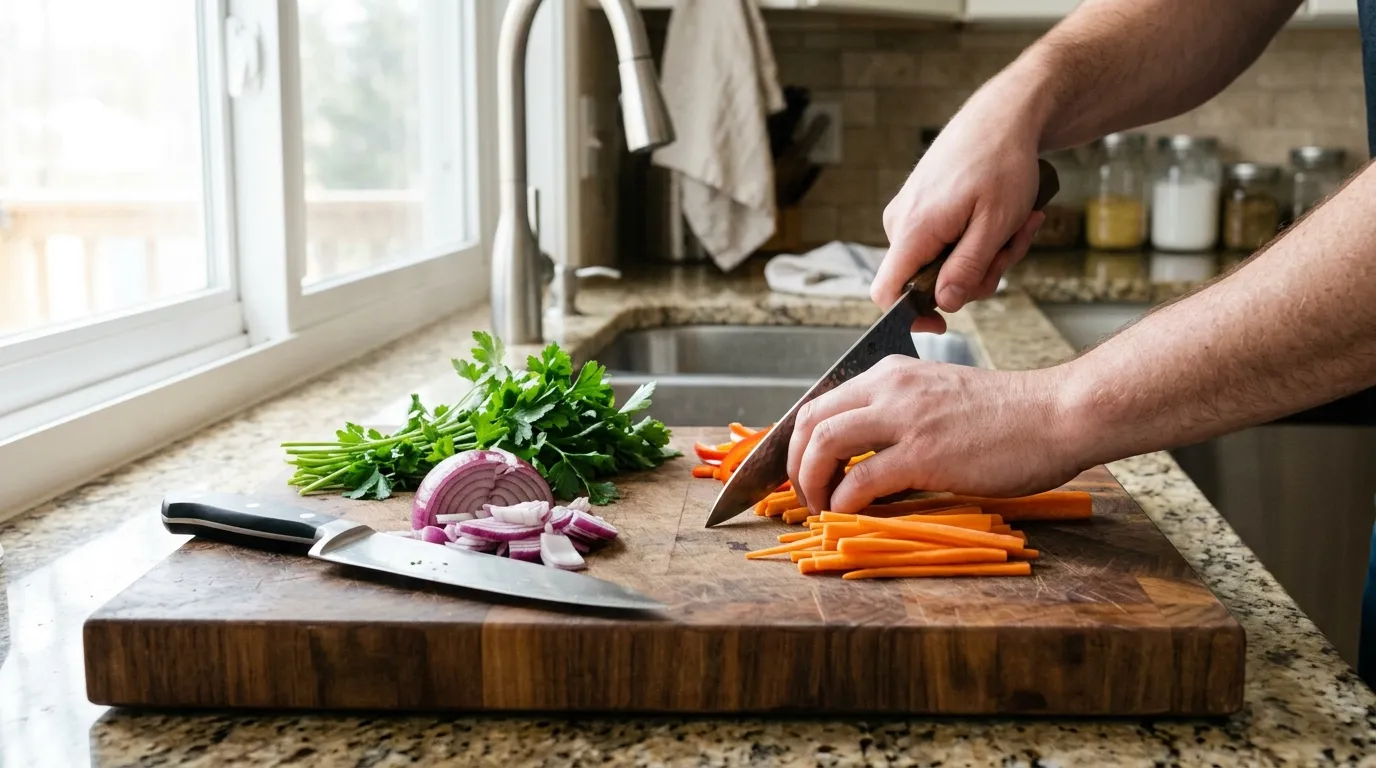
- Chop a carrot baton into coins. Watch tracking.
- Mince garlic. See if sticky bits lift off or cling.
In this Kitchen Knife Buying Guide, I push real tests over specs. The board never lies.
Singles vs Sets: Buying Strategy and Budget
Sets look neat. Singles win on value and fit.
Best path:
- Buy one great chef’s knife.
- Add a paring and a serrated bread knife.
- Fill gaps later with a santoku or petty.
Price tiers I trust:
- Entry: Good heat treat, easy care, under a modest budget.
- Mid: Better steel, thinner grinds, nicer handles.
- High: Premium steel, hand finish, stellar edge life.
Where to spend:
- Spend on the chef’s knife first.
- Save on the bread knife. It works well even at low cost.
- Paring knives can be simple and cheap.
This Kitchen Knife Buying Guide is about value. Buy slow, buy smart, buy to keep.
Care, Sharpening, and Storage Essentials
Care basics:
- Hand wash. Dry at once. No dishwashers.
- Use end-grain wood or soft plastic boards. Avoid glass, stone, or bamboo with harsh glue.
- Do not twist in hard food or pry bones.
Sharpening:
- Hone lightly to realign. Use a ceramic rod on hard steels.
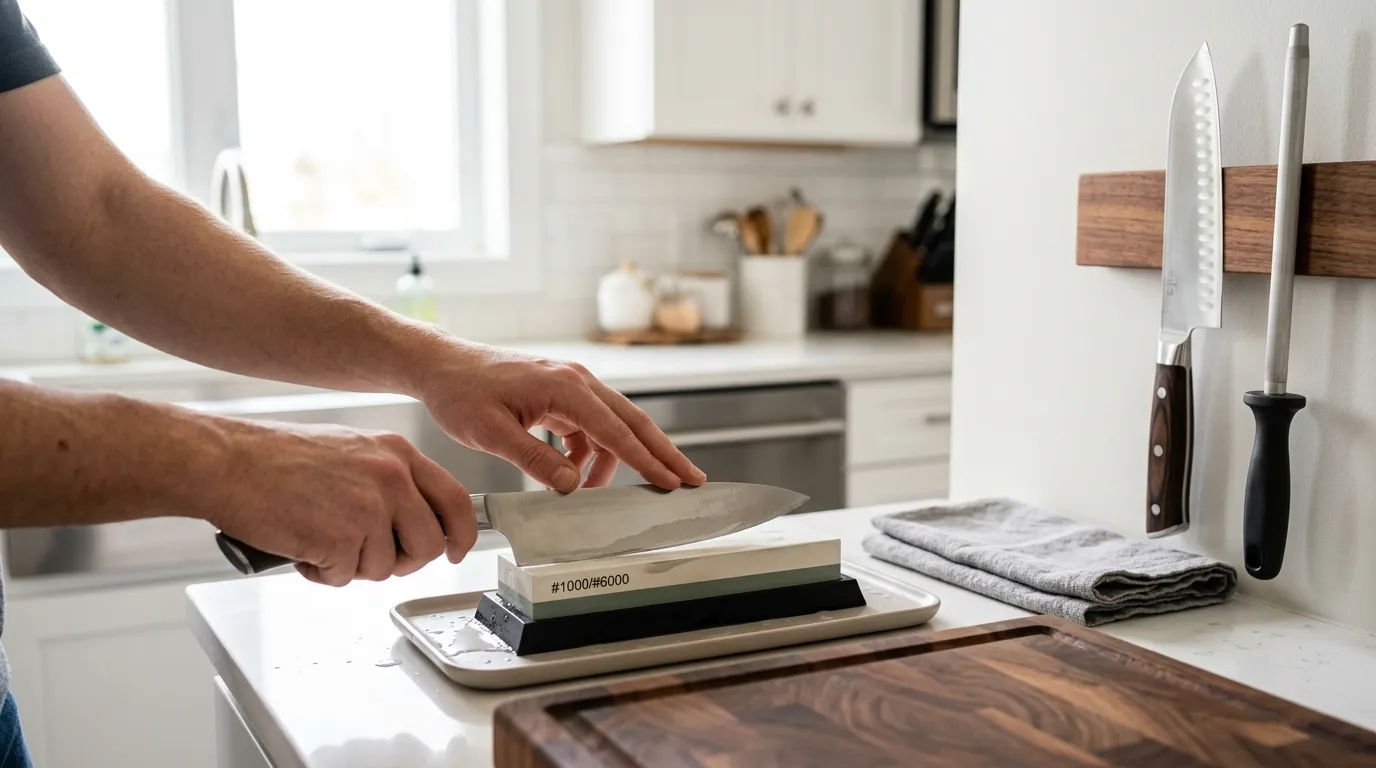
- Sharpen on stones. A 1000 grit sets the edge. A 3000–6000 grit refines it.
- Keep a steady angle. 15 degrees for thin blades. 20 degrees for tough blades.
- Strop on leather for a clean bite.
Storage:
- Use a magnetic strip that is gentle on edges.
- Keep blade guards or saya in drawers.
- A clean block works if slots are wide and dry.
Our Kitchen Knife Buying Guide keeps maintenance clear. A few good habits beat fancy gear.
Safety, Maintenance Mistakes, and Troubleshooting
Safety first:
- Keep your knife sharp. Dull is dangerous.
- Tuck your fingers. Use the claw grip.
- Keep the board dry and stable.
Common mistakes:
- Prying joints and twisting in dense food. That chips edges.
- Hard boards and dishwashers. That kills edges.
- Over-honing soft steel. That rolls edges.
Fixes:
- Microchips. Use a coarse stone to reset, then refine.
- Edge feels dull fast. Check your board and your angle.
- Sticky cuts. Thin your edge or switch grind profiles.
This Kitchen Knife Buying Guide saves you time and stress. Small tweaks bring big gains.
My Field Notes From Pro Kitchens
I learned fast on a hot line. A thin gyuto at 61 HRC stayed sharp all night. But it chipped when I hit shrimp shells. A softer stainless chef’s knife dulled sooner but took abuse without fear. I kept both. I grabbed the laser for herbs and fish. I grabbed the tough one for boxes of squash.
Lessons you can use:
- Match steel to task. Hard for fine work. Tough for heavy work.
- Learn to sharpen. A 1000/3000 stone pays for itself.
- Trust comfort. The best knife is the one you reach for.
I built this Kitchen Knife Buying Guide from hard miles and simple wins. Use it to skip my mistakes.
Frequently Asked Questions of Kitchen Knife Buying Guide
What is the first knife I should buy?
Start with an 8-inch chef’s knife or a gyuto. It does most tasks well and helps you learn control.
How often should I sharpen my knives?
For home cooks, sharpen every 2–3 months and hone as needed. If you cook daily, sharpen monthly.
What board is best for my knives?
End-grain wood is kind to edges and feels great. Soft plastic is fine for meat and easy to sanitize.
Are Japanese knives better than German knives?
Neither is “better.” Japanese knives are sharper and thinner. German knives are tougher and more forgiving.
What does HRC mean on a knife?
HRC is Rockwell hardness for steel. Higher HRC keeps an edge longer but can chip if abused.
Should I buy a knife set or single knives?
Buy singles. Start with a chef’s knife, then add a paring and a bread knife as you need them.
Can stainless steel rust?
Yes, with neglect. Rinse, dry at once, and store dry to prevent spots and pitting.
Conclusion
You now have a clear map for buying your next blade. Start with comfort and fit, choose the right steel, and use smart care. A small, sharp kit beats a bulky block every time.
Pick one knife this week using this Kitchen Knife Buying Guide. Test it on paper and a tomato. If it feels right, build your set around it. Want more tips? Subscribe, share your questions, or drop your own wins and misses in the comments.