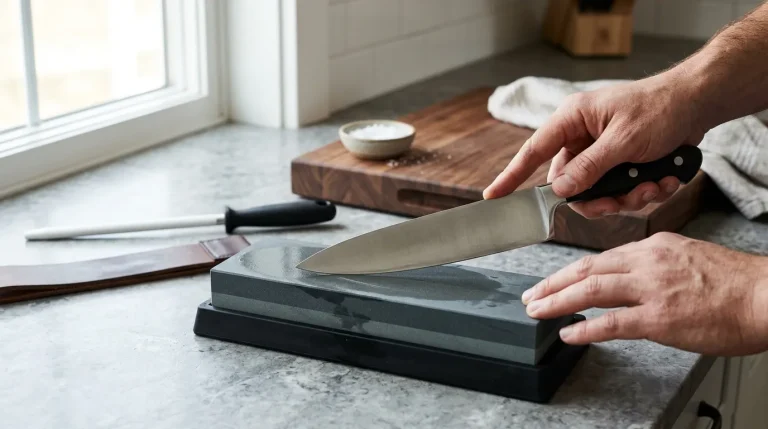

Use a honing rod or a ceramic mug rim to fix a dull knife quickly.
If you cook at home or in a busy line, a blunt edge kills flow and safety. I’ve taught dozens of cooks how to fix a dull knife quickly without fancy gear. In this guide, I’ll show you how to fix a dull knife quickly in minutes, with clear steps, real examples, and pro tips that work when dinner can’t wait.
What Makes a Knife Go Dull Fast

A knife dulls when the fine edge rolls, chips, or wears away. Daily use on hard boards or bones speeds this up. Dishwashers, glass boards, and drawer bumps also damage the edge.
Steel type matters too. Softer steel bends sooner, while very hard steel chips if abused. Knowing this helps you choose the fastest fix for the problem at hand and understand how to fix a dull knife quickly with the right tool.
Tools You Need Right Now

You can sharpen with pro tools or simple stand-ins. Gather what you can from this list:
- Honing rod. Steel or ceramic. Great for a rolled edge and daily touch-ups.
- Whetstone. A 1000 grit stone is a fast, all-around choice.
- Ceramic mug. Flip it over. Use the unglazed ring as an emergency stone.
- 600–1000 grit sandpaper. Wrap it around a book or board for a quick flat surface.
- Pull-through sharpener. Fast, but use gentle pressure and sparingly.
- Marker and towel. A marker helps set angle. A towel keeps your board stable.
If you ever asked how to fix a dull knife quickly with what you already own, this lineup is your answer.
The Fastest Ways To Restore An Edge
Below are quick, safe ways I use at home and in pro kitchens. Choose the one that fits your tools and time.
Use a honing rod for the quickest touch-up
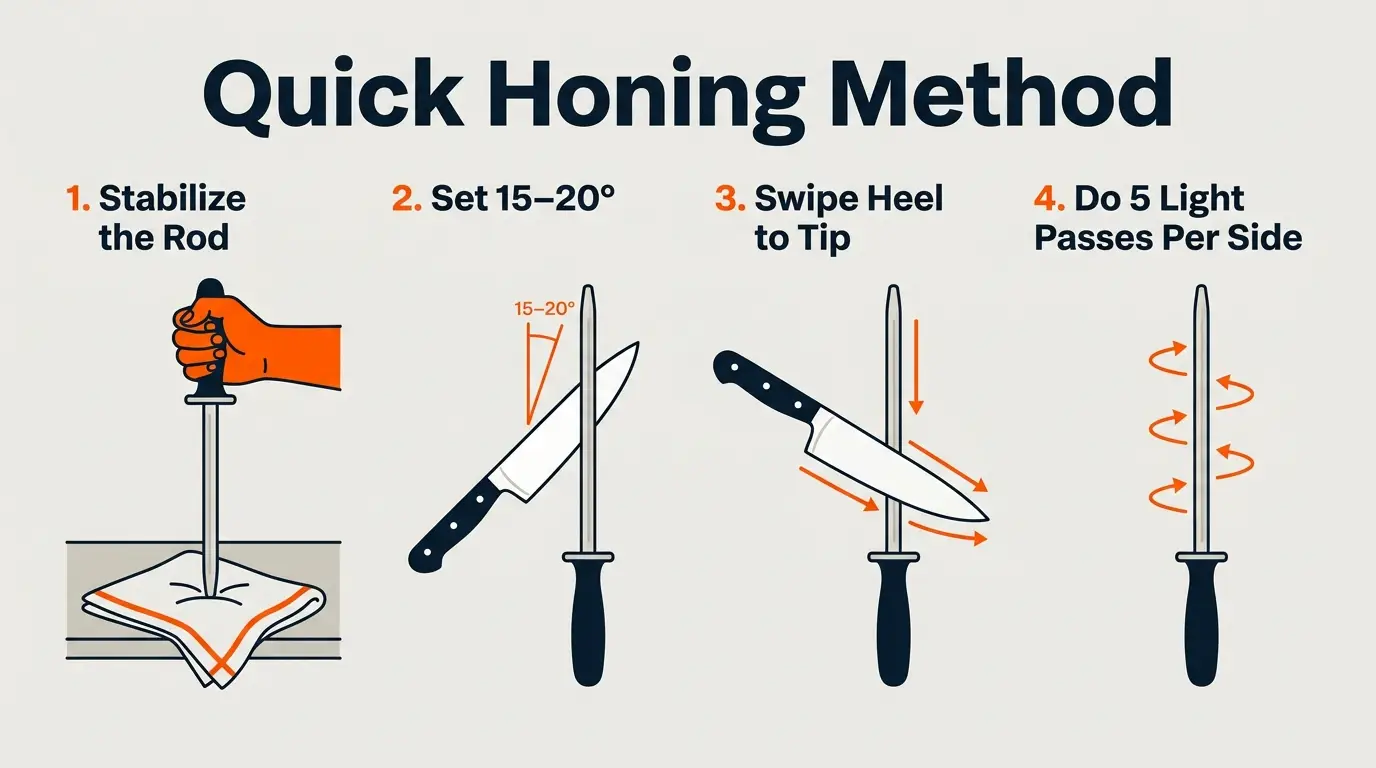
- Hold the rod vertical with the tip on a towel. Keep it steady.
- Set the knife at about 15–20 degrees. Think two stacked pennies under the spine.
- Swipe heel to tip, then switch sides. Do 5 light passes per side.
- Wipe the blade and test on paper.
Pro insight: A rod does not remove much metal. It realigns the edge. If it still feels dull after 10 passes, move to a stone. This is often step one in how to fix a dull knife quickly.
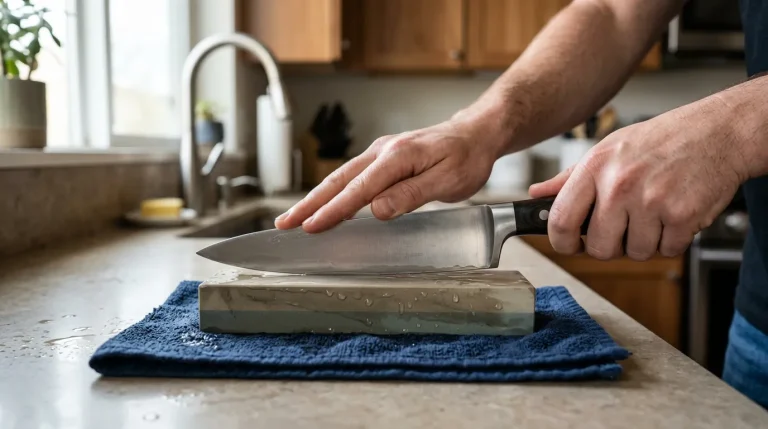
Five-minute refresh on a 1000 grit whetstone
- Soak if needed. Some stones only need a splash.
- Color the edge with a marker to track angle.
- Draw the knife across the stone from heel to tip. Light pressure. Keep the angle steady.
- Do 8–12 strokes per side. Raise a slight burr, then flip.
- Finish with 3 light alternating strokes. Rinse and dry.
Tip from the line: Count strokes. Consistency beats speed. This is the most reliable path when you want to know how to fix a dull knife quickly with a lasting edge.
No stone? Use a ceramic mug
- Flip the mug. Find the rough ring on the bottom.
- Set a 15–20 degree angle. Make 10 passes per side with gentle pressure.
- Strop on cardboard to smooth the bite. Wipe clean.
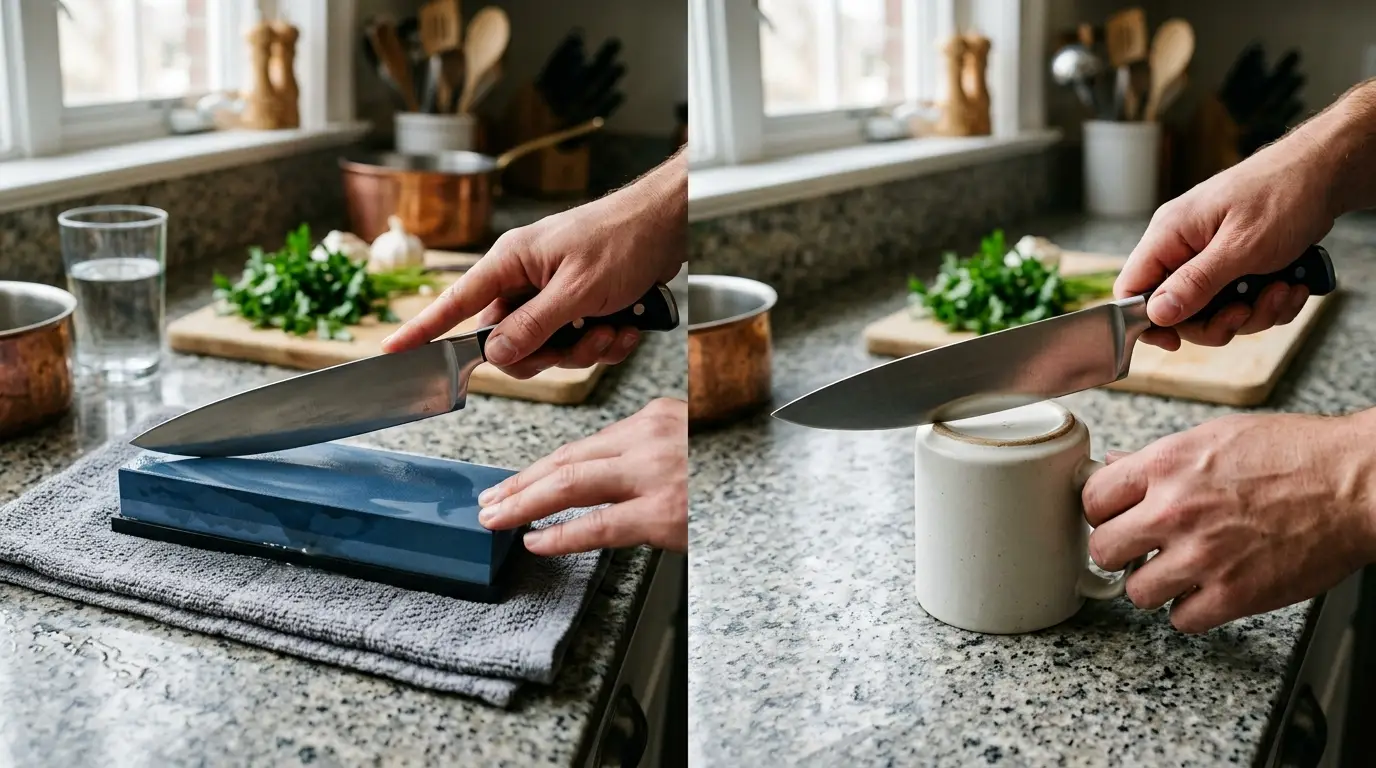
This hack is perfect when you want how to fix a dull knife quickly during a picnic or travel cooking.
Sandpaper method
- Place 600–1000 grit sandpaper on a flat book or board.
- Sharpen as if it were a stone. Light, even strokes at a steady angle.
- Finish with a few light alternating passes.
It is cheap, fast, and controlled. Great for home cooks learning how to fix a dull knife quickly without buying a stone.
Pull-through sharpener (use sparingly)
- Place it on a stable surface. Choose the fine slot.
- Draw the blade through 3–5 times with almost no pressure.
- Clean the blade. Test and stop early to avoid over-grinding.
These devices remove metal fast. They are fine for budget knives, but I avoid them on thin Japanese blades.
Test Sharpness Safely
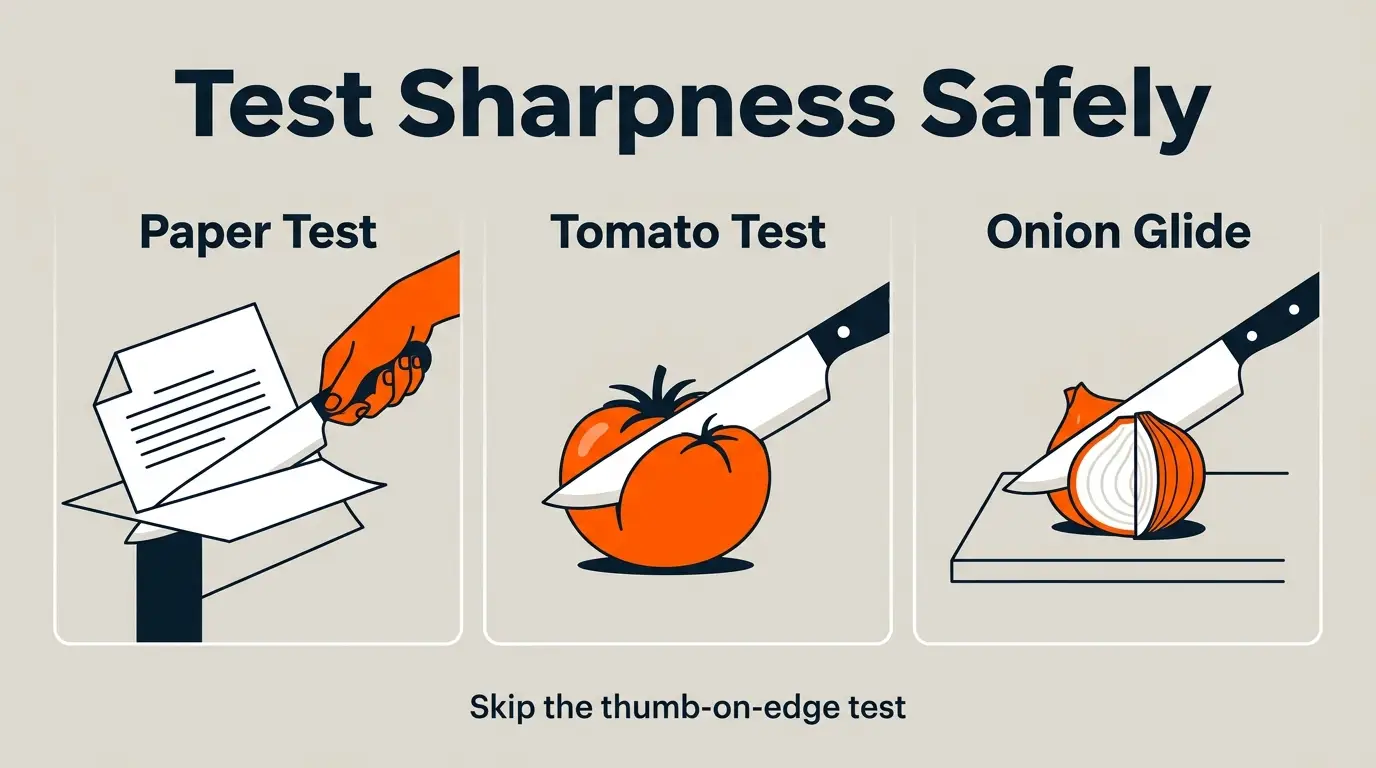
Skip the thumb-on-edge test if you are new. Use these safe checks:
- Paper test. Slice copy paper from the edge. A sharp edge will glide with little snag.
- Tomato test. Set the blade on a tomato. If the skin breaks without push, you are good.
- Onion glide. A sharp knife will start a slice without rock or crush.
Important: Wash and dry the blade after sharpening. Fine grit can linger. This step closes the loop on how to fix a dull knife quickly while keeping your food clean.
Keep It Sharp With Simple Habits
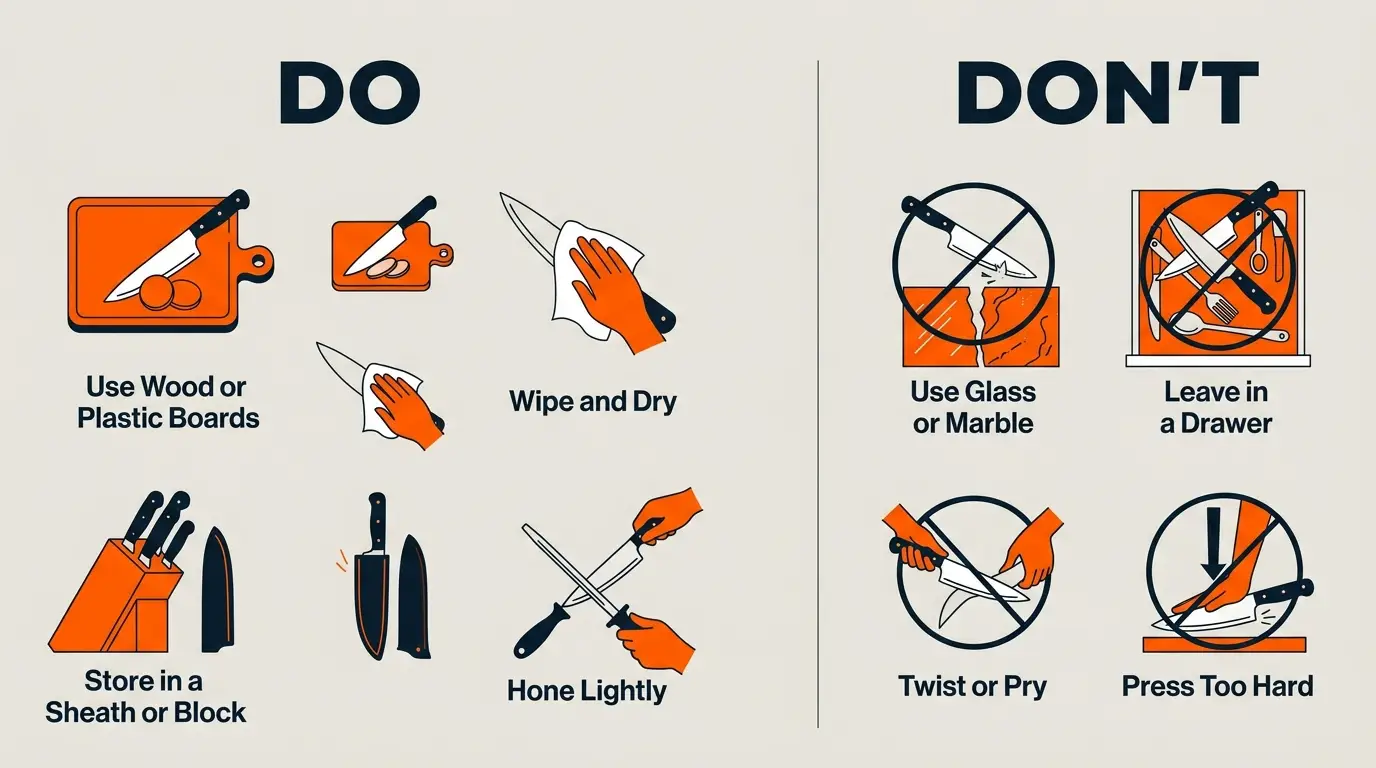
Habits keep edges alive longer than any tool:
- Use soft boards. Wood or quality plastic. Skip glass, marble, or ceramic.
- Wipe and dry at once. Water and acids attack steel.
- Hone lightly before big prep. Ten seconds saves ten minutes later.
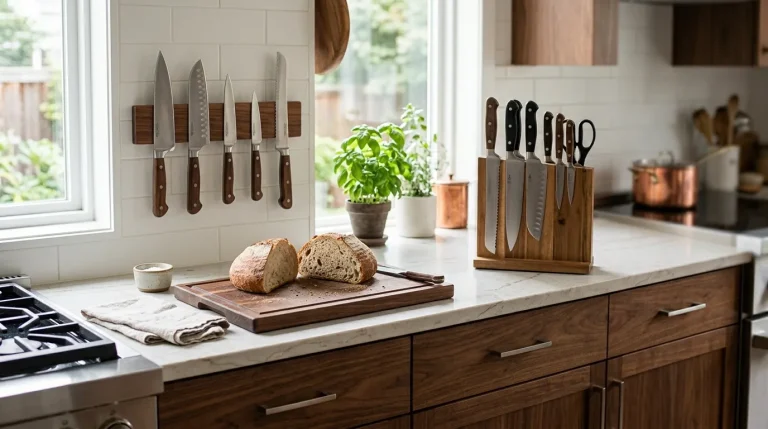
- Store smart. Use a sheath, block, or magnetic strip. Not a drawer.
- Avoid twisting and prying. Let the edge cut. Do not lever or scrape metal on the board.
Do this, and you will need how to fix a dull knife quickly much less often.
Common Mistakes That Slow You Down
- Pressing too hard. Pressure kills control and chips the edge.
- Changing angles mid-stroke. This creates a wavy, weak bevel.
- Skipping deburring. Always do a few light, alternating passes to remove the burr.
- Overusing coarse tools. Start fine. Remove only what you must.
- Ignoring safety. Dry hands, stable surfaces, and clear counters are non-negotiable.
I learned the hard way early in my career. One rush shift, I leaned on a pull-through, overheated the edge, and the knife tore tomatoes for days. Gentle wins. That lesson shaped how I teach how to fix a dull knife quickly to new cooks.
Frequently Asked Questions of How to Fix a Dull Knife Quickly
What is the single fastest way to sharpen at home?
Use a honing rod for a quick touch-up, then test on paper. If it still drags, do 10 light passes per side on a 1000 grit stone.
Can I really sharpen with a coffee mug?
Yes. The unglazed ring acts like a fine ceramic stone. Keep a steady angle, use light strokes, and finish with a few gentle alternating passes.
How often should I hone my knife?
Hone before big prep or when the edge feels less crisp. Many home cooks hone weekly; pros often hone daily.
Will a pull-through sharpener ruin my knife?
Not if used gently and rarely. It removes metal fast, so stop as soon as it cuts clean and avoid it on thin, hard-steel knives.
What angle should I use when sharpening?
Aim for 15–20 degrees per side for most kitchen knives. Keep it steady; consistency matters more than the exact number.
How do I know if I need a stone instead of a rod?
If honing does not bring back bite after 10–12 passes, move to a 1000 grit stone. Chips, flat spots, or shiny rolled edges also need a stone.
Is it safe to test sharpness with my thumb?
It is risky if you are not trained. Use the paper or tomato test instead to avoid cuts.
Conclusion
A sharp knife is speed, safety, and joy on the board. You just learned how to fix a dull knife quickly with tools you already have, from a honing rod to a simple mug. Start with realignment, move to a 1000 grit refresh when needed, and lock in edge life with smart habits.
Try one method today on your most-used knife. Share what worked for you, ask questions, or subscribe for more hands-on kitchen skills.