Group tasks, prep ahead, cook in zones, and clean as you go.
If you want dinner to feel smooth, not rushed, you need a system. I have coached busy home cooks and worked in fast kitchens. I know How to Improve Cooking Workflow step by step. In this guide, I will show you clear rules, simple tools, and smart habits that cut stress and time, while boosting flavor and consistency
What Is Cooking Workflow?
Cooking workflow is the path from plan to plate to cleanup. It covers menu planning, shopping, prep, cooking, plating, and dishes. When it is smooth, you save time and waste less food.
Why it matters is simple. A good workflow lowers stress and errors. It also makes hot food land on the table at the same time. If you want real gains, learn How to Improve Cooking Workflow with small, repeatable steps.
Time and motion studies in kitchens show that fewer moves and fewer handoffs speed up a cook by a lot. You do not need a chef’s kitchen. You need order, timing, and a few good habits.
Core Principles of an Efficient Kitchen
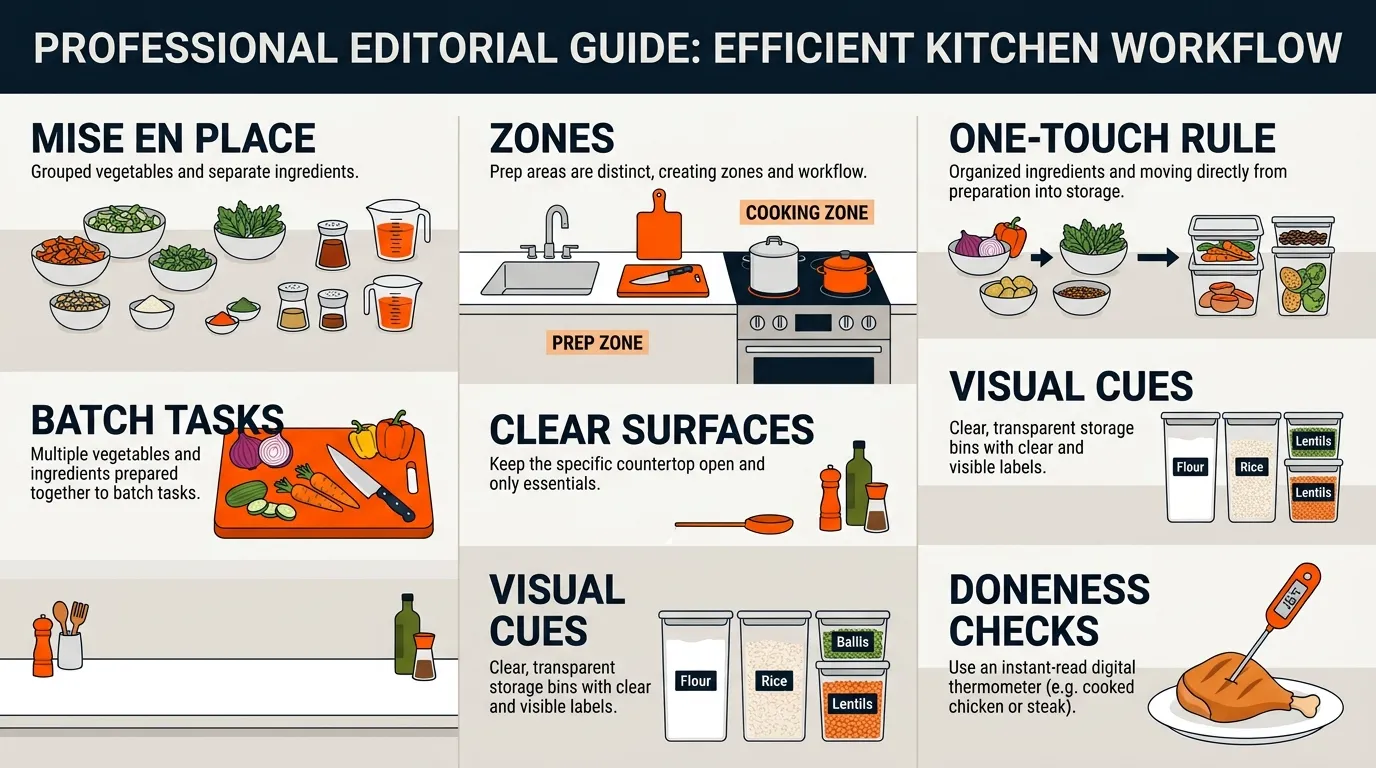
Great meals come from systems, not luck. Here are the pillars I teach when people ask How to Improve Cooking Workflow.
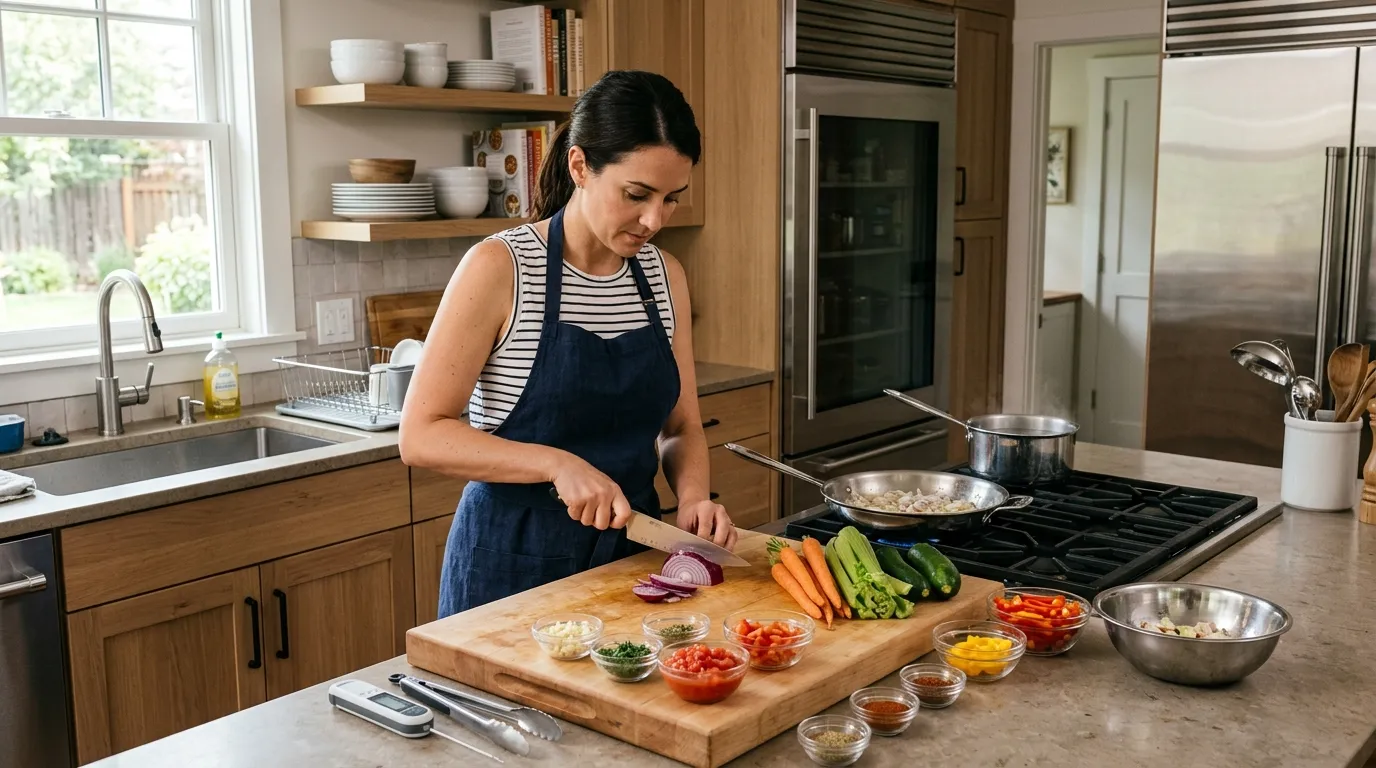
- Mise en place. Prep, measure, and group items before heat. You cook faster and make fewer mistakes.
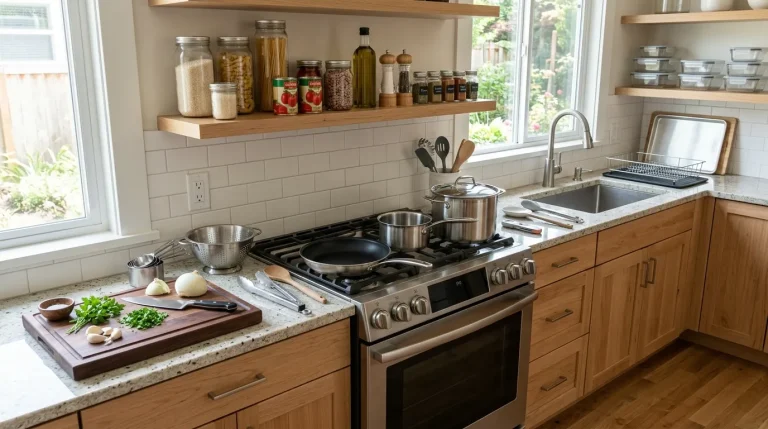
- Zones. Keep tools by the job. Cutting by the board, heat tools by the stove, cleaning by the sink.
- One-touch rule. Touch each item once when you can. Chop, box, and store without back and forth.
- Batch tasks. Dice all onions at once. Wash all greens at once. Clean all knives at once.
- Clear surfaces. A tidy counter speeds up work and reduces risk.
- Visual cues. Use see-through bins and labels so you grab fast and do not forget food.
- Standard doneness checks. Use an instant-read thermometer and simple cues like color, texture, and smell.
These basics are the core of How to Improve Cooking Workflow at home and in pro spaces.
Step-by-Step System to Improve Cooking Workflow
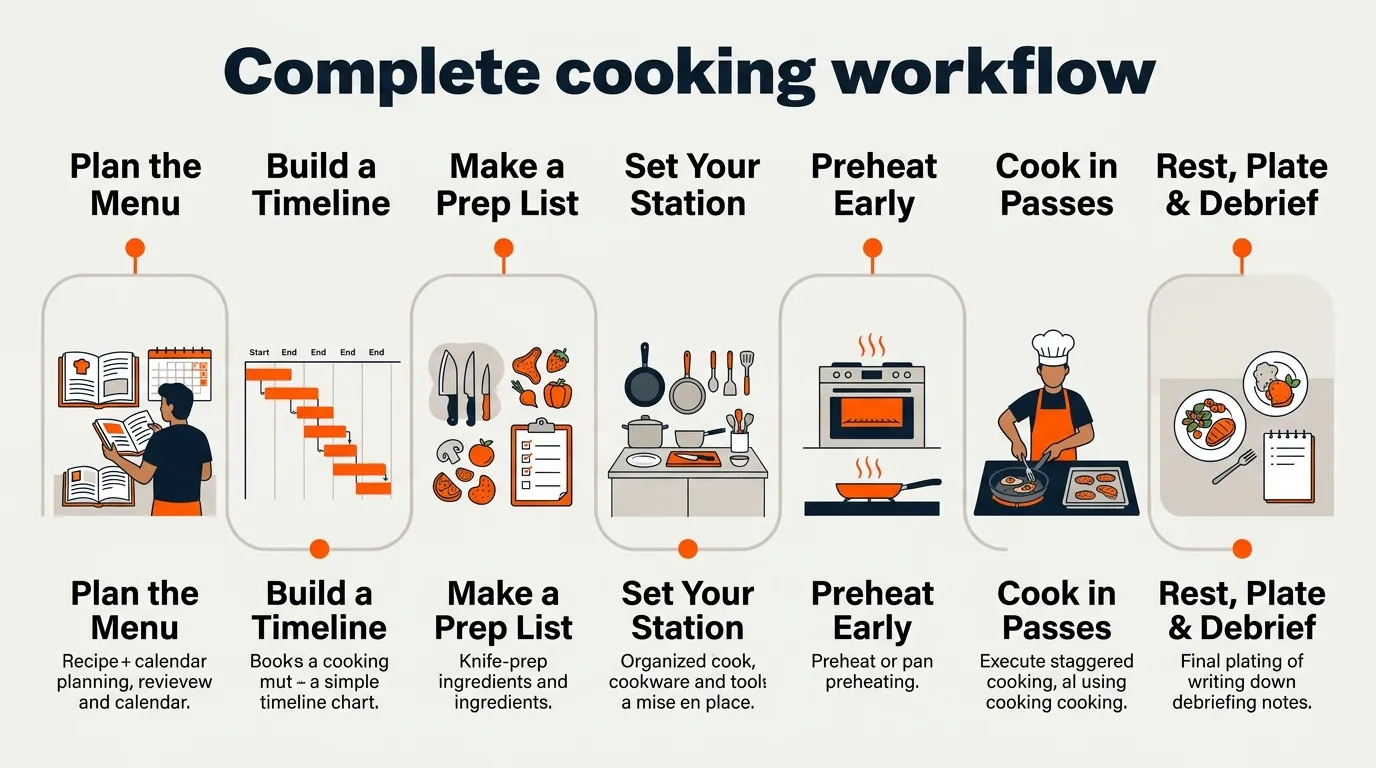
Follow this plan any night. It is my go-to checklist for How to Improve Cooking Workflow.
- Plan the menu. Read recipes end to end. Mark steps that need time, like marinades or soaking.
- Build a simple timeline. Start the longest or slowest item first. Work backward from when you want to eat.
- Make a prep list. Group knife work by method. Dice all, then slice, then mince.
- Set your station. Pull tools, pans, spices, and trays. Put trash and compost bins near you.
- Preheat early. Ovens and pans need time. Set timers for preheat and for each key step.
- Cook in passes. High heat sear, then reduce heat to finish. Stagger sides so they end together.
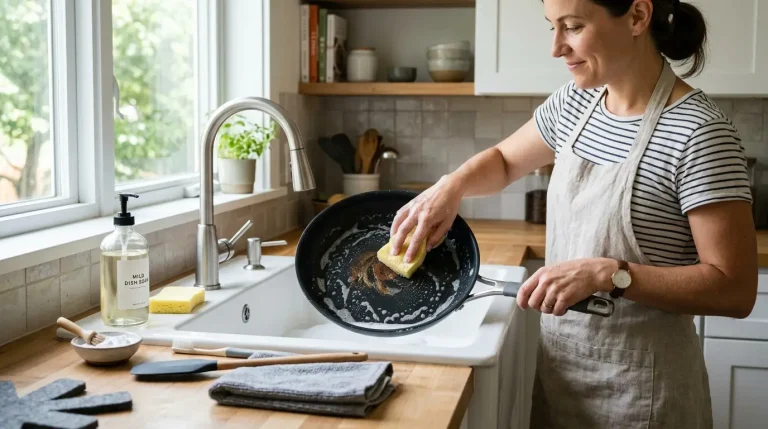
- Use micro breaks to clean. Wipe, wash, and reset during simmer time or oven time.
- Rest and plate. Rest meats. Toss salads last. Warm plates if needed.
- Debrief. Note wins and bottlenecks. Small notes help you fix the next run.
Do this three times and you will feel the lift. This is the fastest way I know How to Improve Cooking Workflow without buying more gear.
Smart Kitchen Layout and Tools
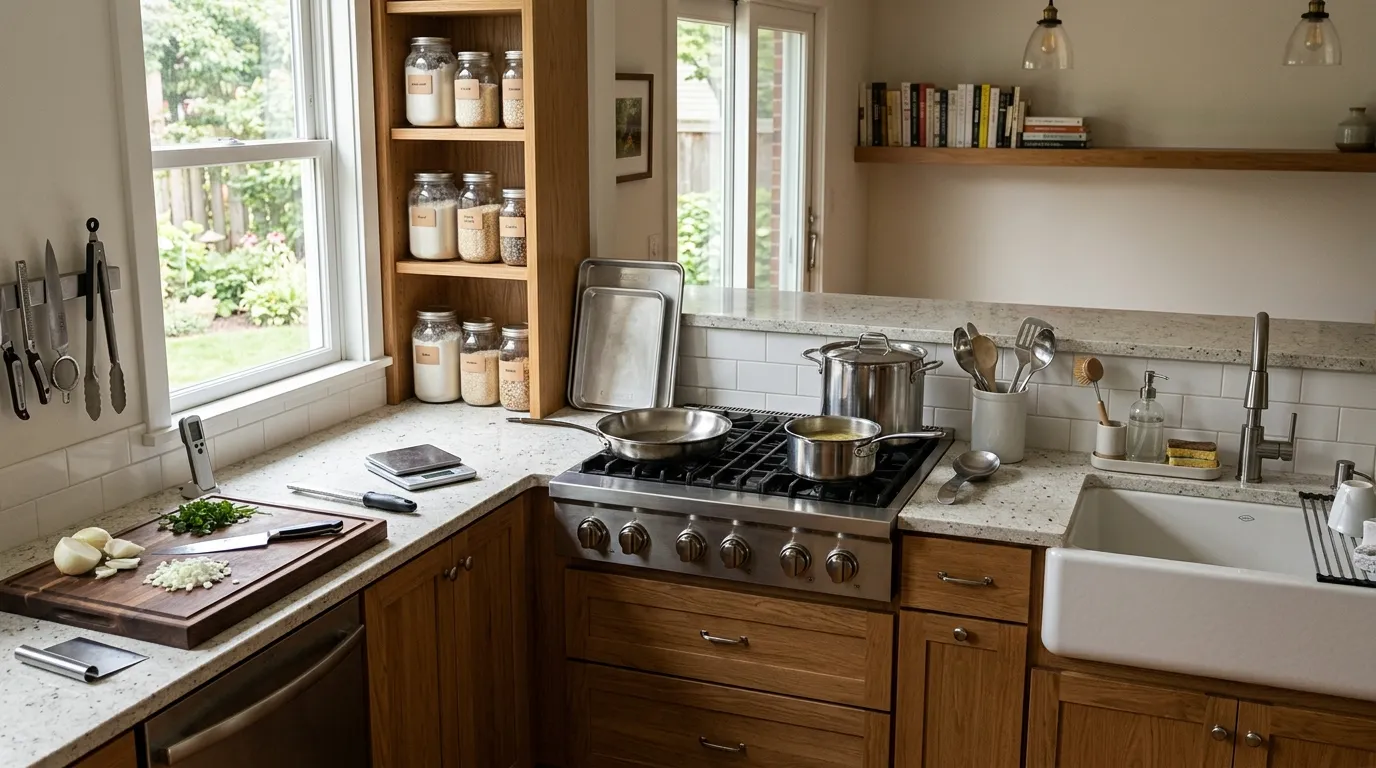
Your layout shapes your speed. A few tweaks can change your night.
- Work triangle or zones. Keep the sink, stove, and fridge close. Store tools near where you use them.
- Knife and board. A sharp chef’s knife and a stable board beat most gadgets.
- Pans that do it all. One heavy skillet, one sauce pan, one stock pot, and two sheet pans cover most meals.
- Key helpers. Instant-read thermometer, digital scale, microplane, tongs, and a bench scraper.
- Storage that shows itself. Clear bins, labels, and shallow pans. You see what to grab and what to use next.
When friends ask me How to Improve Cooking Workflow on a budget, I say sharpen your knife, get two sheet pans, and buy a thermometer. Those three boost speed and accuracy fast.
Time Management Techniques for Home Cooks
Time is your main lever when you plan How to Improve Cooking Workflow. Use these moves.
- Stack tasks. Start rice or potatoes first. Use their cook time to prep veg and sauces.
- Use passive heat. Ovens, slow cookers, and pressure cookers free your hands.
- Timer discipline. Set a timer for every step, even to preheat or rest.
- Par-cook smart. Steam or microwave dense veg for a minute to cut pan time. Then finish in a skillet for color.
- Rest right. Let meat rest. Use carryover heat. This gives you a window to finish sides.
Short, clear timers plus batch prep give you the best gains with the least effort.
Prepping Like a Pro: Mise en Place and Batch Prep
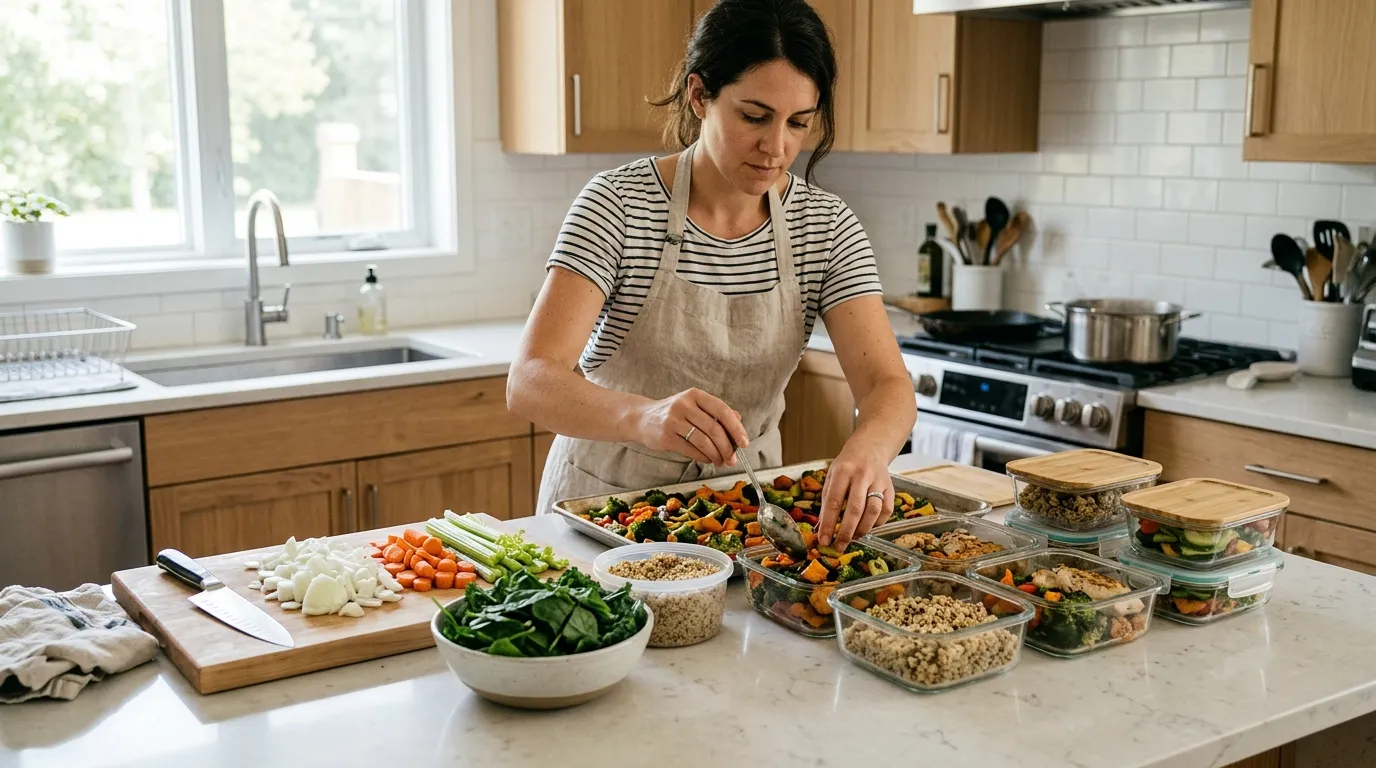
If you want to know How to Improve Cooking Workflow over a full week, batch prep is the hack.
- Pick one block of time. Sixty to ninety minutes on the weekend is enough.
- Prep base items. Dice onions, carrots, and celery. Wash and spin greens. Cook a pot of grains and a tray of roasted veg.
- Make flavor kits. Blend a vinaigrette. Stir a spice rub. Mix a jar of sauce or paste.
- Cook anchor proteins. Roast chicken thighs or bake tofu. Chill fast in shallow pans.
Food safety matters. Keep cold foods at safe temps. Chill hot food fast in thin layers. Follow doneness temps like 165°F for poultry and 145°F for whole cuts of pork and beef with a rest. Label with the date and use within safe windows.
A small story. I once fought weeknight chaos with two kids. One hour on Sunday to wash greens, roast veg, and cook rice cut my nightly cook time to 20 minutes. That is How to Improve Cooking Workflow you can feel.
Workflow by Meal Type
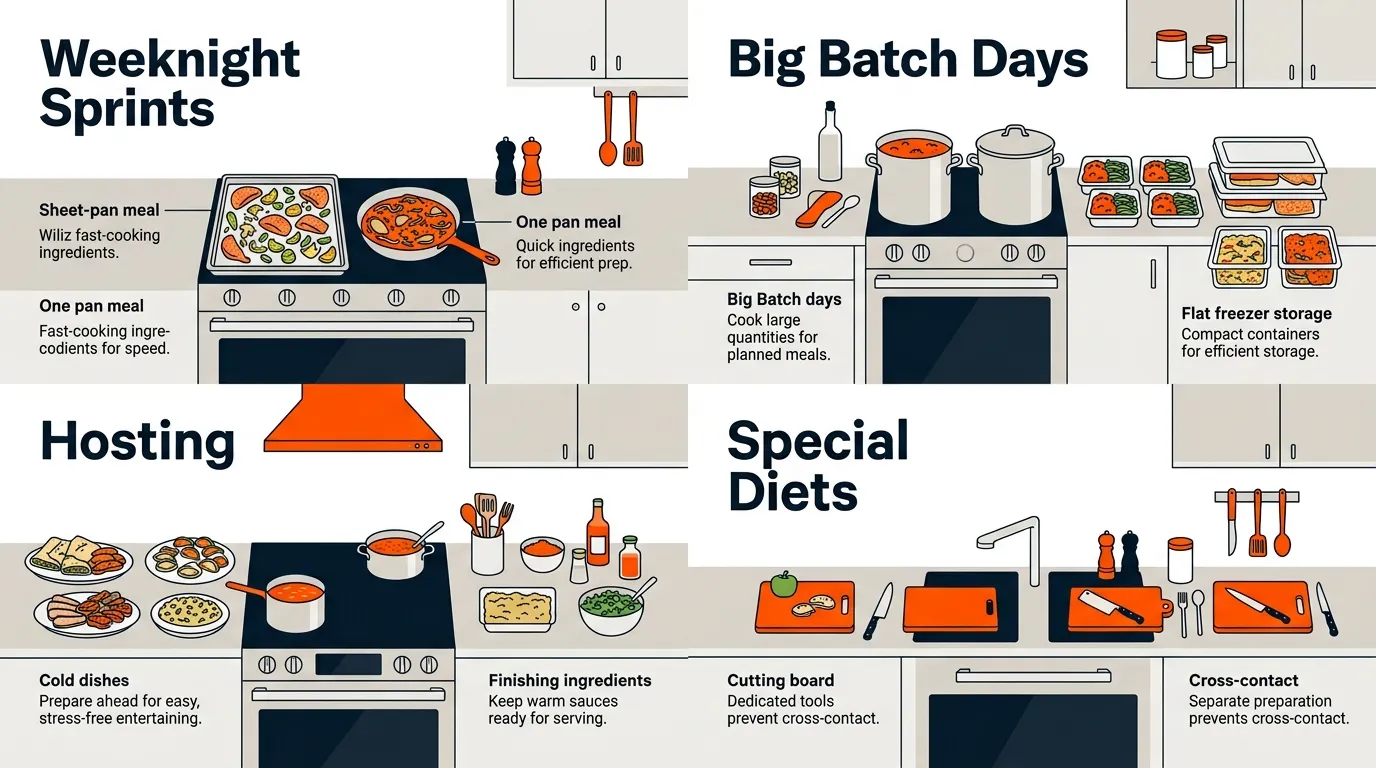
Match your method to the meal. This is where How to Improve Cooking Workflow becomes very real.
- Weeknight sprints. Use one-pan or sheet-pan meals. Lean on fast cuts like shrimp, thin pork chops, or canned beans.
- Big batch days. Double soups, stews, or sauces. Freeze flat in bags for quick thaw.
- Hosting. Make cold dishes and braises ahead. Hold sauces warm. Finish sears and salads right before serving.
- Special diets. Set a gluten-free or allergen-free zone. Use color-coded boards and tools to avoid cross contact.
This lens helps you plan time, tools, and space for each meal style.
Common Mistakes and How to Fix Them
I see the same traps when people try to learn How to Improve Cooking Workflow. Here is how to beat them.
- Not reading the recipe. Fix it by reading once for steps and once for timing.
- Overcrowding pans. Use two pans or cook in batches for better browning.
- Cold pans and cold ovens. Preheat longer. Use an oven thermometer if needed.
- Dull knives. Sharpen or hone. A sharp knife is faster and safer.
- No plan for leftovers. Box food in meal-size portions. Label and date.
- Cluttered counters. Clear the deck before you start. Keep a trash bowl at hand.
Small habits here change outcomes fast.
Safety and Clean-As-You-Go Without Slowing Down
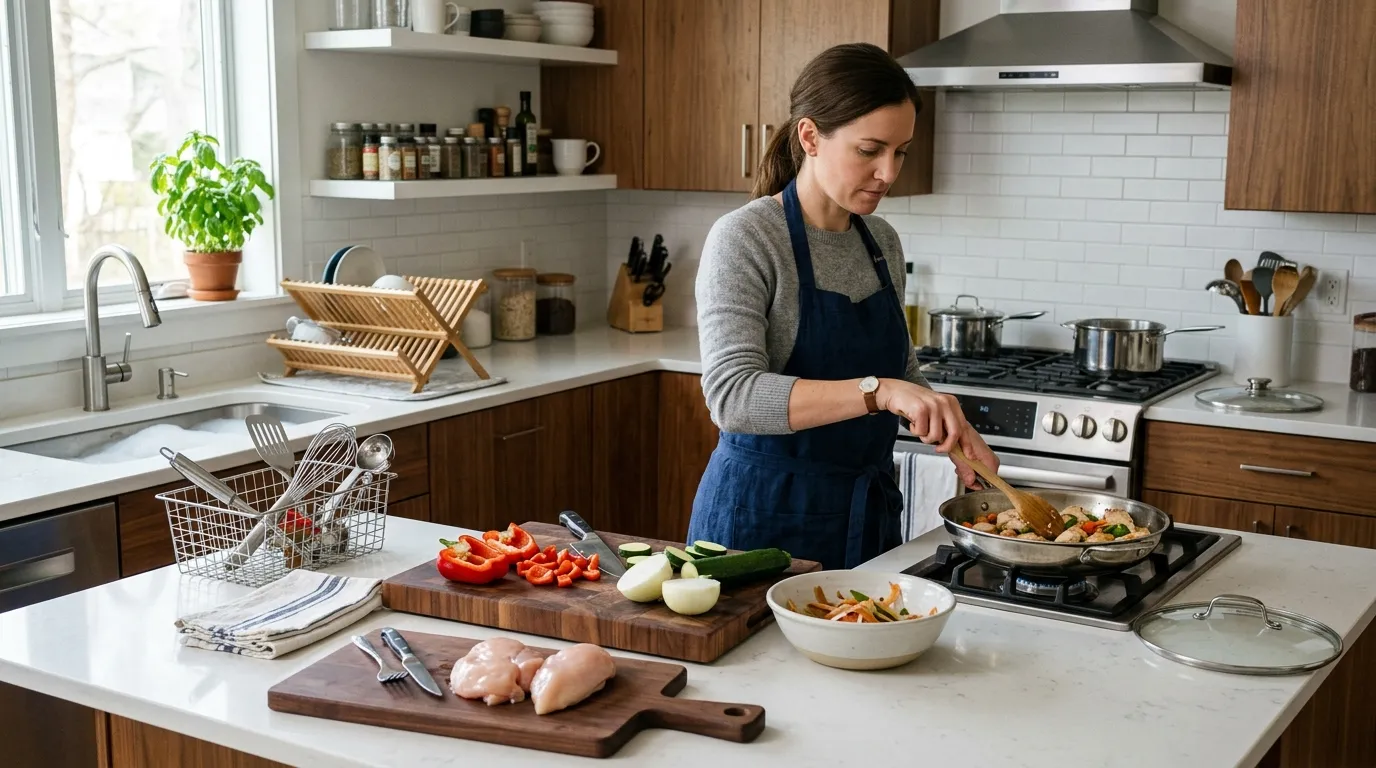
Clean work is safe work. It also speeds you up long term.
- Cross-contamination. Keep raw meat and ready-to-eat foods apart. Use separate boards or clean between tasks.
- Doneness and cooling. Use a thermometer. Chill hot food fast in shallow containers.
- Fire and oil. Do not leave hot oil alone. Keep pan handles turned in. Keep a lid close to smother flames.
- Clean-as-you-go. Fill the sink with hot, soapy water at the start. Drop tools in as you cook. Wipe spills right away.
These checks reduce stress and keep you moving. When planning How to Improve Cooking Workflow, safety is part of speed.
Tracking, Iteration, and Menu Planning
You improve what you track. Treat your kitchen like a small lab.
- Keep a kitchen notebook. Note total time, bottlenecks, and ideas to try next time.
- Make simple menu templates. Use theme nights like pasta, tacos, soup, and roast. Repeat what works.
- Shop with a list tied to meals. Group items by store aisle. Keep a pantry par list and restock before you run out.
- Use light tech. Timers, notes apps, and shared lists help partners sync.
This is the long game of How to Improve Cooking Workflow. Small notes become big wins.
Frequently Asked Questions of How to Improve Cooking Workflow
What is the first step to improve my cooking workflow?
Start with a short plan. Read the recipe, list key steps, and set preheat and prep timers.
How can I balance cooking and cleanup without losing time?
Clean during passive time. Fill the sink with soapy water at the start and wash tools between steps.
Which tools give the biggest speed boost?
A sharp chef’s knife, two sheet pans, and an instant-read thermometer. They cut time and raise consistency.
How do I keep food hot while I finish other parts?
Use a low oven set to warm, or cover and rest on the stove. Avoid high heat so food does not overcook.
What is the best way to batch prep for the week?
Pick one block of time. Wash greens, cook grains, roast a tray of veg, and prep one or two proteins.
How do I avoid overcooking when juggling many tasks?
Set a timer for every step. Use a thermometer for meat and fish so you can trust the number, not guess.
Can small kitchens still have great workflow?
Yes. Use vertical storage, clear counters, and zone your space. Cook in batches and avoid unitasker tools.
Conclusion
You do not need more time to cook better. You need a simple system and a few habits. Plan first, prep in groups, set timers, and clean as you go. That is How to Improve Cooking Workflow in any kitchen, even on a busy night.
Pick one tip to try tonight. Maybe it is a prep list, a warm oven for holding, or setting three timers. Then add one more next time. Share what worked for you, ask a question, or subscribe for more step-by-step guides.