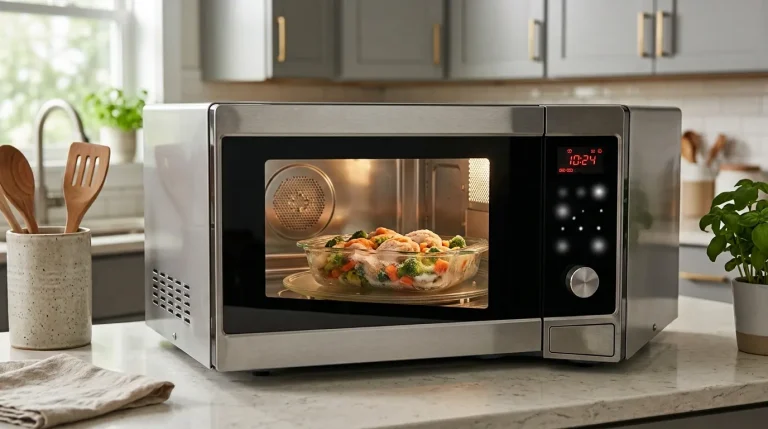
Use lower settings for gentle cooking; high power for fast reheating and boiling.
Microwave ovens are fast, but great results need more than pressing Start. In this guide, I’ll show you how to use microwave power levels properly so food heats evenly, tastes better, and stays safe to eat. I’ve tested these tips in home kitchens and small cafés, and I’ll share what works, what doesn’t, and how to use microwave power levels properly with confidence.
What Microwave Power Levels Mean
Microwaves cycle on and off to hit a target average power. Power level 100% means full power the whole time. Power level 50% means full power half the time and off half the time. This on-off pattern helps control heat flow, moisture, and texture.
Manufacturers label levels in different ways. Some show 1–10. Others show percentages. The idea is the same: power controls how fast energy enters your food. Understanding that timing plus power equals results is the core of how to use microwave power levels properly.
Why Power Levels Matter
High power blasts heat to the surface fast. That is great for water-rich foods and quick heating tasks. But it can make edges tough, sauces explode, and breads rubbery. Lower power lets heat move inward more gently, so centers cook without ruining the outside.
Use higher power for boiling water or steaming. Use medium for casseroles, grains, or sauces. Use low for defrosting and delicate items. This simple map is how to use microwave power levels properly.
A Simple Guide to Common Power Levels
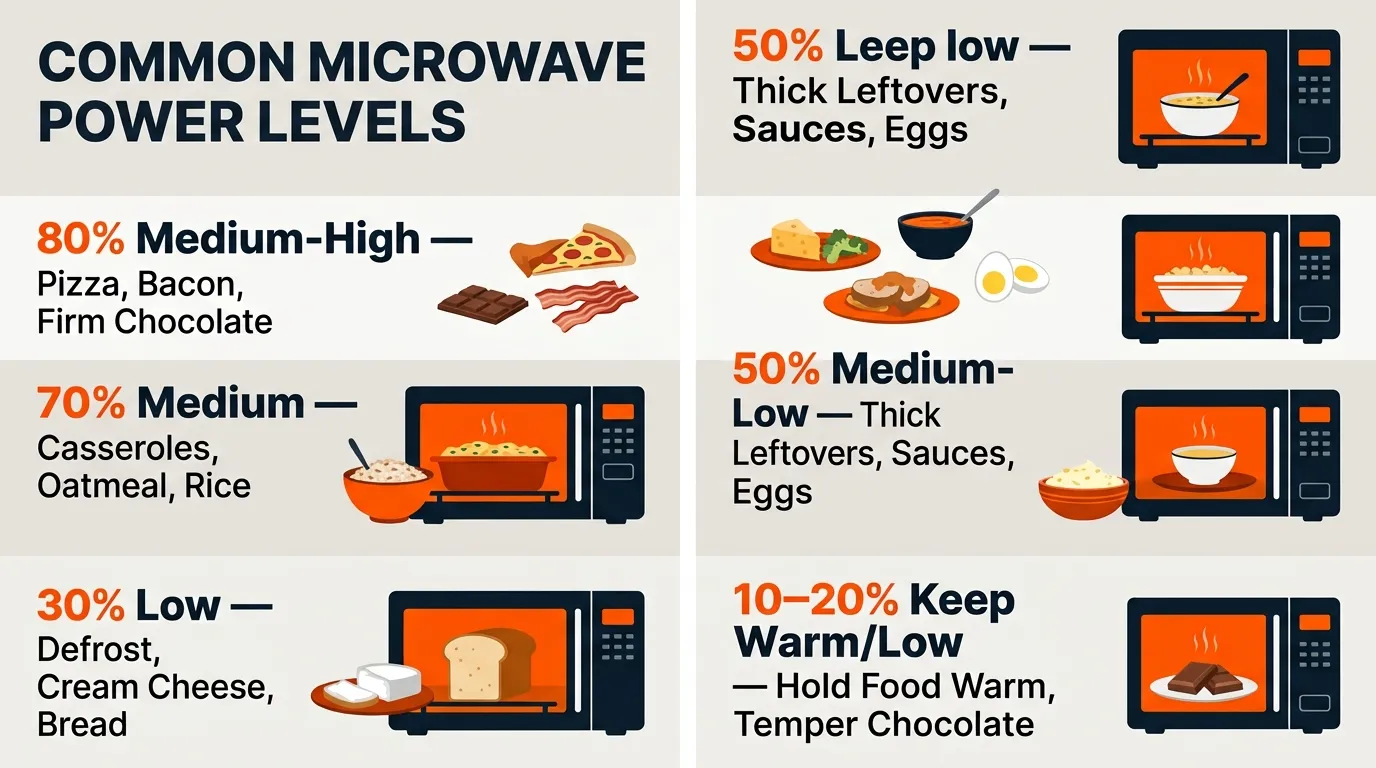
Here is how I match power to food, based on years of daily use.
- 100% (High): Boil water, steam veggies, preheat plates, heat thin soups fast.
- 80% (Medium-High): Reheat pizza slices, cook bacon with fewer splatters, melt firm chocolate in short bursts.
- 70% (Medium): Reheat casseroles, cook oatmeal, soften butter, reheat rice with a damp towel.
- 50% (Medium-Low): Thicker leftovers, sauces, custards, eggs in a mug, reduce hot spots.
- 30% (Low): Defrost, soften cream cheese, warm bread gently.
- 10–20% (Keep Warm/Low): Hold food warm, temper chocolate, rise dough.
These ranges vary by oven wattage and food size. Use them as a starting point for how to use microwave power levels properly.
Step-by-Step: How to Use Microwave Power Levels Properly
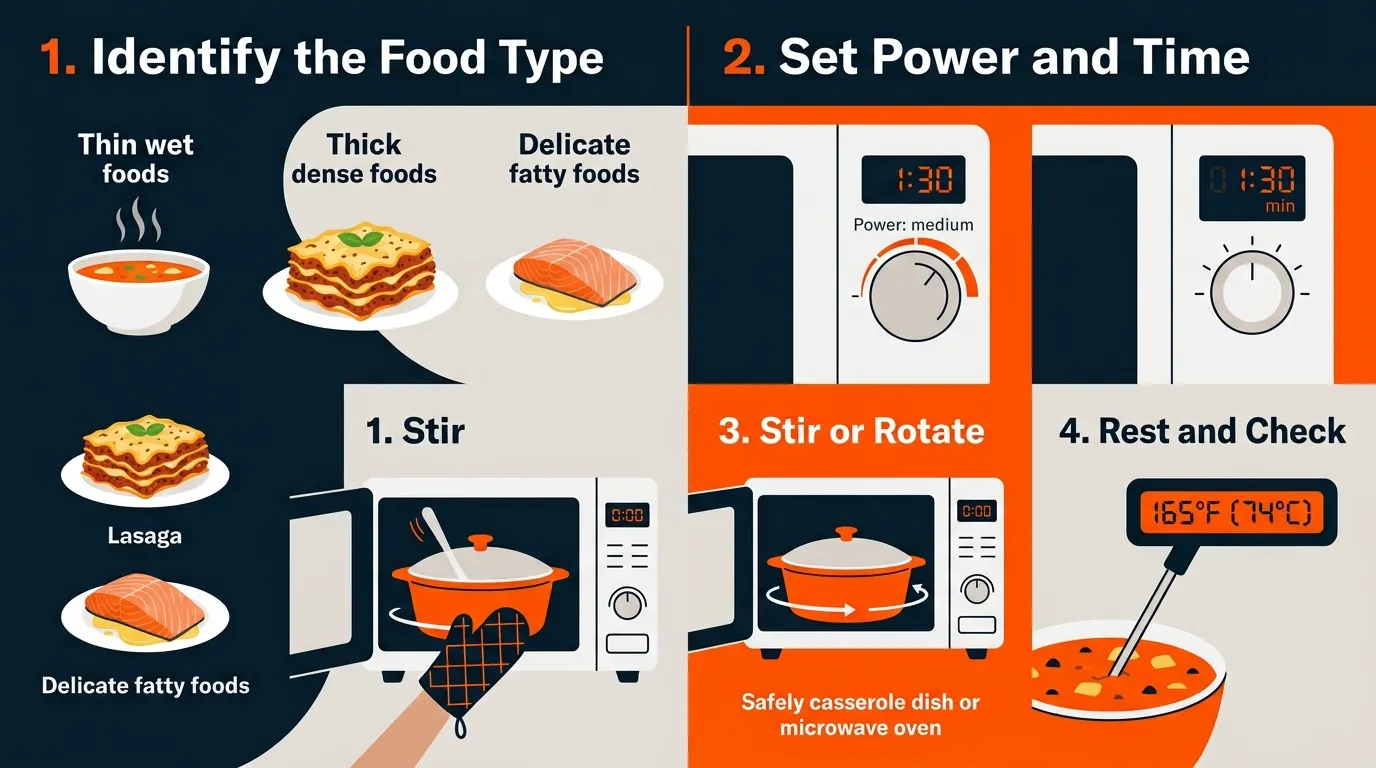
Follow this simple routine for everyday meals.
- Identify the food type
- Thin and wet, like soup or veggies: high power and short time.
- Thick or dense, like lasagna or beans: medium power and longer time.
- Delicate or fatty, like chocolate or cheese: lower power and frequent checks.
- Set the power and time
- Aim for shorter bursts.
- For a dense leftover, I start with 70% power for 2 minutes.
- Stir or rotate
- Pause halfway.
- Stir, flip, or turn the plate to move heat.
- Rest time
- Let food sit 1–3 minutes.
- Heat spreads out during rest. It makes a big difference.
- Check doneness safely
- Look for steam and bubbling.
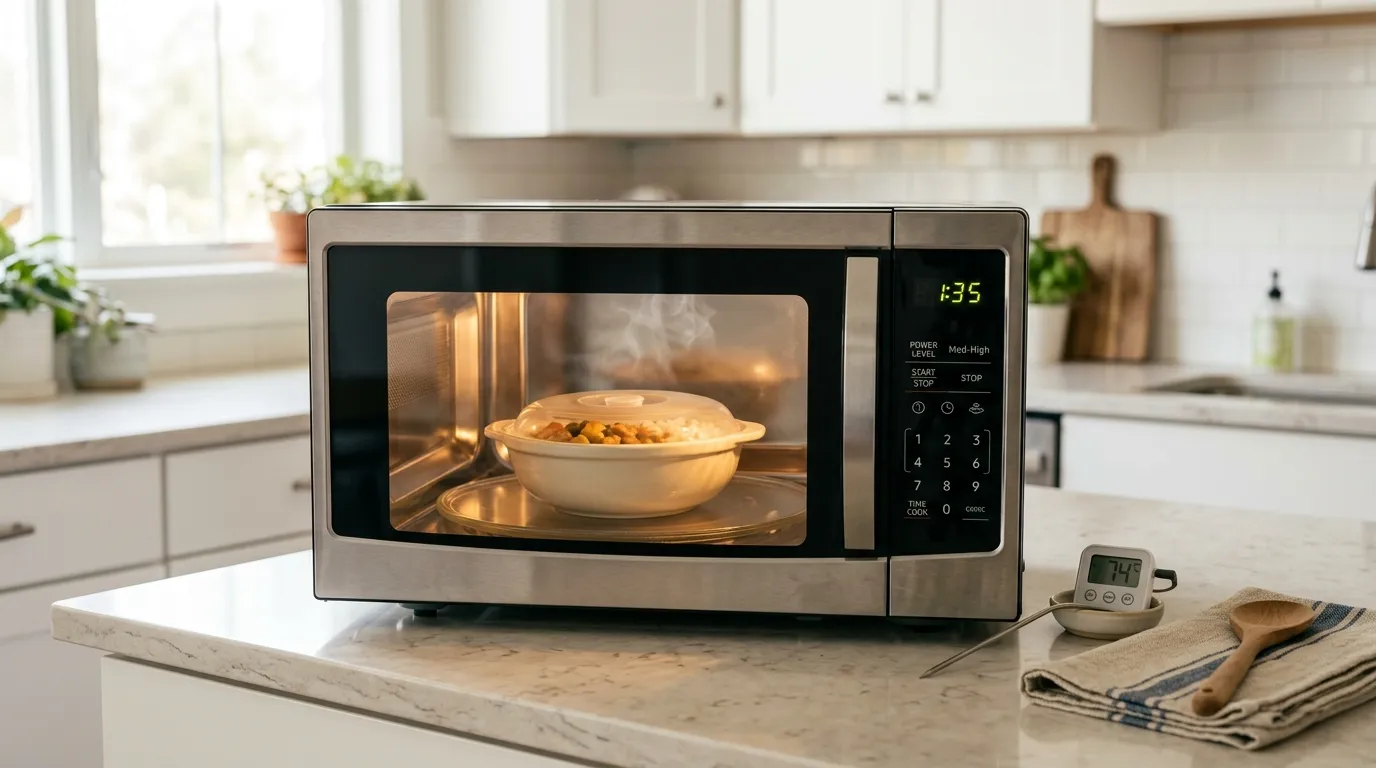
- For leftovers, food safety guidance recommends 165°F (74°C) in the center.
With practice, this is how to use microwave power levels properly every day.
Timing, Stirring, and Standing Time
Power sets the pace. Stirring evens it out. Standing time finishes the job.
- Stir often: Every 30–60 seconds for sauces and stews. This breaks up cold spots.
- Cover smart: Use a vented lid or damp paper towel to trap steam and prevent splatters.
- Stand time: After the timer, wait 1–3 minutes. The food will keep cooking gently.
Think of the microwave like sunlight on a chilly day. It warms the top layers first. A quick stir and a short rest help the warmth reach the middle. That rhythm is how to use microwave power levels properly for even results.
Defrosting Done Right
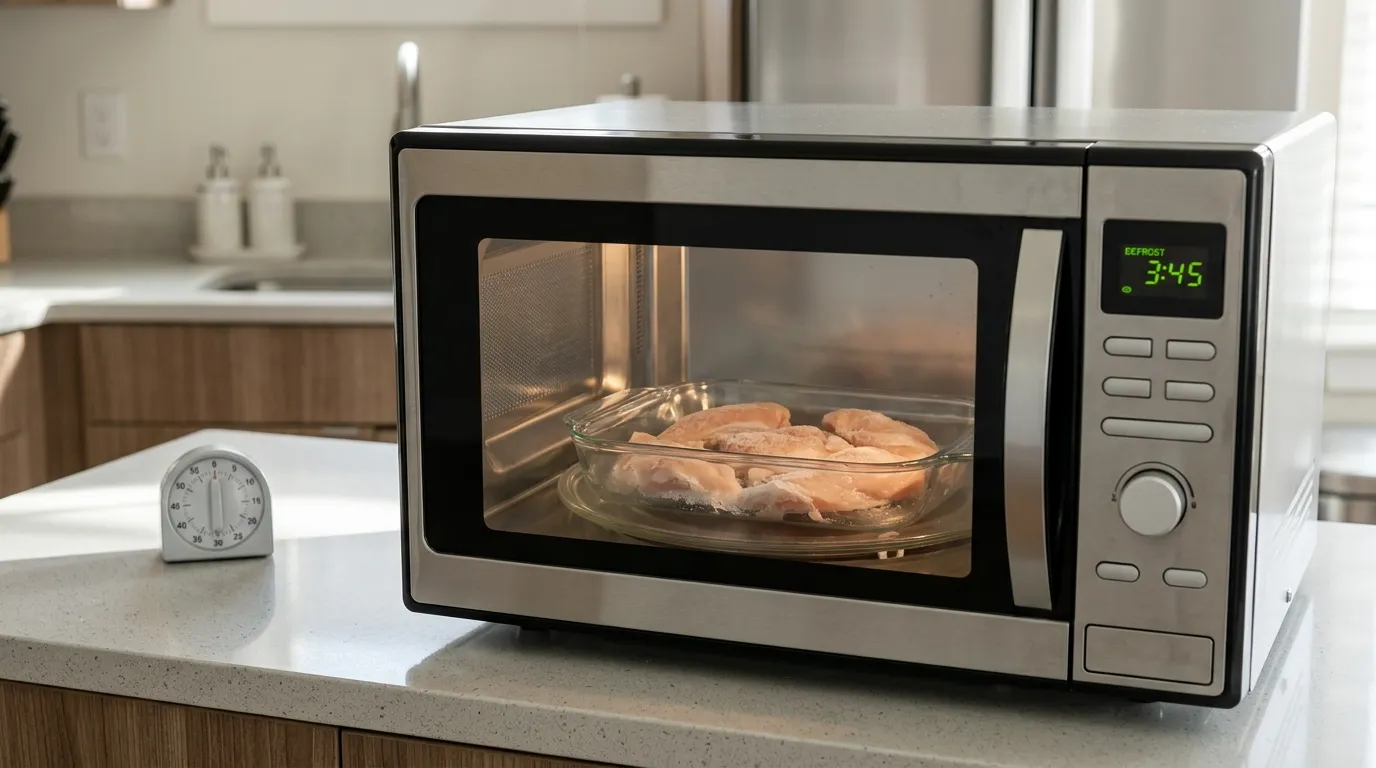
Defrosting is where power control shines. Ice needs gentle energy to melt without cooking the edges.
- Use 30% power or the Defrost setting.
- For 1 pound of meat, defrost 5–7 minutes total, turning every 60–90 seconds.
- Keep the item flat and spread out. Folded parts thaw slow.
- Stop when it is still icy but bendable. Then finish thawing in the fridge.
I learned the hard way that defrosting at 100% starts to cook thin edges. Low power keeps texture and flavor. That is how to use microwave power levels properly for safe, even thawing.
Calibrate Your Microwave: Simple Home Tests
Not all 1000-watt ovens feel the same. Test yours so you can dial in times faster.
- Water test: Heat 1 cup room-temp water on High for 2 minutes. Strong ovens bring it to a near boil. Adjust times if yours runs cooler or hotter.
- Evenness test: Arrange marshmallows or bread slices in a ring. Microwave on Low for a minute. Note hot spots and rotate food to match.
- The popcorn check: Use popcorn’s bag guidance. If it burns early, your High runs hot. If many kernels stay, add time or use a higher setting for a few seconds more.
These checks help you learn your oven’s personality. That insight supports how to use microwave power levels properly with fewer misses.
Containers, Covers, and Food Safety
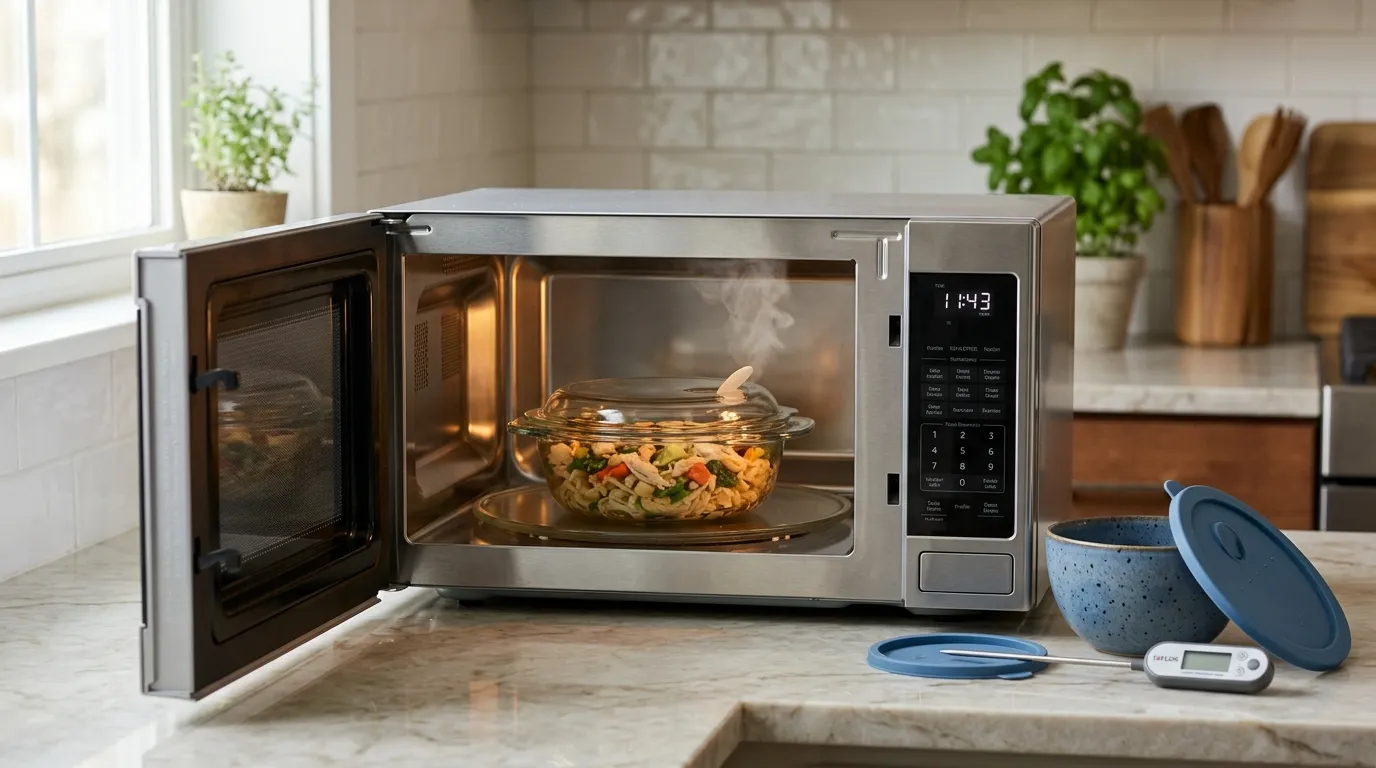
Good containers make power control work better.
- Use microwave-safe glass or ceramic. Thin plastic can warp at high power.
- Avoid metal trim. It can arc and damage the oven.
- Vent lids so steam can escape and moisture stays in.
- Spread food in a shallow layer. Thick piles heat unevenly.
Reheating leftovers? Aim for 165°F (74°C) in the center. Stir halfway, and cover to keep moisture. Safe habits and smart power together are how to use microwave power levels properly without guesswork.
Real-Life Examples and Pro Tips
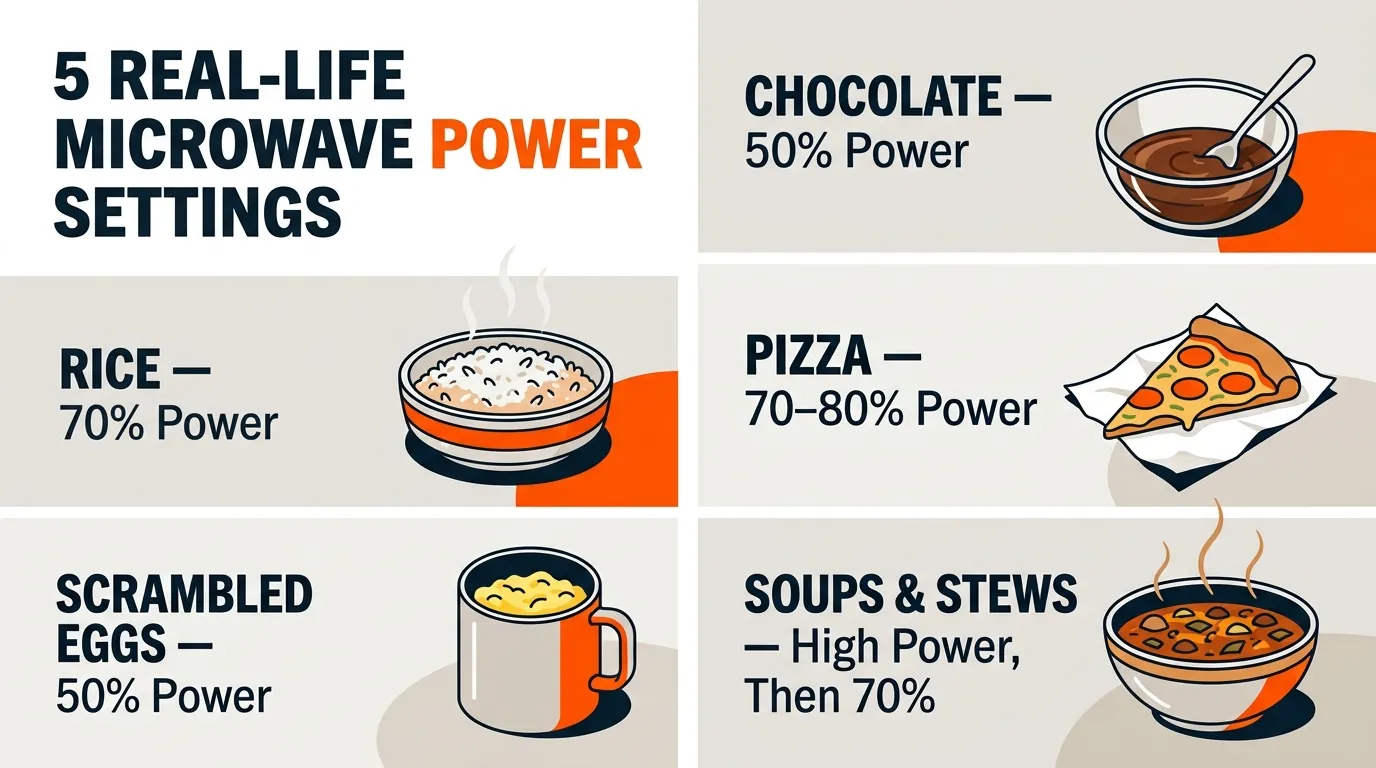
Here are wins and mistakes I see most often, plus what to do instead.
- Reheating rice: Sprinkle with water, cover with a damp towel, use 70% power for 1–2 minutes, stir, then rest.
- Melting chocolate: 50% power in 20–30 second bursts, stirring each time. High power scorches fast.
- Leftover pizza: 70–80% power for 45–60 seconds on a paper towel. It keeps the crust less soggy.
- Scrambled eggs in a mug: 50% power in 30-second cycles, stirring between. High power makes tough, rubbery curds.
- Soups and stews: High power at first to get steam going, then 70% to finish. Stir well.
I once tried to reheat a large chili bowl at High for 4 minutes straight. The edges boiled while the center stayed cold. Now I split it into two shallow bowls and use 70% with a mid-stir. That small change is how to use microwave power levels properly with thick foods.
Frequently Asked Questions
What power level should I use to reheat leftovers?
Use 70% power for even heating without drying. Stir halfway and let it rest for 1–2 minutes.
How do I defrost meat without cooking the edges?
Use 30% power and flip every minute or so. Stop when it is soft but still icy, then finish thawing in the fridge.
Why does my food explode in the microwave?
Steam builds up in sauces and thick items. Cover with a vented lid and use medium power to release steam slowly.
Is it safe to microwave in plastic containers?
Use only containers labeled microwave-safe. When in doubt, switch to glass to avoid warping or leaching.
How do I prevent hot and cold spots?
Spread food in a thin layer, stir often, and use medium power. A short rest at the end helps heat even out.
Conclusion
Power control is the secret to better taste, safer meals, and fewer messes. Choose a power level for the food, cook in short bursts, stir, and let it rest. That simple loop is how to use microwave power levels properly day after day.
Try one change this week. Reheat tonight’s leftovers at 70% with a mid-stir and a 2-minute rest. Notice the difference. Want more kitchen tips that save time and stress? Subscribe, share your results, or drop a question in the comments.