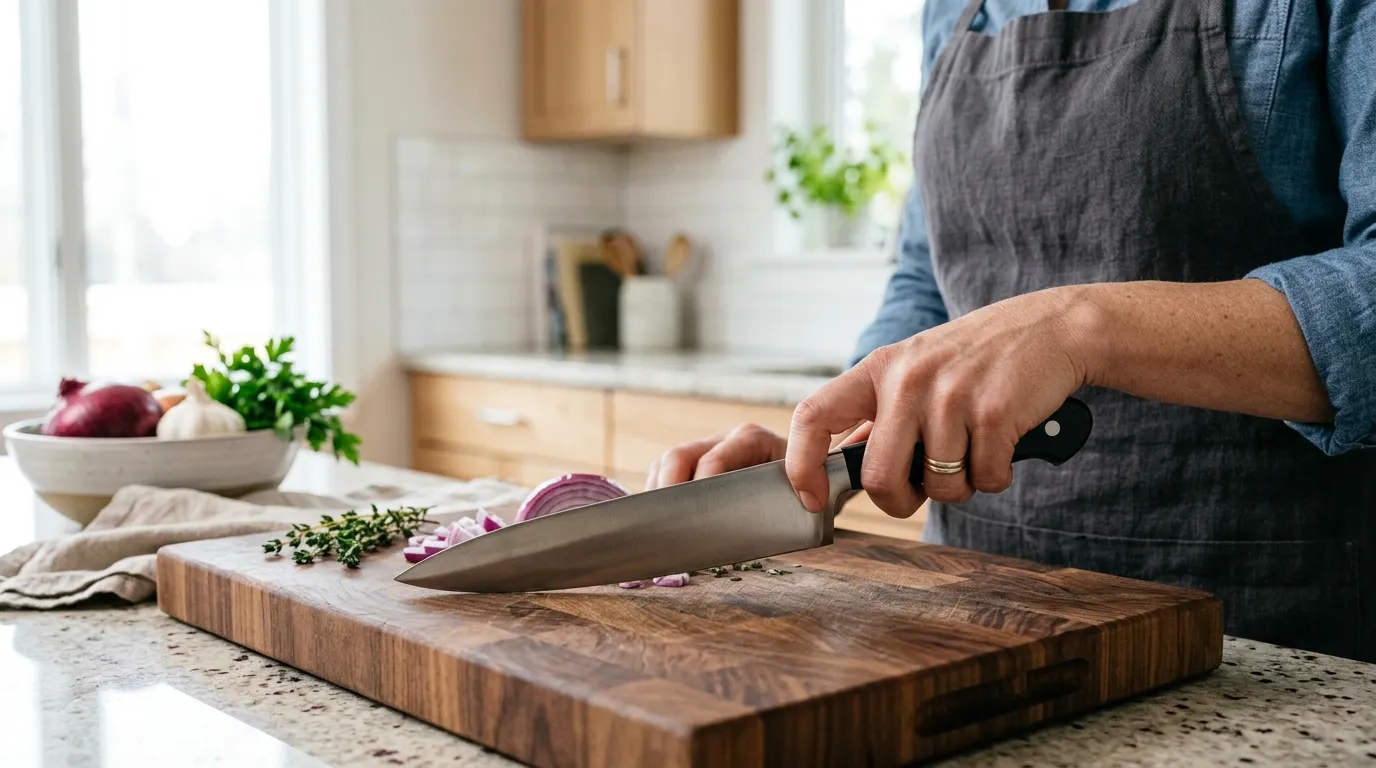
Pinch the blade near the bolster, tuck fingers, keep wrist straight, cut smoothly.
If you want speed and safety, you must learn how to hold knife properly. I’ve taught cooks and home chefs for years, and the right grip changes everything. Your cuts get clean. Your hands stay safe. Stay with me, and you’ll master how to hold knife properly in minutes, then refine it with practice.
Why Grip Matters for Safety and Control
A good grip keeps the knife steady. It stops slips and poor cuts. It reduces strain and helps you work longer with less effort.
When you learn how to hold knife properly, you also protect your fingers. You gain control over thin slices and tough chops. This one skill unlocks fast and calm prep.
The Pinch Grip: Step-by-Step
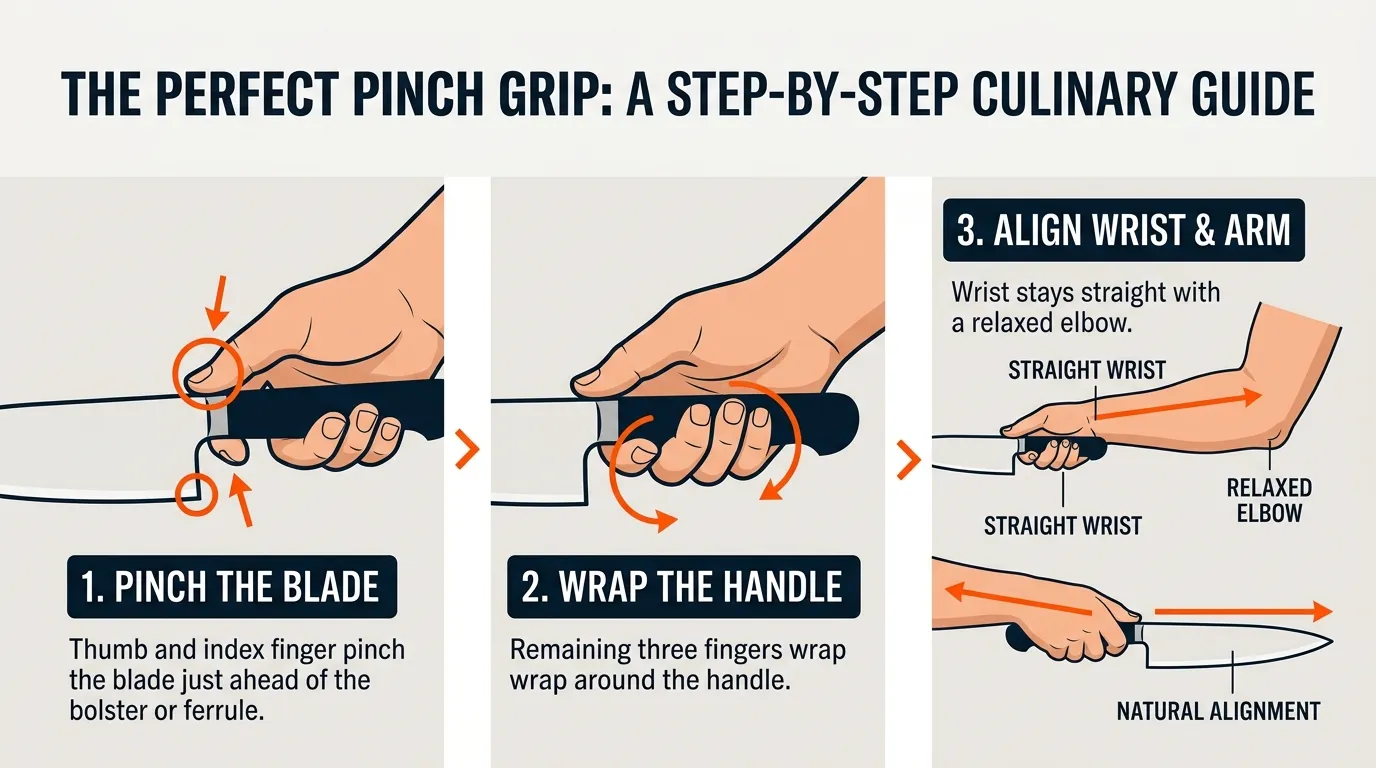
This is the gold standard for most tasks. It gives control near the blade.
- Place your thumb and index finger on the blade, just ahead of the bolster or ferrule.
- Wrap your other three fingers around the handle.
- Keep your wrist straight and your elbow loose.
- Test the hold. The knife should feel like an extension of your hand.
Use the pinch grip when you want both power and precision. It is the base method for how to hold knife properly.
The Handle Grip: When and How to Use It
The handle grip is simple. All fingers stay on the handle. No pinch on the blade.
Use it when you do light tasks. Think fruit, small herbs, or quick snacks. It can also help if your blade has no bolster or feels too tall.
If you plan real prep work, switch back to the pinch grip. It is the best way for how to hold knife properly during long sessions.
Guide Hand (Claw) Technique
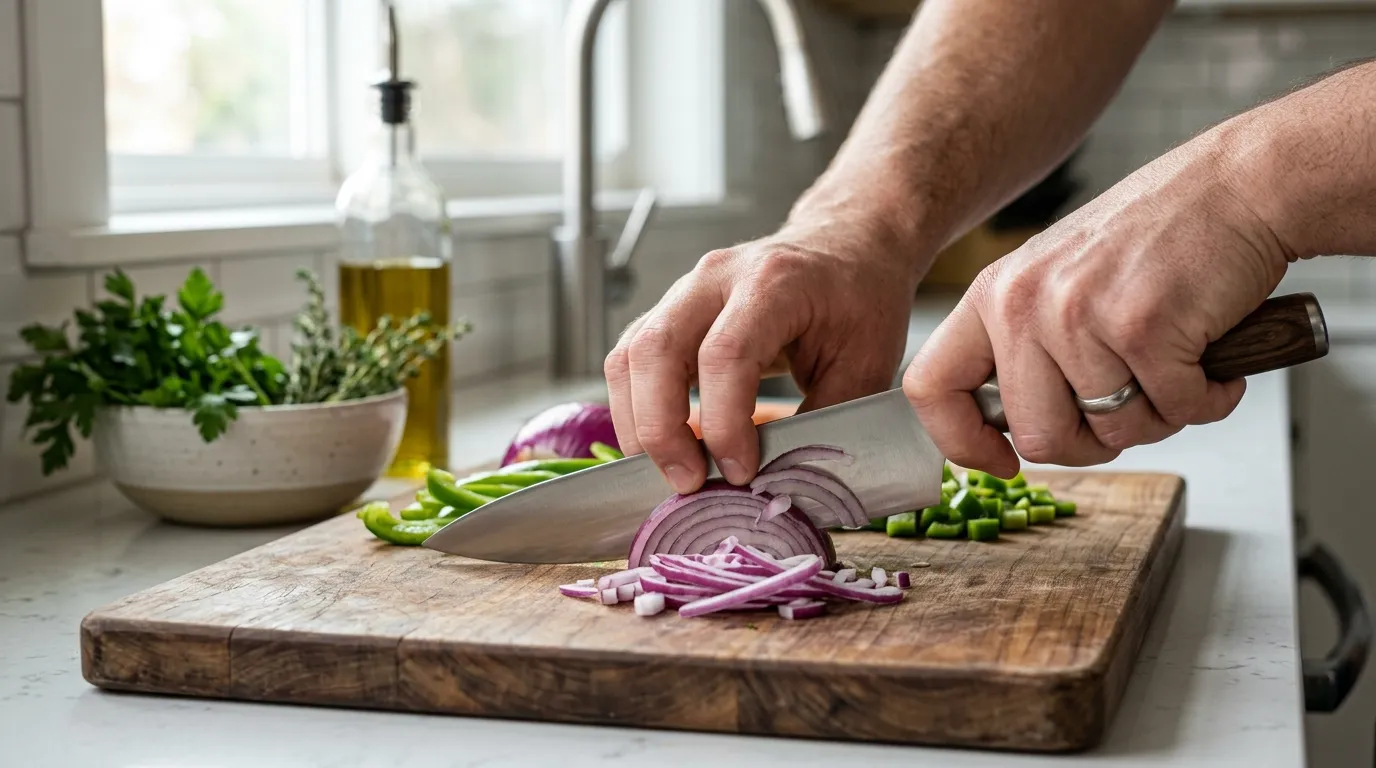
Your guide hand is as important as the knife hand. Shape it like a claw.
- Curl your fingertips under.
- Keep your thumb tucked behind your fingers.
- Rest the flat of your knuckles against the side of the blade.
- Move your claw back as you slice, like a train on a track.
This removes fear. Your knuckles guard your fingertips. Paired with the pinch grip, it completes how to hold knife properly.
Body Position, Cutting Board, and Motion
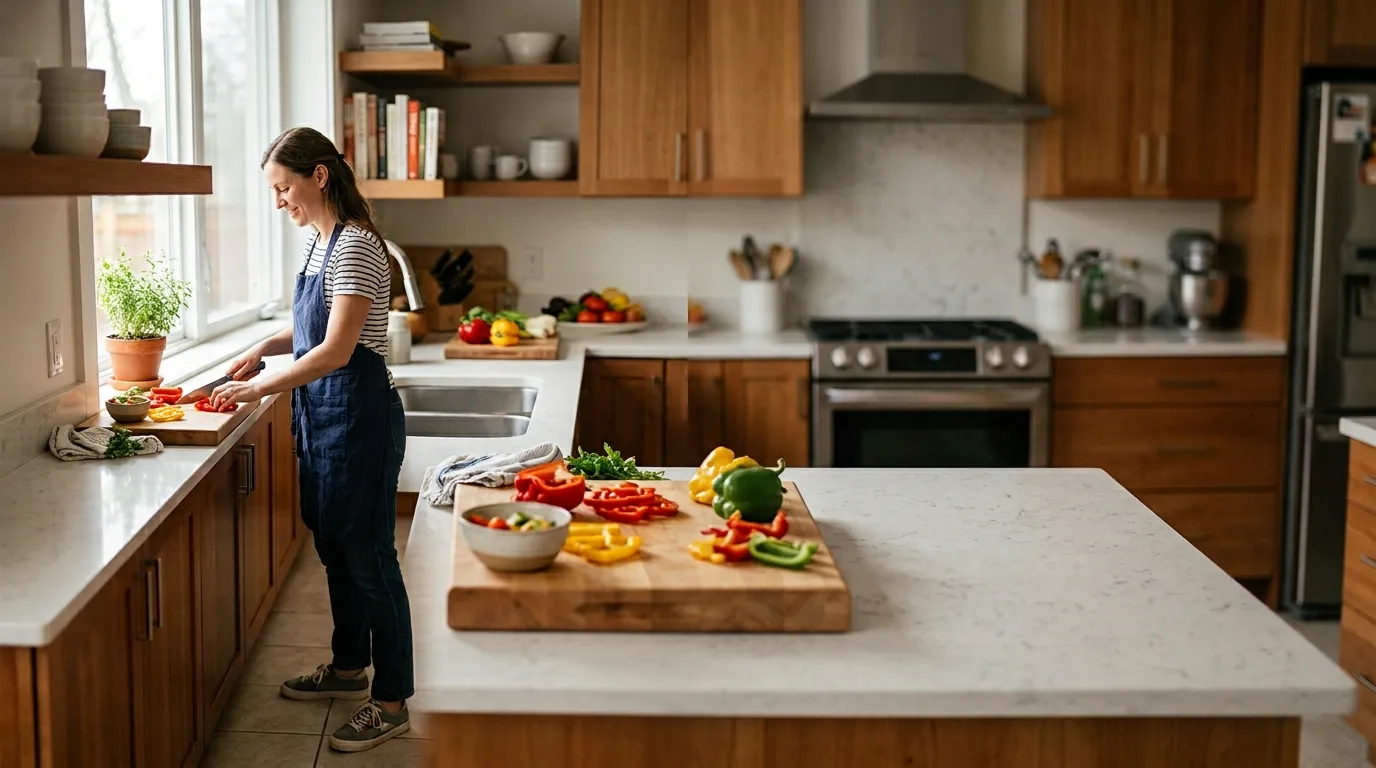
Stand with feet hip-width apart. Put the board at a comfy height. Your forearm should stay near level with the board.
Use a rocking or push-pull motion. Keep the tip or heel in light contact with the board as needed. Let the knife do the work. Do not saw. Smooth strokes prove you know how to hold knife properly.
Knife Types and Matching Grip
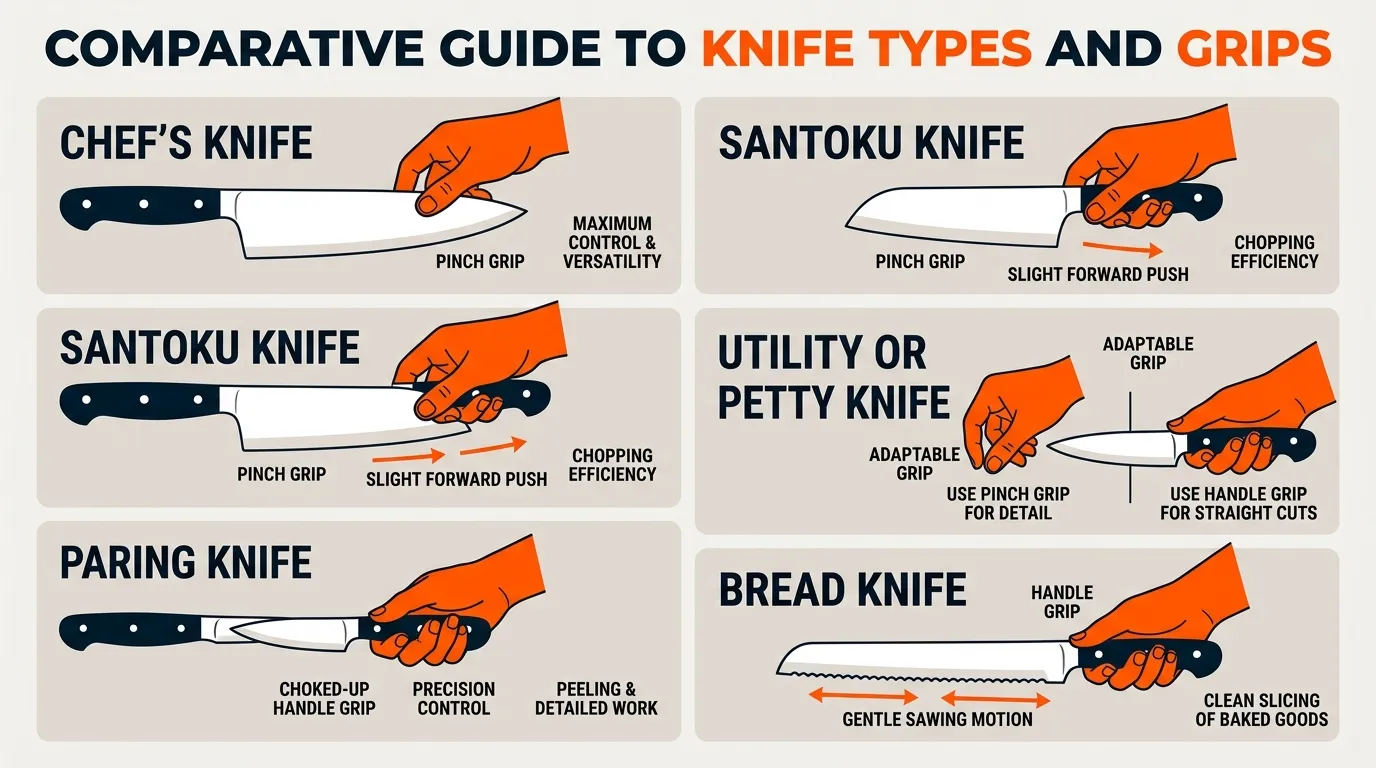
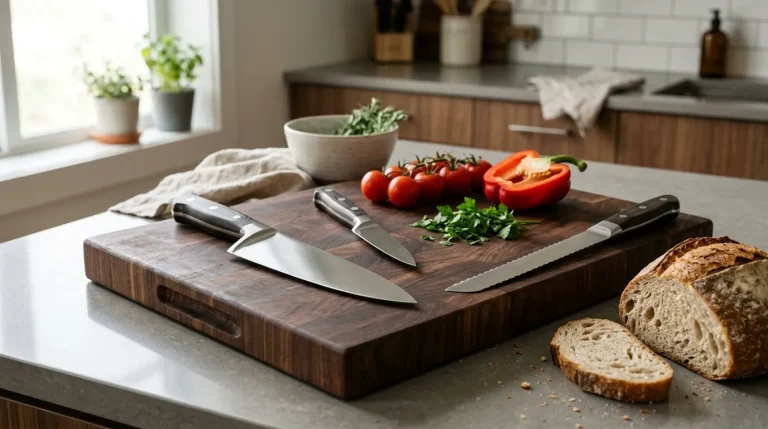
Different knives shine with different tasks. Your grip may shift a bit.
- Chef’s knife: Use the pinch grip for almost all prep.
- Santoku: Pinch grip with a slight forward push for straight cuts.
- Paring knife: Handle grip with a choked-up hold for small work.
- Utility or petty knife: Pinch or handle grip based on task and size.
- Bread knife: Handle grip with a gentle saw for crusts only.
Match the grip to the blade style and task. This is a key part of how to hold knife properly.
Common Mistakes and How to Fix Them
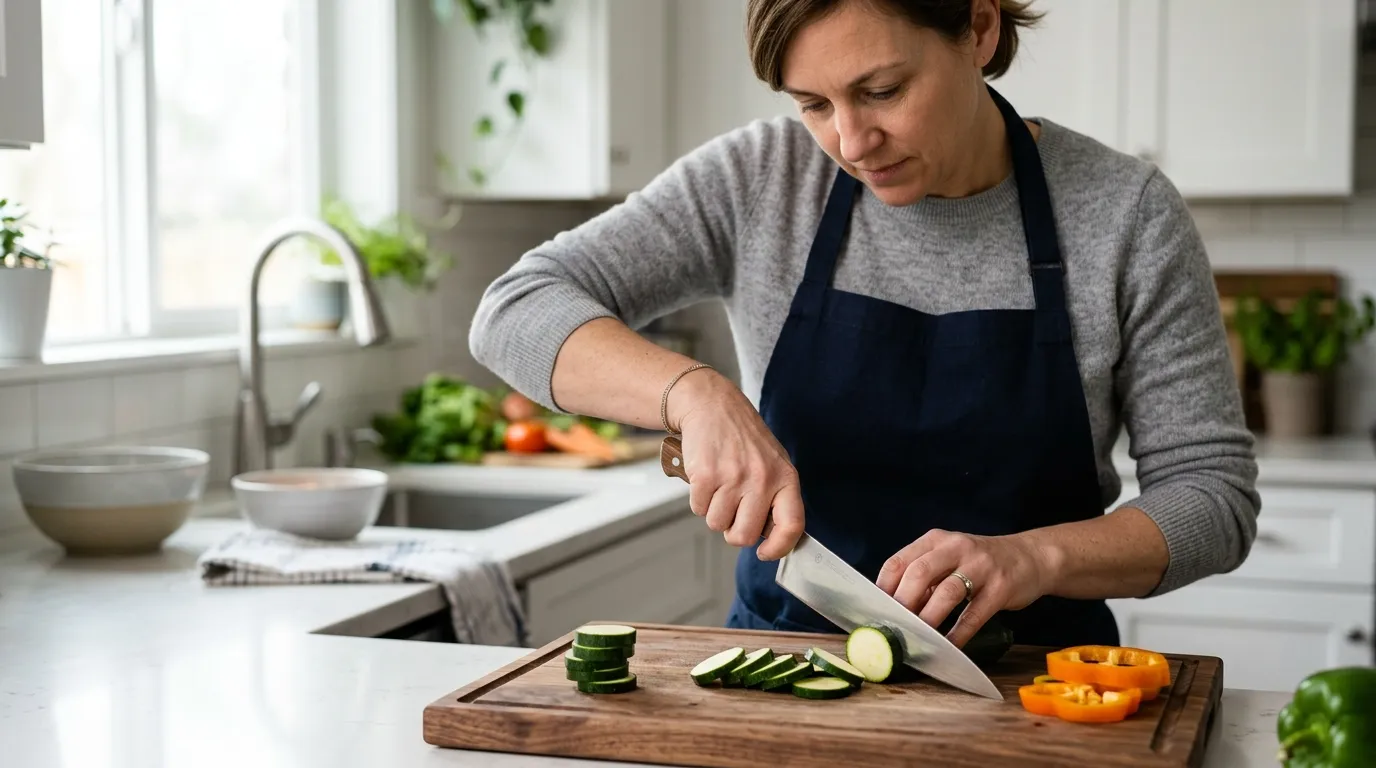
Mistake: Holding the handle only and far from the blade. Fix: Move fingers to the blade and use the pinch.
Mistake: Curved or kinked wrist. Fix: Keep a neutral line from knuckles to forearm.
Mistake: Fingers flat on food. Fix: Use the claw. Let knuckles guide the blade.
Mistake: Death grip. Fix: Hold firm, not tight. Breathe and relax. Ease wins.
Correcting these habits is central to how to hold knife properly.
Safety, Care, and Hygiene Tips
A dull knife is more risky than a sharp one. Dull blades slip and force you to push hard.
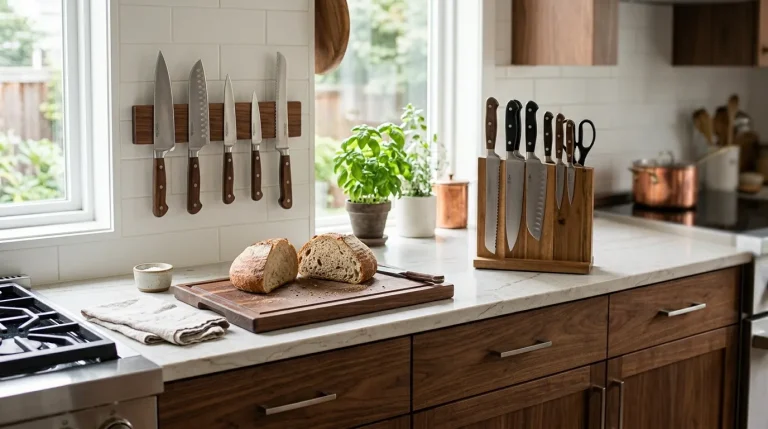
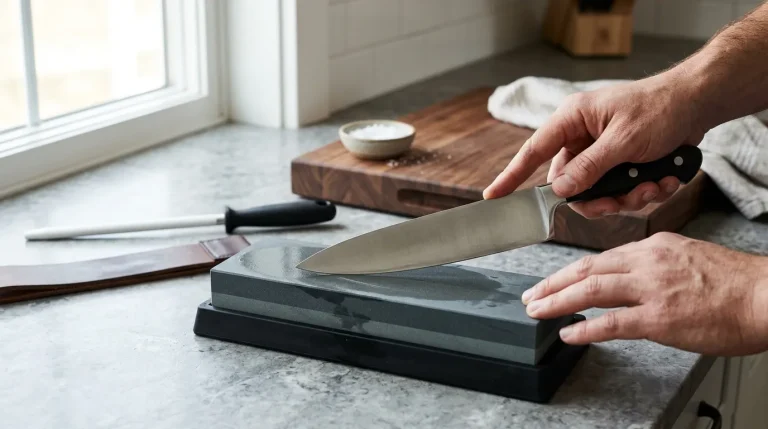
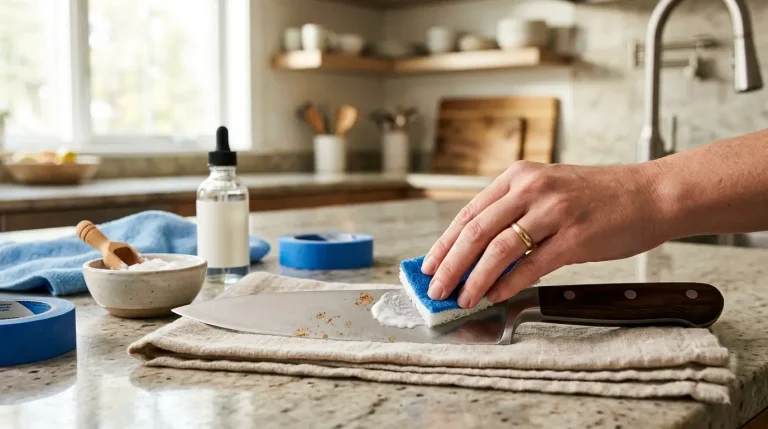
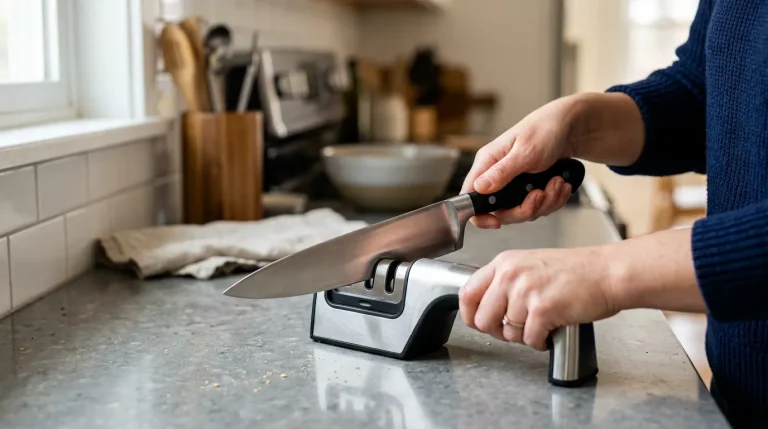
Keep the edge sharp with a honing rod often. Sharpen on a stone as needed. Dry your knife right after washing. Store it on a magnetic strip or in a sheath.
Clean boards and tools cut germs. Food safety groups and culinary programs stress these basics. They pair well with how to hold knife properly.
Practice Drills to Build Muscle Memory
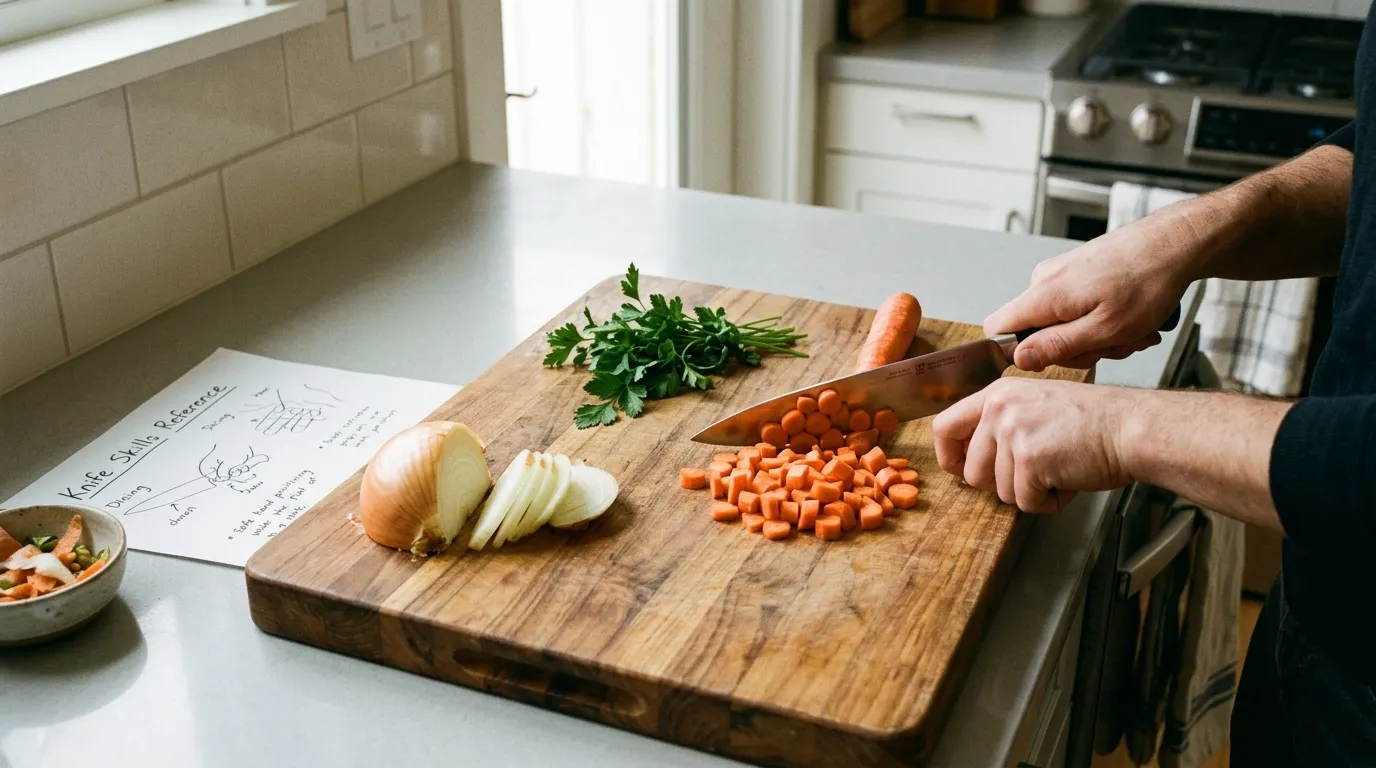
Short, daily drills work best. Ten minutes beats an hour once a week.
- Carrot rails: Cut carrots into long sticks. Then dice. Focus on even cuts.
- Onion halves: Slice north-south, then crosswise. Keep your claw set.
- Paper test: Slice a sheet of paper. Aim for smooth, straight cuts.
- Rocking drill: Keep the tip on the board and rock through a pile of herbs.
Use easy items first. Then try soft tomatoes or ripe peaches. Your feel will improve as you repeat how to hold knife properly.
Troubleshooting: Hand Size, Pain, and Fatigue
Small hands: Choke up more on the blade. Try a thinner handle.
Large hands: Pick a knife with a taller blade and a wider handle. You get room for the pinch grip and the claw.
Pain or tingling is a warning. Check grip, board height, and wrist line. Take breaks. Gentle stretches help. Ergonomic studies link neutral wrists to less strain. Adjusting stance is part of how to hold knife properly.
Frequently Asked Questions of how to hold knife properly
What is the best way to hold a chef’s knife?
Use the pinch grip. Pinch the blade near the bolster, wrap the rest of your fingers on the handle, and keep your wrist straight.
How do I stop cutting my fingers?
Use the claw with your guide hand. Tuck fingertips under and let your knuckles touch the blade side to act as a guard.
Should beginners learn the pinch grip first?
Yes. It gives control and balance from day one, and it teaches how to hold knife properly for almost every cut.
Does a sharp knife change my grip?
No, but it changes your touch. A sharp knife needs less force, so your grip can stay firm yet relaxed.
What board height is best for control?
Aim for a board near elbow height. This keeps your wrist neutral and supports how to hold knife properly without strain.
Conclusion
You now know the pinch grip, the claw, and the right stance. You can keep a straight wrist, use smooth strokes, and match your grip to the task. That is how to hold knife properly with safety and ease.
Practice one drill today for ten minutes. Pick carrots or onions and focus on form. Ready to level up more skills? Subscribe for new lessons, ask a question in the comments, or share your progress with a photo.