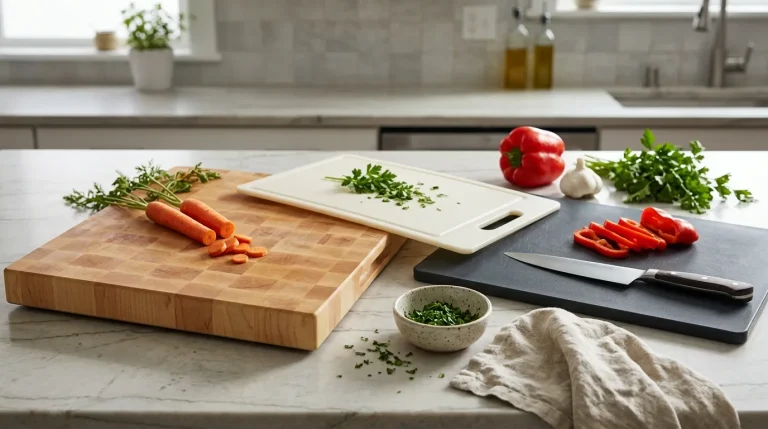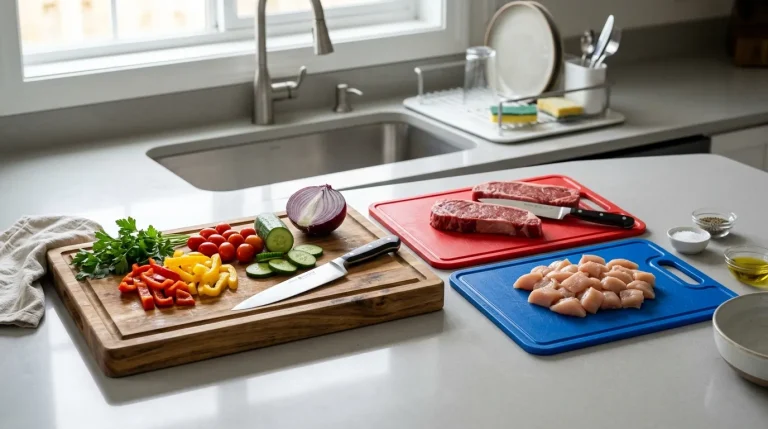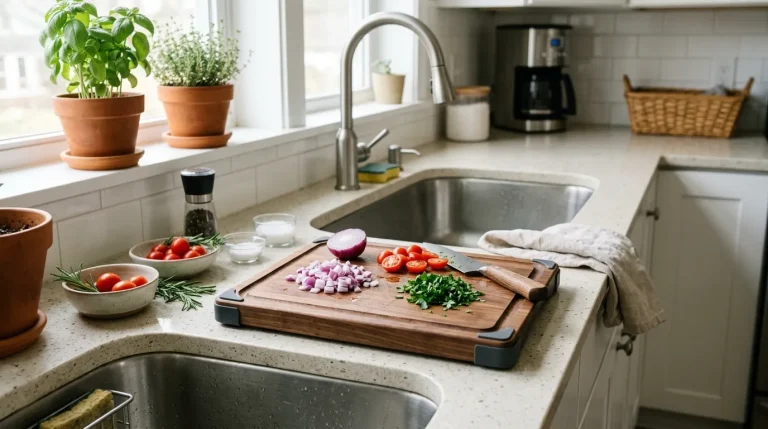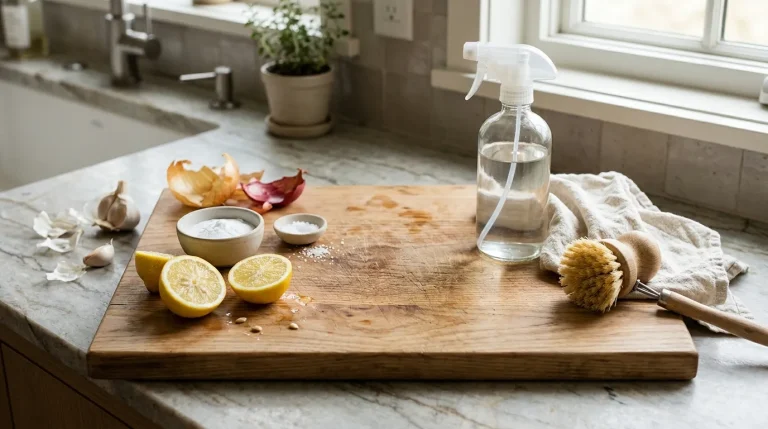
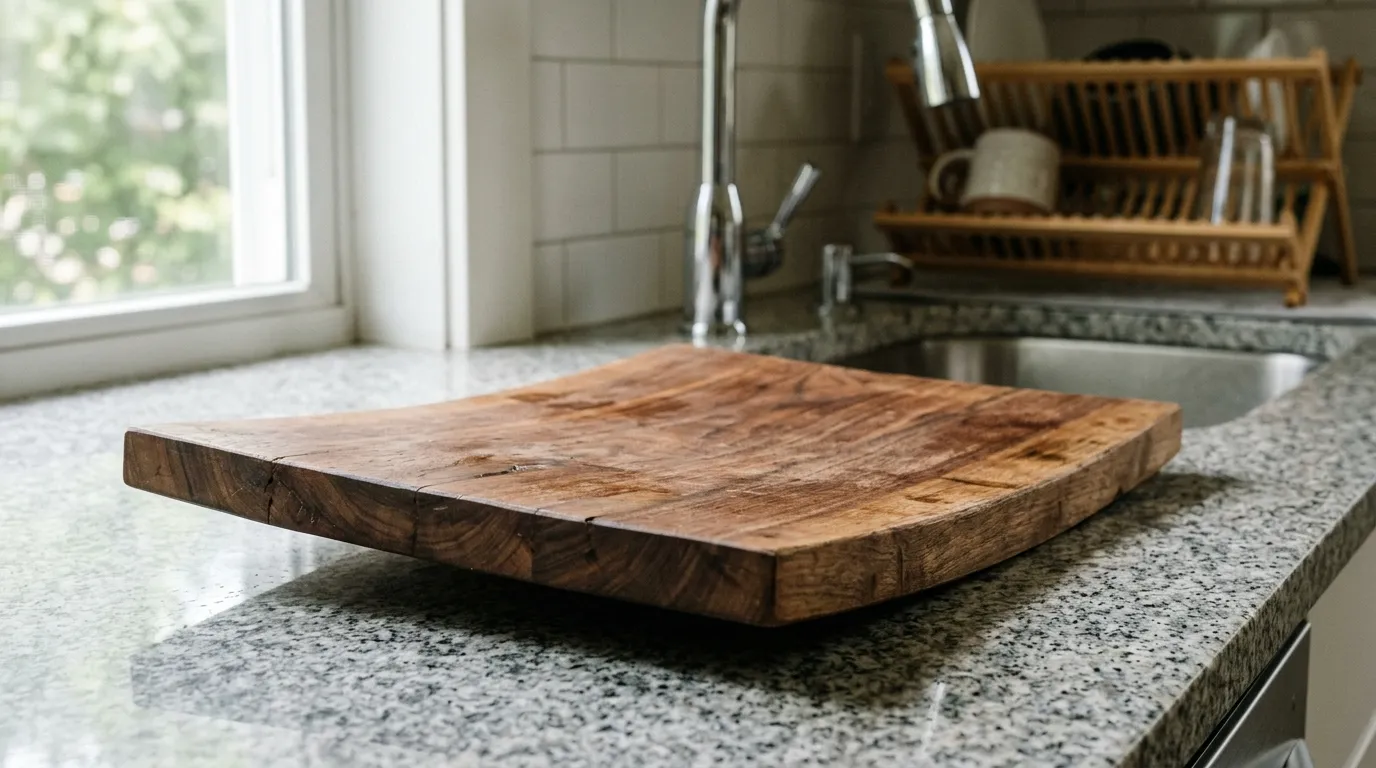
Boards warp when moisture and heat hit unevenly, stressing wood fibers and grain.
If you have asked yourself why cutting board warps, you are not alone. I have cooked and built boards for years, and I have seen the good, the bad, and the bent. In this guide, I explain why cutting board warps, how to prevent it, and how to fix it when it happens. You will get clear steps, simple tips, and real examples you can use today.
What “warping” really means and why it shows up
Warping is when a flat board turns into a curve or a twist. One side moves more than the other. It looks like a smile or a frown. Sometimes one corner lifts. Sometimes the whole board rocks.
Wood and bamboo are hygroscopic. They take in water and let it go. When one face is wetter or hotter, it swells more on that side. When it dries, it shrinks more on that side. This stress causes the bend. That is the root of why cutting board warps.
The science: moisture, heat, and grain direction

Here is the simple truth. Wood cells are like tiny straws. They pull in water. They change size as they get wet or dry. They move more across the grain than along it.
Heat speeds it up. Steam from a sink, hot pans, or a dishwasher makes fast change. Fast change causes stress. This is why cutting board warps when you wash only one face or leave it in sun on one side.
Grain type also matters:
- End grain boards move less on the face and handle knives well.
- Edge grain boards move more but are common and affordable.
- Flat grain boards show more seasonal change.
These facts explain why cutting board warps even when you think you cared for it.
Common causes at home that bend boards

Small habits add up. I learned this the hard way with my first maple board. It cupped in a week. Here are the usual suspects behind why cutting board warps:
- Dishwasher use: Heat, steam, and long cycles soak and bake one side.
- Soaking in a sink: The bottom gets soaked while the top dries in air.
- Drying on one side: Water leaves one face first. The board curls toward the dry side.
- Hot pans on the board: Local heat bakes the spot and warps fibers.
- Sunlight and heater vents: One face gets hot and dry. The other stays cool.
- Oiling only one face: The unoiled side loses moisture faster and shrinks.
- Thin boards: Less mass means faster movement from small changes.
- Poor storage: Leaning a damp board against a wall traps moisture on one side.
If you can control these moments, you can control why cutting board warps in your kitchen.
Material matters: wood vs bamboo vs plastic vs composite
Not all boards behave the same. Each material answers why cutting board warps in its own way.
- Hardwoods (maple, walnut, cherry): Stable if sealed and dried well. Can warp with uneven wetting. Food-safe when finished right.
- Bamboo: Technically grass. Often glued in strips. Can resist cuts but may split or warp if glue lines fail or if it dries fast.
- Plastic (HDPE): Does not warp from water in normal use. Can warp with high dishwasher heat or if stored under weight on one edge.
- Composite (paper or wood fiber, resin): Stable and heat tolerant. Less likely to warp. Hard on knives if very dense.
If you ask why cutting board warps with some woods and not others, the answer lies in density, grain, glue, and finish.
Prevention: simple habits that keep boards flat
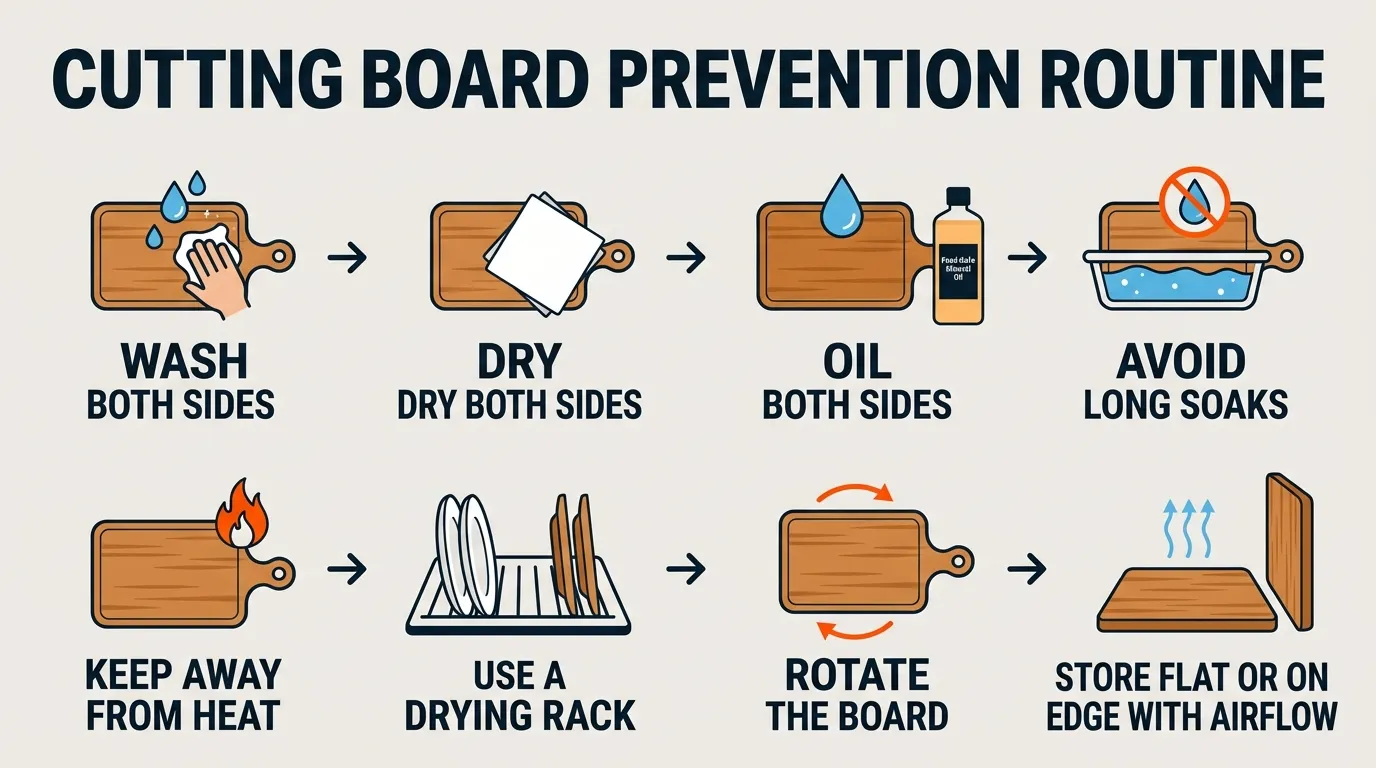
You can avoid why cutting board warps with a few steady habits. These steps work in busy home kitchens and pro spaces.
- Wash both sides: Use warm water and mild soap. Clean both faces each time.
- Dry both sides: Wipe dry. Stand the board on edge so air reaches both faces.
- Oil both sides: Use food-safe mineral oil or board cream. Coat all faces and edges.
- Avoid long soaks: Rinse, scrub, and dry right away.
- Keep away from heat: No dishwashers. No sun. No hot pans on the board.
- Use a drying rack: Let air flow on all sides after each wash.
- Rotate your board: Flip it day to day. This evens out moisture and wear.
- Store flat or on edge: Make sure air can reach both faces.
These small moves stop the chain reaction behind why cutting board warps.
How to fix a warped cutting board
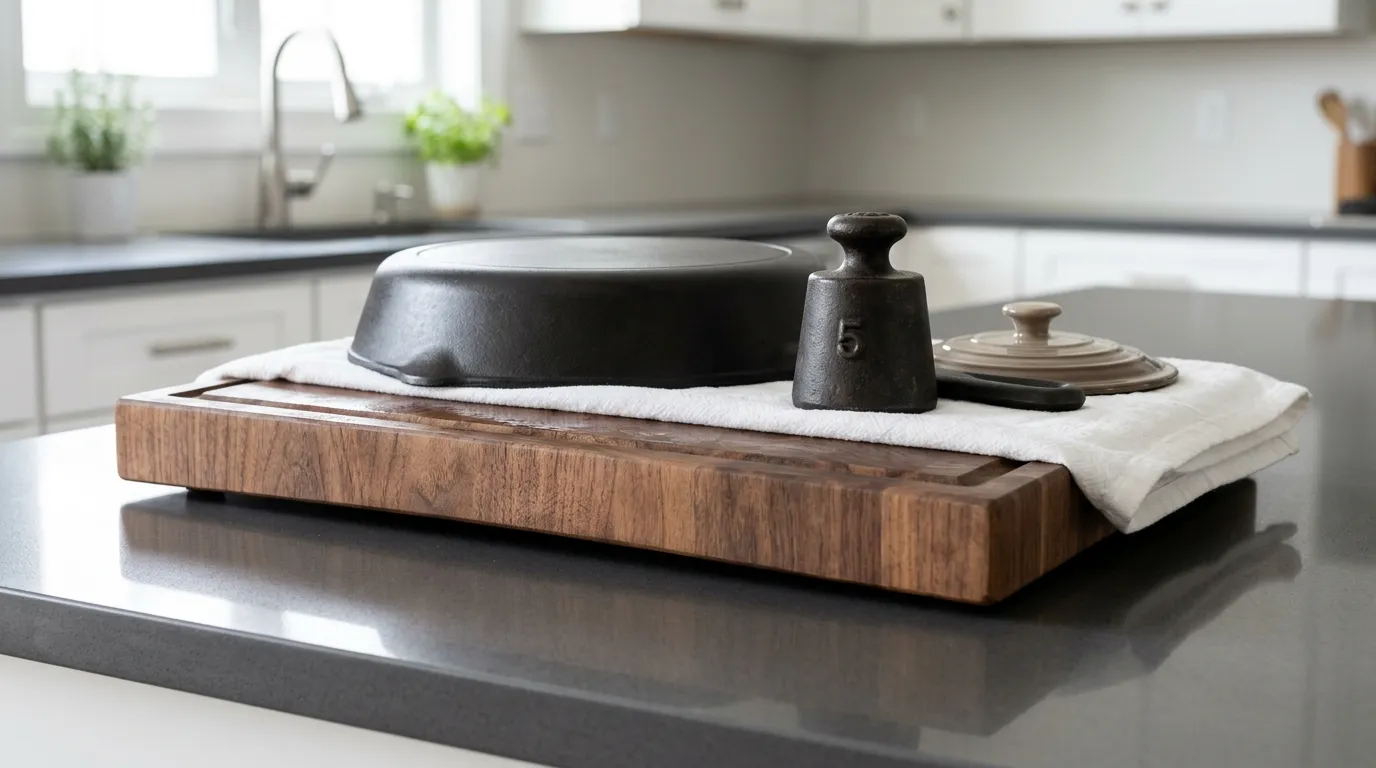
When a board warps, you still have a shot. I have flattened many boards with this calm method. It is safe, cheap, and uses time and weight.
- Map the warp: Set the board on a flat counter. Find the high points.
- Add moisture to the convex side: Lightly mist or wipe the domed side with water. Leave the concave side dry.
- Clamp or weight: Put the damp, domed side down on a flat surface. Place a clean towel over it. Add even weight (books, water jugs).
- Wait and check: After 12 to 24 hours, check the flatness. Repeat if needed.
- Sand if needed: Use fine sandpaper to smooth any lifted grain.
- Seal both sides: Oil and wax both faces and all edges.
This method works because you even out moisture and hold it flat as fibers relax. It answers why cutting board warps and how to reverse it. If the warp is severe or the board is twisted, a planer or belt sander may be needed.
A smart care routine and seasoning schedule
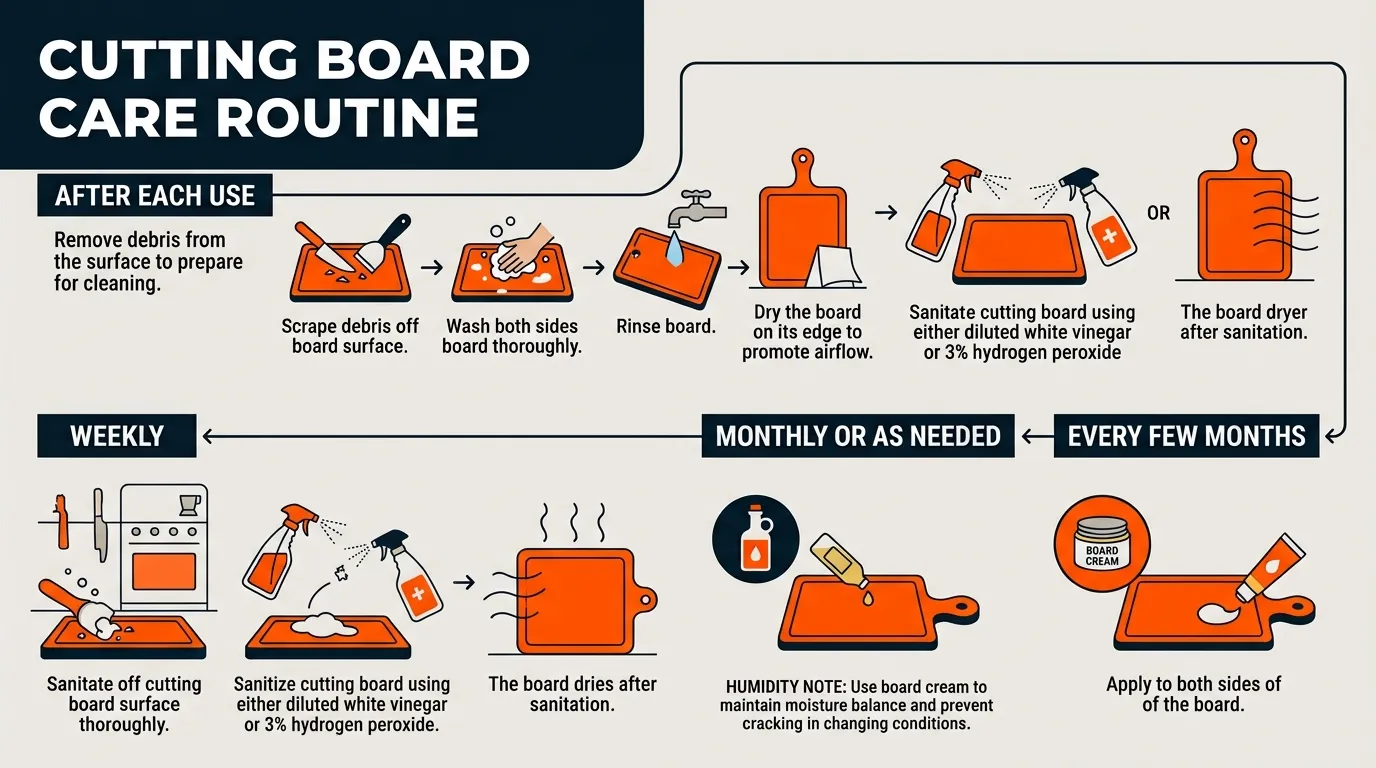
A steady routine keeps you from asking why cutting board warps every few months.
- After each use: Scrape, wash both sides with mild soap, rinse, and dry on edge.
- Weekly: Wipe with diluted white vinegar or 3% hydrogen peroxide to sanitize, then dry.
- Monthly or as needed: Oil both sides. Apply until the wood stops absorbing quickly.
- Every few months: Use a board cream (mineral oil plus beeswax) on both sides to seal in moisture.
- Track humidity: If your home is very dry, oil more often.
Pro tip from my kitchen: Set a reminder to oil on the first weekend of the month. That habit alone cut my warping issues to near zero.
When to repair, refinish, or replace

Sometimes the safest move is to retire a board. Safety and sanitation come first.
- Repair if the warp is mild and the board sits flat with light pressure.
- Refinish if the face is scarred but the core is sound. Sand smooth. Reseal.
- Replace if deep cracks form, glue joints open, or the board rocks more than a few millimeters. Bacteria can hide in those gaps.
Knowing when to let go stops the cycle of why cutting board warps and protects your knives and food.
Frequently Asked Questions of why cutting board warps
How do I stop my new board from warping right away?
Oil both sides before first use, including all edges. Wash and dry both faces every time, then store on edge with airflow.
Does putting a board in the dishwasher cause warping?
Yes. Heat, steam, and long cycles stress one side more than the other. This often leads to cupping and glue failure.
Can I fix a plastic board that warped?
Sometimes. Heat can reshape it, but results vary and may be unsafe. If it stays bent or has deep grooves, replace it.
Why does my board keep warping even after oiling?
You may be oiling only one side or drying on one face. Oil both sides, dry on edge, and avoid heat and sun.
Is bamboo less likely to warp than wood?
Bamboo can be stable, but it depends on glue quality and care. Uneven wetting or heat can still warp bamboo.
Which wood type warps the least?
Hard maple and walnut are both stable when sealed and cared for. End grain construction also resists face movement.
Will adding rubber feet prevent warping?
Feet improve grip but can worsen uneven drying. If you add feet, flip the board often and oil both faces.
Conclusion
Now you know why cutting board warps and what you can do about it. The cause is simple: uneven moisture and heat. The fix is simple too: clean both sides, dry on edge, and seal both faces. When needed, add gentle moisture, press flat, and reseal.
Adopt one habit today. Oil both sides tonight, or change how you dry your board after dinner. You will see a big difference in a week. If this helped, share it with a friend, subscribe for more kitchen care tips, or drop your questions in the comments.