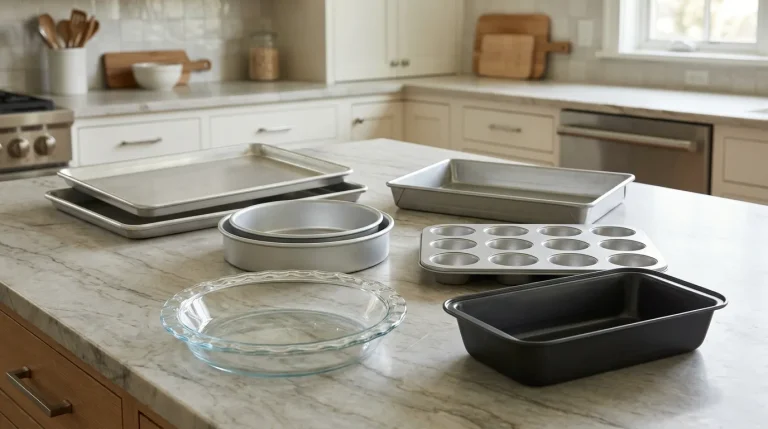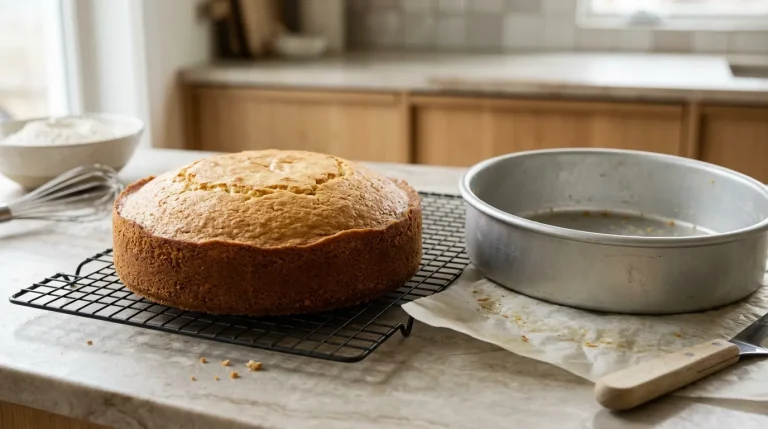
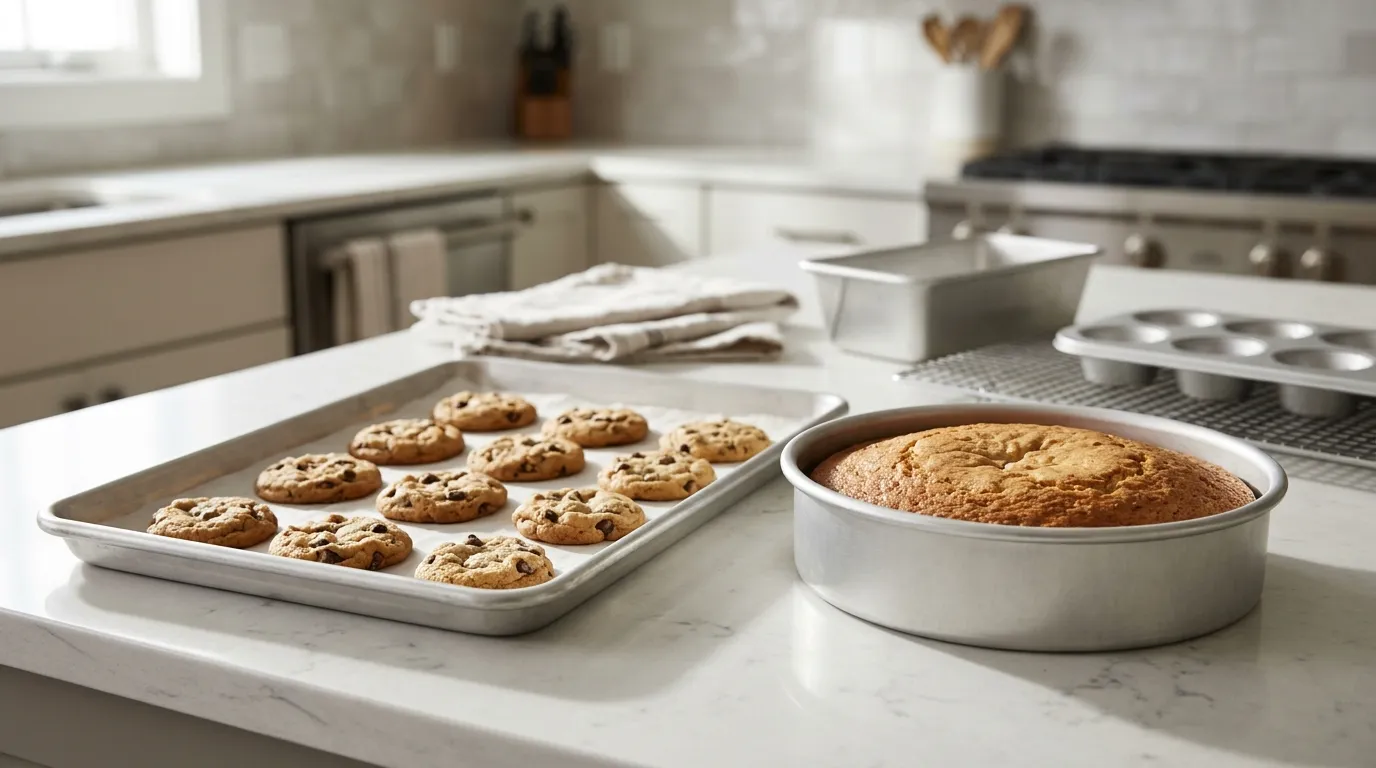
For most home bakers in the United States, heavy-gauge aluminum bakeware is the best choice for even heat distribution. Aluminum heats quickly and spreads heat well, which helps cakes, cookies, breads, and pastries bake with fewer hot spots.
For darker crusts, choose light-colored or reflective aluminum. For better heat retention, use thick aluminized steel or cast iron. Glass and ceramic can work well for casseroles and slow bakes, but they heat more slowly and may need adjusted baking times.
What Makes Bakeware Heat Evenly?
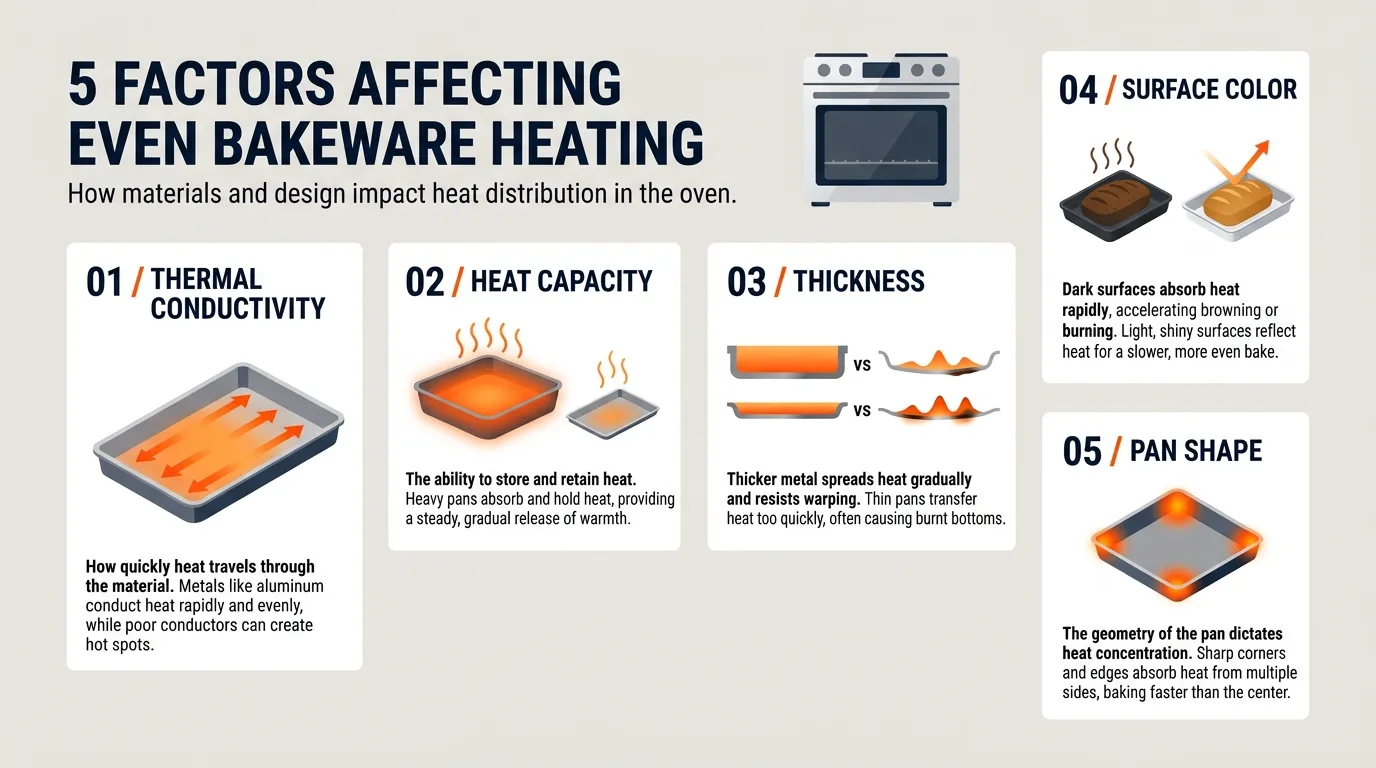
Even heat depends on how fast a pan absorbs heat, how well it spreads that heat, and how much heat it holds. The oven heats the pan first. The pan then transfers heat to the food.
Three material traits matter most:
- Thermal conductivity: How well the material moves heat across its surface.
- Heat capacity: How much heat the pan can store.
- Thickness: How much metal stands between the oven and the food.
- Surface color: How the pan absorbs or reflects radiant heat.
- Pan shape: Corners and thin edges can create hot spots.
Aluminum has high thermal conductivity. It spreads heat across the base and sides faster than many other common bakeware materials. That is why many professional sheet pans, cake pans, and roasting pans use aluminum.
A thin pan may still heat unevenly, even if it uses a good material. A thick, sturdy pan usually resists warping and keeps its shape in a hot oven. That stable shape helps food bake more consistently.
Heat Conductivity vs. Heat Retention
These terms describe different benefits.
A highly conductive pan, such as aluminum, responds quickly to oven heat. This is useful for cookies and cakes that need steady browning.
A heat-retentive pan, such as cast iron, takes longer to heat but stays hot longer. This can help with cornbread, pizza, and deep-dish baking. It can also increase the risk of over-browning if the recipe and pan are not matched.
Best Bakeware Materials for Even Heat
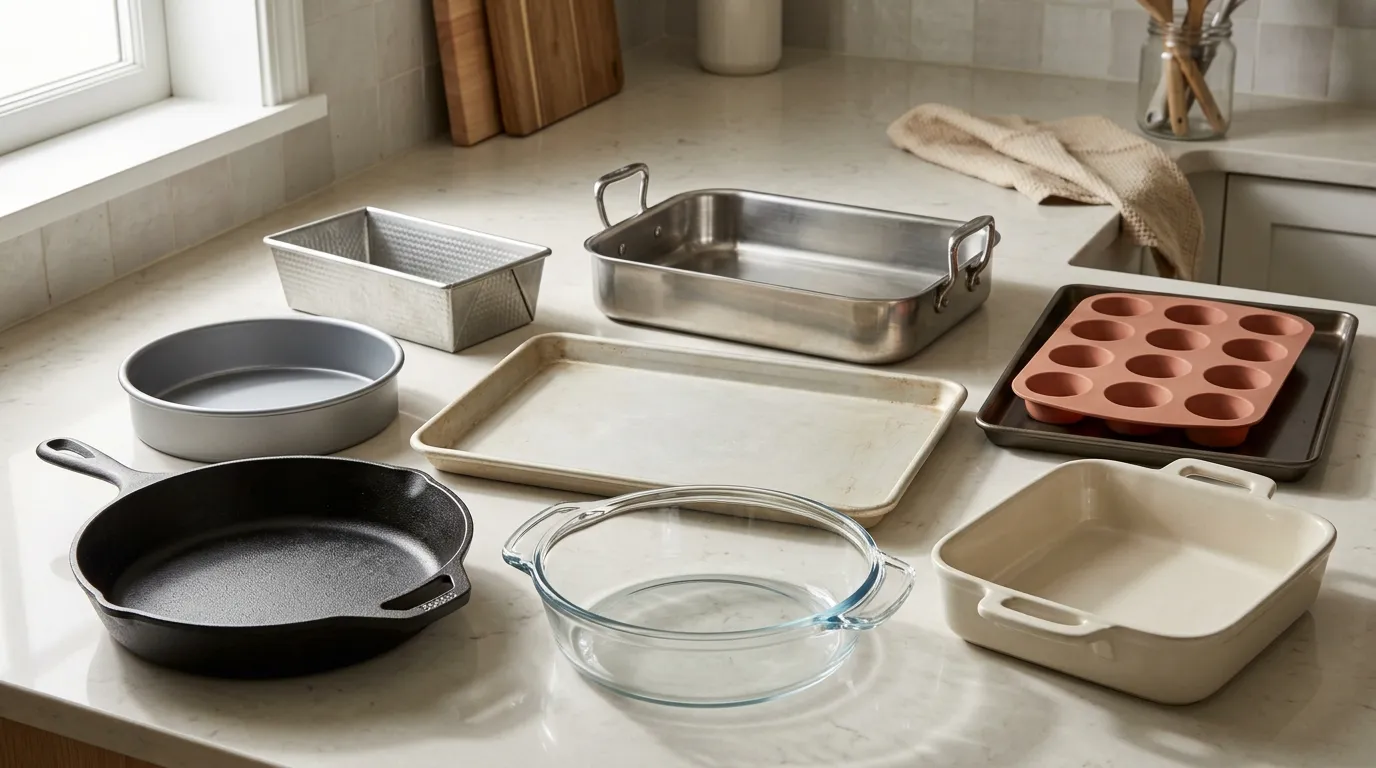
The best material depends on the food you bake most often. Aluminum is the strongest all-purpose choice, while steel, glass, ceramic, and silicone each have a more specific role.
| Bakeware material | Heat spread | Heat retention | Best uses | Main limitation |
|---|---|---|---|---|
| Heavy-gauge aluminum | Very good | Moderate | Cookies, cakes, sheet-pan meals | Can react with acidic foods if uncoated |
| Anodized aluminum | Very good | Moderate | Cakes, bars, roasted foods | Usually costs more |
| Aluminized steel | Good | Good | Bread, cakes, roasting | May brown differently from aluminum |
| Stainless steel | Fair | Moderate | Roasting, general cooking | Often heats less evenly |
| Cast iron | Fair once heated | Excellent | Cornbread, pizza, skillet bakes | Slow to heat and very heavy |
| Glass | Slow and steady | Good | Casseroles, cobblers, baked pasta | Can brown edges more slowly |
| Ceramic or stoneware | Slow | Excellent | Casseroles, gratins, bread | Needs time to preheat |
| Silicone | Poor by itself | Low | Muffins, candy, flexible molds | Needs a firm support pan |
Heavy-Gauge Aluminum: Best Overall
Heavy-gauge aluminum is the best starting point for most American home kitchens. It heats quickly and spreads heat across the pan better than thin steel or many nonmetal materials.
Use it for:
- Layer cakes
- Sheet cakes
- Cookies
- Brownies
- Biscuits
- Roasted vegetables
- Sheet-pan dinners
Choose a pan that feels rigid rather than flimsy. A sturdy rim also helps prevent bending when the pan is loaded with batter or food.
Plain aluminum can react with strongly acidic foods, such as tomatoes, citrus, and vinegar-heavy mixtures. For those foods, use anodized aluminum, stainless steel, glass, or a lined pan.
Anodized Aluminum: A Durable Aluminum Option
Anodized aluminum has a treated surface that is harder and less reactive than plain aluminum. It still keeps much of aluminum’s useful heat-spreading ability.
It is a strong option for:
- Cake pans
- Brownie pans
- Roasting pans
- Acidic recipes
- Frequent home baking
Anodized surfaces can be dark. A dark surface may absorb more heat than a bright one, which can make edges brown sooner. Watch the first batch and adjust the oven setting or baking time only if needed.
Aluminized Steel: Good for Structure and Heat Stability
Aluminized steel usually combines a steel body with an aluminum coating. Steel gives the pan strength, while aluminum improves heat transfer at the surface.
This material works well for:
- Loaf pans
- Bundt pans
- Bread pans
- Roasting pans
- Commercial-style sheet pans
Aluminized steel often feels more rigid than aluminum. It may be a better choice if you value durability and shape retention. Its baking results can differ from an all-aluminum pan, especially when the surface is dark or coated.
Stainless Steel: Durable but Not the Best Heat Spreader
Stainless steel resists rust and staining, but it does not conduct heat as well as aluminum or copper. A stainless-steel pan with an aluminum or copper core can perform better than a single-layer stainless pan.
Look for a thick, bonded base if you want stainless steel for baking. A thin stainless pan may create pale centers and darker edges, especially in cookies or cakes.
Cast Iron: Excellent Heat Retention
Cast iron is not the fastest material to heat, but it stores a great deal of heat once hot. It works especially well for foods that benefit from a hot, stable surface.
Good uses include:
- Cornbread
- Skillet cookies
- Deep-dish pizza
- Fruit cobblers
- Pan breads
Preheat cast iron when the recipe allows it. Avoid moving cold batter into a very hot pan unless the recipe calls for that step. A sudden temperature change can affect the food and, in some cases, stress the cookware.
Glass, Ceramic, and Stoneware: Steady but Slow
Glass and ceramic bakeware heat more slowly than metal. They also hold heat longer after the pan leaves the oven.
These materials are useful for:
- Lasagna
- Casseroles
- Cobblers
- Bread pudding
- Baked pasta
- Fruit crisps
They are less ideal when you need crisp cookie bottoms or fast browning. Follow the recipe’s instructions for glass or ceramic. If a recipe gives only a metal-pan instruction, the result may need a lower temperature or a longer bake, depending on the recipe and pan.
Never place hot glass or ceramic bakeware on a wet, cold, or very hard surface. Thermal shock can cause cracking or breakage.
Silicone: Convenient, but Not a Stand-Alone Heat Solution
Silicone molds are flexible and easy to release. However, silicone itself does not spread oven heat as well as metal.
For more even results, place a silicone mold on a rigid metal sheet pan. The metal pan supports the mold and adds a better heat path.
Silicone is useful for:
- Muffins
- Small cakes
- Candy
- Flexible molds
- Chilled desserts
Expect less browning than with metal. If a golden crust matters, metal is usually the better choice.
The Best Bakeware by Type of Food
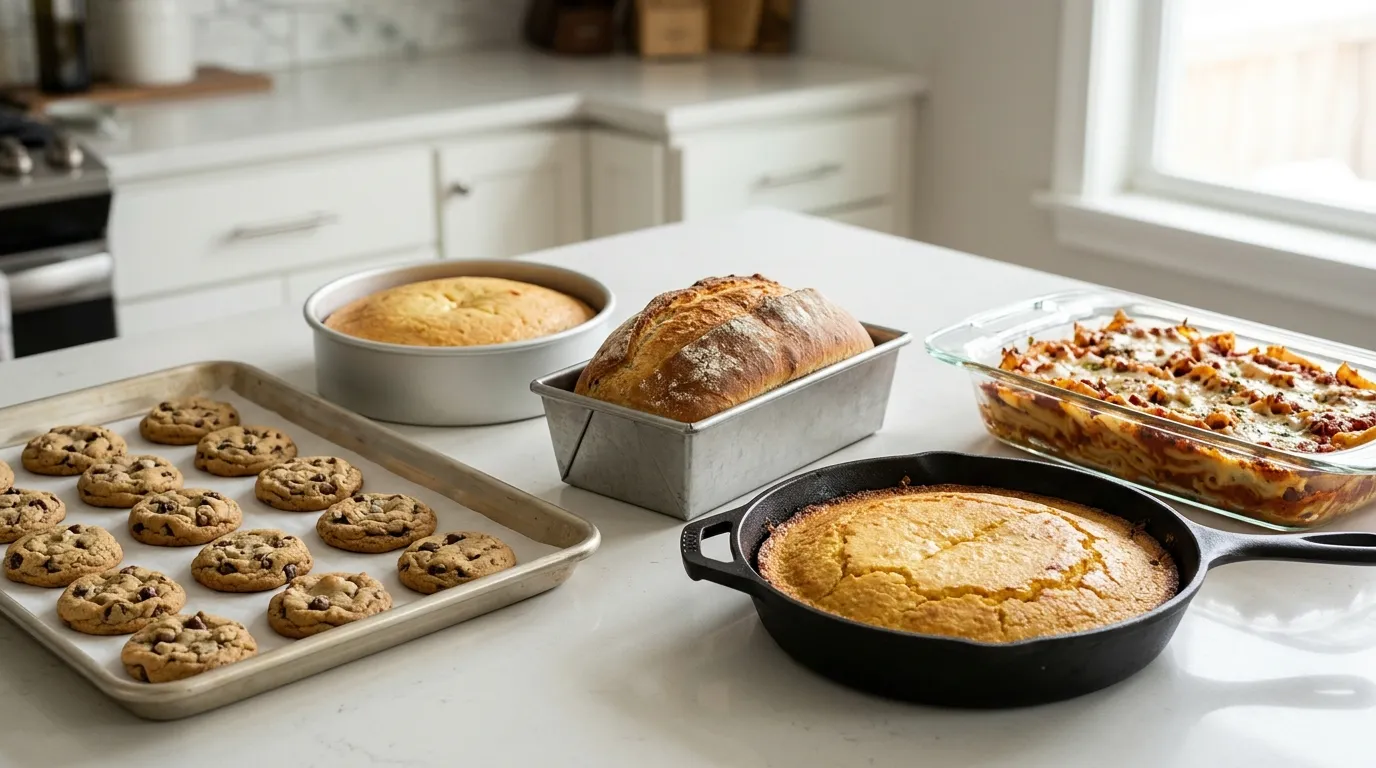
Different foods need different heat behavior. A cookie sheet that works well for crisp cookies may not be the best pan for a delicate sponge cake.
Best Pan for Cookies
Choose a light-colored, heavy-gauge aluminum sheet pan. It spreads heat well and reduces the chance of dark bottoms.
A rimless or low-rimmed sheet allows air to move around the cookies. A tall rim may slightly change airflow and make the pan harder to slide in and out.
Avoid very dark pans if your cookies often burn on the bottom before the centers finish. Parchment can also reduce direct contact between the dough and the hot pan.
Best Pan for Cakes
Choose light aluminum or anodized aluminum cake pans with straight sides and a solid base.
For even layers:
- Use pans with the same diameter and depth.
- Weigh or measure batter into each pan.
- Leave space between pans in the oven.
- Rotate only if the recipe and oven require it.
- Test the center with a toothpick or cake tester.
Dark nonstick cake pans may brown the edges faster. They can still work well, but watch the first bake closely.
Best Pan for Brownies and Bars
A heavy aluminum square pan usually gives a good balance of edge browning and center softness. A dark pan may produce firmer, darker edges.
Pan material is only one variable. Batter depth matters, too. A deeper brownie layer takes longer to set in the center, even in excellent bakeware.
Best Pan for Bread
Use a sturdy aluminized steel or aluminum loaf pan. The pan should hold its shape and support the dough as it rises.
For sandwich bread, a lighter pan may produce a softer, paler crust. A darker pan may create a deeper crust. If the bottom browns too fast, place the loaf on a higher oven rack or use a lighter pan.
Best Pan for Casseroles
Glass, ceramic, and stoneware work well for casseroles because they hold heat and move from oven to table. Metal is often better when you want fast browning or crisp edges.
Do not move cold glass or ceramic directly into a hot oven unless the manufacturer says it is safe. Check the cookware’s care and temperature instructions.
Best Pan for Roasting
Choose a sturdy aluminum, aluminized steel, or stainless-steel roasting pan. Thick construction helps the pan stay flat under heavy food.
For vegetables, a large aluminum sheet pan is often useful because it gives food room to spread out. Crowding traps steam and can prevent browning, no matter which pan you use.
How Pan Color Affects Baking
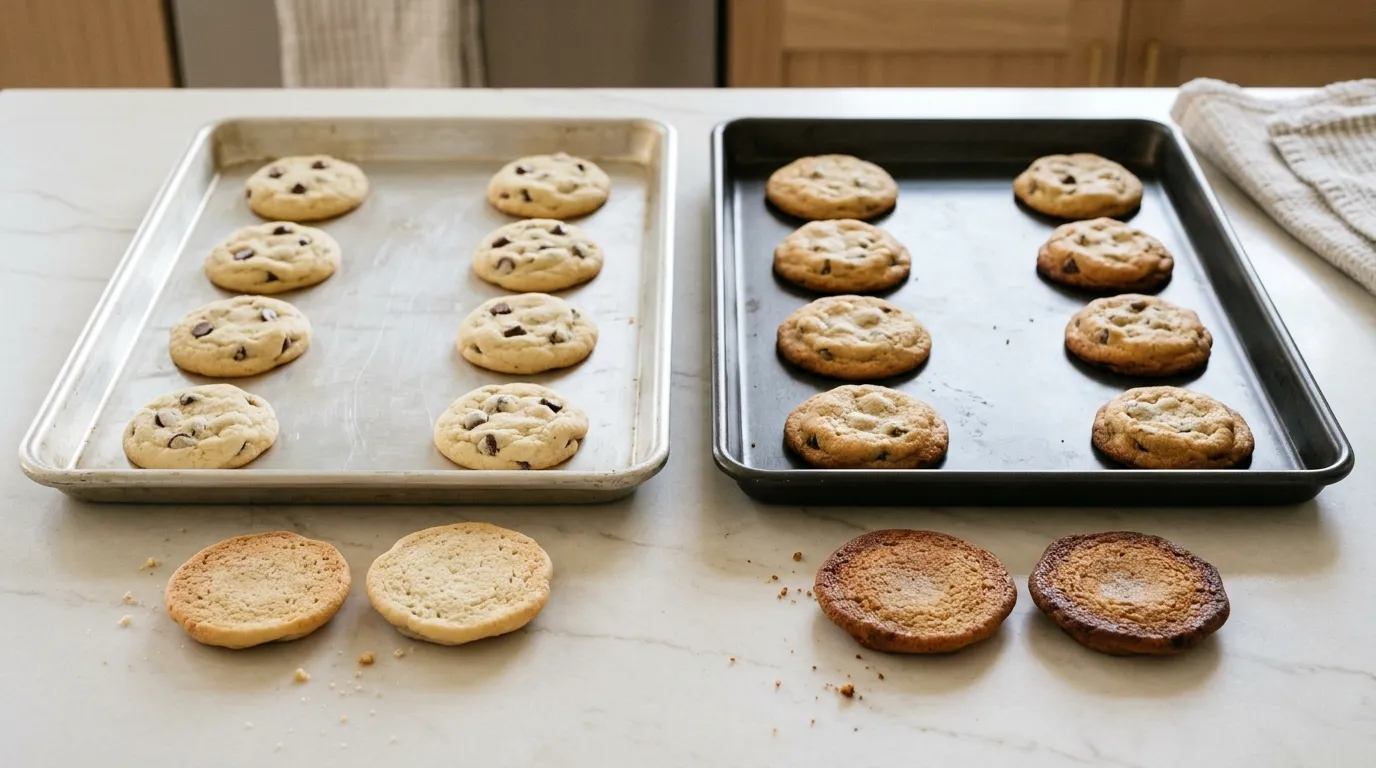
Pan color can change browning. Dark surfaces generally absorb more radiant heat than light or reflective surfaces. This may make the sides and bottoms of baked goods brown faster.
Use these general guidelines:
- Choose light aluminum for pale, tender crusts.
- Choose a darker pan when you want faster browning.
- Watch dark nonstick pans closely during the first bake.
- Do not change the oven temperature automatically without checking the recipe and pan instructions.
- Use parchment to reduce direct browning on the pan surface.
A dark pan is not automatically bad. It may be useful for roasted vegetables, pizza, or foods where strong browning is desirable. The key is matching surface color to the result you want.
How Thickness and Pan Shape Change Results
A thick pan usually heats more slowly than a very thin pan, but it distributes heat with fewer sharp temperature swings. It is also less likely to warp.
Pan shape can matter just as much as material.
Straight-Sided Pans
Straight sides support even cake layers and make clean stacking easier. They are useful for layer cakes, brownies, and bars.
Dark Corners
Square and rectangular pans often brown food more at the corners. The corners receive heat from two sides at once. This is normal, but it can be stronger in thin or dark pans.
Perforated Pans
Perforated pans allow more air and heat to reach the food. They are useful for pizza and some breads, but they may not suit liquid batter.
Glass and Ceramic Depth
Deep glass or ceramic dishes hold more batter and retain heat longer. A deep dish may need more time for the center to cook. Use a food thermometer when a recipe includes meat, eggs, or other safety-sensitive ingredients.
How to Choose the Right Bakeware
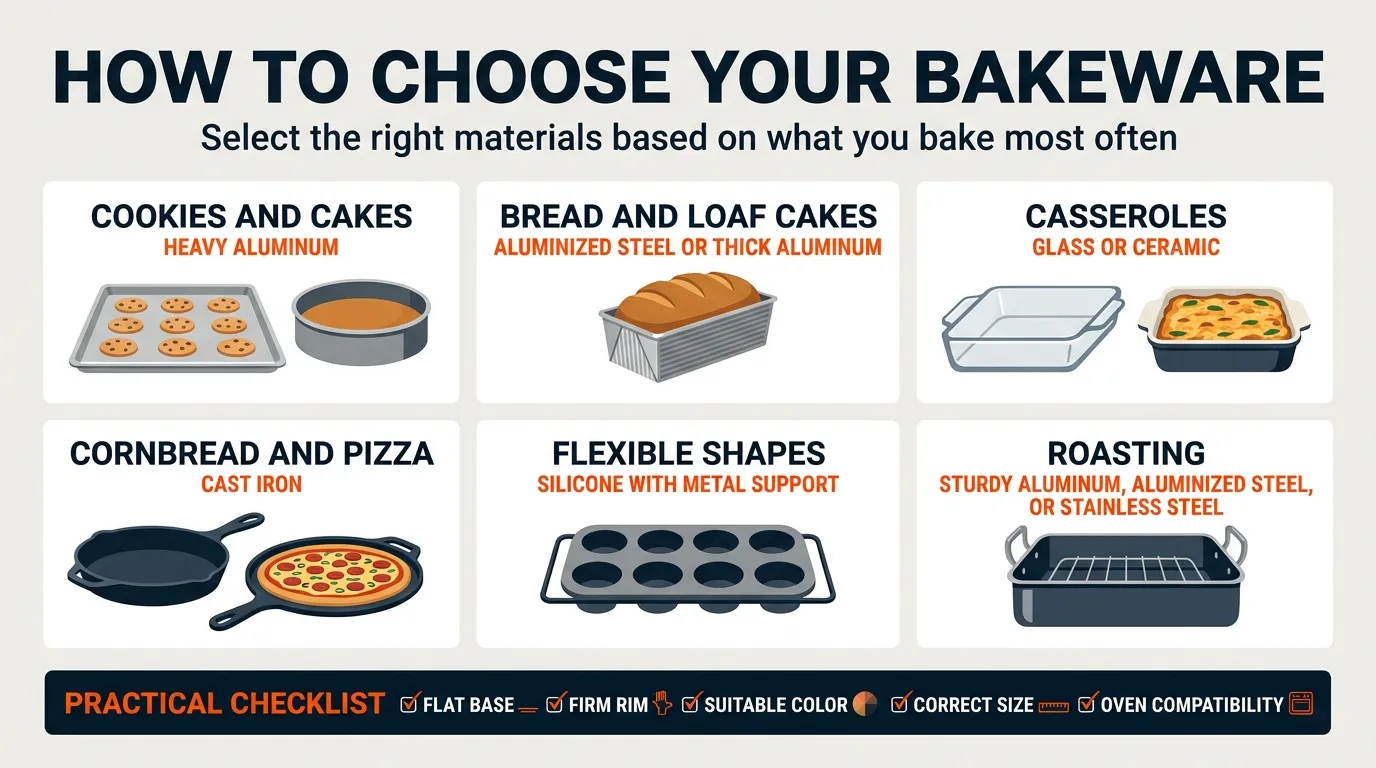
Use this short process before buying a new pan.
1. Start With Your Main Baking Goal
Choose the food you make most often.
- Cookies and cakes: heavy aluminum
- Bread and loaf cakes: aluminized steel or thick aluminum
- Casseroles: glass or ceramic
- Cornbread and pizza: cast iron
- Flexible shapes: silicone with a metal support pan
2. Check the Pan’s Construction
Look for:
- A flat base
- A firm rim
- Even walls
- No visible warping
- A finish that matches your browning needs
- A size that matches your recipes
Avoid pans that twist easily in your hands. A flexible pan may buckle when hot or when filled with batter.
3. Match the Pan to Your Oven
Most U.S. home ovens use Fahrenheit settings and have limited rack space. Measure the oven rack and the storage area before buying oversized bakeware.
Leave space around the pan when possible. Crowding several pans together can block airflow and create uneven baking.
4. Consider Care and Compatibility
Check whether the pan is:
- Dishwasher safe
- Safe for metal utensils
- Safe under a broiler
- Safe for acidic foods
- Compatible with parchment or silicone liners
- Approved for the temperature you plan to use
Do not assume that a nonstick coating is safe under a broiler. Follow the product’s care instructions.
Bakeware Buying Guide: What to Look For
The best bakeware does not need the highest price. It needs the right material, size, thickness, and finish for your recipes.
Choose Aluminum When Even Baking Is the Priority
Aluminum is the strongest general recommendation for home bakers who want even heat distribution. It is especially useful for cookies, cakes, and pastries.
Choose Aluminized Steel When You Want Strength
Aluminized steel is a good fit when the pan will hold heavy loaves, large roasts, or frequent batches. Its rigid structure can support consistent results over time.
Choose Glass or Ceramic for Table-to-Oven Cooking
These materials are practical for casseroles and baked dishes that go from the oven to the table. They are not the first choice for quick browning or crisp cookies.
Choose Cast Iron for High Heat and Retention
Cast iron suits recipes that benefit from a hot, steady surface. Its weight and slow heating make it less convenient for delicate cakes.
Use Silicone for Release and Shape
Silicone helps with release and unusual shapes. Place it on a metal baking sheet for support and better heat transfer.
Common Mistakes That Cause Uneven Baking
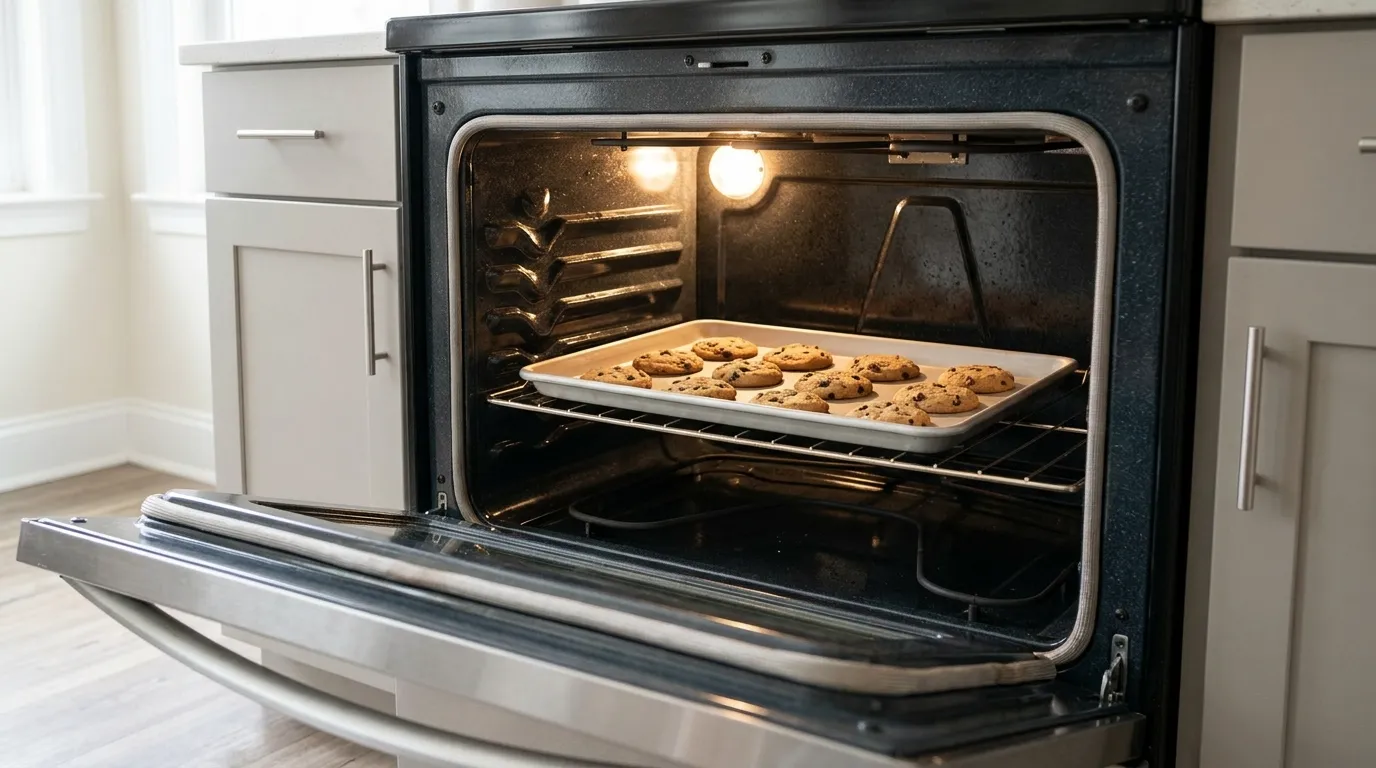
Even high-quality bakeware cannot fix every baking problem. These mistakes often create uneven results:
- Using a pan that is too small
- Overfilling the pan
- Placing pans too close together
- Setting the pan against an oven wall
- Using a warped sheet pan
- Opening the oven door too often
- Ignoring the difference between light and dark pans
- Putting cold glass into a hot oven
- Using silicone without a rigid support
- Replacing a metal pan with glass without checking the recipe
An oven can also have hot spots. Test the oven with a separate oven thermometer if food repeatedly browns on one side. A pan may be working correctly while the oven distributes heat unevenly.
What to Do if One Side Bakes Faster
First, check the rack position and pan placement. Keep the pan centered and leave space around it.
If the recipe allows, rotate the pan near the midpoint of baking. Do not rotate delicate cakes, soufflés, custards, or rising breads too early. They may collapse or lose structure.
If the problem continues, try a lighter, thicker pan and confirm that the oven temperature is accurate.
Maintenance and Safety Tips
Good care helps bakeware keep its shape and surface.
- Let hot pans cool before washing unless the manufacturer permits rapid cooling.
- Avoid sudden temperature changes with glass and ceramic.
- Do not use scratched nonstick pans if the coating is flaking or damaged.
- Dry plain steel thoroughly to reduce rust.
- Use wooden, silicone, or plastic tools on coated surfaces.
- Follow the maker’s maximum temperature.
- Replace pans that warp, crack, or lose a stable base.
- Use oven mitts that cover your hands and wrists.
Food safety also depends on more than even heating. For meat, poultry, egg dishes, and casseroles, verify doneness with a food thermometer and follow current U.S. Department of Agriculture guidance.
Key Takeaways
- Best overall: Heavy-gauge aluminum.
- Best for durable structure: Aluminized steel.
- Best for casseroles: Glass or ceramic.
- Best for heat retention: Cast iron.
- Best for flexible molds: Silicone placed on a metal sheet pan.
- Best for pale, even cookie bottoms: Light-colored aluminum.
- Most important buying features: Flat base, sturdy walls, suitable color, and correct size.
FAQs About Bakeware for Even Heat Distribution
Is aluminum or stainless steel better for even baking?
Aluminum usually spreads heat more evenly than single-layer stainless steel. Stainless steel becomes more competitive when it has a thick aluminum or copper core.
Are dark baking pans better?
Dark pans are useful when you want stronger browning, but they may brown bottoms and edges faster. Light-colored pans are often easier for cakes, cookies, and delicate pastries.
Does glass bake faster than metal?
Glass usually heats more slowly than metal, but it retains heat well. The baking time and temperature may need to change when you replace a metal pan with glass.
Is ceramic bakeware good for even heat?
Ceramic heats slowly and retains heat well. It works best for casseroles, gratins, and cobblers rather than foods that need fast browning.
Why do my cookies burn on the bottom?
Possible causes include a dark pan, a thin pan, an oven that runs hot, a low rack position, or too much direct heat from the bottom element. Try a light aluminum pan, parchment, a higher rack, and an oven thermometer.
Does thicker bakeware always bake better?
No. Thickness can improve stability and reduce hot spots, but pan color, shape, size, recipe temperature, and oven accuracy also affect the result.
Conclusion
For most U.S. home kitchens, heavy-gauge aluminum bakeware offers the best balance of even heat distribution, quick response, and reliable browning. Choose light-colored aluminum for cookies and cakes, aluminized steel for strong everyday pans, glass or ceramic for casseroles, and cast iron when heat retention matters most.
The best next step is simple: replace one problem pan with a sturdy, light-colored aluminum version that matches the food you bake most often.