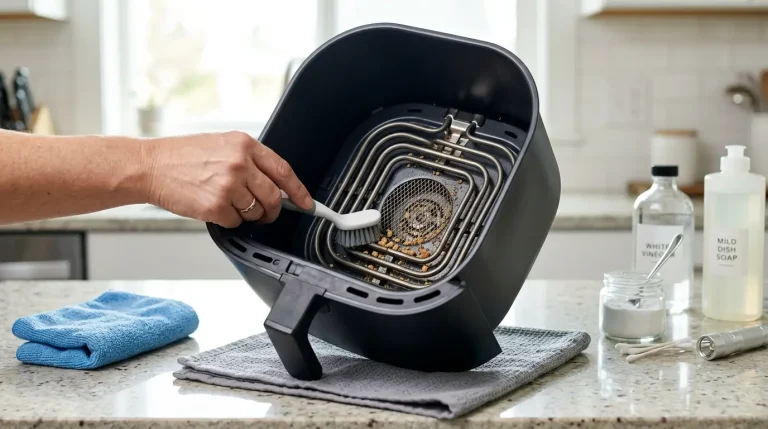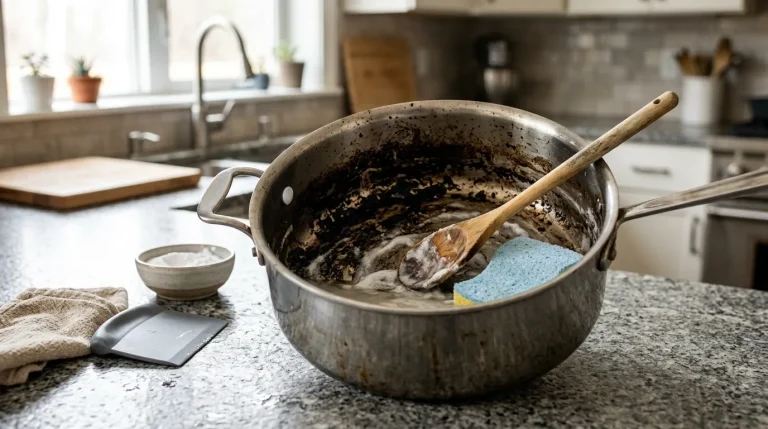
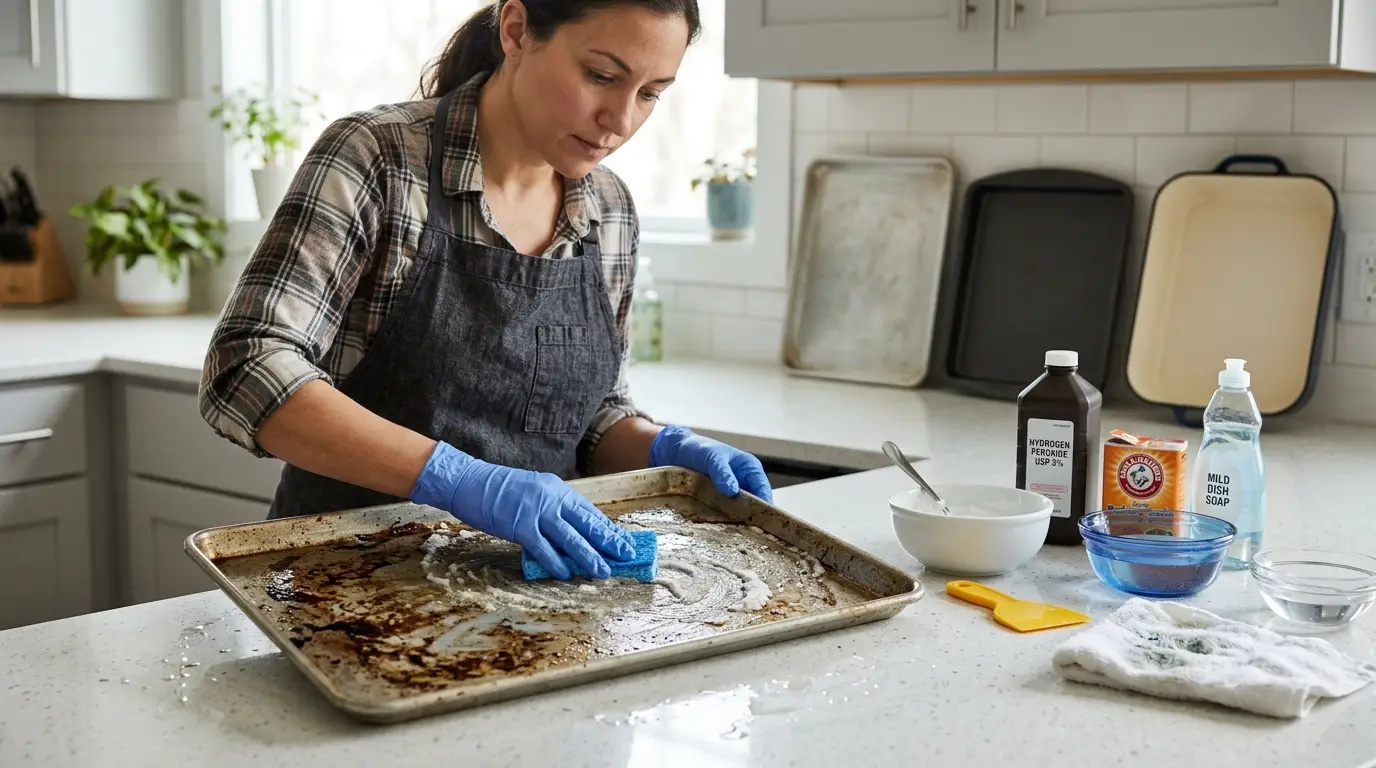
Soak, scrub gently, and use baking soda paste to lift baked-on grime.
If you want shiny, safe pans and better bakes, you need more than a quick rinse. I’ve spent years testing methods in busy home kitchens and food studios to master How to Clean Baking Sheets without damage. This guide breaks down proven steps, real-life tips, and simple tools so you can restore your pans and keep them in top shape. Read on to learn How to Clean Baking Sheets for every material and mess.
Understanding Your Baking Sheets
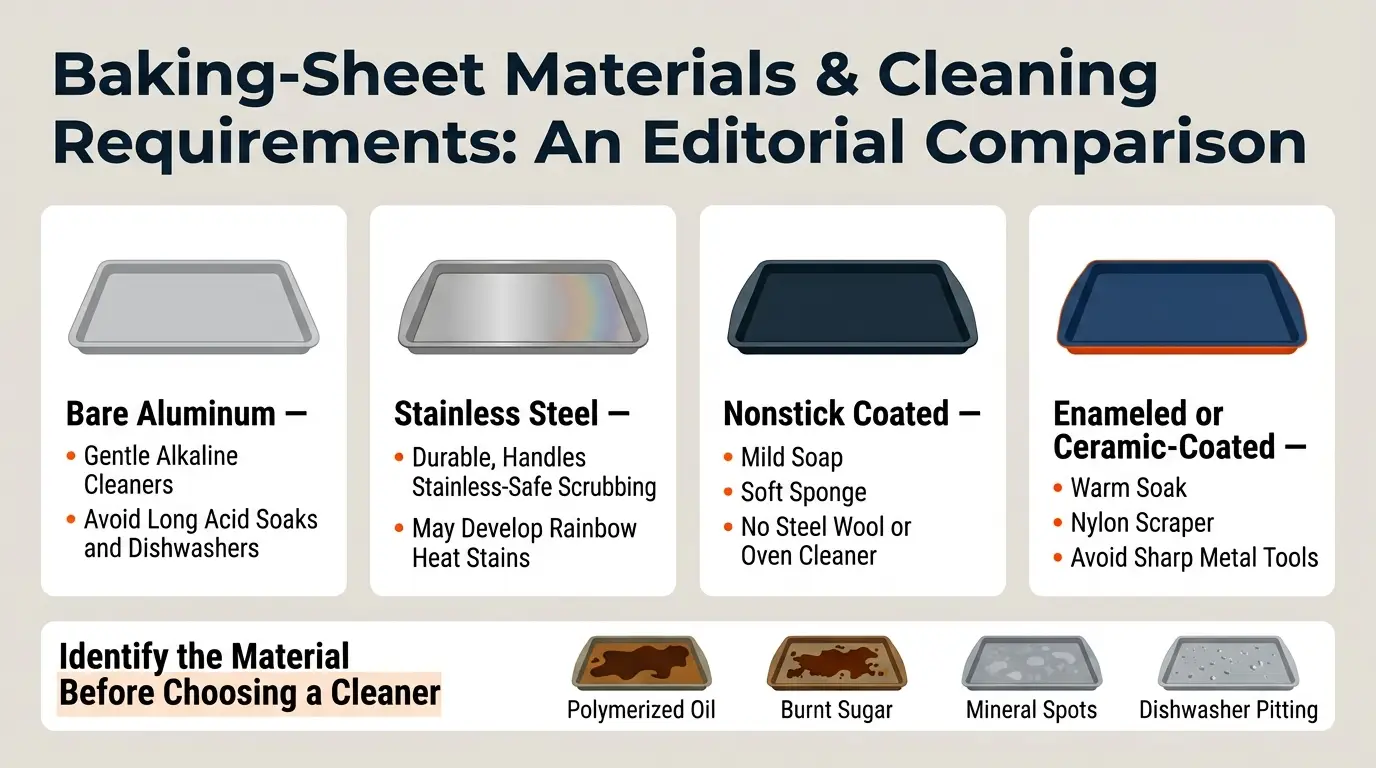
Not all pans are the same. The best way to learn How to Clean Baking Sheets begins with knowing what you own.
Common materials you may have:
- Bare aluminum. Great heat flow. Can stain and darken. Avoid strong acids.
- Stainless steel. Tough and shiny. Can show rainbow stains but handles scrubs well.
- Nonstick coated. Needs gentle care. Skip harsh pads and oven cleaner.
- Enameled or ceramic. Resists stains. Avoid metal scrapers that chip edges.
Why they get grimy:
- Oil polymerizes in heat and turns sticky and brown.
- Sugar burns into a hard shell.
- Dishwasher detergents can pit aluminum.
- Dark buildup insulates metal and can cause uneven browning.
The good news: most stains lift with time, patience, and the right match of cleaner and method. When you learn How to Clean Baking Sheets by material, you prevent damage and keep that even bake you love.
Tools and Cleaners You Actually Need
You do not need a cabinet full of chemicals. For How to Clean Baking Sheets with less hassle, build a small kit.
Stock these basics:
- Baking soda for a gentle, alkaline lift.
- Hydrogen peroxide 3% for deep, oxidizing power on baked-on grease.
- White vinegar for mineral spots on steel and enamel.
- Mild dish soap to cut fresh oil.
- Non-scratch scrub sponge and a nylon scraper.
- Fine steel wool or stainless scrubber for stainless only.
- Microfiber cloths for dry polish.
- Disposable gloves to protect your hands.
Optional helpers:
- Bar cleanser for stainless rainbow marks.
- Oven cleaner for bare metal only, with care and good airflow.
With these, you can handle almost any mess and master How to Clean Baking Sheets the smart way.
Step-by-Step: How to Clean Baking Sheets Daily
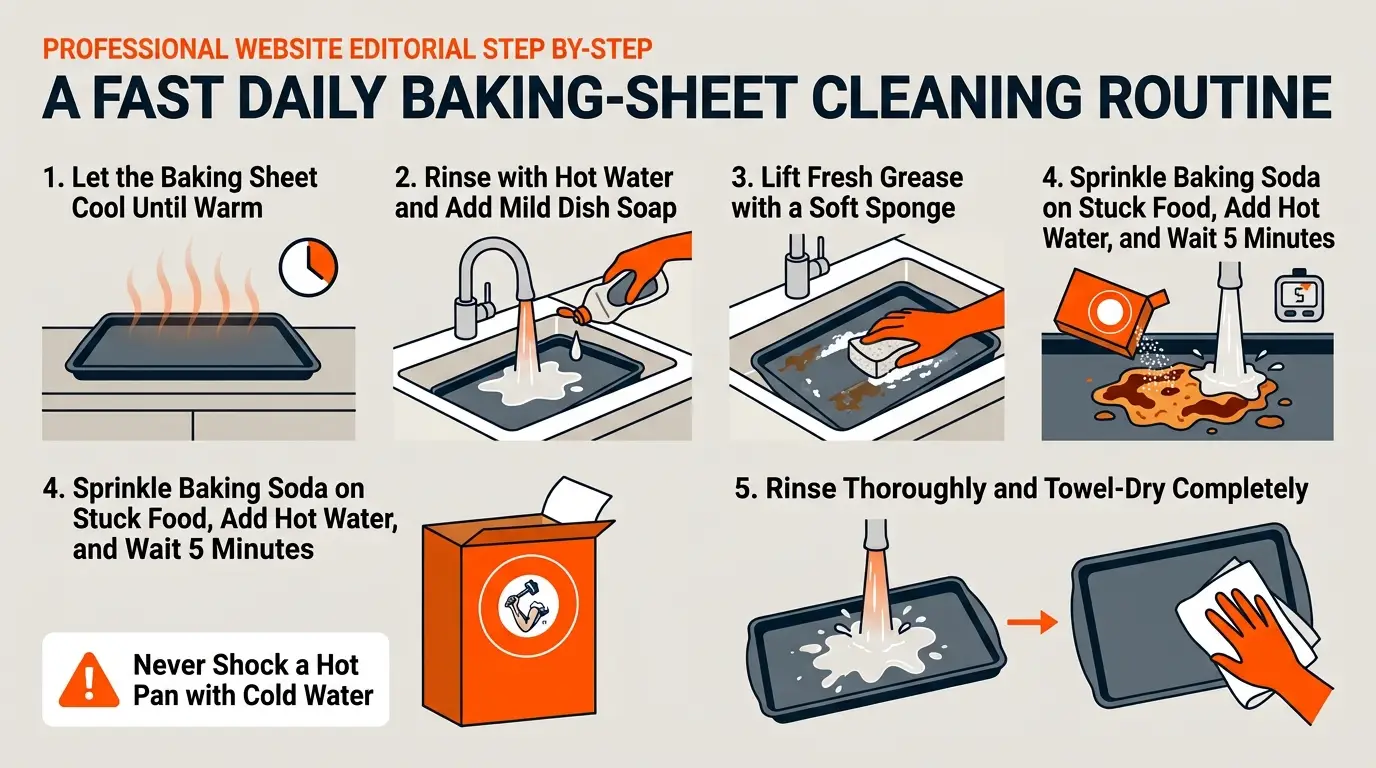
This quick routine keeps buildup from turning into a long battle. I use it after every roast or cookie session.
- Let the pan cool until warm. Never shock hot metal with cold water.
- Rinse with hot water. Add a few drops of dish soap.
- Use a soft sponge to lift grease while it is still fresh.
- For stuck bits, sprinkle baking soda. Add a splash of hot water. Wait 5 minutes, then wipe.
- Rinse well and dry fully with a towel. Water spots can stain.
This simple system is the base for How to Clean Baking Sheets and prevents that sticky film that loves to set hard overnight.
Deep-Clean Methods That Work
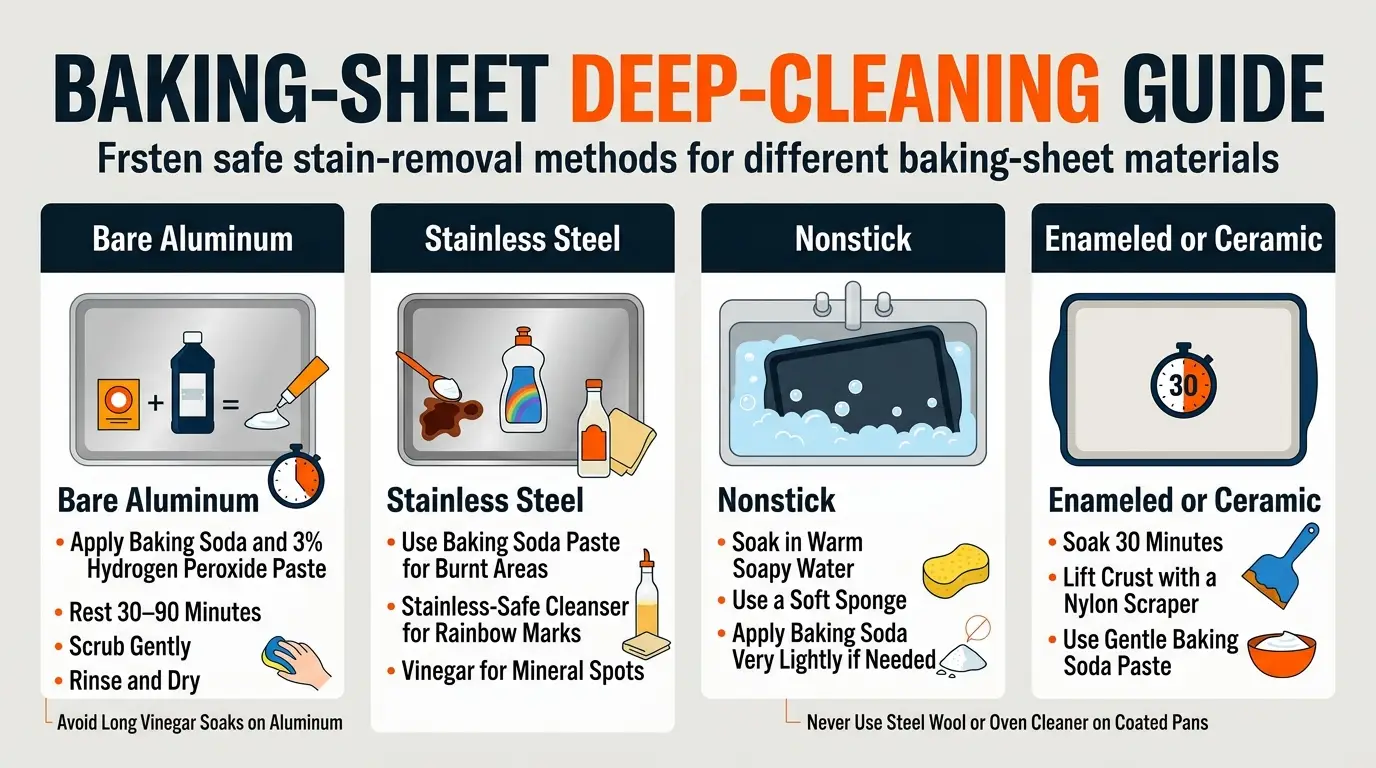
When daily care is not enough, use a targeted deep clean. Match the method to the metal to avoid harm.
Bare Aluminum Sheets
- Make a paste of baking soda and 3% hydrogen peroxide. Spread a thin layer.
- Let it sit 30–90 minutes. Keep it moist with a mist of water if it dries.
- Scrub with a non-scratch pad. Rinse well and dry at once.
- Avoid long soaks in vinegar or the dishwasher. Both can pit aluminum.
Personal tip: I once soaked a favorite half sheet in vinegar. It turned dull gray. Lesson learned—no acid baths for aluminum.
Stainless Steel Sheets
- For burnt patches, use baking soda paste first. Let sit 20 minutes.
- Scrub with a stainless-safe pad. Rinse.
- For rainbow heat stains, rub a dab of bar cleanser with a damp cloth. Rinse and dry.
- Vinegar can remove mineral spots. Rinse right after.
Nonstick Coated Sheets
- Use warm water, dish soap, and a soft sponge.
- For stuck sugar, soak 20 minutes in warm soapy water.
- If needed, use a baking soda paste very lightly. No steel wool or oven cleaner.
- Dry well and avoid metal tools in the future.
Enameled or Ceramic-Coated Sheets
- Soak in warm soapy water for 30 minutes.
- Use a nylon scraper to remove crust.
- Baking soda paste can help on stains. Skip sharp scrapers that chip glaze.
These paths reflect tested methods backed by kitchen science and maker guidance. They form the core of How to Clean Baking Sheets without voiding warranties or ruining surfaces.
Spot Treatments for Tough Messes
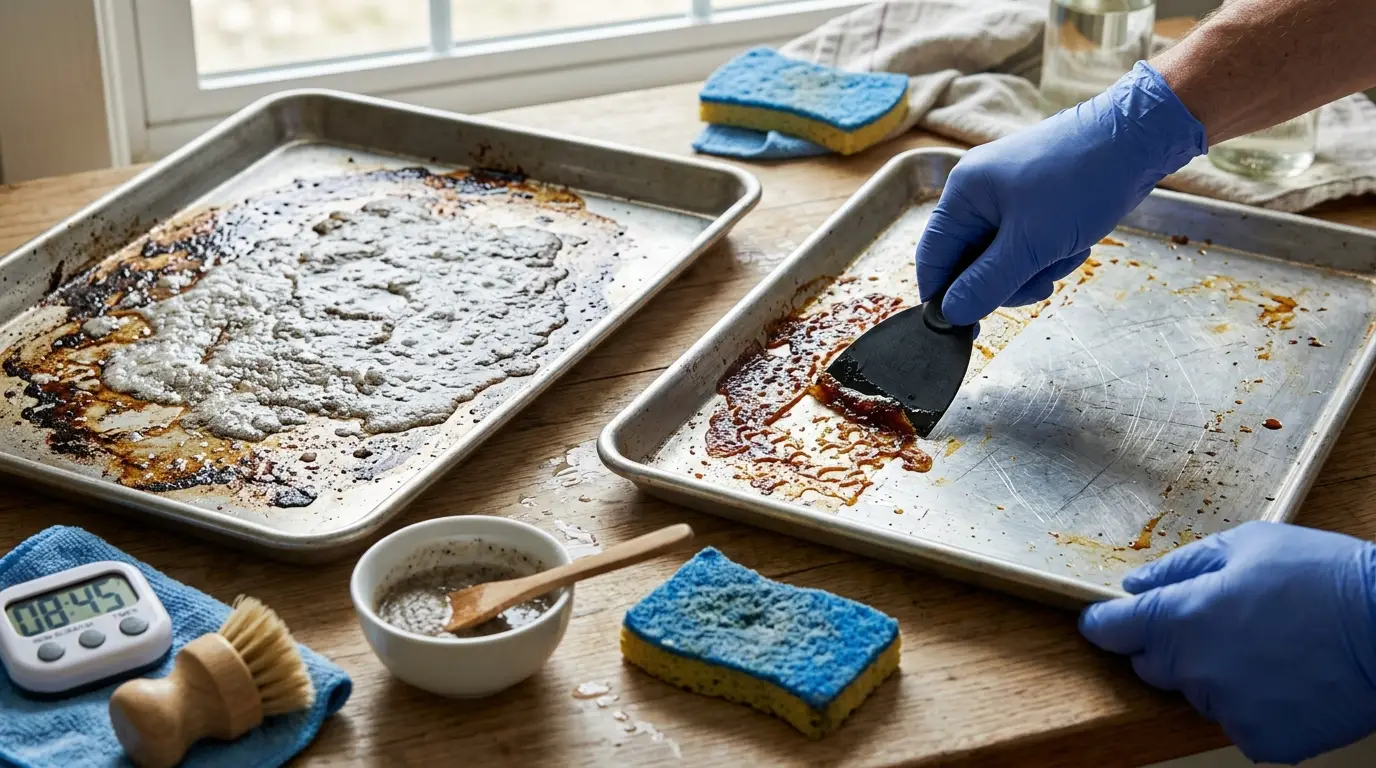
Some stains need special focus. Here is how I tackle the worst of the worst.
- Burnt sugar or caramel
- Warm the sheet in a low oven for 5 minutes. Heat softens sugar.
- Scrape gently with a nylon tool, then use baking soda paste.
- Sticky polymerized oil
- Spread hydrogen peroxide plus baking soda paste on bare aluminum or stainless.
- Rest 1 hour. Scrub. Repeat if needed.
- Rust on steel edges or racks
- Make a paste with baking soda. Rub with a soft brush.
- Dry fully. Wipe a drop of oil on raw edges to seal.
- Dark patina on aluminum
- A light patina is normal and not dirty. If heavy, use the peroxide paste.
- Avoid acid which can worsen dark spots.
- Rainbow discoloration on stainless
- Rub with a bar cleanser or vinegar, then rinse and dry.
These focused moves save time and restore shine while you keep learning How to Clean Baking Sheets like a pro.
What Not to Do and Common Mistakes
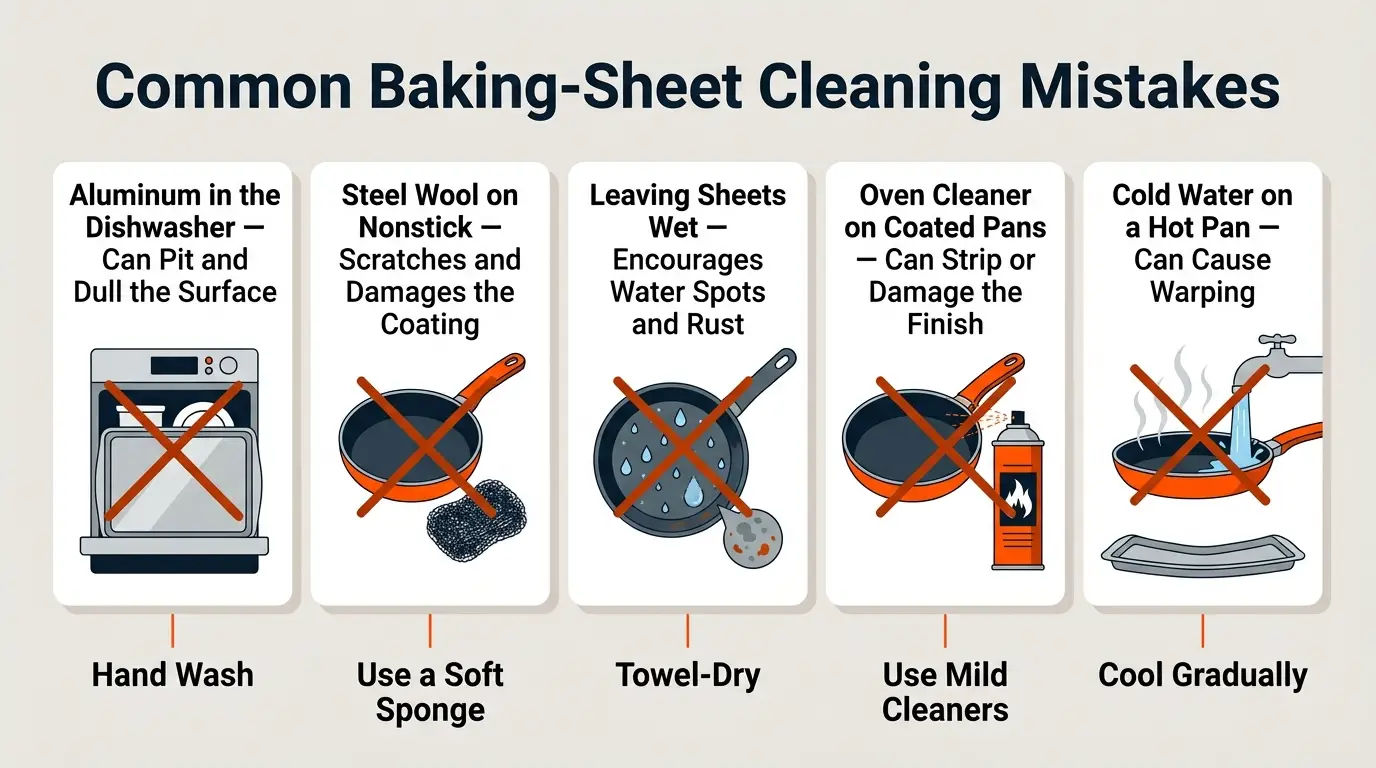
Learn from my misses so you do not repeat them.
- Do not toss aluminum in the dishwasher. Detergent can pit and dull pans.
- Do not use steel wool on nonstick. It shreds the coating fast.
- Do not leave wet sheets to air dry. Water spots and rust may form.
- Do not use oven cleaner on coated pans. It can strip finishes.
- Do not shock hot pans with cold water. Warping can happen.
Avoiding these missteps is a key part of How to Clean Baking Sheets and extend their life.
How to Keep Baking Sheets Clean Longer
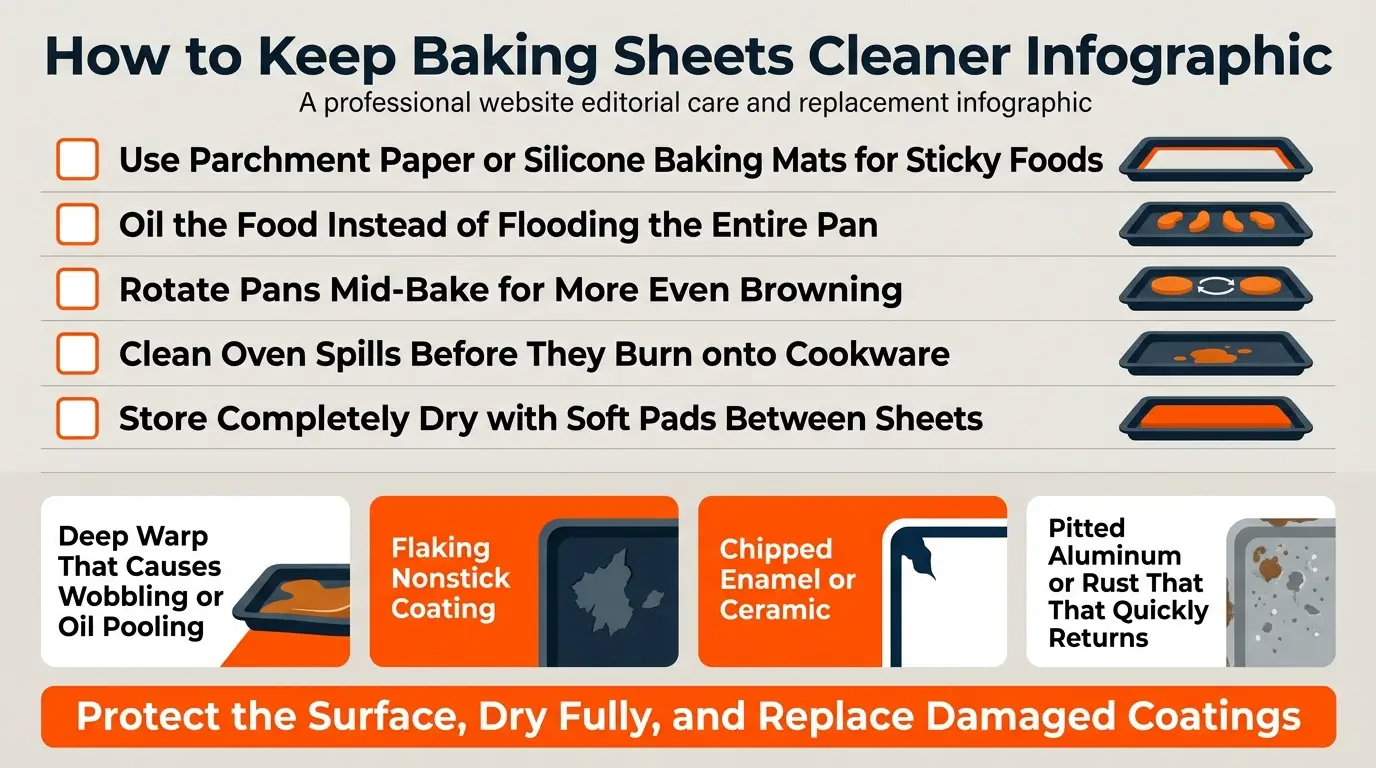
Prevention makes cleaning simple. Small habits have a big payoff.
- Use parchment or silicone mats for sticky bakes.
- Lightly oil food, not the whole pan, to cut pooling grease.
- Rotate pans mid-bake for even heat and fewer burnt spots.
- Wipe spills in the oven to avoid smoke and fall-out on pans.
- Store sheets dry, with a towel between pans to avoid scratches.
These habits lower the work needed for How to Clean Baking Sheets and keep results consistent.
When to Replace a Baking Sheet
Even great care cannot save a pan forever. Know the signs.
- Deep warps that wobble and pool oil.
- Flaking nonstick or chipped enamel.
- Pitted aluminum that traps food and is hard to sanitize.
- Rust that returns right after cleaning.
If you spot these, it is time to replace. Fresh pans bake better and make How to Clean Baking Sheets much easier.
Frequently Asked Questions of How to Clean Baking Sheets
How often should I deep clean a baking sheet?
Deep clean when daily washing no longer removes stains, often every 1–3 months. Heavy roasting may need monthly work, while cookie-only pans can go longer.
Can I use oven cleaner on my baking sheets?
Only on bare metal, never on nonstick or enamel. Use in a well-ventilated space and rinse very well.
What is the best natural cleaner for baked-on grease?
A baking soda and 3% hydrogen peroxide paste works well on most bare metals. Let it sit, then scrub gently.
Is a dark patina on aluminum bad?
A light patina is normal and can even help browning. Remove only heavy gooey buildup that feels sticky.
Why do baking sheets warp?
Sudden temperature changes cause metal to flex. Avoid cold water on hot pans and use heavy-gauge sheets to reduce warping.
Can I put baking sheets in the dishwasher?
Stainless may be fine, but aluminum often pits. Hand wash to protect finish and life.
How do I get rid of rainbow stains on stainless steel?
Use a stainless-safe cleanser or vinegar wipe. Rinse and dry to restore shine.
Conclusion
Clean pans bake better, last longer, and make cooking more fun. With the right tools and a few core methods, you now know How to Clean Baking Sheets for daily care and tough stains, by material and by mess. Start with one pan tonight, try the baking soda paste, and feel the difference on your next batch.
Ready for more simple kitchen wins? Subscribe for weekly tips, or drop a comment with your cleaning challenge and I will help you fix it.