Introduction
The best baking time for a cake depends on the cake batter, pan size, pan material, oven type, and baking temperature. As a general guide, most cakes bake at 325°F to 350°F in a standard U.S. oven and take about 20 to 60 minutes.
Use the recipe time as a starting point, not a guarantee. Begin checking the cake when it reaches the early end of the time range. The cake is ready when the center springs back lightly, a toothpick comes out with a few moist crumbs, or the internal temperature is usually about 200°F to 210°F.
Quick Cake Baking Time Guide
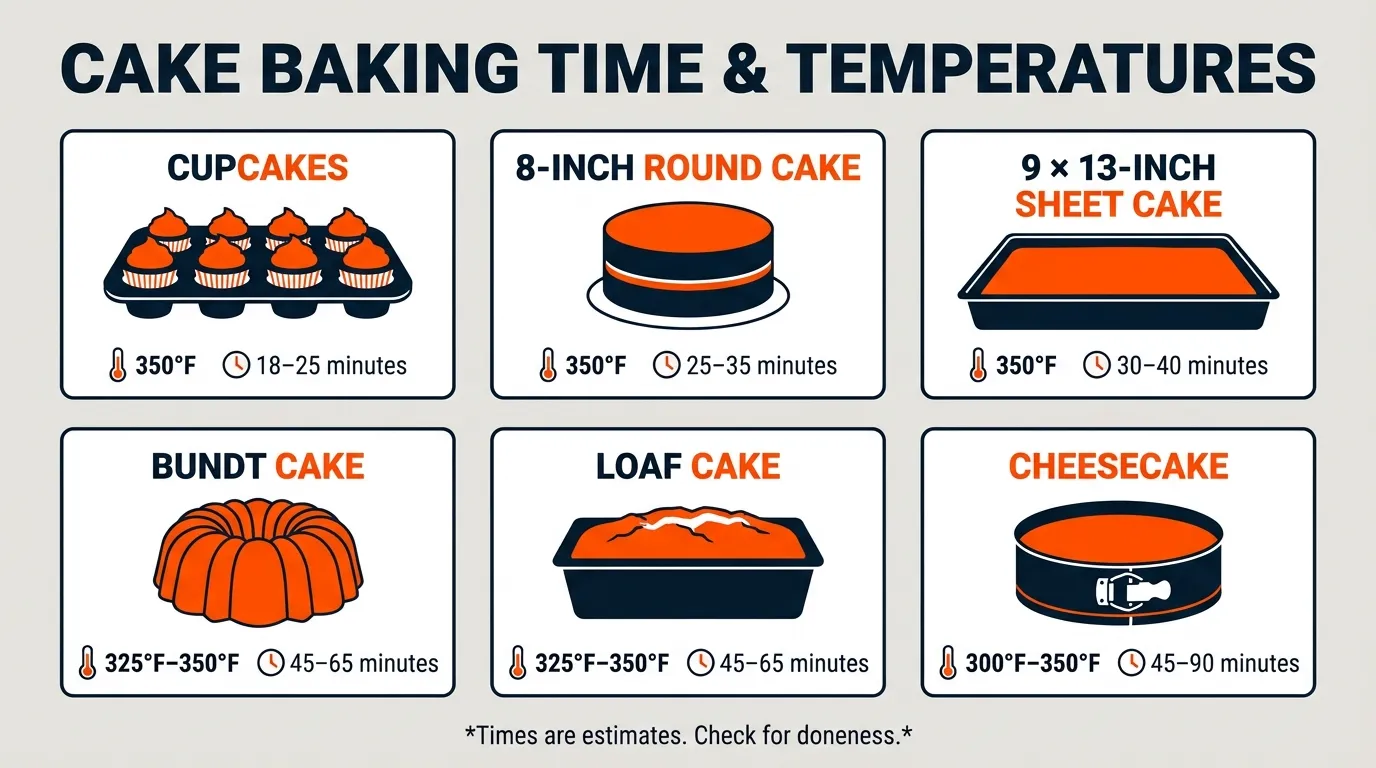
The table below gives common starting times for cakes baked in a fully preheated conventional oven. These times assume the pans are filled correctly and the batter is not unusually dense or wet.
| Cake type or pan | Common oven temperature | Typical baking time |
|---|---|---|
| Cupcakes | 350°F | 18–25 minutes |
| 8-inch round cake | 350°F | 25–35 minutes |
| 9-inch round cake | 350°F | 25–35 minutes |
| 8-inch square cake | 350°F | 30–40 minutes |
| 9-inch square cake | 350°F | 30–40 minutes |
| 9 × 13-inch sheet cake | 350°F | 30–40 minutes |
| Two-layer cake pans | 325°F–350°F | 25–35 minutes |
| Bundt cake | 325°F–350°F | 45–65 minutes |
| Loaf cake | 325°F–350°F | 45–65 minutes |
| Cheesecake | 300°F–350°F | 45–90 minutes |
| Angel food cake | 325°F–350°F | 35–50 minutes |
| Thick fruit or pound cake | 300°F–325°F | 60–90 minutes or longer |
These ranges are estimates. A shallow cake may finish quickly, while a deep cake may need much more time at a lower temperature. Start testing at least 5 to 10 minutes before the shortest listed time.
How to Tell When a Cake Is Done
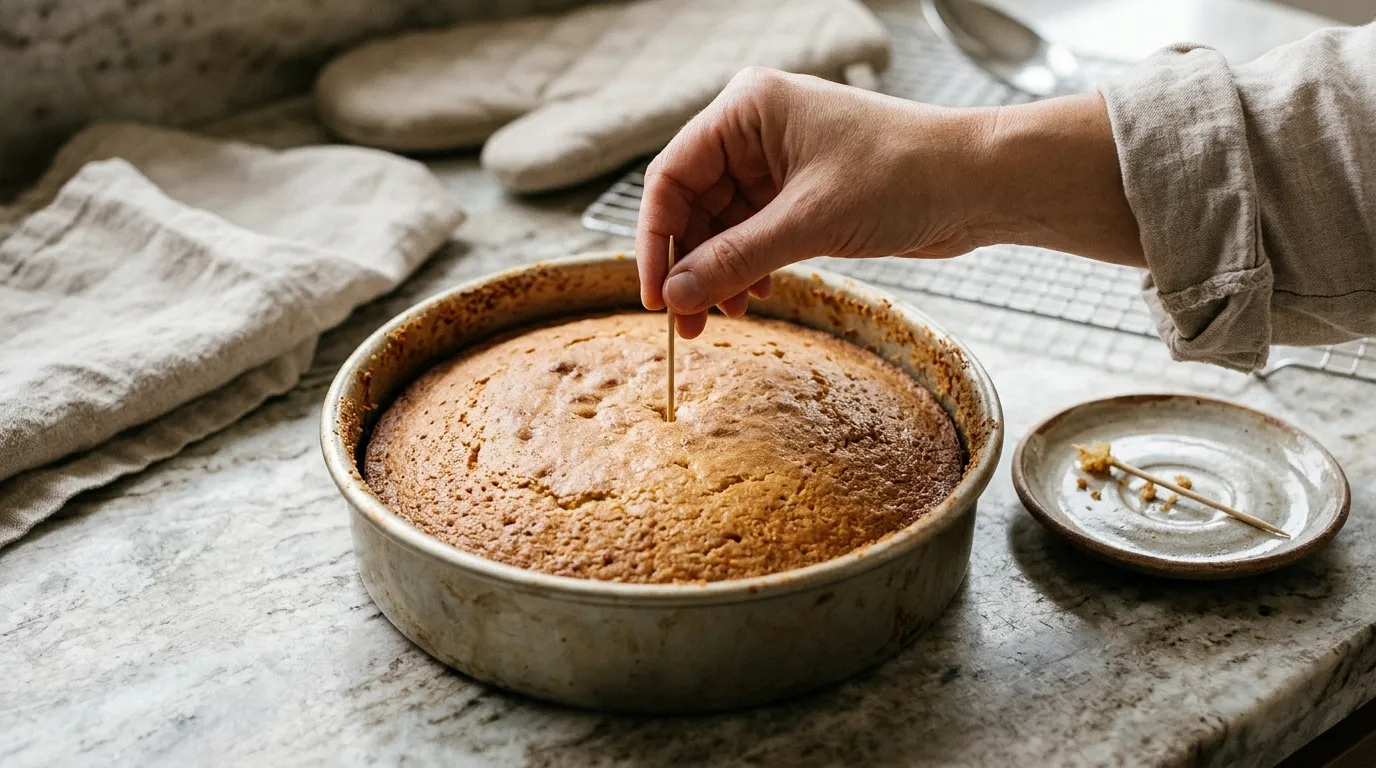
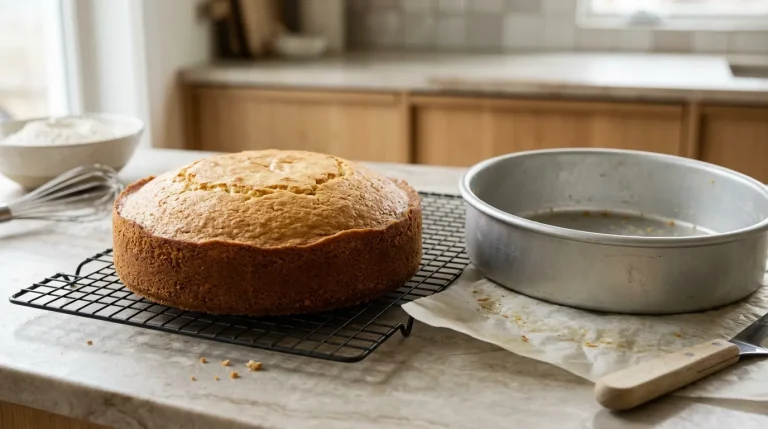
The most reliable approach is to use more than one doneness test. A cake can look brown on top while the center is still raw, or it can pass a toothpick test while remaining slightly underbaked in a dense area.
1. Test the center with a toothpick
Insert a wooden toothpick into the center of the cake, away from the pan edge.
- Wet batter on the toothpick: Bake longer.
- A few moist crumbs: The cake is usually ready.
- Completely clean toothpick: The cake is done, but it may be close to overbaking.
For chocolate cakes, a few dark crumbs are normal. Do not confuse melted chocolate chips with raw batter.
2. Check for a light spring
Press the center gently with one finger. A fully baked cake should spring back instead of leaving a deep dent.
This test is useful for sponge cakes, yellow cakes, and cupcakes. It is less useful for cheesecake, flourless cake, and very moist fruit cake.
3. Look at the edges
The edges should look set and may pull away from the sides of the pan by a small amount. This sign alone is not enough, but it helps confirm that the cake is close to done.
If the edges pull far away from the pan, the cake may already be overbaked.
4. Check the internal temperature
An instant-read thermometer can help with thick cakes. Insert it into the center without touching the pan.
Many standard cakes are done at about 200°F to 210°F. Dense cakes may show a different result, so use temperature as a supporting test rather than an absolute rule.
Cheesecake is a special case. It should look set around the edges but still have a slight wobble in the center. Overbaking can cause cracks and a dry texture.
5. Check the cake before removing it
Do not remove a cake simply because the timer rings. Test the center first. If the cake needs more time, bake it in short intervals of 3 to 5 minutes and test again.
Cake Baking Times by Pan Size
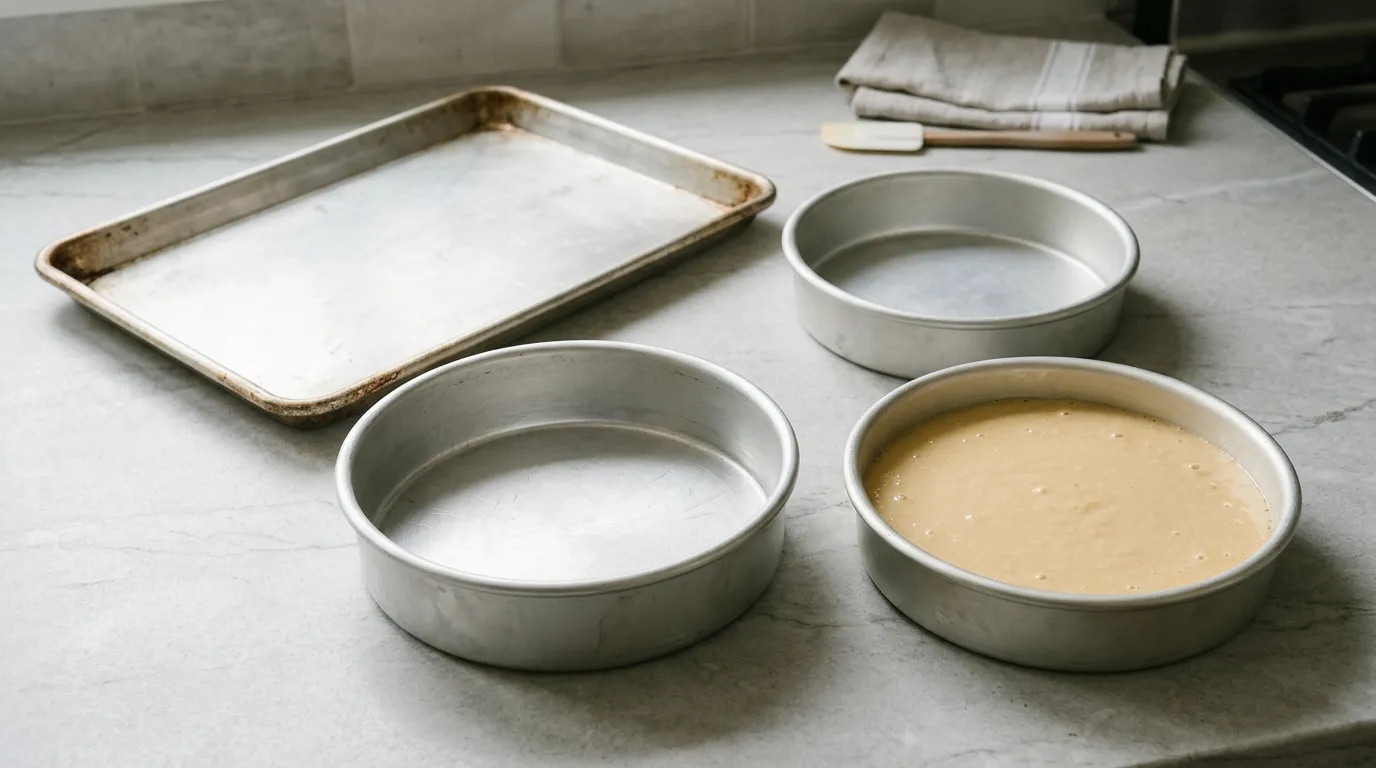
Pan size changes the depth of the batter. Batter depth affects how quickly heat reaches the center.
A wider pan makes a thinner cake, so it usually needs less time. A smaller or deeper pan makes a thicker cake, so it often needs more time at a lower temperature.
| Pan size | Typical use | Starting time at 350°F |
|---|---|---|
| 6-inch round | Small layer cake | 25–35 minutes |
| 8-inch round | Standard layer cake | 25–35 minutes |
| 9-inch round | Thin layer cake | 23–33 minutes |
| 8-inch square | Small snack cake | 30–40 minutes |
| 9-inch square | Snack or coffee cake | 30–40 minutes |
| 9 × 13-inch | Sheet cake | 30–40 minutes |
| 10-inch Bundt | Dense ring cake | 45–65 minutes |
| 9 × 5-inch loaf | Quick bread or loaf cake | 50–70 minutes |
| 12-cup muffin pan | Cupcakes or muffins | 18–25 minutes |
These times assume the recipe is designed for the listed pan. Do not fill a cake pan more than about two-thirds full unless the recipe gives different instructions. Extra batter can overflow before the center sets.
When changing pan size
If you use a wider pan, expect a shorter baking time. Start checking early.
If you use a smaller or deeper pan, lower the oven temperature by about 25°F and allow more time. This can help the center bake before the outside becomes too dark.
Avoid filling a deep pan with a standard cake recipe unless you know the batter amount and pan capacity. A very deep cake may rise unevenly, sink, or remain wet in the middle.
Cake Baking Time by Cake Type
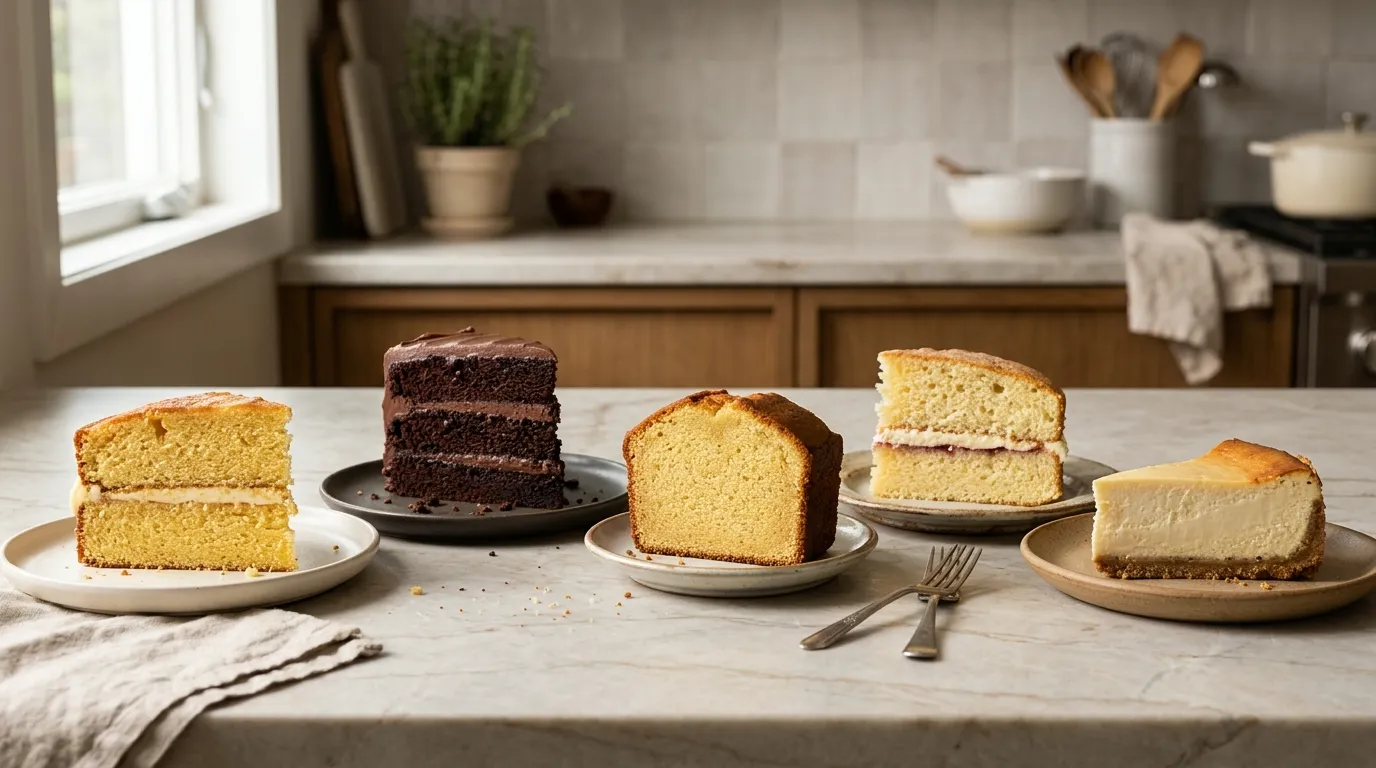
Different batters hold heat and moisture in different ways. A light sponge cake does not bake like a pound cake.
Butter and yellow cakes
Butter cakes usually bake at 325°F to 350°F. Two 8-inch or 9-inch layers often take 25 to 35 minutes.
The cake is ready when the top springs back and the center no longer looks wet. Do not wait for the edges to become very dark.
Chocolate cakes
Chocolate cake may look moist even when it is done. A toothpick should show a few moist crumbs, not loose batter.
Most chocolate layer cakes take 25 to 35 minutes at 350°F. Cakes with coffee, sour cream, buttermilk, or extra oil may need a few more minutes.
Pound cakes
Pound cake is dense and needs a longer bake at a lower temperature. A Bundt or loaf pound cake often takes 55 to 75 minutes at 325°F.
Check the thickest part with a skewer or thermometer. If the top browns too fast, cover it loosely with foil after the crust has set.
Sponge and chiffon cakes
Sponge and chiffon cakes depend on trapped air for height. They often bake at 325°F to 350°F for 35 to 50 minutes, depending on the pan.
Avoid opening the oven early. A sudden drop in heat can cause the cake to collapse.
Carrot and other moist cakes
Carrot cake, zucchini cake, and similar cakes may contain shredded produce, oil, nuts, or fruit. These ingredients add moisture and can lengthen baking time.
A 9 × 13-inch moist cake often takes 35 to 45 minutes at 350°F. Test the center in more than one spot if the cake contains large pieces.
Cheesecake
Cheesecake needs gentle heat and careful cooling. Baking time may range from 45 minutes to 90 minutes, depending on the pan depth and recipe.
The edges should look firm, while the middle should move slightly when the pan is nudged. The center should not look liquid.
How Oven Type Changes Baking Time
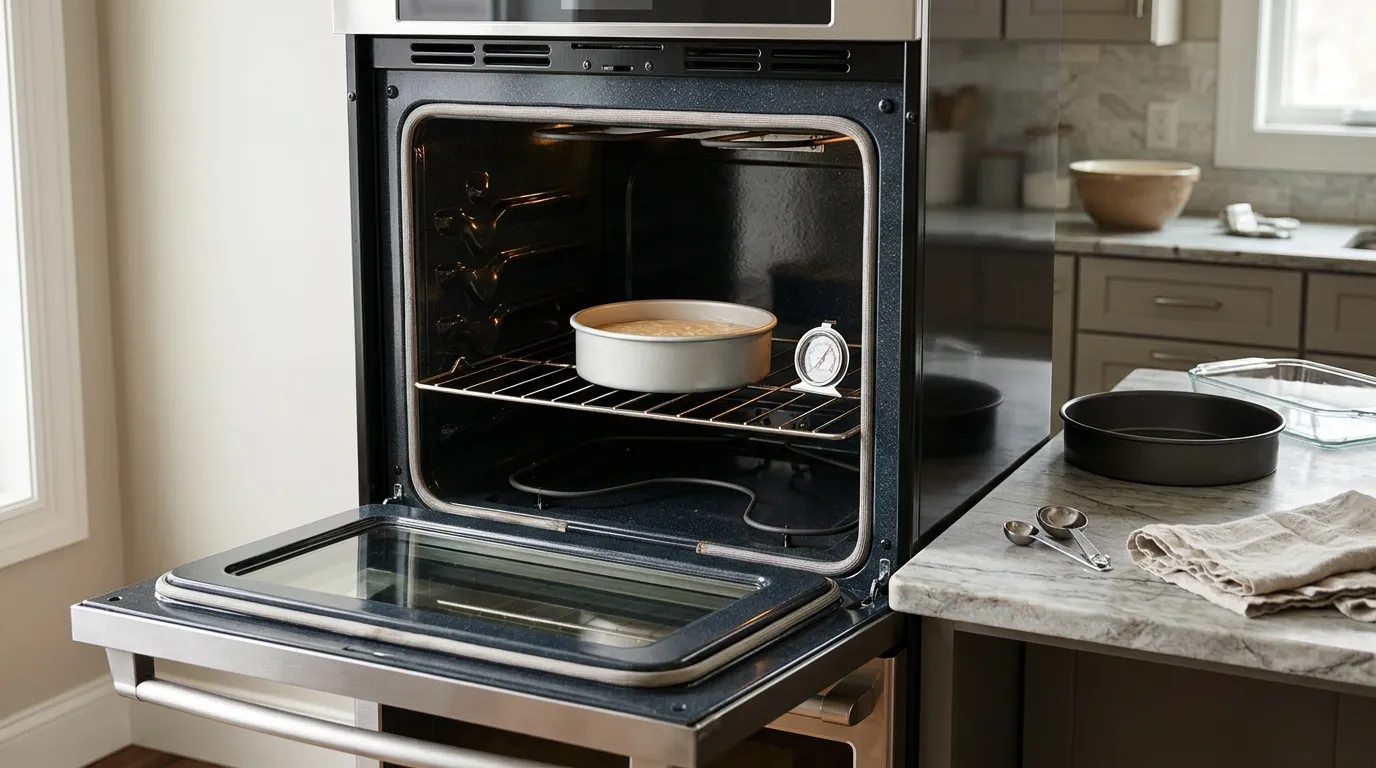
Your oven can change the result even when the recipe is correct. Oven temperature readings are not always exact, and heat moves differently in conventional, convection, and toaster ovens.
Conventional oven
A conventional oven uses heat from the top and bottom without a fan. Most U.S. cake recipes are written for this type of oven.
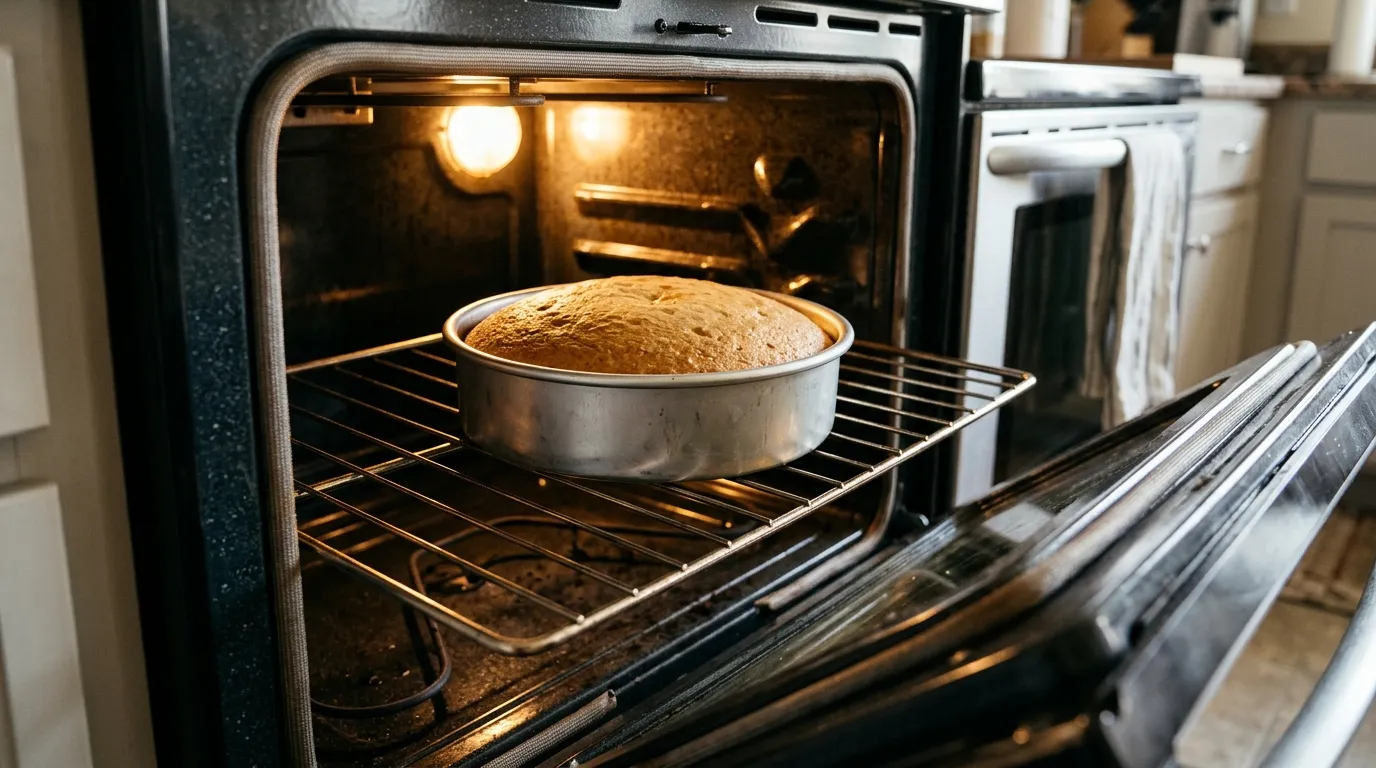
Place the cake on the center rack. Leave space around the pan so hot air can move freely.
Convection oven
A convection oven uses a fan to circulate hot air. Cakes may bake faster and brown more quickly.
As a starting point, reduce the temperature by 25°F or begin checking the cake 5 to 10 minutes early. Follow the recipe if it gives a specific convection setting.
Toaster oven
A toaster oven has a small baking chamber and can heat the surface quickly. Cakes may brown before the center is done.
Use a lower temperature if needed, keep the pan away from the heating elements, and begin checking early. A small cake pan may also need less batter than a full-size recipe provides.
Gas and electric ovens
Gas and electric ovens can both bake good cakes. The main issue is heat accuracy and distribution, not the fuel source alone.
An oven thermometer can reveal whether the oven runs hot or cool. Do not change the recipe temperature based only on guesswork.
How Pan Material Affects Cake Baking Time
Pan material changes how quickly the batter heats.
- Light-colored aluminum pans: Usually bake cakes evenly and allow moderate browning.
- Dark metal pans: Absorb more heat and may brown the edges faster. Reduce the temperature by about 25°F or check early.
- Glass pans: Heat more slowly at first but retain heat well. Many recipes work best with a temperature reduction of about 25°F.
- Silicone pans: May need more time and can produce softer, lighter-colored sides.
- Insulated pans: Often need extra time because the batter heats more slowly.
These are starting points, not strict rules. The recipe’s pan instructions should take priority.
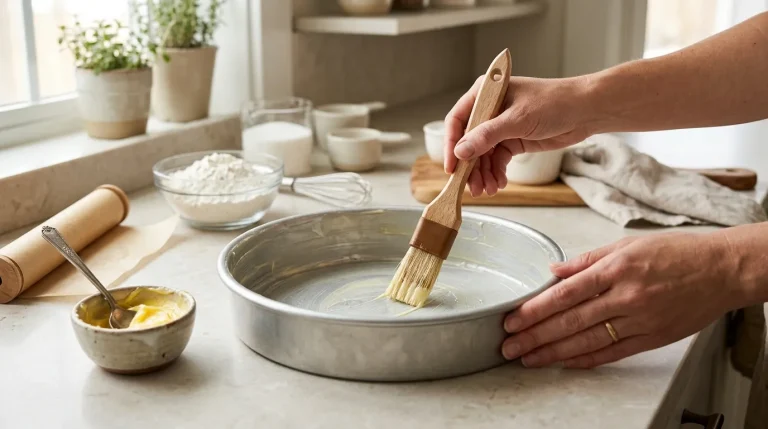
Always grease and line the pan as directed. A cake that sticks can tear even when it is fully baked.
The Best Way to Time a Cake
Use the clock to guide you, but use the cake to make the final decision.
- Preheat the oven fully. Do not place the cake in while the oven is still heating.
- Prepare the pan before mixing the batter. This prevents the batter from sitting too long.
- Fill the pan evenly. Uneven batter creates uneven baking.
- Place the pan on the center rack. Keep it away from the oven wall.
- Set the timer for the shortest recipe time.
- Check the cake without removing it fully. Look through the oven window when possible.
- Test the center. Use a toothpick, gentle press, or thermometer.
- Add 3 to 5 minutes if needed. Test again after each short interval.
- Cool the cake as directed. Some cakes need to cool in the pan; others need prompt removal.
- Wait before frosting. Warm cake can melt frosting and break during handling.
Opening the oven once near the end of baking is usually less harmful than opening it repeatedly during the early rise. Keep the door closed during the first part of baking, especially for sponge and chiffon cakes.
What to Do if a Cake Is Raw in the Middle
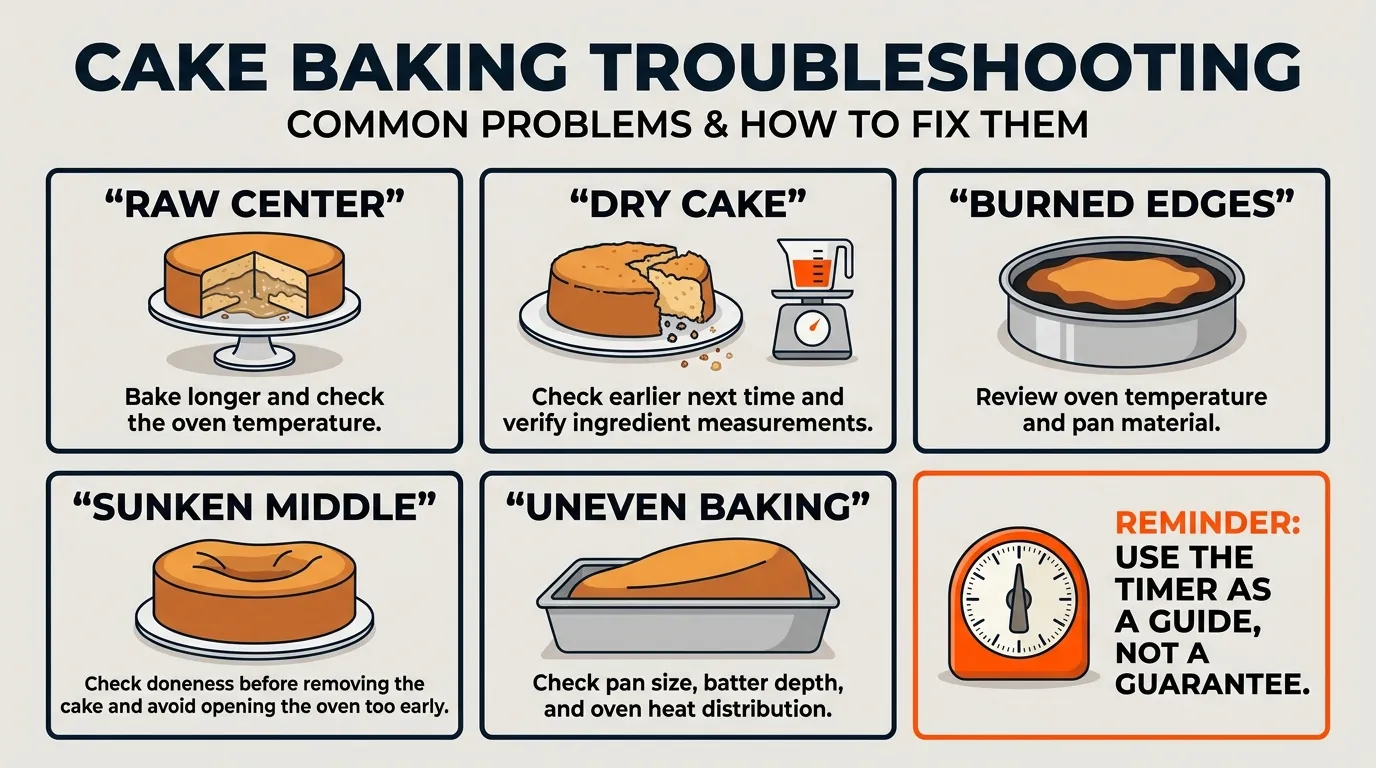
A raw center usually means the cake needs more time, the oven is too cool, or the pan is too deep.
Place the cake back in the oven and bake for 5 to 10 more minutes. If the top is already dark, cover it loosely with aluminum foil. Do not press the foil onto the cake.
Check the center again. If the outside is fully set but the center remains wet after much more time, the pan may be too small or the oven temperature may be inaccurate.
For future bakes:
- Measure the pan.
- Check the oven with an oven thermometer.
- Avoid overfilling the pan.
- Use the correct temperature for glass or dark metal.
- Weigh ingredients when possible.
- Keep the oven door closed during early baking.
Do not eat cake batter that contains raw eggs or raw flour. A cake that remains wet in the center should be baked until the batter is fully set.
What to Do if a Cake Is Dry or Burned
A dry cake often stays in the oven too long. It can also result from too much flour, too little liquid, or an oven that runs hot.
If the cake is only slightly dry, brush it with simple syrup after cooling. Use a small amount so the cake does not become wet or fall apart.
If the edges are burned, trim them after the cake cools. Covering the cake with frosting may improve its appearance, but it will not restore a tough crumb.
For the next bake, check the cake earlier. Reduce the temperature by 10°F to 25°F only when the pan, oven type, or browning pattern supports that change.
Why Cakes Sink After Baking
A cake that sinks in the middle may be underbaked, overmixed, overfilled, or exposed to a sudden temperature change.
Common causes include:
- Opening the oven too early.
- Removing the cake before the center sets.
- Adding too much leavening.
- Using a pan that is too small.
- Beating too much air into the batter.
- Moving the pan during baking.
- Using expired baking powder or baking soda.
A slightly sunken cake may still taste good. You can level it for frosting or serve it with fruit and whipped cream. If the center is wet, return it to the oven if possible.
How to Convert Baking Time for a Different Pan
There is no single formula that converts every cake recipe perfectly. The safest method is to compare the surface area and batter depth.
For round pans, use:
Area = 3.14 × radius × radius
Examples:
- An 8-inch round pan has about 50 square inches of surface area.
- A 9-inch round pan has about 64 square inches.
- A 9 × 13-inch rectangular pan has 117 square inches.
A 9-inch round pan holds more batter in a wider, shallower layer than an 8-inch round pan. The cake may finish sooner, but the difference also depends on the recipe and pan depth.
When changing pans:
- Keep the batter depth close to the original.
- Fill the new pan no more than two-thirds full.
- Use the original temperature unless the new pan is much deeper or darker.
- Start checking early.
- Use extra batter for cupcakes rather than overfilling the pan.
These calculations help with planning, but they do not replace a doneness test.
Cake Baking Temperature and Time Chart
Use this chart as a starting reference for common U.S. home-baking conditions.
| Cake style | Suggested temperature | Approximate time | Best doneness check |
|---|---|---|---|
| Cupcakes | 350°F | 18–25 minutes | Light spring and clean or crumb-covered toothpick |
| Thin sheet cake | 350°F | 25–35 minutes | Center springs back |
| Standard layer cake | 350°F | 25–35 minutes | Toothpick with moist crumbs |
| Moist carrot cake | 350°F | 35–45 minutes | Toothpick in center |
| Bundt cake | 325°F–350°F | 45–65 minutes | Skewer and spring test |
| Pound cake | 325°F | 60–75 minutes | Thermometer and skewer |
| Chiffon cake | 325°F–350°F | 35–50 minutes | Firm top and spring |
| Cheesecake | 300°F–350°F | 45–90 minutes | Set edges with a slight center wobble |
| Flourless chocolate cake | 300°F–350°F | 25–45 minutes | Recipe-specific temperature or center texture |
The main trade-off is simple: higher heat can shorten baking time but may brown the outside before the center is ready. Lower heat takes longer but often suits thick or dense cakes.
Common Cake Baking Mistakes
Relying only on the timer
A timer cannot account for pan color, oven accuracy, batter depth, or altitude. Treat the listed time as a range.
Using the wrong pan size
A recipe made for two 9-inch layers may not work in one deep 9-inch pan. The center can stay raw while the edges overbake.
Opening the oven too often
Each opening releases heat. Check once near the end instead of opening the door every few minutes.
Measuring flour by packed volume
Packed flour can add too much flour and create a dry cake. Spoon flour into a dry measuring cup and level it, or use a kitchen scale.
Frosting a warm cake
Warm cake can melt buttercream, loosen cream cheese frosting, and cause layers to slide. Cool the cake fully before decorating.
Cutting too soon
The crumb continues to set as the cake cools. Cutting while hot can make a fully baked cake seem gummy.
Baking at High Altitude
At high elevations in the United States, lower air pressure can make cakes rise quickly and then collapse. Moisture also evaporates faster.
The exact adjustment depends on elevation, recipe, and local conditions. Common changes may include:
- Slightly reducing sugar.
- Adding a little liquid.
- Reducing leavening.
- Increasing the oven temperature by about 15°F to 25°F.
- Using a shorter baking time.
Do not apply every adjustment at once. Start with guidance from a trusted high-altitude baking source or the recipe developer. Test one change at a time and record the result.
Frequently Asked Questions
How long should I bake a cake at 350°F?
Most standard layer cakes bake for 25 to 35 minutes at 350°F. Cupcakes often take 18 to 25 minutes, while Bundt and loaf cakes may need 45 to 70 minutes. Begin testing before the shortest time listed.
Is it better to bake a cake at 325°F or 350°F?
Use 350°F for many standard cakes and cupcakes. Use 325°F for thick, dense, or delicate cakes when you want the center to bake more evenly. The recipe’s temperature should come first.
Can I bake a cake longer at a lower temperature?
Sometimes. A lower temperature can help a thick cake bake through without burning the outside. However, a very low temperature may prevent proper rising or create a dense texture.
Why is my cake done on the outside but raw inside?
The pan may be too deep, the oven may run cool, or the temperature may be too high for the batter thickness. Cover the top with foil and continue baking in short intervals. Check the oven temperature before your next bake.
Can I use a glass pan instead of a metal pan?
Usually, but the result may change. Glass can require a lower temperature and a longer bake. Start by reducing the temperature by about 25°F, then check the cake early and often near the end.
Should I use a toothpick or a thermometer?
Use both when possible. A toothpick shows whether loose batter remains, while a thermometer gives information about the center temperature. Neither test works perfectly for every cake, especially cheesecake and flourless cake.
Reliable Sources and Further Reading
These sources provide useful background on cake doneness, oven temperature, food safety, and baking methods:
- USDA Food Safety and Inspection Service
- King Arthur Baking ingredient and technique guides
- American Bakers Association
- U.S. Department of Agriculture baking and food safety guidance
Conclusion
For most cakes, bake at 325°F to 350°F and use the recipe time as a starting range. Standard layer cakes often take 25 to 35 minutes, cupcakes take 18 to 25 minutes, and dense Bundt or loaf cakes may need 45 to 75 minutes.
The best final check is the center: it should be set, spring back lightly, and show no wet batter on a toothpick. Adjust for pan size, pan color, oven type, and cake style, then cool the cake fully before frosting or cutting.