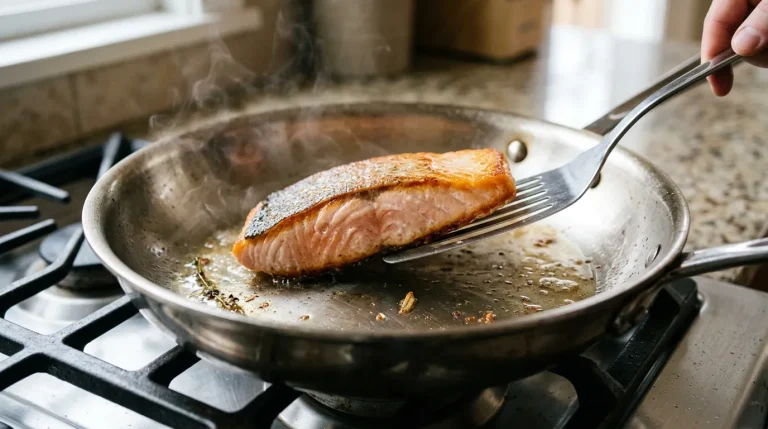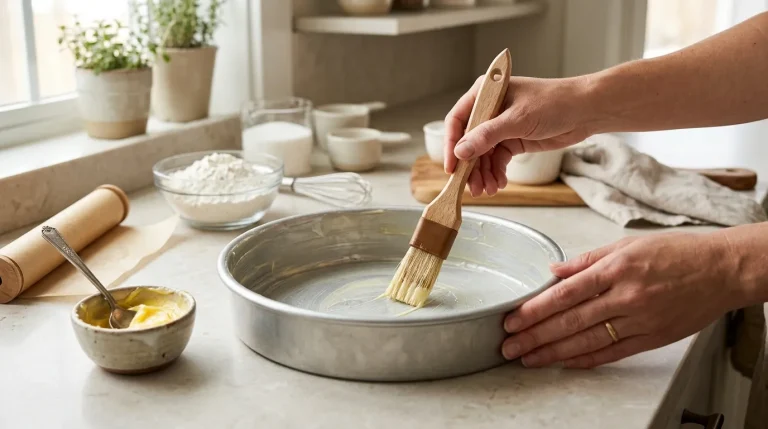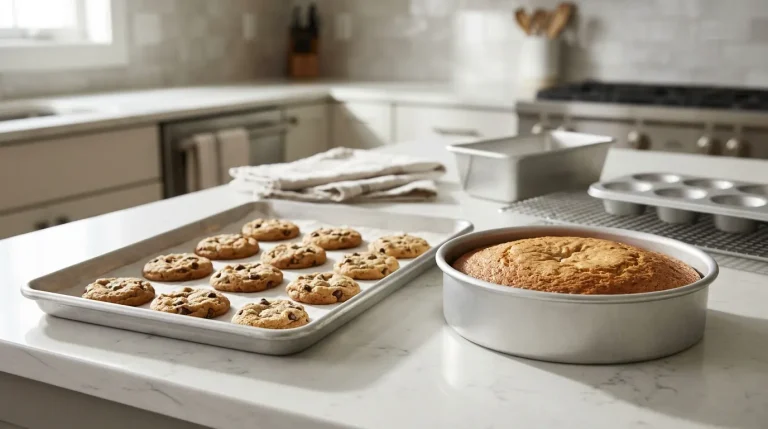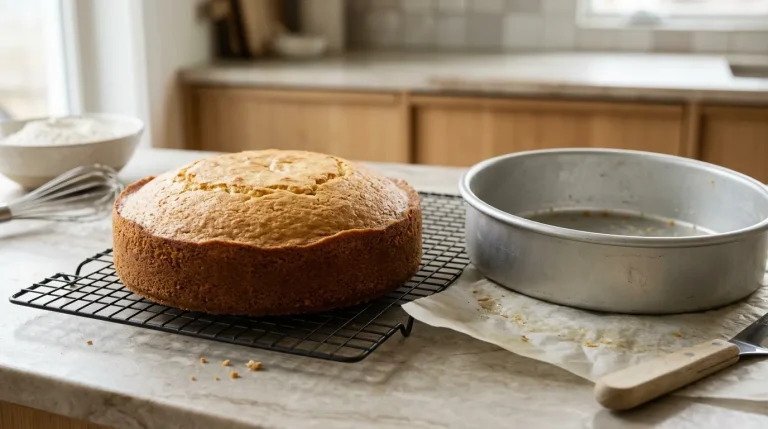
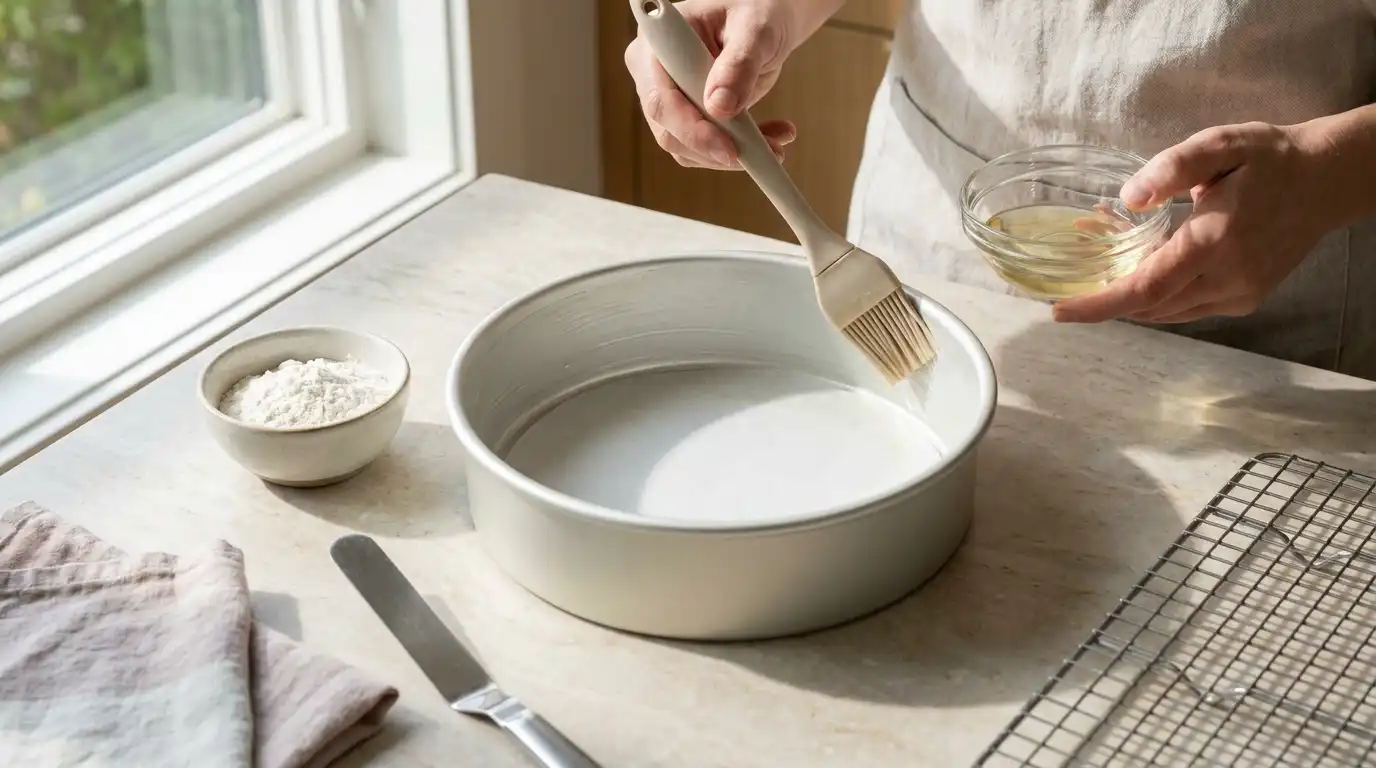
Grease, line, and preheat bakeware to stop food from sticking.
I’ve spent years testing pans in busy kitchens and quiet home ovens. This guide breaks down every proven bakeware sticking fix, from why batters glue to metal to the tricks that release fragile cakes whole. If you want a complete bakeware sticking fix that lasts, keep reading. You’ll learn the science, the quick saves, and the long-term habits that make stuck-on bakes a thing of the past.
Why Things Stick: The Science Behind Your Bakeware
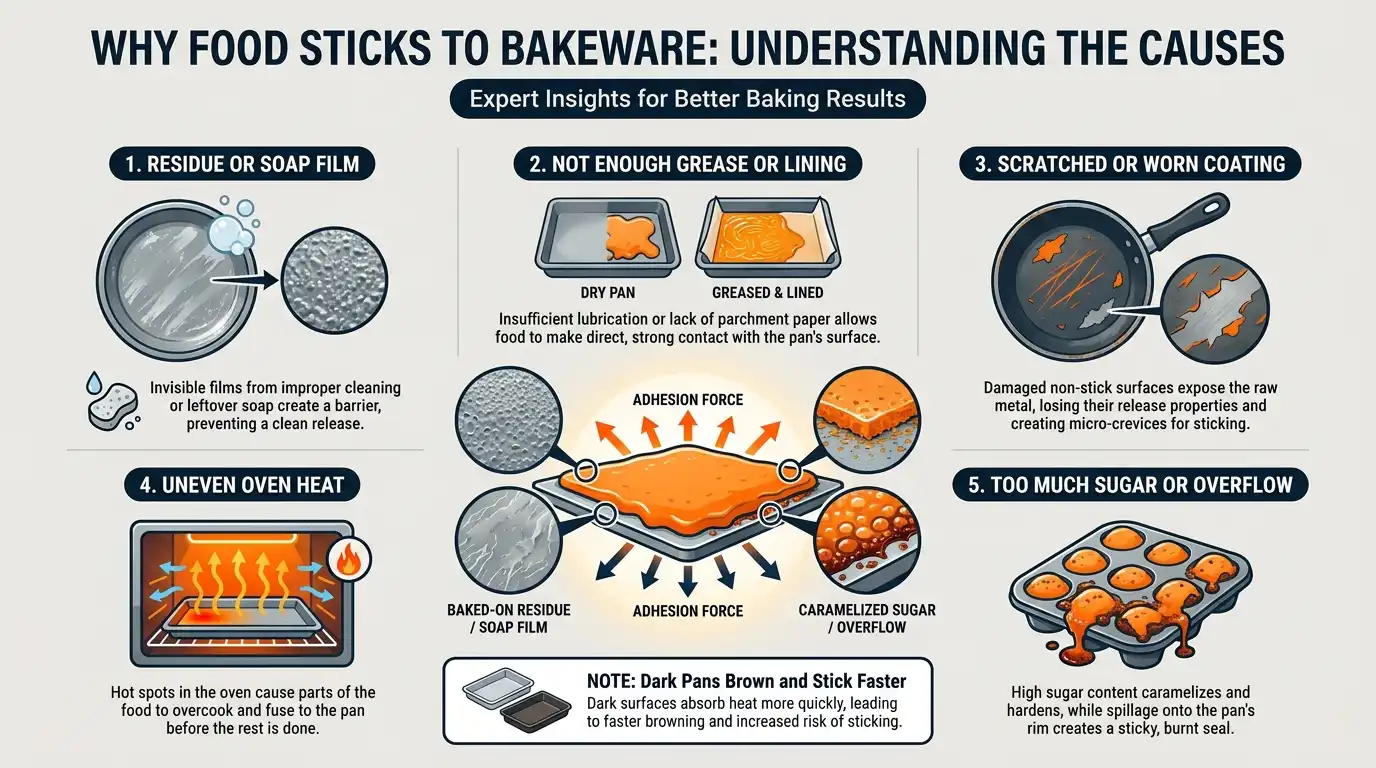
Food sticks when proteins and sugars bond to rough or dirty surfaces. Hot spots, cold spots, and steam trapped under batter can lock on crusts. Old oil, soap film, or scratched coatings make the surface grabby.
Several small issues stack up into a mess. Pan color affects heat. Dark pans brown and stick faster. Wet batters leak sugar and can caramelize like glue. Eggs set fast and grip exposed metal. A good bakeware sticking fix starts by removing these little traps.
Key causes to watch:
- Residue on pans from aerosol sprays or dishwasher film
- Worn nonstick or scratched coatings
- Under-greased or unlined surfaces
- Oven that runs hot or cool by 15–25°F
- Overfilled pans that spill and sugar-weld edges
Can you salvage a stuck cake? Yes. Chill or freeze the pan to firm the crumb, then release with a thin knife.
Fast Bakeware Sticking Fixes You Can Use Today
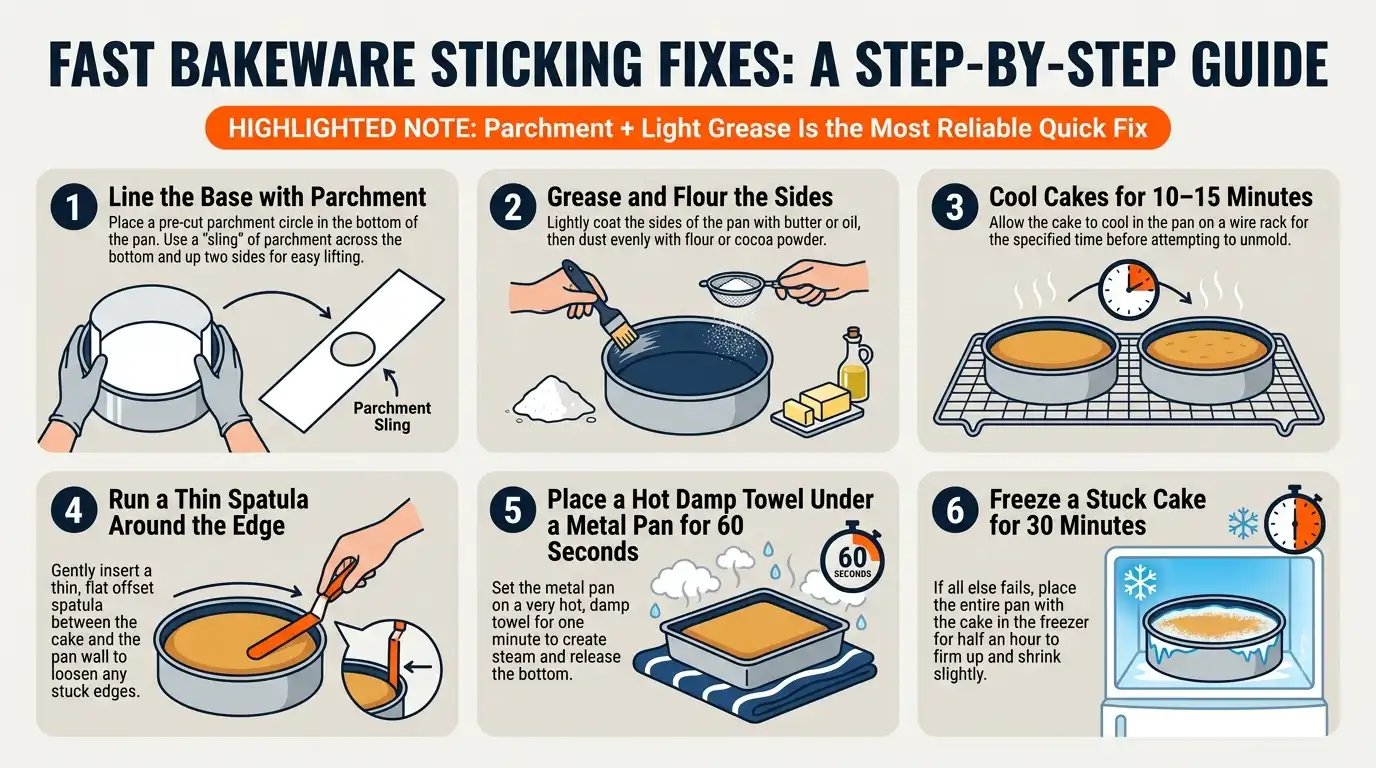
When time is tight, go straight to these fixes. They are simple and work in most kitchens. They also protect shape and texture.
Quick steps:
- Line the base with parchment. Trace, cut, and lay it flat.
- Grease, then flour the sides. Tap out the excess.
- Use a baking spray with flour. Brush it into corners.
- Create a sling for bars with parchment that hangs over edges.
- Cool cakes 10 to 15 minutes in the pan. Then release while warm.
- Run a thin offset spatula around the edge. Keep it flat to the wall.
- For metal pans, rest a hot, damp towel under the pan for 60 seconds. Steam loosens sugars.
- Freeze stuck cakes for 30 minutes. Firm edges, then try again.
- For muffins, twist gently in the tin before pulling up.
- For bread, knock the bottom of the pan with a wooden spoon to pop the seal.
If you need a near-instant bakeware sticking fix, parchment plus a light grease is the one-two punch. I use it for cheesecakes, brownies, and delicate sponge layers.
Long-Term Bakeware Sticking Fix: Prep, Ratios, and Heat
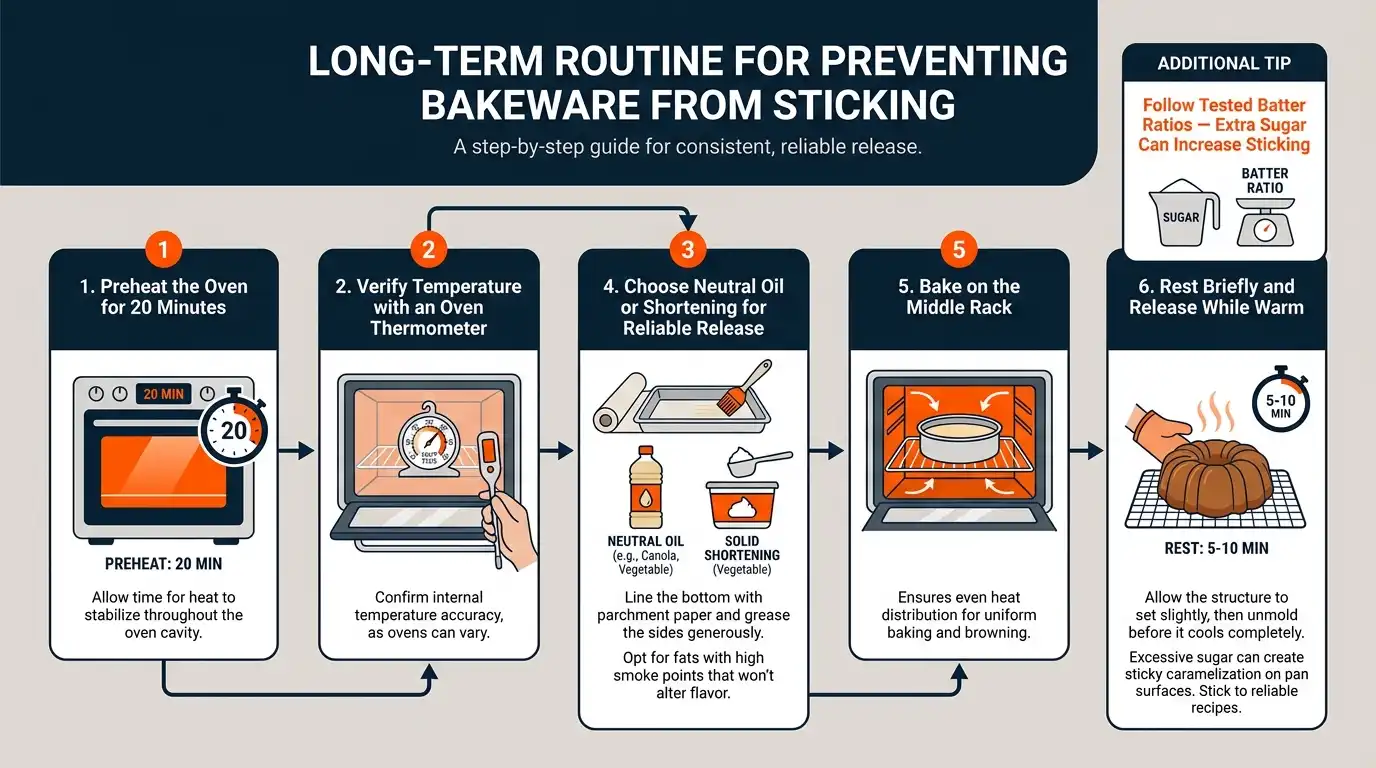
Prevention beats rescue. A long-term bakeware sticking fix blends smart prep and steady heat. It takes minutes and pays off for years.
Build a simple routine:
- Preheat the oven for 20 minutes. Use an oven thermometer to verify.
- Prep the pan before mixing batter. Grease corners, line bases.
- Choose the right fat. Butter adds flavor but can brown and stick. Neutral oil or shortening often release better.
- Dust greased sides with flour or fine sugar for cakes. Use cornmeal for savory breads.
- Aim for middle rack baking. It evens heat and cuts hot spots.
- Rest cakes a few minutes after baking. Release while warm, not hot.
- Keep batters balanced. Extra sugar or low protein flour can stick more. Follow tested ratios.
Do you need to flour a pan after greasing? For most cakes, yes. For brownies with parchment, you can skip flouring. The smartest bakeware sticking fix is a habit, not a hack.
Cleaning and Maintenance That Restore Nonstick Release
Residue is the silent spoiler. A thin film of old oil, spray, or soap can grab food. A maintenance plan is a powerful bakeware sticking fix on its own.
What to do:
- Hand-wash nonstick with warm water and mild soap. Use soft sponges only.
- Avoid aerosol sprays on nonstick. They can bake into sticky layers.
- For metal pans, deep clean with a paste of baking soda and warm water. Rinse well.
- For stainless, lift brown film with a gentle, non-scratch cleanser. Rinse and dry at once.
- For silicone, degrease with hot water and a long soak. Rinse until squeaky.
- Season cast iron and carbon steel. Bake a thin coat of high-smoke oil until polymerized.
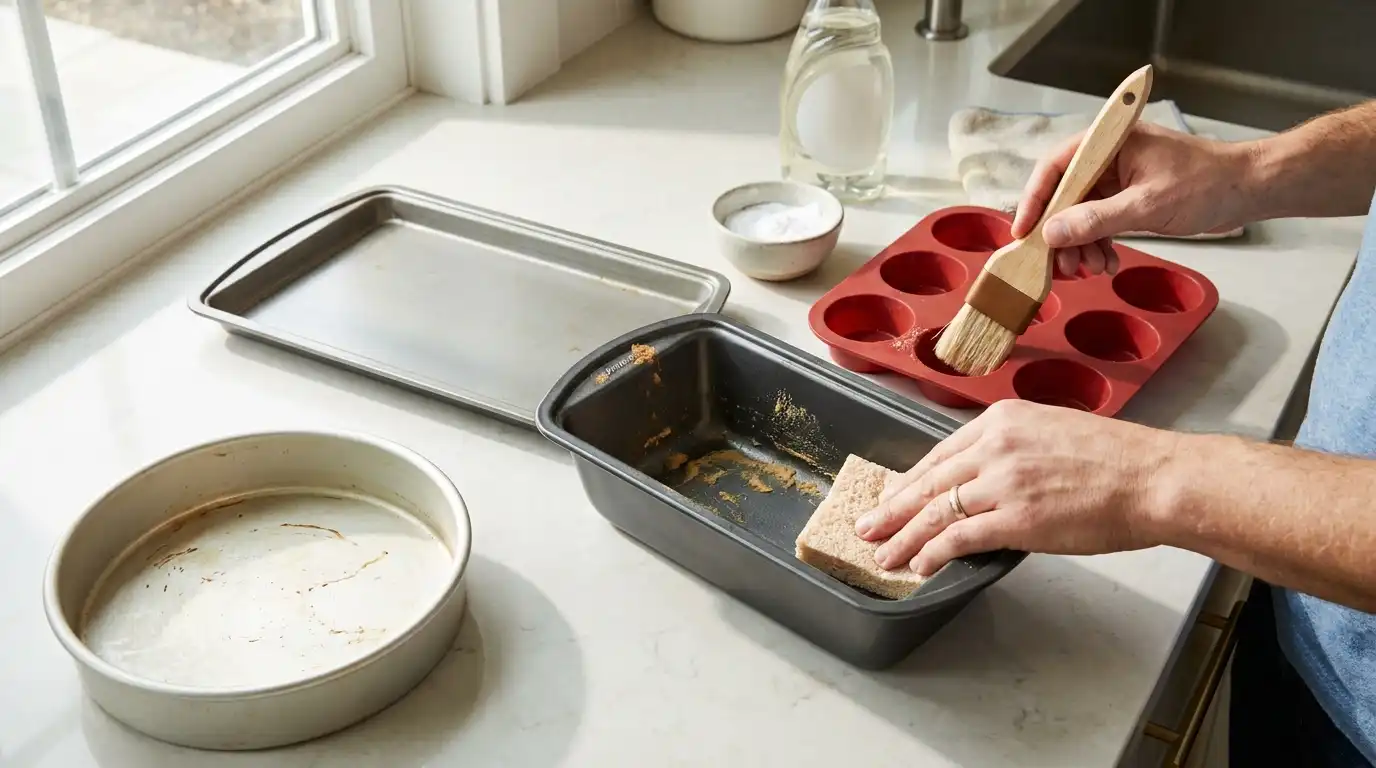
If a pan stays tacky after washing, you still have film. Clean again, then test with a water bead. Tight beads mean a cleaner surface and a better bakeware sticking fix.
Choose the Right Pan, Liner, and Coating
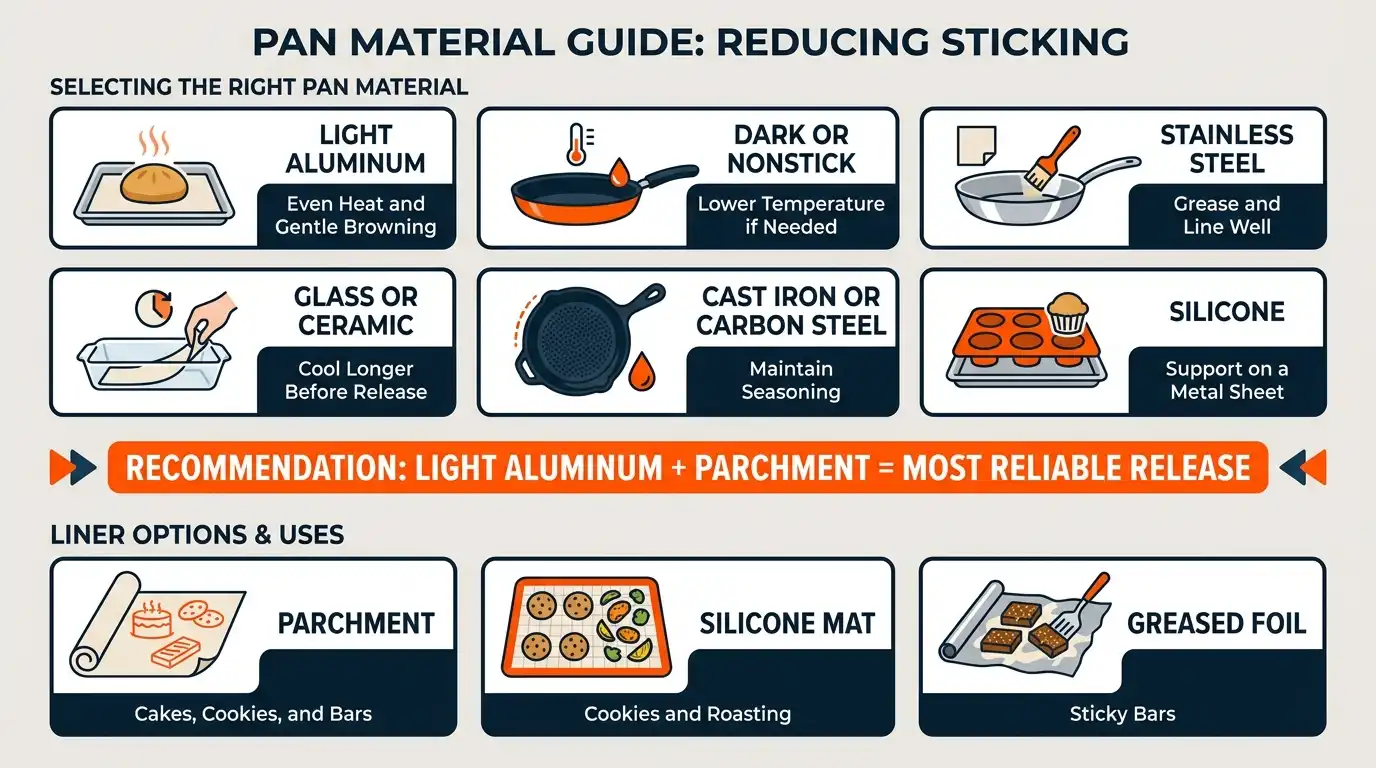
Good tools make release easier. A smart pick here can be your simplest bakeware sticking fix.
Pan basics:
- Light-colored aluminum gives steady heat and gentle browning.
- Dark or nonstick pans run hotter at the surface. Lower oven temp by 25°F if needed.
- Stainless steel is tough but needs good prep. Grease and line it.
- Glass and ceramic hold heat longer. Cool a bit before release to avoid tearing.
- Silicone flexes, but it needs support. Set it on a metal sheet.
Liner choices:
- Parchment is the gold standard for cakes, cookies, and bars.
- Silicone mats work for cookies and roasting. Do not use for very wet batters that need grip to climb.
- Foil is fine for sticky bars. Grease it well for clean edges.
When testing pans for clients, I pair a light aluminum pan with parchment for the most reliable bakeware sticking fix. It wins in both sweet and savory baking.
Material-Specific Troubleshooting
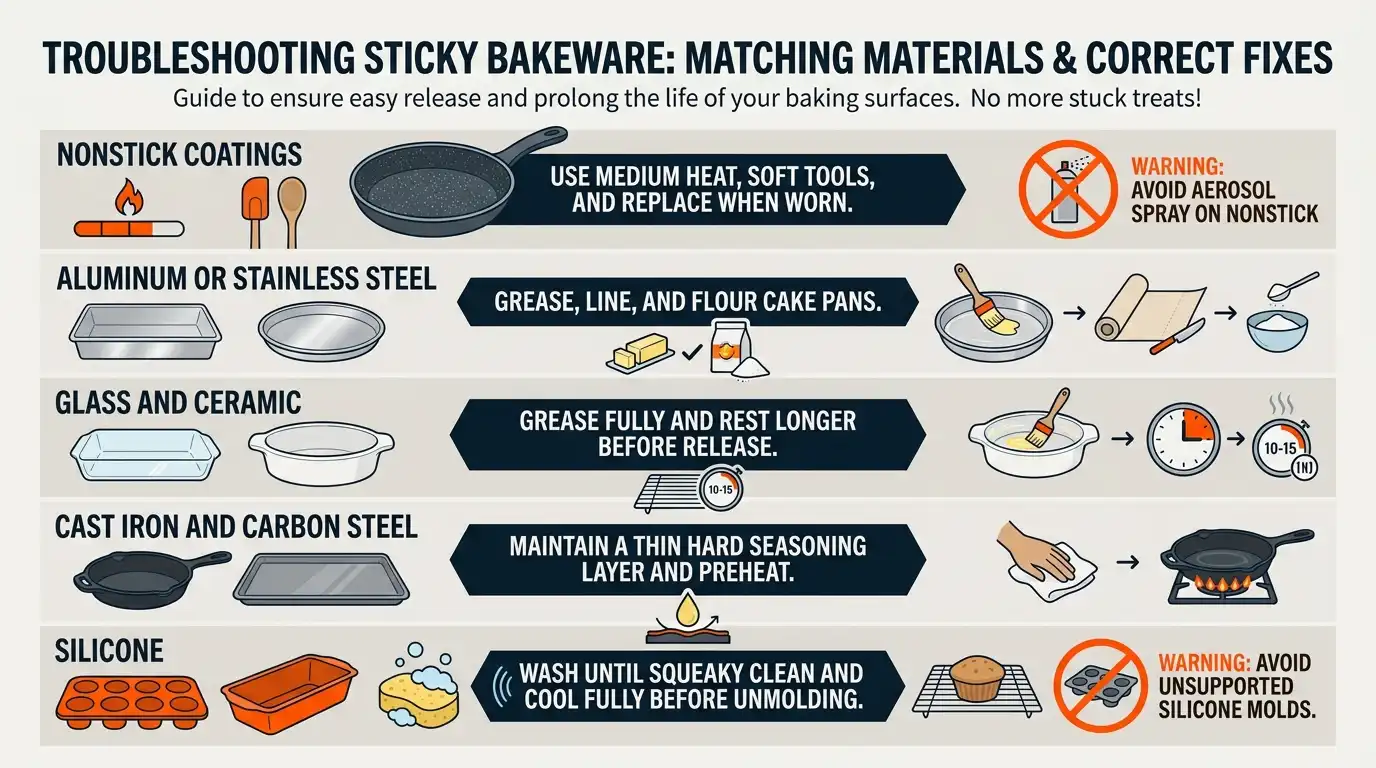
Each surface has quirks. Match the fix to the material for best results and a durable bakeware sticking fix.
Nonstick coatings
- Use medium heat and plastic, wood, or silicone tools.
- Skip dishwasher and aerosol sprays.
- When food starts to catch, retire the pan. Worn coatings cannot be restored.
Aluminum or stainless steel
- Grease and line. Flour the sides for cakes.
- Preheat pans for breads or pizza to jump-start release.
- Use fine cornmeal under doughs as tiny ball bearings.
Glass and ceramic
- Grease fully. Avoid high sugar spillovers at edges.
- Let bakes rest longer before release. Heat holds and needs time to relax.
- Run a knife around edges while still warm.
Cast iron and carbon steel
- Keep a thin, hard seasoning layer. Bake oil on, then cool in oven.
- Preheat well for cornbread and skillet cakes.
- Use parchment rounds for delicate layers.
Silicone
- Wash until squeaky. Any film will cause sticking.
- Grease for egg-heavy or sugar-heavy batters.
- Cool fully before unmolding to avoid tearing.
Simple Tests To Prove Your Fix Works
Trust the process by running quick checks. A data-backed bakeware sticking fix builds confidence.
Try these:
- Muffin test. Grease half the tin and line the other half. Bake, then compare release and crumb.
- Cookie sheet test. Bake cookies on a silicone mat and on parchment. Note spread and release.
- Sponge layer test. Use a lined, greased round pan. Rest 10 minutes, then release. Track any tearing.
I log results after each change. One tweak at a time shows what gives you the best bakeware sticking fix in your own oven.
Frequently Asked Questions of bakeware sticking fix
How do I stop cakes from sticking to the pan?
Grease the sides, line the base with parchment, and dust with flour. Cool 10 to 15 minutes, then run a thin knife around the edge before turning out.
Why do nonstick pans still stick sometimes?
Coatings wear and residue builds up. Gentle cleaning and avoiding aerosol sprays help, but worn coatings need replacement.
Can I use olive oil as a release fat?
Yes, but it can add flavor and may brown fast. Neutral oil or shortening often gives a cleaner release for cakes.
What is the best liner for brownies?
Use parchment with overhangs for easy lifting. Grease lightly so corners stay sharp without tearing.
How do I rescue a stuck loaf of bread?
Let it rest 10 minutes, then tap the pan bottom with a wooden spoon. If needed, run a thin spatula around edges and try again after a brief cool.
Does pan color affect sticking?
Yes. Dark pans run hotter, which can over-brown edges and cause sticking. Lower the oven temp by 25°F or switch to light aluminum.
Are silicone mats better than parchment?
For cookies and roasting, silicone mats are reusable and release well. For cakes and very wet batters, parchment is more reliable.
Can I line glass or ceramic pans?
Yes. Parchment works well and prevents sugar-welded edges. Grease under the parchment so it stays flat.
Is flouring the pan always needed?
Not always. It helps for cakes, but brownies and bars often need only parchment. Follow the recipe’s guidance for best results.
What oven rack should I use to reduce sticking?
Use the middle rack for even heat. Top or bottom racks can create hot spots and sticky edges.
Conclusion
A great bakeware sticking fix blends clean pans, smart prep, and steady heat. Grease right, line where it counts, and give bakes a short rest before release. Small habits stop big headaches.
Set a simple routine today. Test one change per bake, and keep what works. Share your wins, ask questions, or subscribe for more test-kitchen tips that make every bake pop free and perfect.