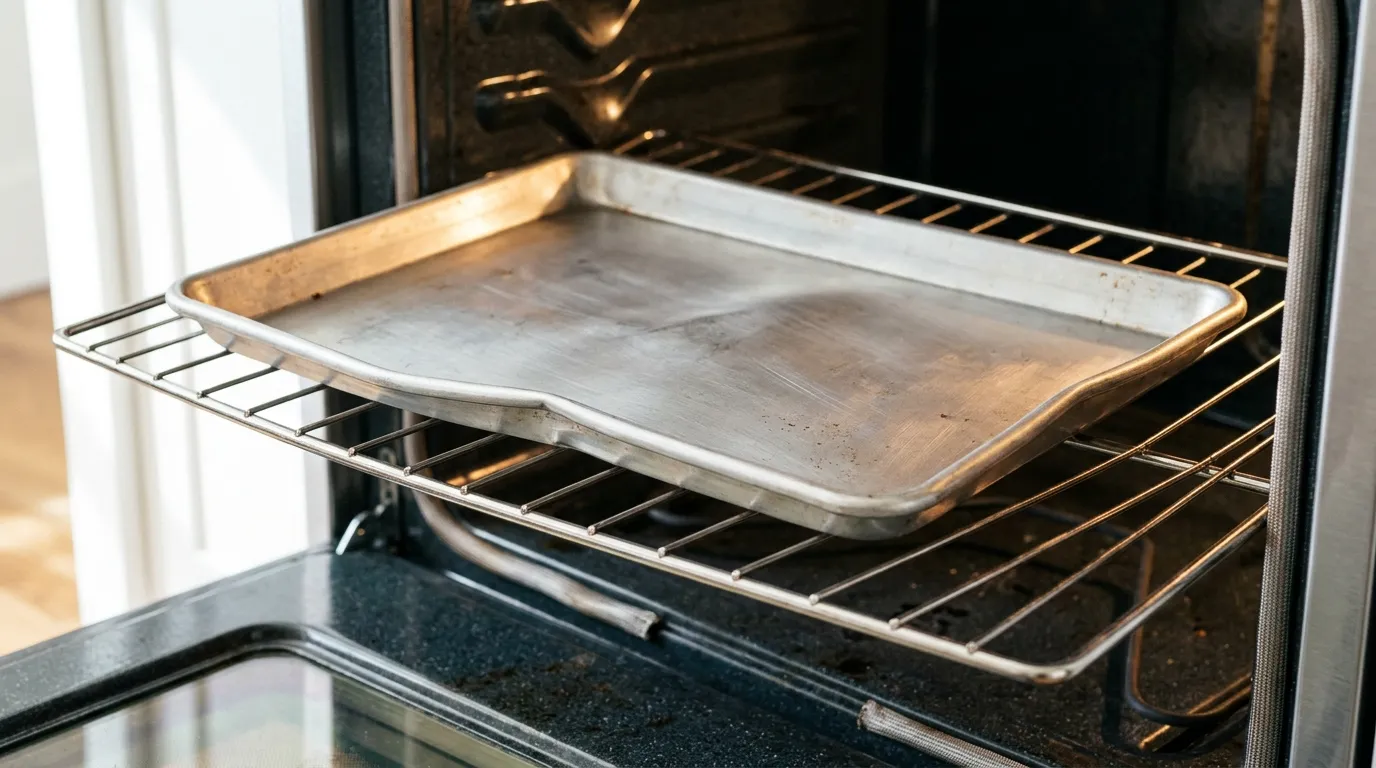
A baking pan warps when parts of the pan heat or cool at different rates. This uneven change creates stress in the metal. If the stress becomes stronger than the pan can handle, the pan bends, twists, or develops a raised center.
This is common with thin aluminum, steel, and nonstick pans used in American home ovens. High heat, cold water, poor support, and repeated heating cycles can all play a role. Most warped pans are not dangerous by themselves, but a badly bent pan may sit unevenly, spill batter, or cook food poorly.
How thermal stress makes a baking pan warp
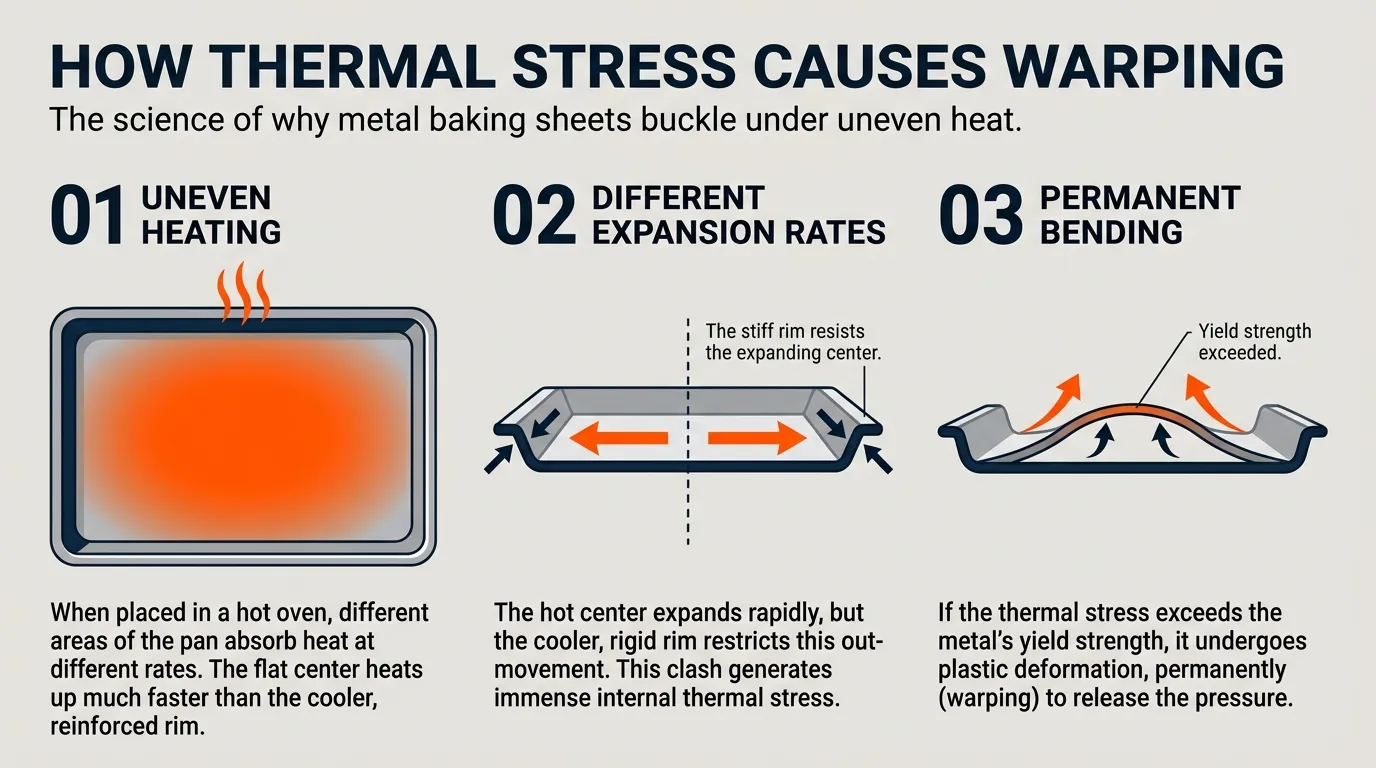
Metal expands when it gets hot and contracts when it cools. A baking pan usually does this many times during its life. The problem starts when one part of the pan changes size faster than another part.
For example, the bottom of a pan may sit close to a hot oven rack. The sides may stay cooler because they are exposed to moving air. The bottom then expands more than the sides. Since the parts are joined, they pull against each other.
This creates thermal stress. Thermal stress means force inside a material caused by uneven temperature or restricted movement.
If the stress stays below the metal’s strength, the pan returns to its old shape after cooling. If the stress passes the metal’s yield point, the pan takes a permanent bend.
A simple estimate shows why this can happen. Aluminum expands by about 23 micrometers per meter for each 1°C temperature rise. A 9-inch aluminum pan heated from room temperature to a typical 350°F oven may try to expand by roughly 0.8 millimeter in length. That is a small change, but the pan must absorb it across its flat base, corners, rim, and coating.
Why thin pans warp more easily
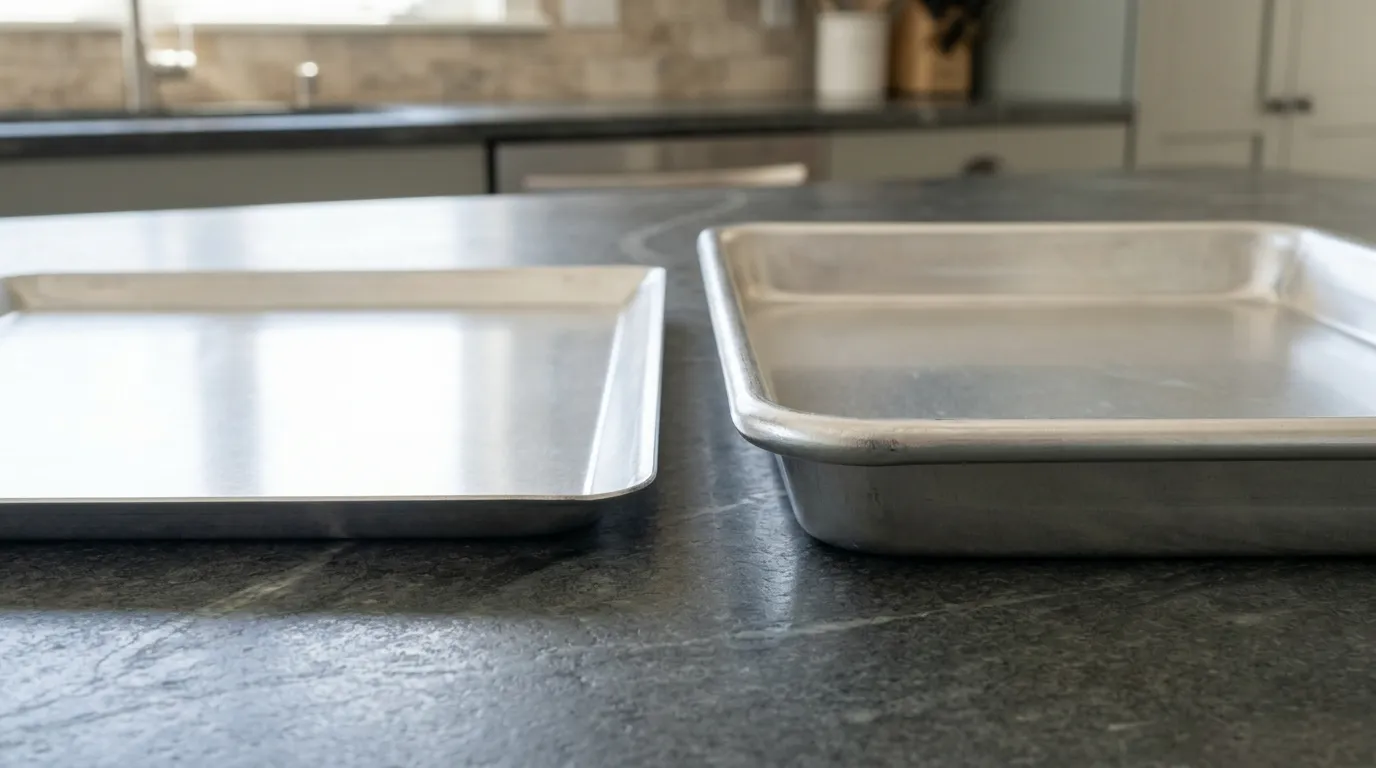
Thin metal heats fast. That can help food bake quickly, but it also creates larger temperature differences across the pan.
A thin pan may:
- Heat at the center before the corners catch up
- Bend when placed on a hot oven rack
- Twist when removed from the oven
- Lose its shape after many heating and cooling cycles
Thicker pans usually resist bending better. However, thickness alone does not guarantee that a pan will stay flat. Metal type, shape, rolled edges, coatings, and manufacturing quality also matter.
Why pan shape affects warping
Large flat surfaces have more room to expand. A broad sheet pan can therefore show more movement than a small, deep cake pan.
Corners and rims also affect the result. A raised rim can hold parts of the pan in place while the base expands. This may push the center upward or make the pan rock from corner to corner.
The most common reasons baking pans warp
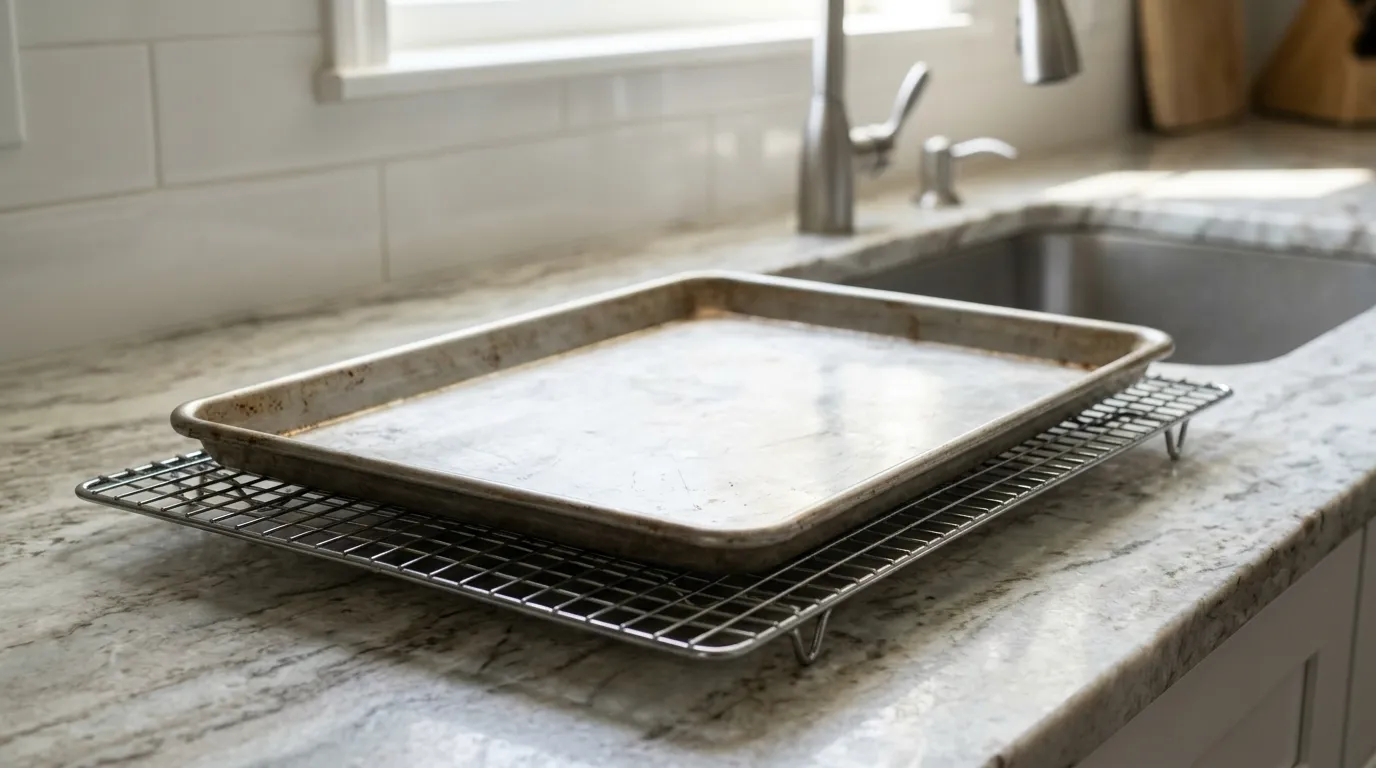
The main cause is uneven heating or cooling. Several common habits can make that effect worse.
1. Moving a hot pan onto a cold surface
A hot pan can warp when placed on a cold countertop, stone surface, wet towel, or metal table. The bottom cools quickly while the top remains hot.
That sudden temperature difference can bend the base. The risk is higher with thin sheet pans and pans that are already weakened from years of use.
Use a dry cooling rack instead. A rack lets air move around the pan and reduces the speed of uneven cooling.
2. Pouring cold water into a hot pan
Cold water can cool one area of a hot pan very fast. This is one of the most common causes of sudden warping.
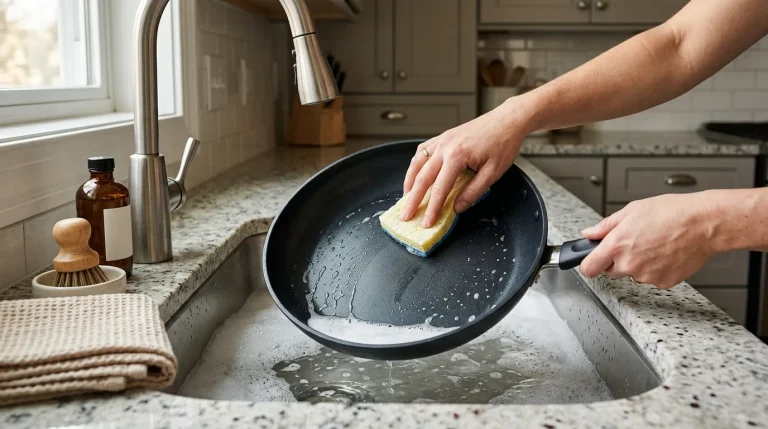
Do not put a hot baking pan under cold tap water. Let it cool until it is warm, then wash it with warm water and mild dish soap.
This rule matters even more for pans with nonstick coatings. A sharp temperature change may damage the coating or make it separate from the metal.
3. Using a pan that is too thin for high heat
Many light pans work well for cookies, biscuits, and other standard baking tasks. They may not handle high heat as well as a heavy-gauge pan.
High heat can include:
- Broiling
- Roasting at very high temperatures
- Direct contact with a heating element
- Use on a stovetop burner
- Use over an open flame
Most baking pans are made for oven baking, not stovetop cooking. Follow the temperature and use limits from the pan maker.
4. Uneven oven heat
Home ovens do not heat every area in the same way. The back, sides, top, and bottom may have different temperatures. A pan can also sit close to a heating element or touch a hot oven wall.
A pan may warp when:
- It sits partly over a hot spot
- One side is close to the oven wall
- It is placed directly under a broiler
- It rests on a rack that is not level
- The oven cycles heat in strong bursts
An oven thermometer can help check whether the oven runs far above its set temperature. It cannot remove all hot spots, but it can reveal a temperature problem.
5. Repeated heating and cooling
Metal can weaken after many cycles of expansion and contraction. A pan may stay flat for years, then begin to rock or pop during use.
This does not mean the pan “remembers” its shape. Rather, repeated stress can cause small changes in the metal. Over time, those changes may become visible.
6. Using the wrong cleaning method
A dishwasher does not always warp a baking pan by itself. However, a dishwasher cycle can add heat, strong detergent, water pressure, and rapid cooling. Some thin pans may not tolerate that treatment well.
Abrasive pads can also scratch coatings. Once a pan has scratches, dents, or exposed metal, it may be more likely to heat unevenly.
Check the care instructions before using a dishwasher. Hand washing is often the safer choice for thin aluminum and coated bakeware.
How to tell why your baking pan warped
Look at the shape of the bend before trying to fix it. The pattern can suggest the cause.
| What you see | Likely cause | What it means |
|---|---|---|
| Center rises when the pan heats | Uneven expansion of the base | The pan may flatten when cool but pop in the oven |
| Pan rocks on a flat counter | Permanent bending or twisted corners | The pan may spill batter or slide |
| One corner sits higher | Uneven cooling or impact | The frame may be stressed or bent |
| Coating bubbles or peels | Excess heat, age, or damage | The pan should usually be replaced |
| Cracks or chips in glass or ceramic | Thermal shock or impact | Do not use the pan |
| Pan bends only at very high heat | Heat limit may have been exceeded | Check the maker’s instructions |
| Pan stays bent when cool | Permanent deformation | Gentle reshaping may not work |
The pop-up center
Some sheet pans make a loud pop in the oven. The center may rise during heating and flatten again after cooling.
This can happen because the pan’s bottom expands faster than its rim. The sound is not always a sign of failure. However, a pan that pops violently, slides, or spills food needs closer inspection.
A warped pan versus a pan with a loose coating
Warping changes the shape of the metal. A damaged coating is a separate issue.
Replace a coated pan if the surface:
- Peels into food
- Has large flakes
- Shows exposed metal in many places
- Has deep scratches across the cooking area
- Produces loose particles during washing
A small change in shape may be manageable. A failing coating creates a different reason to stop using the pan.
How to prevent baking pans from warping
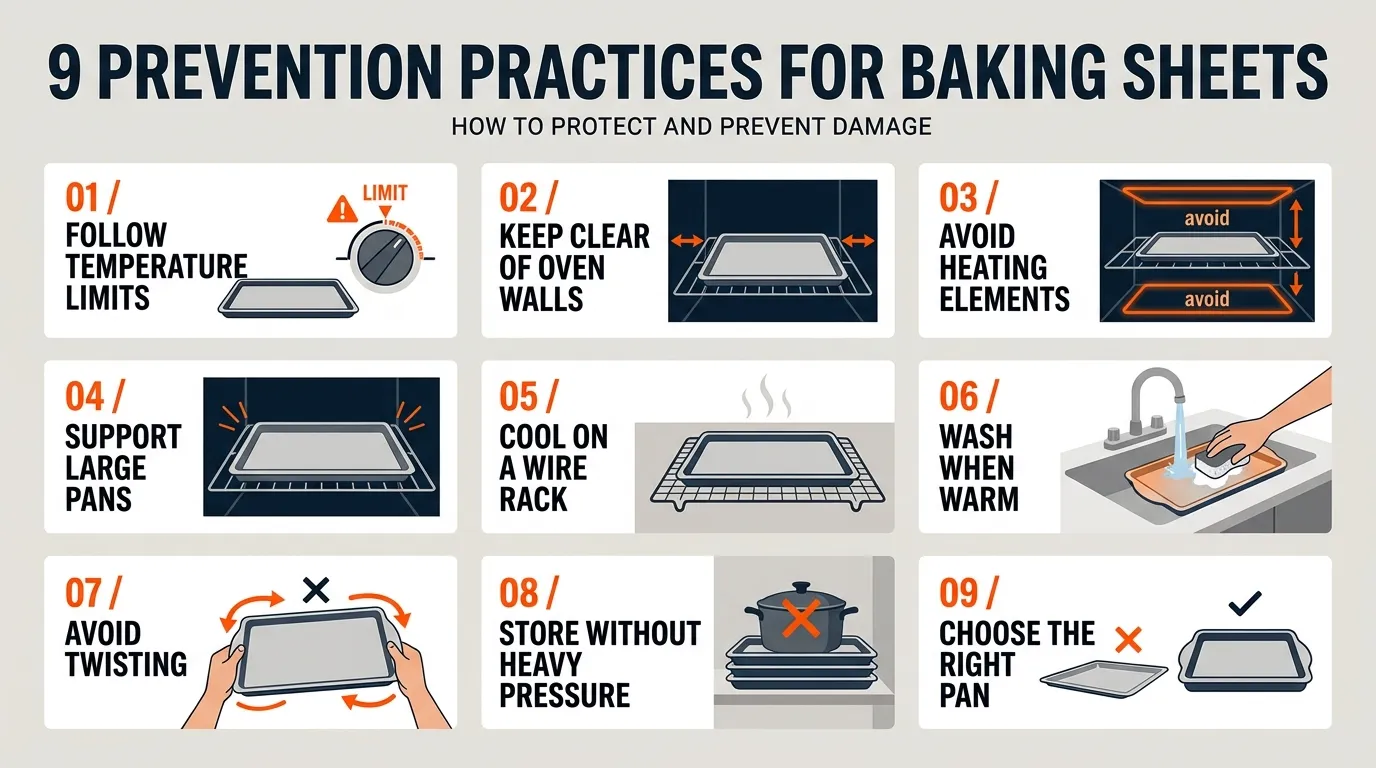
Good temperature control and gentle handling prevent most warping.
Follow these steps
- Use the pan within its stated temperature range.
Do not use a baking pan under a broiler unless the manufacturer allows it. - Place the pan on the oven rack, not against the oven wall.
Leave room for air to move around the pan. - Avoid direct contact with heating elements.
Do not place bakeware on the oven floor unless the oven manual says it is safe. - Support large pans well.
Hold both ends of a full sheet pan. Heavy food can make a thin pan bend while it is hot. - Cool the pan on a wire rack.
This helps the pan cool more evenly. - Wait before washing.
Let the pan cool from hot to warm. Use warm water instead of cold water. - Do not twist the pan.
If food sticks, soak the pan rather than forcing it flat or bending the corners. - Store pans without heavy items pressing on them.
Weight can slowly bend thin metal, especially when it is stacked at an angle. - Choose the right pan for the job.
A heavy-gauge sheet pan is better for high-heat roasting than a very thin cookie sheet.
How to choose a more stable baking pan
When shopping for a replacement, look for useful construction details rather than a vague claim that a pan is “heavy duty.”
Helpful features may include:
- A thicker metal base
- A rolled or reinforced rim
- A flat design that sits evenly
- A shape that matches the food and oven space
- Clear oven temperature limits
- Care instructions that fit your cleaning routine
A dark pan may absorb more heat than a light or shiny pan. That can change browning and surface temperature, even though color alone does not determine whether a pan will warp.
Can you fix a warped baking pan?
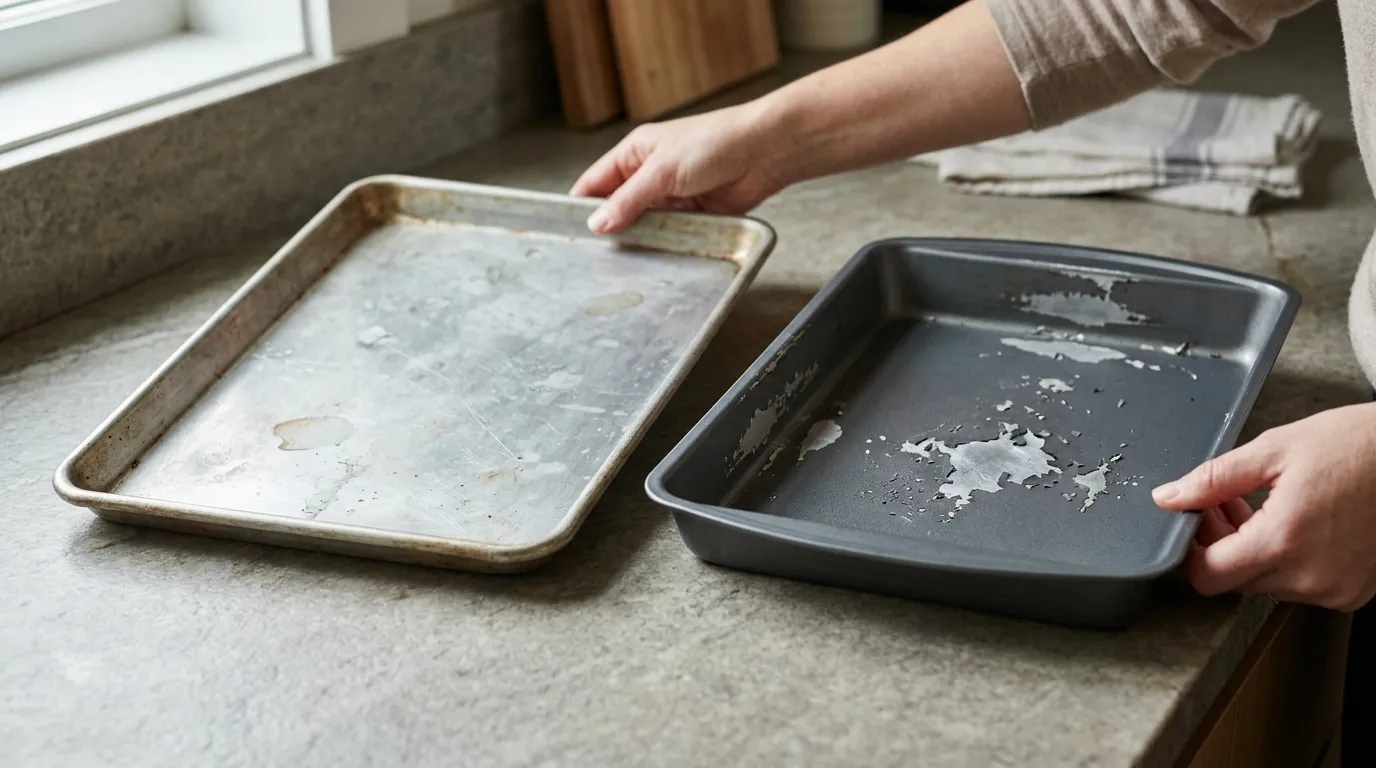
Sometimes, but the safest choice depends on the material and the amount of damage.
Mildly warped metal pans
A slightly bent, uncoated metal pan may be reshaped with careful hand pressure. Work slowly on a flat, protected surface. Do not hammer the pan or force it sharply, since that can create cracks, sharp edges, or more distortion.
This approach is not a reliable fix for every pan. A pan can look flat while still rocking under weight.
Coated baking pans
Do not aggressively bend a nonstick or ceramic-coated pan. Flexing the metal can damage the coating or cause it to separate.
If the pan is badly warped or the coating is damaged, replacement is usually safer and more practical.
Aluminum pans
Aluminum is light and conducts heat well, but it is also relatively easy to bend. A small dent may not matter for some tasks. A large bend can cause uneven baking or make the pan unsafe to carry when full.
Avoid trying to heat an aluminum pan and then bend it into shape. That can increase distortion and damage any coating.
Glass and ceramic bakeware
Glass and ceramic dishes usually crack or shatter rather than warp. Never place a hot glass or ceramic dish on a wet or cold surface, and do not add cold liquid to it while it is hot.
A cracked, chipped, or heavily damaged dish should not be used. Do not attempt to repair it with glue or heat.
When should you replace a warped baking pan?
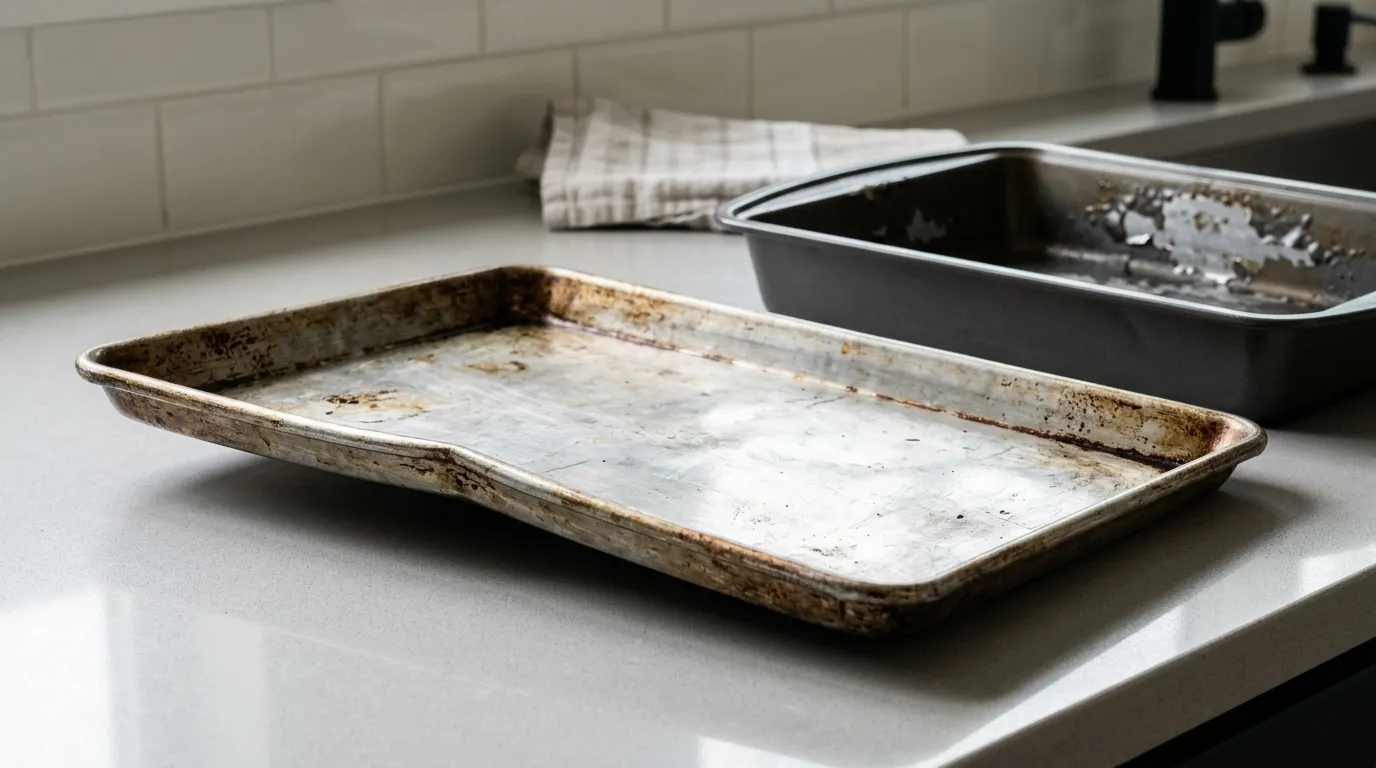
Replace the pan when the damage affects safety, stability, or food quality.
A new pan is the better choice if:
- It rocks badly on a flat surface
- It slides when you move it
- It spills batter or hot food
- It has sharp bent edges
- The coating peels or flakes
- It has cracks, holes, or deep dents
- It touches an oven wall or heating element
- It no longer fits the oven rack safely
- It causes food to burn in one area and remain pale in another
You may keep using a mildly warped uncoated pan for low-risk tasks if it remains stable and does not spill. Place it on a larger flat tray when practical, but do not use that workaround if the pan is unstable or the food could leak.
Common mistakes that make warping worse
Avoid these quick fixes:
- Do not pour ice water into a hot pan.
- Do not put a hot pan on a wet towel or cold stone counter.
- Do not hammer a coated pan flat.
- Do not use a warped pan on a stovetop burner.
- Do not keep using a pan with peeling coating.
- Do not assume a loud pop means the pan is safe.
- Do not exceed the maker’s temperature limit.
- Do not carry a heavy, hot pan with one hand if it bends.
A baking sheet that bends while full can spill hot grease, sugar, or batter. Use oven mitts that cover your hands and wrists, and place the pan on a stable, heat-safe surface.
Key takeaways
- Baking pans warp because uneven heating or cooling creates thermal stress.
- Thin metal pans usually bend more easily than thick, reinforced pans.
- Cold water, cold surfaces, high heat, and poor support are common triggers.
- Cool hot pans on a wire rack and wash them with warm water.
- Replace pans with sharp edges, peeling coatings, cracks, or serious instability.
- A mild bend in an uncoated pan may be manageable, but it can still affect baking results.
Frequently asked questions
Why does my baking sheet warp in the oven and flatten when it cools?
The pan’s base and rim expand at different rates. The center may rise as the metal heats, then return closer to its original shape as the pan cools. This is often called “oil-canning.” It may be harmless if the pan remains stable, but repeated severe movement can lead to permanent bending.
Does aluminum warp more than stainless steel?
Aluminum is light and expands more with temperature than many steel alloys. That can make a thin aluminum pan more likely to move during heating. Pan thickness, shape, rim design, and heat exposure also matter, so metal type alone does not predict performance.
Can I put a warped pan under a heavy object to flatten it?
It is not a dependable fix. Pressure may flatten one area while twisting another. It may also damage a nonstick coating or create sharp edges. If the pan is unstable, replacing it is safer.
Will parchment paper stop a baking pan from warping?
No. Parchment can reduce sticking and make cleanup easier, but it does not stop the metal from expanding or cooling unevenly.
Is a warped baking pan dangerous?
A small bend in an uncoated pan is not automatically dangerous. Risk rises when the pan rocks, spills, has sharp edges, touches an oven element, or has damaged coating. Inspect the pan before each use and replace it if its condition creates a burn or food-safety risk.
Conclusion
Baking pan warping is usually a heat and stress problem, not a mystery. The pan expands and contracts, but uneven temperatures make some areas move faster than others. Over time, that stress can leave the metal permanently bent.
Use the pan within its temperature range, cool it on a rack, avoid cold water, and handle thin pans with support. If the pan becomes unstable, develops sharp edges, or loses its coating, replacing it is the safest next step.