
The right tools save time, boost flavor, and make home cooking easy.
If you want a kitchen that works as hard as you do, this Essential Kitchen Tools Guide is your map and compass. I test gear for home cooks, teach basics to beginners, and cook daily for a busy family. In this Essential Kitchen Tools Guide, I’ll share what matters, what to skip, and how to build a smart, durable kit that helps you cook better tonight.
What Makes a Tool “Essential”

An essential tool earns its spot every week. It does many jobs well, lasts for years, and is safe and simple to clean. This Essential Kitchen Tools Guide focuses on tools that check all three boxes.
Key factors to judge:
- Use rate Choose tools you reach for often.
- Versatility One tool should handle many jobs.
- Durability Materials like 18/10 stainless, cast iron, and wood hold up.
- Safety Good grip, stable base, and heat-safe parts matter.
- Cleanability Dishwasher-safe is fine, but simple hand-wash designs often last longer.
- Storage Smaller footprints and stackable gear help tight kitchens.
A quick rule I use: if a tool only does one cute trick, leave it on the shelf.
Cutting Essentials: Knives and Boards

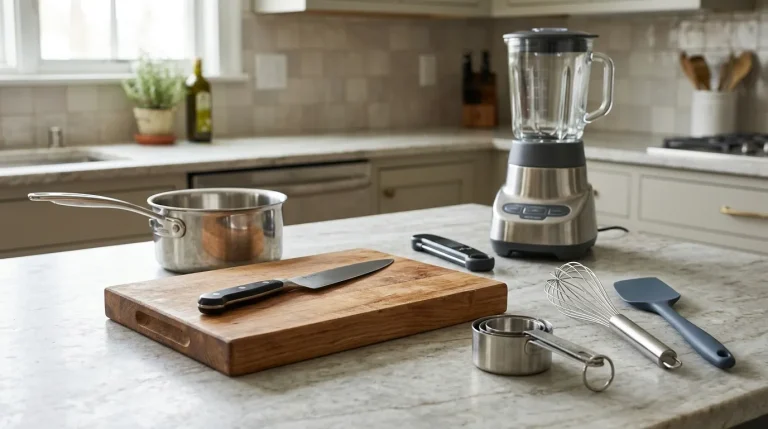
A good knife is the heart of any kitchen. In this Essential Kitchen Tools Guide, the core set is simple: an 8-inch chef’s knife, a paring knife, and a serrated bread knife. Add a honing steel and a basic sharpener to keep edges true.
What to buy:
- Chef’s knife 8-inch, full tang, comfortable handle.
- Paring knife 3–4 inches for peeling and detail work.
- Serrated bread knife 8–10 inches for bread and tomatoes.
- Honing steel Aligns the edge between sharpenings.
- Knife sharpener Simple two-stage or a whetstone if you want to learn.
Cutting boards:
- Large wood or bamboo board Gentle on edges; stable; needs oil now and then.
- Plastic board Dishwasher-safe; great for raw meat to avoid cross-contamination.
Pro tips from my bench:
- Keep knives sharp. Dull blades slip and cause cuts.
- Use a damp towel under boards to stop sliding.
- Store knives on a magnetic strip or in a block. Drawers dull and chip tips.
Cookware Core Set
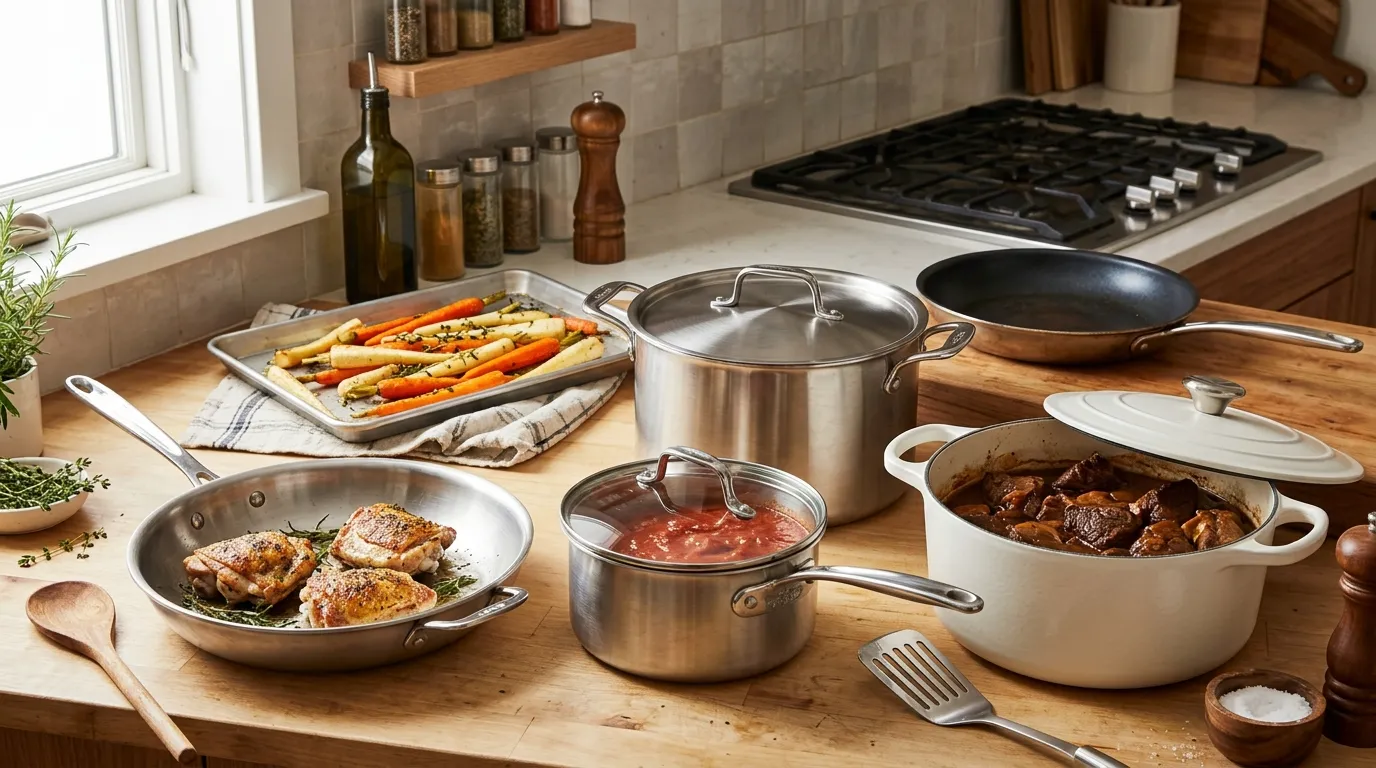
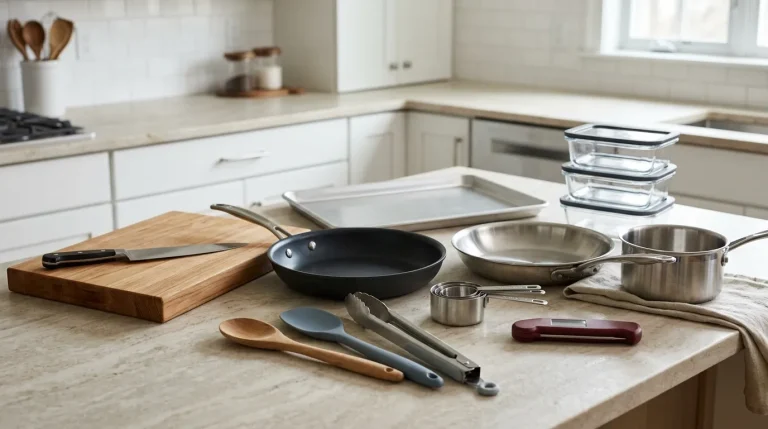
You do not need a dozen pans. You need the right ones. The Essential Kitchen Tools Guide recommends a balanced mix to cover sear, simmer, bake, and braise.
Core picks:
- 12-inch skillet Stainless or carbon steel for searing and sautéing.
- 2–3 quart saucepan For grains, sauces, and reheating.
- 6–8 quart stockpot For soups, pasta, and big batches.
- Half-sheet pan Rimmed, heavy-gauge aluminum for roasting and baking.
- Dutch oven 5–6 quart enameled cast iron for braises and bread.
- Nonstick skillet 10-inch for eggs and delicate foods.
Material notes:
- Stainless tri-ply Even heat, low care, oven safe.
- Cast iron Amazing heat retention; needs seasoning.
- Carbon steel Lighter than cast iron; seasons fast; sears well.
- Nonstick Look for PFOA-free PTFE or quality ceramic; keep heat moderate.
Mistakes to avoid:
- Overheating nonstick. Use medium heat and silicone tools.
- Tiny pans. Food steams instead of browns when crowded.
- Thin pans. They warp and create hot spots.
Prep and Mixing Tools

Prep sets the tone for every meal. This Essential Kitchen Tools Guide keeps it lean yet complete so you can chop, stir, and strain with ease.
Must-haves:
- Mixing bowls Nesting stainless or glass with non-slip bases.
- Colander Large, sturdy handles for pasta and produce.
- Silicone spatulas Heat-safe, flexible, and easy to clean.
- Wooden spoon Gentle on pans and great for stirring.
- Whisk Balloon style for sauces and batters.
- Tongs 12-inch with locking hinge for flipping and serving.
- Bench scraper Moves chopped food and cleans boards.
- Microplane zester Brings citrus, garlic, and hard cheese to life.
- Y-peeler Safer angle and smoother strokes.
- Box grater Four sides for coarse to fine grating.
Real-world tip:
I keep a small bin for scraps and peels on the counter. It saves steps and keeps my board clear. That one habit speeds up prep more than any gadget.
Measuring, Baking, and Thermometers

Good cooking is about feel. Good baking is about precision. The Essential Kitchen Tools Guide blends both with a few key tools.
Precision tools:
- Dry measuring cups Flat top for level scoops.
- Liquid measuring cup Clear, with a pour spout.
- Measuring spoons Narrow bowls fit spice jars.
- Digital scale Accuracy for bread, coffee, and consistent results.
- Instant-read thermometer Fast and accurate for meat and candy.
- Oven thermometer Checks real oven heat.
Baking basics:
- Two half-sheet pans Light-colored for even browning.
- Wire cooling rack Fits inside sheet pan for roasting and cooling.
- Silicone mat or parchment For nonstick, easy cleanup.
Safety note:
Use USDA safe temps. Poultry hits 165°F. Pork and fish reach 145°F, with pork resting for 3 minutes.
Small Appliances Worth the Space
Counter space is prime real estate. In my tests, these devices earn their keep. The Essential Kitchen Tools Guide picks tools that save time every week.
Top choices:
- Blender Smoothies, sauces, and pureed soups.
- Food processor Chops, slices, shreds, and makes dough.
- Hand mixer Quick batters and whipped cream.
- Immersion blender Soups and mayo right in the pot.
- Electric kettle Boils water fast and saves energy.
- Rice cooker or multi-cooker Set and forget grains, beans, and stews.
- Toaster oven Great for small bakes without heating the whole kitchen.
Tip:
If you bake bread weekly, a stand mixer is worth it. If not, a hand mixer and a strong spatula cover most jobs.
Storage, Organization, and Safety

A tidy kitchen cooks faster. You waste less food and stress less. This Essential Kitchen Tools Guide treats storage like a tool you use every day.
Smart storage:
- Glass containers with snap lids Safe for fridge, freezer, and oven.
- Quart and pint deli cups Cheap, light, and stackable.
- Labels and a marker Date leftovers and batch prep.
- Spice jars Consistent size, clear labels, and a cool, dark cabinet.
Safety and sanitation:
- Color-code cutting boards or use plastic for raw meat.
- Keep a small fire extinguisher rated for grease fires.
- Replace sponges often; consider silicone scrubbers.
- Wash hands and tools when switching from raw to ready-to-eat foods.
Budget Builds and Upgrades
You can build a strong kit without overspending. Here is the Essential Kitchen Tools Guide plan I use for new cooks and small kitchens.
Starter kit under $200:
- 8-inch chef’s knife and paring knife
- Large wood board and small plastic board
- 12-inch stainless skillet and 2-quart saucepan with lid
- Rimmed half-sheet pan and a wire rack
- Silicone spatula, wooden spoon, tongs, and whisk
- Measuring cups, spoons, and an instant-read thermometer
- Nesting bowls and a colander
Smart upgrades over time:
- Enameled Dutch oven for braises and bread
- Carbon steel skillet for fast, high-heat sears
- Digital scale for baking and coffee
- Food processor if you batch-cook
Skip or wait on:
- Single-use gadgets like avocado slicers
- Knife sets with many blades you never use
- Ultra-cheap nonstick pans that peel fast
Care, Maintenance, and Lifespan
Take care of your tools and they will pay you back. The Essential Kitchen Tools Guide favors simple routines that fit busy lives.
Knife care:
- Hone before big prep days. Sharpen a few times a year.
- Hand wash and dry at once. No soaking.
Pan care:
- Stainless Use water and a scrub pad; deglaze stuck bits with hot water.
- Cast iron Wash fast, dry well, and rub with a thin oil layer.
- Nonstick Use silicone tools and low to medium heat. Replace when scratched or sticky.
General care:
- Tighten loose pot handles.
- Oil wood boards and spoons each month.
- Check silicone tools for tears and replace if needed.
Common Mistakes and How to Avoid Them
Even pros slip up. The Essential Kitchen Tools Guide helps you spot trouble early and fix it fast.
Watch-outs:
- Dull knives They slow you down and raise injury risk. Sharpen on a schedule.
- Overcrowded pans Food steams. Cook in batches for better browning.
- Wrong pan size Too small makes a mess; too big burns edges.
- High heat on nonstick Coatings break down. Keep it moderate.
- Chasing gadgets Buy once, buy right. Focus on multi-use tools.
Frequently Asked Questions of Essential Kitchen Tools Guide
What knives should I buy first?
Start with a chef’s knife, a paring knife, and a serrated bread knife. This trio handles 95% of home tasks.
How many pans do I really need?
You can do almost everything with a skillet, a saucepan, a stockpot, and a sheet pan. Add a Dutch oven if you love braises and bread.
Is a digital scale worth it for home cooks?
Yes, it improves baking results and reduces dishes by skipping cup measures. It also helps with portion control and repeatability.
What is the best cutting board material?
Wood or bamboo is gentle on edges and stable. Use a plastic board for raw meat to simplify sanitation.
How often should I sharpen my knives?
Home cooks can sharpen two to four times a year, depending on use. Hone often to keep the edge aligned between sharpenings.
Which small appliance should I buy first?
Choose based on your habits. A blender for smoothies and sauces or a food processor if you chop and shred big batches.
How do I choose safe nonstick cookware?
Look for PFOA-free coatings, sturdy handles, and oven safety to at least 400°F. Use silicone or wood tools and moderate heat.
Conclusion
Great cooking starts with smart choices, not more stuff. With this Essential Kitchen Tools Guide, you can build a lean kit that saves time, cooks better, and lasts longer. Start with the core tools, add upgrades as you cook more, and take simple care steps so your gear stays ready.
Ready to put this into action? Pick one upgrade from this list, plan a simple recipe tonight, and feel the difference. If you found this helpful, subscribe for more guides, ask a question in the comments, or share your own must-have tool.