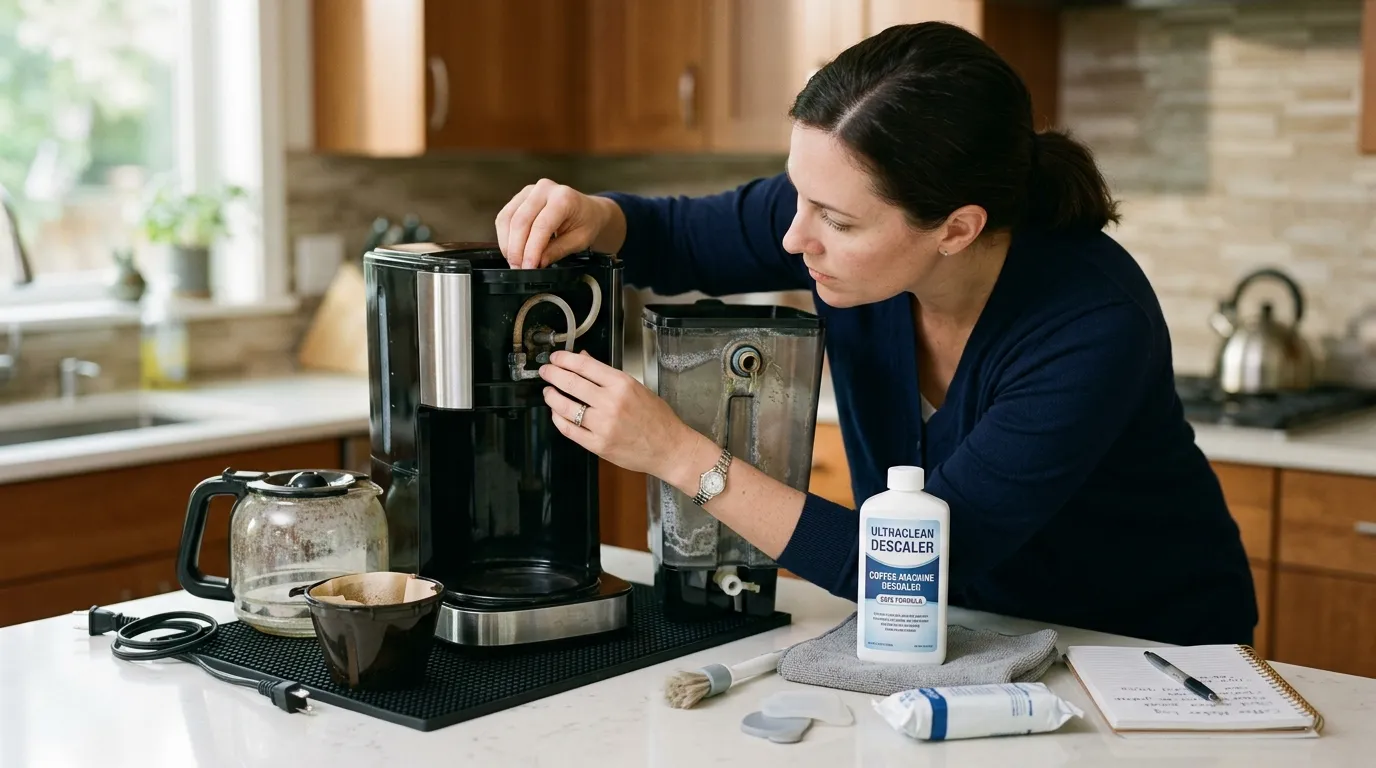
Most coffee maker noise comes from scale buildup, loose parts, or a failing pump.
If the clatter or hiss is ruining your morning, you can fix it. I’ve serviced home machines for years and know the common causes and fast fixes. This guide on How to Fix Coffee Maker Noise gives you clear steps, pro tips, and safe checks you can do today. Stay with me and quiet that brew for good.
What Normal Coffee Maker Sounds Mean
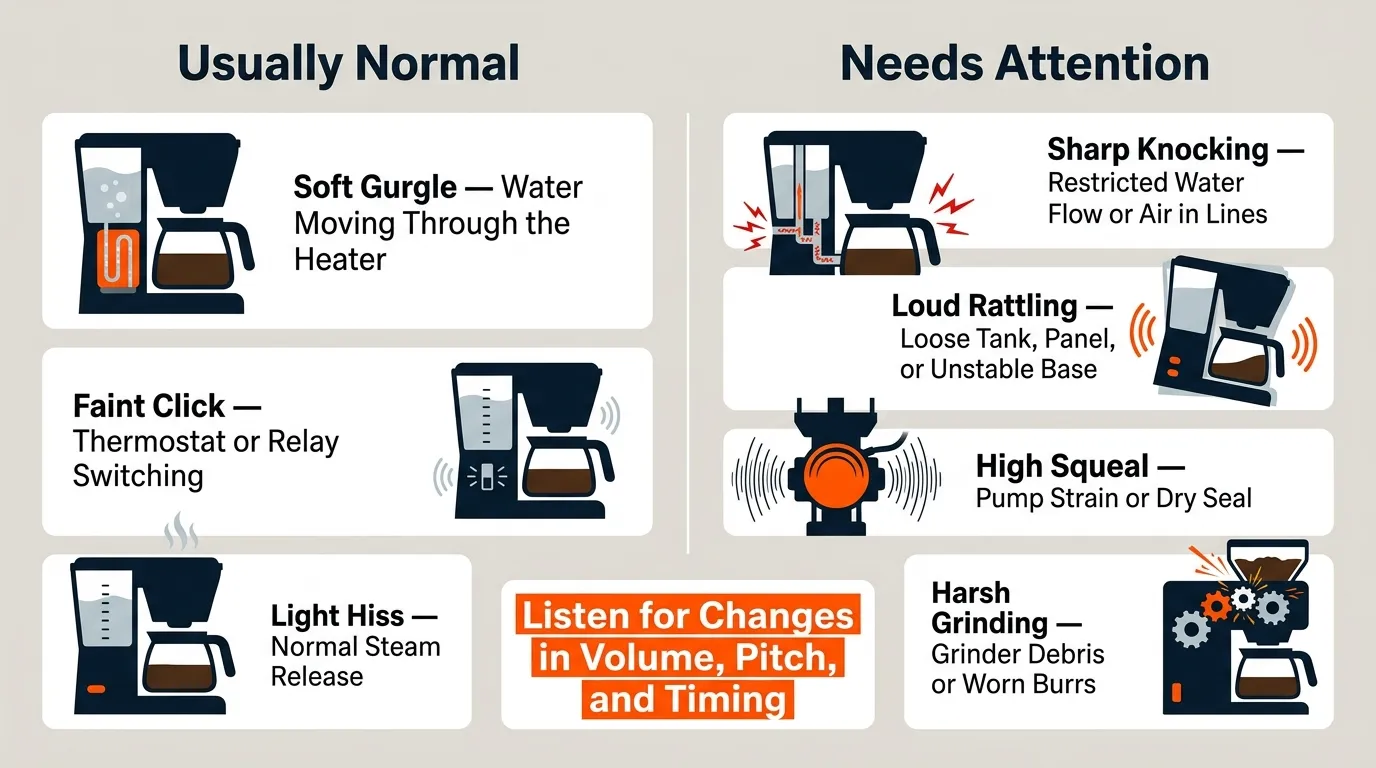
Not all sounds are bad. A soft gurgle is the boiler moving hot water. A faint click is a thermostat or relay. A light hiss is steam venting.
Worry when you hear sharp knocking, loud rattles, high squeals, or harsh grinding. These point to blocked lines, loose parts, or a worn pump. If you want to know How to Fix Coffee Maker Noise, learn what is normal and what is not first.
Why Your Coffee Maker Gets Noisy
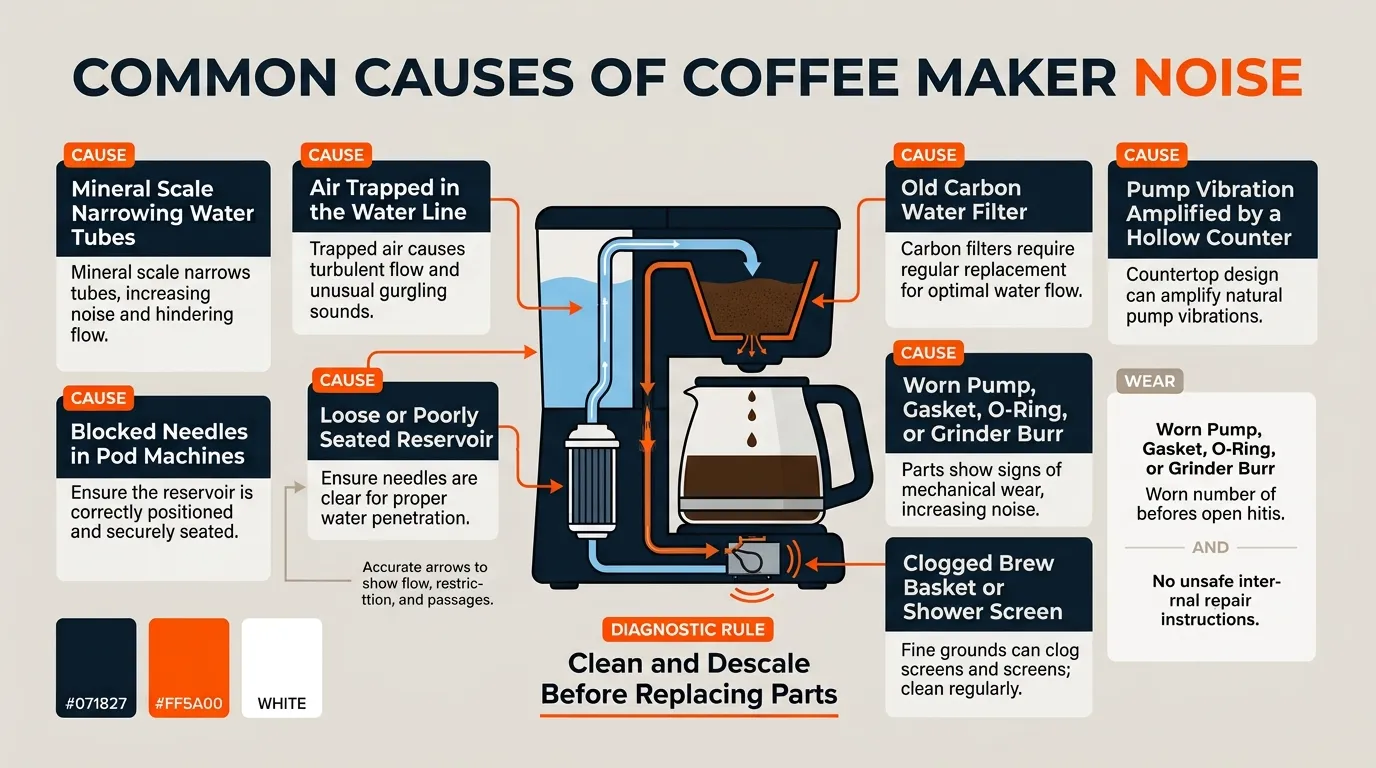
Scale from hard water narrows tubes. The pump then strains and gets loud. Air trapped in the lines can cause chattering. A loose tank or panel can buzz on the counter.
Other causes include a clogged brew basket, a dirty needle in pod units, or an old water filter. Vibrations get worse on hollow or metal counters. These points all feed into How to Fix Coffee Maker Noise in a simple, stepwise way.
Safety First
Unplug the machine. Let it cool. Empty hot water and pressure before you open anything.
Do not open sealed boilers. Do not touch live wires. If a smell of burning stays after cleaning, stop and get service. Safety is part of How to Fix Coffee Maker Noise that many skip, but never should.
Step-by-Step: How to Fix Coffee Maker Noise
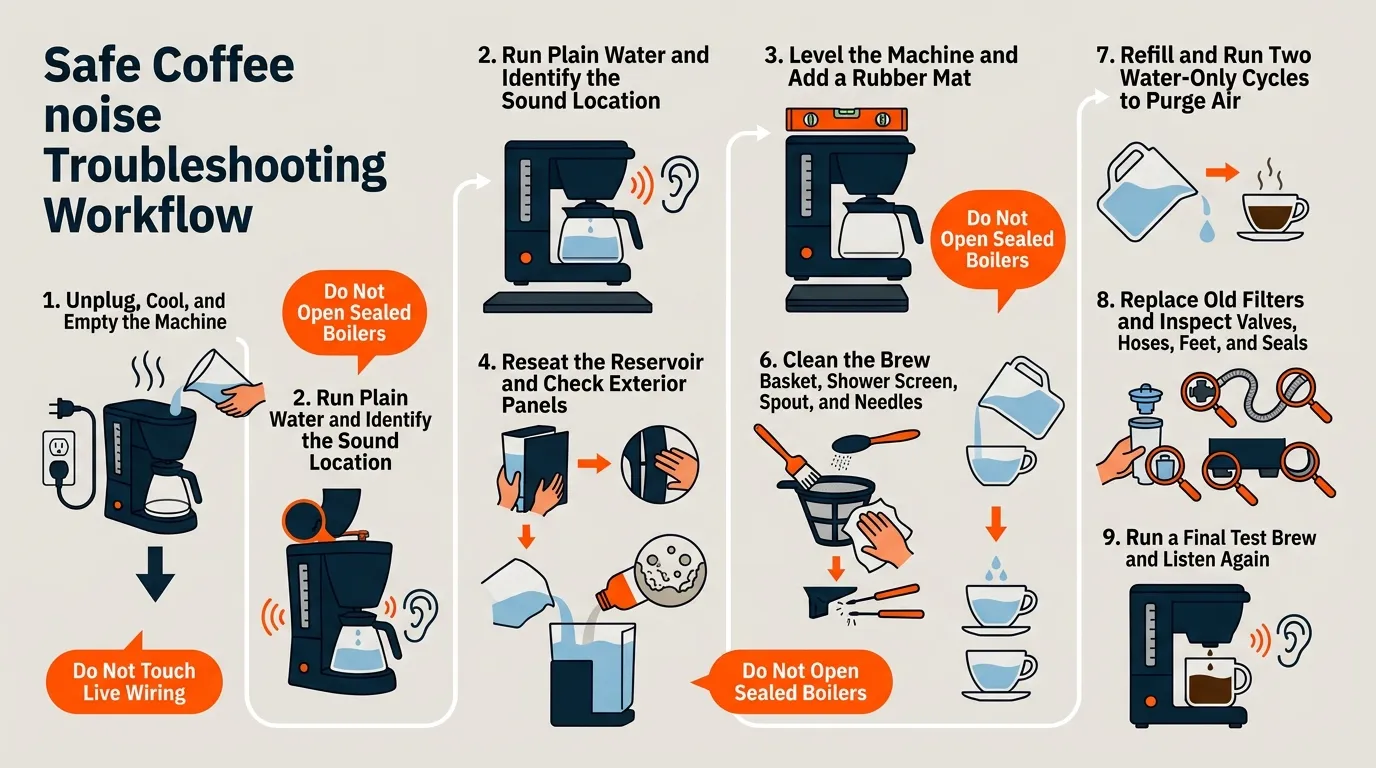
Use this quick workflow. It solves most cases at home. This step-by-step guide on How to Fix Coffee Maker Noise is simple and safe.
- Find the sound
- Run plain water.
- Listen near the reservoir, pump, and brew head.
- Note if the sound changes with flow or heat.
- Level and isolate
- Place the machine on a firm, flat spot.
- Add a thick rubber mat to cut vibration.
- Make sure the reservoir sits snug and does not rattle.
- Descale the water path
- Use a labeled coffee descaler for best results.
- Mix per the bottle. Fill the tank. Run a brew cycle. Pause mid-cycle for 15 minutes. Finish the cycle.
- Rinse with two full tanks of fresh water.
- If you must use vinegar, use one part white vinegar to one part water, then rinse with at least three tanks. Some makers advise against vinegar, so check your manual.
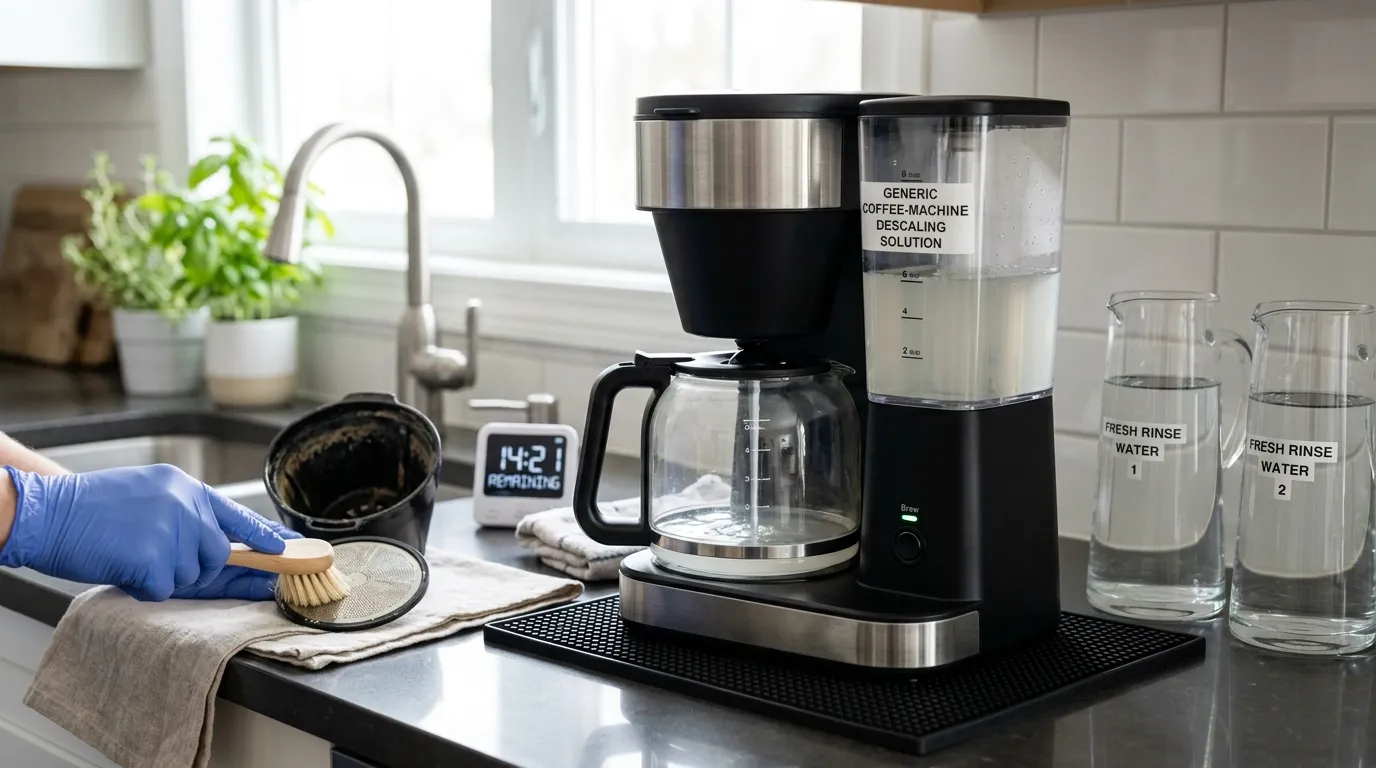
- Clear flow blocks
- Wash the brew basket, shower screen, and carafe spout.
- For pod units, unclog the entry and exit needles with the tool or a paper clip.
- For espresso, backflush if the model allows it. Clean the steam tip.
- Purge air and prime
- Fill the tank to max.
- Run two cycles with no coffee.
- Toggle the brew or hot water mode to force out bubbles.
- Check filters and valves
- Replace the carbon water filter if older than two months.
- Make sure the tank check valve moves free.
- Confirm hoses seat tight with no kinks.
- Tighten hardware
– Gently snug external screws.- Add felt or silicone pads under loose panels or the reservoir.
- Ensure feet are all present to prevent wobble.
- Replace wear parts
- Look for cracked gaskets or flat O-rings.
- Lube brew unit seals with food grade silicone if your model needs it.
- A dry seal can squeak or squeal.
- Assess the pump
- A constant high pitch under load can mean a tired pump.
- If the noise stays after descale and purge, plan a pump swap or pro service.
- Care for grinders
- Empty beans. Vacuum the chute.
- Brush burrs. Set a mid grind size.
- A rock can cause a harsh grind sound. Remove it if found.
- Final test brew
- Run a small test brew.
- Listen at warmup, pre-infusion, and full flow.
- If quiet now, you solved it.
I have fixed dozens of rattles with a mat and a proper descale alone. Once, a sharp buzz came from a loose reservoir float. A tiny silicone shim stopped it at once. Real wins like these are the heart of How to Fix Coffee Maker Noise.
Maintenance to Keep It Quiet
Use filtered water to slow scale. Descale every 1 to 3 months based on your water hardness. Replace the tank filter on time.
Clean the basket, shower, and carafe daily. For grinders, brush weekly and deep clean monthly. Keep a simple log so you do not miss steps. This is the easiest way to live out How to Fix Coffee Maker Noise before it starts.
When to Repair or Replace
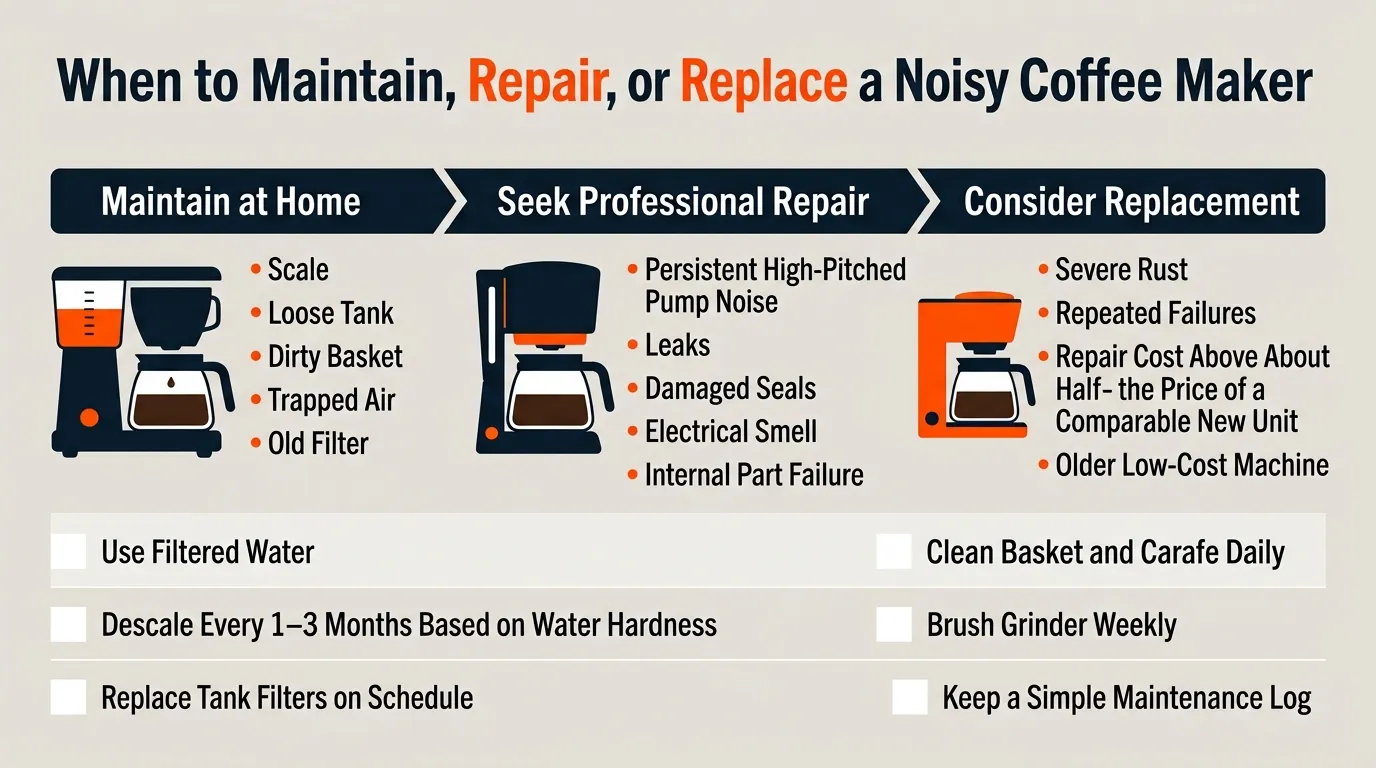
If the machine is under warranty, use it. If the fix costs more than half the price of a new unit, consider a replacement. Age matters too. Budget drip models past six years may not be worth a new pump.
Look for cracks, leaks, and burnt smells. If a loud squeal stays after a full descale and purge, the pump or bearings may be done. At that point, How to Fix Coffee Maker Noise may mean a smart upgrade.
Troubleshooting by Machine Type
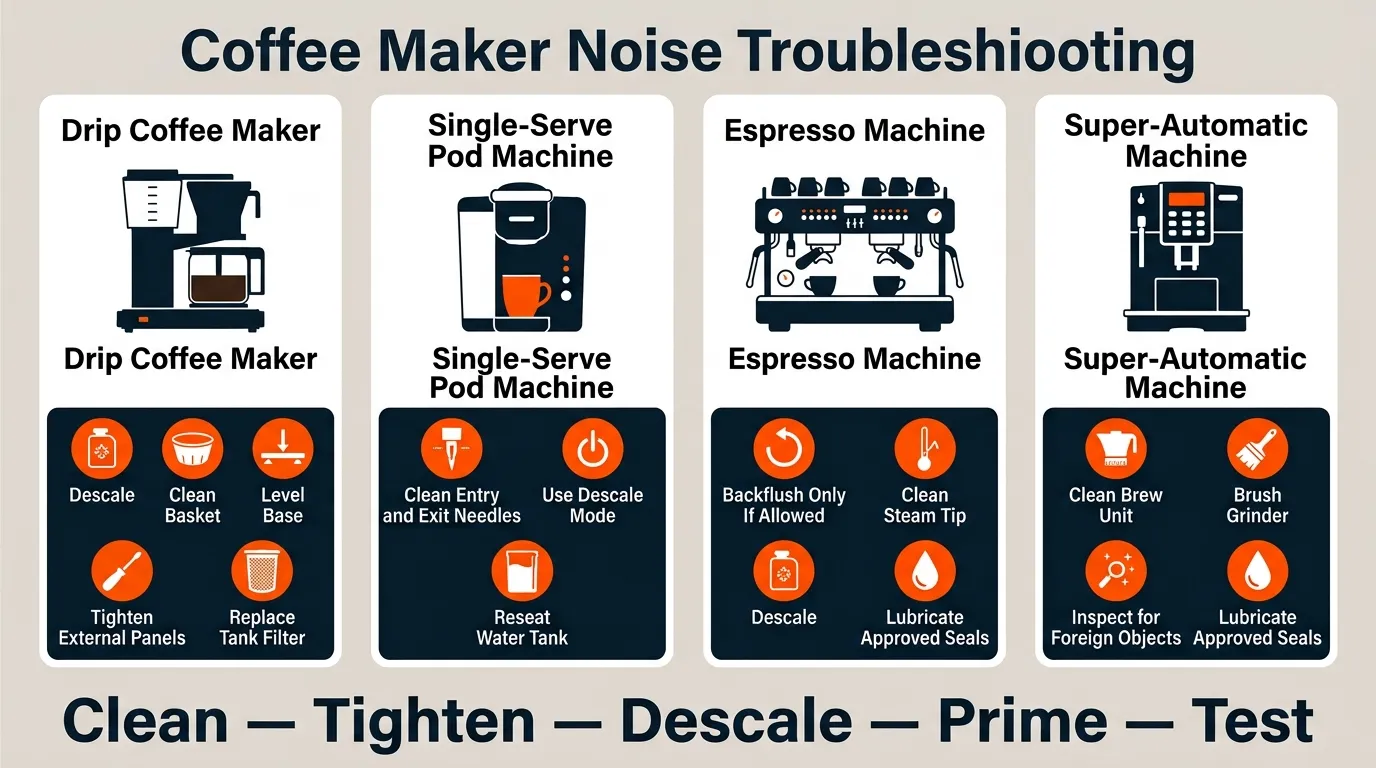
Drip coffee makers
- Most noise is from scale and loose panels.
- Descale, tighten screws, level the base, and replace tank filters.
Single-serve pod machines
- Needle clogs are common. Clean both needles.
- Use a descale mode if your model has one. Reseat the tank to stop chattering.
Espresso machines
- Squeals can be pump strain or dry gaskets.
- Backflush, clean the steam tip, lube group seals, and descale the boiler if allowed.
Super-automatic machines
- Burr noise often means old coffee oil or a pebble.
- Clean the brew unit, lube seals, and reset the grinder to a mid setting.
Each type has a few key moves, but the core plan for How to Fix Coffee Maker Noise does not change: clean, tighten, descale, then test.
Frequently Asked Questions of How to Fix Coffee Maker Noise
Why is my coffee maker loud all of a sudden?
A sudden increase often points to scale or a partial clog. Descale first, then check for air in the lines and a loose reservoir.
Is vinegar safe to use for descaling?
It can work, but some brands advise against it due to odor and residue. A dedicated descaler is safer and usually more effective for How to Fix Coffee Maker Noise.
How often should I descale to prevent noise?
With hard water, aim for monthly. With filtered or soft water, every two to three months is fine.
Can I fix a noisy pump myself?
You can reduce strain with descale and prime steps. If the pump still whines under load, a replacement is best done by a technician.
Will a rubber mat really help?
Yes. A thick rubber or silicone mat absorbs vibration and cuts counter buzz. It is a fast, cheap win.
What if my grinder sounds harsh or metallic?
Empty the hopper and check for a pebble. Brush the burrs clean, then reset the grind to a mid point and test.
Conclusion
You now have a clear, safe plan to quiet your brewer. Start with a proper descale, tighten the obvious, and remove air. Most machines calm down fast with those steps. For the stubborn cases, seals and pumps tell the rest of the story. That is the practical path for How to Fix Coffee Maker Noise.
Try the checklist today and enjoy a calm, steady brew tomorrow. If this helped, subscribe for more home coffee fixes, or leave a comment with the sound your machine makes and what worked for you.