Clean, dry, hone often, sharpen right, store safely, and use soft boards.
If you want your kitchen knives to feel new for years, you need the best knife maintenance routine built on small daily habits. I’ve sharpened blades for home cooks and café crews, and I’ve tested what lasts. This guide breaks down a simple routine you can stick to, backed by edge science, real-life experience, and easy steps you can use today.
What Makes a Knife Stay Sharp
A knife edge is a tiny wedge. When it bends, you hone it. When it wears away, you sharpen it. The best knife maintenance routine keeps the wedge aligned and removes as little steel as needed.
Steel hardness, heat treatment, and grind all matter. Harder steel holds a fine edge longer but can chip on hard boards. Softer steel is tougher but rolls faster. Thin edges cut like lasers but need gentle use. Understanding these basics helps you choose the right tools and habits for your knives.
I learned this the hard way with a thin Japanese gyuto. On a glass board, it micro-chipped in one service. On end-grain wood, it glided for weeks. Same knife. Different results.
The Best Knife Maintenance Routine: Daily, Weekly, Seasonal
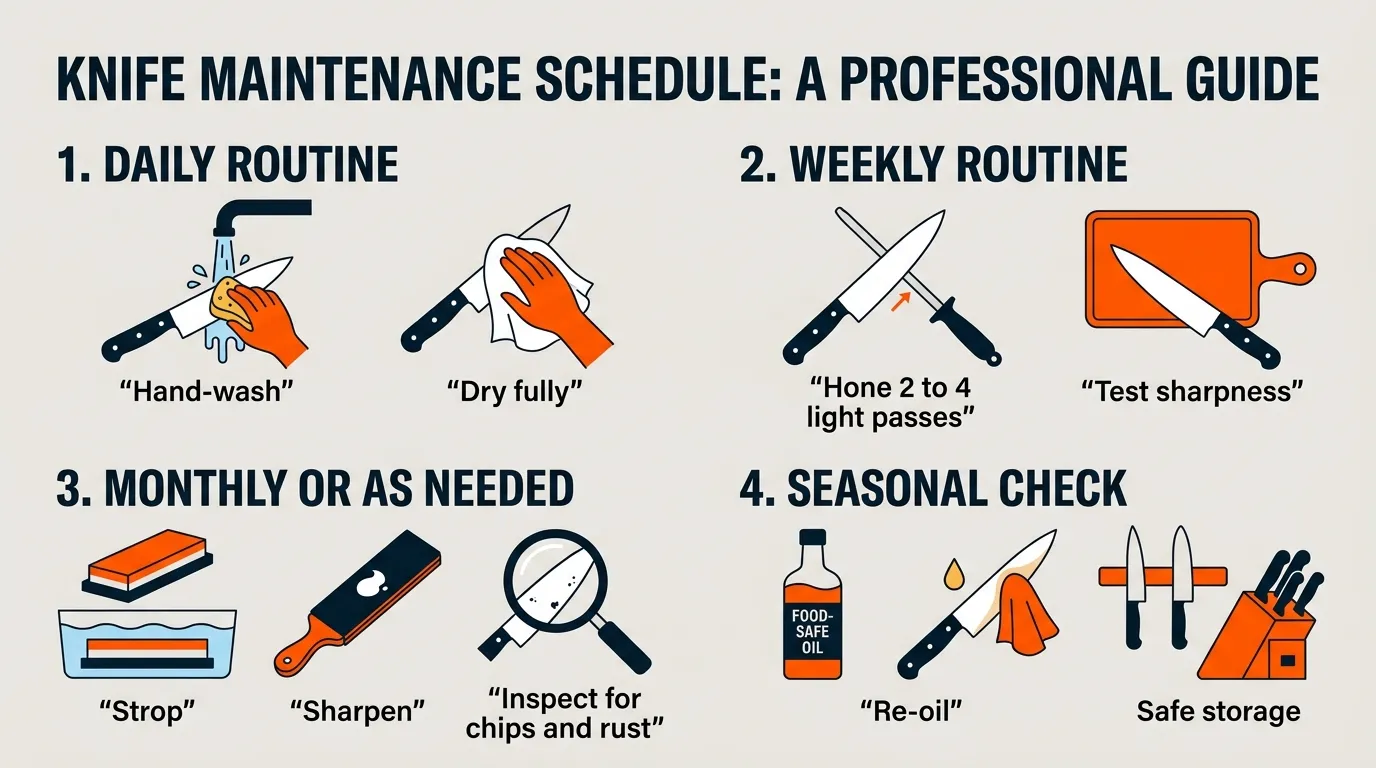
Use this best knife maintenance routine as your simple schedule. It works for most Western and Japanese kitchen knives.
Daily routine
- Hand-wash right after use with warm water and mild soap. No dishwasher.
- Dry fully with a clean towel. Do not air dry.
- Hone 2 to 4 light passes per side, keeping a steady angle.
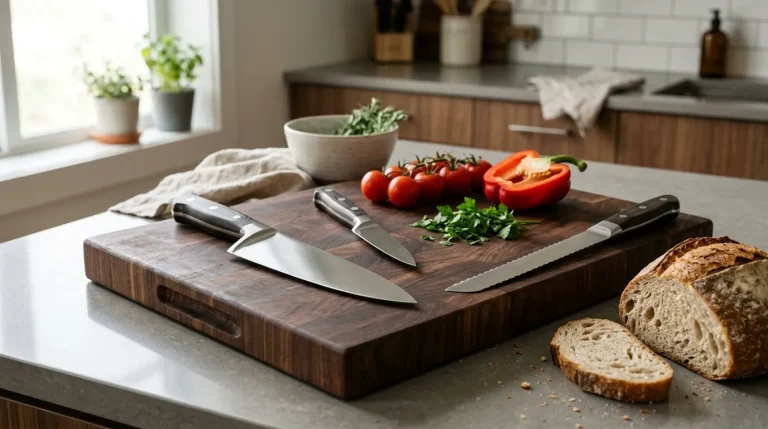
- Use an end-grain wood or soft plastic cutting board. Never glass, stone, or steel.
- For carbon steel, wipe a tiny drop of food-safe oil before storage.
Weekly routine
- Deep-clean the handle, bolster, and spine to remove buildup.
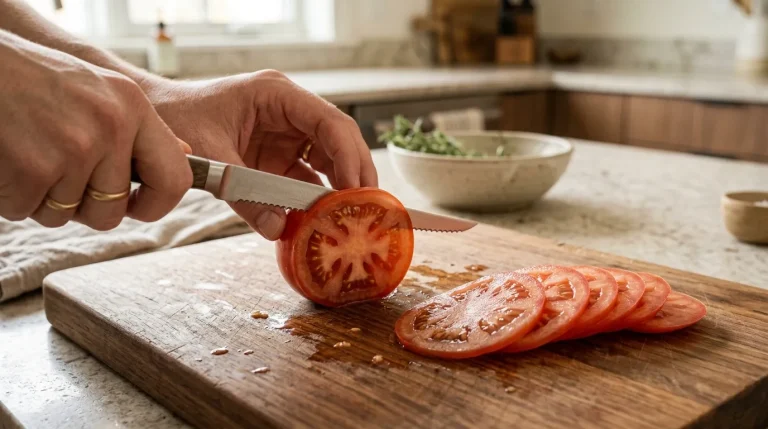
- Test sharpness on paper or a tomato. If it snags, plan a light sharpen.
- Strop on leather or newspaper for a smooth, toothy edge.
Monthly or as needed
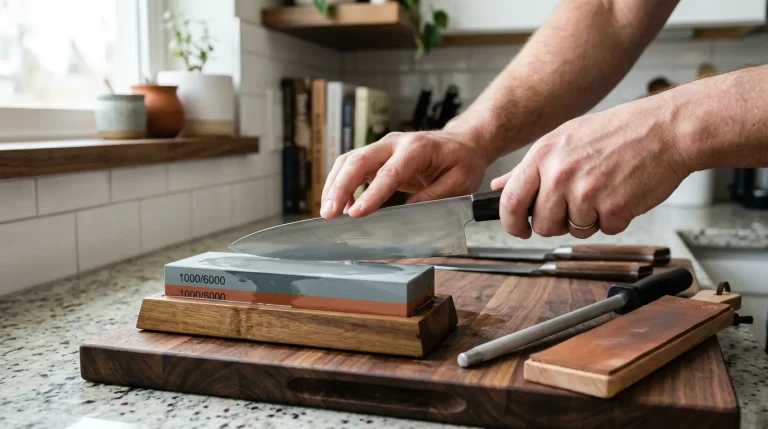
- Sharpen with water stones, such as 1000 grit then 3000 to 6000 grit.
- Keep angles steady: about 15 degrees per side for many Japanese knives, 20 degrees for many Western knives.
- Flatten stones and clean rods so they work well.
Seasonal check
- Inspect for chips, rust spots, and loose handles.
- Re-oil wood handles and carbon steel blades.
- Send out for a pro service if you lack time or tools.
This is the best knife maintenance routine because it splits care into small, repeatable actions. It saves steel, time, and money while keeping edges crisp.
Cleaning and Drying The Right Way
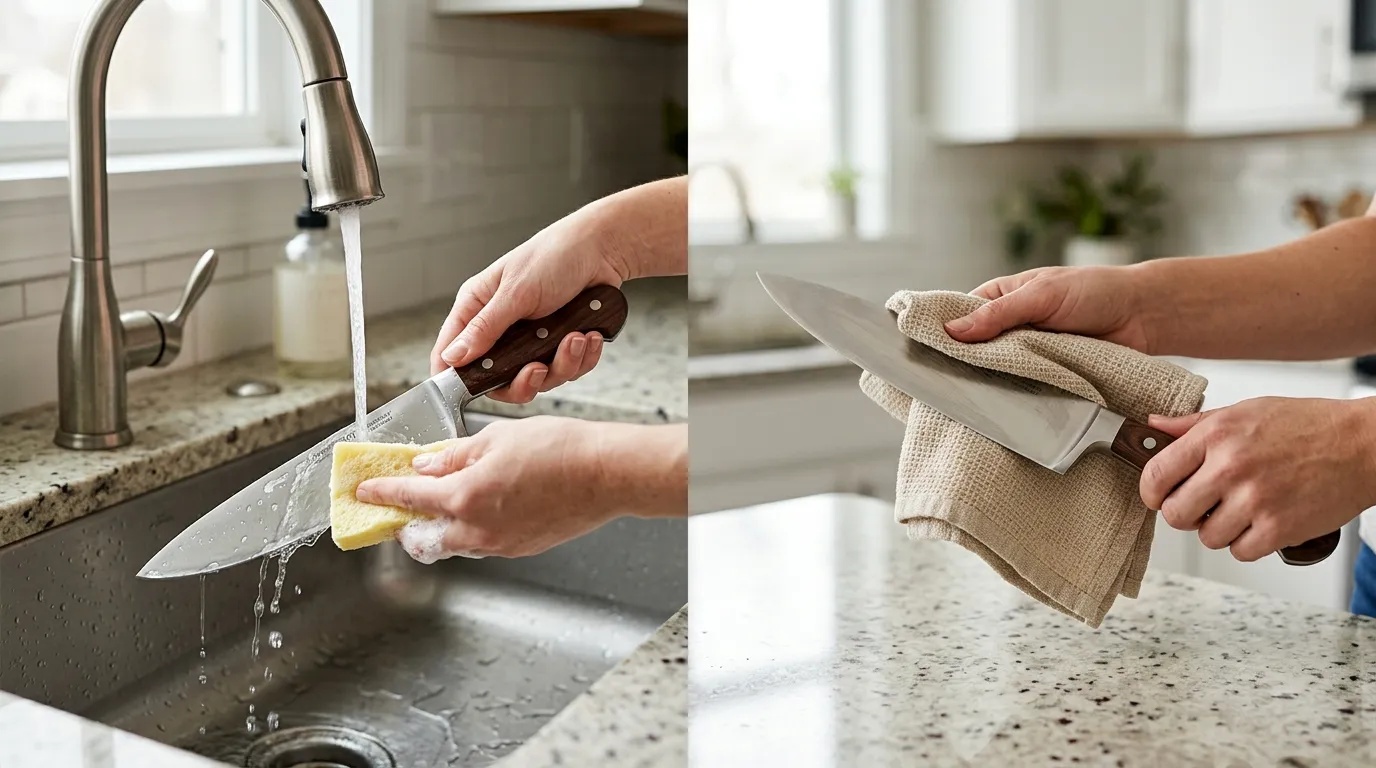
Hand-wash right after cutting. Use warm water, a soft sponge, and mild soap. Avoid abrasive pads near the edge. They can dull the blade.
Wipe from spine to edge, not edge to spine. This protects your fingers. Rinse well, then dry right away. Trapped moisture causes rust and stains, even on stainless steel.
Do not soak knives. Long soaks swell wood handles and attack adhesives. Food safety guidance also supports quick cleaning and full drying to limit bacteria.
Honing vs. sharpening: Know the Difference
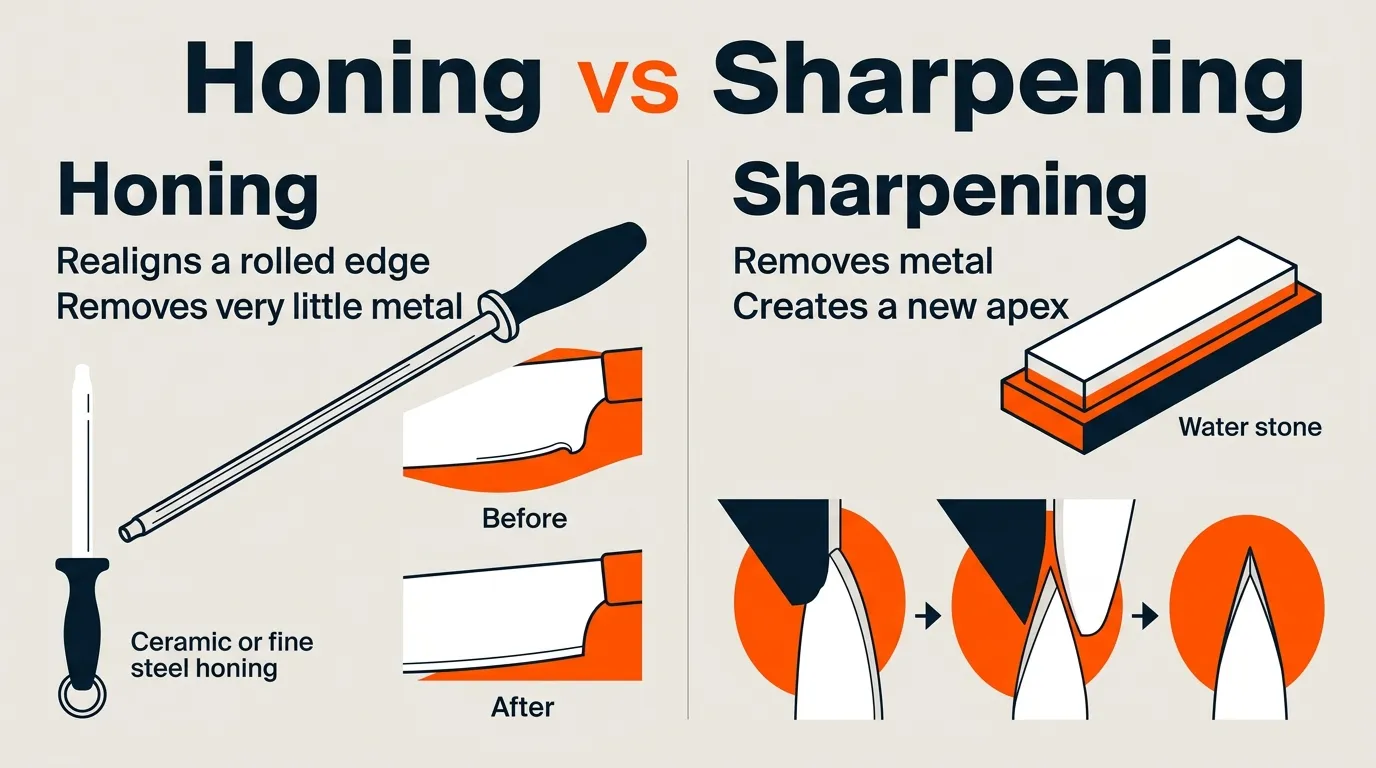
Honing realigns a rolled edge. It does not remove much metal. Sharpening removes metal to create a new apex. Both matter in the best knife maintenance routine.
Honing tips
- Use a smooth ceramic or fine steel rod. Coarse, grooved rods can tear hard steel.
- Keep a steady angle. Light pressure. A few passes per side.
- If honing no longer helps, it is time to sharpen.
Sharpening tips
- Use water stones or quality systems. Start with 800 to 1200 grit to set the edge.
- Move up to 2000 to 6000 for polish, if you like. Stop where the edge suits your food.
Step-by-Step Sharpening That Works
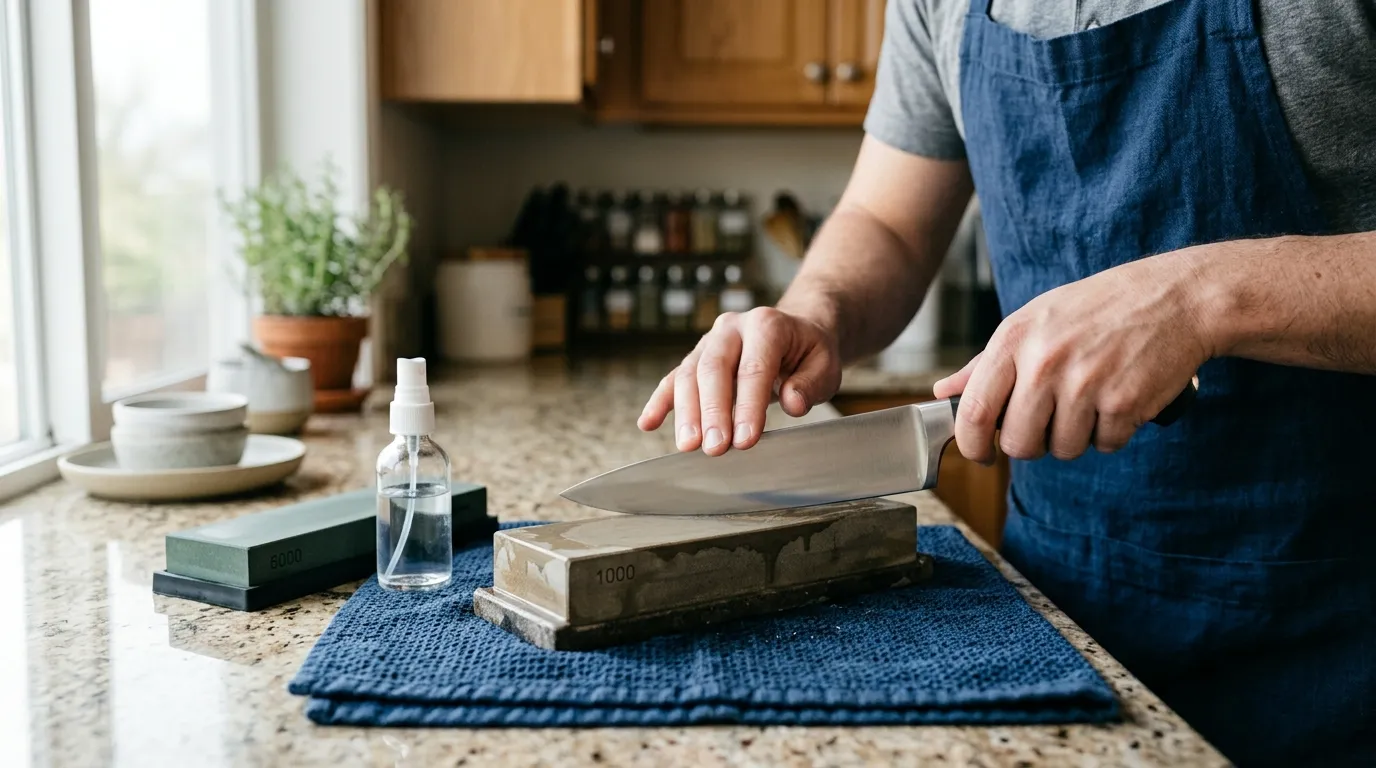
Here is my field-tested stone routine that fits the best knife maintenance routine.
Set up
- Soak splash-and-go stones as needed. Keep a spray bottle close.
- Place a damp towel under the stone for grip.
- Mark the edge with a marker to track angle contact.
- Bevel and burr
- Start at 1000 grit. Angle about 15 to 20 degrees per side.
- Push-pull strokes. Moderate pressure. Feel for a light burr along the edge.
- Switch sides
- Form a burr on the other side. Keep strokes even and count matched.
- Refine
- Reduce pressure. Do lighter strokes to remove a fat burr.
- Move to 3000 to 6000 grit for a smoother, longer-lasting edge.
- Deburr and finish
- Use edge-trailing strokes. Light pressure only.
- Strop on clean leather or newspaper to clean the apex.
- Clean up
- Rinse and dry the blade. Wipe stones and flatten when needed.
Do not rush. The goal is a clean apex, not mirror polish. My best results come from less pressure and careful deburring.
Storage and Cutting Boards That Protect Edges
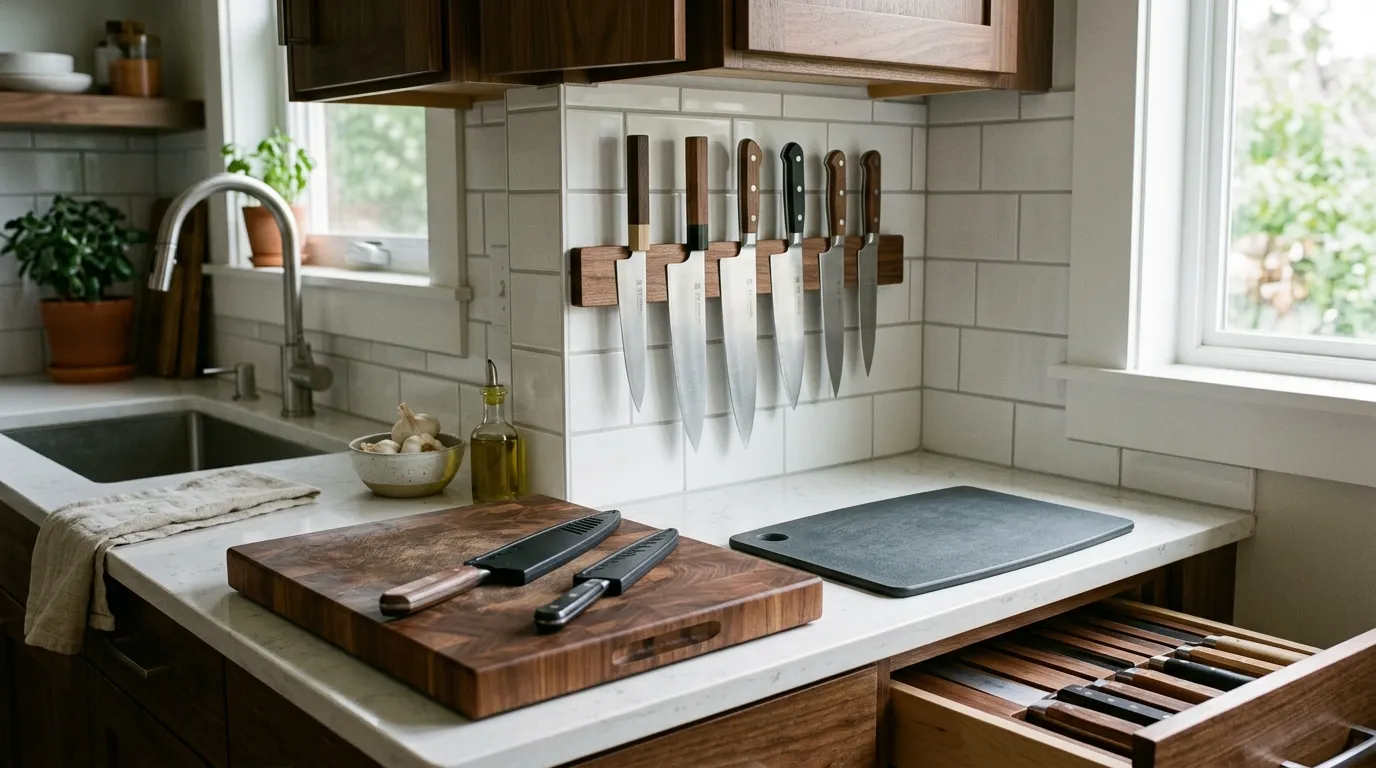
Storage is part of the best knife maintenance routine. Bad storage kills edges fast.
Safe storage
- Magnetic wall strip with strong magnets holds blades without touching edges.
- In-drawer blocks or saya sheaths protect tips and fingers.
- Edge guards are great if you share drawers or travel.
Board choices
- End-grain wood is top tier for edge life and feel.
- Soft plastic is good for raw meat and easy sanitizing.
- Avoid glass, marble, granite, and steel. They chip and dull blades fast.
Keep boards clean and dry. Oil wood boards with food-safe oil to prevent cracks.
Rust Prevention, Oiling, and Stain Control
Stainless steel resists rust, but it is not rust-proof. Carbon steel will patina. A stable gray patina helps, but red rust must go.
Daily habits
- Wipe blades dry right away. Moisture is the enemy.
- For carbon steel, add a thin coat of camellia, mineral, or coconut oil.
Spot care
- Remove fresh rust with a soft eraser block or a mild abrasive cleaner.
- Rinse and dry, then oil. Avoid bleach and harsh cleaners that pit steel.
Environment matters
- Humid kitchens cause more rust. Use silica gel packs in drawers.
- After cutting acidic foods, rinse and dry before the next task.
These small steps lock in the best knife maintenance routine and protect your edges between uses.
Common Mistakes That Ruin Knives
Learn from my early blunders and what I see in home kitchens.
- Dishwasher use. Heat, water jets, and detergent wreck edges and handles.
- Glass or stone boards. They chip edges. Use end-grain wood or soft plastic.
- Soaking in the sink. Causes rust and handle damage. Clean right away.
- Hard honing on grooved rods. Can tear fine edges. Choose fine or ceramic rods.
- Scraping with the edge. Flip the knife and scrape with the spine.
- Cutting bones or frozen food with a chef’s knife. Use a cleaver or saw.
- Tossing knives in drawers. Use guards, a block, or a magnetic strip.
Avoid these and your best knife maintenance routine will shine.
Tool Kit: What You Need at Any Budget
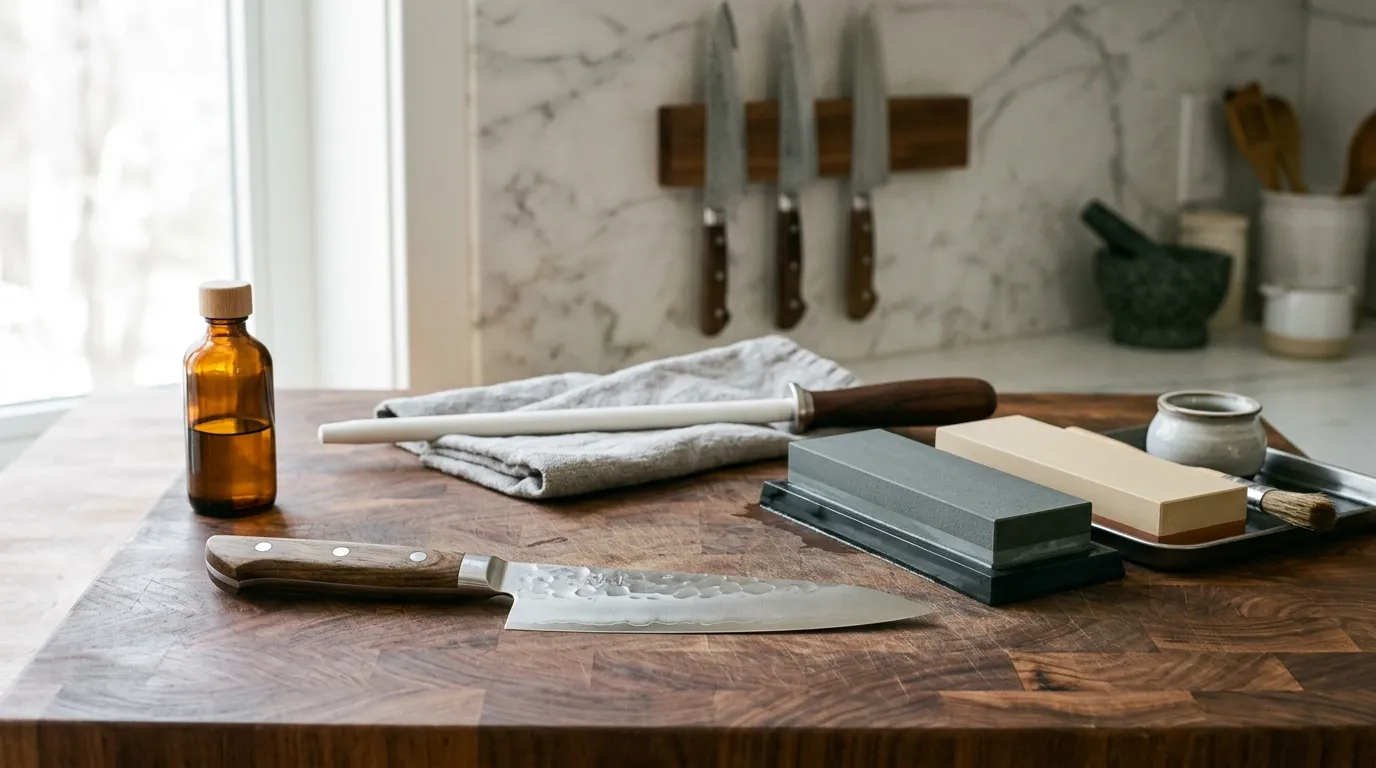
You do not need a drawer full of gadgets. Here is a simple, proven setup that supports the best knife maintenance routine.
Starter kit
- Ceramic honing rod, 10 to 12 inches.
- 1000 and 3000 grit combo water stone.
- Edge guards or a magnetic strip.
- End-grain wood or soft plastic board.
Upgrade kit
- Add a coarse 400 to 600 grit stone for repairs.
- Leather strop with fine compound.
- Stone flattener to keep stones true.
Pro kit
- Full stone range: 400, 1000, 3000, 6000.
- Angle guides or a digital angle cube if you want precision.
- Loupe to inspect the apex and burr.
Focus on skill over gear. Good stones and light hands beat flashy machines.
Knife Types and Special Cases
Not all blades need the same care. Fit the best knife maintenance routine to the tool.
- Serrated knives. Use a ceramic rod that fits the gullets. Work tooth by tooth. Do not flatten the serrations.
- Cleavers. Butcher cleavers get tougher edges and lower grits. Chinese vegetable cleavers take finer edges and gentle boards.
- Single-bevel knives. Keep the wide bevel flat on the stone. Deburr the micro-bevel with care.
- Pocket and folding knives. Clean pivots, add a drop of oil, and keep lint out. Follow local laws when carrying.
Match edge angles and grits to the job. Your knife will tell you what it likes.
Safety and How to Test Sharpness
Safety starts with grip. When wiping, pinch the spine with a towel and move from spine to edge. Keep fingers behind the edge at all times.
- Paper test. Slice printer paper. A sharp edge glides without tearing.
- Tomato test. A clean edge bites the skin with no pressure.
- Fingernail test. Very gently touch the edge to a nail. It should bite, not slide.
Skip risky shave tests. They can cause cuts and skin issues. Control beats bravado.
Frequently Asked Questions of best knife maintenance routine
How often should I hone my knife?
Hone lightly before most cooking sessions. If it no longer responds, it needs a proper sharpen.
How often should I sharpen on stones?
For home cooks, every 1 to 3 months is common. It depends on use, steel, and cutting boards.
What angle should I use for sharpening?
Many Western knives like about 20 degrees per side. Many Japanese knives work well around 15 degrees per side.
Is a pull-through sharpener safe to use?
It is fast but can remove too much steel and scratch bevels. Use it only for cheap knives, and finish with light honing.
Can I put knives in the dishwasher?
No. Heat, detergent, and rattling will dull and damage blades and handles. Hand-wash and dry right away.
What oil is safe for carbon steel knives?
Food-safe mineral, camellia, or coconut oil works well. Use a thin coat and wipe off excess.
Which cutting board is best for edge life?
End-grain wood is best, with soft plastic as a close second. Avoid glass, stone, and metal.
How do I fix small chips?
Use a coarse stone, such as 400 to 600 grit, and thin the edge slightly before refinishing. Keep strokes even and check progress often.
Does stainless steel rust?
Yes, stainless can rust if left wet or dirty. Clean and dry after use to prevent stains.
What is the simplest best knife maintenance routine for beginners?
Hand-wash, dry, hone a few passes, use a wood board, and sharpen every couple of months. Keep it steady and light.
Conclusion
Sharp knives are not an accident. With the best knife maintenance routine, you get clean cuts, safer prep, and tools that last for years. Wash and dry fast, hone with care, sharpen with a plan, and store smart.
Start today with one habit: hone before dinner. Add a better board next week. Then learn a simple stone routine. Your cooking will feel easier, faster, and more fun. If this helped, subscribe for more kitchen tips, share your wins, or ask a question in the comments.