Use steel wool, a short vinegar soak, and thin oil coats to remove rust.
If you want to know how to clean cast iron rust spots without stress, you are in the right place. I restore cast iron for home cooks and pros. In this guide, I explain how rust forms, what fixes it fast, and how to keep your pan smooth for years. I will show clear steps, common mistakes, and simple science so you can handle light orange dust or deep rust with ease. Stay with me, and you will master how to clean cast iron rust spots like a pro.
Understand Why Cast Iron Rusts (And How Bad It Is)
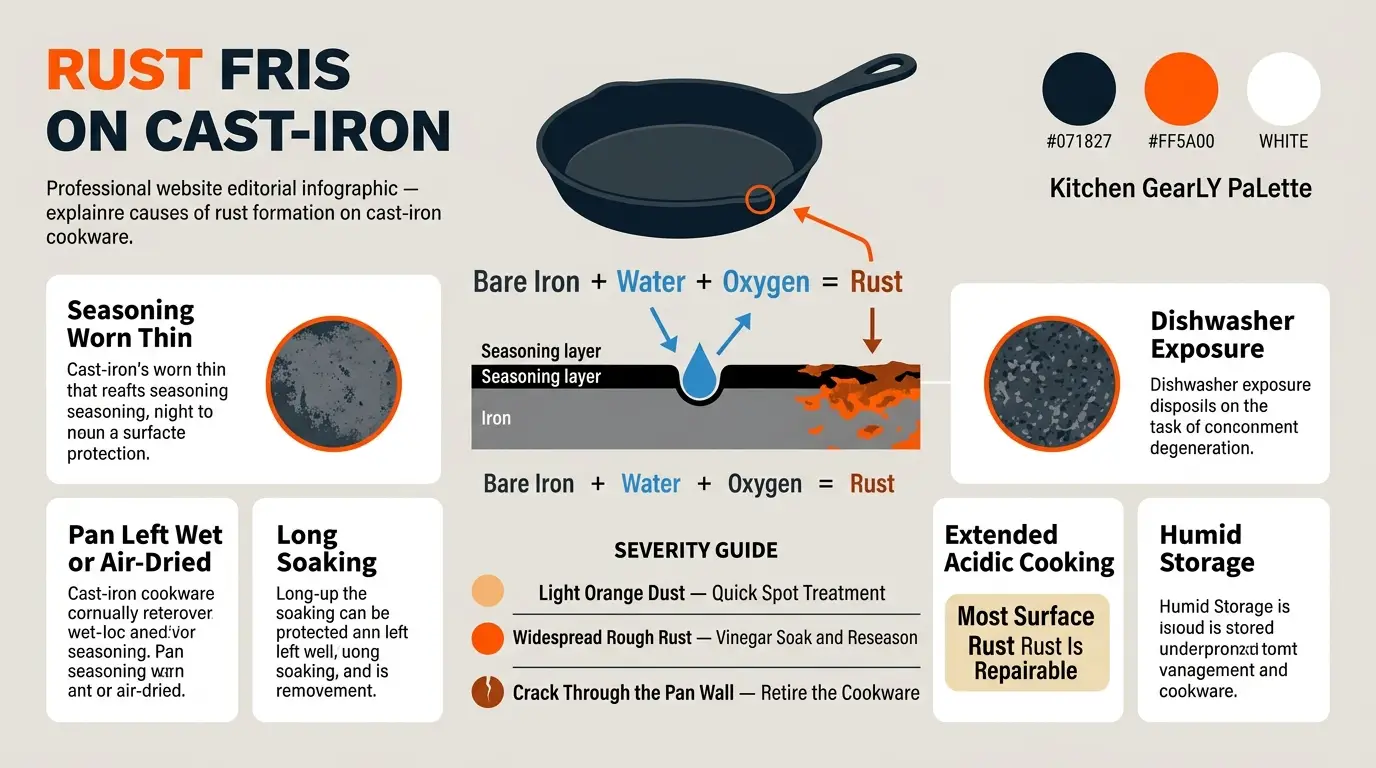
Cast iron rusts when bare iron meets water and air. Seasoning is a thin, hard oil layer that shields the iron. If that layer thins, rust can start.
Common triggers are soaking, dishwashers, long simmering of tomato sauces, or air drying. Salt and acid speed it up. The good news: rust on cast iron is almost always fixable.
I have brought flea market skillets back from orange to jet black. Even heavy rust can be saved with time and patience. If you learn how to clean cast iron rust spots once, you can fix any pan you own.
Tools And Materials You Will Need
You do not need fancy gear to clean cast iron rust spots. A few simple tools work well.
- Steel wool in 0 or 00 grade for rust removal
- Chainmail scrubber or a stiff nylon brush for regular cleaning
- Coarse kosher salt for gentle abrasion
- White distilled vinegar and water for a short soak
- Baking soda to neutralize acid after soaking
- Paper towels or lint-free cloths for drying and oiling
- High-smoke-point oil like canola, grapeseed, or refined avocado
- An oven or stovetop burner to dry and season
- Heat-safe gloves for safety and control
Optional items help on tough jobs.
- A rust eraser block for spot work
- A plastic scraper for stuck bits
- Aluminum foil to catch oil drips in the oven
Light Rust Spots: Fast Fix In Minutes

If you see a few orange dots or a dull patch, act now. Here is how to clean cast iron rust spots fast without a long soak.
- Rinse the pan with hot water and wipe with a cloth.
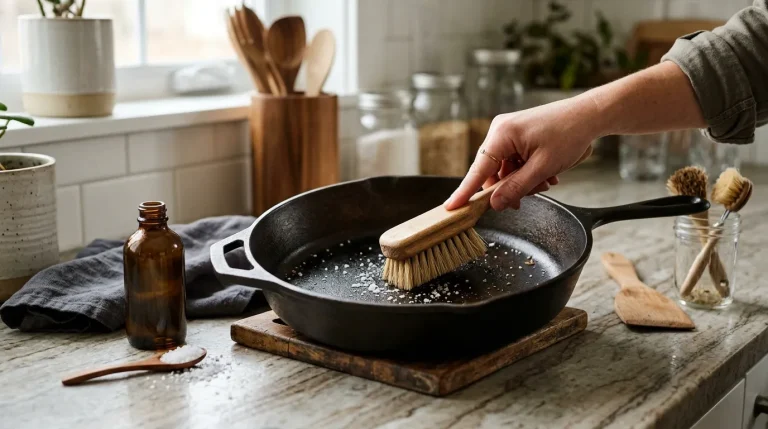
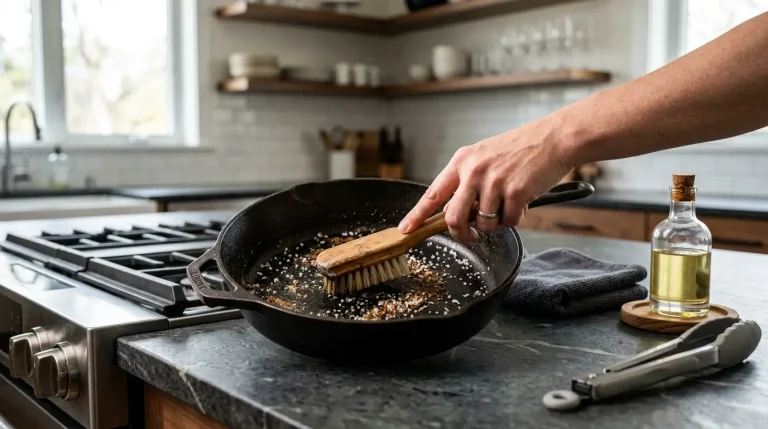
- Make a scrub paste with 1 tablespoon salt and a few drops of oil.
- Scrub the rusty area with a paper towel or brush until the orange fades.
- Rinse, then place the pan on medium heat for 3 to 5 minutes to drive off water.
- Wipe on a drop of oil. Buff until the surface looks dry and even.
- Heat the pan until a faint wisp of smoke appears, then cool.
This quick method keeps seasoning intact. It is my go-to move after a rainy camping cook when dots show up the next day.
Moderate To Heavy Rust: Vinegar Soak And Reseason
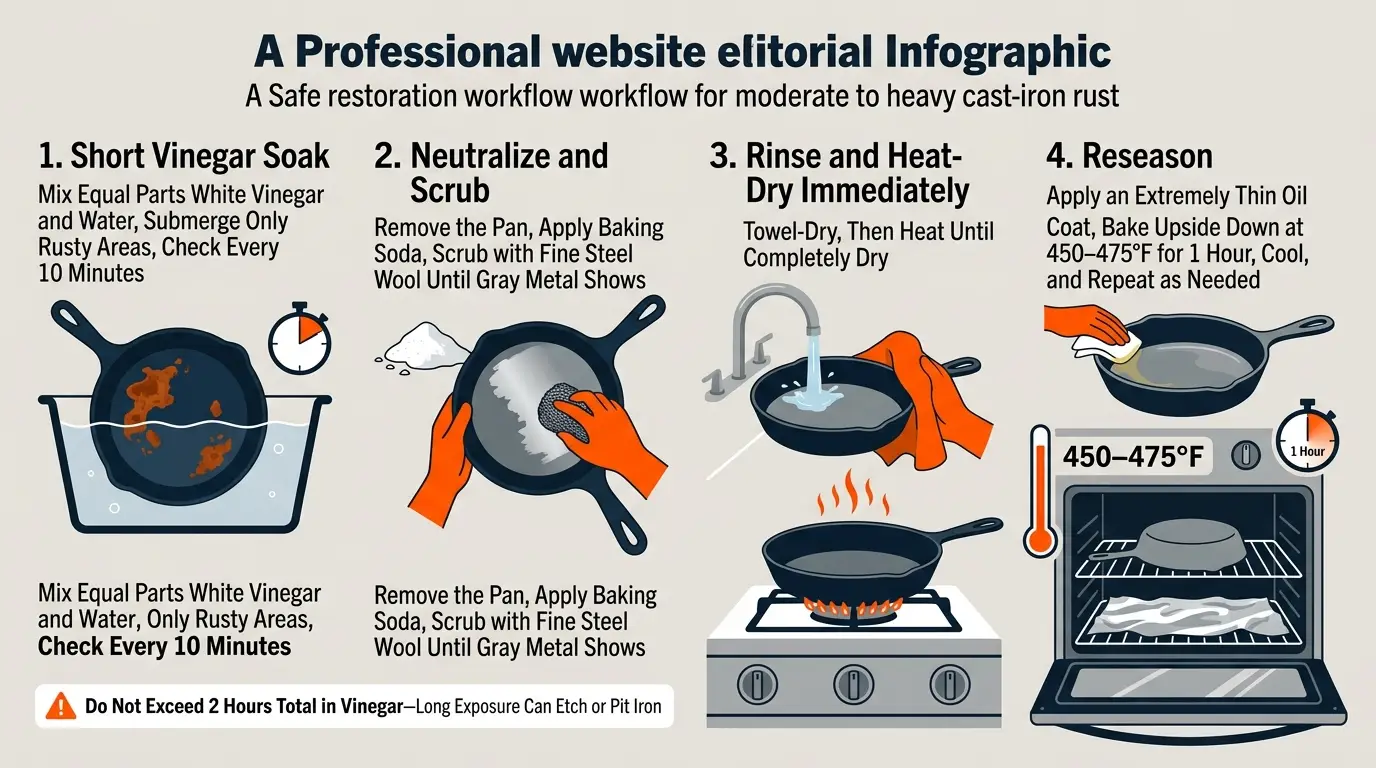
When rust covers large areas or feels rough, remove it to bare metal, then rebuild seasoning. This is the core of how to clean cast iron rust spots that have spread.
Step 1: Short vinegar soak
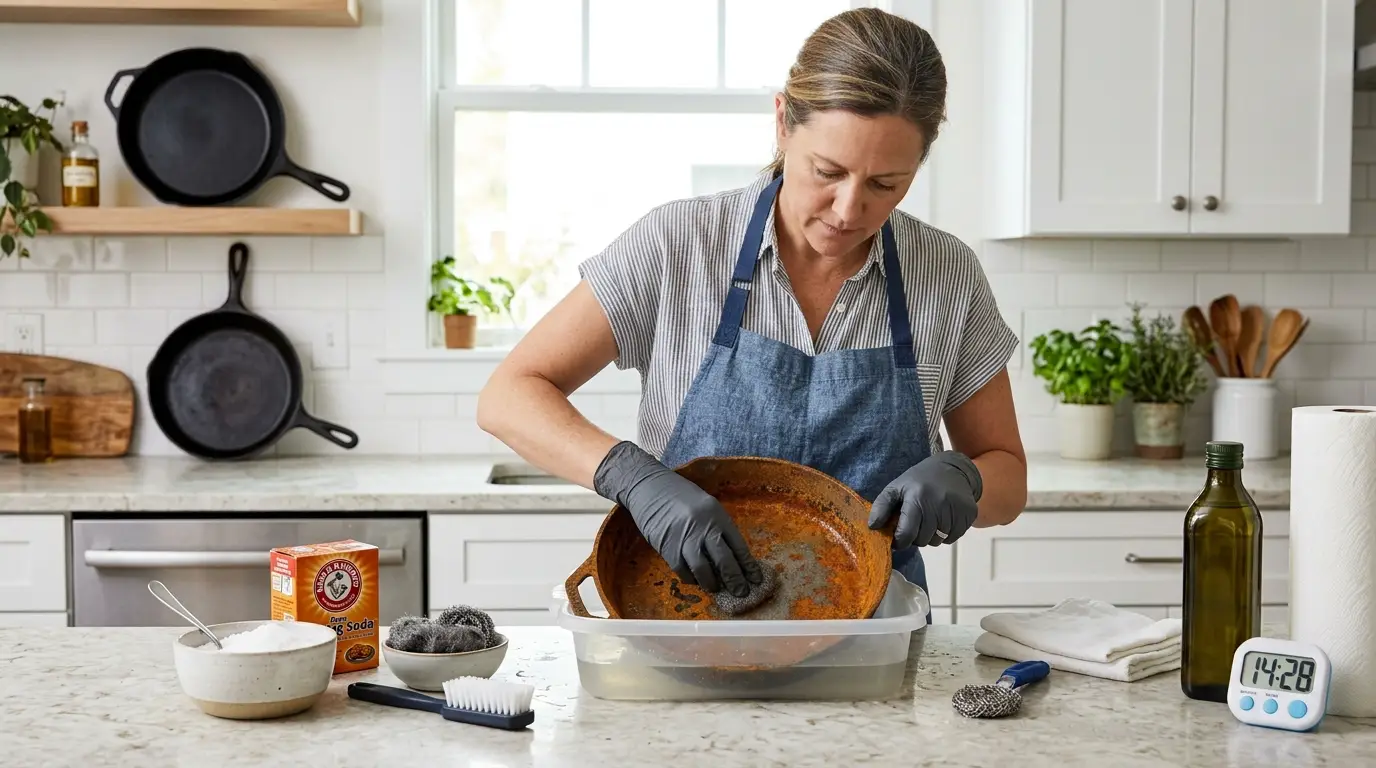
- Mix equal parts white vinegar and water in a tub big enough for the pan.
- Submerge rusty areas only. Soak 15 to 30 minutes, checking every 10 minutes.
- Do not exceed 2 hours total. Long soaks can pit the iron.
Step 2: Scrub to bare metal
- Remove the pan. Sprinkle baking soda to stop the acid.
- Scrub with steel wool until the grey metal shows and rust lifts.
- Rinse well, then dry with a towel.
Step 3: Heat-dry at once
- Set the pan on a burner over medium heat for 5 to 10 minutes.
- The surface must be bone dry. Any damp spots can flash to new rust.
Step 4: Reseason in thin coats
- Wipe on 1 teaspoon of oil. Buff hard until the pan looks almost dry.
- Bake upside down at 450 to 475°F for 1 hour. Place foil on a lower rack.
- Cool in the oven. Repeat 2 to 3 coats for a deep, even black.
I once rescued a yard-sale Dutch oven with this exact plan. The soak took 40 minutes in two checks. Three coats of oil later, it was slick enough for eggs.
Reseasoning 101: Make A Hard, Smooth Shield
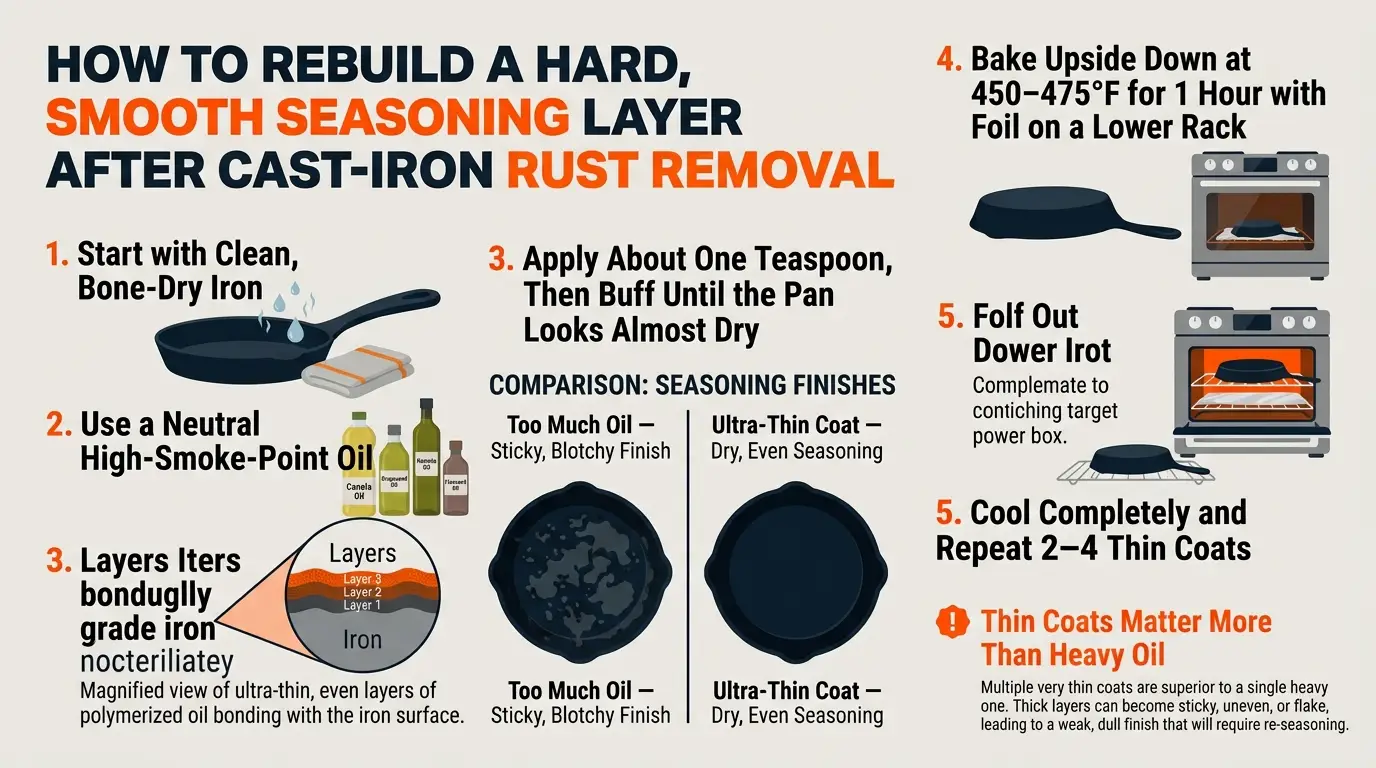
Seasoning is oil that has been heated past its smoke point until it bonds and hardens. It is not a sticky film. It is a dry, thin layer.
Follow these rules for a pro finish.
- Use very thin coats. If you can see wet shine, you used too much.
- Pick an oil with a high smoke point and neutral taste.
- Bake hot enough for polymerization. Oven temps at 450 to 475°F work well.
- Face the pan upside down so extra oil does not pool.
- Two to four coats build a strong base. Cooking high-fat foods after helps too.
These steps are key in how to clean cast iron rust spots because the final shield stops rust from coming back.
Daily Care And Rust Prevention

Prevention is simple and fast. A minute of care saves hours of scrubbing later.
- Clean while warm. Wipe, add a splash of water, and scrub with a brush.
- A tiny bit of mild soap is safe on seasoned pans. Rinse well.
- Dry with heat. Do not air dry. Warm the pan to drive off water.
- Oil lightly. Wipe on a drop and buff to a dry sheen.
- Store in a dry spot. Slip a paper towel between stacked pans.
- Avoid long, wet soaks and dishwasher cycles.
- Go easy on long acid cooks. Finish tomato sauces in stainless if needed.
Use your pan often. Cooking is the best way to keep seasoning strong.
Troubleshooting And Common Mistakes

Even when you know how to clean cast iron rust spots, small errors can slow you down. Here is how to fix them.
Sticky or gummy surface
- Cause: too much oil per coat or low heat.
- Fix: Bake the empty pan at 450°F for 1 hour to harden or burn off excess. If still sticky, scrub lightly with hot water and a drop of soap, dry, and apply a thinner coat.
Patchy seasoning
- Cause: uneven oil or hot spots.
- Fix: Spot-coat dry areas and rebake. Rotate the pan midway through the bake.
Rust keeps returning
- Cause: moisture left after washing or humid storage.
- Fix: Heat-dry longer. Add a thin oil film. Store with a moisture absorber if you live in a humid area.
Pitting on the surface
- Cause: long acid exposure or very long vinegar soaks.
- Fix: Pitting will not hurt performance, but it will not vanish. Build up seasoning to smooth the feel.
Cracks vs. casting marks
- Hairline cracks run through the wall and can leak. Casting lines are shallow and harmless. If a true crack is found, retire the pan.
Real-Life Tips From The Kitchen
Here are quick tips I learned while teaching friends how to clean cast iron rust spots at home.
- For a camping skillet, I keep a small bottle of oil and a salt packet. After dinner, I scrub with salt and a paper towel. No water needed.
- In humid summers, I warm the pan for two minutes after washing, then oil. That tiny step stopped all next-day orange dust.
- I once over-soaked a lid in vinegar. It etched the surface. The fix was slow: many thin coats and lots of bacon cooks. It is not perfect, but it is still a workhorse.
These small habits make your pan feel better every week.
Frequently Asked Questions Of How to Clean Cast Iron Rust Spots
Can I use soap on cast iron?
Yes, a small amount of mild soap is fine on a well-seasoned pan. Rinse well, dry with heat, and oil after.
How long should I soak in vinegar?
Start with 15 to 30 minutes and check often. Do not exceed 2 hours total to avoid pitting.
What oil is best for seasoning?
Use a neutral, high-smoke-point oil like canola or grapeseed. Thin coats matter more than the exact oil.
Will baking soda remove rust by itself?
Baking soda does not dissolve rust well alone. Use it after a vinegar soak to neutralize acid.
Is rust on cast iron dangerous?
Light rust is not harmful, but it can taste metallic. Remove it and reseason for best flavor and safety.
Can I put cast iron in the dishwasher?
No. Dishwashers strip seasoning and invite rust. Hand wash, heat-dry, and oil instead.
How do I fix sticky seasoning?
Bake the pan at 450°F for 1 hour to harden the layer. If still sticky, scrub lightly and reapply a very thin coat.
Do I need to strip to bare metal every time?
No. For small spots, spot-scrub and reseason only that area. Full stripping is for heavy, widespread rust.
Can salt and a potato clean rust?
Yes, it works for light rust. The salt abrades while the potato’s moisture helps lift residue.
How many seasoning coats do I need after rust removal?
Two to four thin coats are enough for a strong base. Cooking fatty foods after will finish the job.
Conclusion
You now know exactly how to clean cast iron rust spots, from quick touch-ups to full restores. Remove the rust, dry with heat, and build thin, hard coats of oil. Keep moisture out and use your pan often.
Set a goal to try the light-rust method tonight. If your pan needs more, schedule a vinegar soak this weekend and rebuild the seasoning. Share your results, subscribe for more kitchen fix-it guides, or leave a comment with your toughest cast iron challenge.