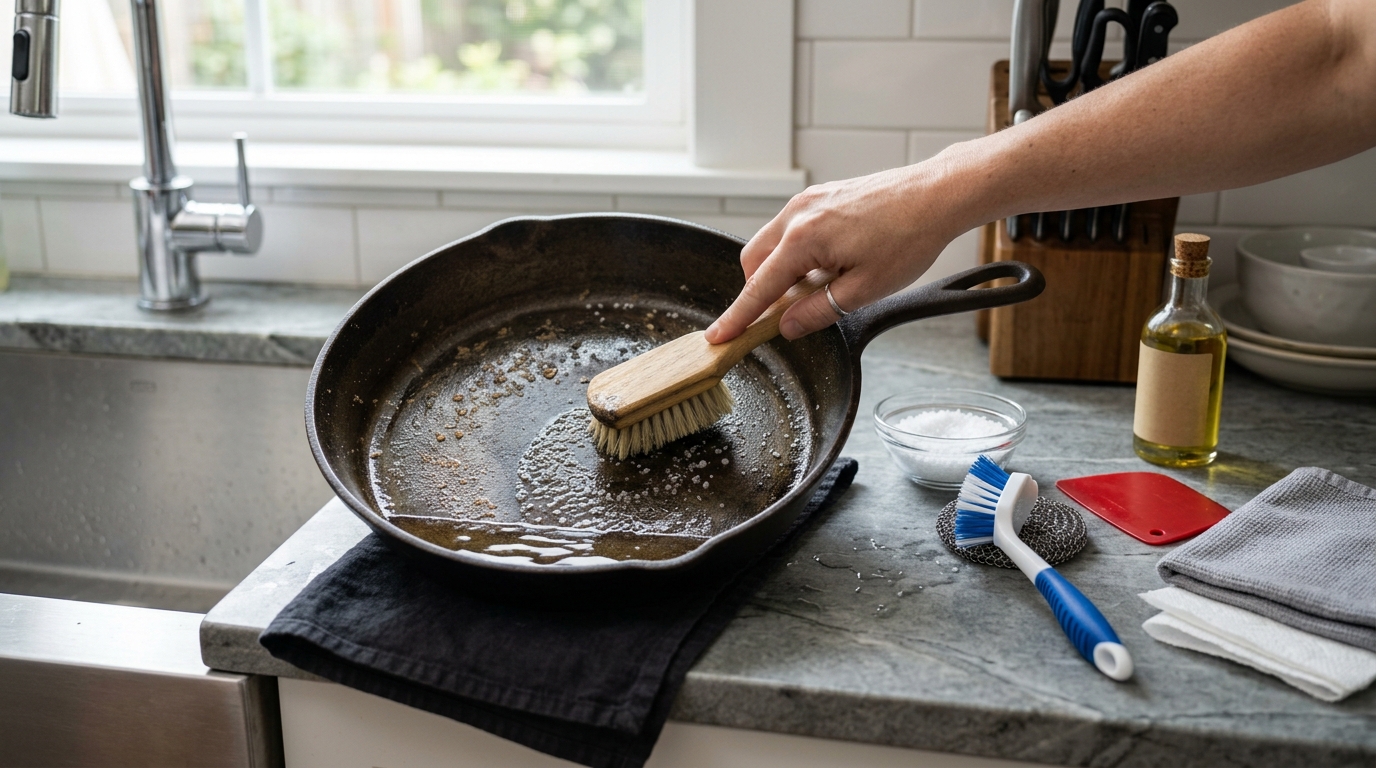
Use hot water, coarse salt, heat, and a thin oil coat—no soap needed.
If you love cast iron, you know its nonstick magic comes from seasoning, not soap. In this guide, I’ll show you How to Clean Cast Iron Without Soap using simple steps I’ve tested on dozens of skillets, griddles, and Dutch ovens. You’ll learn the science, the tools, and the exact routine to keep your pan slick, safe, and rust-free for life.
Why Clean Cast Iron Without Soap
Seasoning is a thin, hard layer of polymerized oil. Soap can strip that layer over time. Hot water, salt, and friction lift food without harming seasoning.
Think of your skillet like a well-waxed car. You don’t scrub off the wax after each drive. You touch it up and protect it. That is the core idea behind How to Clean Cast Iron Without Soap. It keeps the pan’s coating strong and its surface slick.
When you avoid soap, you:
- Protect the nonstick layer
- Prevent rust and dull spots
- Keep flavor neutral and clean
Tools and Supplies You’ll Need
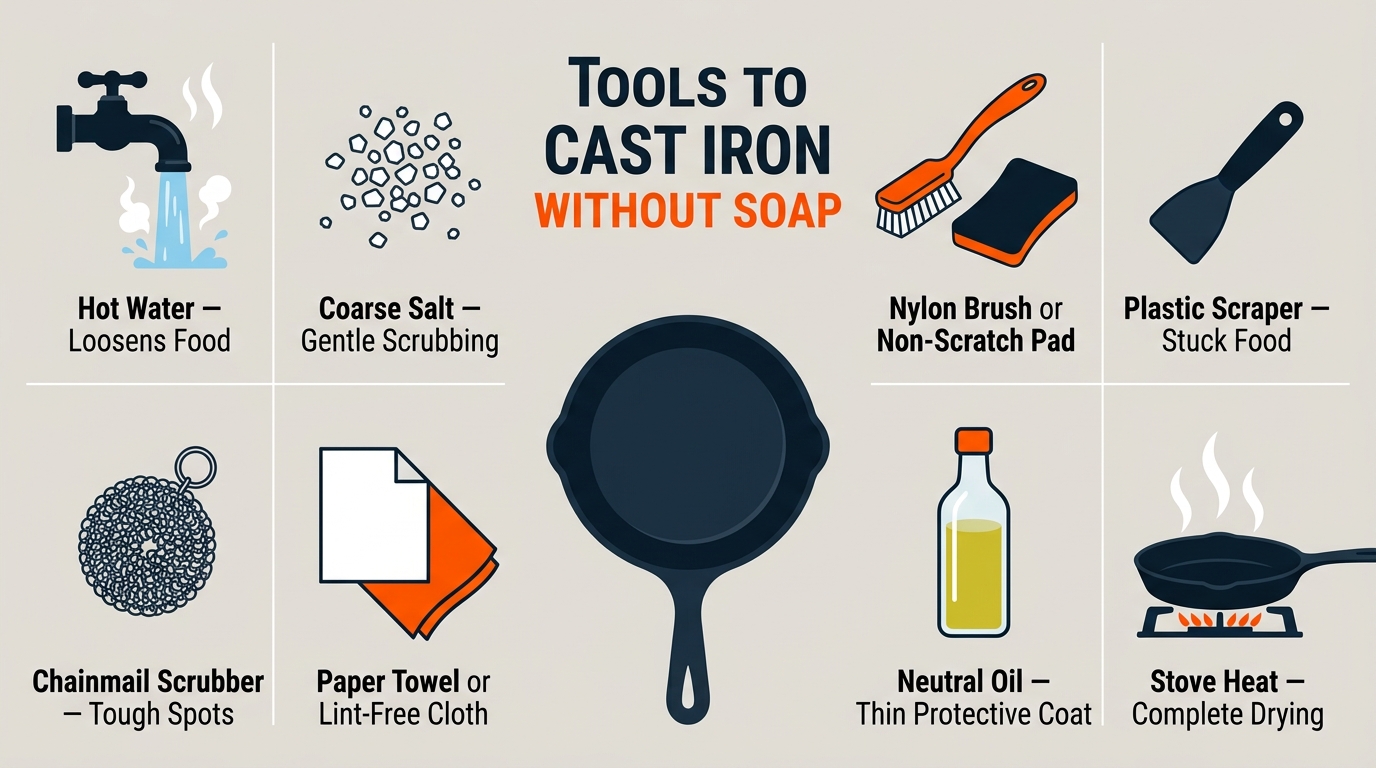
You do not need special gear. A few basics do the job fast.
- Hot water from the tap or kettle For loosening stuck bits
- Coarse salt or kosher salt Acts like a gentle scrub
- Scrub brush or non-scratch pad Nylon is great
- Plastic scraper or chainmail scrubber For stubborn spots
- Paper towels or lint-free cloth For wiping and buffing
- Neutral oil Canola, grapeseed, or refined avocado oil
- Stove heat or a warm oven For drying and sealing
These are the only things I use when showing people How to Clean Cast Iron Without Soap at workshops and in my own kitchen.
Step-by-Step: How to Clean Cast Iron Without Soap
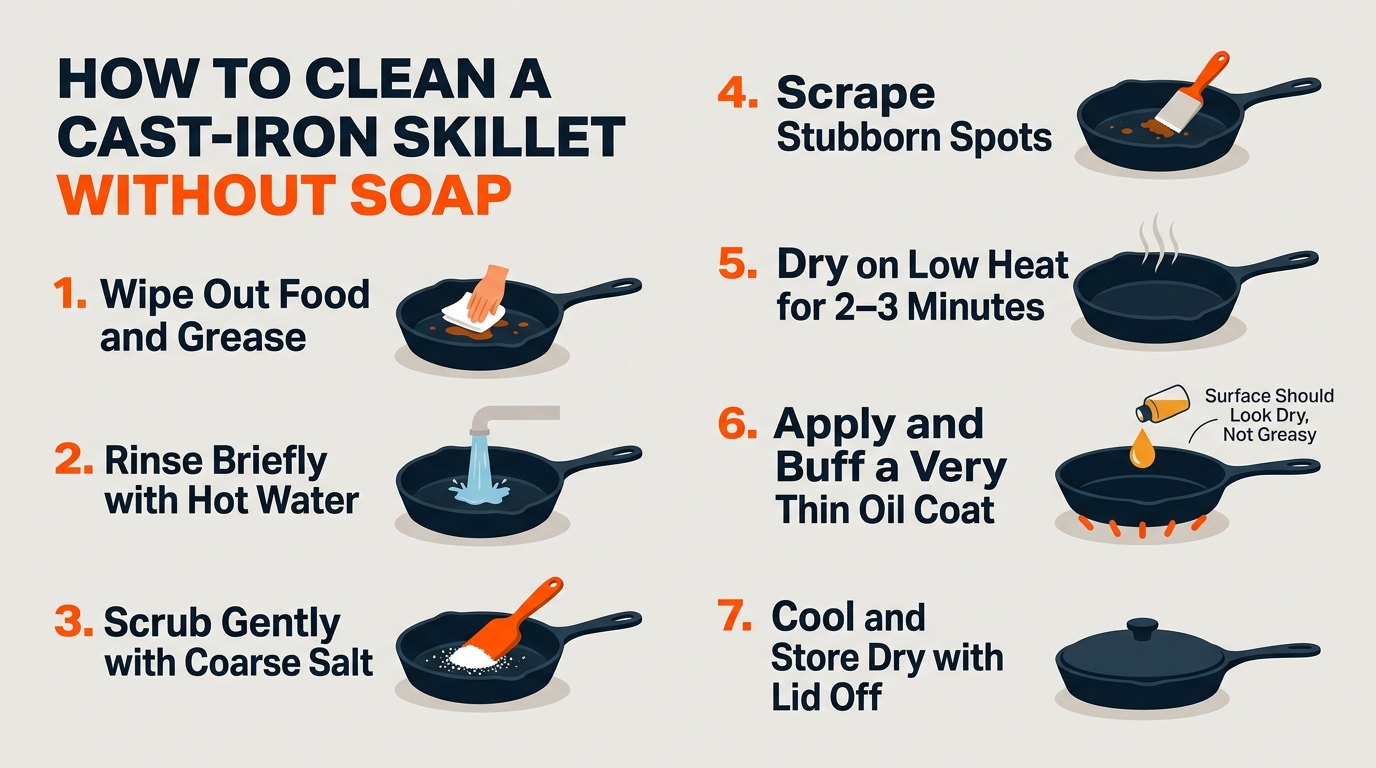
Follow this exact routine after most meals. It takes two to five minutes.
- Wipe out food
- While the pan is still warm, wipe with a paper towel.
- Remove grease pools and loose bits.
- Rinse with hot water
- Run hot water over the surface.
- Avoid soaking. A quick rinse is enough.
- Scrub gently
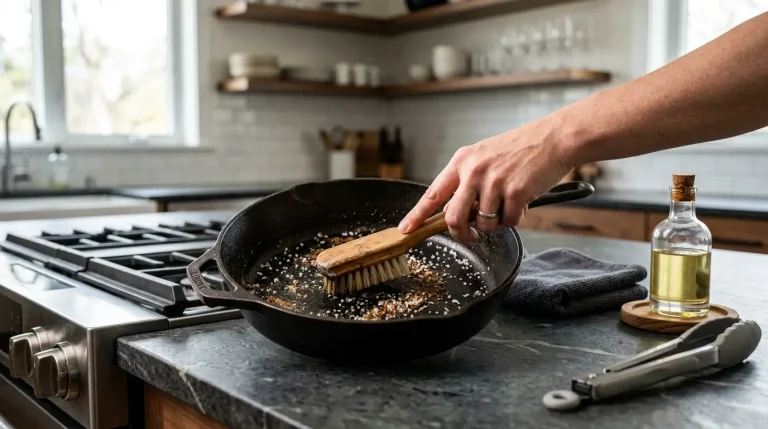
- Sprinkle coarse salt. Add a few drops of warm water.
- Scrub with a brush, pad, or chainmail until smooth.
- Tackle stubborn spots
- Use a plastic scraper at a low angle.
- For tough stuck-on bits, simmer a thin layer of water for 2 minutes, then scrape and rinse.
- Dry completely
- Put the pan on low heat for 2 to 3 minutes until bone-dry.
- Water left behind can cause flash rust.
- Reseason light
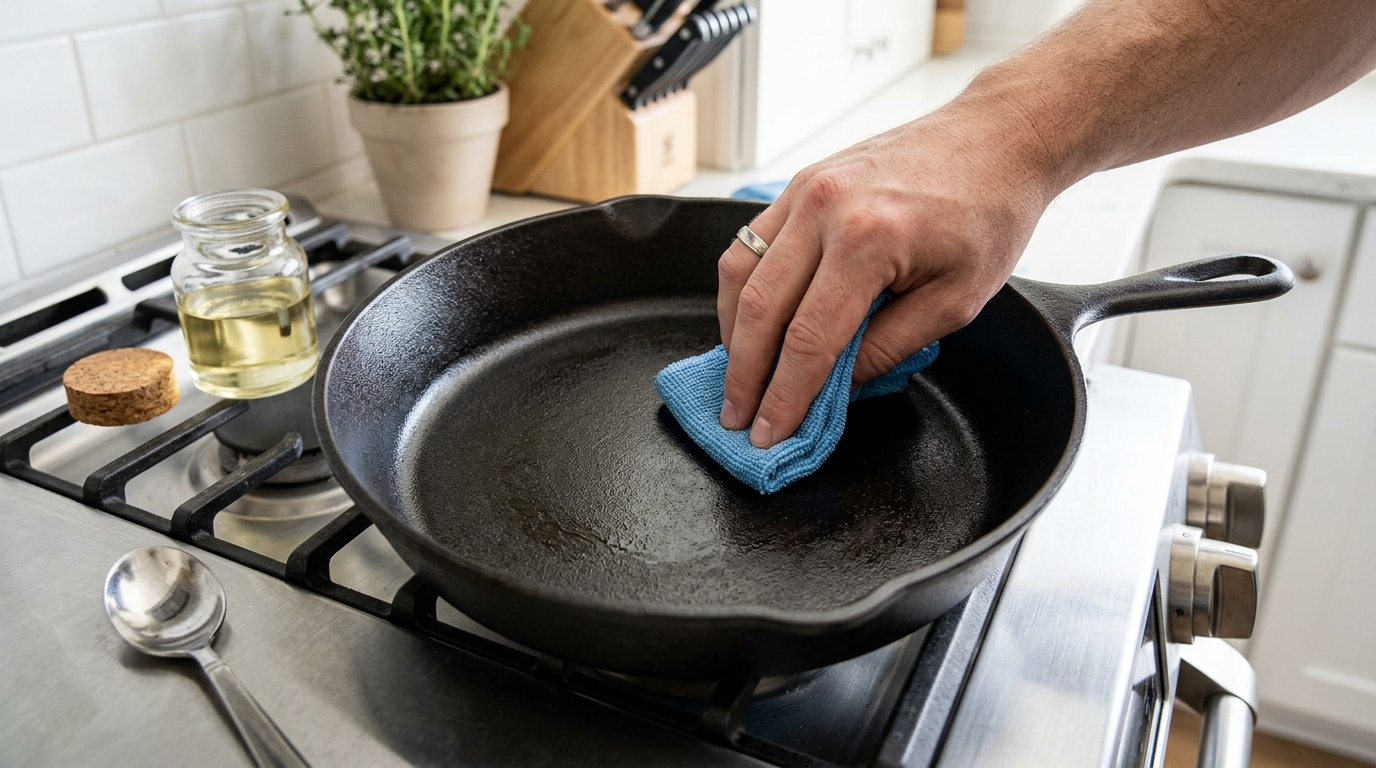
- Add 1 teaspoon of oil to the warm pan.
- Wipe and buff until the surface looks dry, not greasy.
- Cool and store
- Let it cool on the stove.
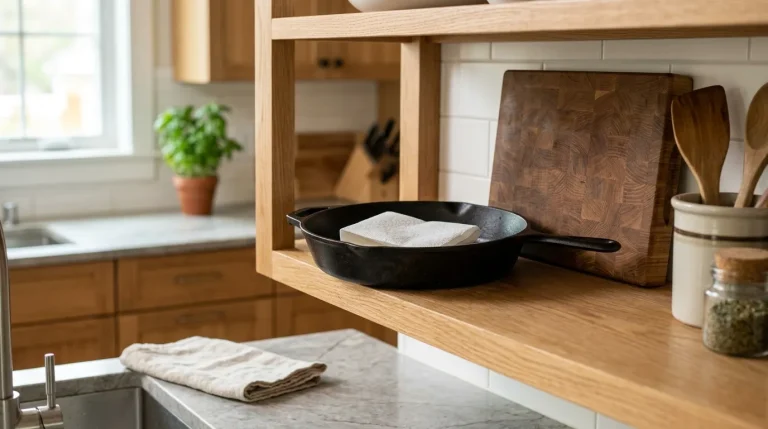
- Store in a dry place with the lid off to avoid trapped moisture.
This is the core of How to Clean Cast Iron Without Soap. It preserves seasoning and keeps meals tasting great.
Quick Methods for Common Messes
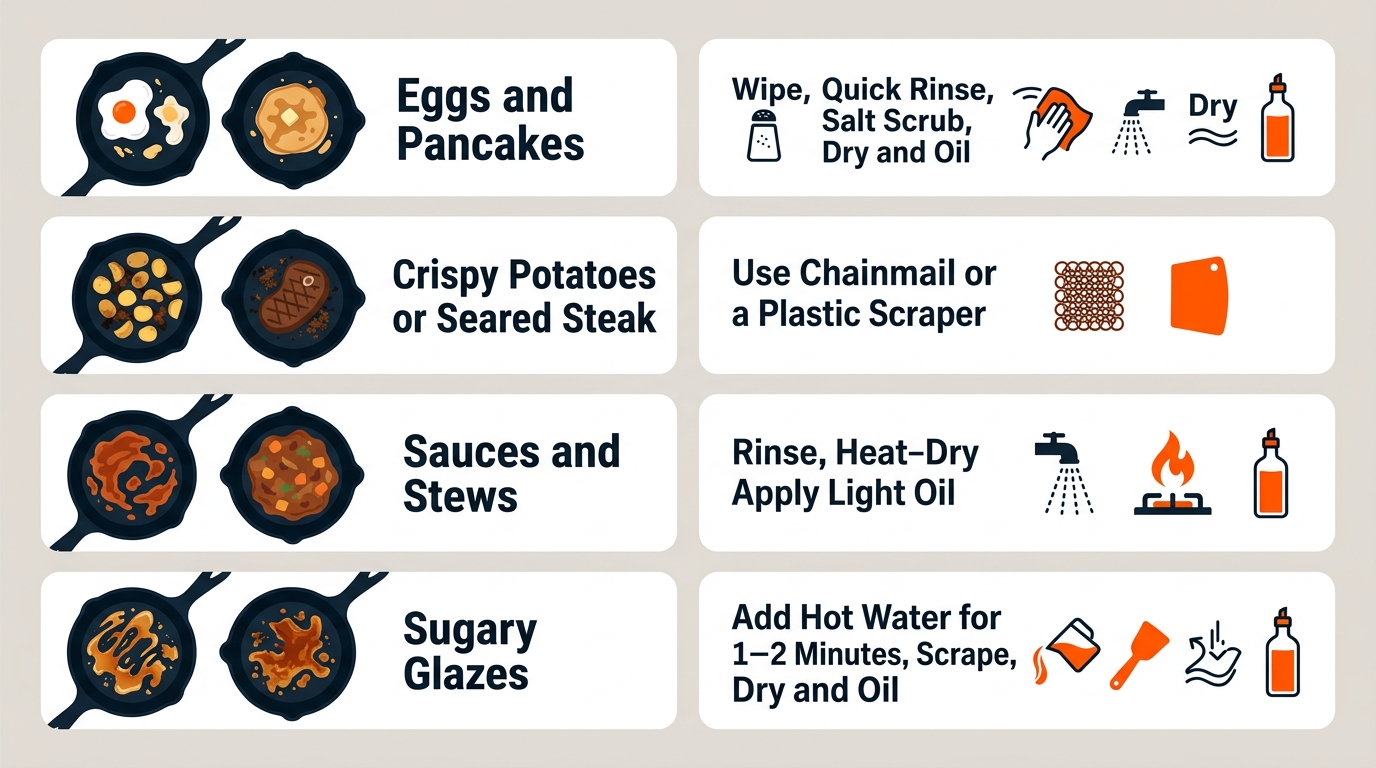
Not every mess needs the same approach. Here is how to adapt.
- Eggs and pancakes
- Wipe well, quick rinse, salt scrub, dry, and buff with oil.
- Crispy potatoes or seared steak
- Chainmail or a scraper for stuck bits; finish with oil buff.
- Sauces or stews
- Minimal residue. Rinse, dry on heat, and light oil.
- Sugary glazes
- Use hot water soak for 1 to 2 minutes. Scrape, then dry and oil.
These tweaks help you master How to Clean Cast Iron Without Soap in real life, not just in theory.
The Science: Seasoning, Heat, and Hygiene
Seasoning forms when oil bonds to iron under heat. It builds up layer by layer. Soap can break that bond, which is why we avoid it for daily cleaning.
What about germs? Heat is your friend. Heating your pan above 400°F for several minutes during or after cooking reduces common kitchen bacteria. Drying on the burner also drives off moisture, which bacteria need. This is a key part of How to Clean Cast Iron Without Soap that keeps your pan safe.
Note: If you are handling raw chicken or fish, cook and heat-dry well. A short high-heat blast is better than soap here.
My Personal Routine and Lessons Learned
I restored my first rusty lodge pan 12 years ago. I used soap once, and the eggs stuck for weeks. Since then, I have used the same no-soap steps and have taught friends the method many times.
What I learned:
- The buffing step is gold A dry, thin oil layer prevents next-day sticking.
- Less is more A teaspoon of oil is plenty.
- Heat is the secret weapon Dry your pan on the stove every time.
This is how I practice How to Clean Cast Iron Without Soap day in and day out.
Troubleshooting: Fix Common Issues Fast
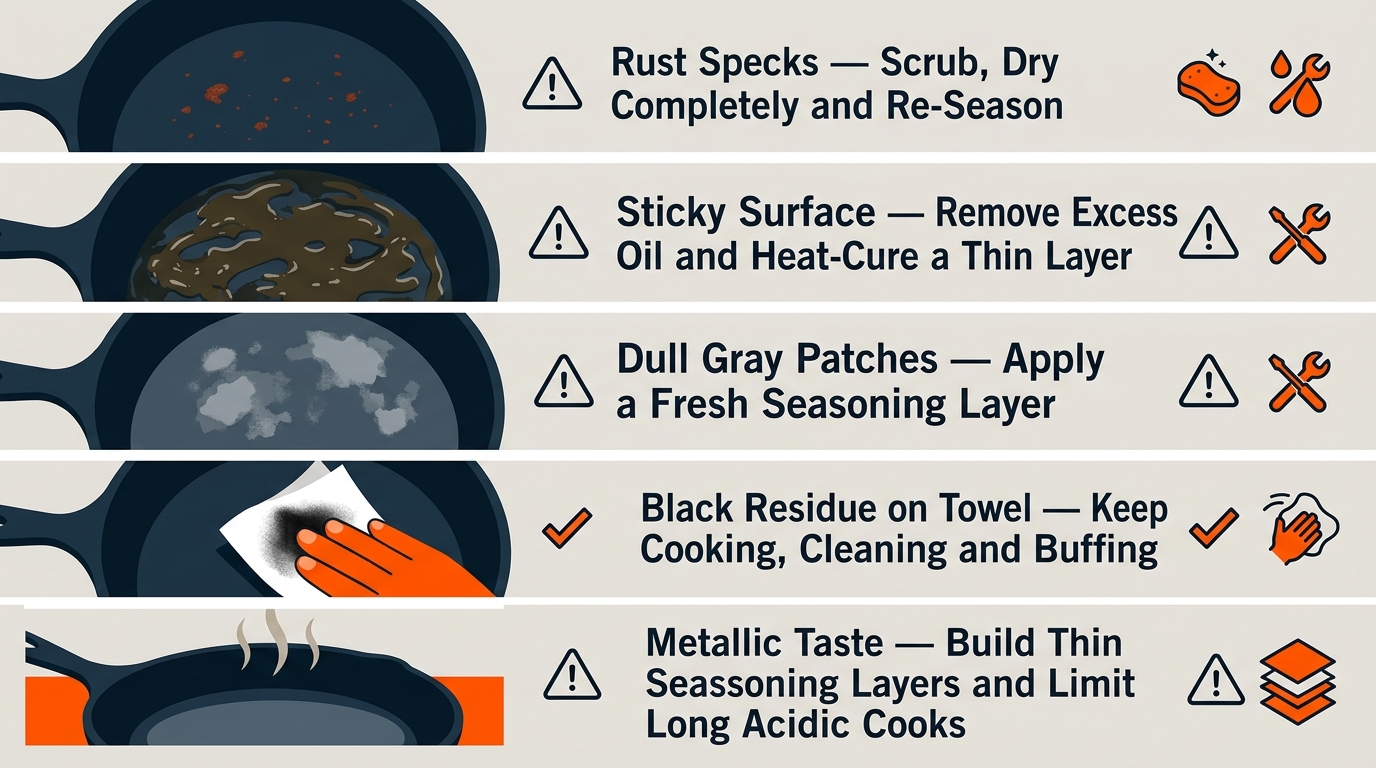
Things happen. Here is how to get back on track.
- Rust specks
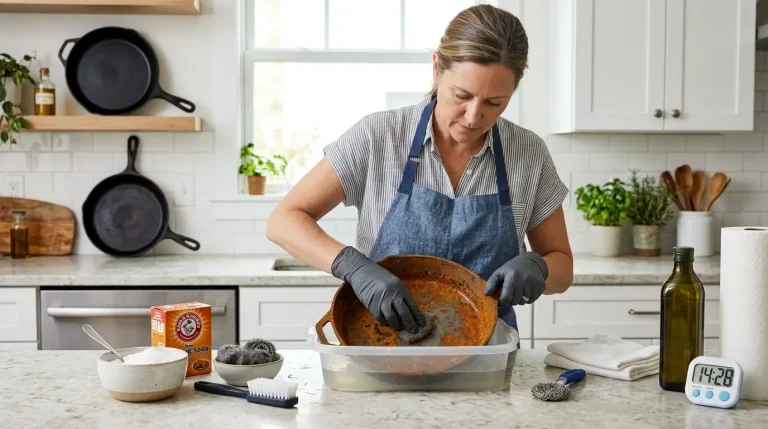
- Scrub with salt or fine steel wool. Rinse, dry hot, then oil-bake at 400°F for 1 hour.
- Sticky surface
- You used too much oil. Bake the pan upside down at 450°F for 1 hour to harden it.
- Dull gray patches
- Bare metal is showing. Do a quick re-season layer in the oven.
- Black residue on towel
- Normal for new pans. Keep cooking and buffing. It will stabilize.
- Metallic taste
- Add two thin oven seasoning layers and avoid long tomato cooks for a few runs.
Use these steps with How to Clean Cast Iron Without Soap, and your pan will bounce back fast.
Deep Clean and Re-Season (When Needed)
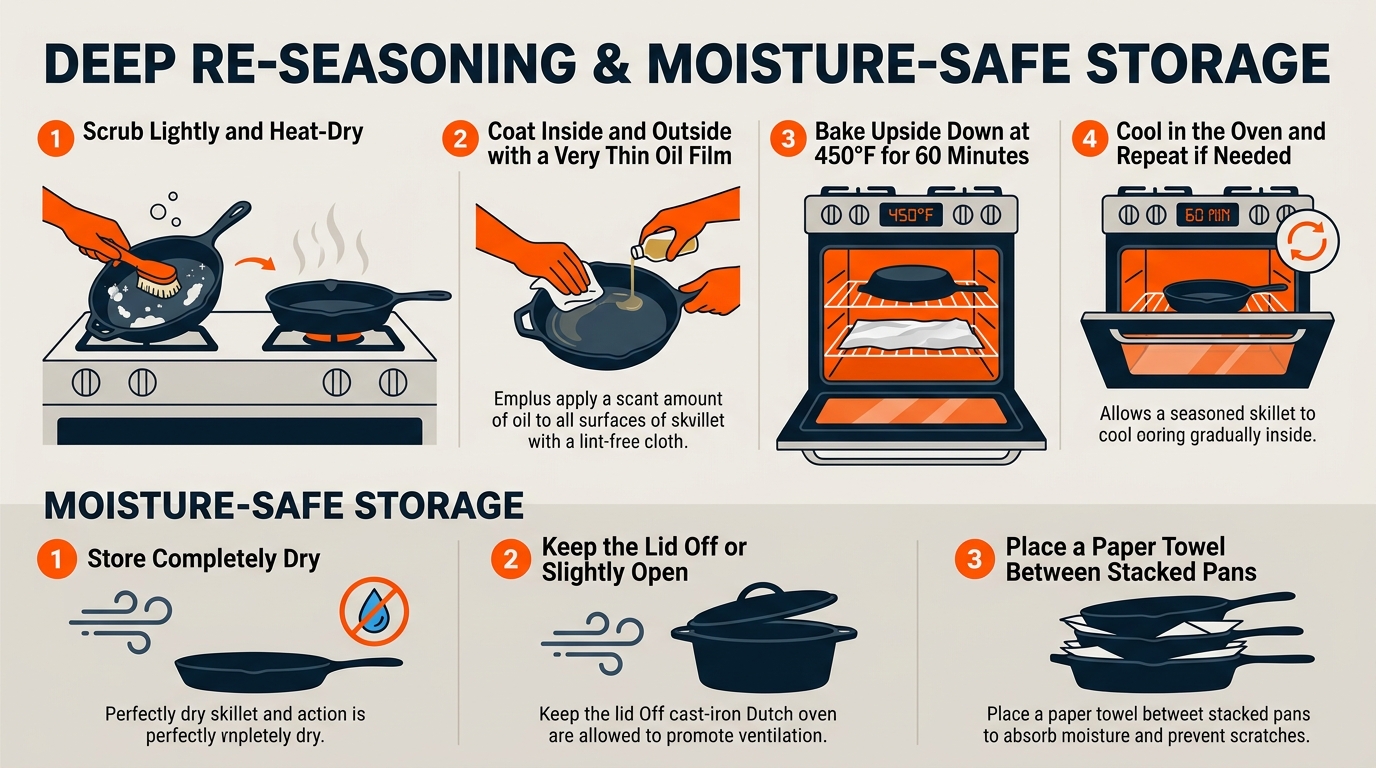
When food sticks again and again, it is time for a deeper reset.
- Strip lightly
- Scrub with salt and a splash of warm water. Dry on heat.
- Oil the whole pan
- Coat inside and out with a thin film of neutral oil. Wipe until almost dry.
- Bake upside down
- Place foil on a lower rack. Bake at 450°F for 60 minutes. Cool in the oven.
- Repeat 2 to 3 times for a smooth, dark finish.
This deeper routine pairs well with How to Clean Cast Iron Without Soap for long-term care.
Storage and Rust Prevention
Moisture is the enemy. Airflow is your ally.
- Dry on heat every time It stops flash rust.
- Store with the lid off Moisture trapped under lids causes rust.
- Paper towel between pans Reduces scratches and absorbs any oil.
- Light oil wipe before vacations Keeps humidity from creeping in.
Good habits here support everything you do with How to Clean Cast Iron Without Soap.
What to Avoid
A few things can undo your hard work.
- Long soaks Standing water invites rust.
- Dishwasher The harsh cycle strips seasoning.
- Harsh soap and degreasers They thin your coating.
- Metal scouring pads They can scratch and shed seasoning.
- Thick oil layers They stay sticky and attract dust.
Skip these, and the How to Clean Cast Iron Without Soap method will shine.
Frequently Asked Questions of How to Clean Cast Iron Without Soap
Can I ever use soap on cast iron?
You can in a pinch, but it is not ideal for daily use. If you do, re-oil right after to protect the seasoning.
How do I clean cast iron after cooking fish?
Rinse hot, scrub with salt, then dry on heat and oil-buff. The heat step removes odor and keeps the surface neutral.
Will salt scratch my pan?
Coarse salt is softer than the seasoning layer. It works like a gentle abrasive and will not harm a well-seasoned pan.
Is boiling water in the pan safe for cleaning?
Yes, a short simmer loosens stuck bits. Dry right after and apply a thin oil coat.
What oil should I use for routine care?
Use a neutral, high-smoke-point oil like canola, grapeseed, or refined avocado oil. They polymerize well and do not leave strong flavors.
How often should I re-season in the oven?
Only when food starts to stick or the surface looks patchy. Many home cooks do it a few times a year.
Can I cook acidic foods in cast iron?
Yes, but keep it short and in a well-seasoned pan. Avoid long tomato braises until your layer is thick and stable.
Why does my pan feel sticky after cleaning?
Too much oil or low heat during the dry step. Buff the oil until the pan looks dry, then warm it to set the coat.
Conclusion
You now have a simple, proven plan for How to Clean Cast Iron Without Soap. Use hot water, salt, heat, and a whisper of oil. Keep layers thin. Keep the pan dry. Your skillet will cook like a dream for decades.
Try the routine tonight after dinner. Then share your results, subscribe for more cast iron tips, or leave a comment with your best seasoning win.