Remove light rust with vinegar or baking soda, scrub gently, rinse, dry, and oil.
Kitchen rust happens to the best of us. I’ve cleaned hundreds of spoons, knives, and tongs for clients and at home, and I’ll show you how to fix utensil rust fast, safely, and for good. This guide breaks down how to fix utensil rust by metal type, the exact steps to remove it, and the simple habits that keep it from coming back.
What Causes Rust on Kitchen Utensils

Rust is iron oxide. It forms when iron or steel meets water and oxygen. Salt, acids, and harsh detergents speed it up. Even stainless steel can rust if the surface gets scratched, contaminated, or exposed to chlorine.
Common triggers I see in kitchens:
- Dishwasher exposure to strong detergents and high heat.
- Long soaks in the sink, especially overnight.
- Contact with chipped dishwasher racks that expose raw steel.
- Storing damp utensils in a drawer or caddy with poor airflow.
- Cross-contamination from steel wool or carbon steel tools.
If you know these triggers, you already know half of how to fix utensil rust.
Quick ID: What Metal Are You Dealing With?
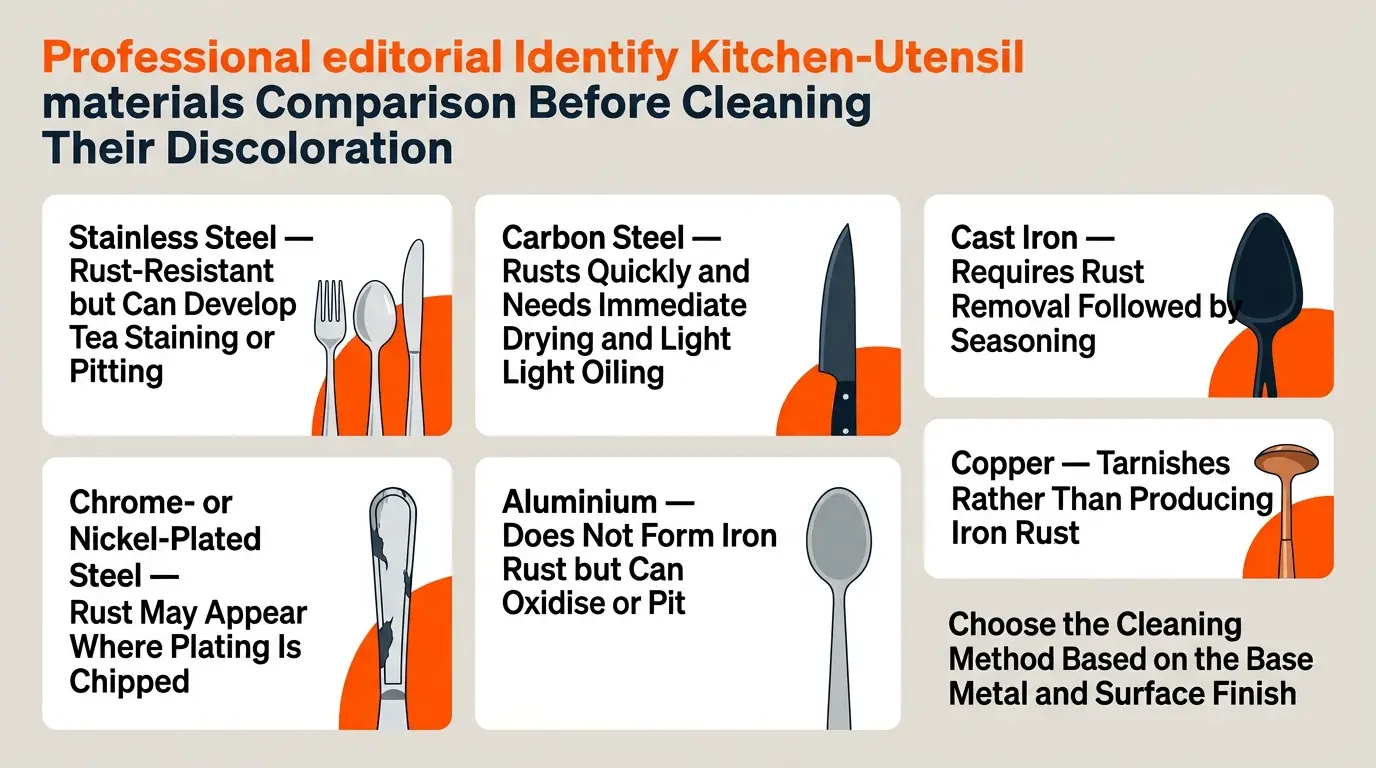
Before you fix anything, know your metal. The right method depends on it.
- Stainless steel flatware and ladles: Usually 18/8 or 18/10. They resist rust but can tea-stain or spot.
- Carbon steel knives and tools: Rust quickly. Need fast drying and a light oil coat.
- Cast iron cookware and serving pieces: Needs seasoning. No soaking. No dishwasher.
- Chrome-plated or nickel-plated utensils: Can rust if the plating chips and exposes steel.
- Aluminum or copper: They don’t rust. They tarnish or pit instead, so use different care.
Knowing the metal makes how to fix utensil rust straightforward and safe.
Step-by-Step: How to Fix Utensil Rust
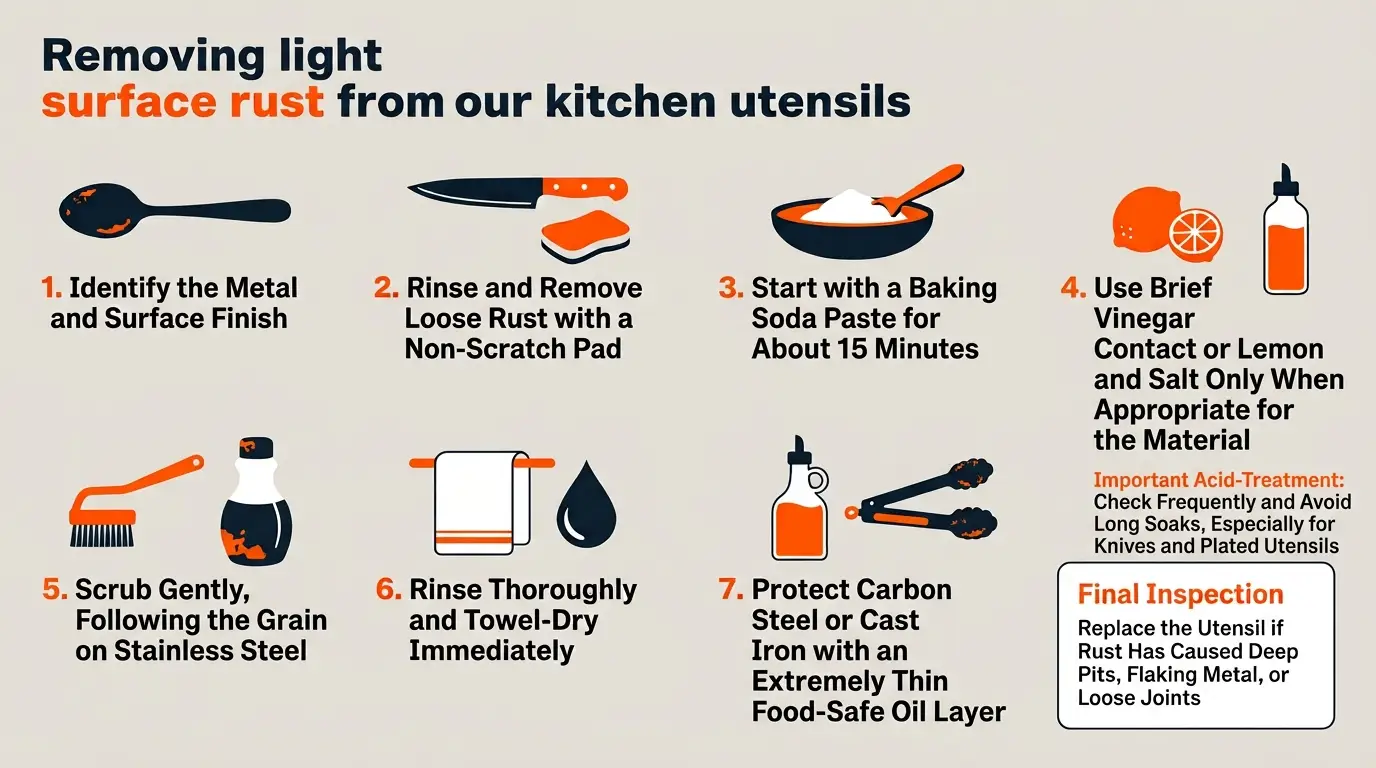
This is my go-to process. It’s simple, food-safe, and effective.
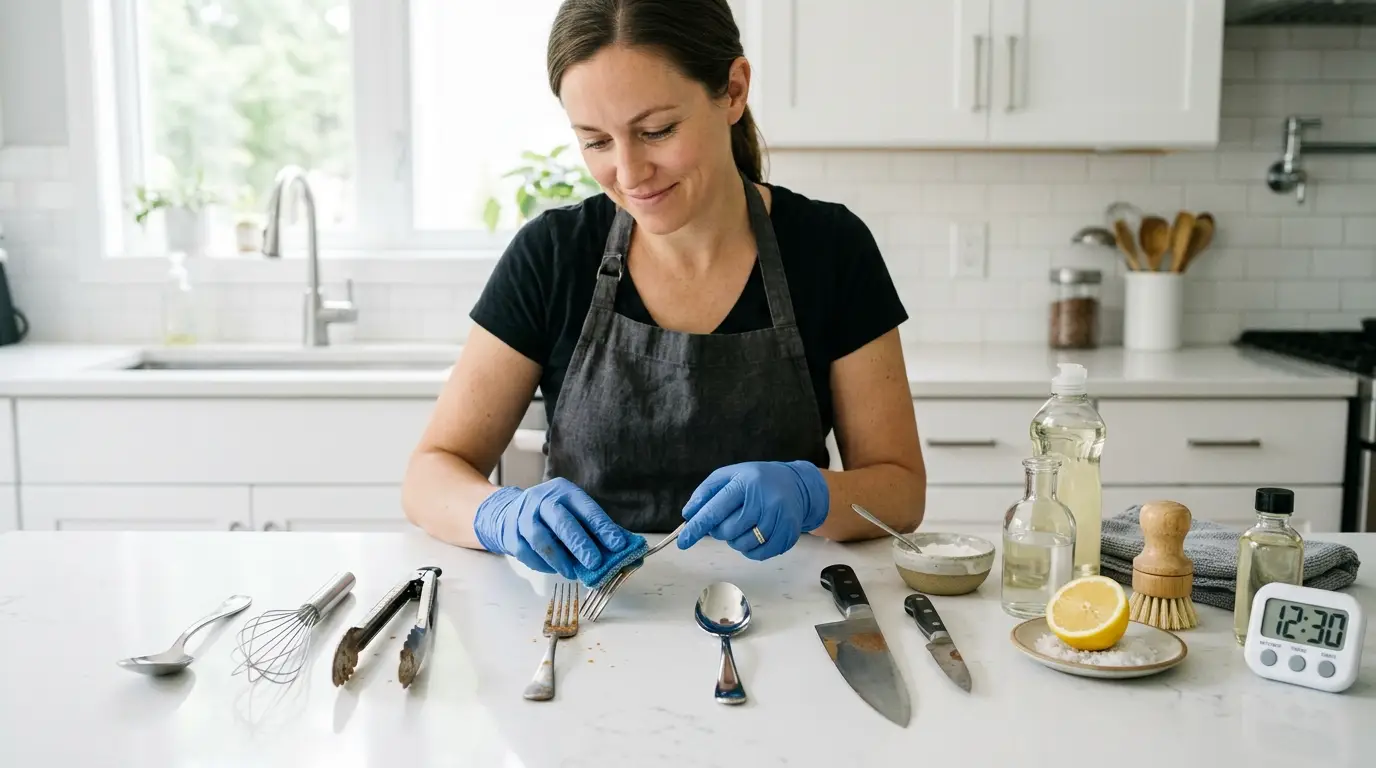
- Gather your supplies
- White vinegar, baking soda, lemon, table salt, dish soap.
- Non-scratch scrub pad, soft brush, microfiber cloth.
- Bar Keepers Friend or a similar oxalic-acid cleaner for stainless.
- Food-grade mineral oil or camellia oil for protection.
- Remove loose rust
- Rinse the utensil.
- Use a non-scratch pad to lift any loose flakes. Avoid steel wool on stainless; it can embed particles that cause more rust.
- Choose your rust-removal method
- Vinegar soak: Submerge the rusty area in white vinegar for 10–30 minutes. For stubborn rust, up to 2 hours. Then scrub, rinse, and neutralize with a quick baking soda rinse.
- Baking soda paste: Mix baking soda with a few drops of water into a paste. Spread on rust, wait 15 minutes, scrub, and rinse.
- Lemon and salt: Sprinkle salt on the rust, squeeze lemon juice over it, wait 15–30 minutes, scrub, and rinse.
- For stainless steel: Use Bar Keepers Friend with a damp sponge. Rub with the grain, rinse well, and dry.
- For carbon steel knives: Avoid long soaks. Use a paste method or a quick vinegar wipe, scrub, rinse, dry, then oil.
- Rinse, dry, and inspect
- Rinse with warm water.
- Dry right away with a clean towel. Check for pits or black spots.
- Protect the surface
* Stainless steel: Wipe dry until streak-free. You can wipe with a tiny bit of food-safe oil if desired.
- Carbon steel and cast iron: Wipe a thin coat of food-grade mineral oil. For cast iron, warm it and season if needed.
This is the heart of how to fix utensil rust. It’s gentle, safe, and works on most kitchen tools in under an hour.
Methods by Material: Do This, Not That
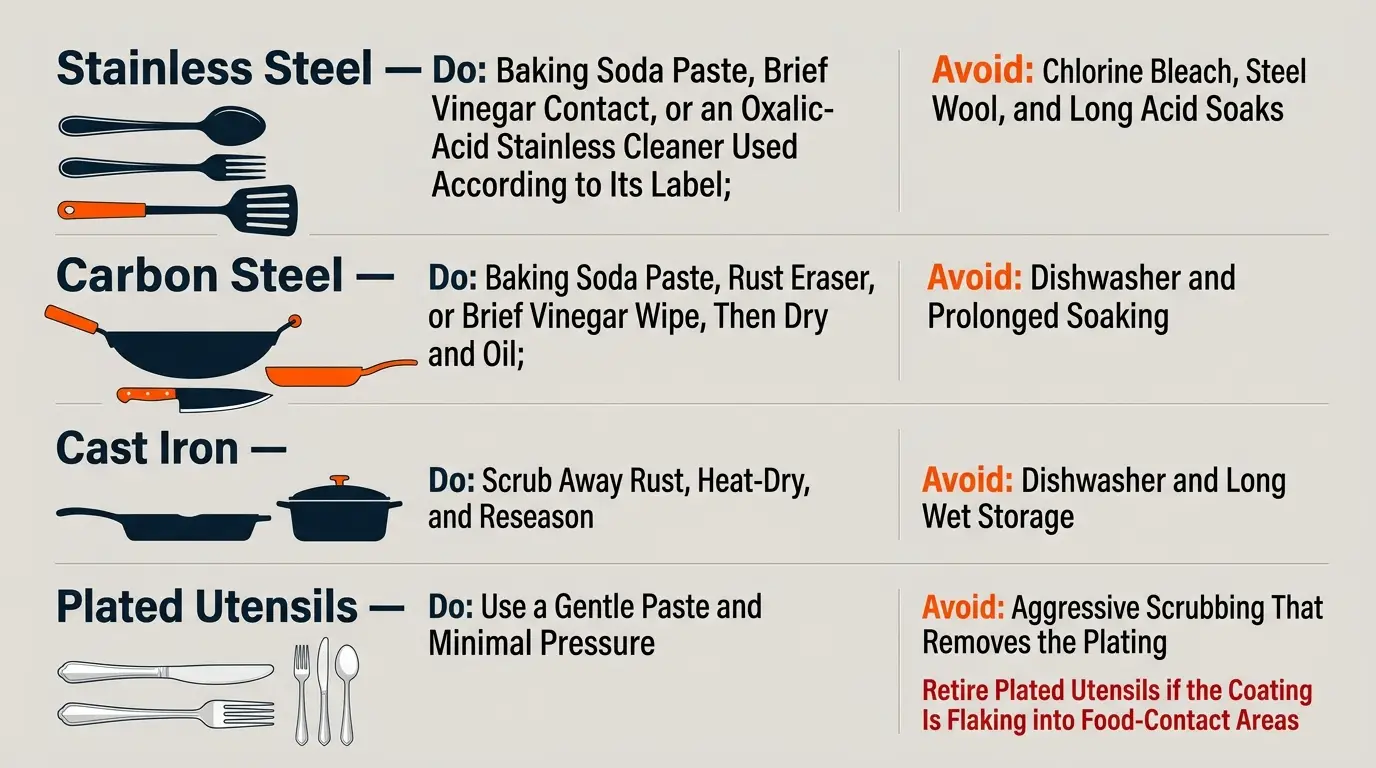
Stainless steel utensils and flatware
- Best methods: Bar Keepers Friend, baking soda paste, short vinegar contact.
- Avoid: Bleach and long soaks. Chlorides cause pitting and more rust.
- Tip from my kit: Rub with the grain to avoid haze.
Carbon steel knives and tools
- Best methods: Baking soda paste, short vinegar wipe, rust eraser.
- Avoid: Dishwasher, soaking, harsh acids for long periods.
- My habit: Dry immediately and oil with two drops of camellia oil.
Cast iron servers or trivets
- Best methods: Steel brush or scrub pad, vinegar wipe, then re-season.
- Avoid: Soap soaks, dishwasher.
- Quick fix: After rust removal, heat, wipe with oil, and bake to restore seasoning.
Plated utensils
- Best methods: Gentle paste methods. Do not over-scrub or you’ll strip the plating.
- Red flag: If plating is flaking, consider replacement.
When you tailor your approach by metal, how to fix utensil rust becomes faster and safer.
Troubleshooting: Stains That Look Like Rust

Not every orange or brown mark is rust.
- Tea staining on stainless: Thin orange-brown film from chlorides or hard water. Remove with oxalic-acid cleaner and a non-scratch sponge.
- Hard water spots: White or gray film. Use a vinegar rinse, then dry.
- Galvanic staining: Happens when dissimilar metals touch while wet. Store items dry and apart.
- Black dots or pits: Can be chloride pitting. Use a gentle cleanser; if deep, the utensil may be compromised.
Understanding these look-alikes helps you decide how to fix utensil rust the right way without over-scrubbing.
Preventive Care: Keep Rust From Coming Back

A few tiny habits make a big difference.
Daily and weekly habits
- Dry right away. Wipe after washing; avoid air-drying in humid rooms.
- Skip overnight soaks. Ten minutes max for stuck-on food.
- Use a rinse aid in the dishwasher and a gentle cycle.
- Keep knives and carbon steel out of the dishwasher.
Storage and environment
- Store in a dry drawer with airflow. Add a small silica gel pack if your kitchen is humid.
- Repair chipped dishwasher racks with rack paint to stop rust transfer.
- Avoid contact with steel wool. Use non-scratch pads.
Protective finishes
- Stainless steel: Keep clean and dry. Periodically polish with a dedicated stainless cleaner.
- Carbon steel and cast iron: Thin coat of food-safe oil after each wash.
These small steps are the backbone of how to fix utensil rust and keep it fixed.
Real-World Tips From My Kitchen Bench
What’s worked best for me across hundreds of utensils:
- I start gentle. Baking soda paste is my first move; it’s safe and cheap.
- For flatware with orange film, Bar Keepers Friend is a winner. Rinse well.
- I never soak knives. A quick wipe, scrub, rinse, and dry saves the edge and the handle glue.
- I keep a lint-free towel by the sink. A 10-second dry beats 10 minutes of scrubbing later.
- If a piece has deep pits that collect food, I retire it. Safety beats sentiment.
Follow these, and how to fix utensil rust becomes a 10-minute routine, not a weekend project.
Data-Backed Safety Notes You Should Know
Food safety guidance backs a few important points:
- Light surface rust is not toxic itself, but it can flake into food and taste metallic. Remove it before use.
- Tetanus does not come from rust alone; it comes from bacteria in dirt. In a clean kitchen, the risk is low. Good cleaning and drying are what matter.
- Chlorine bleach can damage stainless steel and cause pitting. Use non-chlorine cleaners.
Grounding your routine in these facts is a smart way to approach how to fix utensil rust with confidence.
Dishwasher Rust: Stop It at the Source
If rust keeps returning, your dishwasher may be the culprit.
What to check
- Chipped rack tips: Exposed steel transfers rust. Seal with rack repair paint.
- Mixed loads: Carbon steel tools in the same load can share rust particles.
- Detergent strength: Use less detergent and add rinse aid to cut residue.
- Drying mode: Use heated dry only if you’ll unload soon and towel any damp spots.
Fix these roots, and you’ll do less rust removal and more actual cooking. That’s the real win in how to fix utensil rust.
Eco-Friendly and Budget Options
You can clean rust without harsh chemicals.
- Pantry heroes: Vinegar, lemon, baking soda, and salt.
- Reusable tools: Non-scratch pads and soft brushes last longer than steel wool.
- Tiny oil bottles: A $5 bottle of mineral oil can protect tools for a year.
These choices save money and keep your kitchen healthier while you practice how to fix utensil rust.
Pro Checklist: How to Fix Utensil Rust Fast
Use this short plan when you’re in a rush.
- Identify the metal.
- Try baking soda paste first; scrub and rinse.
- For stainless, switch to Bar Keepers Friend if needed.
- Neutralize any acid with a quick baking soda rinse.
- Dry completely and oil carbon steel or cast iron.
Keep this by the sink, and you’ll master how to fix utensil rust in minutes.
Frequently Asked Questions of How to Fix Utensil Rust
Is it safe to use a utensil with light rust?
Light surface rust is not toxic, but it can flake and taste metallic. Remove it first, then rinse, dry, and protect with a light oil if needed.
Does stainless steel really rust?
Stainless resists rust, but it can tea-stain or pit when exposed to chlorides or scratches. Gentle cleaning and thorough drying prevent this.
Vinegar or baking soda: which is better?
Vinegar dissolves rust faster, but can etch if left too long. Baking soda is gentler and safer for frequent use.
How long should I soak utensils in vinegar?
Start with 10–30 minutes and check progress. Rinse and neutralize with a baking soda rinse to stop the acid action.
Can I put rusty utensils in the dishwasher to clean them?
No. The dishwasher can spread rust and worsen stains. Clean rust by hand, dry well, then run normal dishwasher cycles later.
What oil should I use after cleaning rust?
Use food-grade mineral oil or camellia oil. Apply a very thin coat to carbon steel and cast iron; wipe off any extra.
Why do my utensils rust after the dishwasher?
Chipped rack tips, harsh detergents, and trapped moisture are common causes. Repair the rack, reduce detergent, and dry promptly.
Are rust erasers safe for kitchen tools?
Yes, use them gently and follow the grain, especially on knives. Rinse well and dry immediately.
Can bleach remove rust on stainless steel?
Avoid chlorine bleach; it can cause pitting and more rust. Use oxalic-acid cleaners or baking soda instead.
When should I replace a rusty utensil?
Replace when rust causes deep pits, flaking metal, or loosened joints or handles. These can trap food and are hard to sanitize.
Conclusion
You can fix most rust in minutes with simple tools: a mild abrasive, a short vinegar or baking soda treatment, and fast drying. The real key is prevention: no soaking, no bleach on stainless, and a touch of oil on carbon steel and cast iron. Put this plan into action today and make how to fix utensil rust a quick, stress-free habit. Want more practical kitchen care tips? Subscribe for weekly guides or drop your questions in the comments.