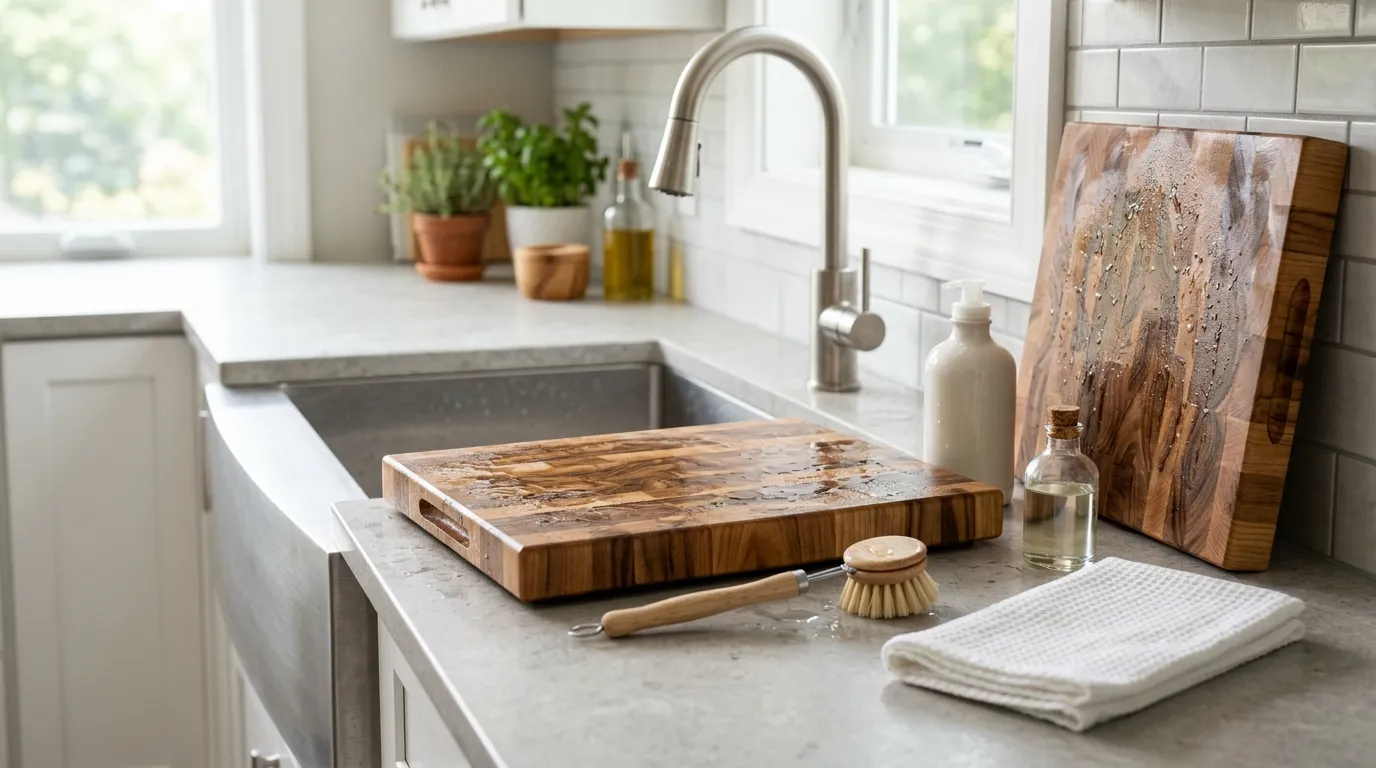
Wash with hot soapy water, sanitize with peroxide, dry fast, oil monthly.
I’ve cleaned hundreds of boards in busy kitchens and home studios. In this guide, I’ll show you how to clean wooden cutting board the right way, based on food safety best practices and real-life use. We’ll cover fast daily cleaning, deep cleaning, safe disinfecting, oiling, and what to avoid so your board lasts for years.
Why Wood Boards Need Special Care
Wood is strong and gentle on knives. It also moves with moisture. That means it swells when wet and shrinks when dry. If you treat it like plastic, it can warp or crack. Knowing how wood behaves is the core of how to clean wooden cutting board without damage.
End-grain boards hold up well. Edge-grain boards cost less and still work great. Maple, walnut, and beech are common and stable. Softer woods dent fast and can trap food bits. Good care helps any wood board stay safe and smooth.
Wood also dries from the surface inward. This slows how far moisture and food juices travel. Drying well is key. That is why how to clean wooden cutting board always includes fast drying and airflow.
Daily Cleaning Routine
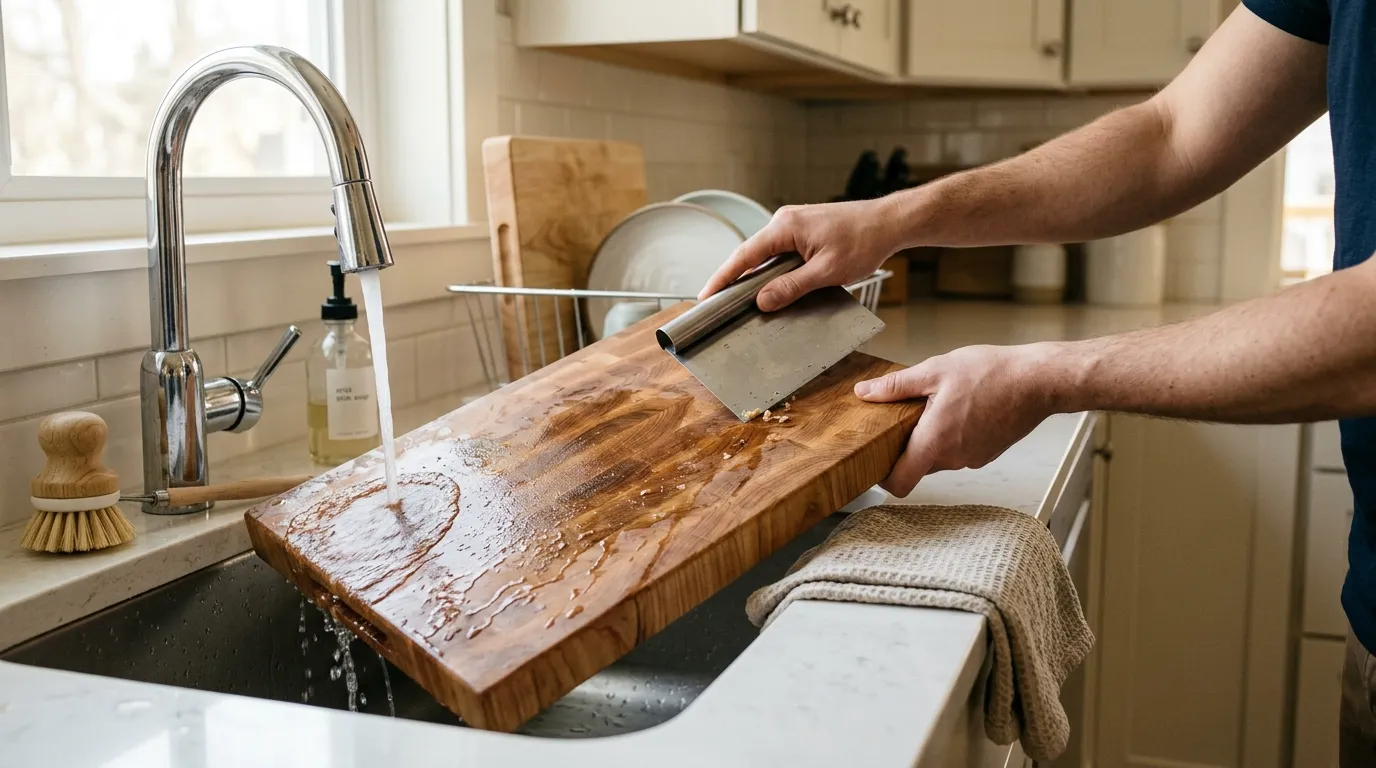
This is the simple routine I use after most prep. It works for fruits, bread, cheese, and cooked foods.
- Scrape. Use a bench scraper to lift stuck bits.
- Wash. Use hot water and a drop of mild dish soap. Scrub with a brush or sponge along the grain.
- Rinse. Rinse with hot water to remove soap.
- Dry. Wipe with a clean towel. Stand the board on edge so air reaches both sides.
If you cut raw meat, add a sanitizing step (below). For day-to-day, this is how to clean wooden cutting board in under two minutes.
Deep Cleaning and Deodorizing Methods
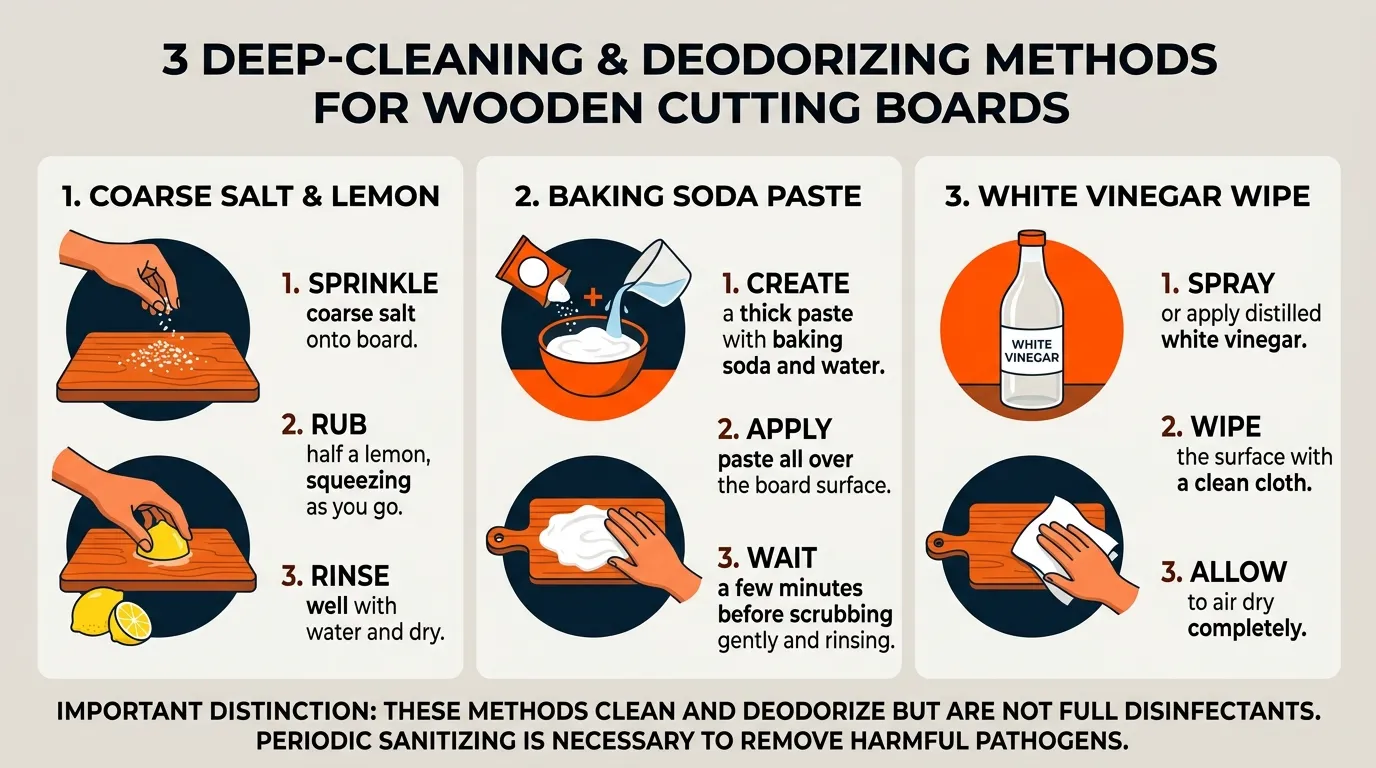
Sometimes odors and light stains linger. Deep clean to refresh the surface. Note that these methods clean and deodorize. They are not full disinfectants.
- Coarse salt and lemon: Sprinkle coarse salt. Halve a lemon and scrub. Let sit 5 minutes. Wipe and rinse. This lifts surface grime and brightens smell.
- Baking soda paste: Mix baking soda with a little water. Spread, scrub, and rinse. Great for onion or fish smells.
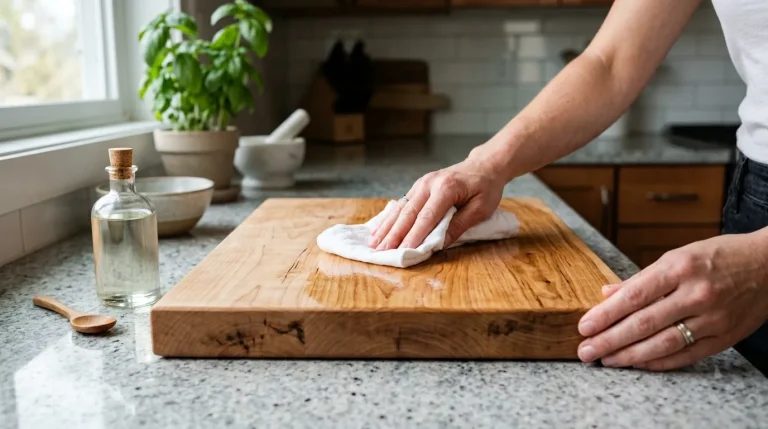
- White vinegar wipe: Dampen a cloth with plain vinegar. Wipe, then rinse and dry. Vinegar helps with smells and mineral film. It does not replace a sanitizer.
I schedule a deep clean weekly in my home kitchen. This habit is central to how to clean wooden cutting board so it looks and smells fresh.
Disinfecting Without Damaging the Wood
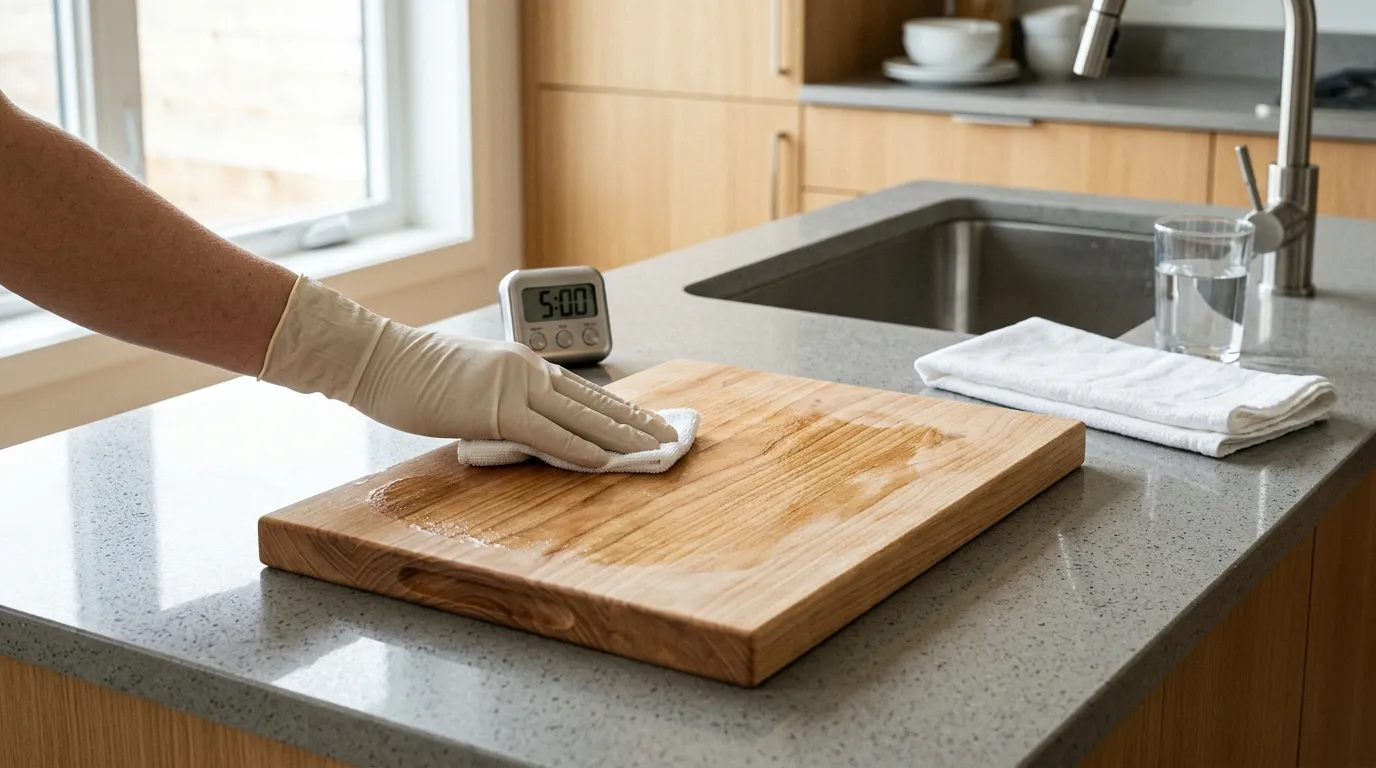
When you prep raw meat, poultry, or seafood, disinfect after washing. Use a food-safe, effective method that will not harm the board.
- 3% hydrogen peroxide: Pour enough to cover the surface. Spread with a clean cloth. Let sit 5 minutes. Wipe, rinse with water, and dry well. It kills common kitchen germs and is gentle on wood.
- Diluted bleach: Mix 1 tablespoon unscented household bleach in 1 gallon of cool water. Apply to the board. Let sit 1–2 minutes. Rinse with clean water. Dry at once. Note that bleach may lighten the wood over time.
Avoid strong, undiluted chemicals. They can strip finish and raise the grain. Disinfecting well, then drying fast, is a big part of how to clean wooden cutting board after high-risk foods.
Removing Stains, Odors, and Mold Safely
Tough stains happen. So do funky smells. Here is how to fix them without hurting the board.
- Gray or black water marks: Wipe with a vinegar cloth, then deep clean with baking soda. If marks stay, lightly sand with 220-grit paper. Wipe, then oil.
- Garlic or onion odor: Salt and lemon, then a baking soda paste. Rinse and dry. A brief sun-dry near a window can help.
- Surface mold: Move fast. Scrub with hot soapy water. Rinse, then disinfect with peroxide. If black spots remain, sand until they are gone. Re-oil. If mold runs deep or the board smells musty after drying, it is safer to replace.
These fixes match how to clean wooden cutting board in real kitchens where stains and smells show up after busy weeks.
Drying, Oiling, and Waxing for Longevity
Water is wood’s stress test. Dry it fast every time. Then feed the wood so it resists moisture later.
- Drying: Towel-dry at once. Stand the board upright on edge with airflow on both faces.
- Oiling: Use food-grade mineral oil. Apply a thin coat. Let it soak 20 minutes. Wipe the extra. For a new or dry board, repeat until oil no longer soaks in.
- Waxing: Use a beeswax and mineral oil blend. Rub on a thin layer. Buff dry. Wax adds a moisture shield and a soft sheen.
Most home cooks oil once a month. In dry climates, do it more often. Oiling is a core step in how to clean wooden cutting board and keep it stable over time.
What to Avoid and Common Mistakes
Some habits ruin boards fast. Skip these to save yours.
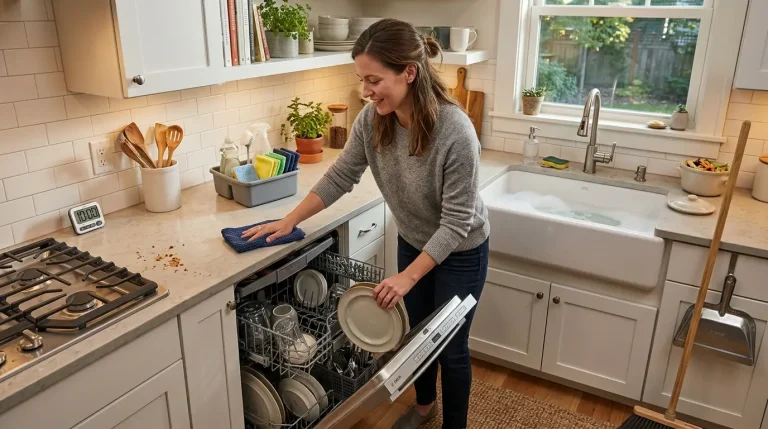
- No dishwasher. Heat, steam, and long cycles cause warping and cracks.
- No soaking. Long soaks push water deep into the grain.
- No vegetable or olive oil. They can go rancid and smell.
- No steel wool on face grain. It tears fibers. Use a brush or fine sandpaper if needed.
- No perfume cleaners. Scents stick to wood and transfer to food.
Avoiding these errors is as important as learning how to clean wooden cutting board step by step.
Step-by-Step: How to Clean Wooden Cutting Board After Raw Meat
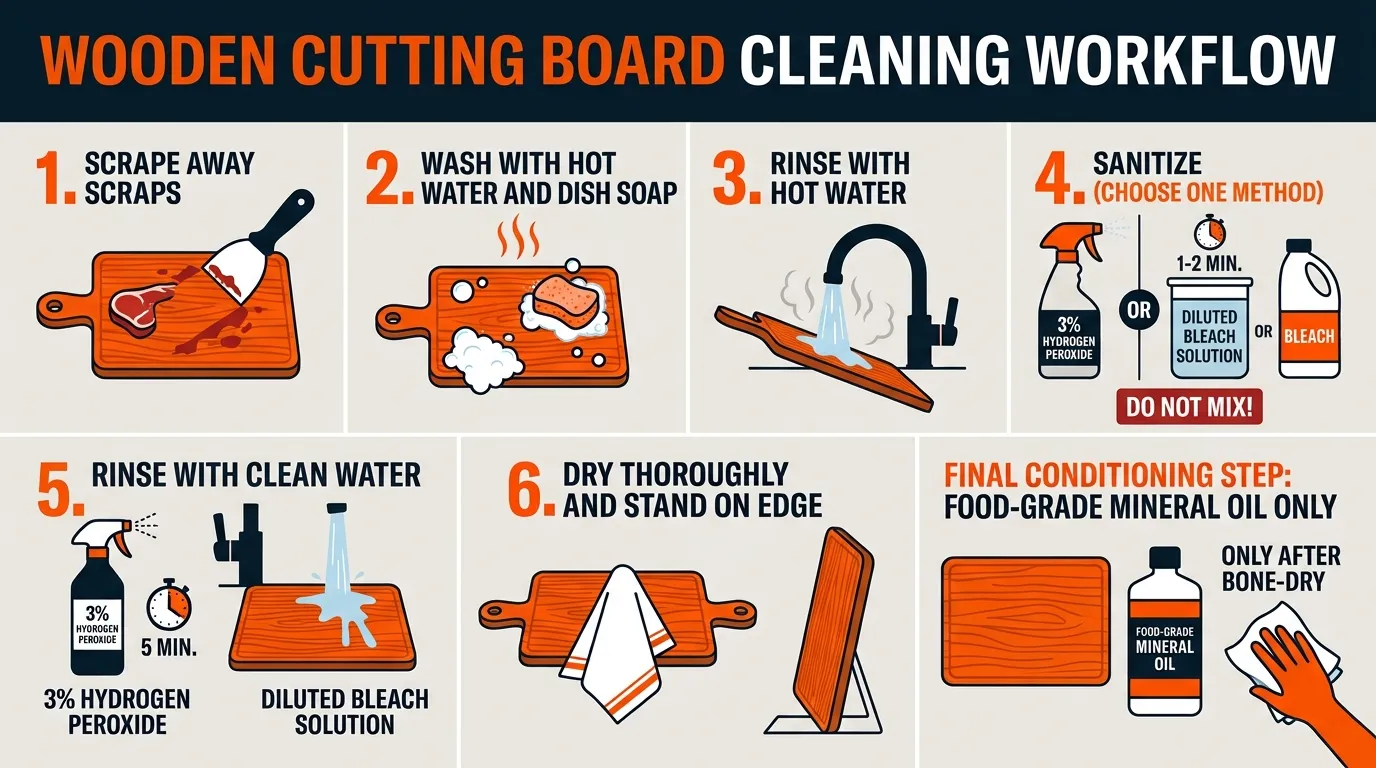
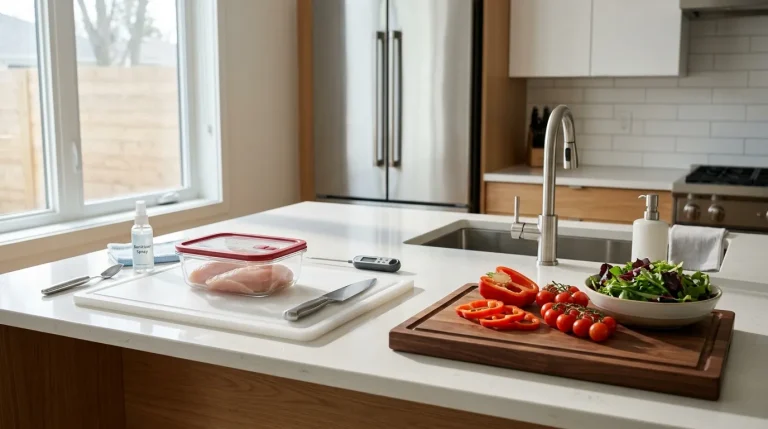
This is my fast, safe method that meets food safety goals.
- Scrape away scraps with a bench scraper.
- Wash with hot water and dish soap. Scrub well on both sides and edges.
- Rinse with hot water.
- Sanitize with 3% hydrogen peroxide for 5 minutes, or use diluted bleach (1 tablespoon per gallon) for 1–2 minutes.
- Rinse again with clean water.
- Dry with a towel. Stand on edge to air-dry fully.
- When bone-dry, oil the board, especially the edges and end grain.
Use this playbook any time you handle raw protein. It is the heart of how to clean wooden cutting board when safety is the main goal.
Troubleshooting and When to Replace
Some boards reach the end of the road. Here is how to tell.
- Warping: If it rocks on the counter, store it flat with weight on top for a day. Light sanding can help high spots. Severe warps often do not recover.
- Cracks: Hairline cracks can be sanded and waxed. Deep or through cracks trap bacteria. Replace the board.
- Deep grooves: Heavy knife scars collect grime. Sand them out. If you cannot sand them away without thinning the board too much, it is time for a new one.
Knowing your limits is part of how to clean wooden cutting board with a long-term mindset. Safety comes first.
Frequently Asked Questions of how to clean wooden cutting board
Can I use vinegar to disinfect a wooden cutting board?
Vinegar helps with smell and light mineral film, but it is not a broad disinfectant. Use 3% hydrogen peroxide or a proper bleach solution after raw meat.
How often should I oil my wooden cutting board?
Oil monthly in most homes, or anytime the surface looks dry or feels rough. In dry climates or heavy use, oil every two weeks.
Is salt and lemon enough after cutting raw chicken?
No. Salt and lemon clean and deodorize. After raw meat, wash with soap and water, then sanitize with peroxide or diluted bleach.
What oil is best for conditioning the board?
Use food-grade mineral oil or a board cream with mineral oil and beeswax. Do not use cooking oils that can turn sticky or rancid.
Can I put my wooden cutting board in the dishwasher?
Do not. Heat and steam can warp, crack, and split the board. Hand wash, rinse, sanitize if needed, and dry fast.
How do I remove black stains on the board?
Try a baking soda paste and a vinegar wipe first, then rinse. If stains remain, sand the area with fine grit and re-oil.
What is the fastest way to dry a wooden cutting board?
Towel it off and stand it on edge so both sides get air. A fan helps. Do not use an oven or direct heat.
Conclusion
Caring for wood is simple when you stick to the basics. Wash with hot soapy water, sanitize when needed, dry fast, and oil on a schedule. That is how to clean wooden cutting board in a way that is safe, fast, and kind to the grain.
Make this routine your own tonight. Try the salt and lemon scrub, then oil your board after it dries. Want more kitchen care tips like this? Subscribe for fresh guides, or drop a comment with your board questions.