Use the right board, keep foods separate, and clean and sanitize every time.
If you care about safe, fast, and tasty cooking, mastering how to use cutting board properly is a must. I’ve trained teams in busy kitchens and taught home cooks how small board habits prevent big problems. In this guide, I’ll show you how to use cutting board properly with clear steps, real tips, and pro shortcuts you can use today.
Why your cutting board habits matter
A cutting board is more than a slab of wood or plastic. It is the runway for every slice, dice, and chop. Good habits keep you safe, protect your knife, and stop germs from spreading.
Raw foods can carry bacteria that move to ready-to-eat foods in a blink. Dull knives, slippery boards, and messy stations slow you down. Learn how to use cutting board properly and you cut faster, cleaner, and with less stress.
Types of cutting boards and when to use each
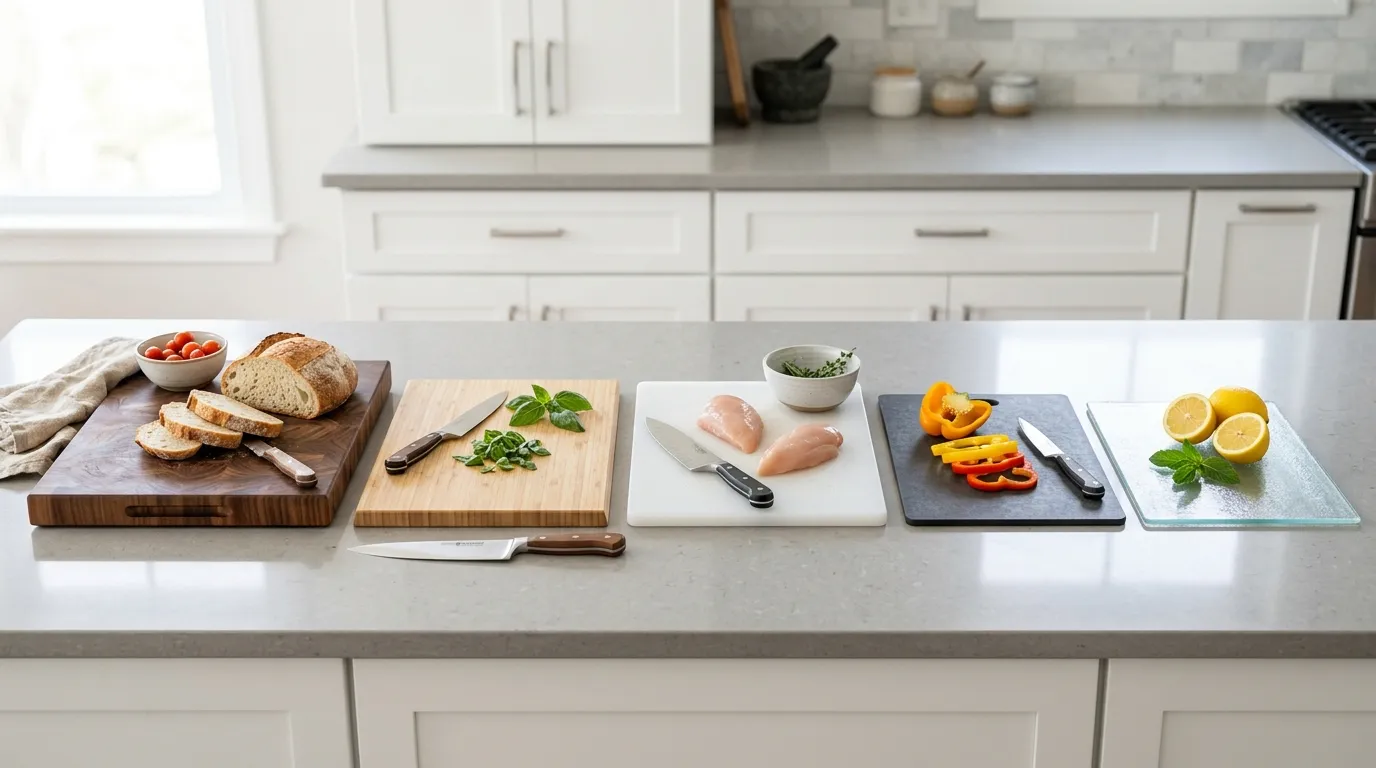
Not all boards are equal. Choose a board that fits what you cook and how you clean.
- Hardwood boards. End-grain maple or walnut are gentle on knives and last. They need oil and cannot soak for long.
- Bamboo boards. Hard and light. They resist water well but can be tough on edges. Oil helps.
- Plastic boards. HDPE boards are light, cheap, and dishwasher safe. They are great for raw meat and fish.
- Composite boards. Paper-resin or wood-fiber boards handle heat and are low care. They can be a good all-around pick.
- Glass or stone boards. Avoid them. They dull knives fast and can chip.
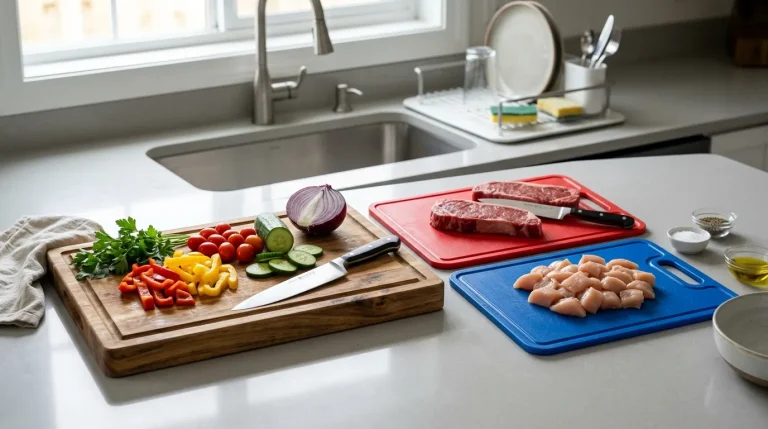
If you want to know how to use cutting board properly, match the board to the task. Many pros use wood for produce and bread, and plastic for raw proteins
Set up your cutting station
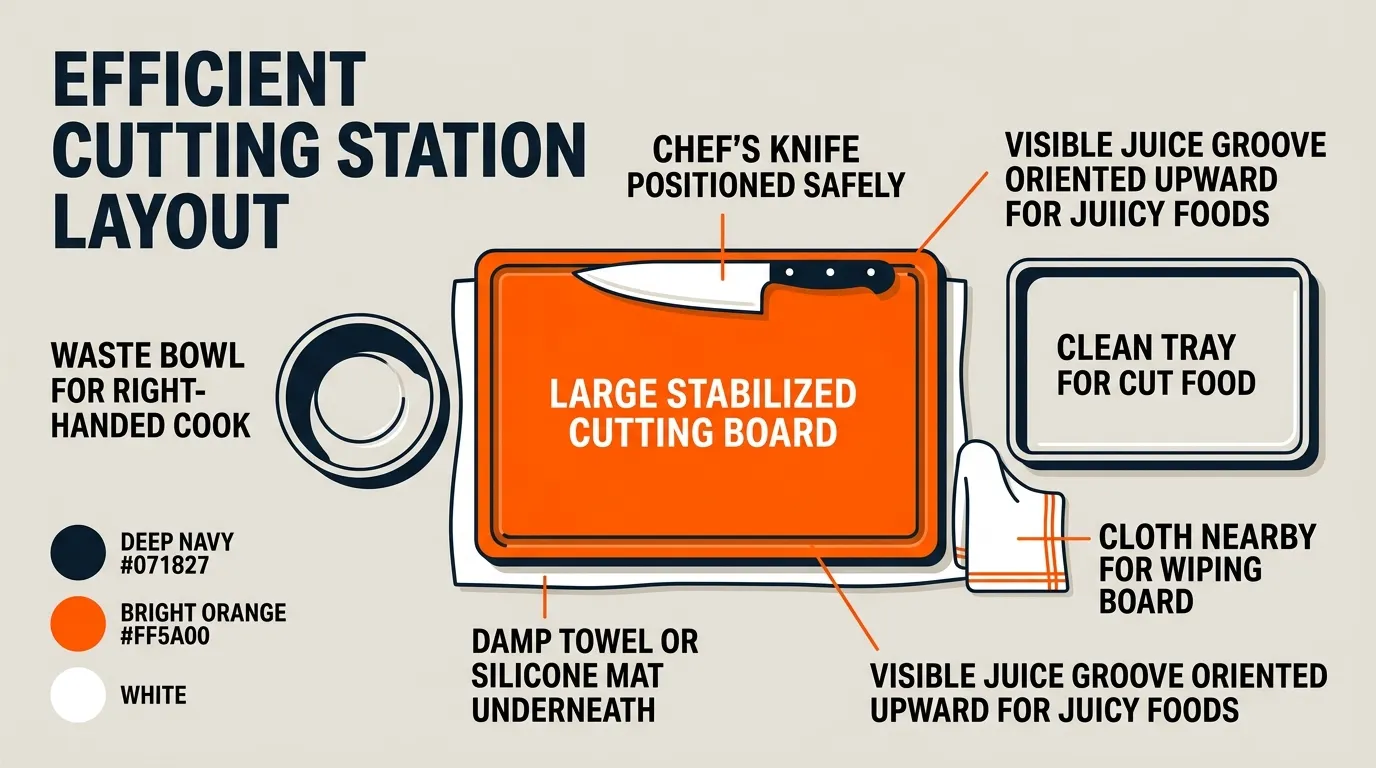
Good setup saves time and avoids spills. It also shows you how to use cutting board properly in daily cooking.
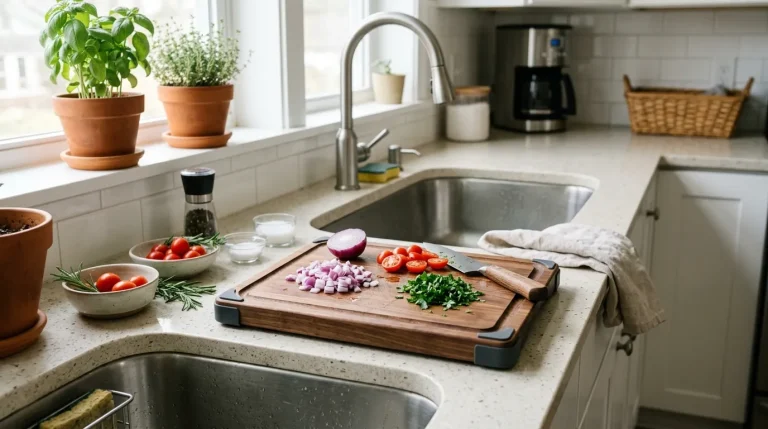
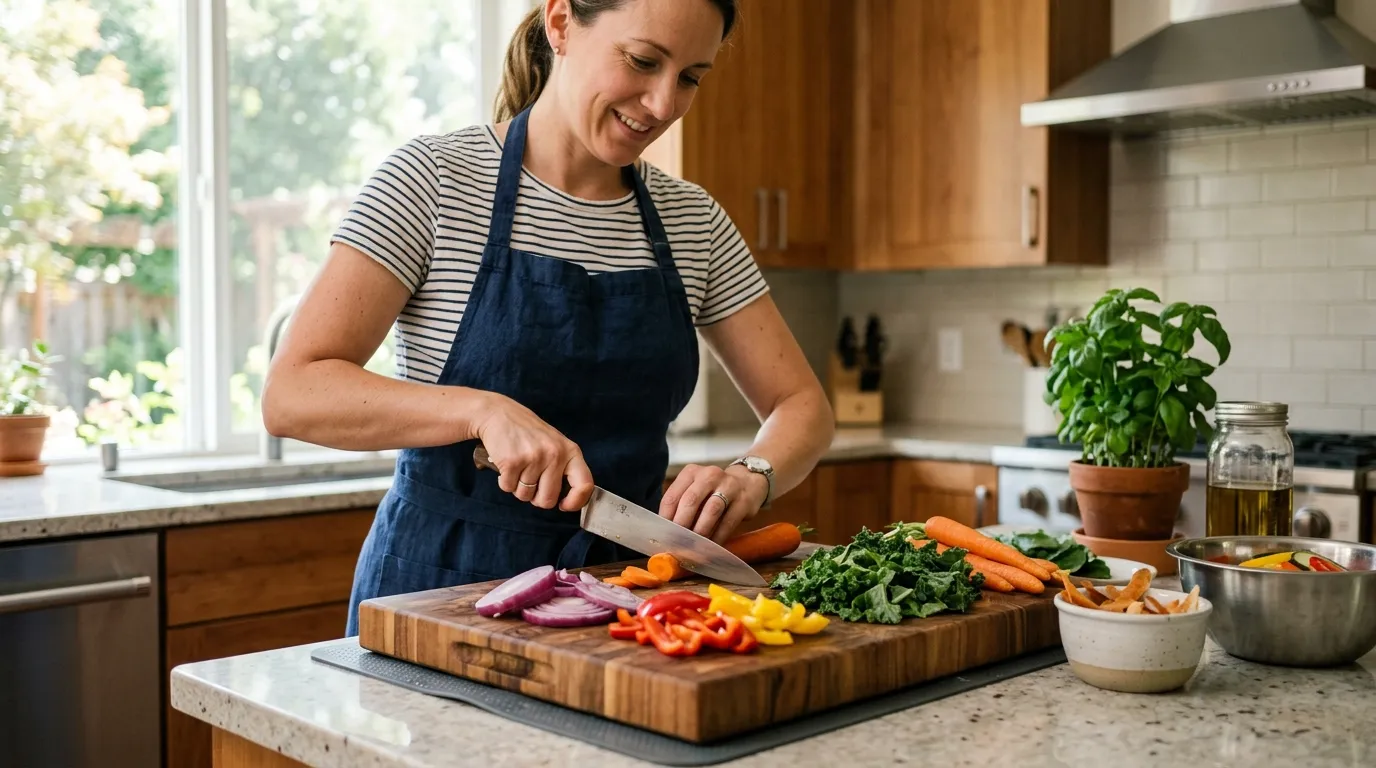
- Steady the board. Place a damp paper towel or a silicone mat under it so it will not slide.
- Pick the right size. A board that is too small is unsafe. Aim for one that gives space for food and the knife.
- Plan your flow. Keep a waste bowl on the left if you are right-handed. Keep a clean tray on the right for cut items.
- Use the groove. If your board has a juice groove, turn that side up for juicy meats and fruits.
Keep a cloth to wipe the board as you go. Clean as you cook and you stay sharp and calm.
How to use cutting board properly: a simple step-by-step
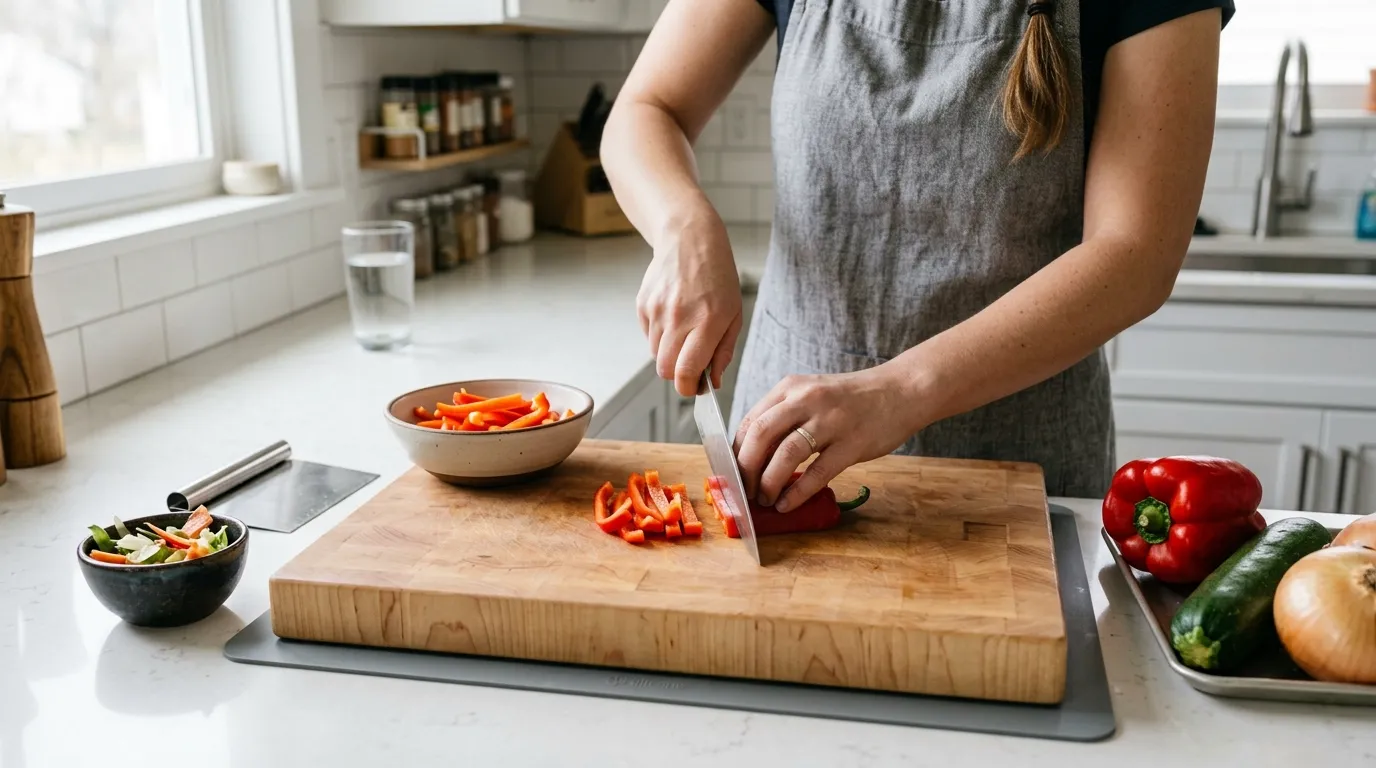
Follow these steps each time you prep. They are quick and work in any kitchen.
- Wash and dry the board. Start clean and fully dry to stop slips.
- Stabilize. Place a damp towel under the board.
- Make zones. Keep raw foods on one side. Keep ready-to-eat foods on the other.
- Use claw grip. Tuck fingers in on your guide hand to protect them.
- Keep the knife vertical. Let the blade meet the board flat. Do not twist the tip.
- Work in batches. Cut all onions, then all peppers, and so on. Wipe the board between foods.
- Scrape smart. Use a bench scraper, not the knife edge, to move food.
- Switch boards for raw meats. Or wash and sanitize before moving to salads or fruit.
- Finish by cleaning and sanitizing. Dry upright.
These steps show how to use cutting board properly while keeping speed and safety in mind.
Stop cross-contamination before it starts
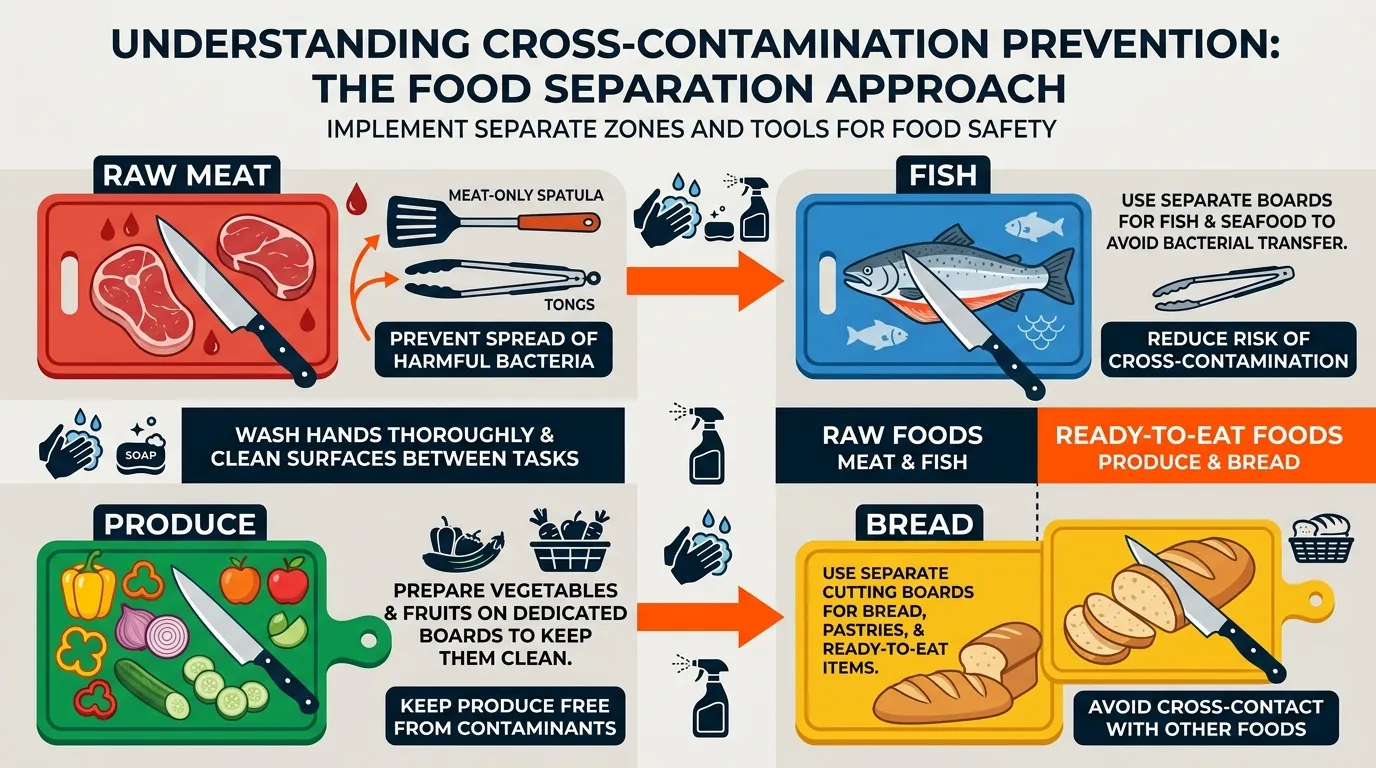
Cross-contamination is when germs move from raw foods to other foods or tools. A little care goes a long way.
- Color-code boards. Use one color for raw meat, one for fish, one for produce, and one for bread.
- Use separate tools. Keep a meat-only tong or spatula. Wash hands before you switch tasks.
- Clean as you go. Wipe the board when you switch foods. When in doubt, wash and sanitize.
Public health guidance supports these steps to reduce risk. If you teach someone how to use cutting board properly, start here.
Cleaning and sanitizing that actually works
Cleaning removes food and grease. Sanitizing reduces germs to a safe level. You need both.
- For plastic boards. Wash with hot, soapy water. Rinse. Then run through the dishwasher if safe for your board.
- For wood boards. Wash with hot, soapy water. Rinse fast. Never soak. Dry right away and stand the board on edge.
- To sanitize. Use 1 tablespoon of unscented liquid chlorine bleach per gallon of water. Apply, let sit 1 minute, then rinse and air-dry. You can also use a food-safe sanitizer spray as directed.
- For odors and stains. Use coarse salt and half a lemon to scrub. Rinse and dry.
These care steps are key to how to use cutting board properly and keep it safe for years.
Maintain your board and know when to replace it
A little upkeep saves money and protects your knife.
- Oil wood boards. Use food-grade mineral oil once a month, or when the board looks dry. Rub on, let soak, wipe off. A wax blend adds a water seal.
- Resurface if needed. Light sanding can fix raised grain or small stains on wood. Wash and oil after sanding.
- Replace plastic boards with deep grooves. Grooves can trap germs. If the board still smells after cleaning, it is time to retire it.
- Watch for warping or cracks. If the board rocks or splits, replace it.
Knowing how to use cutting board properly includes knowing when to let a worn board go.
Knife and board technique that protects edges
Your knife and board work as a team. Treat them well and they last.
- Avoid glass and marble. They dull edges fast.
- Do not twist the blade on the board. Lift and reset instead.
- Use the back of the knife or a bench scraper to move food. Do not drag the edge.
- Keep knives sharp. A sharp knife is safer and kinder to the board.
These habits are part of how to use cutting board properly in any kitchen.
Common mistakes and easy fixes
Even good cooks slip up. Here are quick wins.
- Using one board for all foods. Fix it by color-coding or keeping two boards on hand.
- Letting boards sit wet. Dry them right away and store upright.
- Cleaning with just a wipe. Wash with soap and then sanitize.
- Cutting on a sliding board. Use a damp towel under the board every time.
- Scraping with the knife edge. Switch to a scraper to save your blade and board.
Avoid these and you are already nailing how to use cutting board properly.
Real-life lessons from the line
In a busy brunch rush, color-coded boards saved our service. One cook tried to slice fruit on the meat board. A quick swap kept berries from tasting like chicken stock and kept us safe.
At home, I used to soak wood boards to “deep clean” them. They warped. I learned to scrub, sanitize, and dry upright instead. It is simple, fast, and it works. These small habits are what define how to use cutting board properly day after day.
Frequently Asked Questions of How to Use Cutting Board Properly
Do I need separate cutting boards for meat and vegetables?
Yes. Keep one board for raw meat and fish, and another for produce or bread. This reduces cross-contamination and keeps flavors clean.
Can I put wooden cutting boards in the dishwasher?
No. The heat and water can warp or crack wood. Wash by hand with hot, soapy water, rinse, sanitize, and dry upright.
How often should I oil a wooden cutting board?
Oil when the board looks dry or monthly if you cook often. Use food-grade mineral oil and finish with a wax blend if you like.
What is the best way to sanitize a cutting board?
Use 1 tablespoon of unscented liquid chlorine bleach per gallon of water. Apply, wait 1 minute, rinse, and air-dry.
How do I know when to replace a cutting board?
Replace plastic boards with deep grooves or lingering odors. Replace any board that rocks, splits, or will not come clean.
Is a glass cutting board safe for my knives?
No. Glass and stone dull edges fast and can cause slips. Use wood or plastic instead.
Conclusion
Strong cutting board habits make cooking safer, faster, and more fun. Choose the right board, set up a stable station, separate raw and ready-to-eat foods, and clean and sanitize every time. These steps show exactly how to use cutting board properly, at home or on the line.
Pick one tip to start today. Stabilize your board, color-code your setup, or oil that dry wood slab. Want more guides like this? Subscribe for weekly kitchen skills, or drop a comment with your questions and wins.