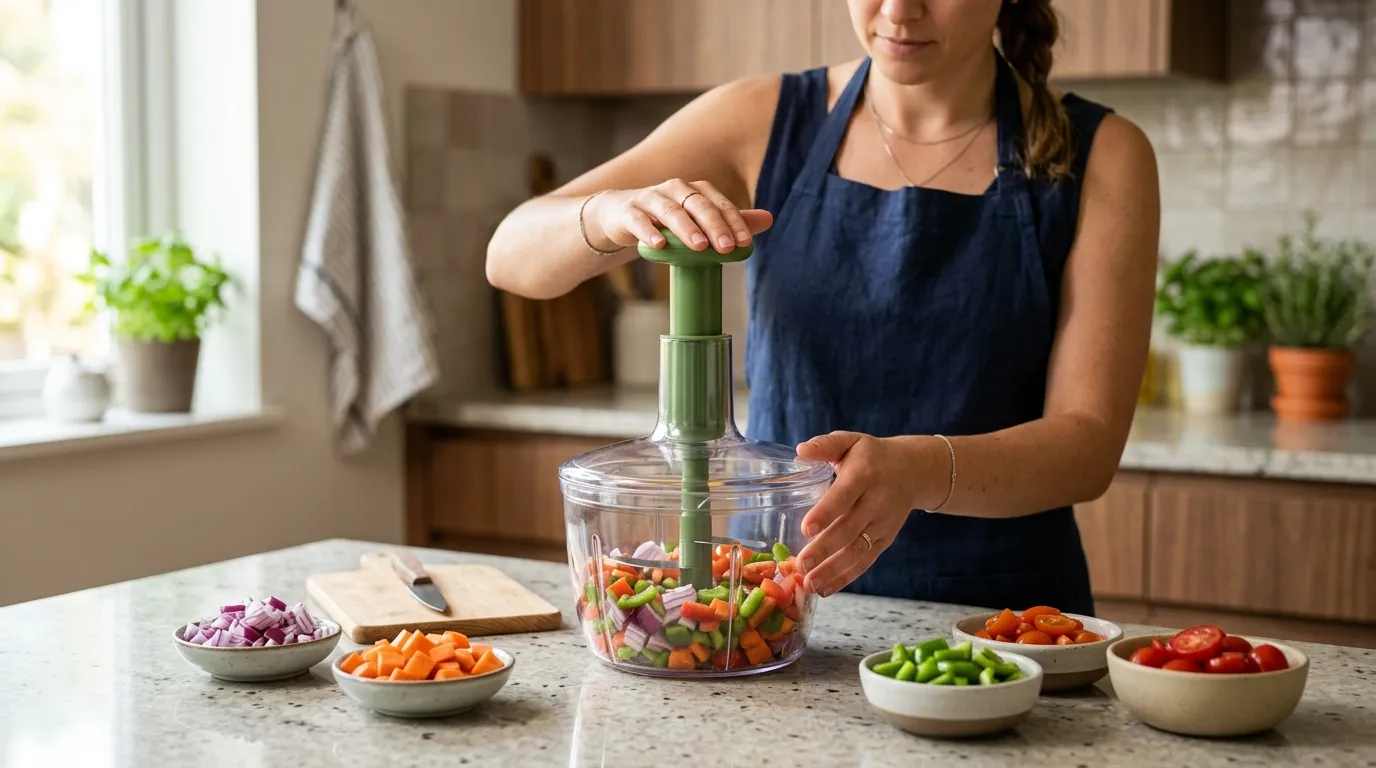
Cut vegetables into even pieces, load the bowl safely, and press or pull the chopper in short bursts.
Learning how to use vegetable chopper properly can make meal prep faster, cleaner, and less tiring. After testing manual and electric models, I have found that good results depend less on force and more on correct cutting, loading, blade care, and timing. This guide explains the process step by step, including safety tips, common mistakes, cleaning advice, and practical ways to get even cuts.
What Is a Vegetable Chopper?
A vegetable chopper is a kitchen tool that cuts vegetables into smaller pieces. Most models use sharp stainless steel blades inside a bowl. Some work with a pull cord, while others use a push-top, spring-loaded handle, or electric motor.
A vegetable chopper can help with:
- Dicing onions, tomatoes, peppers, and cucumbers
- Chopping carrots, celery, and herbs
- Preparing salsa, salads, soups, and stir-fries
- Making small batches of garlic, ginger, or nuts
- Saving time during daily meal preparation
A chopper is not always a replacement for a chef’s knife. It works best for small, fairly soft pieces. Hard foods, large chunks, or overfilled bowls can reduce its performance and may damage the blade.
How to Use Vegetable Chopper Properly: Step-by-Step
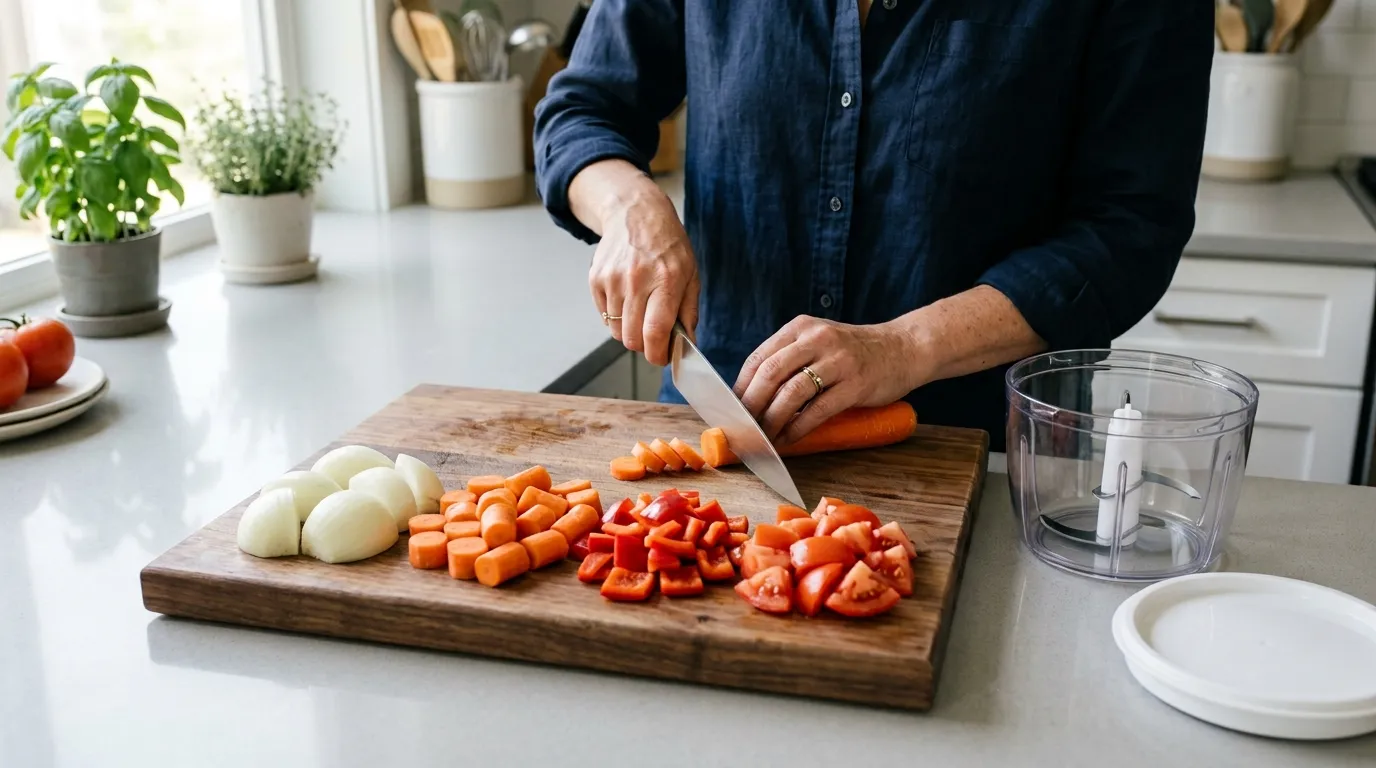
The best way to use vegetable chopper properly is to prepare the food first. Do not place a whole onion, potato, or carrot into a small chopper unless the manual clearly allows it.
1. Read the manufacturer’s instructions
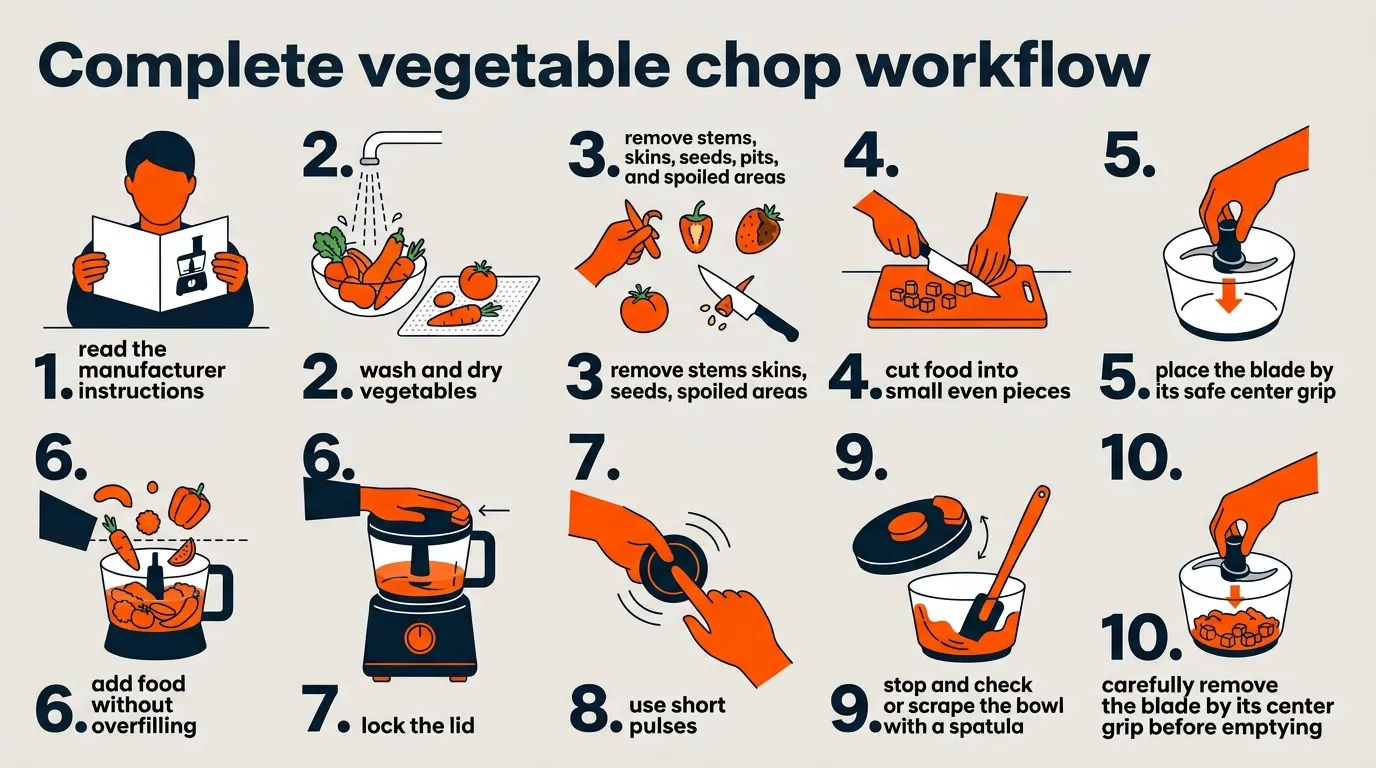
Each vegetable chopper has different limits. Check the manual for:
- Maximum bowl capacity
- Foods that are safe to use
- Whether the parts are dishwasher-safe
- Correct blade placement
- Recommended pulse time
- Instructions for electric charging or power use
This step may seem boring, but it prevents many avoidable problems. Some choppers are made for soft vegetables, while others can handle firmer foods.
2. Wash and dry the vegetables
Rinse fresh produce under clean running water. Scrub firm vegetables, such as carrots and potatoes, when needed. Dry the vegetables with a clean towel.
Excess water can make chopped food wet and slippery. Wet food may also stick to the bowl and produce an uneven texture.
3. Remove parts that should not go into the chopper
Trim away stems, roots, tough skins, seeds, pits, and spoiled areas. Remove onion roots, pepper stems, apple cores, and avocado pits before chopping.
Never place bones, frozen blocks, or very hard pits in a standard vegetable chopper. These items can break the blades or cause the bowl to crack.
4. Cut food into small, even pieces
Cut vegetables into pieces that are roughly the same size. For many manual choppers, pieces about 1 inch wide work well. Small pieces allow the blades to move more freely.
The goal is not to create tiny pieces by hand. It is simply to prevent large chunks from blocking the blades. Think of the chopper as a team member; give it manageable work.
5. Place the blade correctly
Hold the blade by its plastic center or safe grip. Do not touch the sharp edges. Set it onto the center post or base, as shown in the instructions.
The blade should sit flat and turn freely. If it wobbles, stop and reposition it before adding food.
6. Add food without overfilling the bowl
Place the prepared vegetables around the blade. Keep the food below the maximum fill line. If your model has no line, fill the bowl no more than halfway during your first few uses.
Overfilling is one of the most common mistakes. It can cause uneven cuts, jam the blade, and make the lid difficult to secure.
7. Lock the lid in place
Secure the lid before pressing, pulling, or switching on the chopper. Keep your fingers away from the blade area.
For an electric model, confirm that the lid is locked before connecting the power. Many newer designs include a safety lock that prevents the motor from starting when the lid is not secure.
8. Use short pulses
Press the button or pull the cord in short bursts. Pause after each burst and check the texture.
Short pulses give you control. They also reduce the chance of turning vegetables into mush. For diced onions, three to five short pulses may be enough. Softer foods may need fewer pulses.
9. Check and scrape the bowl
Stop the chopper before opening the lid. Use a spatula to move food from the sides toward the center. Check the pieces and pulse again if needed.
Never use your fingers to push food toward the blade. Even when the chopper is off, the blade can remain sharp.
10. Remove the blade before serving or emptying
Take out the blade carefully before transferring the chopped food. Hold it by the center grip, not by the cutting edge.
This small habit prevents cuts and makes cleanup much safer. It also keeps the blade from falling into a sink or trash container.
How to Prepare Different Vegetables
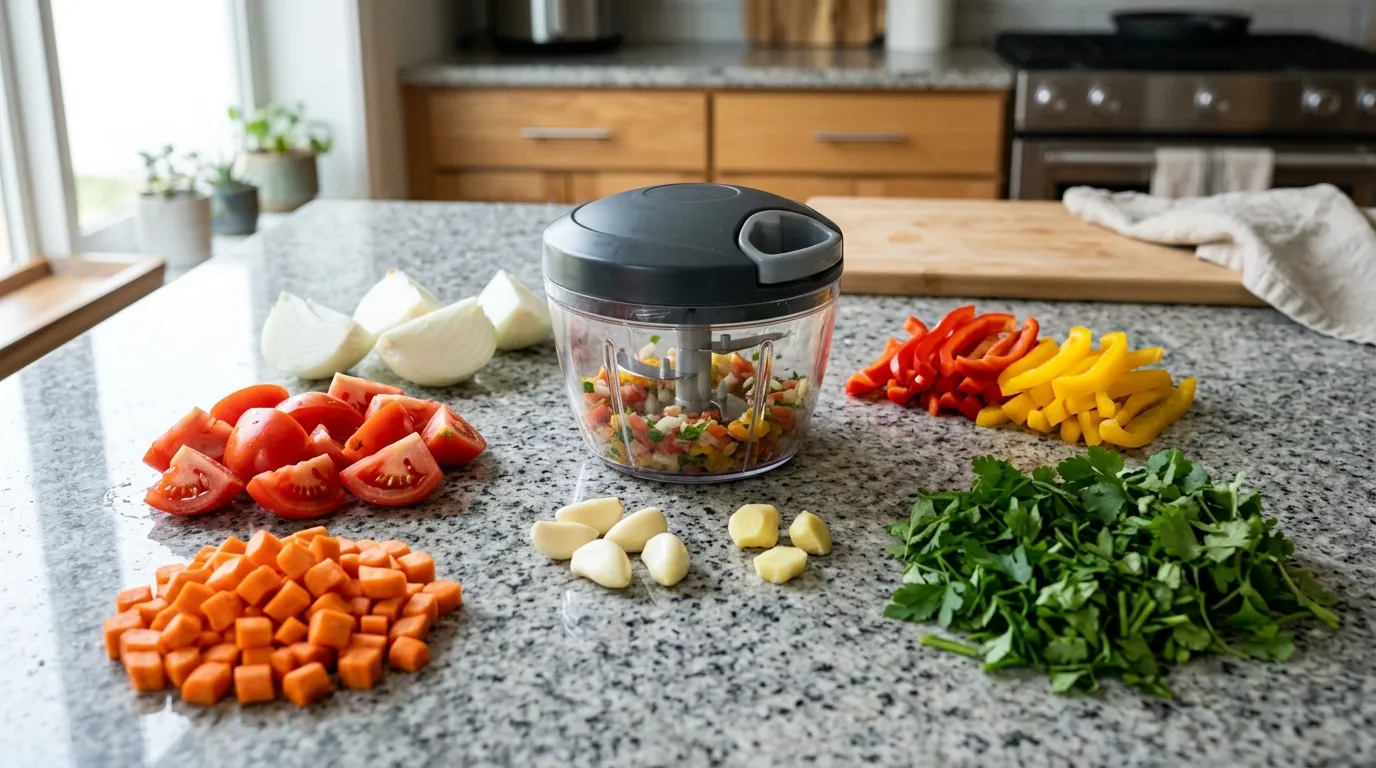
Knowing how to use vegetable chopper properly also means knowing that each vegetable behaves differently. Moisture, firmness, size, and fiber all affect the final result.
Onions
Peel the onion and cut it into quarters or smaller pieces. Use short pulses to avoid creating onion paste. Chilling the onion for about 10 minutes may reduce tears and help it stay firm.
Tomatoes
Use firm tomatoes rather than very soft ones. Remove excess liquid and seeds if you want a thicker salsa or topping. Pulse gently because tomatoes can become watery very quickly.
Carrots
Peel or scrub carrots, then cut them into small rounds or chunks. A manual chopper may struggle with very thick raw carrots, so use smaller pieces or lightly steam them first if the instructions allow it.
Bell peppers
Remove the stem, seeds, and white inner ribs. Cut the pepper into strips or chunks before adding it. Short pulses will give you a clean dice without making the pepper too wet.
Leafy herbs
Wash herbs and dry them well. Moisture can cause basil, parsley, or cilantro to stick together. Use quick pulses and avoid filling the bowl with more herbs than the blade can move.
Garlic and ginger
Peel garlic cloves and ginger before chopping. Ginger may leave fibrous strands around the blade, so remove them promptly after use. A small amount of oil can help with some models, but check the manual first.
Manual Versus Electric Vegetable Choppers
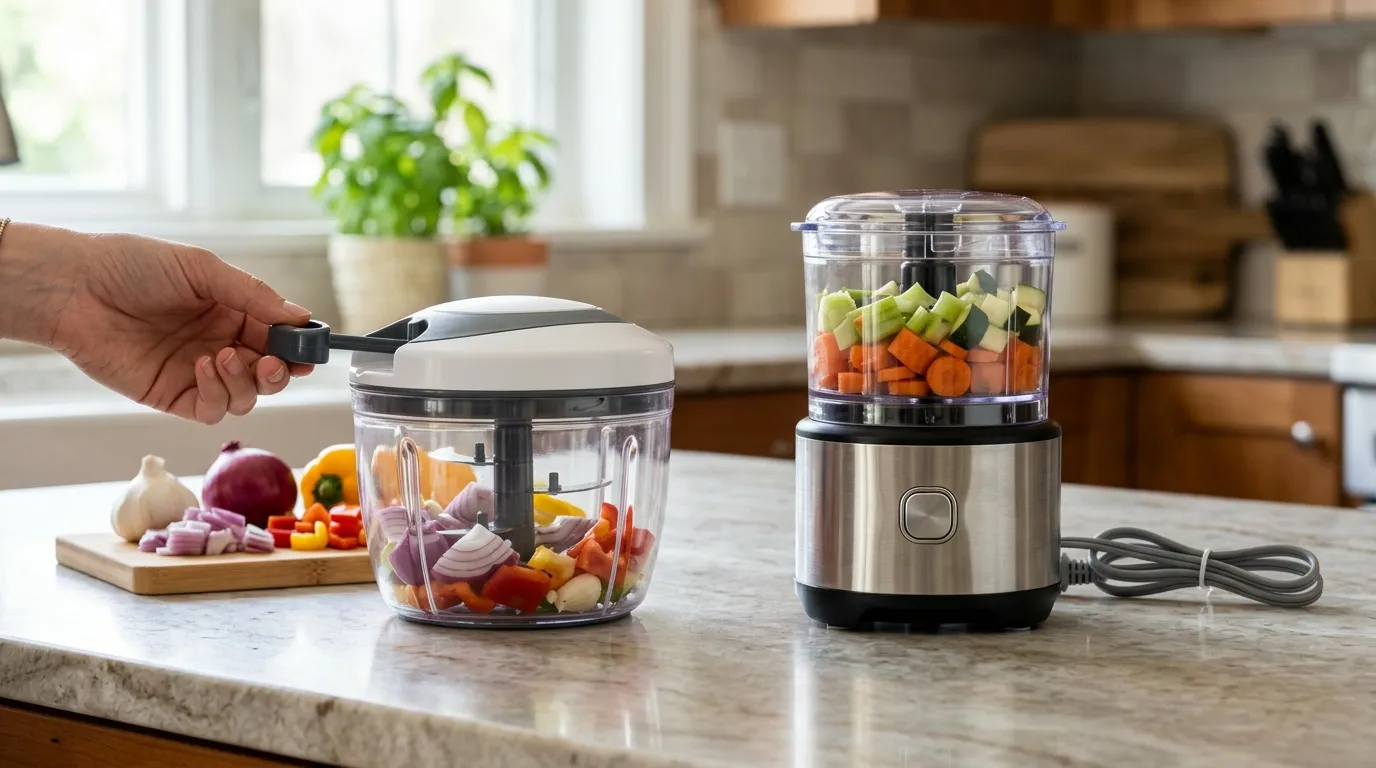
Both types can work well, but they suit different cooking styles.
Manual choppers
Manual models use a pull cord, press button, or rotating handle. They are useful when you want control and do not need large batches.
Benefits include:
- No outlet or battery is needed
- They are often quiet
- They are easy to carry
- They give good control over texture
- They usually cost less
Manual choppers can require more effort. The cord may also wear out if pulled too hard or at an angle.
Electric choppers
Electric models use a motor and usually work with a push button. They can chop quickly and may handle larger batches.
Benefits include:
- Faster preparation
- Less hand effort
- Useful for frequent cooking
- Good performance with soft and medium-firm foods
Electric models need more care around water and power connections. Do not immerse the motor base in water. Unplug the appliance before cleaning or checking the blade.
Common Mistakes to Avoid
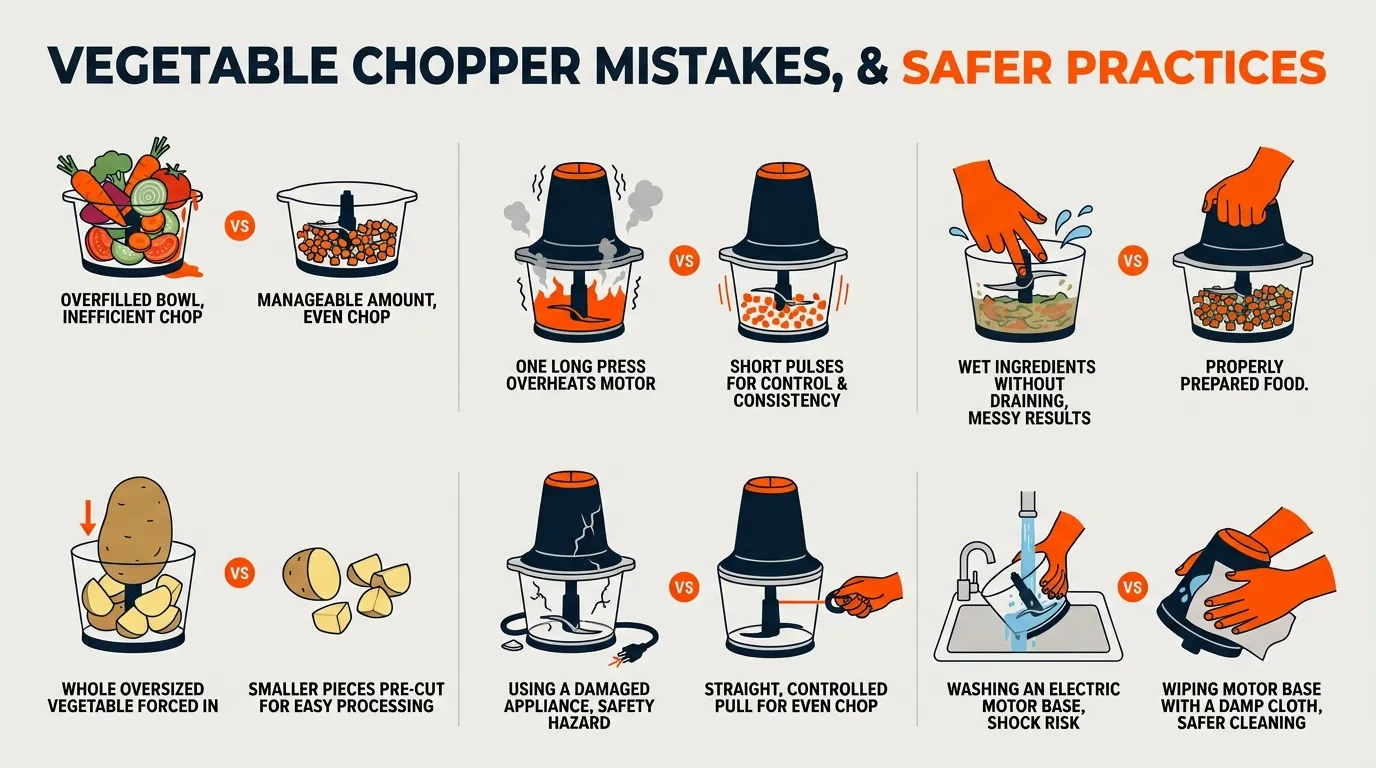
Even a good chopper will perform poorly when used incorrectly. These are the mistakes I see most often during kitchen equipment testing and home meal preparation.
- Overfilling the bowl: Too much food prevents even movement and creates large pieces.
- Using one long press: Continuous pressure can make vegetables mushy.
- Adding whole vegetables: Large items can jam the blade or strain the motor.
- Ignoring the fill line: The stated capacity is a safety and performance limit.
- Touching the blade: Sharp edges can cause serious cuts, even when the blade looks harmless.
- Chopping wet ingredients without draining them: Excess liquid can create a watery mixture.
- Using the wrong food: Ice, bones, pits, and very hard foods may damage a basic chopper.
- Pulling a cord sideways: This can wear out the mechanism and shorten the tool’s life.
- Leaving food in the bowl overnight: Acidic foods can stain plastic and create odors.
- Washing the motor base: Water can damage electrical parts and create a shock risk.
One lesson is especially useful: do not try to fix poor results by using more force. Stop, reduce the food amount, and cut the pieces smaller.
Safety Tips for Using a Vegetable Chopper
A vegetable chopper has sharp moving parts, so safe habits matter. Food safety guidance also supports clean hands, clean tools, and prompt refrigeration of cut produce.
Follow these precautions:
- Place the chopper on a dry, stable surface.
- Keep the appliance away from the edge of the counter.
- Keep children away while the blade is exposed.
- Use the blade’s center grip whenever possible.
- Unplug electric models before opening or cleaning.
- Do not operate a chopper with a cracked bowl or damaged cord.
- Keep cut vegetables refrigerated if you will not use them soon.
- Wash the bowl, lid, and blade after each use.
- Do not place a hot ingredient into a plastic bowl unless the manual permits it.
Cut vegetables have more exposed surface area than whole vegetables. That means they can pick up germs more easily and may spoil faster. Store them in a clean, covered container and follow the storage advice for the specific food.
How to Get Evenly Chopped Vegetables
Uniform pieces cook at a similar speed. This matters for soups, sauces, roasted vegetables, and stir-fries.
To improve consistency:
- Cut all large vegetables into similar starting sizes.
- Add firm vegetables first if the recipe contains mixed ingredients.
- Keep soft foods separate from hard foods when possible.
- Use short pulses rather than holding the button down.
- Stop and stir the bowl between pulses.
- Remove small pieces if they are already finished.
- Avoid filling the bowl beyond half full until you know its limits.
For example, when making salsa, chop onions and peppers first. Add tomatoes last and use only a few light pulses. This keeps the salsa chunky instead of turning it into a thin sauce.
Cleaning and Maintaining Your Vegetable Chopper

Proper cleaning protects both food quality and the chopper itself. Wash removable parts soon after use so oils, starches, and food fibers do not dry onto the surfaces.
A simple cleaning routine is:
- Unplug the electric base or separate the manual mechanism.
- Remove the blade before washing the bowl.
- Rinse away loose food.
- Wash removable parts with warm water and dish soap.
- Use a soft brush around the blade hub and lid grooves.
- Dry every part fully before storage.
- Wipe the motor base with a damp cloth only.
- Store the blade in a safe cover or protected place.
Check the blade from time to time. A dull or bent blade may crush food instead of cutting it. If the blade is damaged, replace it rather than trying to sharpen a small built-in blade at home.
How Long Does It Take to Chop Vegetables?
Most small batches take less than a minute. The exact time depends on the vegetable, piece size, bowl capacity, and chopper design.
Use texture as your guide rather than a fixed timer:
- Rough chop: one to three short pulses
- Medium dice: three to six short pulses
- Fine chop: several short pulses with checks between them
- Puree: longer blending, only when the model supports it
Timing is important because vegetables continue to break down with each pulse. When the pieces look almost right, stop. A final pulse is often enough to finish the job.
Is a Vegetable Chopper Worth Using?
For many home cooks, yes. A vegetable chopper is especially helpful when preparing onions, salsa, herbs, mirepoix, or small salad ingredients.
It may not be worthwhile if you usually cook large batches or want precise restaurant-style cuts. A chef’s knife offers more control for julienne strips, thin slices, and large amounts of vegetables.
The best tool depends on your cooking habits. A chopper is a time-saving helper, not a complete replacement for basic knife skills.
Frequently Asked Questions About How to Use Vegetable Chopper Properly
Can I put whole vegetables into a vegetable chopper?
Most small choppers work better when vegetables are cut into smaller pieces first. Whole vegetables can block the blade, strain the motor, or produce uneven pieces.
How full should I fill a vegetable chopper?
Keep food below the marked maximum line. If there is no line, start with the bowl half full or less, then increase the amount only after you know how the model performs.
Can I chop meat in a vegetable chopper?
Only use a chopper for meat if the manufacturer specifically says it is designed for that purpose. Raw meat can create food safety risks, and the motor or blade may not be strong enough.
Why does my chopper make vegetables mushy?
Mushy vegetables usually result from too many pulses, overfilling, or using very soft produce. Use shorter bursts, drain wet ingredients, and check the texture after each pulse.
Can I wash a vegetable chopper in the dishwasher?
Some removable parts are dishwasher-safe, but the motor base never is. Check the care instructions because high heat can damage plastic, seals, or the blade assembly.
How do I keep onions from turning into paste?
Cut the onion into even chunks and use quick pulses. Stop to shake or stir the bowl, and avoid holding the button down continuously.
What should I do if the blade gets stuck?
Turn off and unplug the chopper before opening it. Remove some food with a spatula, check for a large piece blocking the blade, and never use your fingers to clear the jam.
Conclusion
Learning how to use vegetable chopper properly is simple once you follow a few core habits. Prepare vegetables in small pieces, avoid overfilling, secure the lid, use short pulses, and handle the blade with care. Clean every removable part after use, keep cut food cold, and follow the instructions for your exact model.
Start with a small batch of onions or peppers and practice checking the texture between pulses. With a little care, your vegetable chopper can become a reliable helper for faster, safer, and more enjoyable meal prep. Try these steps in your next recipe, then share your favorite chopper tips or explore more practical kitchen guides.