
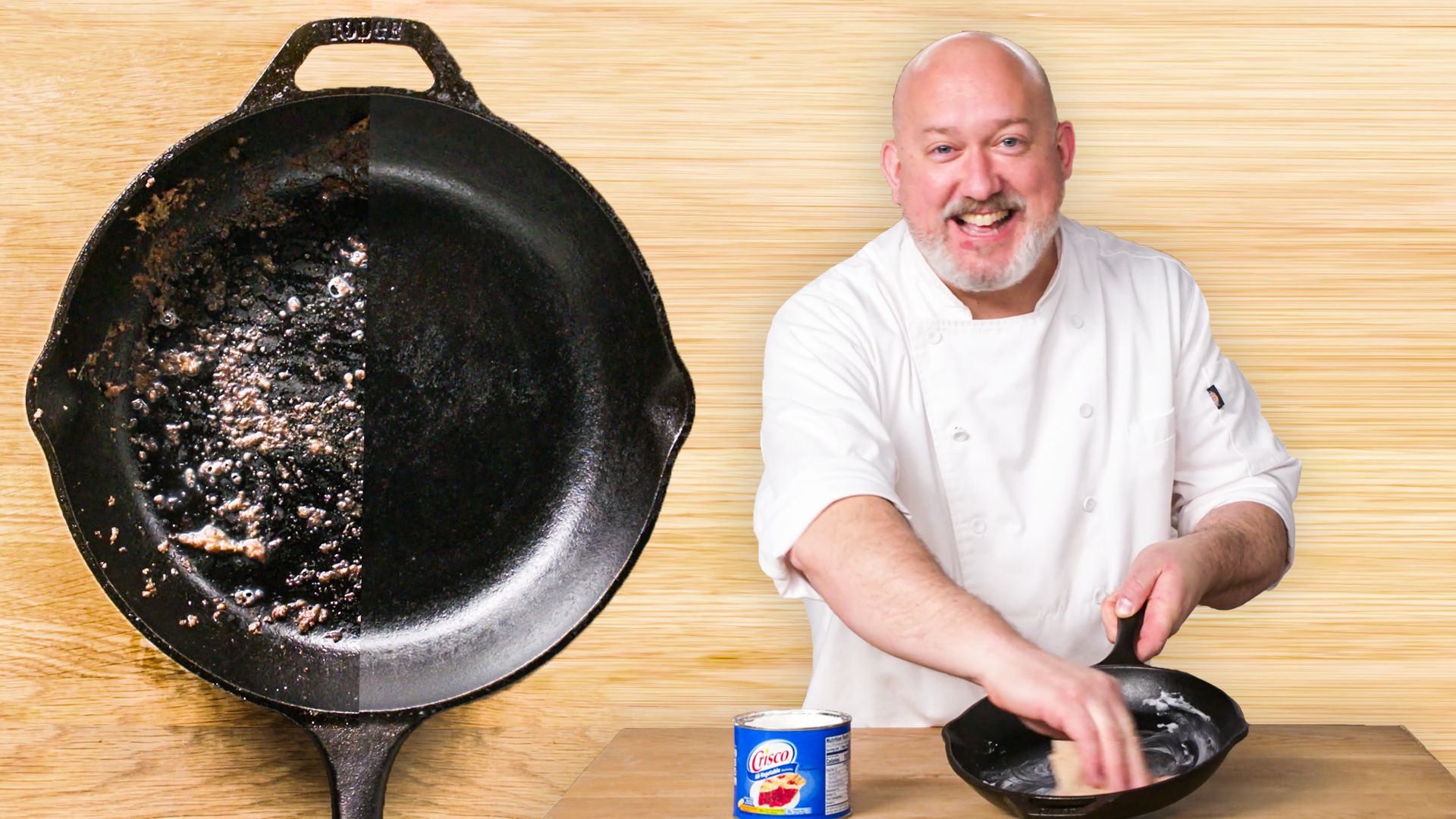
Heat, coat with thin oil, bake at high heat, and repeat for a slick finish.
If you want a pan that sears like a steakhouse and releases eggs with ease, you need to know how to season cast iron pan the right way. I have restored dozens of skillets, from flea market rust buckets to heirlooms. In this guide, I will show you clear steps, simple science, and real tips that make the job easy.
What seasoning is and why it matters
Seasoning is a hard, slick layer made when oil bonds to iron under heat. This process is called polymerization. It builds a thin plastic-like film that protects the pan and keeps food from sticking. Learning how to season cast iron pan helps you get that durable layer fast.
Seasoning also stops rust. It adds flavor over time. It turns a raw iron surface into a smooth cooking partner.
:max_bytes(150000):strip_icc()/How-to-Season-Cast-Iron-Skillet-3x2-1-bcd280f1703e47e0a59bb62e86a0d53a.png)
Source: allrecipes.com
Tools and prep checklist
You do not need much. Here is a simple list I use at home.
- Clean, dry cast iron pan
- Neutral oil with a high smoke point
- Paper towels or a lint-free cloth
- Tongs or heat-safe gloves
- Aluminum foil for drips
- Stiff brush, chainmail scrubber, or steel wool (for tough pan)
- Oven set to 450–500°F
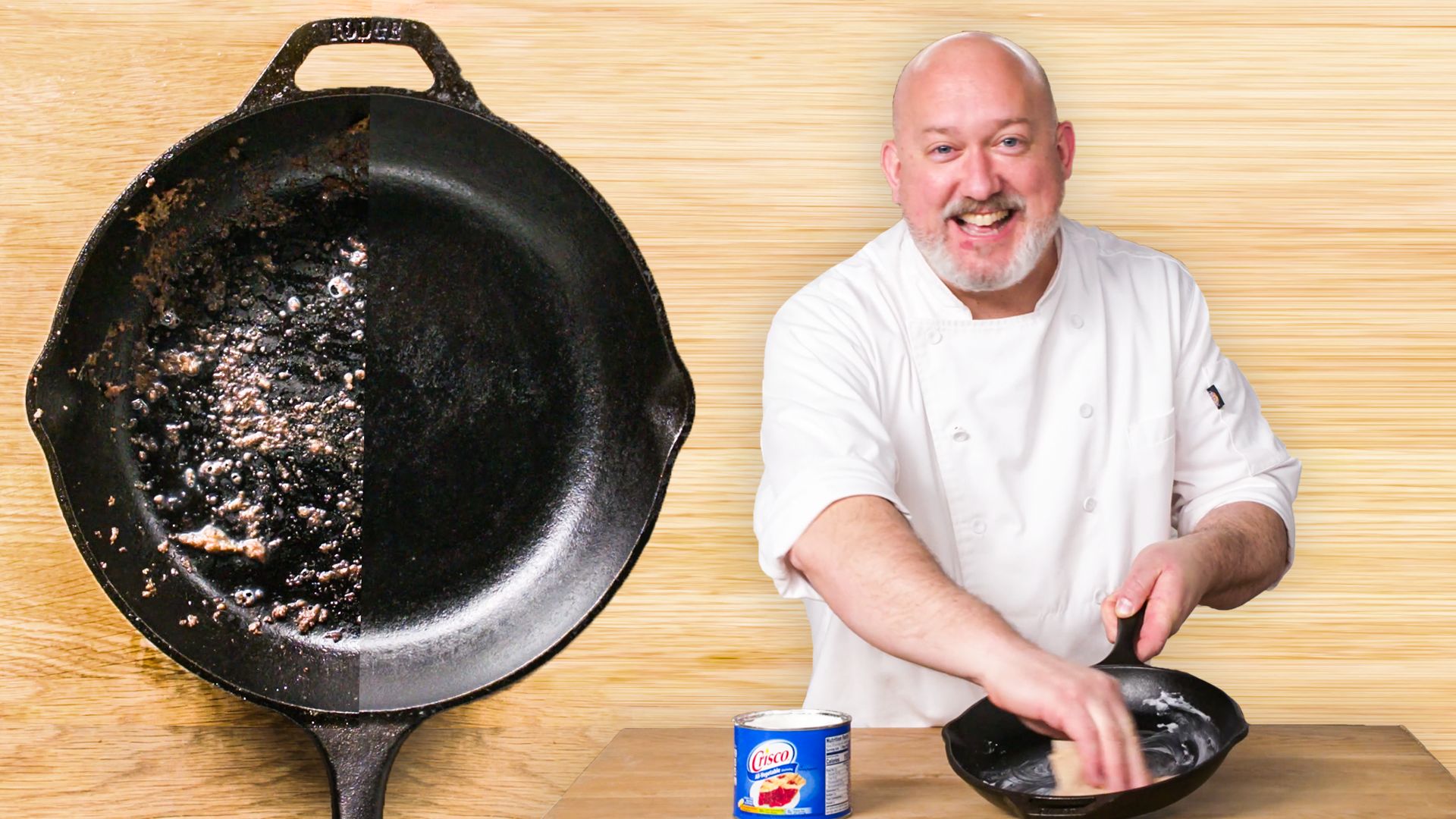
Before you start, make sure the pan is bone dry. Any water will steam and cause spots. For anyone asking how to season cast iron pan without fuss, start with a dry, warm pan.
Source: epicurious.com
Step-by-step: how to season cast iron pan
Follow these steps. Thin is the secret.
- Scrub the pan. Remove rust, sticky spots, and old gunk. Use hot water and a brush. Dry right away on low heat for a few minutes.
- Warm the pan in the oven at 200°F for 10 minutes. Warm iron takes oil better.
- Add a tiny puddle of oil. About 1 teaspoon for a 10–12 inch skillet is enough.
- Wipe the oil over every surface. Inside, outside, and handle. Then wipe it almost dry. The pan should look just shy of dry, not glossy.
- Place the pan upside down on the center rack. Put foil on a lower rack to catch drips.
- Bake at 450–500°F for 60 minutes. Turn on a fan or open a window.
- Let the pan cool in the oven for 45–60 minutes.
- Repeat steps 3–7 two to three more times for a strong base coat.
- After the final coat, rub a pea-size drop of oil over the warm pan. Wipe dry.
- Cook something fatty on your next use. Bacon, sausage, or potatoes work well.
This is how to season cast iron pan at home with reliable results. Light coats and high heat give you a hard, even finish.
Stovetop quick method
You can also build layers on the burner. Heat the pan until it just smokes. Wipe a whisper of oil all over. Keep heating and wiping for 10–15 minutes. Move the pan to avoid hot spots. This works well between oven sessions or for touch-ups.
:max_bytes(150000):strip_icc()/__opt__aboutcom__coeus__resources__content_migration__serious_eats__seriouseats.com__images__2016__09__20160817-cast-iron-pan-vicky-wasik-collage-1500x1125-a15711a84a054cca9268b8ddda1e5dd2.jpg)
Source: seriouseats.com
Choosing the right oil for a durable coat
The best oil is the one you can apply thin and heat hard. Many cooks use canola, grapeseed, or refined sunflower oil. These have a good smoke point and a neutral taste. They also have more polyunsaturated fat, which forms a tough layer.
Flaxseed oil can form a slick coat but can turn brittle if applied thick. Lard and tallow work and add a classic touch. Refined avocado oil has a high smoke point and is very stable. For how to season cast iron pan, oil choice matters less than thin coats and enough heat.
Tip from my kitchen: I use grapeseed oil for base coats and a drop of canola for daily wipe-downs. It is simple and steady.

Source: bbcgoodfood.com
Oven vs stovetop: which method to season cast iron pan
Both work. Pick what fits your space and patience.
- Oven method
- Pros: Even heat, hands-off, great for full re-season.
- Cons: More time, more ventilation needed.
- Stovetop method
- Pros: Fast, good for touch-ups, lower energy use.
- Cons: Hot spots can cause blotches; harder to keep coats ultra-thin.
If you are unsure how to season cast iron pan with less mess, start with the oven. It gives more even layers for beginners.
:max_bytes(150000):strip_icc()/GettyImages-614986450-2000-f7ac499e535845c2903ff48843e0b142.jpg)
Source: southernliving.com
First cooks and daily care after you season cast iron pan
Your first week matters. Gentle habits build a great surface.
- Cook fatty foods first. Skip tomato sauce and wine for a few cooks.
- Clean while the pan is warm. Use hot water and a brush. Soap is okay in small amounts.
- Dry on low heat for 2–3 minutes. Then rub on a drop of oil and wipe dry.
- Store in a dry spot. If you stack, place a paper towel between pans.
These small steps lock in your work. This is the low-effort side of how to season cast iron pan that pays off every day.
Source: youtube.com
Troubleshooting: sticky spots, rust, and flaking
Sticky or gummy surface
- Cause: Too much oil or too low heat.
- Fix: Bake the pan at 450–500°F for 60 minutes with no added oil. For stubborn spots, scrub with hot water and salt first.
Blotchy color
- Cause: Normal early on.
- Fix: Keep cooking and add a thin coat after use. Color evens out with time.
Rust
- Cause: Moisture left on the pan.
- Fix: Scrub with steel wool until smooth. For heavy rust, use a quick 50/50 vinegar and water soak for 30 minutes, checking often. Rinse, dry, and re-season.
Flaking
- Cause: Thick layers or fragile coats.
- Fix: Strip loose bits with steel wool. Start thin and hot. Repeat coats.
Rancid smell
- Cause: Pooled oil.
- Fix: Bake at high heat to burn off residue. Wipe very thin after.
These fixes are part of how to season cast iron pan like a pro. Do not stress. Iron is forgiving.
Source: youtube.com
Myths, mistakes, and pro tips for how to season cast iron pan
Common myths
- Soap ruins seasoning. Not true today. Modern soap will not strip a hard, baked-on layer.
- You must never use metal tools. Gentle metal spatulas are fine on a well-seasoned pan.
- Bacon alone will season a raw pan. It helps, but it is not enough for a full base coat.
Mistakes to avoid
- Using too much oil. Less is more.
- Skipping the wipe-down. Glossy puddles turn sticky.
- Baking at low heat. Polymerization needs high heat.
Pro tips
- Pre-warm the pan before oiling for a better bond.
- Wipe the outside too. It prevents drips and rust.
- Cook crispy potatoes or chicken thighs to build fast layers.
This is how to season cast iron pan with fewer rounds and better results.
Safety, ventilation, and smart setup
Seasoning can smoke. Plan for airflow.
- Turn on your vent and open a window.
- Use a sheet of foil on a lower rack to catch any drips.
- Keep pets away from smoke. Birds are very sensitive to kitchen fumes.
- Do not leave oily rags in a pile. Spread them flat to dry before trash to avoid heat build-up.
If you worry about smoke points, remember the key steps of how to season cast iron pan: ultra-thin oil, hot oven, and good airflow. That keeps smoke low and coats hard.
Frequently Asked Questions of how to season cast iron pan
How often should I season my cast iron pan?
Do a full oven seasoning once when new or after a strip-down. After that, maintain with a tiny oil wipe after each use.
Which oil is best for seasoning?
Use grapeseed, canola, or refined sunflower for easy, tough layers. The real secret is very thin coats and high heat.
Can I use soap to clean my cast iron?
Yes. A small amount of mild soap will not remove a hard seasoning layer. Rinse well and dry with heat.
What temperature should I use to season?
Bake at 450–500°F for 60 minutes per coat. This range helps the oil polymerize into a hard shell.
How do I fix a sticky or gummy pan?
Heat it in the oven at 450–500°F for an hour with no new oil. If needed, scrub lightly first and then reapply a very thin coat.
Is oven seasoning better than stovetop?
Oven seasoning is more even and beginner-friendly. Stovetop is great for quick touch-ups between full rounds.
How long does it take to build a good base?
Plan on two to four thin coats in one afternoon. Then cook fatty foods for a week to finish the job.
Conclusion
Seasoning is simple when you go thin, hot, and patient. You now know how to season cast iron pan with steps that work, oils that bond well, and habits that keep the surface strong. A few careful coats and smart daily care will give you a pan that lasts for life.
Ready to level up your kitchen? Season your pan today, cook something fatty tonight, and enjoy the glide. Want more guides like this? Subscribe, share your results, or drop a question in the comments.


