
Store knives dry in a block, magnetic strip, or sheaths, edge-protected, out of reach.
If you want a kitchen that feels safe, fast, and neat, learning how to store kitchen knives safely is a game changer. I’ve taught cooks and set up home kitchens for years. In this guide, I’ll show you how to store kitchen knives safely with clear steps, pro tips, and gear picks that last.

Source: knifewear.com
Why safe knife storage matters
A dull or damaged edge is more risky than a sharp one. Blades that bump around get chips, rolls, and rust. That leads to slips and cuts.
Loose knives also raise the chance of hand injuries. Emergency rooms see many kitchen knife cuts each year, often from drawers. Good storage cuts that risk and keeps edges keen.
Hygiene counts too. Dry, clean knives resist rust and germs. Safe storage keeps edges from touching wet sponges, damp wood, or raw foods. This is a core part of how to store kitchen knives safely.
From a cost view, smart storage protects your tools. Your knives will sharpen faster and last longer. That saves time and money.
Source: co.uk
Knife anatomy and why it affects storage
Different steels act in different ways. Carbon steel can rust fast if left damp. Stainless is tougher, but not rust proof.
Thin edges chip when they hit hard surfaces. Thick edges can roll when they hit other blades. Both need a soft, stable rest.
Handles matter too. Wood handles like to stay dry. Synthetic handles can take more water, but still need air flow. Knowing this helps you plan how to store kitchen knives safely.

Source: co.uk
Storage options compared: find the right fit
You have many safe ways to store kitchen knives. The best choice depends on space, kids, pets, and knife types. Here is what works and when.
Countertop slot block
- Pros: Easy to reach. Protects edges on all sides.
- Cons: Slots can trap moisture and crumbs. You must match each knife to the right slot.
- Tips: Turn knives spine-down to save edges. Clean slots with pipe cleaners. Keep the block dry.
Universal rod block
- Pros: No fixed slots. Holds odd shapes and cleavers.
- Cons: Rods get dirty. Needs deep cleaning.
- Tips: Remove rods and wash a few times a year. Let it dry fully before use.
Magnetic wall strip
- Pros: Saves counter space. Lets blades dry in air. You can see the edge at a glance.
- Cons: Poor magnets can drop knives. Bare steel can scratch.
- Tips: Use a wood-faced strip. Place blades spine-first, then roll the edge to the wood. Keep it out of kids’ reach.
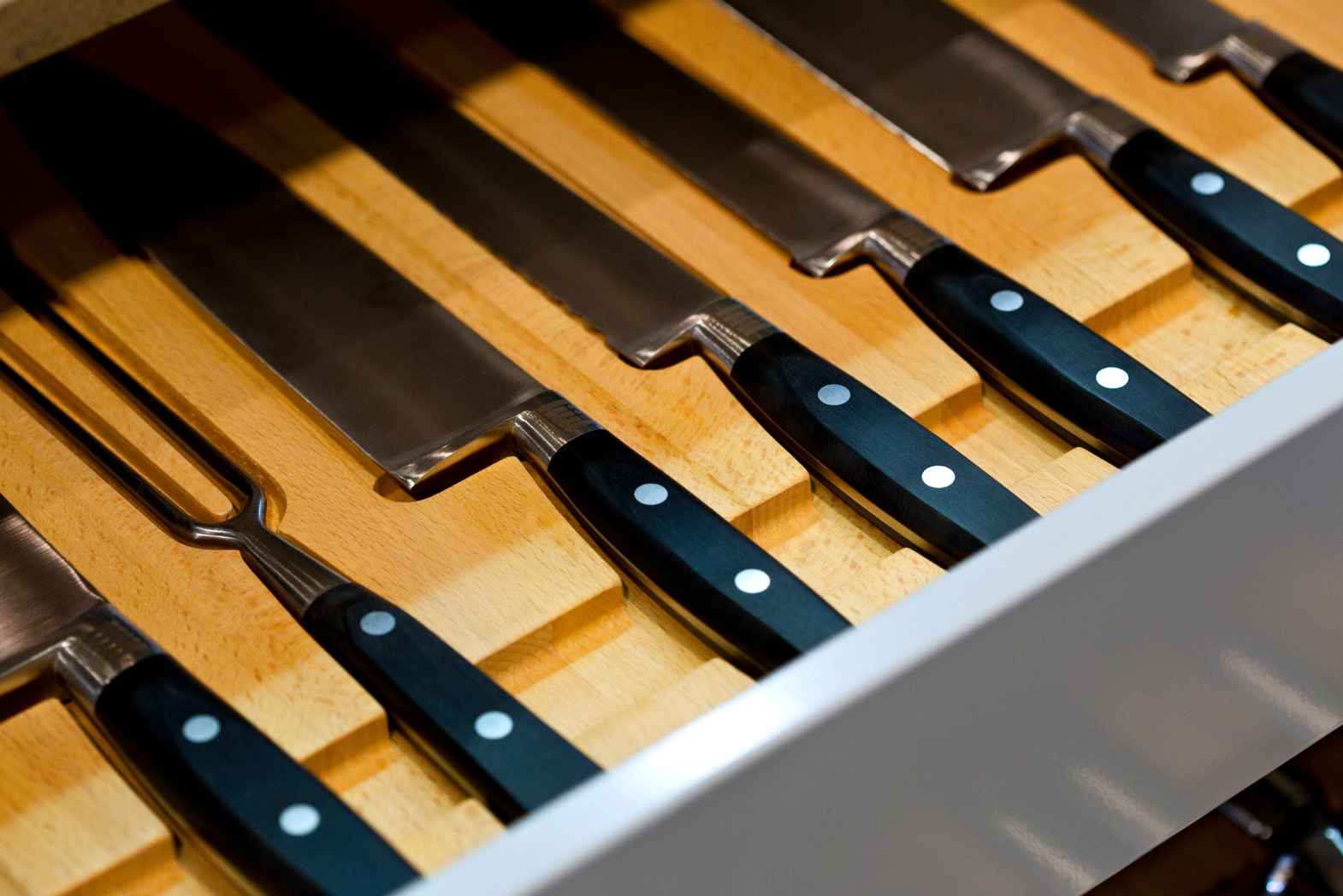
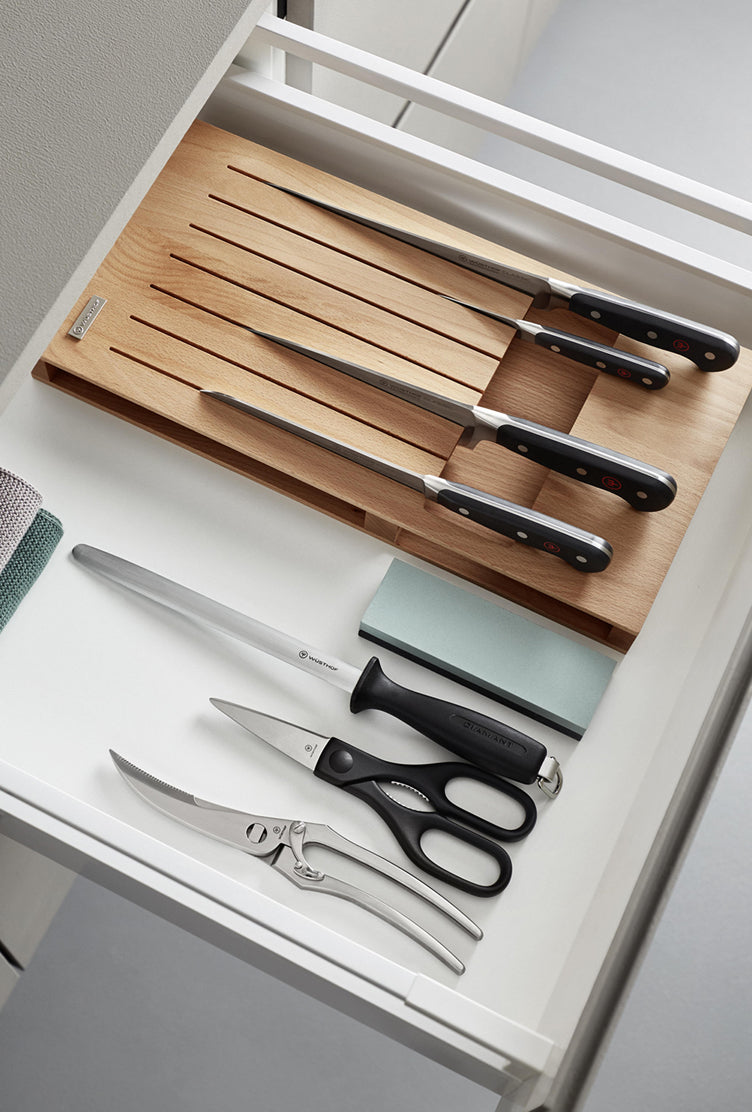
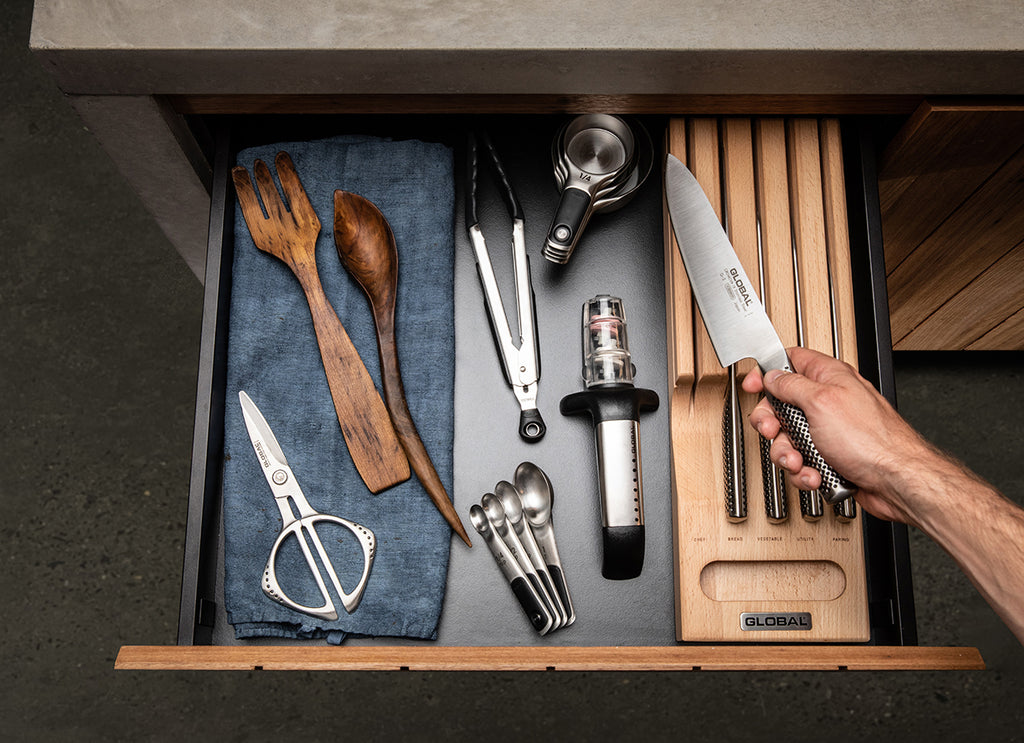
In-drawer knife tray
- Pros: Clean look. Great for rentals or small spaces.
- Cons: Needs a wide drawer. More steps to reach knives.
- Tips: Choose trays with slots that fit your set. Keep edges covered if the drawer also holds tools.
Edge guards and sheaths
- Pros: Low cost. Good for drawers and travel.
- Cons: Can trap moisture. Cheap guards may scratch.
- Tips: Dry blades well. Add a thin coat of oil on carbon steel. Use snug guards that do not slide.
Knife rolls and cases
- Pros: Best for travel or small kitchens. Protects each blade.
- Cons: Slower access. Needs a safe spot to store the roll.
- Tips: Use stiff guards inside the roll. Keep it off the floor and out of reach.
No single method wins for all cooks. Mix and match. For example, a wall strip for daily knives and guards for extras. This layered plan shows how to store kitchen knives safely in real life.
:max_bytes(150000):strip_icc()/__opt__aboutcom__coeus__resources__content_migration__serious_eats__seriouseats.com__2018__07__20180720-knife-storage-vicky-wasik-2--1500x1125-c05be5e0c3c64dedb9fc8261e2d10195.jpg)
Source: seriouseats.com
Step-by-step: how to store kitchen knives safely today
Follow these simple steps to set up a safe system fast.
- Sort by size and use. Keep daily knives within easy reach. Store specialty blades elsewhere.
- Pick the main station. Choose a block, strip, or tray that fits your space.
- Clean and dry each knife. Wipe with a soft towel. Make sure there is no moisture.
- Protect the edge. Use slots, wood faces, or guards. Avoid bare metal on metal.
- Set safe heights. Mount wall strips above child reach. Keep blocks away from edges.
- Leave space. Do not crowd blades. They should not touch each other.
- Make a habit. Put each knife back in the same place after use.
- Review monthly. Tighten mounts. Clean slots. Replace worn guards.
This is the core of how to store kitchen knives safely at home. A clear spot for each tool removes guesswork and cuts risk.
Source: wusthof.com
Care and maintenance that make storage safe
Clean knives by hand with warm water and mild soap. Dry right away. Do not leave them in the sink or on a wet towel.
Hone often. Sharpen as needed. A sharp edge glides and needs less force, which is safer. Store right after you dry and hone.
Oil carbon steel blades and wood handles. Use food-grade mineral oil in a thin coat. This helps stop rust and swelling.
Do not wash knives in a dishwasher. Heat, steam, and bumping will dull and damage them. That makes safe storage harder.
These care steps support how to store kitchen knives safely and keep them ready to work.

Source: fnsharp.com
Small kitchens, rentals, and homes with kids or pets
Tight space? Go vertical with a wood-faced magnetic strip. Or choose an in-drawer tray to hide clutter. Use edge guards if the drawer holds other tools.
In rentals, avoid drilling if needed. Use strong adhesive-backed strips made for tile or stainless. Test weight with a heavy spoon first.
With kids or pets, use child-proof latches on drawers. Mount strips high. Pick blocks with lockable clear covers. This is a key part of how to store kitchen knives safely in family homes.
Source: com.au
Common mistakes to avoid
- Tossing knives in a drawer without guards. Edges chip and hands get cut.
- Storing blades wet. This leads to rust and spots, even on stainless.
- Using bare metal magnets. Steel-on-steel scuffs and weak magnets cause drops.
- Mounting strips over the stove. Heat and steam speed rust and can warp handles.
- Overstuffing a block. Tight slots scrape edges and trap crumbs.
- Washing in the dishwasher. Heat and banging dull blades and loosen handles.
Dodging these traps is central to how to store kitchen knives safely day to day.
:max_bytes(150000):strip_icc()/__opt__aboutcom__coeus__resources__content_migration__serious_eats__seriouseats.com__2018__07__20180720-knife-storage-vicky-wasik-1--1120b4c0025b44d58f93ced16f7901ea.jpg)
Source: seriouseats.com
Buying guide: what to look for in storage gear
For wall strips, choose a wood or bamboo face with strong neodymium magnets. Look for even pull across the bar. Knives should not twist or slide.
For blocks, seek wide, open slots and stable bases. Removable-rod blocks are easy to clean. Non-slip feet add safety.
For trays, pick solid wood or soft-touch plastic with shaped lanes. Measure your drawer depth and length.
For guards, choose snug, lined covers. Felt or soft plastic liners protect the edge. Get sizes that match blade lengths.
These points help you judge quality and show how to store kitchen knives safely with gear that lasts.
:strip_icc()/Storing-Knives-1-25b1e7a05ade418ebc944b64aee8683e.jpg)
Source: bhg.com
Troubleshooting and quick fixes
Blades stick too hard to a magnet? Place spine first, then roll the edge down. To remove, roll the spine up and away. This avoids snapping.
Slots feel gritty? Use a thin brush or compressed air. Then wipe with a damp cloth and dry the block in the sun.
Rust spots on carbon steel? Make a paste of baking soda and water. Rub gently with a wine cork. Dry and oil. Then review how to store kitchen knives safely so rust does not return.
Guards feel damp? Add a touch of mineral oil to the blade. Leave the guard off for a few minutes to air out, then sheath.
Frequently Asked Questions of how to store kitchen knives safely
Is a magnetic strip bad for my knives?
A good wood-faced strip is safe and gentle. Place the spine first, then roll the edge to the wood to avoid scratches.
Can I store knives in a drawer?
Yes, if you use a fitted tray or edge guards. Loose knives in a drawer are risky and can dull fast.
How high should I mount a magnetic strip?
Mount it above your tallest child’s reach and below eye level. Aim for a spot away from heat and steam.
Are knife blocks sanitary?
They are safe if kept clean and dry. Vacuum or brush slots and let the block dry after cleaning.
Do I need edge guards if I have a tray?
Guards add extra safety in shared drawers. They help stop chips and protect hands when you reach in.
Is the dishwasher safe for knives before storage?
No. Dishwashers dull edges and can warp handles. Hand wash, dry at once, then store.
How often should I oil carbon steel before storage?
A thin coat after each wash in humid areas works well. In dry climates, weekly oiling is often enough.
Conclusion
Safe storage protects your hands, your blades, and your time. Pick one main method, add guards where needed, and make it a habit. That is how to store kitchen knives safely without stress.
Start today. Clean, dry, and place each knife in its new home. Share your setup, ask a question, or subscribe for more simple kitchen safety tips.


