
Choose kitchen tools with durable materials, safe design, good ergonomics, and real value.
If you cook often, you feel the difference fast. I have tested gear in tiny apartments and busy test kitchens. This guide covers what to look for in kitchen tools in clear, simple steps. You will learn how pros judge build, safety, and value. By the end, you will know exactly what to look for in kitchen tools and how to buy with confidence.
Start with your cooking style and space
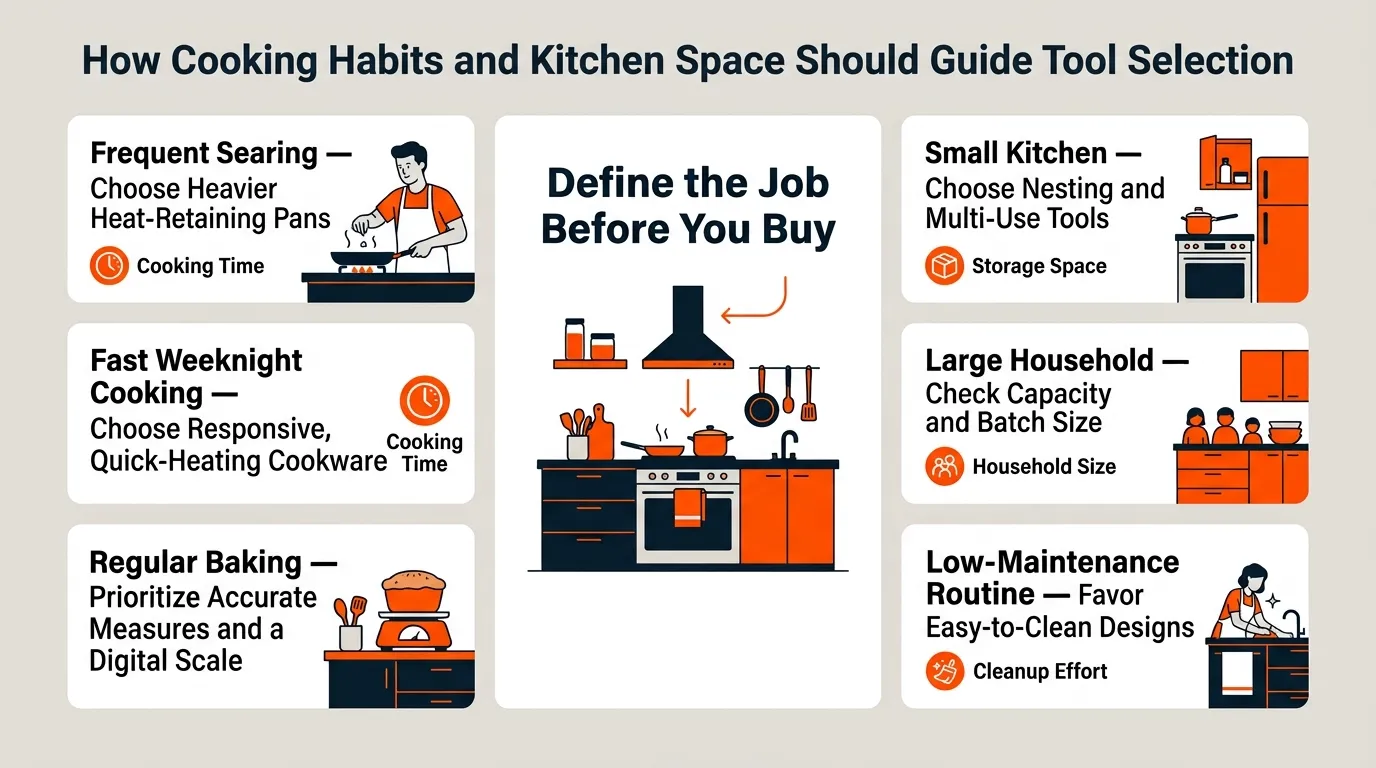
Before you buy, define the job. This is the first step in what to look for in kitchen tools. Your needs shape the right tool, not the ad or sale.
Ask yourself:
- What do you cook most nights?
- How many people do you feed?
- How much storage and counter space do you have?
- How much time do you want to spend on cleanup?
Simple rules:
- If you love searing, pick heavier pans. They hold heat.
- If you cook fast, favor quick-heating pans. They save time.
- If you bake a lot, buy accurate measures and a good scale.
- If space is tight, choose tools that stack and do more than one job.
From my kitchen: I once bought a pasta maker for a studio kitchen. It lived in the closet. A sturdy stockpot with a steamer insert did more, and it nested well. That is what to look for in kitchen tools that fit real life.
Materials and build quality that last
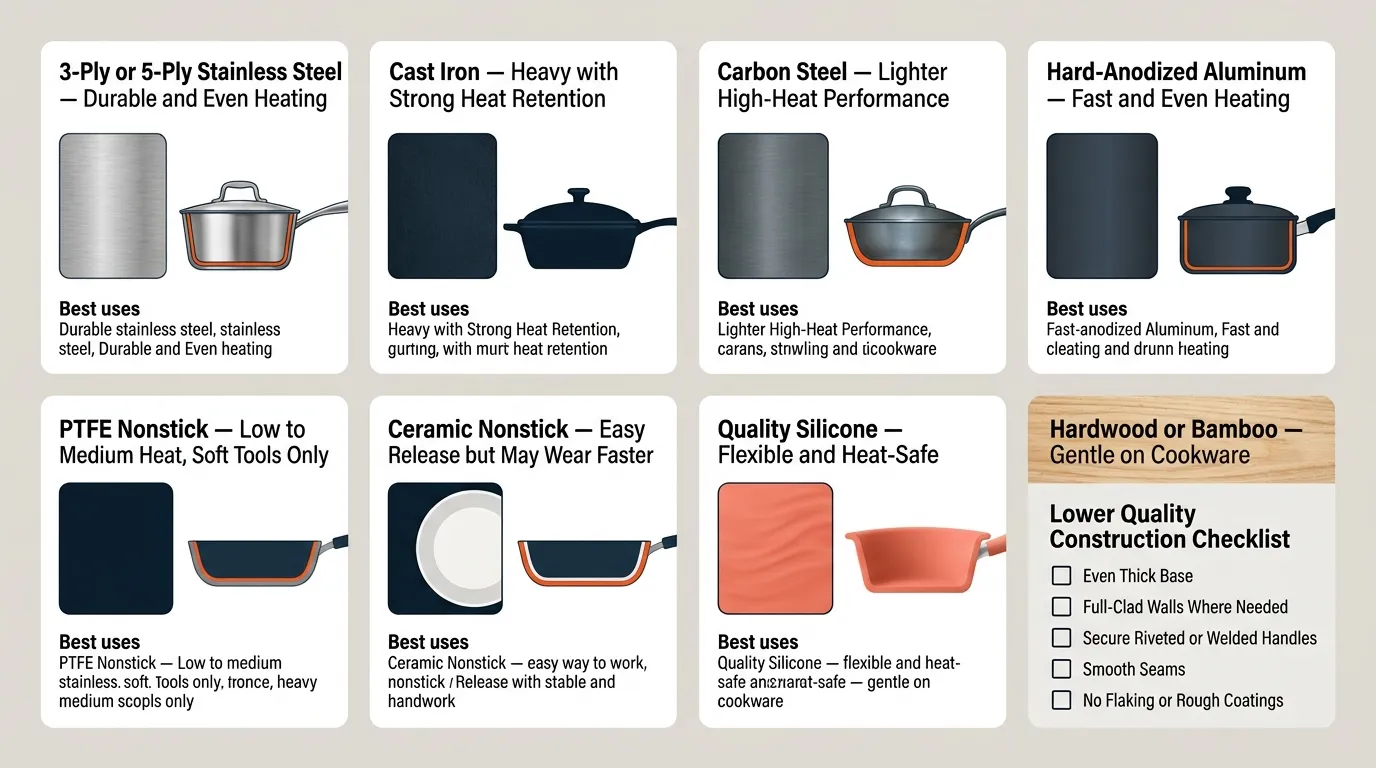
Material choice drives safety, performance, and care. It is core to what to look for in kitchen tools.
Common materials and when to use them:
- Stainless steel cookware. Look for 3-ply or 5-ply with an aluminum core. 18/10 or 304 stainless resists rust. It is safe and stable. It browns well with practice.
- Cast iron. Great heat retention and sear. It is heavy and needs seasoning. Enameled cast iron skips seasoning but costs more.
- Carbon steel. Lighter than cast iron. Seasons to a slick patina. Good for high heat.
- Hard-anodized aluminum. Heats fast and even. The anodized layer helps with durability. Avoid bare aluminum for acidic foods.
- Nonstick (PTFE). Food releases with little oil. Use low to medium heat. Avoid metal tools. Replace when the surface scars.
- Ceramic nonstick. PTFE-free. Easy release at first. Many lose nonstick with time. Use low to medium heat.
- Silicone tools. Look for LFGB-grade or platinum-cured. Heat safe. Gentle on pans.
- Wood and bamboo. Gentle and quiet. Choose hardwoods like maple or beech. Oil now and then.
Signs of quality:
- Even, thick base or full clad walls for pans.
- Riveted or welded handles with no wiggle.
- Smooth seams on silicone and plastic.
- No flaking paint or rough coatings.
I still use a 3-ply pan bought 12 years ago. It outlived two nonstick pans. That is a lesson in what to look for in kitchen tools if you want long-term value.
Ergonomics and design you can feel
Good tools feel right in hand. This is a key point in what to look for in kitchen tools.
Check for:
- Secure grip when wet or oily.
- Balanced weight so your wrist relaxes.
- Handle shape that fits your hand size.
- Knives with a secure pinch grip area.
- Lids that vent steam without rattling.
Do a quick test in-store:
- Hold the pan for one minute. Any strain?
- Grip a knife and do a few air chops. Any hot spots?
- Stir with a spoon. Does it flex too much?

Comfort cuts fatigue. That means you cook more and enjoy it.
Performance and versatility benchmarks
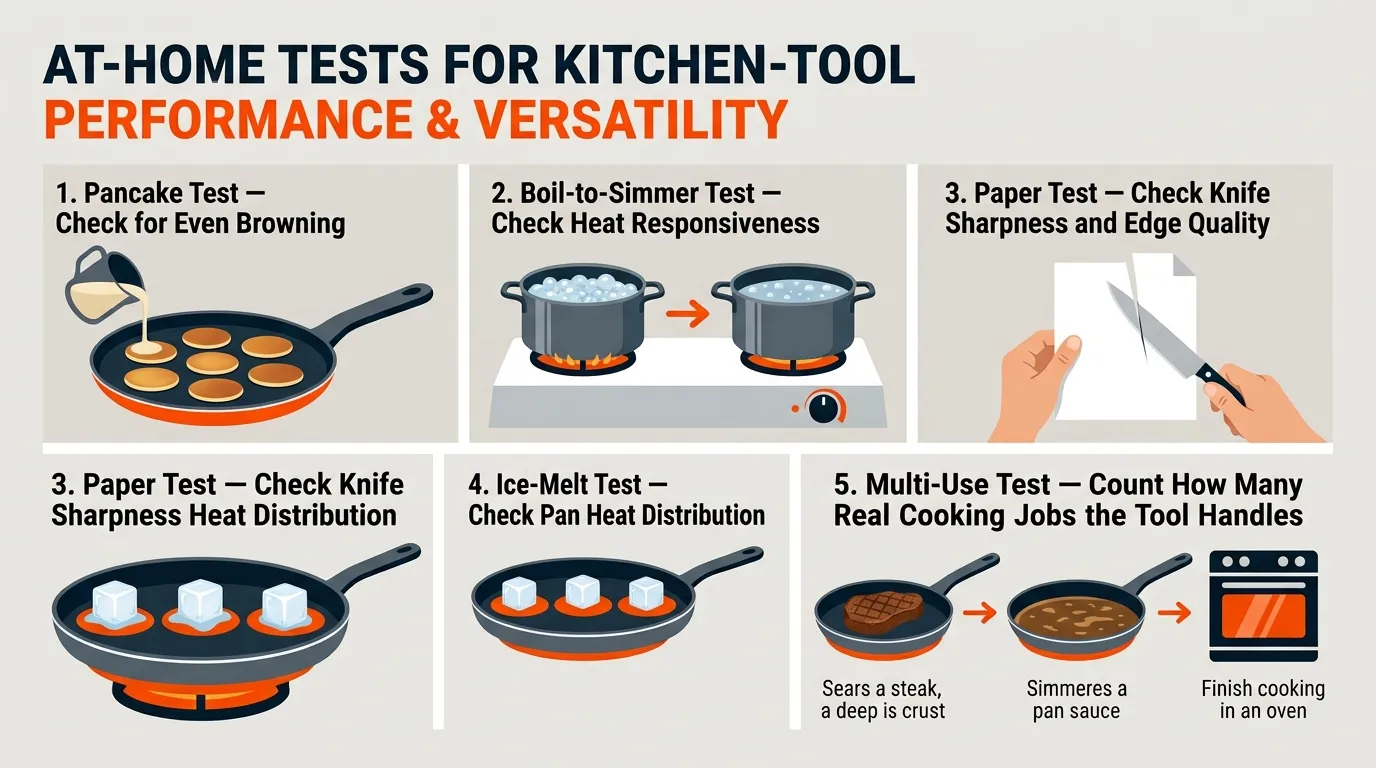
Performance is how well a tool does the job. Versatility is how many jobs it can do. Both matter in what to look for in kitchen tools.
Look for:
- Heat distribution. Even browning with no hot rings.
- Heat retention. Steady sear without big drops.
- Responsive control. Fast changes when you adjust heat.
- Sharpness and edge hold for knives.
- Accurate measures and thermometers.
Simple home tests:
- Pancake test for even heat. Spots tell a story.
- Boil-to-simmer test. Turn heat down. Watch how fast it settles.
- Paper test for knives. Slice paper cleanly, no tear.
- Ice melt test for pans. Even melt means even heat.
One pan that sautés, simmers, and bakes is gold. That is what to look for in kitchen tools that earn space.
Safety and food-contact standards
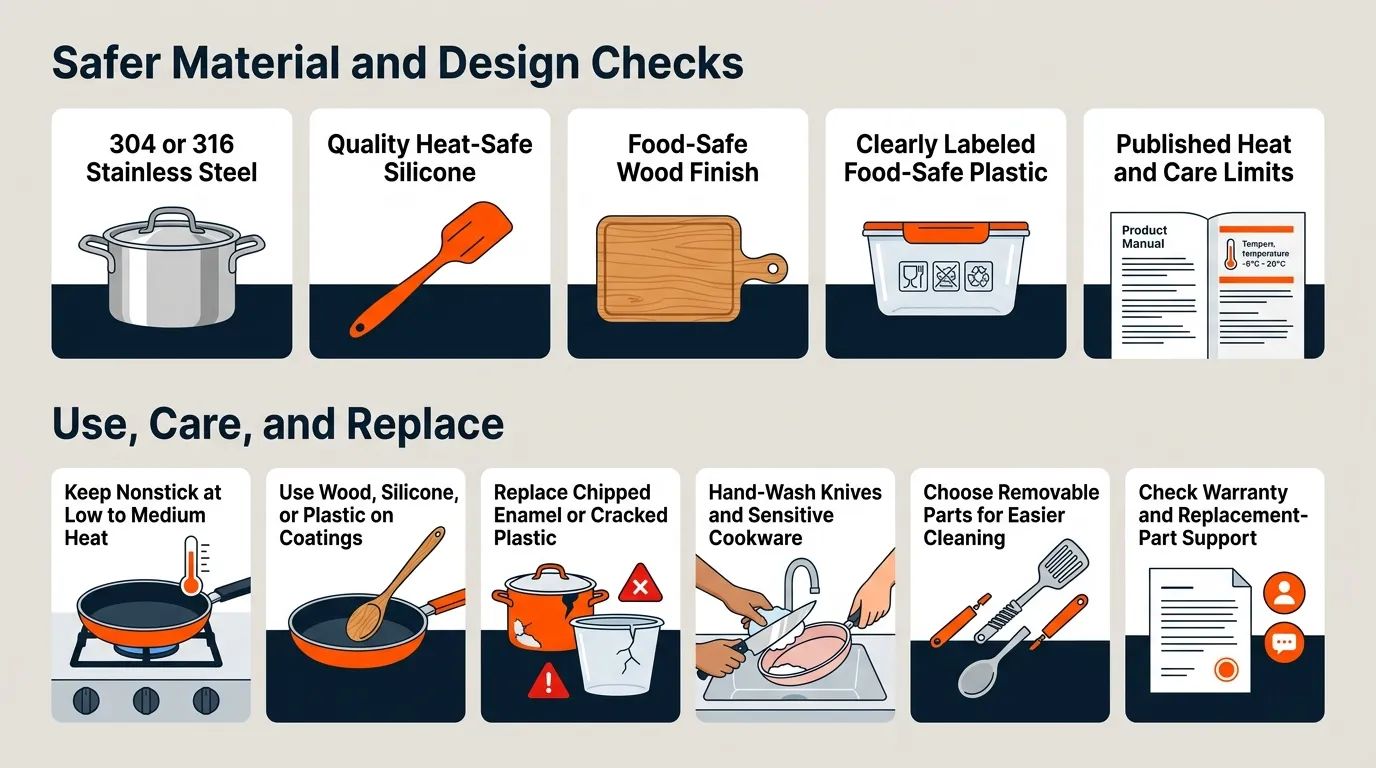
Safety is non-negotiable. It is central to what to look for in kitchen tools.
Aim for:
- Food-grade stainless like 304 or 316.
- Silicone marked LFGB or platinum-cured.
- Wood finished with food-safe mineral oil or beeswax.
- Plastics labeled food-safe and free of unwanted additives.
Use tips:
- Keep nonstick under high heat thresholds. Empty overheated pans can smoke.
- Do not use metal on nonstick.
- Replace chipped enamel or cracked plastic.
- Avoid reactive metals for acidic foods.
Look for third-party testing claims and clear labels. Reputable brands state heat limits, care rules, and warranty. That builds trust.
Maintenance, cleaning, and warranties
Easy care keeps tools in use. That is a big part of what to look for in kitchen tools.
Choose:
- Dishwasher safe when it makes sense. Note that knives and some pans do better by hand.
- Seasoning that is simple. Carbon steel and cast iron should recover fast after a deep clean.
- Removable parts on appliances for deep cleaning.
- Clear, fair warranties. Lifetime on build, not on wear surfaces.
My rule: if a tool takes more time to clean than to use, it will sit. Make care easy, and you will cook more.
Value, price, and smart buying strategy
Price is not the same as value. Value is how much use you get per dollar. This is sharp thinking in what to look for in kitchen tools.
Tips that work:
- Spend more on daily drivers. Knives, pans, and a cutting board earn it.
- Go mid-range on gadgets. You can upgrade if you use them often.
- Skip big sets. Build a kit piece by piece.
- Watch for open-box and seconds. Small marks, big savings.
- Choose tools with serviceable parts. A new gasket beats a new pot.
A high price can be cheap over time. A cheap tool can be very costly if it fails when you need it.
Sustainability and footprint
Longevity is the greenest choice. This matters in what to look for in kitchen tools today.
Prefer:
- Durable builds you can repair or re-season.
- Replaceable tips, gaskets, and batteries.
- Timeless materials like steel, cast iron, and wood.
- Brands that offer part sales and take-back programs.
- Tools that do more than one job.
I still use a thrifted cast iron skillet. One scrub and new seasoning, and it cooks like new.
Red flags and marketing traps
Not all “innovations” help you cook. Spotting traps is part of what to look for in kitchen tools.
Watch out for:
- One-trick gadgets that do a single job poorly.
- Coatings with wild color shifts or glitter. They can hide wear.
- Knife “sets” with many fillers. You need only a few.
- Fake “pro” terms with no testing data.
- Ultra-thin pans that warp fast.
If a claim sounds magic, ask how it works and how it was tested.
Essential checklist by category
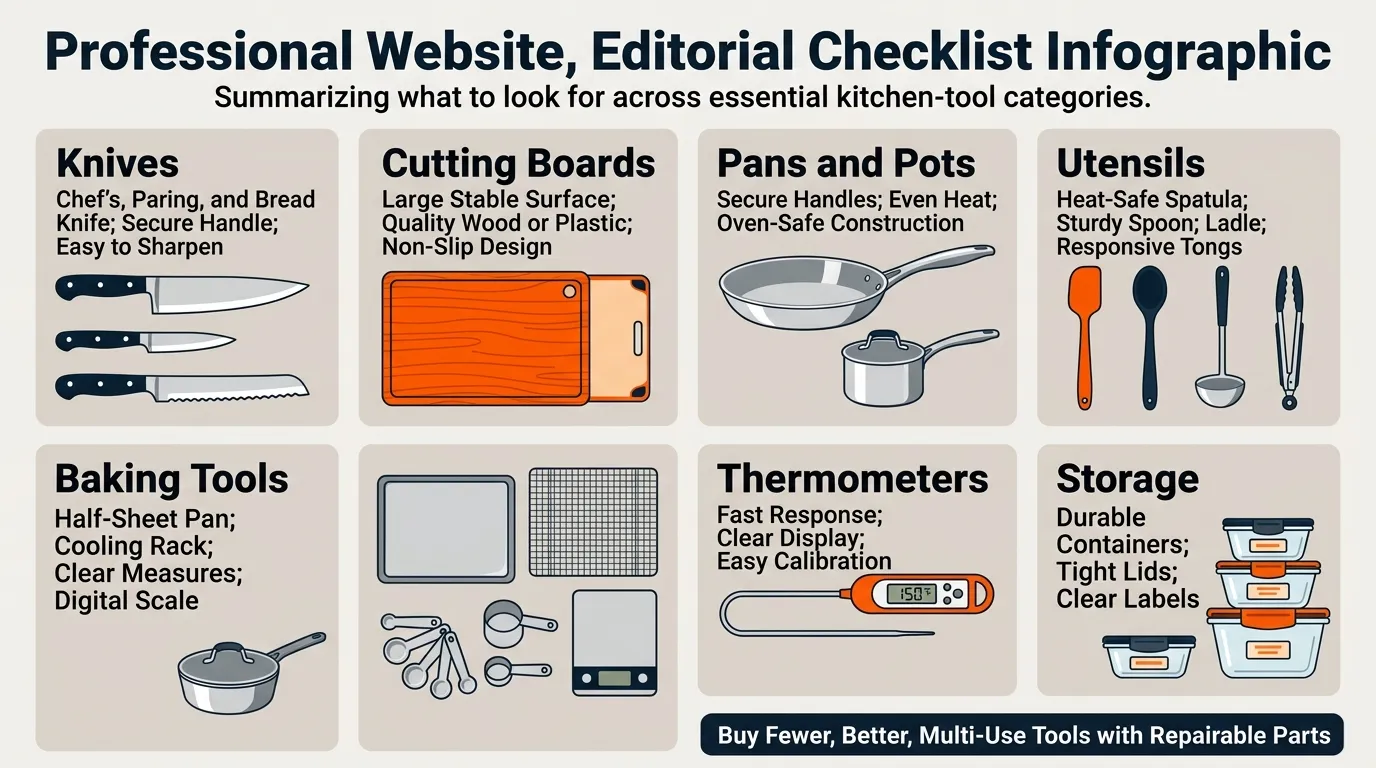
This checklist nails what to look for in kitchen tools across core groups.
Knives
- An 8-inch chef’s knife, a paring knife, and a bread knife.
- Full-tang or strong handle join. Even grind. Easy to sharpen.
Cutting boards
- Large, stable surface. End-grain wood or quality plastic.
- Juice groove if you carve meat. Non-slip feet.
Pans and pots
- 3-quart saucepan, 10–12 inch skillet, and a Dutch oven.
- Secure lids and oven-safe handles. Even heat.
- Heat-safe spatula, sturdy spoon, ladle, and tongs with good spring.
- Whisk that keeps shape. Can opener that is smooth and safe.
Baking tools
- Half-sheet pans, cooling rack, oven thermometer.
- Measuring cups and spoons that read clear. Digital scale.
Thermometers
- Instant-read with fast response.
- Clear display. Easy to calibrate.
Storage
- Glass containers with tight lids.
- Labels you can read at a glance.
How to test tools in-store or at home
Hands-on tests reveal the truth. This step seals what to look for in kitchen tools.
Try these:
- Grip test. Hold for one minute. Any strain or slip?
- Balance test. Does the tool tip or stay neutral?
- Heat test. Simmer water and watch stability.
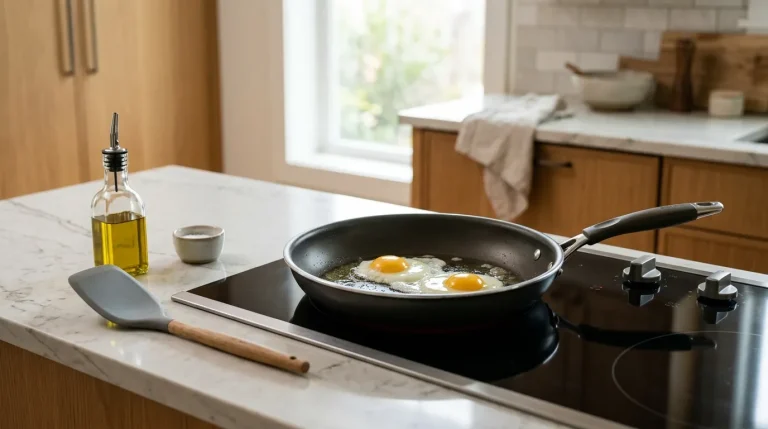
- Release test. Fry an egg with little oil. Note sticking.
- Edge test. Slice a tomato with no squish.
Track notes in your phone. Compare across brands. Pick the one that helps you cook better today.
Where reviews and data actually help
Good data beats hype. Use this to back what to look for in kitchen tools.
Do:
- Read independent lab tests when you can. Look for repeatable methods.
- Check long-term reviews after six months or a year.
- Scan warranty and parts pages. Support matters later.
- Shop where returns are fair. Try at home without risk.
Avoid:
- Star-only ratings with no detail.
- Reviews that repeat the product page.
Blend data with your own tests. That is the winning mix.
Frequently Asked Questions of what to look for in kitchen tools
What is the first thing to consider when buying a pan?
Think about your stove and your food. Match pan material to heat source and cooking style.
How many knives do I really need?
Three cover most tasks. A chef’s knife, a paring knife, and a bread knife handle 95% of cuts.
What to look for in kitchen tools on a budget?
Buy fewer, better pieces. Start with a good pan, a sharp chef’s knife, and a solid board.
Are ceramic nonstick pans safer than PTFE?
Both can be safe when used right. Keep heat moderate and avoid metal tools with any nonstick.
What to look for in kitchen tools for small kitchens?
Choose multi-use items that nest or fold. A sauté pan with a lid beats three single-use pans.
How do I know if stainless steel is good quality?
Look for 3-ply or 5-ply with an aluminum core. 18/10 or 304 stainless resists rust and stains.
Do I need a digital scale for baking?
Yes if you want repeatable results. It is cheap, fast, and far more accurate than cups.
Conclusion
Great tools make cooking easier, safer, and more fun. Focus on durable materials, honest performance, and comfort in hand. Test when you can. Avoid gimmicks. Keep your kit small and strong.
Start today. Pick one upgrade that you will use every week. Share your favorite finds, ask questions, or subscribe for more hands-on guides.