Smart bakeware maintenance means gentle cleaning, full drying, and careful storage every time.
If your pans warp, stick, or stain, you waste time and money. I’ve tested and cared for bakeware in busy kitchens and at home, and the difference is clear. With simple habits, bakeware maintenance keeps sheets flat, coatings safe, and bakes even. This guide gives you expert steps, real fixes, and easy routines you can use today.
Understanding Bakeware Materials
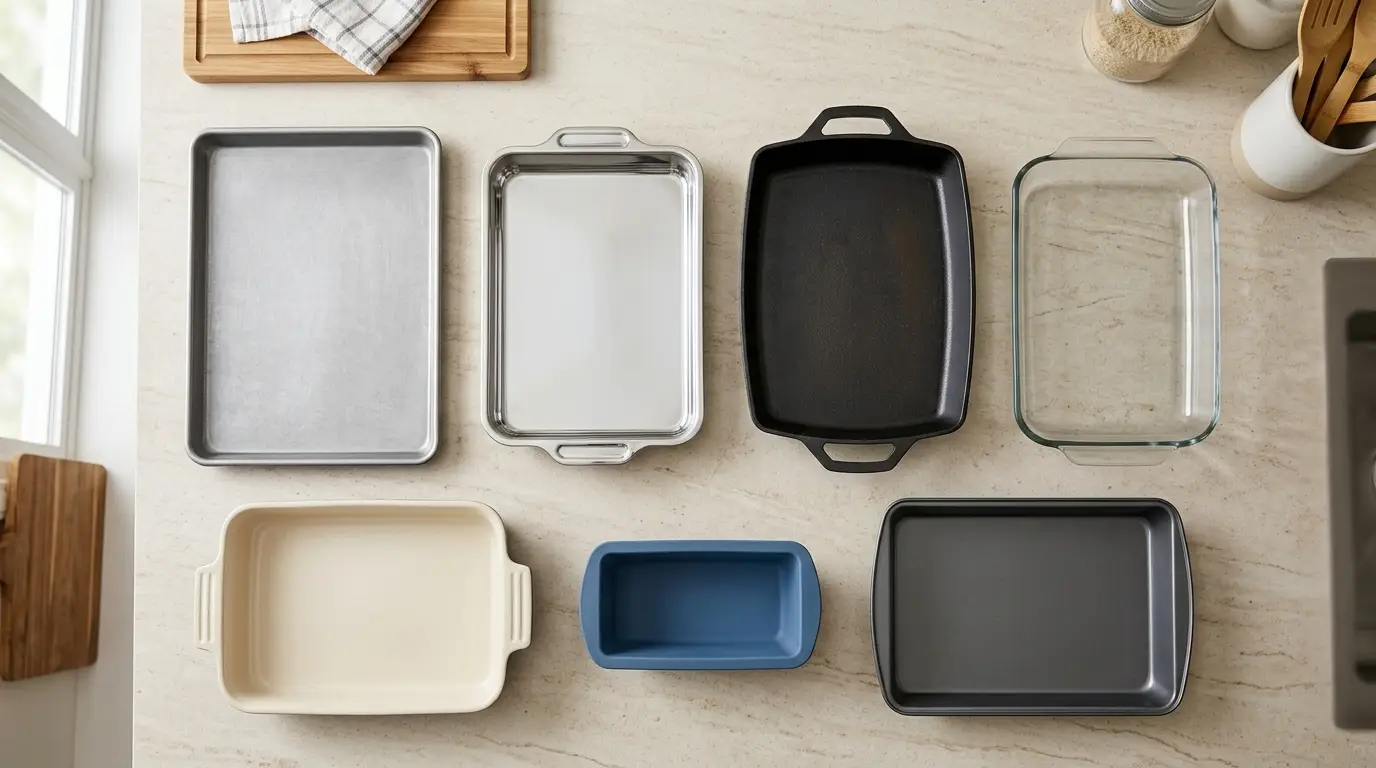
The right care depends on the material. Each metal or surface reacts to heat, soap, and scrubbing in its own way. Good bakeware maintenance starts with knowing what you own and how it behaves.
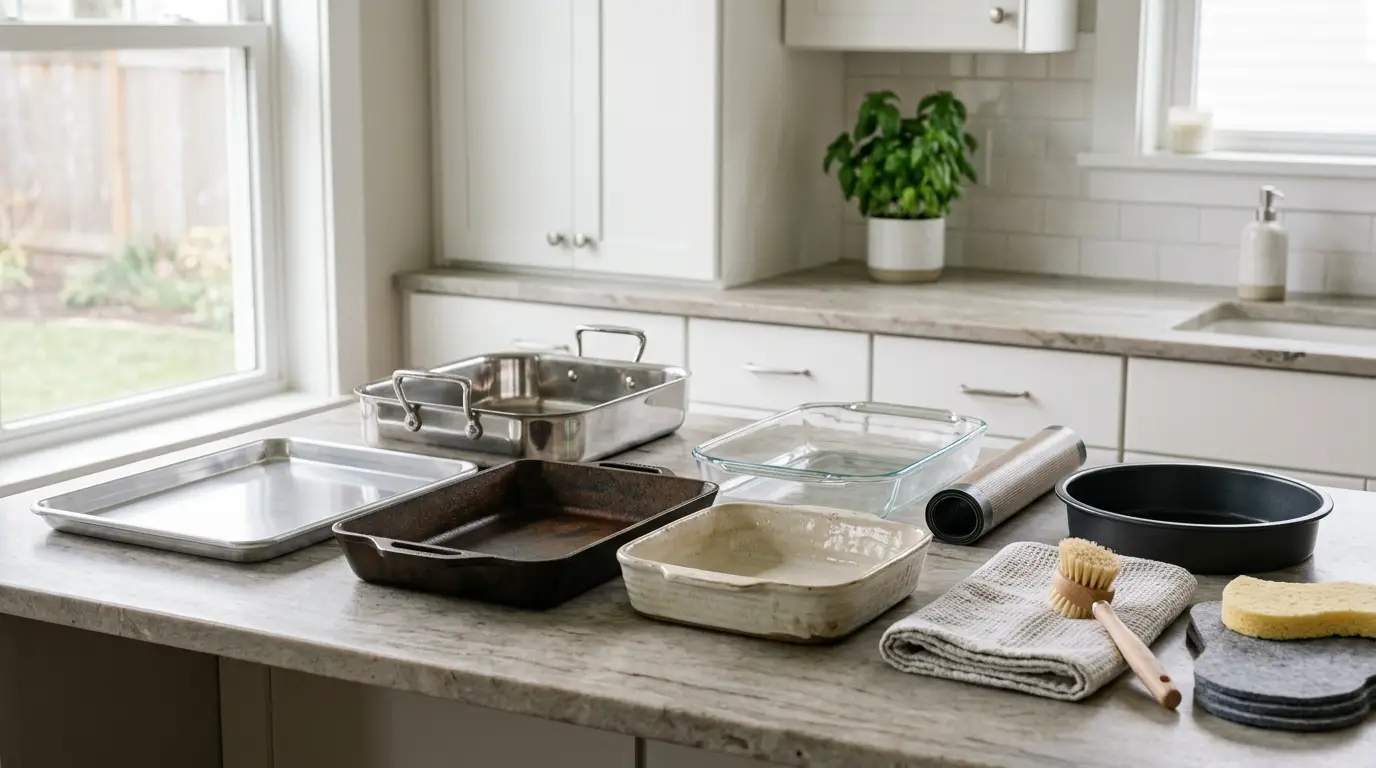
Aluminum heats fast and even but can pit with harsh cleaners. Stainless steel is tough and resists rust but may discolor from high heat sugars. Carbon steel and cast iron are strong and need seasoning. Glass bakes steady but can shatter with thermal shock. Ceramic and stoneware hold heat well but chip if hit. Silicone releases well and needs a grease rinse to avoid a greasy film. Nonstick coatings need soft tools and low to medium heat.
I keep a simple tag on each pan with care notes. That reminder saves pans in the rush of a bake day.
Cleaning Fundamentals That Protect Your Pans
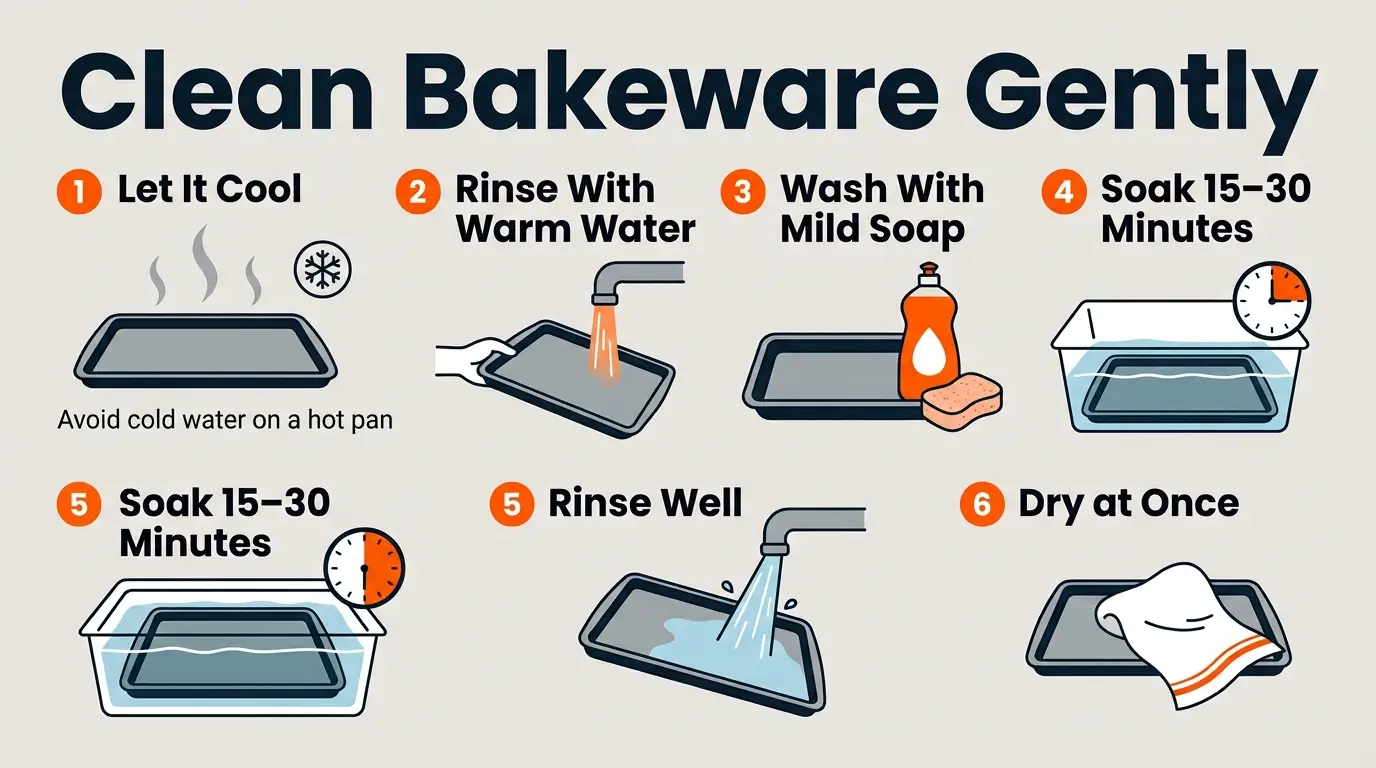
Great bakeware maintenance is mostly about fast, gentle cleaning. Clean soon after use. Stuck sugar turns into a rock when cold.
Follow these core steps after each bake:
- Cool the pan until warm to the touch. Avoid cold water on a hot pan.
- Rinse with warm water to lift loose bits.
- Wash with mild dish soap and a soft sponge or brush.
- For stuck spots, soak 15–30 minutes in warm, soapy water.
- Rinse well, then dry at once with a towel to prevent rust or spots.
Key do’s and don’ts:
- Do use plastic or wood scrapers on baked-on patches.
- Do use baking soda paste for stains on metal and glass.
- Don’t use steel wool on nonstick, silicone, or enamel.
- Don’t use bleach or oven cleaner on any bakeware.
- Don’t put most nonstick or aluminum in the dishwasher. The detergent is harsh.
A quick note from my own routine: I keep a “pan spa” bin. It is a shallow tub where I soak pans while I plate desserts. The soak does the work, not my elbows.
Care by Material
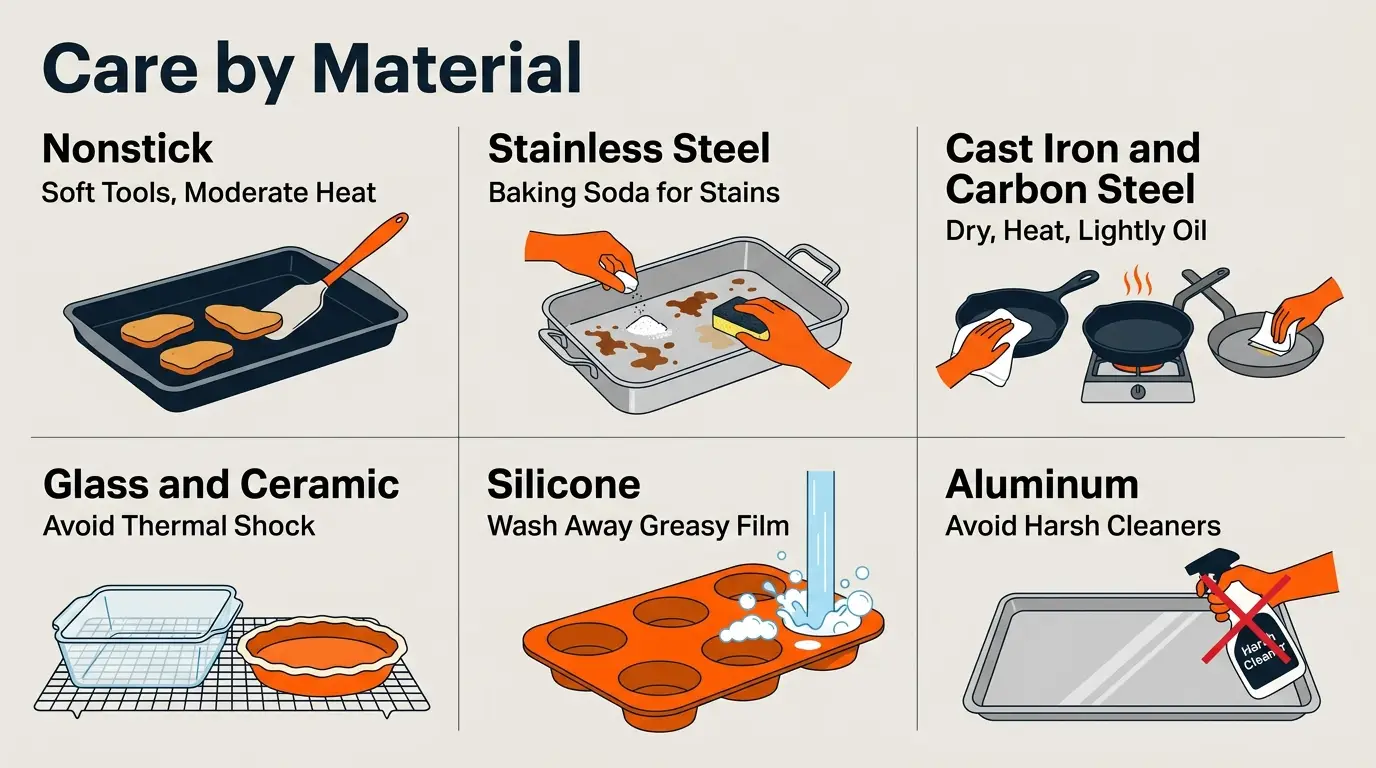
Nonstick Pans and Sheets
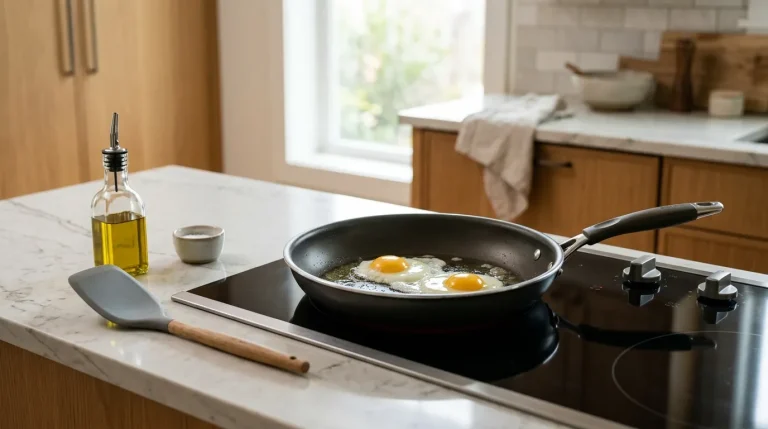
Nonstick needs low to medium heat, gentle soap, and soft tools. Avoid aerosol sprays, which can gum up coatings. If food starts to cling, refresh release with a light wipe of oil before baking.
Stainless Steel and Aluminized Steel
Use warm, soapy water and a soft scrub. For brown sugar stains, use a non-abrasive cleanser or a baking soda paste. Dry right away to avoid rainbow heat tint and spots.
Cast Iron and Carbon Steel
Wipe clean while warm. Use hot water and a brush. Dry, then heat the pan a minute and rub a thin oil layer to protect. This is core bakeware maintenance for pans that last a lifetime.
Glass and Ceramic
Avoid sudden temperature swings. Let hot dishes rest before washing. Use baking soda paste for film, and avoid metal tools that can scratch the glaze.
Silicone Molds and Mats
Silicone can get a sticky film from oils. Wash with warm water, soap, and a soft brush. Bake empty at low heat for 10 minutes to dry and refresh release.
I learned the hard way that one wrong pad can end a new nonstick sheet. Now I keep a “green zone” caddy with only safe sponges and tools for those pans.
Seasoning and Nonstick Preservation
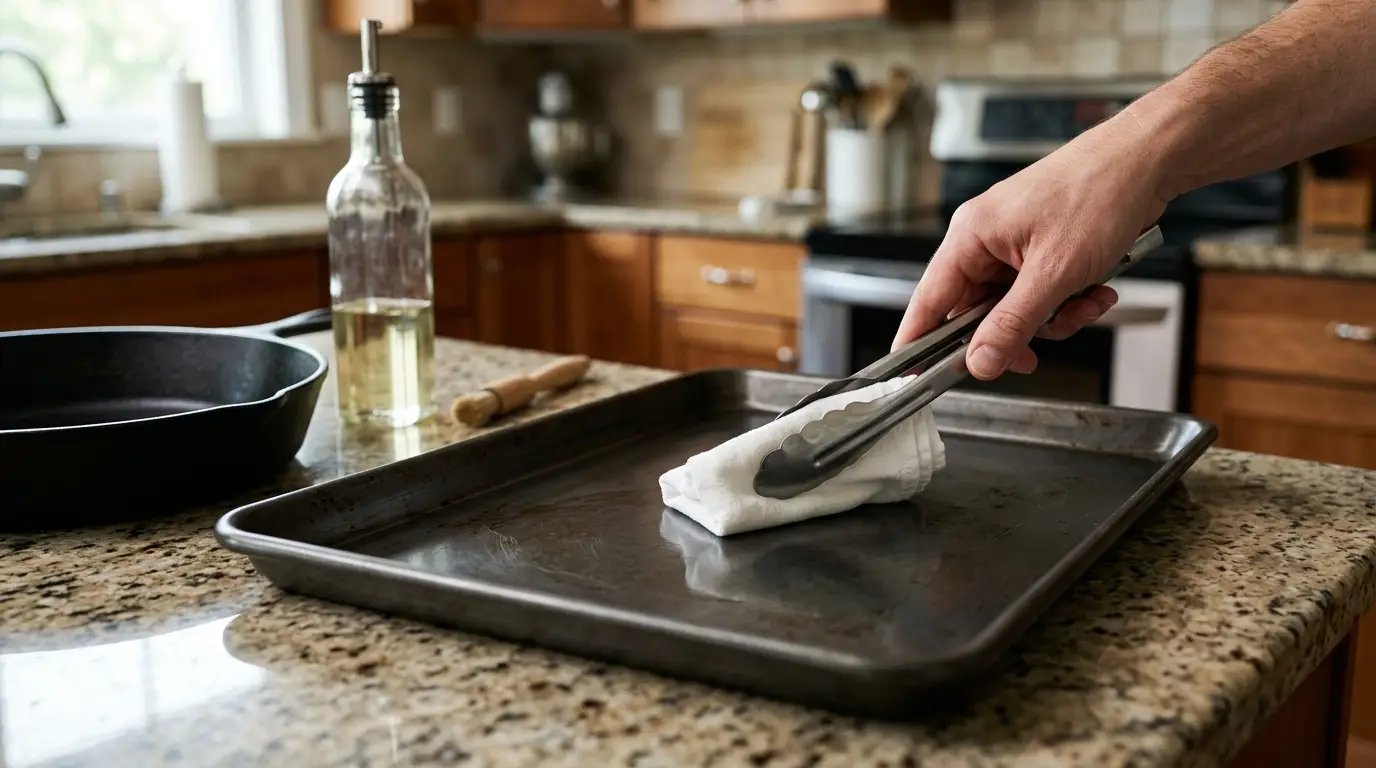
Seasoning builds a thin, durable layer of polymerized oil. It helps prevent rust and improves release on cast iron and carbon steel. It is a key part of bakeware maintenance for those materials.
How to season cast iron or carbon steel:
- Clean and dry the pan.
- Rub on a very thin layer of high-smoke-point oil.
- Buff off excess until it looks almost dry.
- Bake upside down at 450–500°F for 1 hour; cool in the oven.
- Repeat 2–3 times for a strong base layer.
Protecting PTFE or ceramic nonstick:
- Use wood, nylon, or silicone tools.
- Keep heat under 500°F, unless maker says higher is safe.
- Avoid aerosol sprays; use a pump oil mister or brush.
- If a coating peels or flakes, replace the pan for safety.
A seasoned pan tells a story: dark, smooth, and slick. I treat it like a leather jacket—thin coats, regular care, and it only gets better.
Storage and Organization
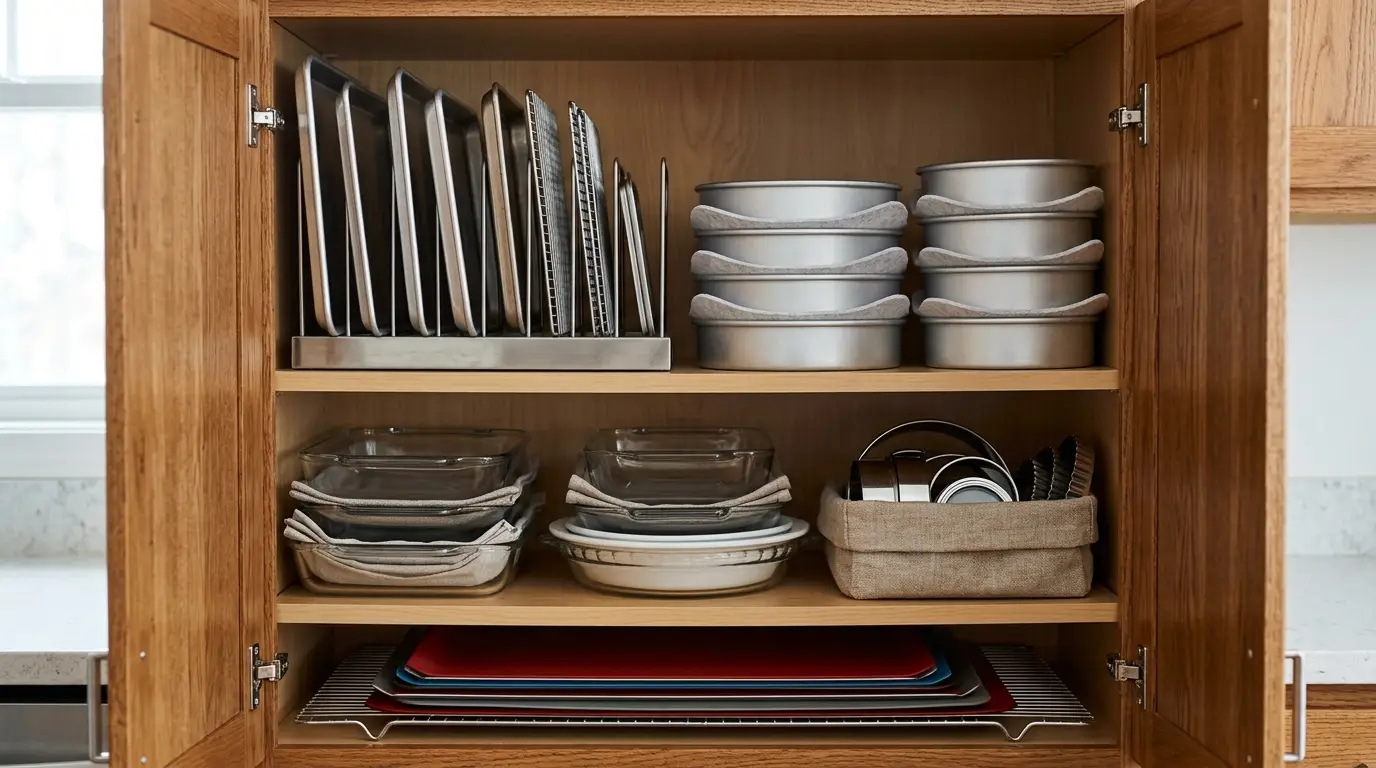
Good storage is silent bakeware maintenance. It stops scratches, chips, and warps.
Simple storage rules:
- Use pan protectors or paper between stacked pans.
- Stand sheets and racks vertically in a file organizer.
- Store lids and rings in a basket so they do not rattle and ding.
- Keep silicone flat, not folded, to avoid creases.
Humidity matters too. Dry pans fully before putting them away. I set a timer when I wash a big batch so nothing sits damp in the rack.
Troubleshooting and Restoration
Even with care, pans get stains, sticky films, or rust. Here is how to fix common issues while keeping bakeware maintenance safe and simple.
Burnt-on sugar or cheese:
- Soak in hot, soapy water.
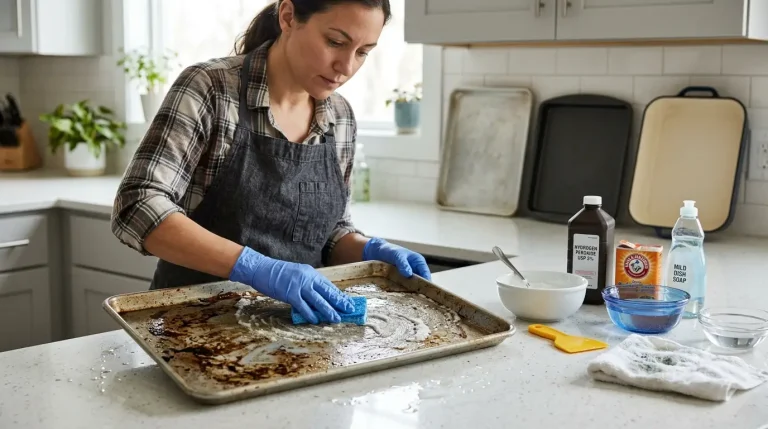
- Apply baking soda paste; let sit 20 minutes; scrub with a nylon brush.
- For stainless, a non-abrasive cleanser helps on sugar glass.
Rust on carbon steel or cast iron:
- Scrub rust with a soft metal-safe scrubber or fine chain mail.
- Rinse, dry, heat to drive off water, then re-season with thin oil coats.
Warped sheet pans:
- Warping comes from fast heat shocks or thin metal.
- Prevent by heating gradually and avoiding broilers for thin sheets.
- Light warps may ease under even heat; deep warps are permanent.
Sticky silicone:
- Degrease with hot water, soap, and a baking soda rub.
- Bake empty at 300°F for 10 minutes to “de-smell” and dry.
Cloudy glass:
- Soak in warm vinegar water for 15 minutes.
- Rinse and buff dry with a lint-free towel.
When in doubt, test a cleaning method on a small spot first. Safety guidance suggests replacing cracked glass, chipped ceramic, and flaking nonstick.
Safety and Hygiene Essentials
Food safety is part of bakeware maintenance. Clean gear means safer bakes and better flavor.
Simple hygiene checks:
- Avoid cross-use of meat pans for delicate pastries.
- Wash tools and pans that touched raw eggs right away.
- Replace pans with deep scratches or flaking that can trap bacteria.
- Do not use harsh chemicals that leave residues.
Know when to let go:
- Nonstick that peels or scratches deeply.
- Glass with chips or star cracks.
- Enamel with large chips exposing metal.
- Rust that returns fast even after seasoning.
I set a calendar note to inspect pans each quarter. Ten minutes now saves a failed bake later.
Eco-Friendly and Cost-Saving Habits
Bakeware maintenance saves money and cuts waste. A well-kept pan can last for years.
Smart habits:
- Line pans with parchment or reusable mats to reduce scrubbing.
- Choose thicker-gauge pans that resist warping and last longer.
- Repair where safe, replace only when needed.
- Donate usable items you no longer need.
I track each new pan’s first use date on masking tape. Seeing a pan hit year five feels great and keeps me mindful of care.
Tools and Products I Trust
You do not need a cupboard of cleaners. A few gentle tools do most jobs and support steady bakeware maintenance.
My short list:
- Soft sponges and nylon brushes for daily wash.
- Plastic or wood scrapers for baked-on bits.
- Baking soda and white vinegar for stains and film.
- Mild dish soap and warm water for almost everything.
- Pan protectors or clean towels for stacking.
- High-smoke-point oil for seasoning cast iron and carbon steel.
In my test kitchen, these basics handle 90% of jobs. The trick is to use them fast while residue is still soft.
Maintenance Schedule and Checklist
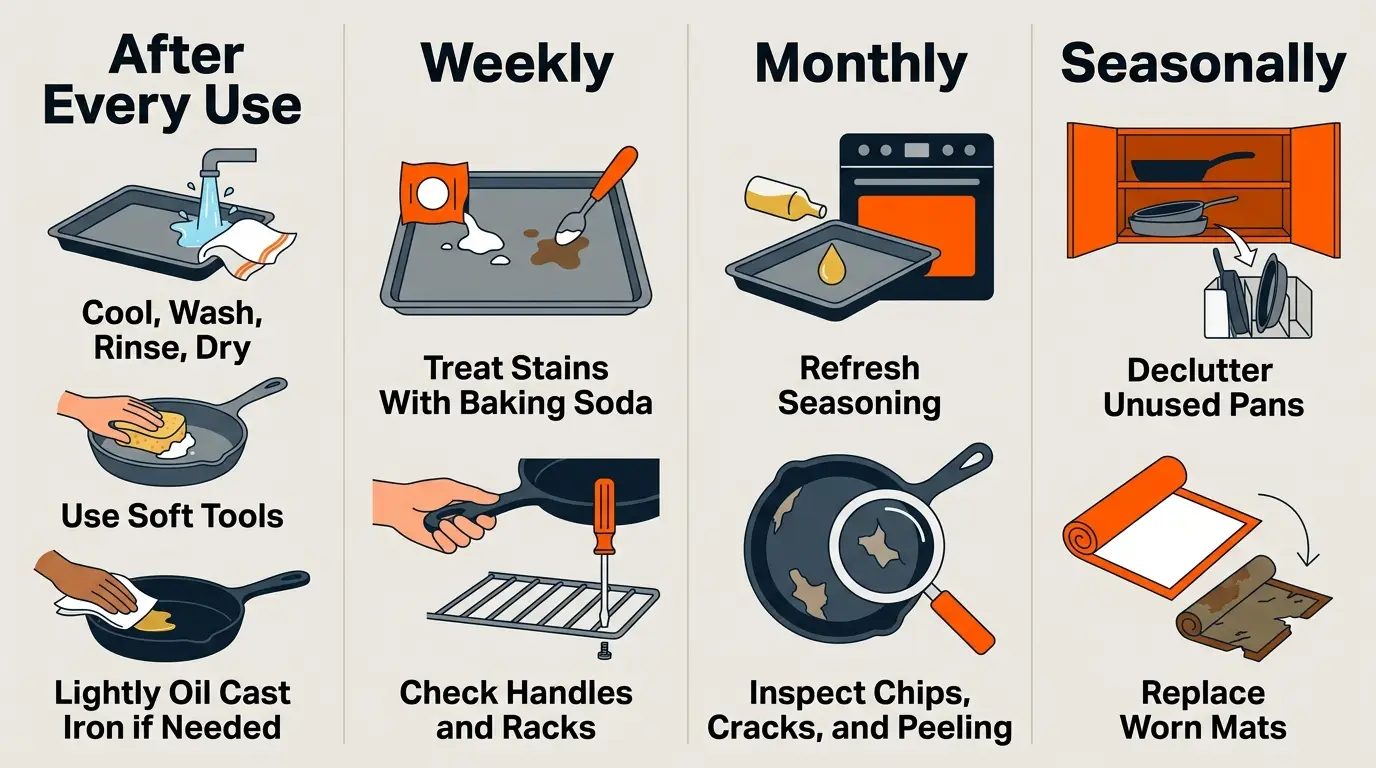
A simple routine keeps your set in top shape. Use this bakeware maintenance checklist and adjust to your bakes.
After every use:
- Cool, wash with mild soap, rinse, and dry fully.
- Wipe nonstick with a soft towel; avoid metal tools.
- Oil a thin coat on cast iron or carbon steel if needed.
Weekly:
- Deep clean stained spots with baking soda paste.
- Check for loose screws on handles or racks.
Monthly:
- Refresh seasoning on carbon steel or cast iron you use often.
- Inspect for chips, cracks, and peeling.
Seasonally:
- Declutter pans you do not use.
- Replace worn mats and torn parchment dispensers.
I keep this list on the inside of a cabinet door. It turns care into a quick habit, not a chore.
Frequently Asked Questions of bakeware maintenance
How often should I season cast iron for baking?
Season when the surface looks dull or food begins to stick. For frequent use, a light coat after each wash keeps it strong.
Can I put nonstick bakeware in the dishwasher?
Most makers advise hand washing. Dishwasher detergents are harsh and can shorten the coating’s life.
Why do my sheet pans warp in the oven?
Thin metal and sudden heat cause warps. Use thicker-gauge pans and avoid broiling on light sheets.
What is the safest way to clean burnt sugar on glass?
Soak in warm, soapy water, then use a baking soda paste. Avoid metal tools that can scratch.
When should I replace nonstick pans?
Replace if the coating peels, flakes, or has deep scratches. Safety guidance favors a fresh pan over risk.
Is silicone bakeware safe at high heat?
Most silicone is safe up to 428–450°F. Check your product label and avoid broilers.
Can I fix rust on carbon steel sheets?
Yes. Scrub rust off, dry with heat, and re-season with thin oil layers. If rust keeps returning, repeat and store in a dry place.
Do I need special soap for bakeware maintenance?
No. Mild dish soap works for daily care. Save non-abrasive cleansers for stubborn stains on metal.
Conclusion
Care is cheaper than replacement, and it bakes better food. With quick washes, full drying, gentle tools, and smart storage, bakeware maintenance becomes a simple habit. Your pans will heat evenly, release cleanly, and last for years.
Start today: pick one section, set up your tools, and refresh one pan. Then share your wins, ask a question, or subscribe for more kitchen-tested guides.