Most Keurigs stop pumping due to scale, clogs, air locks, or a stuck float.
If your morning brew is slow or short, you’re in the right place. In this Keurig Coffee Maker Not Pumping Enough Water: Quick Fixes guide, I’ll show you simple, proven steps that work fast. I’ve repaired many home and office units, and I’ll help you fix yours today with clear, safe methods that last.
How the Keurig water system works in simple terms
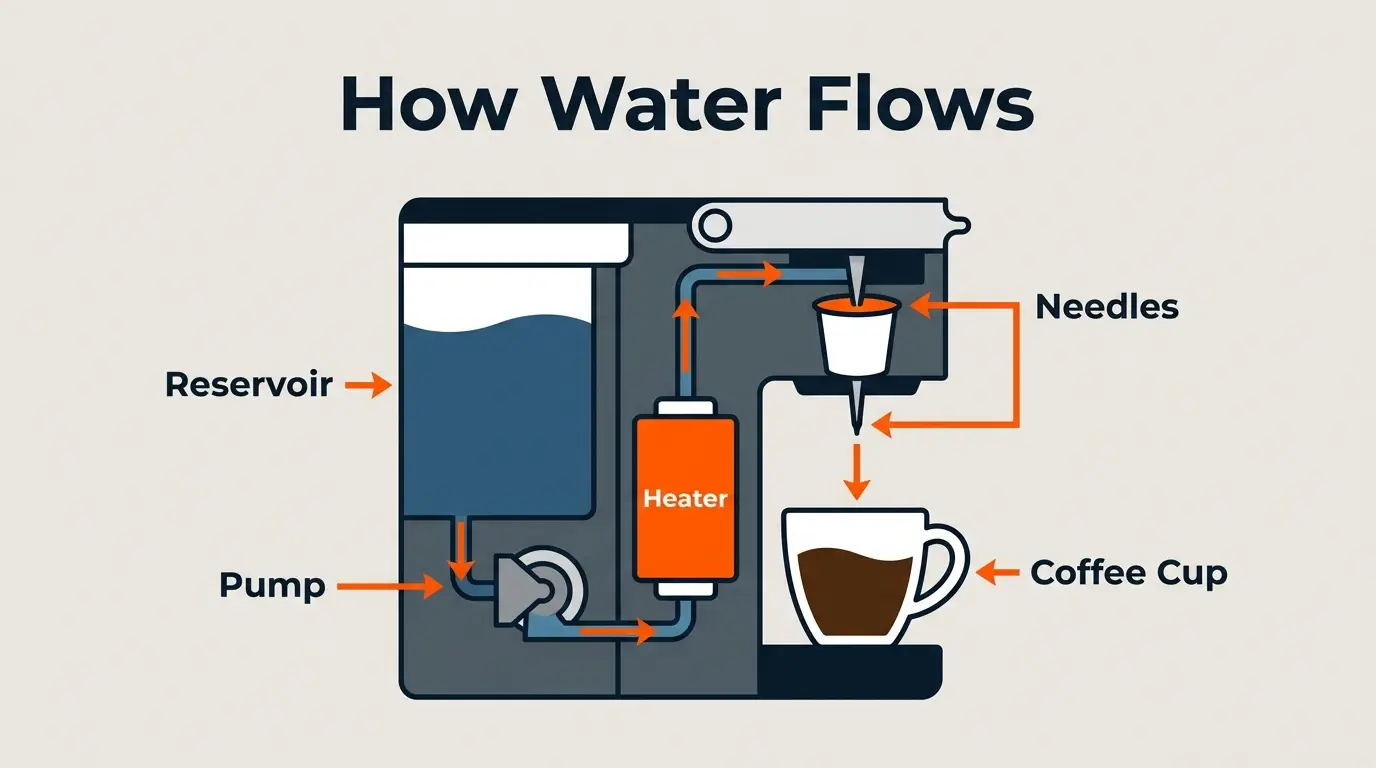
A Keurig pulls water from the reservoir with a small pump. It heats that water in a boiler, then pushes it through the K‑Cup via two needles. If any part clogs, the pump cavitates, and you get short cups or no flow. That is why the Keurig Coffee Maker Not Pumping Enough Water: Quick Fixes in this guide target the pump, needles, and water path.
Common symptoms and what they mean
When your brewer runs but the cup is tiny, you likely have scale or a clog. If the pump is loud and gurgles, there may be an air lock. If the pump is silent, power or pump failure is possible. If the Add Water light stays on with a full tank, the float magnet is stuck or misread.
You may also see coffee grounds on the K‑Cup top. That points to a blocked exit needle. You might get only steam. That means heat is fine, but water flow is not. Each sign maps to the Keurig Coffee Maker Not Pumping Enough Water: Quick Fixes you’ll use below.
Keurig Coffee Maker Not Pumping Enough Water: Quick Fixes
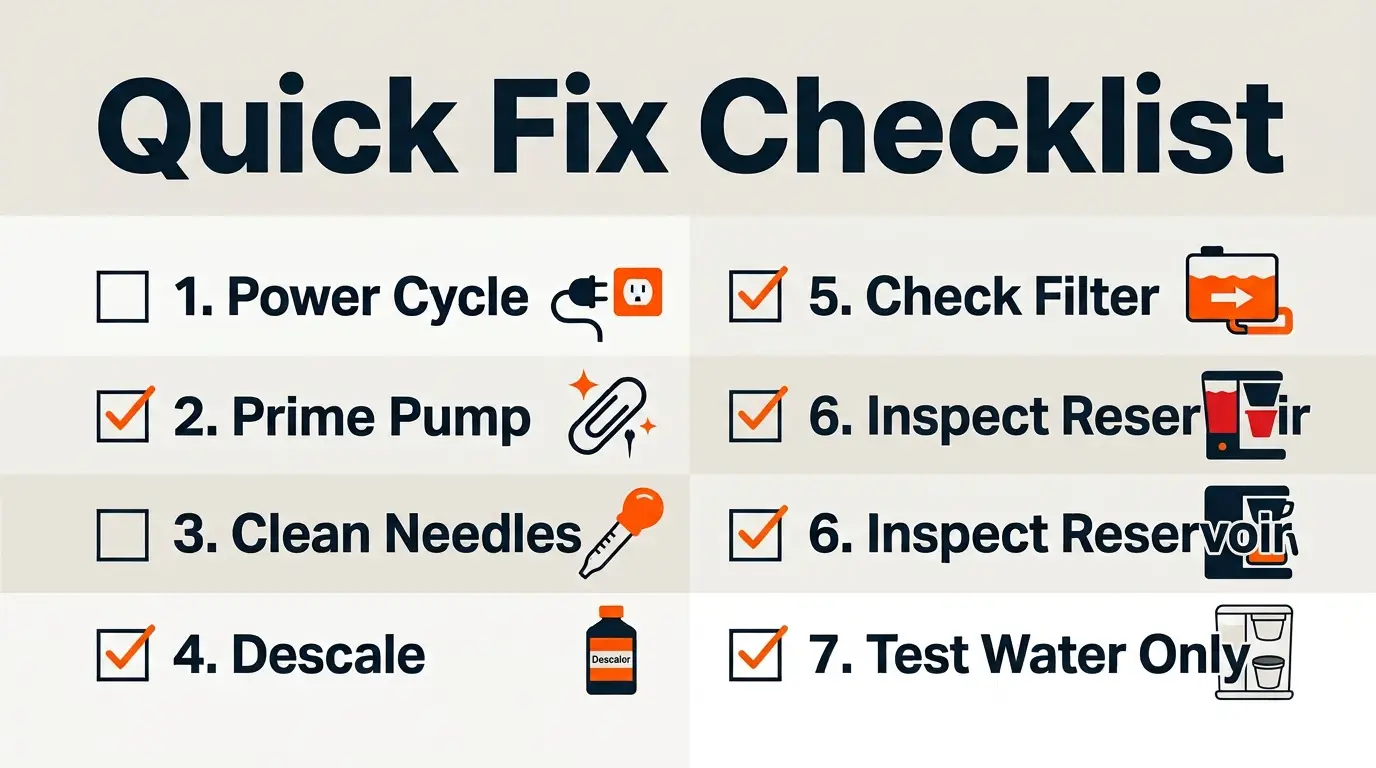
I’ve brought many slow Keurigs back to life with these steps. Most fixes take under 20 minutes. Keep it safe. Unplug the machine before cleaning needles or moving water.
- Power cycle and prime
- Turn the brewer off. Unplug it for 60 seconds. Plug it back in.
- Fill the reservoir to the Max line. Reseat it firmly.
- Run two water‑only brews with no pod on the largest size. This can clear small air locks and resets flow. Use this Keurig Coffee Maker Not Pumping Enough Water: Quick Fixes step first.
- Check the water filter and reservoir float
- Remove the charcoal filter holder. If the filter is older than two months, take it out and test a brew without it.
- Gently tap the side of the reservoir near the float window. Stuck magnet floats are common. Clean the reservoir with mild soap, rinse well, and reattach.
- Clean the entrance and exit needles
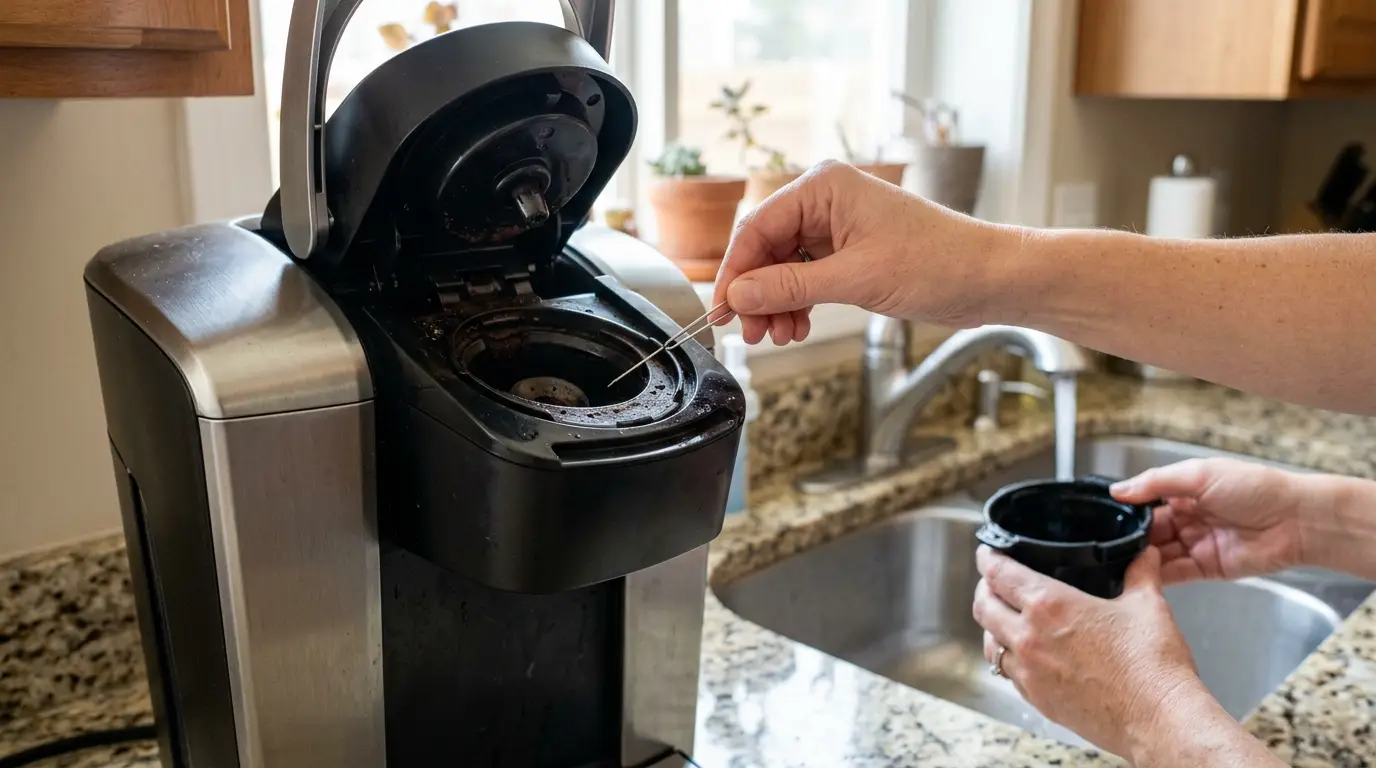
- Lift the handle. You will see a sharp needle above and another one under the K‑Cup holder.
- Use a straightened paper clip to clear each needle. Insert 1 cm, wiggle, and remove grounds. Be gentle.
- Rinse the K‑Cup holder under warm water. This is a core Keurig Coffee Maker Not Pumping Enough Water: Quick Fixes move that fixes short cups fast.
- Descale the water path
- Empty the reservoir. Fill it with a 1:1 mix of white vinegar and water, or use a branded descaling solution per label.
- Run large water‑only brews until the tank is half empty. Let the brewer sit for 20 minutes. Finish the tank.
- Rinse by running two full tanks of plain water. Scale is the top cause of slow flow.
- Clear an air lock (safe priming trick)
- Remove the water reservoir. Press the spring valve at the base of the reservoir with a clean finger to confirm water flows.
- With the brewer off and cool, use a clean turkey baster to push a small burst of water into the intake port on the brewer where the reservoir sits. Reattach the tank and run a water‑only brew.
- This simple priming step often restores flow after the machine sat dry.
- Check brew size settings and pod choice
- Make sure you selected the largest size while testing. Small cup settings can mask flow issues.
- Try a water‑only cycle with no pod, then a fresh, non‑swollen K‑Cup. Damaged or overfilled pods can choke the exit needle.
- Inspect seals and seating
- Close the lid fully. A loose lid reduces pressure and flow.
- Make sure the K‑Cup holder is clicked in and the reservoir is aligned flat with no gaps.
- Deep descale for heavy scale
- If you see white flakes or have very hard water, repeat descaling. Let the solution soak longer, up to 1 hour, then rinse well.
- Consider using filtered or bottled water to prevent quick re‑scaling.
- Listen for the pump
- No pump sound at all can mean an electrical fault or a failed pump. If steps above fail, contact support.
- Many pumps are sealed and not user‑serviceable. If under warranty, do not open the machine.
This Keurig Coffee Maker Not Pumping Enough Water: Quick Fixes checklist solves most issues I see at home and in office kitchens. If your brewer now pours a full cup, you found the cause. If not, go on to the model notes and repair tips below.
Model‑specific tips and settings

Different models have small quirks. These notes can shave minutes off your fix.
- K‑Classic, K‑Select, K‑Elite
- The reservoir float magnet sticks more often. Clean and tap near the float window.
- Descaling access is simple. Two rinse tanks are enough after vinegar.
- K‑Express, K‑Mini, compact units
- These have tighter water paths. Needle cleaning matters more. Use the paper clip step twice.
- Descale with solution rather than vinegar if odors linger.
- Keurig 2.0 (K200–K575)
- Firmware can lock brew sizes. Run a water‑only carafe cycle if you have the carafe accessory to flush faster.
- Seat the reservoir with care. The sensor can misread if not flat. These Keurig Coffee Maker Not Pumping Enough Water: Quick Fixes still apply across 2.0 models.
- K‑Supreme, K‑Slim (multistream)
- There are several exit needles. Clean each port with the paper clip.
- Run three water‑only cycles after needle cleaning to flush all streams.
Preventive care to keep water flowing
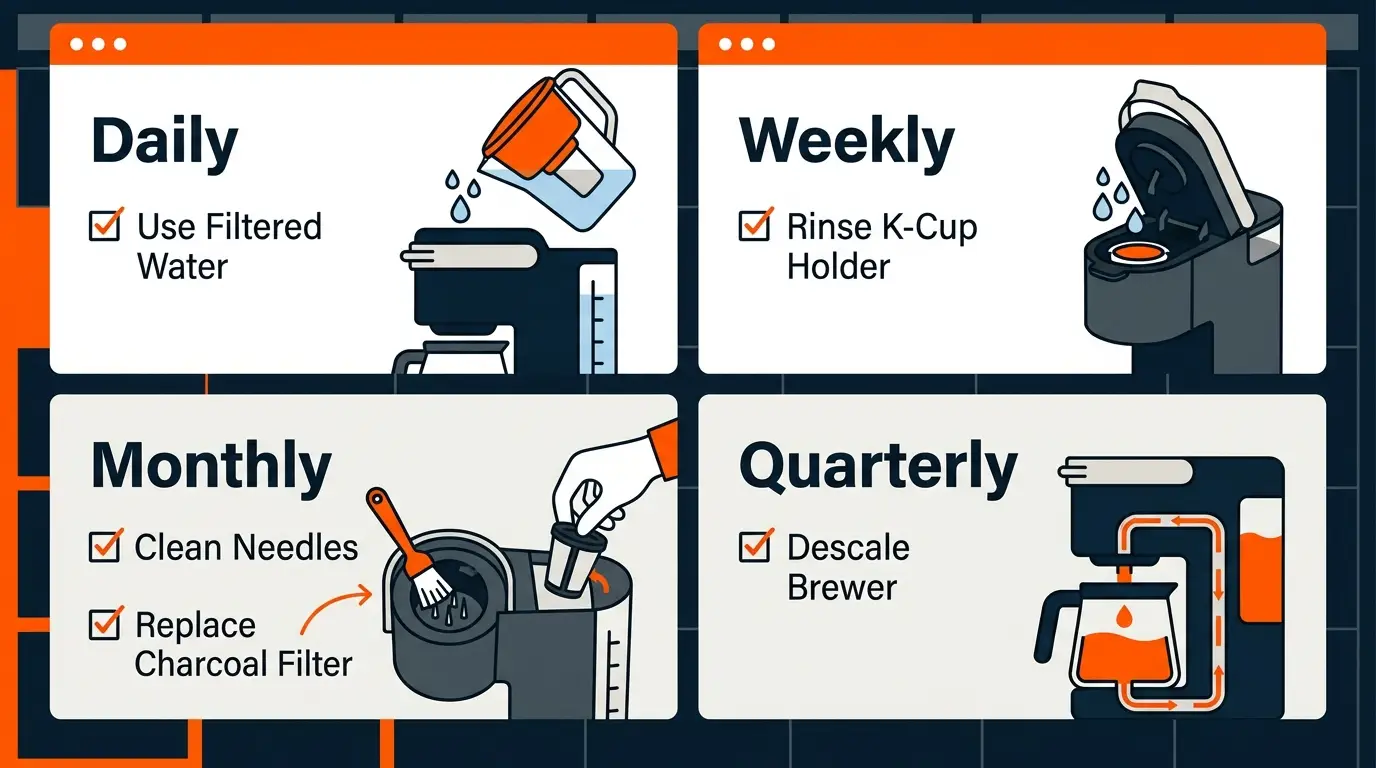
The best fix is the one you never need. A simple routine prevents most clogs and weak flow.
- Use filtered water if your tap is hard. This cuts scale and pump strain.
- Descale every 3 months. If you see white spots in your kettle, descale monthly.
- Swap the charcoal filter every 2 months. Old filters restrict flow.
- Rinse the K‑Cup holder weekly. Clean needles monthly or after a blowout pod.
- Empty and dry the reservoir if you won’t use the brewer for a week.
Make these steps a habit, and you will avoid another Keurig Coffee Maker Not Pumping Enough Water: Quick Fixes scramble. Your pump will last longer, and your cup size will stay true.
When to repair, call support, or replace
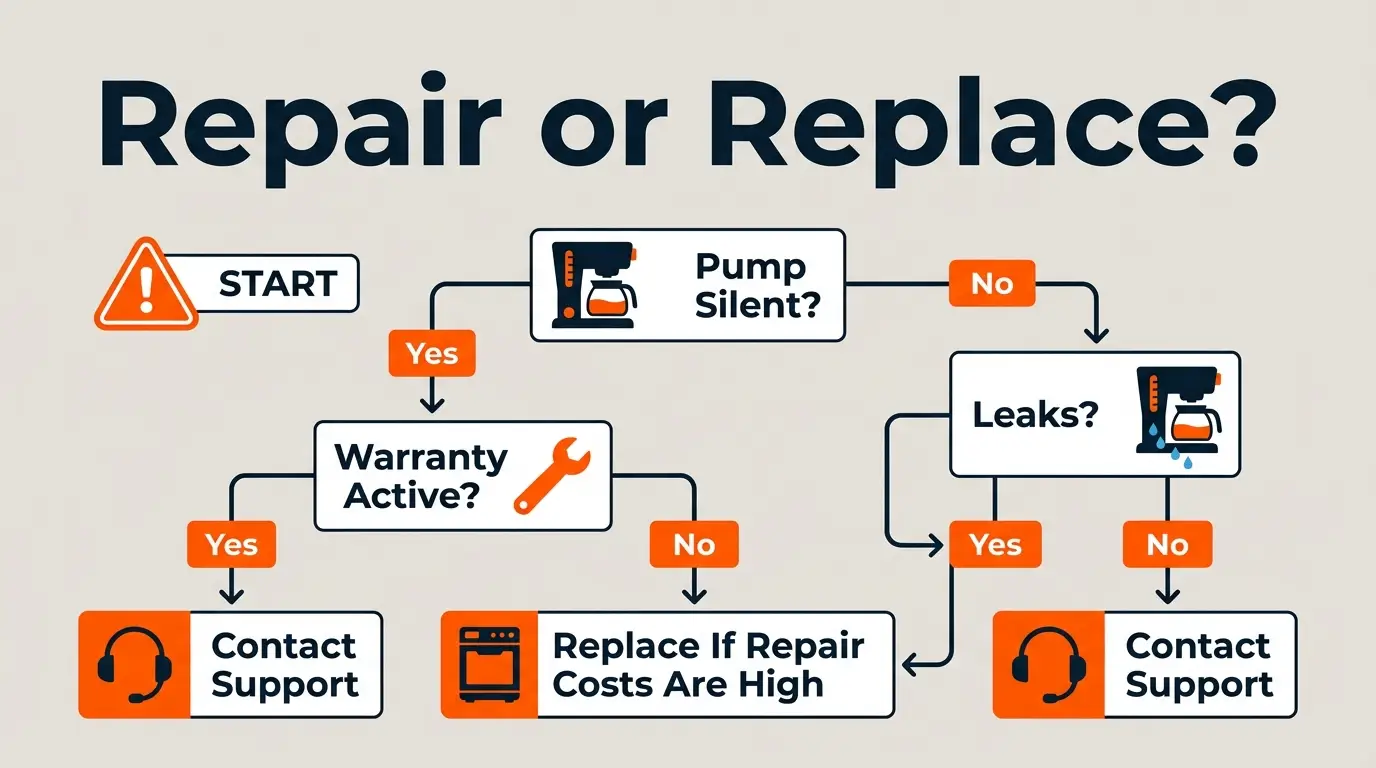
If the pump is silent, leaks appear under the brewer, or you get error lights after all steps, contact Keurig support. Many units carry a one‑year warranty. Opening the brewer can void that coverage.
A new pump or board is often not cost‑effective out of warranty. Consider a replacement if repair parts and labor approach half the price of a new unit. None of the Keurig Coffee Maker Not Pumping Enough Water: Quick Fixes will fix a dead pump, but they will rule out simple causes before you spend money.
If you live with very hard water, test it with a cheap strip kit. Using filtered water and steady descaling extends life and protects heat sensors, valves, and seals.
Frequently Asked Questions of Keurig Coffee Maker Not Pumping Enough Water: Quick Fixes
Why does my Keurig make a partial cup?
Mineral scale and clogged needles restrict flow. Start with needle cleaning and a full descale, then run water‑only cycles to confirm the fix.
Is vinegar safe to descale my Keurig?
Yes, white vinegar works if you rinse with two full tanks of water after. A branded descaling solution is faster and leaves less odor.
How do I know if the pump failed?
If there is no pump sound and no flow after priming and descaling, the pump may be dead. Contact support, especially if under warranty.
Can a bad charcoal filter cause low flow?
Yes. An old or swollen filter can choke the intake. Remove the filter and test a brew; replace it if flow improves.
How often should I clean the needles?
Monthly for most homes, or anytime you see grounds on the K‑Cup top. It takes one minute and prevents weak cups.
Do these steps apply to all Keurig models?
The basics do: needle cleaning, descaling, and priming help most units. Controls vary, but water paths and clogs behave the same.
Are Keurig Coffee Maker Not Pumping Enough Water: Quick Fixes safe for new machines?
Yes, these steps match standard care in manuals. They keep your warranty safe and prevent bigger issues.
Conclusion
You now have a simple plan to restore full cups fast. Clean the needles, descale well, prime the pump, and reset the basics. These steps fix most units I see at home and at work.
Put this guide to use today and save your morning routine. If you found this helpful, share it with a friend, subscribe for more home fixes, or leave a comment with your results.