Grind coarser, lower water temperature, shorten brew time, and use fresh beans.
If your cup turned harsh, you are not stuck with it. In this guide, I show you how to fix coffee taste bitter with clear steps you can use today. I have dialed in thousands of brews, from pour-over to espresso. I will help you decode the cause and make a smooth, sweet cup, fast.
Why coffee tastes bitter: the simple science
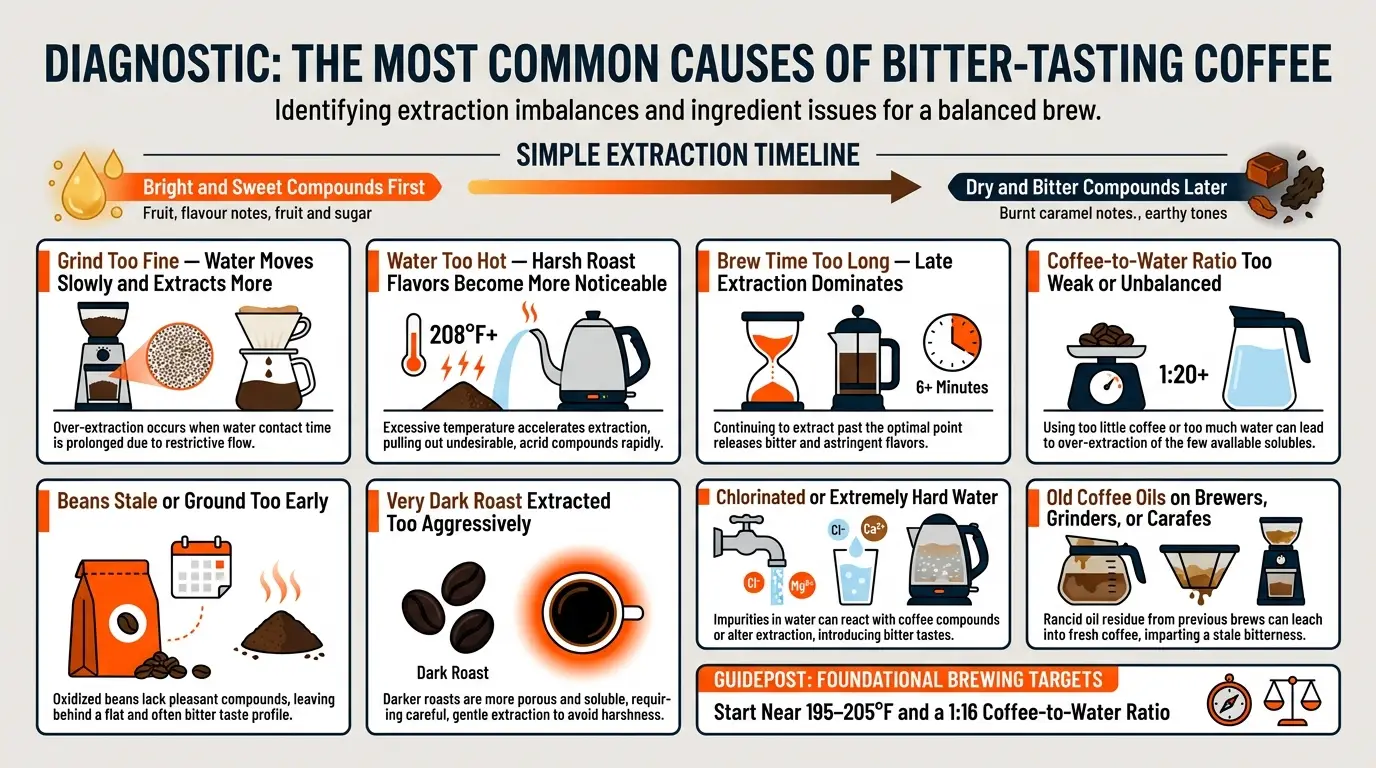
If you want to know how to fix coffee taste bitter, start with extraction. Bitter notes show up when hot water pulls too much from the grounds. This happens late in the brew, after the sweet acids and sugars come out. Over-extraction, very high heat, and stale beans make it worse.
Key reasons your coffee tastes bitter:
- Grind is too fine, so water moves slow and extracts harsh compounds.
- Water is too hot, often near a rolling boil, which scorches flavors.
- Brew time is too long, so the last, bitter bits dominate the cup.
- Coffee-to-water ratio is off, so the brew runs lean and bitter.
- Beans are stale or ground long ago, which flattens sweetness.
- Very dark roasts can taste ashy if extracted too much.
- Water quality is poor, with chlorine or extreme hardness.
- Gear is dirty, with built-up oils that taste rancid.
Helpful guideposts I use:
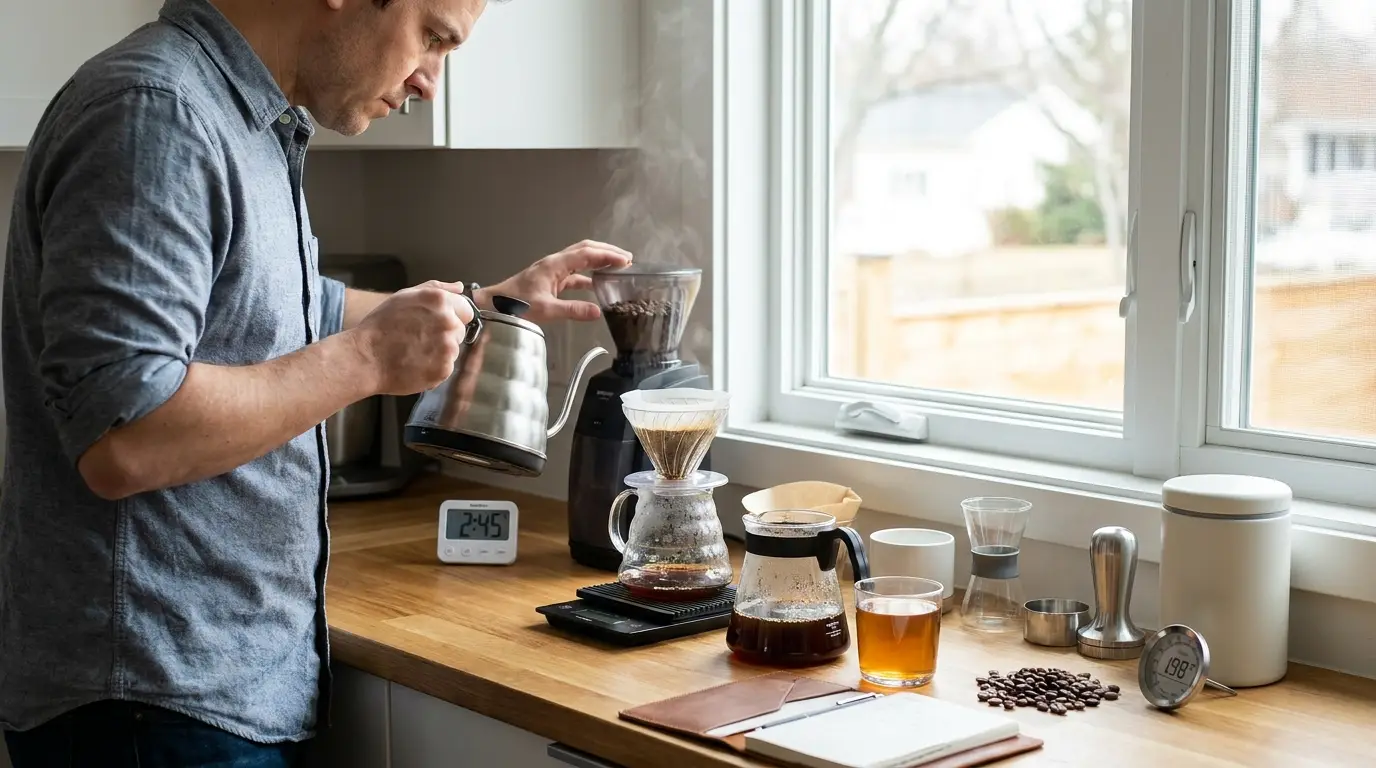
- Water temperature target is about 195 to 205°F for most methods. If bitterness is strong, try 190 to 200°F.
- Start with a 1:16 brew ratio. That is 1 gram coffee to 16 grams water.
- Aim for even flow and contact time. Avoid clogging or channeling.
Knowing these basics makes how to fix coffee taste bitter much easier.
Quick fixes for a bitter cup right now
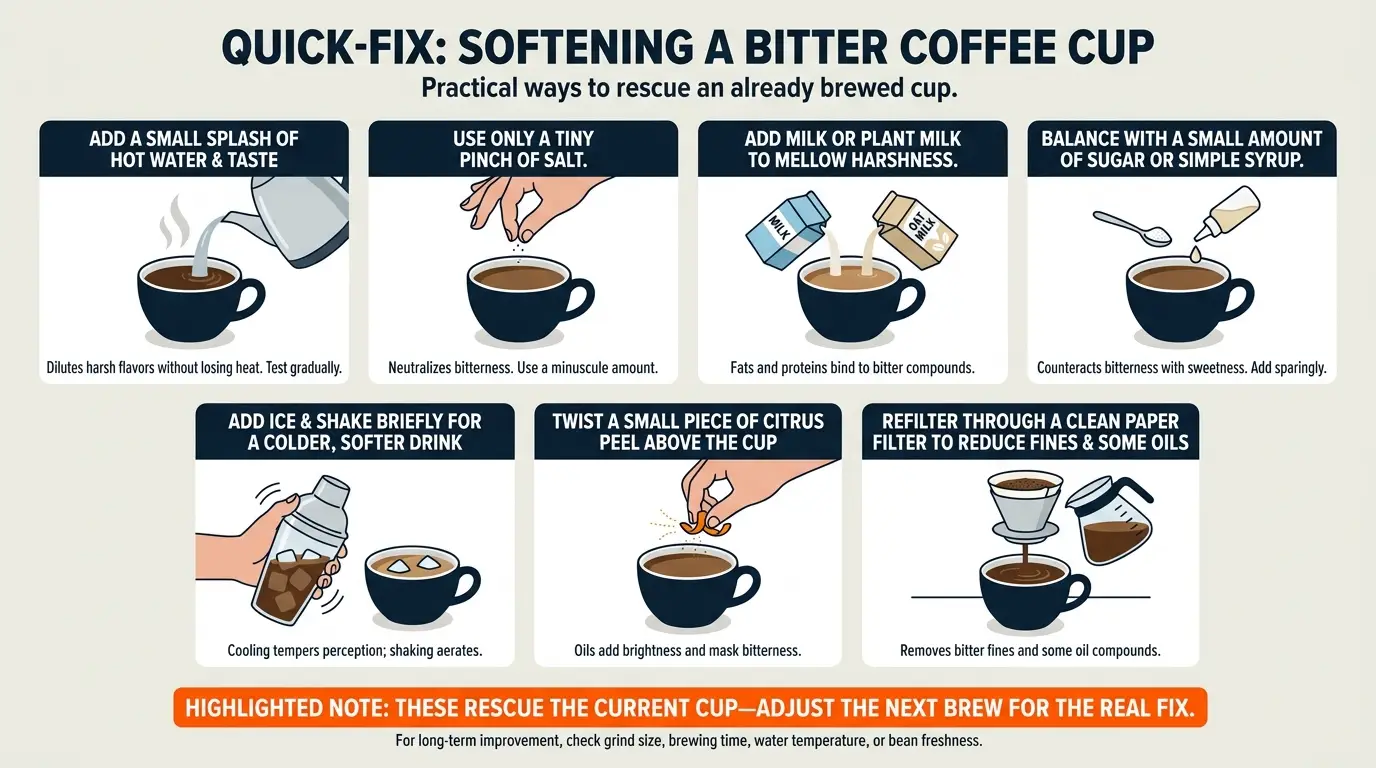
When a cup goes wrong, here is how to fix coffee taste bitter in seconds. These tricks save mornings.
Try these fast tweaks:
- Add a tiny pinch of salt. It does not make coffee salty. It softens harshness and lifts sweetness.
- Add hot water to dilute. Use a splash at a time and taste as you go.
- Add milk or a plant milk. Fats mellow bitter edges and add body.
- Add a bit of sugar or simple syrup. A small dose can balance the cup.
- Add ice and shake for 10 seconds. Cold dulls harsh notes and brightens aroma.
- Add a squeeze of citrus peel oil. Twist over the cup for a gentle zest.
- Refilter through a paper filter. This can catch some oils and fines.
These are stopgaps. Your next brew is where you truly learn how to fix coffee taste bitter for good.
Brew method fixes that work
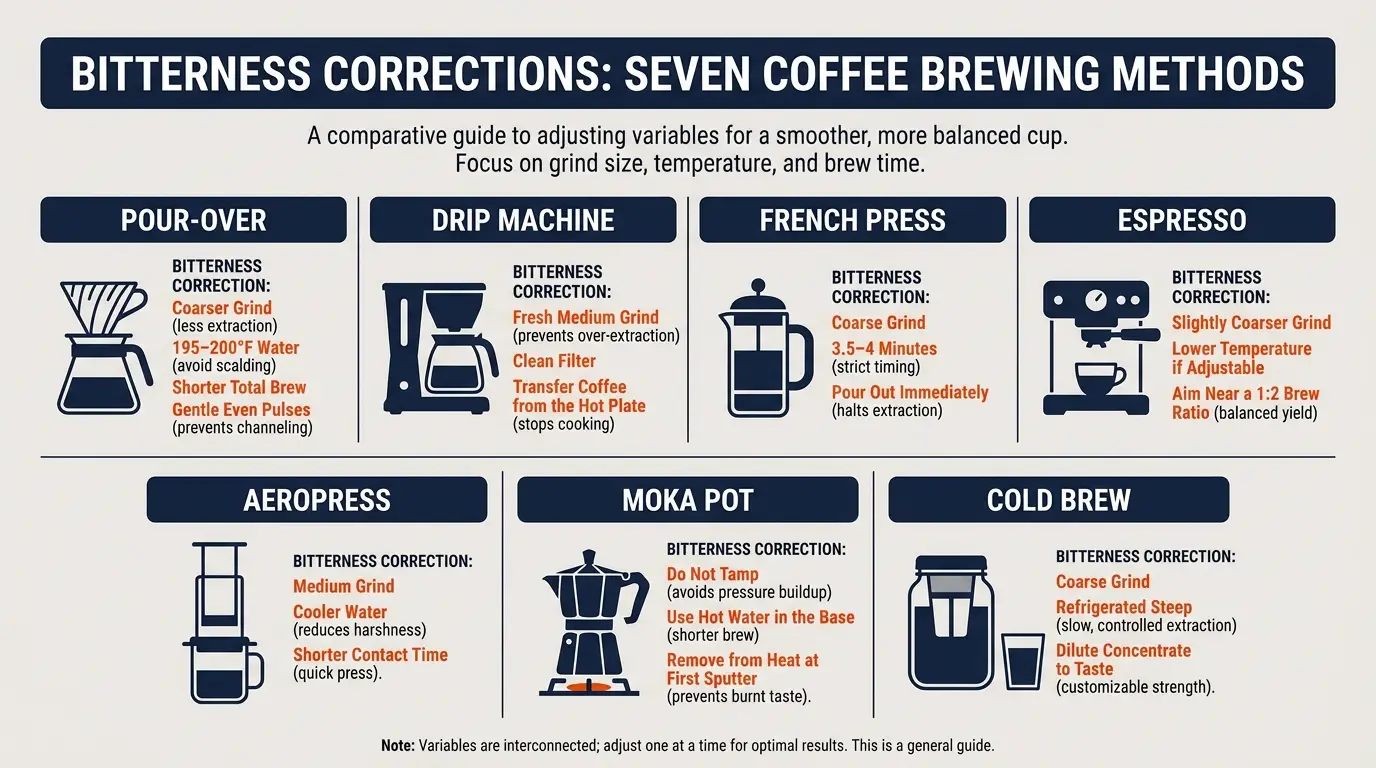
If you brew the same way each day, method tweaks can solve how to fix coffee taste bitter at the source.
Pour-over
- Grind a notch coarser and use 195 to 200°F water.
- Shorten total brew to about 2.5 to 3.5 minutes.
- Pour in gentle pulses and keep the bed flat to avoid channeling.
Drip machine
- Use fresh medium grind and a clean paper filter.
- If your machine runs hot, add cool water to the tank to hit 195 to 200°F.
- Do not leave coffee on a hot plate for long. Transfer to a thermal carafe.
French press
- Use a coarse grind and brew 3.5 to 4 minutes.
- Skim the floating oils and fines before plunging.
- Pour all the coffee out right away to stop extraction.
Espresso
- Lower brew temperature a bit if your machine allows it.
- Grind coarser and reduce shot time to 25 to 30 seconds.
- Use a 1:2 ratio, like 18 grams in for 36 grams out.
AeroPress
- Use medium grind and cooler water, about 175 to 185°F for a sweeter cup.
- Brew 1 to 2 minutes. If it is still bitter, shorten by 15 seconds.
- Try the inverted method to control contact time.
Moka pot
- Fill the basket loosely and do not tamp.
- Use hot water in the base to reduce harsh heat time.
- Pull from heat as soon as sputtering starts.
Cold brew
- Use a coarse grind and a 1:8 to 1:10 ratio.
- Steep 12 to 18 hours in the fridge, not on the counter.
- If it tastes dull and bitter, dilute and add a pinch of salt.
Apply these steps and you will master how to fix coffee taste bitter by method.
Dial in the four big variables
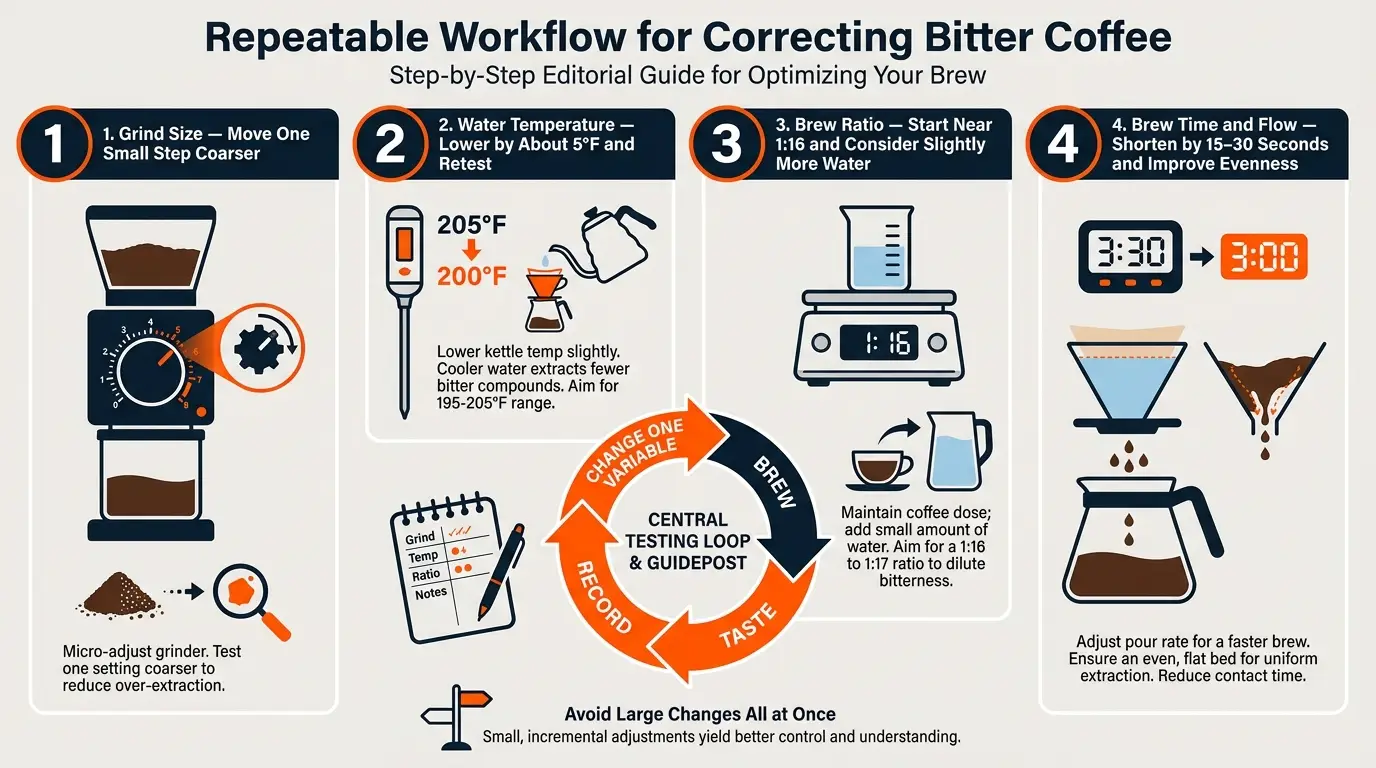
This is my simple path for how to fix coffee taste bitter in a repeatable way.
Step 1: Grind size
- If bitter, go coarser by one small step.
- Keep grinding changes small. Taste after each tweak.
- Aim for even particles. Avoid dust-like fines.
Step 2: Water temperature
- If bitter, drop 5°F and taste again.
- For kettles without a display, let boiling water sit 30 to 60 seconds.
Step 3: Brew ratio
- Start at 1:16. If bitter, use more water, like 1:17.
- Weigh both coffee and water for consistency.
Step 4: Time and flow
- If bitter, shorten brew time by 15 to 30 seconds.
- Fix uneven flow. Level the bed. Avoid pouring on the filter walls.
Follow this loop for two or three brews and log changes. This is how to fix coffee taste bitter without guesswork.
Choose and store beans the right way
Your beans set the ceiling for flavor. Better beans make how to fix coffee taste bitter much easier.
Picking beans
- Look for a recent roast date, ideally within 2 to 4 weeks.
- If you hate bitterness, try light to medium roasts.
- Choose origins known for sweetness, like Colombia or Ethiopia naturals.
Storing beans
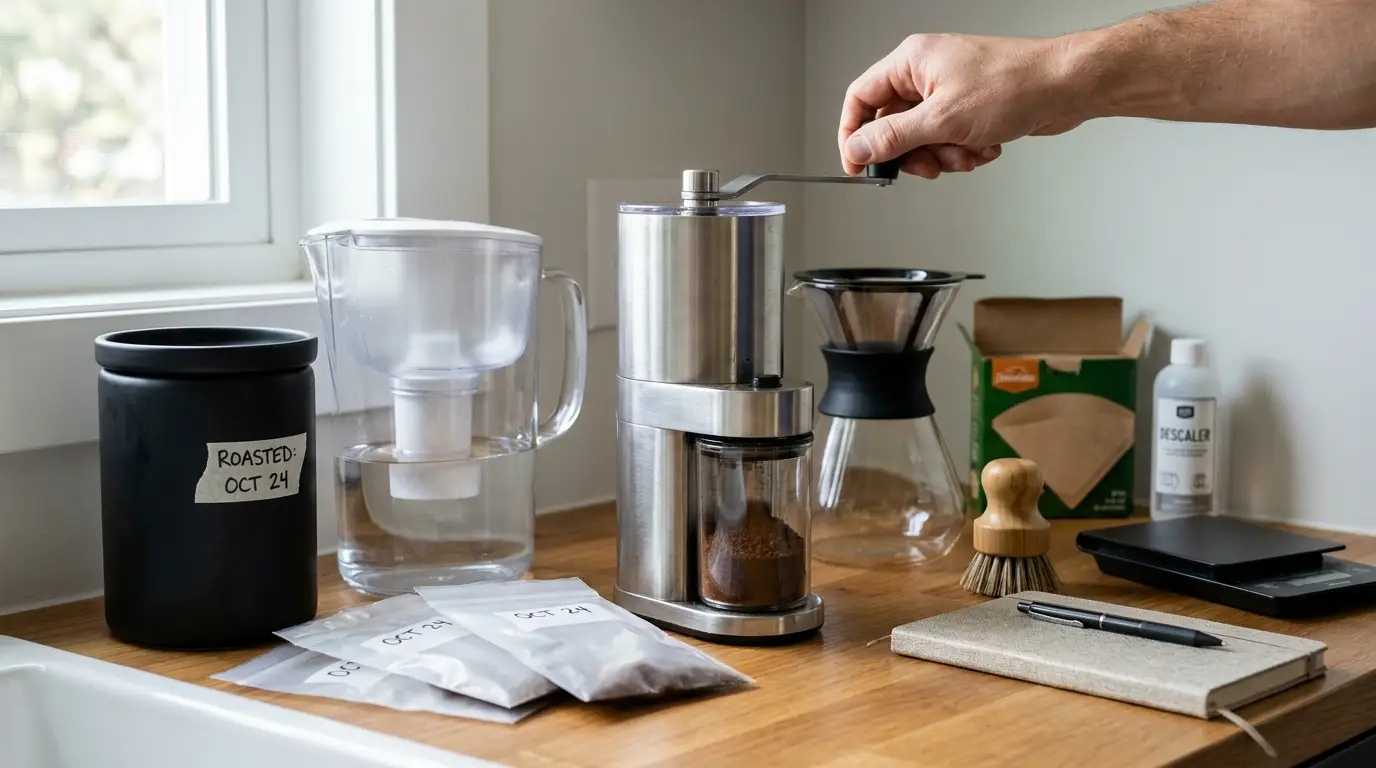
- Keep beans whole. Grind right before brewing.
- Store in an airtight, opaque container in a cool place.
- Freezing works if done right. Divide into small airtight packs. Do not refreeze thawed beans.
A note from my barista bench: old, pre-ground coffee is the top reason people ask me how to fix coffee taste bitter. Fresh grind is a game changer.
Water quality and clean gear
Better water and clean tools are quiet heroes in how to fix coffee taste bitter.
Water matters
- Use filtered water. Avoid chlorine. Aim for moderate hardness.
- If your water tastes good by itself, it is a good start for coffee.
Clean gear
- Rinse gear after each brew. Oils turn bitter as they age.
- Deep clean brewers and grinders weekly. Use coffee-safe cleaners.
- Descale machines on a set schedule if you have hard water.
One client swore their beans went bad overnight. We cleaned a rancid carafe and fixed the issue on the spot. Sometimes how to fix coffee taste bitter is simple housekeeping.
Common mistakes to avoid and pro tips
Dodging these traps will speed up how to fix coffee taste bitter.
Mistakes to avoid
- Grinding much too fine for your method.
- Using boiling water right off the stove.
- Letting coffee sit on heat after brewing.
- Brewing with stale or pre-ground coffee.
- Skipping regular cleaning.
Pro tips from daily practice
- Bloom freshly roasted coffee a bit longer to release gas.
- If your pour-over stalls, stir gently to free trapped air.
- For espresso, taste the shot, not only the crema, before judging.
A quick story: early in my career, I kept turning a sweet Guatemalan into a bully. The fix was easy. I lowered the kettle 10°F, went one click coarser, and shaved 20 seconds off the brew. The cup turned from bark to brown sugar. That is how to fix coffee taste bitter with small, smart moves.
A simple troubleshooting path
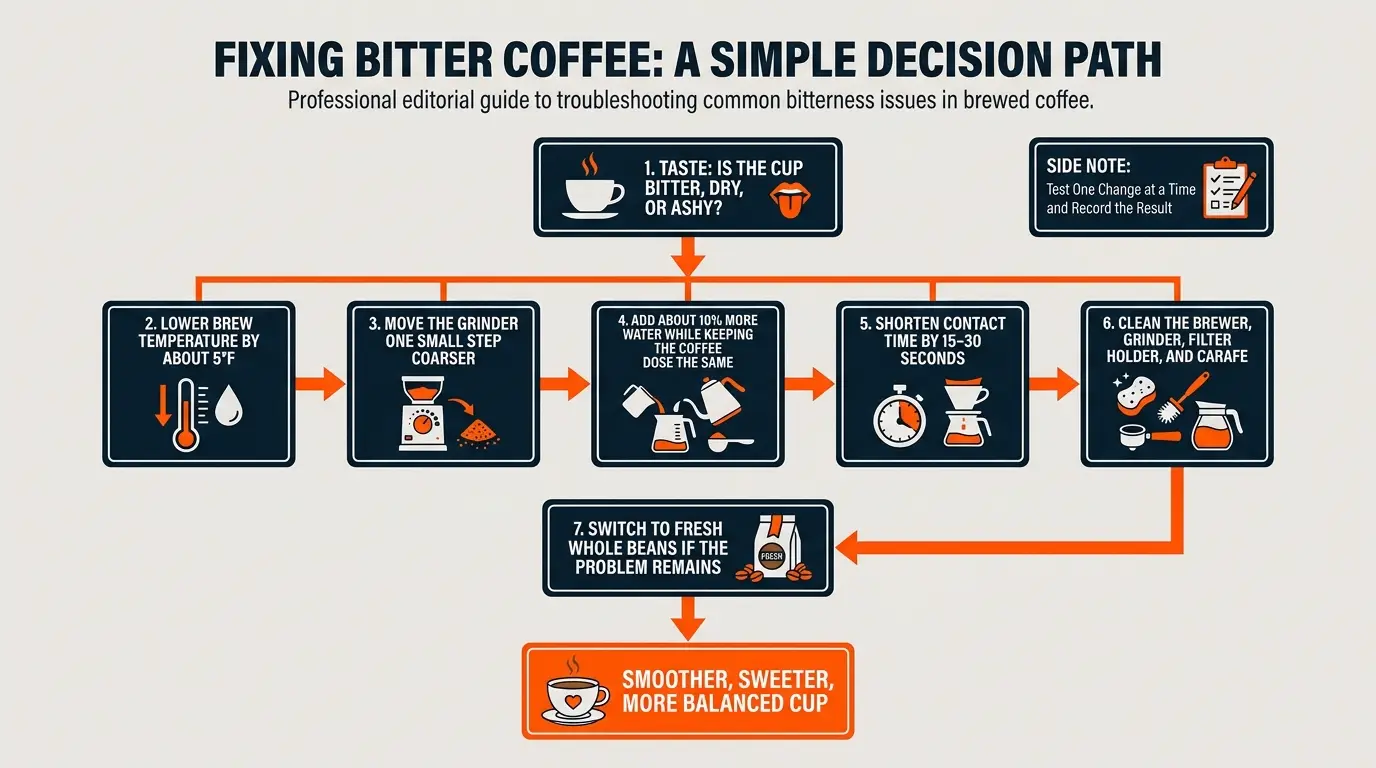
Use this fast path to lock in how to fix coffee taste bitter.
- Taste the cup. If it is bitter and dry, note it.
- Drop brew temperature by 5°F.
- Go one step coarser on the grinder.
- Add 10 percent more water to the same coffee dose.
- Shorten brew time by 15 to 30 seconds.
- Clean your gear before the next run.
- Switch to fresh, whole beans if all else fails.
Two or three loops through this path often solve it. Keep notes so wins stick. That is how to fix coffee taste bitter for good.
Frequently Asked Questions of How to Fix Coffee Taste Bitter
Why does my coffee taste bitter even with fresh beans?
Over-extraction is the usual cause. Try a coarser grind, cooler water, and a shorter brew time.
Can salt really fix bitter coffee?
Yes, a tiny pinch can mute harshness. It will not taste salty if you use less than a sixth of a teaspoon for a full pot.
What water temperature reduces bitterness best?
Aim for 195 to 200°F for most brews. If it is still bitter, try 190 to 195°F and taste again.
Do darker roasts always taste more bitter?
Not always, but they can if brewed hot and long. Use cooler water and a shorter time for dark roasts.
Is my grinder making coffee bitter?
It can if it makes many fines. A better burr grinder gives more even particles and a cleaner taste.
How do I fix bitter espresso shots?
Lower temperature slightly, grind a bit coarser, and aim for a 25 to 30 second shot. Keep the puck level to avoid channeling.
Does water quality change bitterness?
Yes. Chlorine and extreme hardness can push harsh notes. Use filtered water that tastes clean on its own.
Conclusion
You can turn a bitter cup into a balanced brew with a few simple moves. Adjust grind, drop water heat, shorten brew time, and use fresh, well-stored beans. Clean water and clean tools seal the deal.
Save this guide, test one change at a time, and track what works. That is how to fix coffee taste bitter with confidence. Want more tips like this? Subscribe, share your results, or ask a question in the comments.