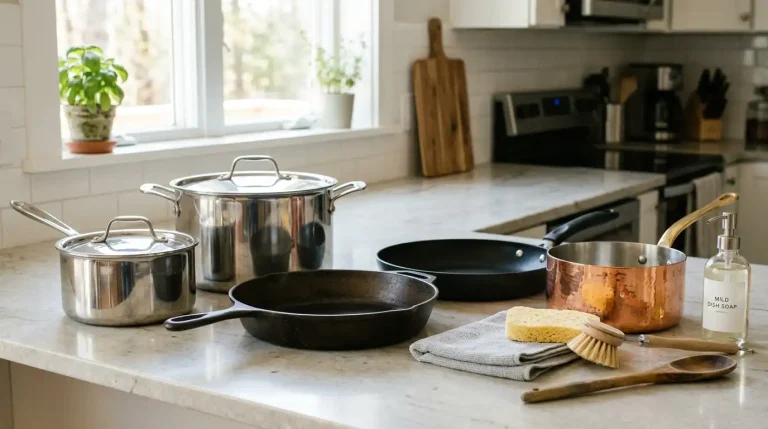
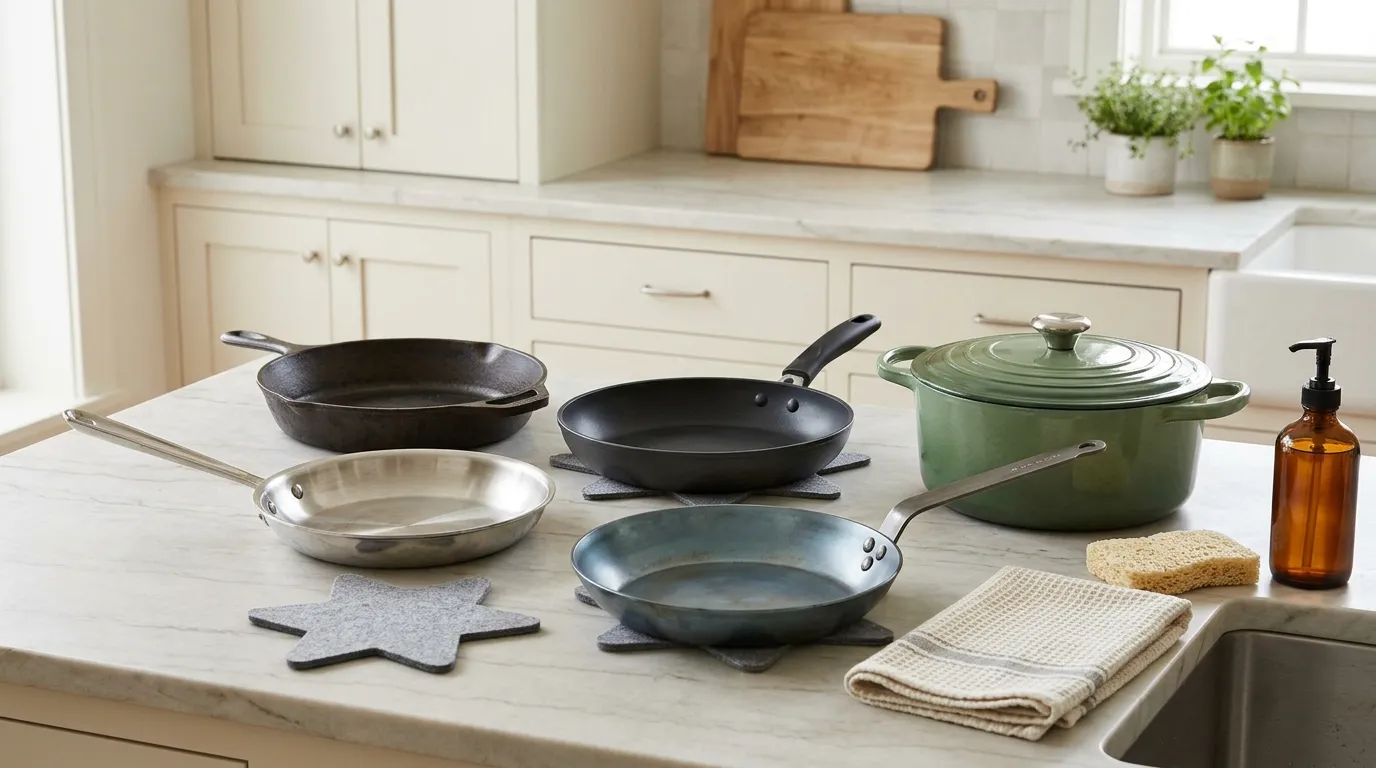
A good cookware care routine keeps pots and pans safer, cleaner, and useful for longer. In a U.S. kitchen, the best routine is simple: clean each pan based on its material, avoid heat and tools that can damage the surface, dry cookware fully, and follow the maker’s care instructions when they differ.
This guide covers stainless steel, nonstick, cast iron, enameled cast iron, carbon steel, copper, aluminum, and glass cookware. It also explains how to remove stuck food, prevent rust, handle stains, and know when a pan should be replaced.
The Basic Cookware Care Routine
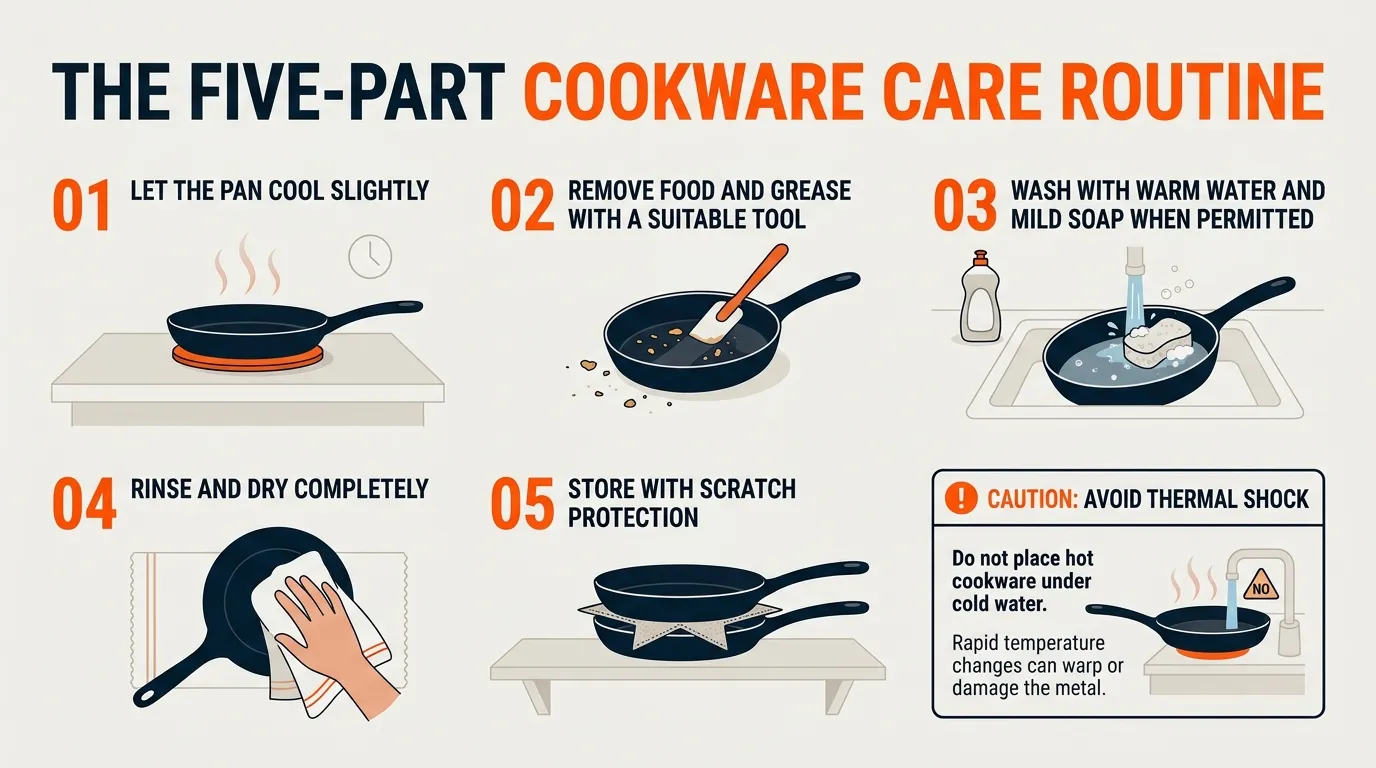
Most cookware needs the same five-part routine:
- Let the pan cool slightly.
- Remove food and grease with the right tool.
- Wash with warm water and mild dish soap when allowed.
- Rinse and dry the pan fully.
- Store it so the cooking surface does not get scratched.
Do not place a very hot pan under cold water. A fast temperature change can warp some pans, crack glass cookware, or damage an enamel coating.
Step 1: Remove food before it dries
Wipe out loose oil and food with a paper towel or soft cloth. Do not pour large amounts of grease down the drain. Let the grease cool, then place it in the trash or follow your local waste rules.
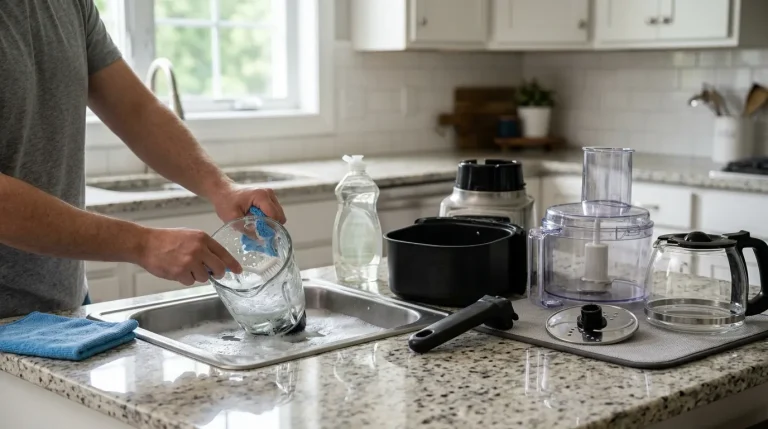
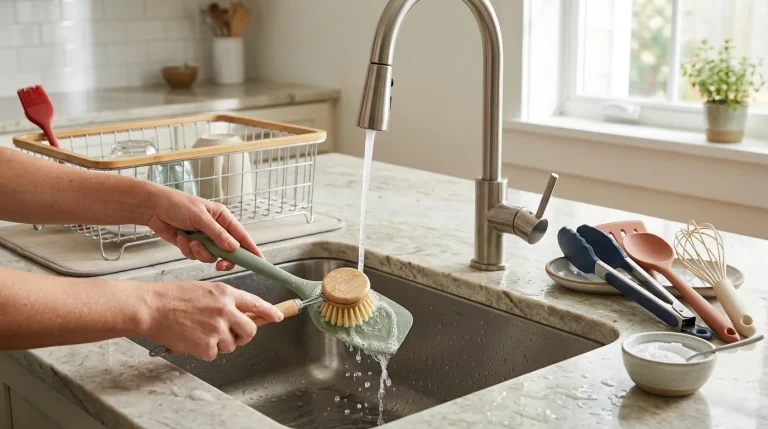
For stuck food, add warm water and let the pan soak for a short time. A soft nylon pad, sponge, or pan-safe brush usually works better than forceful scrubbing.
Step 2: Match the cleaner to the pan
Use mild dish soap for most stainless steel, enameled, aluminum, and nonstick cookware. Avoid strong abrasives unless the manufacturer says they are safe.
Baking soda can help lift cooked-on food from many hard surfaces. Make a paste with a little water, apply it to the spot, and rub gently. Do not use this method on a delicate nonstick surface unless the care guide allows it.
Step 3: Dry every pan completely
Water left on cookware can cause rust on cast iron, carbon steel, and some steel handles or rivets. Dry the pan with a towel. For cast iron and carbon steel, place the pan over low heat for a few minutes to remove hidden moisture, then apply a very thin layer of oil if needed.
Step 4: Store pans with protection
Avoid sliding bare pans across one another. Use pan protectors, a clean dish towel, or a paper plate between stacked cookware. Hang pans only when the hook and handle can support the weight safely.
How to Care for Different Cookware Materials
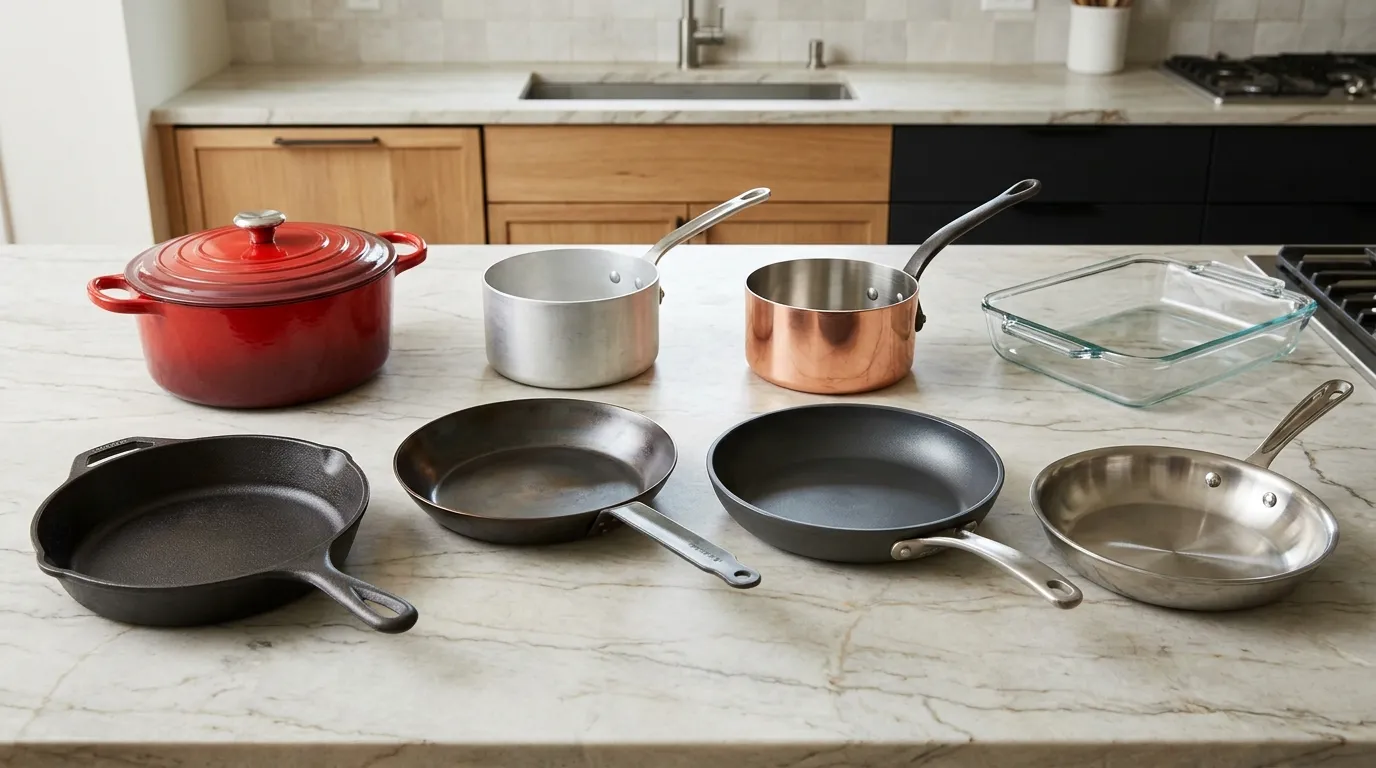
The material matters more than the brand. A method that works for stainless steel may ruin nonstick coating or remove the seasoning from cast iron.
| Cookware type | Best cleaning method | Avoid | Main care goal |
|---|---|---|---|
| Stainless steel | Mild soap, soft sponge, stainless-safe cleaner | Chlorine bleach, harsh steel wool | Prevent stains and overheating |
| Nonstick | Hand wash with soft sponge | Metal tools, high heat, abrasive pads | Protect the coating |
| Cast iron | Brief wash, dry at once, light oil | Long soaking, dishwasher, air drying | Prevent rust and maintain seasoning |
| Enameled cast iron | Mild soap, soft or nylon scrubber | Thermal shock, harsh abrasives | Protect the enamel |
| Carbon steel | Wash briefly, dry, oil lightly | Long soaking, dishwasher | Maintain seasoning |
| Aluminum | Mild soap and soft sponge | Strong alkalis, rough scouring | Prevent discoloration and scratches |
| Copper | Gentle wash; polish only when needed | Abrasive cleaners and rough pads | Protect the finish and lining |
| Glass | Mild soap and nonabrasive sponge | Thermal shock and sudden heat changes | Prevent cracks and clouding |
Stainless steel cookware
Stainless steel is durable, but food can stick when the pan is too cold, too hot, or not properly oiled. Let the pan preheat over medium heat, add oil, then add dry food. This can reduce sticking and make cleanup easier.
For browned food, cover the bottom with warm water and simmer it for a few minutes. Let the pan cool enough to handle, then loosen the residue with a wooden spoon or nylon scraper.
White spots often come from minerals in water. A small amount of diluted white vinegar can help dissolve these spots. Rinse the pan well afterward. Do not mix vinegar with bleach or other cleaners.
Rainbow-colored marks are usually heat discoloration, not a sign that the pan has failed. A stainless-steel cleaner may remove them, but test the cleaner on a small area and follow its label.
Nonstick cookware
Wash nonstick pans by hand with warm water, mild dish soap, and a soft sponge. Even when a pan is labeled dishwasher-safe, repeated dishwasher cycles can shorten the life of some coatings, handles, and exterior finishes.
Use wood, silicone, or plastic utensils made for high heat. Avoid metal tools unless the manufacturer clearly states that they are safe. Do not cut food in the pan.
Keep nonstick cookware away from very high heat. Never preheat an empty nonstick pan for a long time, and do not use it under a broiler unless the product instructions specifically allow it.
Replace a nonstick pan when the coating is badly peeling, deeply scratched, or flaking. A small surface mark does not always mean immediate danger, but it can signal that the pan will perform poorly and needs replacement soon.
Cast iron cookware
Traditional cast iron develops a layer called seasoning. Seasoning is a baked-on layer of oil that helps protect the iron and improves release.
Clean cast iron soon after use. Wash it with warm water and a small amount of dish soap if needed. Current guidance from major cast-iron makers generally allows mild soap, but long soaking and dishwasher cleaning can encourage rust.
Dry the pan fully. If the surface looks dull or dry, rub in a very thin layer of cooking oil. Too much oil leaves a sticky coating. Heat the pan briefly until the oil looks nearly dry, then let it cool before storage.
Do not store acidic foods, such as tomato sauce, in bare cast iron for long periods. A short cooking time is often fine, but extended contact can affect the seasoning and may give food a metallic taste.
Enameled cast iron
Enameled cast iron has a glass-like coating over the iron. It does not need seasoning, but the enamel can chip or crack if handled roughly.
Use mild soap and a soft sponge or nylon pad. For stains, simmer water with a little baking soda, let the pan cool, and clean it gently. Do not drop the cookware or strike the rim against a hard surface.
Avoid sudden temperature changes. Do not move an extremely hot enameled pan directly onto a cold, wet counter. Use a dry trivet or heat-safe pad.
Carbon steel cookware
Carbon steel needs care similar to cast iron, but it usually heats faster and has a smoother surface. Wash it briefly, dry it right away, and apply a thin film of oil when the surface looks dry.
New carbon steel may have a factory coating or wax that must be removed before seasoning. Follow the product instructions because the required process differs by maker.
Acidic foods can weaken fresh seasoning. Build the surface slowly with regular cooking, proper drying, and thin layers of oil rather than thick, sticky coats.
Aluminum cookware
Uncoated aluminum is light and conducts heat well. Wash it with mild soap and a soft sponge. Strong alkaline cleaners can darken or damage the surface.
Do not use rough steel wool unless the maker allows it. Scratches can make the pan harder to clean and may affect its appearance.
Some aluminum pans have a nonstick coating or anodized finish. In those cases, follow the coating instructions rather than treating the pan as plain aluminum.
Copper cookware
Many copper pans have a stainless steel or tin lining. Wash the inside gently and avoid rough pads that can damage the lining.
Copper develops a natural dark or brown patina over time. That change is usually cosmetic. Use a copper polish only when you want to restore the shine, and keep polish away from the cooking surface unless the label says it is food-safe and suitable for that lining.
Glass cookware
Glass baking dishes and pans need special care because thermal shock can cause cracks. Do not place a hot glass dish on a cold or wet surface. Do not pour cold liquid into hot glass cookware.
Check the product instructions before using glass cookware on a stovetop. Many glass baking dishes are not made for direct burner heat.
A Weekly and Monthly Cookware Maintenance Schedule
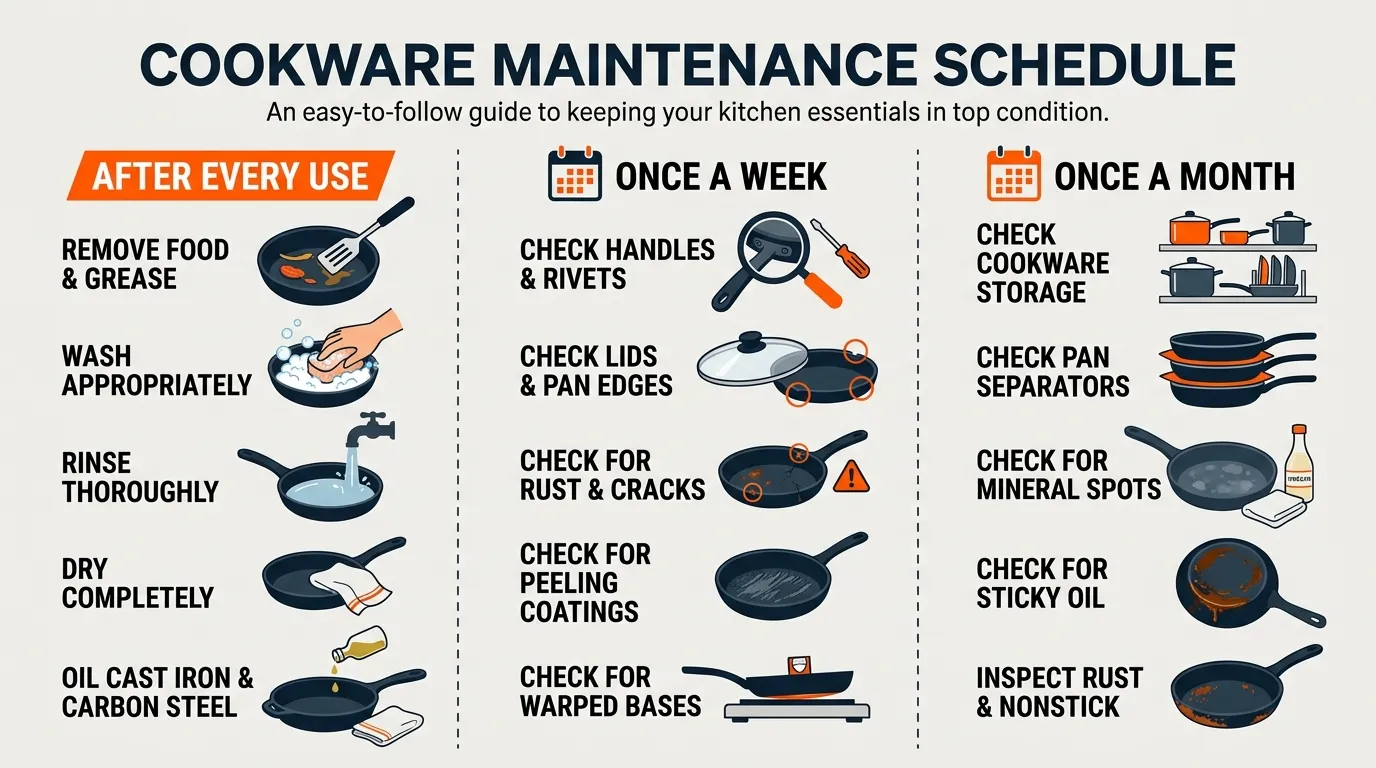
A daily wash removes food, but regular inspection prevents small problems from becoming expensive ones.
After every use
- Remove food and excess grease.
- Wash the pan using its material-safe method.
- Rinse away soap.
- Dry it fully.
- Check for leftover residue before storage.
For cast iron and carbon steel, add a very thin oil layer when the surface appears dry or begins to look uneven.
Once a week
Inspect handles, rivets, lids, and pan edges. Look for:
- Loose handles
- Wobbling lids
- Cracks or chips
- Peeling coatings
- Rust spots
- Grease trapped around rivets
- Warped bases
Clean the area around handles and rivets with a small brush. Food trapped there can create odors and hard buildup.
Once a month
Review your cookware storage. Remove pans you no longer use and check whether stacked cookware is rubbing together. Wash removable silicone or rubber parts according to their instructions.
For stainless steel, remove mineral spots if they are building up. For cast iron and carbon steel, check for rust and sticky oil. For nonstick pans, inspect the coating under good light.
A maintenance calendar is useful if you cook often. A short check once each month can prevent rust, loose hardware, and surface damage.
How to Remove Stuck Food, Burn Marks, and Rust
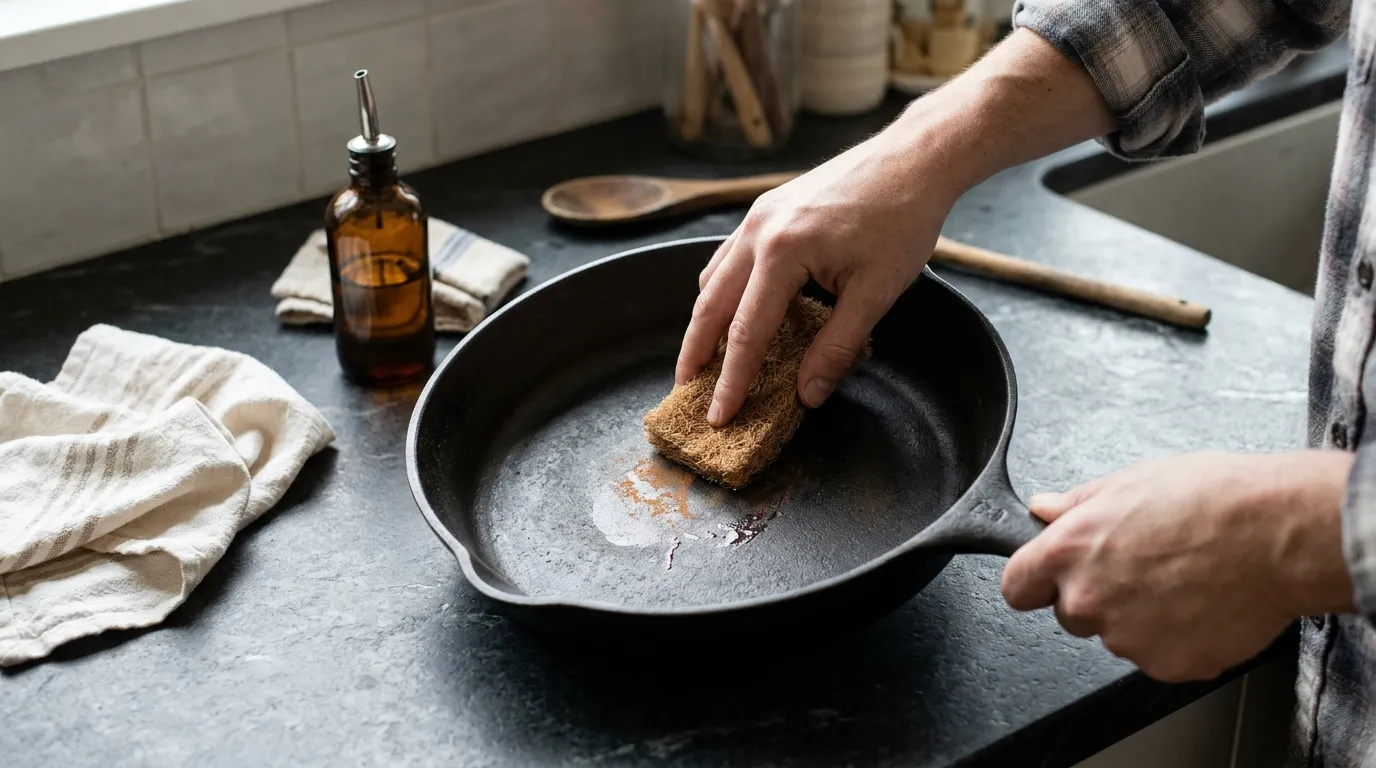
Use the least aggressive method first. Strong scrubbing can turn a small stain into permanent surface damage.
Stuck food on stainless steel
- Add enough warm water to cover the stuck area.
- Simmer the water for several minutes.
- Turn off the heat and let the pan cool.
- Lift the residue with a wooden spoon or nylon scraper.
- Wash and dry the pan.
For severe buildup, a baking soda paste may help. Do not use chlorine bleach, and never mix cleaning products.
Burn marks on the outside
Let the pan cool fully. Apply a cleaner made for the exterior material, then use a soft cloth or sponge. Follow the cleaner’s label and test a hidden spot first.
Do not assume that a product safe for stainless steel is safe for aluminum, enamel, or a coated exterior.
Rust on cast iron or carbon steel
Light surface rust can often be removed with a scrub pad or a small amount of coarse salt and oil. Rinse the pan, dry it over low heat, and restore the surface with a thin coat of oil.
Heavy rust, deep pitting, or a flaking surface may require more extensive restoration. If the metal is deeply damaged or the pan is cracked, replacement is safer than continued use.
White mineral deposits
Mineral deposits often appear as chalky white spots. Use diluted vinegar on compatible hard surfaces, then rinse well. Do not use vinegar on a surface when the cookware maker warns against acids.
Sticky oil on cast iron
Sticky seasoning usually comes from applying too much oil or not heating the pan enough after oiling. Scrub the sticky area gently, wash and dry the pan, then apply a much thinner coat.
The surface should look almost dry, not wet or glossy with oil.
Dishwasher, Heat, and Utensil Safety
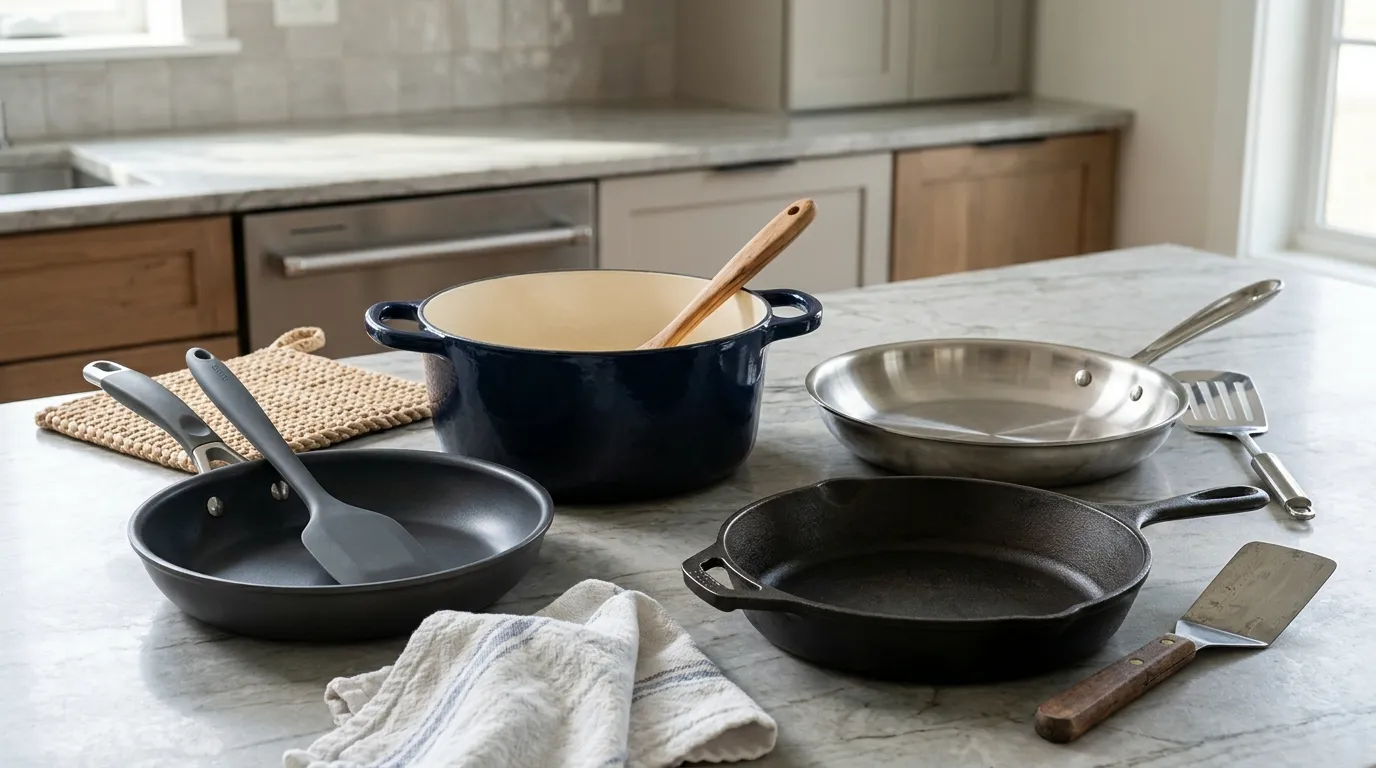
The word “dishwasher-safe” does not mean that every part of a pan will remain unchanged forever. Heat, detergent, water pressure, and repeated cycles can affect handles, coatings, aluminum, and polished finishes.
When the dishwasher may be suitable
A dishwasher may be acceptable when the cookware maker specifically allows it. This is more common for some stainless steel, glass, and certain hard-anodized products.
Before using the dishwasher, check:
- The pan’s care label
- The handle material
- The lid and seal material
- Whether the pan has a nonstick coating
- Whether the exterior can discolor
- Whether the pan fits without touching other items
When in doubt, hand washing is the lower-risk choice.
Avoid overheating empty pans
An empty pan can heat very quickly. This is especially important for nonstick cookware and thin aluminum pans. Use the lowest heat that can complete the cooking task, and do not leave a pan unattended on an active burner.
If a pan or coating gives off smoke, turn off the burner, open windows if safe, and leave the cookware alone until it cools. Do not add water to a hot oil fire. If oil catches fire, turn off the heat if you can do so safely, slide a lid over the pan, and call 911 if the fire does not go out at once.
Choose tools that match the surface
- Nonstick: silicone, wood, or heat-safe plastic
- Enameled cookware: wood, silicone, or plastic
- Stainless steel: most tools, but avoid cutting directly in the pan
- Cast iron: wood, metal, or silicone tools can be suitable
- Copper-lined cookware: use tools that will not damage the lining
Always follow the cookware maker’s instructions if they are stricter.
Common Cookware Care Mistakes
The most common mistakes come from using one cleaning method for every pan.
Soaking every pan overnight
Long soaking can encourage rust on cast iron and carbon steel. It can also allow water to enter handles, seams, or damaged areas.
Using metal scrubbers on coated cookware
Metal pads can scratch nonstick and enamel. Once the surface is damaged, food may stick more easily and cleaning becomes harder.
Adding cold water to a hot pan
This can warp metal and create thermal shock. Let the pan cool for a few minutes before washing it.
Leaving cookware wet
Air drying may be fine for some stainless steel, but it is a poor habit for cast iron and carbon steel. Dry these pans completely every time.
Using cooking spray on nonstick pans without checking the label
Some sprays can leave a sticky residue that builds up over time. Use the fat and heat level recommended by the cookware maker.
Stacking pans without protection
Even durable cookware can develop scratches when metal surfaces rub together. Use separators, especially for coated pans and enamel.
Treating all discoloration as damage
A rainbow mark on stainless steel, a dark patina on copper, or a darker cast-iron surface may be cosmetic. Check for cracks, peeling, deep pits, and loose parts before deciding that a pan is unsafe.
When Should You Replace Cookware?
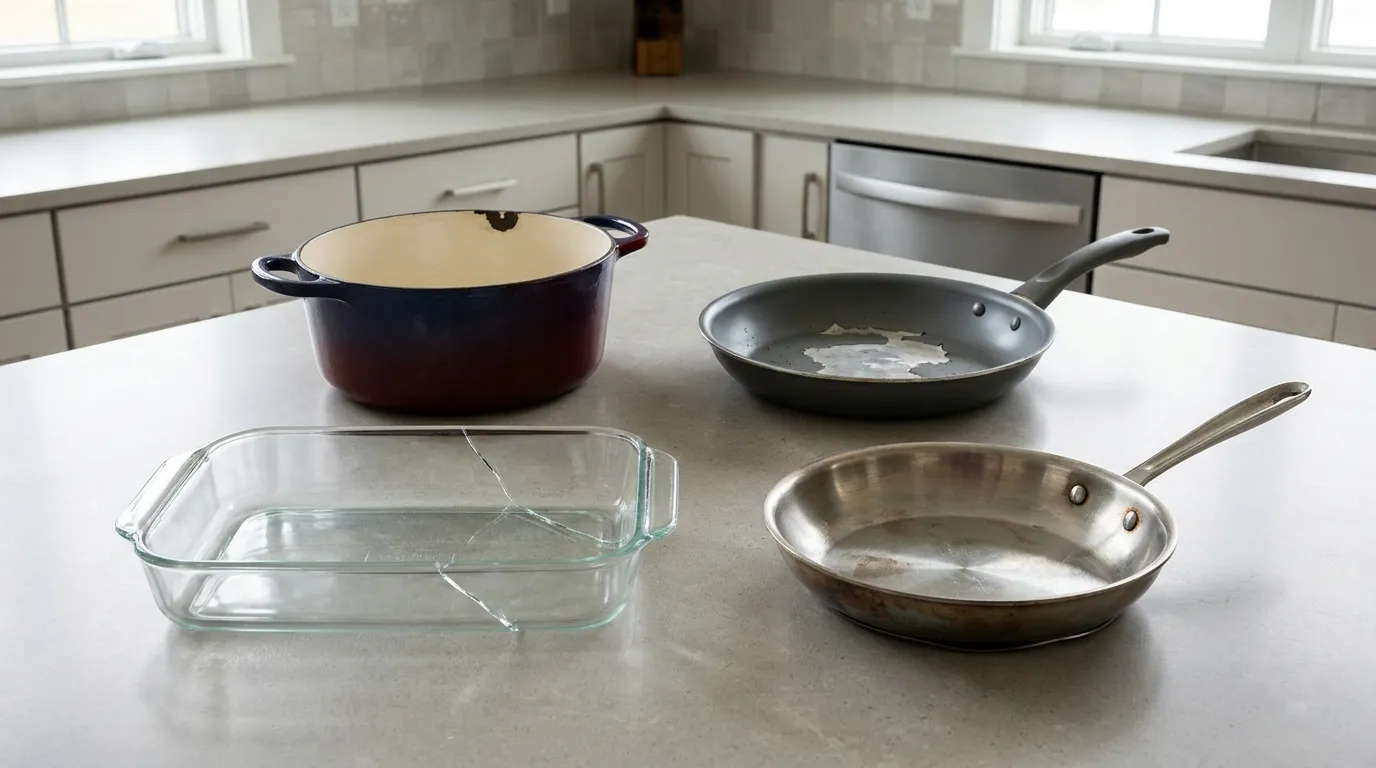
Replace cookware when damage affects safe use, cleaning, or temperature control.
Consider replacing a pan if it has:
- A cracked body or lid
- A loose handle that cannot be repaired
- Deep pits or severe corrosion
- A badly warped base
- Peeling or flaking nonstick coating
- Large chips in enamel near the cooking surface
- A lining that is worn through
- A lid that no longer fits safely
A stained stainless steel pan may still work well. A rusty cast-iron pan may be restorable if the metal remains sound. A chipped enamel pan needs closer inspection because chips can expand and expose the iron beneath.
Follow the maker’s warranty or repair instructions for high-value cookware. Do not keep using a pan with structural damage simply because it still heats food.
A Simple Cookware Care Checklist
Use this short checklist after cooking:
- Let the pan cool enough to wash safely.
- Remove grease and loose food.
- Use a cleaner and scrubber suited to the material.
- Avoid long soaking unless the maker permits it.
- Rinse away all soap or cleaner.
- Dry the pan fully.
- Oil cast iron or carbon steel when needed.
- Store pans with a soft separator.
- Inspect coatings, handles, and rims regularly.
The right routine should feel easy. If a care method takes too much force, heat, or harsh cleaner, stop and check the cookware instructions.
Frequently Asked Questions
Can I use dish soap on cast iron?
Yes, a small amount of mild dish soap is generally acceptable for modern cast iron. The key risks are long soaking, dishwasher cleaning, and leaving the pan wet. Dry it fully and apply a very thin layer of oil when needed.
How do I clean a nonstick pan without damaging it?
Use warm water, mild dish soap, and a soft sponge. Avoid metal tools, abrasive pads, high heat, and cutting food in the pan. Do not scrub hard to remove food; soak briefly and loosen it gently.
Why does my stainless steel pan turn rainbow-colored?
Heat can create a rainbow or blue tint on stainless steel. It is usually cosmetic. A stainless-steel cleaner or diluted vinegar may reduce the discoloration, but the pan should be rinsed well after cleaning.
Is it safe to put cookware in the dishwasher?
Only when the product instructions allow it. Dishwasher use can affect nonstick coatings, aluminum, handles, seals, and polished finishes even when the pan remains usable.
How often should I season cast iron?
Season cast iron whenever the surface looks dry, rough, or prone to rust. A thin coat of oil after cleaning is often enough for routine care. Full oven seasoning is usually needed after stripping rust, removing damaged seasoning, or restoring a neglected pan.
Conclusion: Build a Routine That Fits the Pan
A reliable cookware care routine has four habits: use the right cleaner, control heat, dry cookware completely, and protect surfaces during storage. Stainless steel, nonstick, cast iron, enamel, carbon steel, copper, aluminum, and glass each need slightly different treatment.
Start by sorting your cookware by material. Then place a soft sponge, mild dish soap, nylon scraper, clean towels, and pan protectors where they are easy to reach. Check the manufacturer’s instructions whenever dishwasher use, oven temperature, coating damage, or a special finish is involved.