
The best way to clean silicone utensils is to wash them with warm water, mild soap, and a soft brush.
Silicone tools are flexible, heat resistant, and gentle on nonstick pans, but they can hold onto grease, food smells, and stains. Learning how to clean silicone utensils properly helps protect their surface, extend their life, and keep your kitchen more hygienic. This guide covers daily washing, dishwasher use, deep cleaning, odor removal, and common mistakes.
Why silicone utensils need careful cleaning
Food-grade silicone is nonporous, so food should not soak deeply into the material. However, grease can cling to its slightly soft surface. Tomato sauce, curry, garlic, fish, and cooking oil may also leave color or odor behind.
Silicone spatulas and tongs often have seams, ridges, or removable heads. These areas can trap food particles. If they stay damp, they may also develop a stale smell.
Knowing how to clean silicone utensils properly is useful because clean tools support safer food preparation. The U.S. Food and Drug Administration sets standards for materials that contact food, but even approved silicone needs proper washing and care.
A quick rinse is not enough after cooking oily food. Think of silicone like a soft sponge with a smooth face: the surface looks clean, but grease may still remain unless soap breaks it down.
What you need to clean silicone utensils
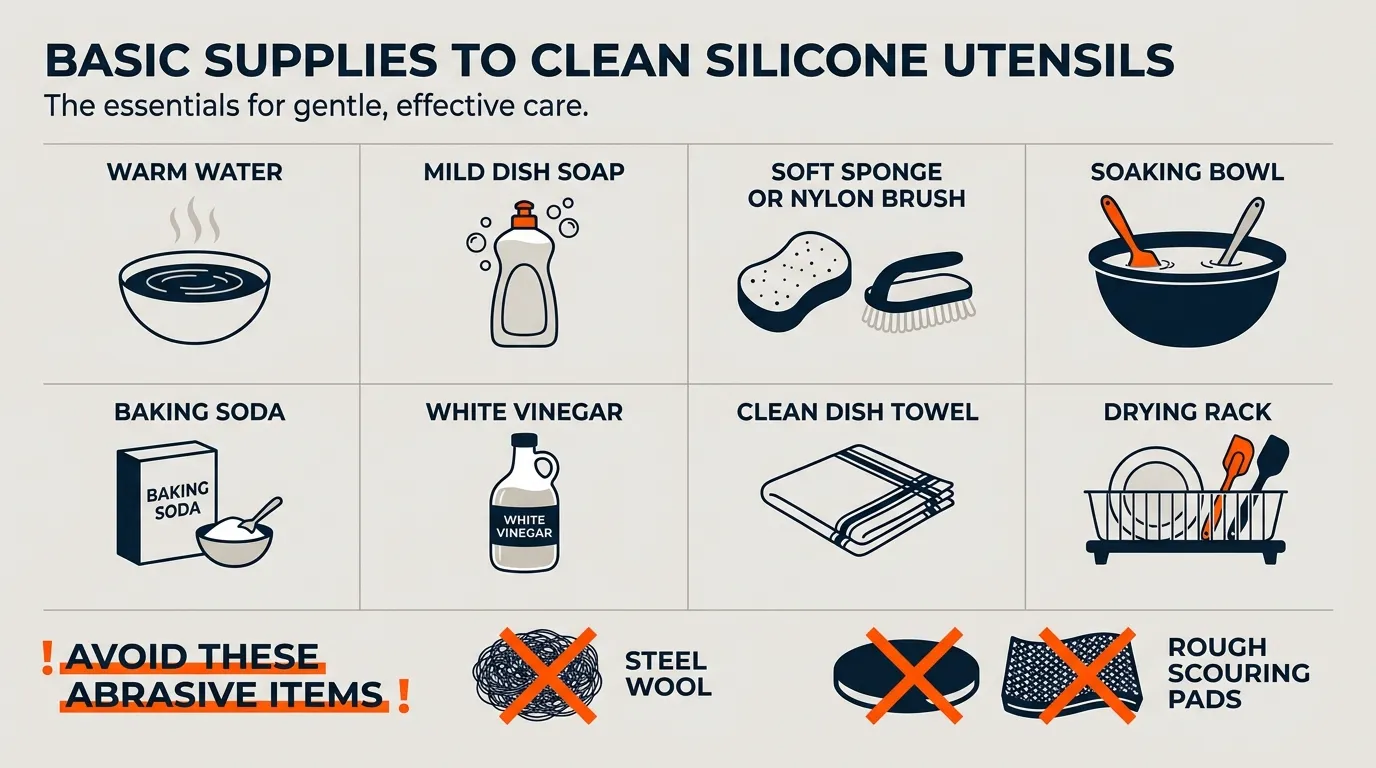
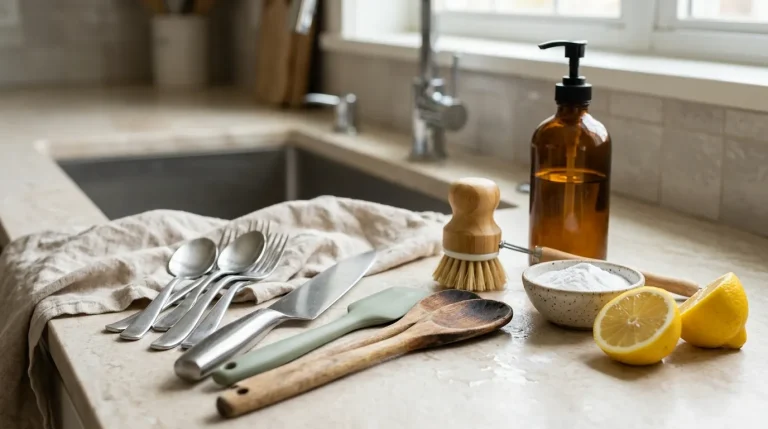
Most silicone utensils need only a few simple supplies. You do not need harsh chemicals or special kitchen equipment.
Gather these items:
• Warm water
• Mild dish soap
• A soft sponge or nylon brush
• A clean dish towel or drying rack
• Baking soda for stubborn smells
• White vinegar for some odor problems
• A clean bowl or sink for soaking
Choose a mild dish soap made for washing dishes by hand. Avoid steel wool, rough scouring pads, and abrasive powders. They may scratch attached handles or damage printed markings.
Before cleaning, check whether the silicone part comes off the handle. A removable head needs extra attention around the connection point. This is one of the most important details when learning how to clean silicone utensils properly.
How to clean silicone utensils properly by hand
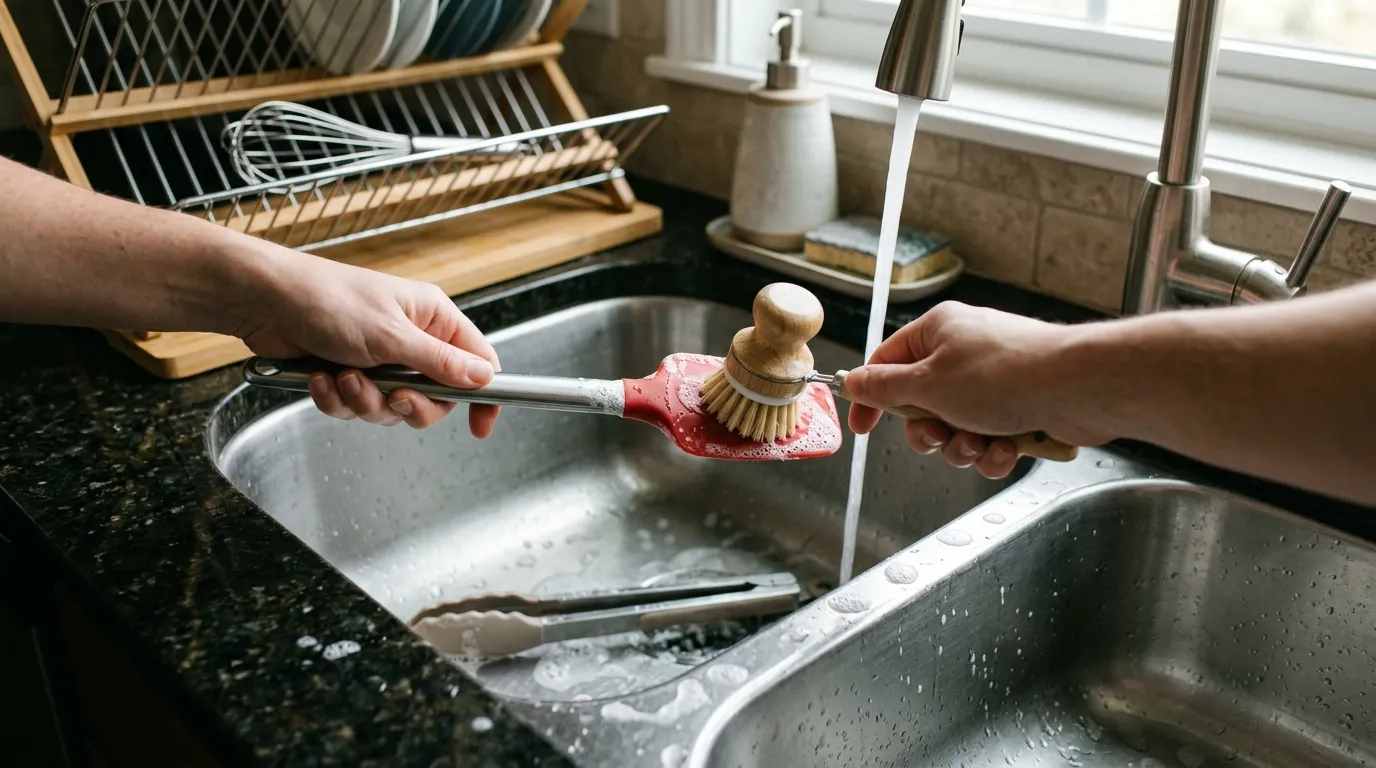
Hand washing is the safest choice for utensils with wooden, painted, glued, or electronic parts. It also gives you better control over seams and small gaps.
Follow these steps:
- Scrape off leftover food with a spatula or paper towel.
- Rinse the utensil under warm running water.
- Add a small amount of mild dish soap to a soft sponge or brush.
- Wash every surface, including the edges, corners, seams, and handle.
- Use a narrow brush around joints or slots.
- Rinse well until no soap film remains.
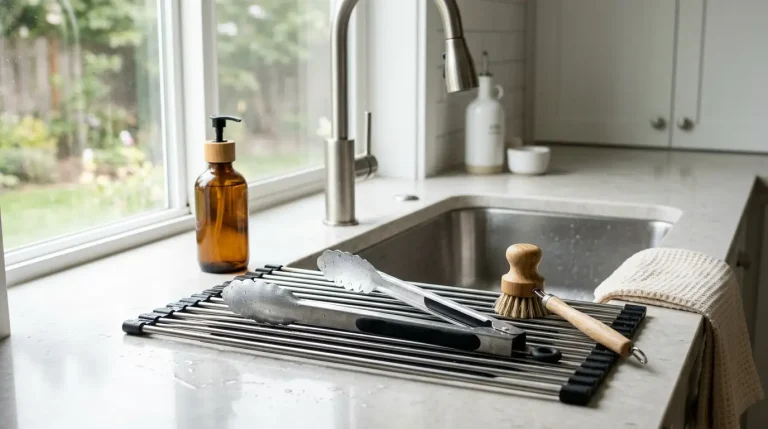
- Shake off excess water and place the utensil on a drying rack.
- Let it dry fully before putting it away.
Hot water helps loosen oil, but very hot water is not always needed. If the utensil has a metal core or a glued handle, extreme heat may weaken the connection over time.
When you clean silicone utensils properly, do not rush the rinse step. Soap left on the surface can attract dust and give the utensil a slippery feel.
How to clean silicone utensils in the dishwasher

Many food-grade silicone utensils are dishwasher safe. Still, always check the care label or the manufacturer’s instructions first. A silicone head may tolerate the dishwasher while its handle does not.
Place utensils where water and detergent can reach them. Do not pack them tightly together. Overcrowding can leave grease or food under the edges.
Use these dishwasher tips:
• Put small tools in the top rack when possible.
• Keep utensils away from exposed heating elements.
• Separate removable silicone heads from handles if the care instructions allow it.
• Avoid mixing very greasy tools with a lightly soiled load.
• Inspect each utensil after the cycle.
• Dry or air-dry the pieces fully before storage.
The dishwasher can clean and sanitize many kitchen items through heat and detergent, but it cannot fix trapped grease in a narrow seam. Inspect the utensil after washing. If it still feels oily or smells like food, wash it by hand.
How to clean silicone utensils properly in a dishwasher depends on the whole utensil, not just the silicone part. A wooden handle, glued joint, or soft grip may need hand washing.
How to remove grease from silicone utensils
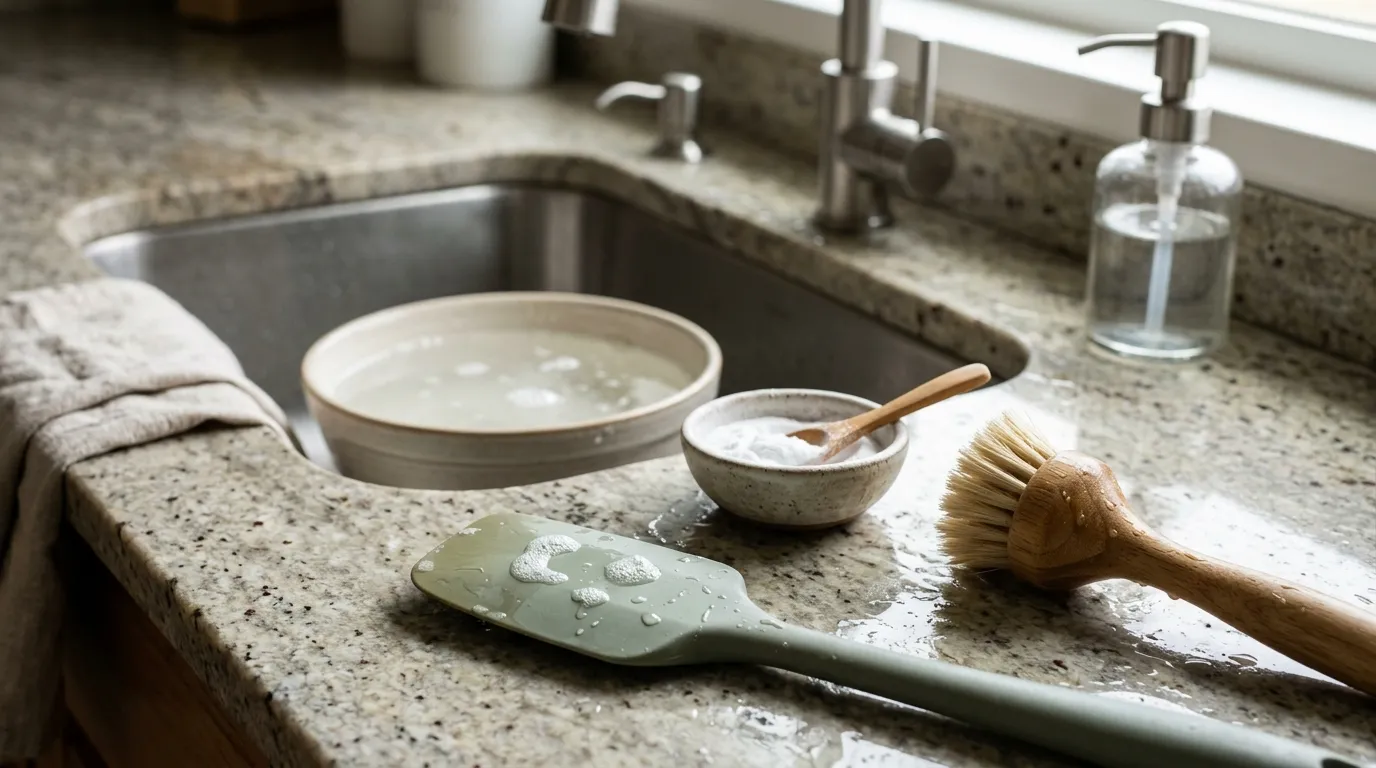
Grease is one of the most common reasons silicone tools still feel dirty after washing. Water alone does not dissolve oil. Dish soap contains cleaning agents that help lift oil from the surface so it can rinse away.
For a greasy utensil, use this method:
- Wipe away excess oil before adding water.
- Apply dish soap directly to the silicone.
- Rub the surface with a soft brush.
- Let the soapy utensil sit for five to ten minutes.
- Rinse with warm water.
- Repeat if the surface still feels slick.
Do not pour cooking oil into the sink while cleaning. Wipe large amounts into the trash first. This helps prevent clogged pipes and reduces the amount of grease entering wastewater.
A common kitchen lesson is that more soap is not always better. A small amount of good dish soap, enough contact time, and firm brushing usually work better than a large amount of soap rinsed away at once.
How to remove odors from silicone utensils
Silicone can hold onto strong smells, especially after contact with garlic, onions, fish, bacon, or spicy foods. The smell may remain even when no food is visible.
Start with a baking soda paste:
• Mix baking soda with a little water.
• Spread the paste over the silicone.
• Let it sit for 15 to 30 minutes.
• Scrub gently with a soft brush.
• Rinse and dry completely.
You can also soak the utensil in warm water with a small amount of dish soap. For a persistent odor, a short soak in a mixture of equal parts water and white vinegar may help. Rinse the utensil well afterward.
Do not mix vinegar with bleach or other cleaners. Also, never use bleach unless the product instructions clearly allow it and you can rinse the item completely. For most household odors, baking soda, soap, air, and time are safer choices.
Sunlight and fresh air may reduce some odors, but do not leave silicone in strong sunlight for long periods. Heat and ultraviolet light can age some handles and materials.
How to remove stains from silicone utensils
Bright foods can stain silicone. Tomato paste, turmeric, chili oil, and berries are common examples. A stain does not always mean the utensil is unsafe, especially if the surface remains smooth and free from cracks.
To treat a stain, wash the utensil first. Then apply a thin baking soda paste and let it sit for several minutes. Rinse well and repeat once if needed.
For oily orange stains, soap must come before baking soda. Baking soda can help lift residue, but it is not a substitute for a grease-cutting dish soap.
Avoid these stain-removal methods:
• Steel wool
• Knives or sharp scrapers
• Strong solvents
• Abrasive bathroom cleaners
• Unapproved disinfectants
Some silicone stains are permanent. If the utensil has no cracks, sticky areas, or odor after washing, a change in color may be cosmetic. Replace it if the material becomes damaged or difficult to clean.
How to deep clean silicone utensils
Deep cleaning is helpful when a utensil has a lasting smell, sticky grease, or food trapped around a joint. Do this every few weeks or whenever normal washing no longer works.
Use this simple process:
- Fill a bowl or sink with warm water.
- Add mild dish soap.
- Soak the silicone utensil for 15 to 30 minutes.
- Scrub all surfaces with a soft brush.
- Rinse under running water.
- Check the seams and handle connection.
- Dry the utensil in open air.
For a removable silicone head, take it off before soaking if the care instructions allow it. Clean both the inside of the head and the handle. Food residue often hides where these pieces meet.
Avoid boiling a silicone utensil unless the manufacturer says it is safe. Silicone itself can tolerate high heat, but the complete utensil may include glue, metal, wood, plastic, or coatings that do not.
Cleaning silicone utensils with boiling water
Boiling water can help loosen stuck food, but it is not required for routine cleaning. It may also damage parts that are not made from silicone.
If the instructions permit heat cleaning, place the silicone-only item in hot water for a short time. Remove it with tongs and let it cool before scrubbing. Never handle hot water carelessly.
Do not boil utensils with:
• Wooden handles
• Electrical parts
• Painted surfaces
• Glued joints
• Unknown materials
• Cracks or loose sections
Heat does not replace soap. It may soften grease, but detergent and brushing still remove the residue. This distinction matters when deciding how to clean silicone utensils properly.
Common mistakes to avoid
Small cleaning mistakes can shorten the life of kitchen tools. They can also leave behind grease that attracts dust and odors.
Avoid these habits:
• Leaving dirty utensils in the sink overnight
• Using only cold water on greasy tools
• Storing utensils while damp
• Ignoring seams and removable parts
• Scrubbing with metal pads
• Using harsh cleaners made for bathrooms
• Mixing cleaning chemicals
• Assuming every silicone utensil is dishwasher safe
• Using a damaged tool for food preparation
A sticky feel, deep crack, peeling coating, or mold-like growth is a warning sign. Cleaning may not restore a damaged utensil. When the surface can no longer be washed smooth, replacement is the safer choice.
One useful habit is to inspect utensils under bright light. Run clean fingers over the surface after rinsing. If it feels oily, wash it again before storage.
How to dry and store silicone utensils
Drying is part of cleaning. Water trapped in a seam can create a stale smell and may encourage microbial growth on leftover food residue.
Place washed utensils on a clean drying rack with space between each piece. Store them only after they are fully dry. If the utensil has a hollow handle, angle it so water can drain.
Good storage habits include:
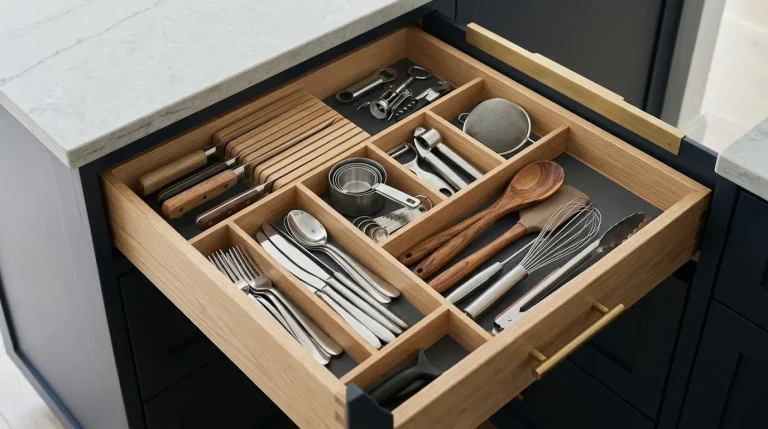
• Keeping utensils in a dry container
• Avoiding overcrowded drawers
• Separating wet tools from clean ones
• Storing removable parts apart when needed
• Keeping utensils away from strong heat
• Checking stored tools for dust and residue
Do not store silicone utensils pressed tightly against dirty drawers or greasy surfaces. Clean the storage area from time to time as well.
When should you replace a silicone utensil?
Proper cleaning can keep silicone tools useful for years, but no utensil lasts forever. Replace one when it has damage that cleaning cannot fix.
Look for these signs:
• Cracks or cuts
• A torn edge
• A permanently sticky surface
• Peeling or flaking material
• Loose silicone around a handle
• Mold that remains after cleaning
• A strong odor that will not go away
• Exposed metal or sharp internal parts
Small stains are not always a reason to throw away a utensil. A smooth, intact surface is usually easier to clean than a cracked one. When in doubt, follow the product instructions and choose safety over saving an inexpensive kitchen tool.
Frequently Asked Questions About How to Clean Silicone Utensils Properly
Can I use dish soap to clean silicone utensils?
Yes. Mild dish soap and warm water are suitable for most silicone utensils. Use a soft sponge or brush, rinse away all soap, and dry the utensil completely.
Are silicone utensils safe to put in the dishwasher?
Many are dishwasher safe, but the full utensil may include wood, glue, plastic, or other materials. Check the care label before using a dishwasher, and inspect seams after the cycle.
How do I remove a bad smell from silicone utensils?
Wash the utensil with dish soap first, then apply a baking soda paste and rinse it well. A short water-and-vinegar soak may also help, but never mix vinegar with bleach or other cleaners.
Can I boil silicone utensils to clean them?
Only boil a silicone utensil if the manufacturer says it is safe. Handles, coatings, glue, wood, and metal parts may not tolerate boiling water.
Why does my silicone utensil still feel greasy after washing?
The utensil may need more contact time with dish soap and gentle scrubbing. Wipe away heavy oil first, then wash it with warm water and repeat the process if needed.
Is a stained silicone utensil unsafe?
A stain may be cosmetic if the utensil is smooth, intact, and free from odor or residue. Replace it if it has cracks, peeling material, a sticky surface, or a smell that cleaning cannot remove.
Conclusion
Learning how to clean silicone utensils properly is simple: remove food, wash with mild soap and warm water, scrub seams, rinse well, and dry completely. Use baking soda for odors, take care with stains, and check dishwasher instructions before adding any tool to a cycle.
Avoid harsh abrasives, unsafe chemicals, and boiling utensils with mixed materials. Inspect your silicone tools often and replace any item that becomes cracked, sticky, or difficult to clean. Put these habits into practice today, and share your best kitchen cleaning tips with other home cooks.