Clean kitchen tongs protect your food, stop cross-contamination, and stretch tool life.
You can tell a great cook by their tongs. Not fancy ones. Clean ones. In this guide, I’ll show you how to clean kitchen tongs the right way, why it matters for safety, and how to choose tools that clean fast. I’ve worked the line, tested gear at home, and learned what fails. If you want clean kitchen tongs that stay safe and spotless, you’re in the right place.
What Makes Clean Kitchen Tongs So Important
Clean kitchen tongs keep germs off your plate. Raw meat juice spreads fast. It sticks to hinges and scallops. One slip can spoil a whole meal.
They also protect taste. Old grease adds off flavors. Burnt bits can char your next dish. Clean kitchen tongs help food shine.
There is a gear benefit too. Gunk ruins springs. Rust starts at tight joints. Clean kitchen tongs last longer and lock better over time.
Key wins:
- Less cross-contamination during meal prep
- Better flavor and less smoke on the pan
- Fewer repairs and replacements
Types of Tongs and Which Are Easiest to Keep Clean
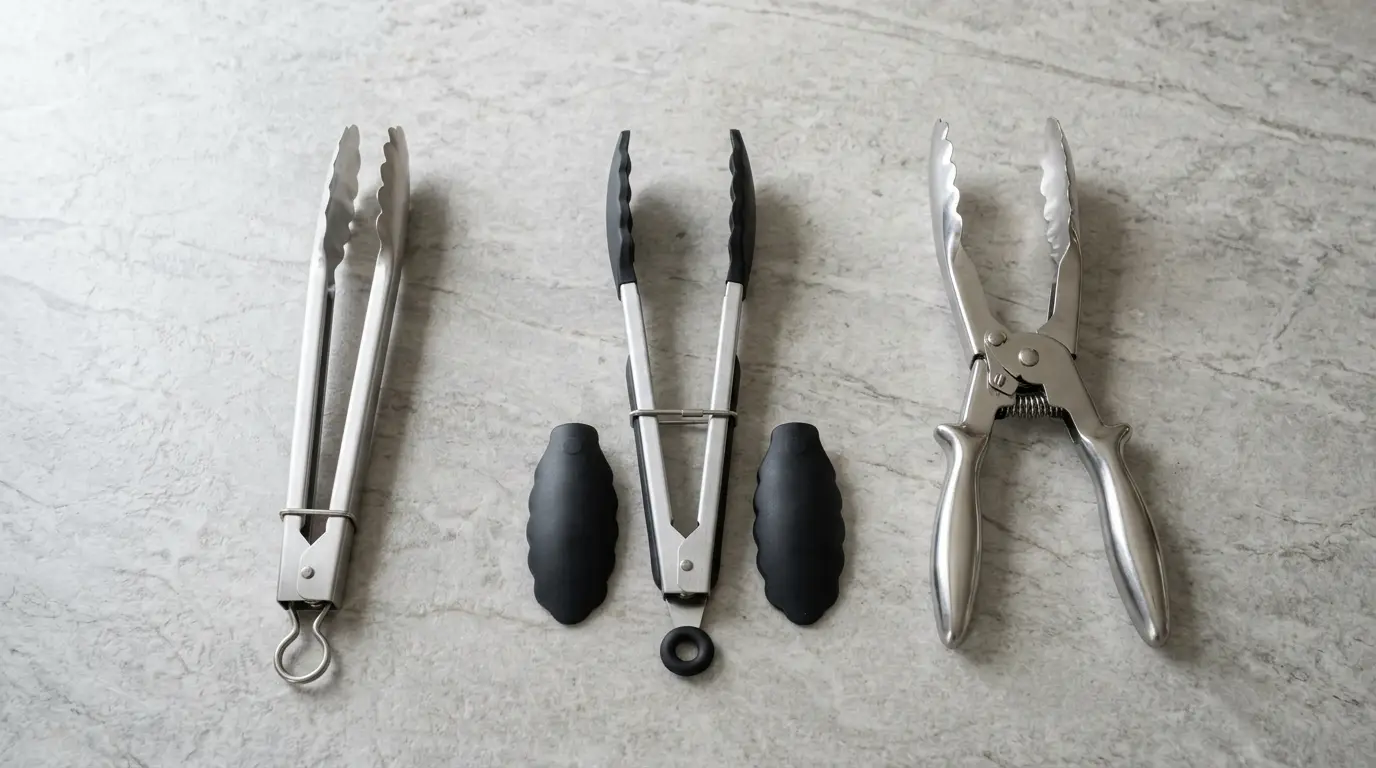
Not all tongs clean the same. Some trap grime. Some rinse clear in seconds. Clean kitchen tongs start with the right build.
What to look for:
- One-piece stainless bodies. Fewer gaps. Fewer traps. Easy rinse.
- Detachable silicone tips. Pop them off. Wash both sides well.
- Smooth scallops. Deep teeth hold food, but they also hold grease.
- Simple locks. A pull ring is fine. Avoid complex sliders that trap water.
- 304 or 18/8 stainless steel. Resists rust. Stays smooth.
What to avoid:
- Loose rivets and open hinges
- Flaking nonstick coatings
- Wood handles that soak up water
Personal tip: My best set is a 12-inch one-piece steel pair with removable silicone tips. It cleans fast and never twists under heat.
Step-by-Step: How to Clean Kitchen Tongs After Cooking
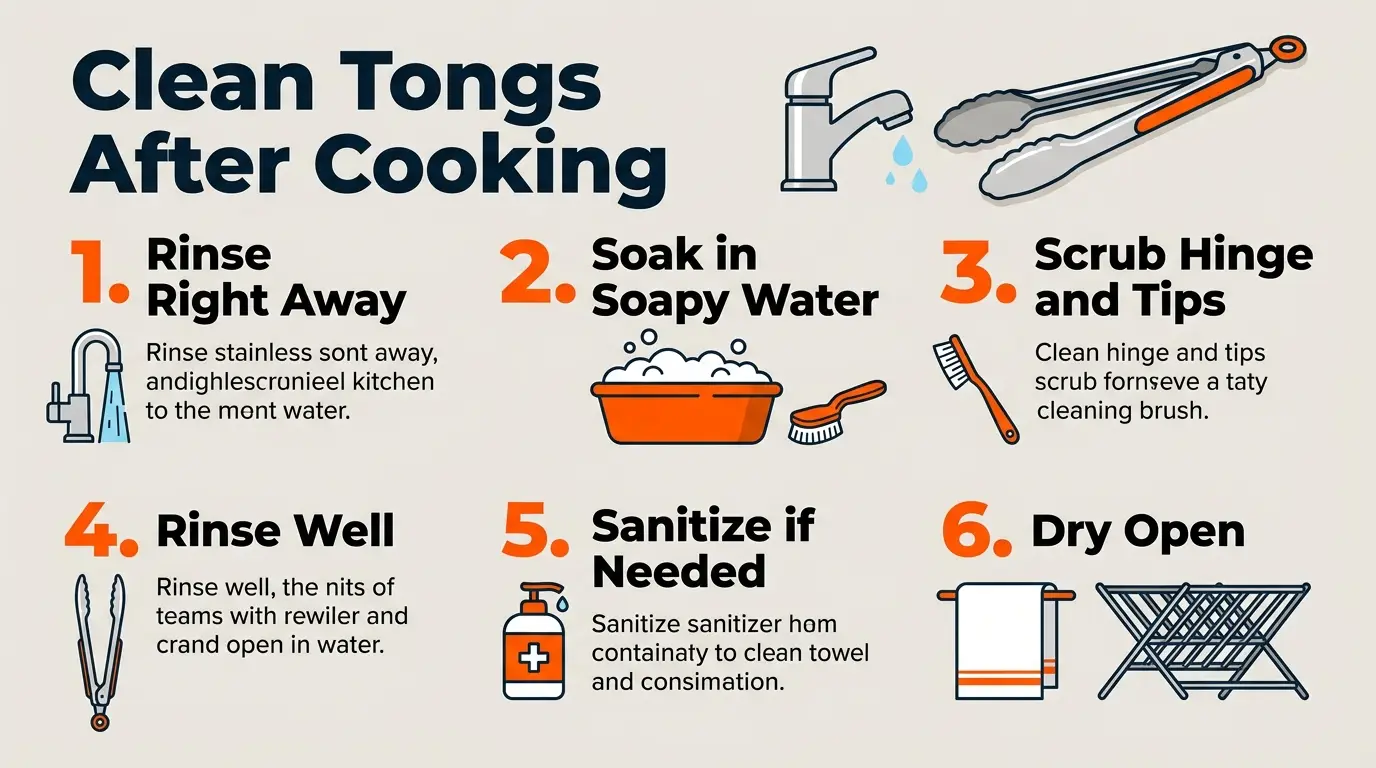
Clean kitchen tongs right after use. Warm grease lifts fast. Dried grease fights back.
Do this every time:
- Rinse right away. Use warm water to loosen fat.
- Soak for a minute in hot, soapy water.
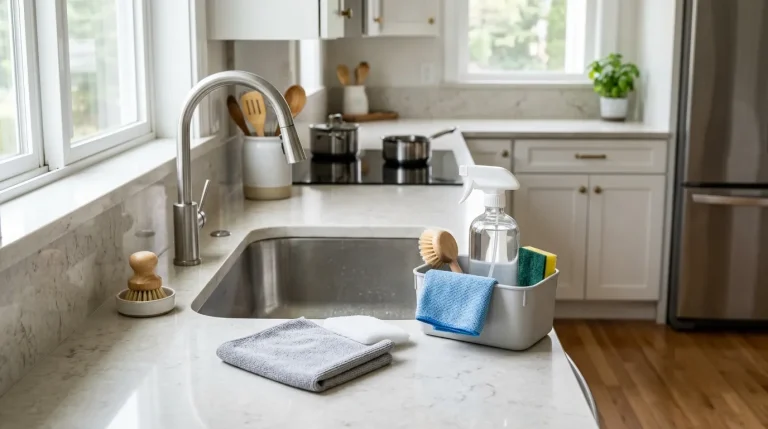
- Scrub the scallops, hinge, and lock. Use a small brush.
- Rinse well. No suds left.
- Sanitize if needed. See the next section for safe methods.
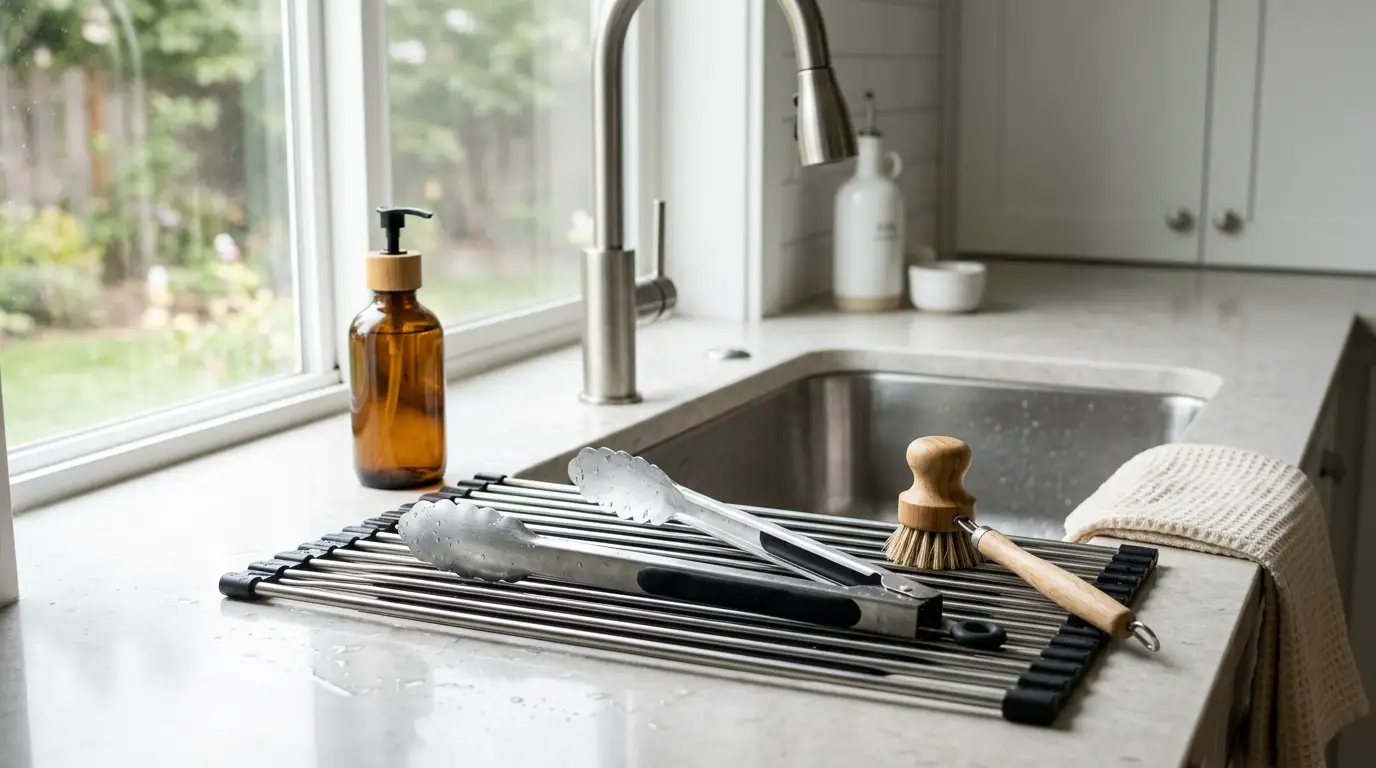
- Dry at once. Use a clean towel. Open the tongs so water escapes.
- Store with tips up or hang to keep them dry.
Dishwasher notes:
- Stainless steel is fine on the top rack.
- Silicone tips are usually safe. Check the mark.
- Place tongs open so spray can reach the hinge.
Can I put silicone tip tongs in the dishwasher?
Yes, if the maker marks them dishwasher safe. Remove the tips if they come off. Place pieces so the spray hits all sides.
How often should I sanitize my tongs at home?
Sanitize after raw meat, poultry, or seafood. Also sanitize between tasks if you switch from raw to ready-to-eat food.
What temperature is best for washing water?
Hot tap water helps degrease. Aim for water as warm as your hands can handle with gloves.
Deep Cleaning, Disinfecting, and Removing Stuck Gunk
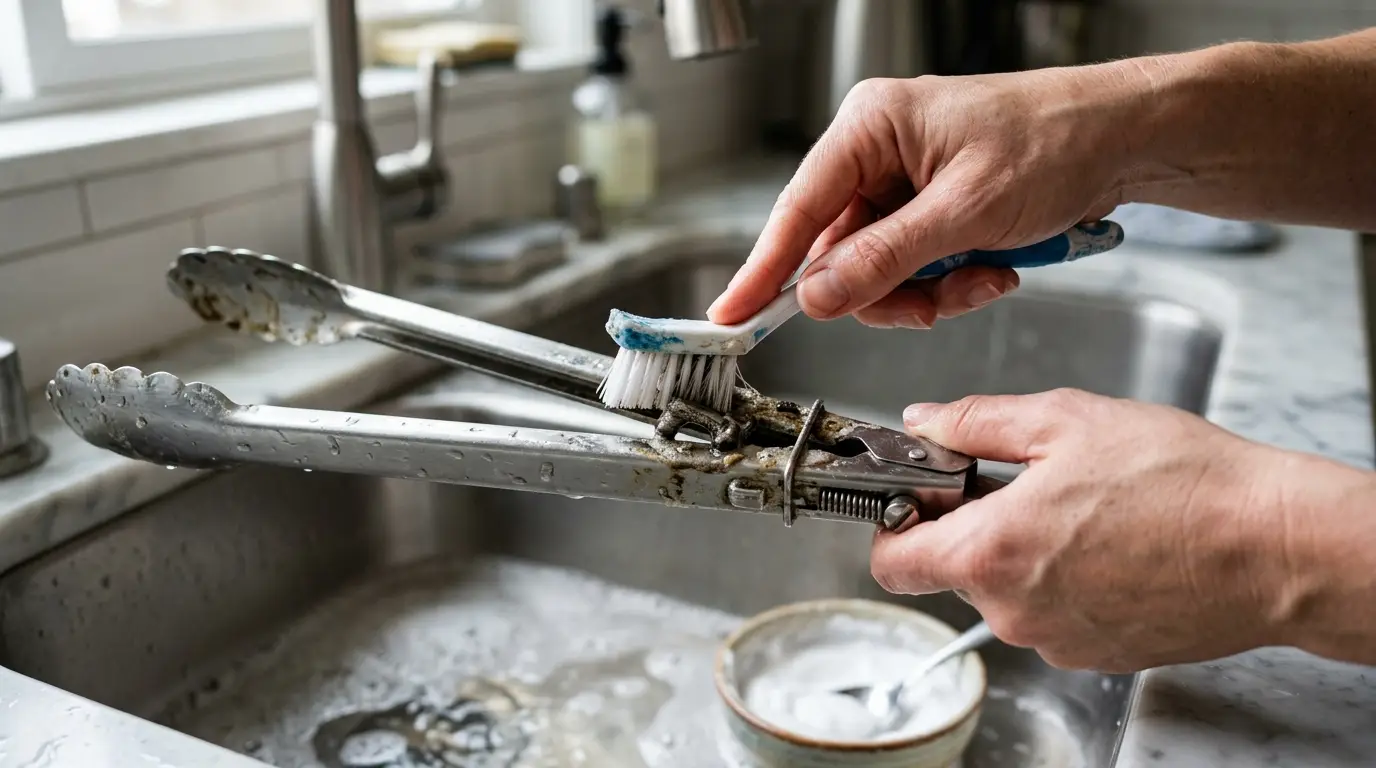
Grease can bake into the hinge and scallops. Here is how to rescue them.
For stuck residue:
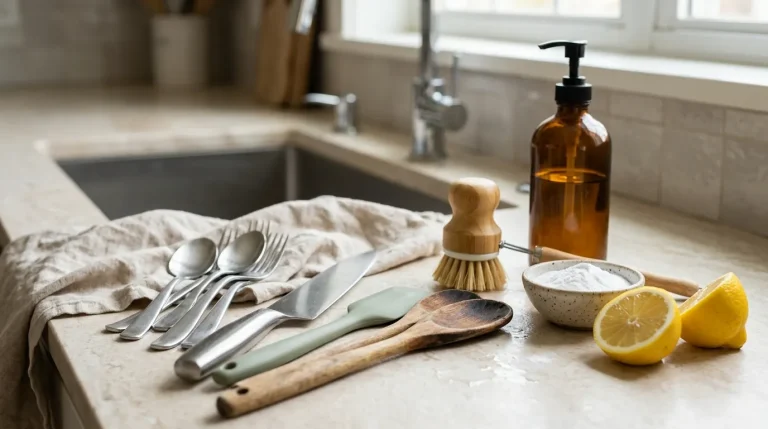
- Make a paste with baking soda and water. Spread. Wait 10 minutes. Scrub and rinse.
- Use a drop of mild degreaser on a brush. Rinse very well.
- For stainless stains, a gentle cleanser can help. Use it sparingly. Rinse fully.
For sanitizing:
- Chlorine method: Mix 1 teaspoon of unscented bleach in 1 gallon of cool water. This gives about 50–100 ppm. Dip for 1 minute. Air-dry.
- Heat method: Boil for 1 minute if the tongs are all metal.
- Do not mix bleach with vinegar or ammonia. It creates toxic gas.
From my line cook days: We kept a small brush at every sink. A 10-second hinge scrub saved us hours later. Clean kitchen tongs start with a clean hinge.
Hygiene Habits: Prevent Cross-Contamination With Clean Kitchen Tongs
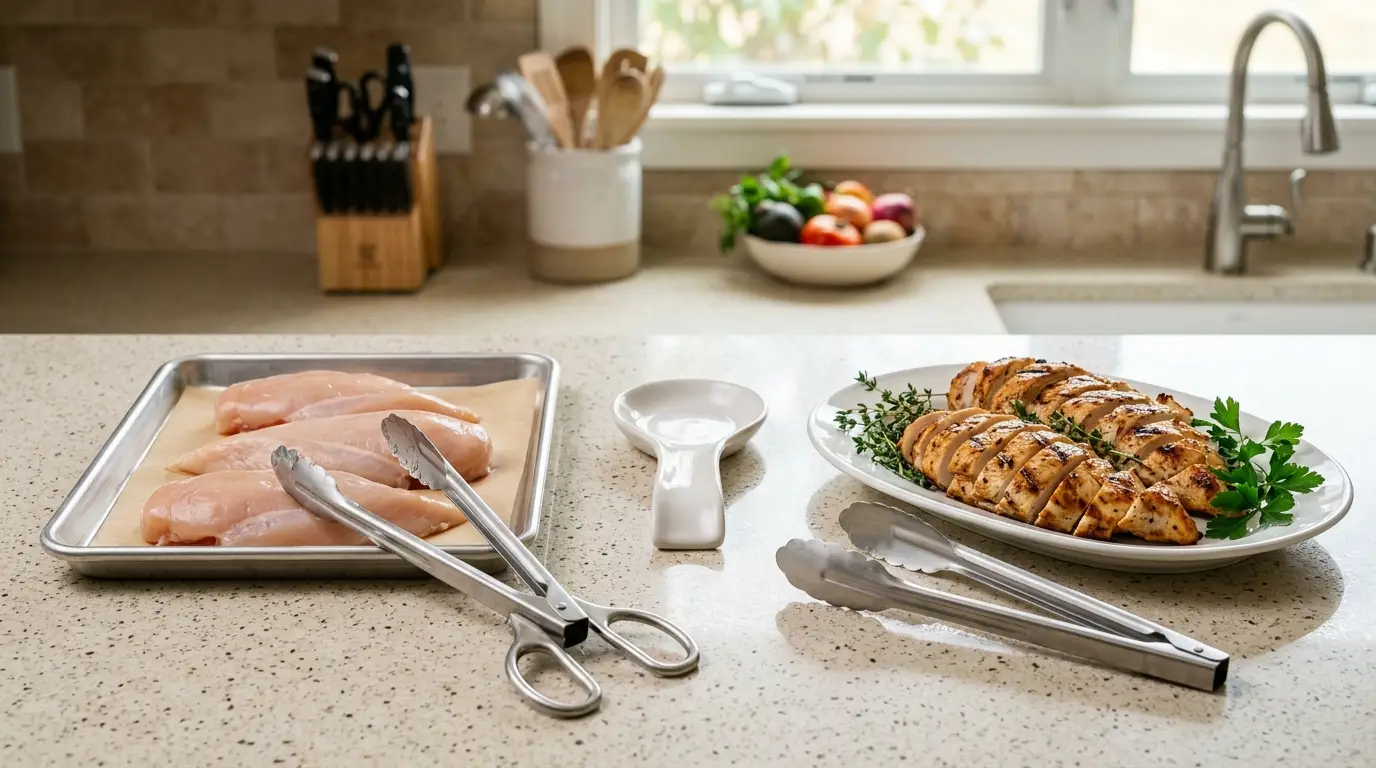
Set rules for yourself. They keep food safe. They also make cooking calmer.
Use smart habits:
- Keep one pair for raw meat. Keep another for cooked food.
- Color-code or label your sets.
- Place a tong rest by the stove. A small plate works.
- If a tong touches raw juice, wash, rinse, and sanitize before reuse.
Safe temps:
- Poultry needs 165°F.
- Ground meat needs 160°F.
- Fish and steaks are safe at 145°F with rest.
Use a thermometer. Tongs move food. They do not measure heat.
Do I need separate tongs for grill and platter?
Yes. One lives by the heat for raw items. The other stays clean for cooked food. Switch as soon as food is done.
How often should I change in-use tongs?
Every 4 hours in room temp service, or sooner after raw contact. That matches standard food safety practice.
Storage, Maintenance, and When to Replace
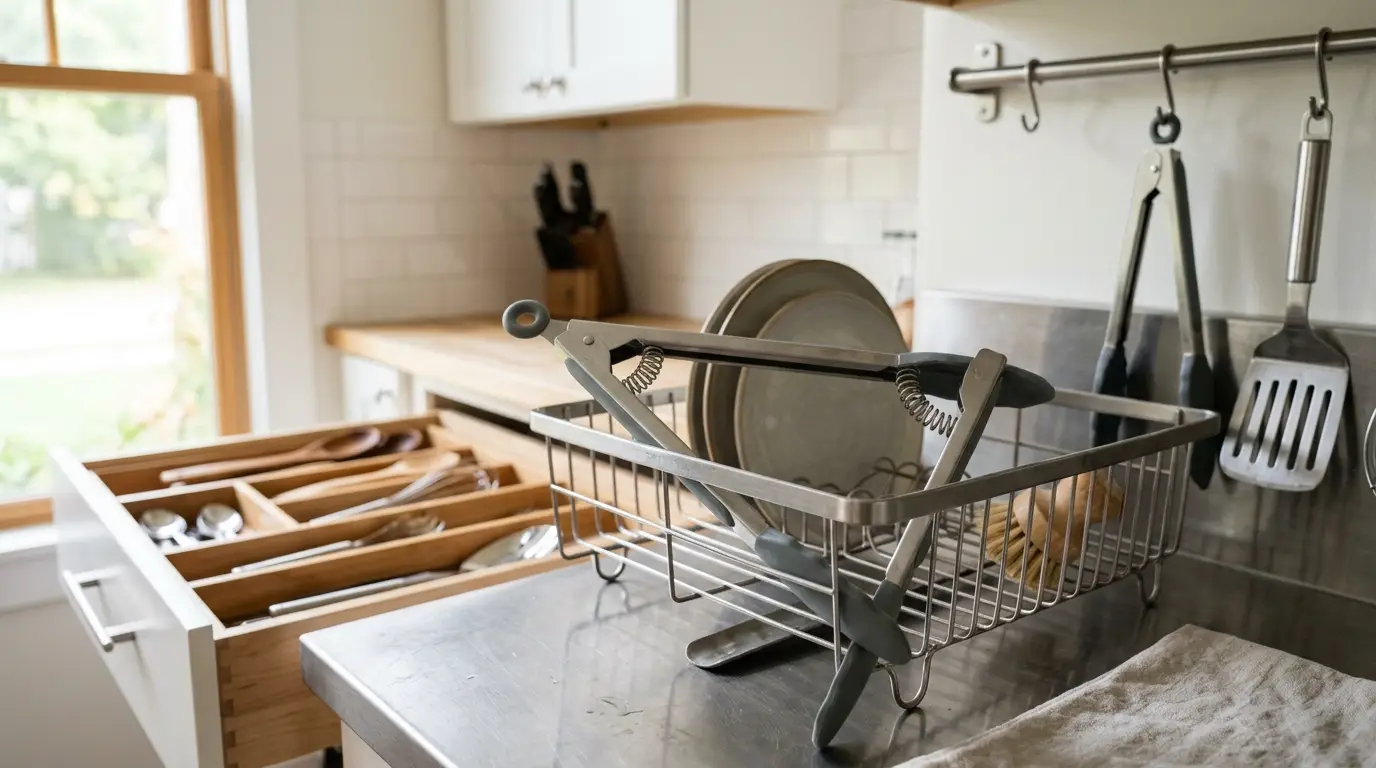
Clean kitchen tongs need dry storage. Water at the hinge causes rust.
Keep them in shape:
- Hang them to dry. Tips point down.
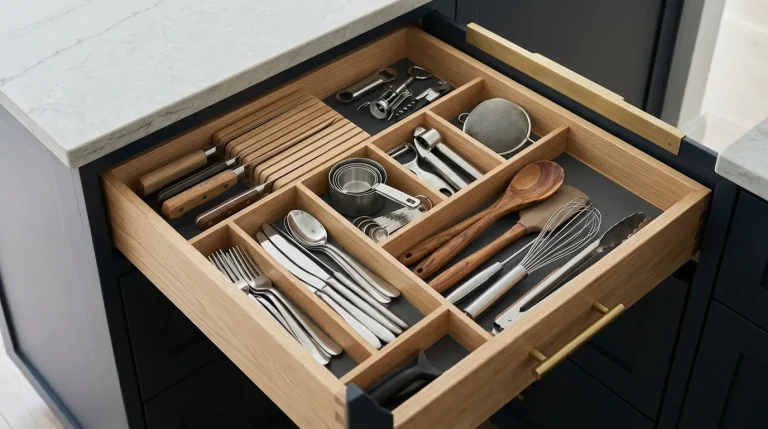
- If in a drawer, use a divider. Avoid bending the arms.
- Open and close the lock while drying to push out water.
- Lightly oil the hinge if it squeaks. Wipe off any extra.
Replace your tongs if:
- Springs snap or stick
- Silicone tips crack or peel
- Rust shows at the hinge
- The lock jams or the arms no longer align
Buying Guide: Choose Easy-to-Clean Kitchen Tongs
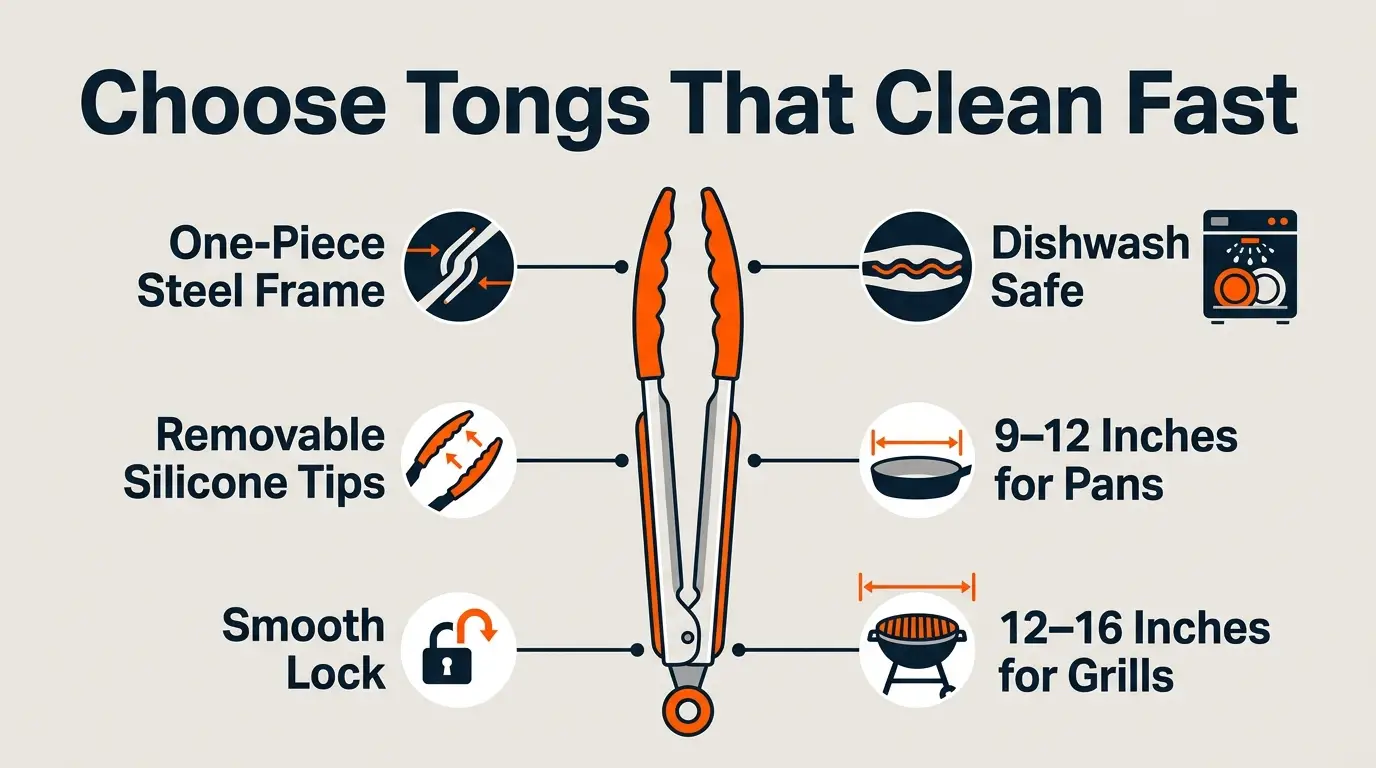
Want clean kitchen tongs with less work? Pick better parts up front.
Features that help:
- One-piece stainless frame for easy rinse
- Removable, heat-safe silicone tips
- Firm spring and smooth lock
- Lengths: 9–12 inches for the pan; 12–16 inches for the grill
- Moderate scallops for grip without deep grooves
- NSF certification for pro-grade sanitation
- Dishwasher safe marking
Budget tip: Get two pairs. Label them raw and ready. Clean kitchen tongs used in sets make cooking safer and faster.
Eco-Friendly and Commercial Kitchen Considerations
You can clean well and still save water. A plan helps.
Greener habits:
- Pre-wipe grease with a paper towel, then wash.
- Fill one basin to wash, one to rinse. Do not run water nonstop.
- Use the right soap dose. More soap does not mean more clean.
- Air-dry on a rack when you can.
In pro settings:
- Swap in-use tongs at least every 4 hours if held at room temp.
- Store tongs in hot water above 135°F or ice water below 41°F between uses if allowed by your code.
- Follow wash, rinse, sanitize steps with test strips to verify sanitizer strength.
- Log cleaning times during service.
These habits keep clean kitchen tongs safe for rush hour and home dinner alike.
Frequently Asked Questions of clean kitchen tongs
How do I clean kitchen tongs fast after raw chicken?
Rinse off debris, wash with hot soapy water, scrub the hinge, then sanitize. Dry at once with a clean towel.
Can I use vinegar to sanitize my tongs?
Vinegar helps with smell and scale, but it is not a high-level sanitizer. Use a proper bleach solution or heat for true sanitation.
Are wooden tongs safe and easy to clean?
Wood can soak up moisture and juices. It is harder to sanitize, so use wooden tongs for dry tasks only.
Why do my tongs rust near the hinge?
Water sits in tight gaps and causes rust. Dry them open, and avoid soaking overnight.
How many pairs of clean kitchen tongs should I own?
Keep at least two. One for raw foods and one for ready-to-eat items. Three is better if you grill often.
Do silicone tips melt on high heat?
Quality silicone handles high heat, often up to 450°F or more. Avoid direct flame and leave tips out of broilers.
How do I know if my tongs are dishwasher safe?
Look for a mark on the handle or packaging. When unsure, hand wash to protect springs and tips.
Conclusion
Clean kitchen tongs make meals safer, tastier, and easier. Choose smart designs, wash right away, sanitize when needed, and store them dry. Small habits beat big scrubs later.
Start today. Label two pairs for raw and ready. Set a brush by the sink. If this guide helped, share it, subscribe for more simple kitchen wins, or drop your best tong tip in the comments.