
The best utensils for stir fry cooking are a wok spatula, long tongs, a ladle, and heat-safe tools.
Choosing the best utensils for stir fry cooking can make a big difference in speed, control, and food texture. After testing different tools with carbon steel woks, stainless steel pans, and nonstick skillets, I have found that the right set helps you toss food without spills, scrape browned bits, and protect your cookware. This guide explains what to buy, what to avoid, and how each utensil performs at high heat.
What Makes a Good Stir-Fry Utensil?
Stir-frying uses high heat, quick movement, and small batches of food. The best utensils for stir fry cooking must help you move ingredients fast without scratching the pan or burning your hands.
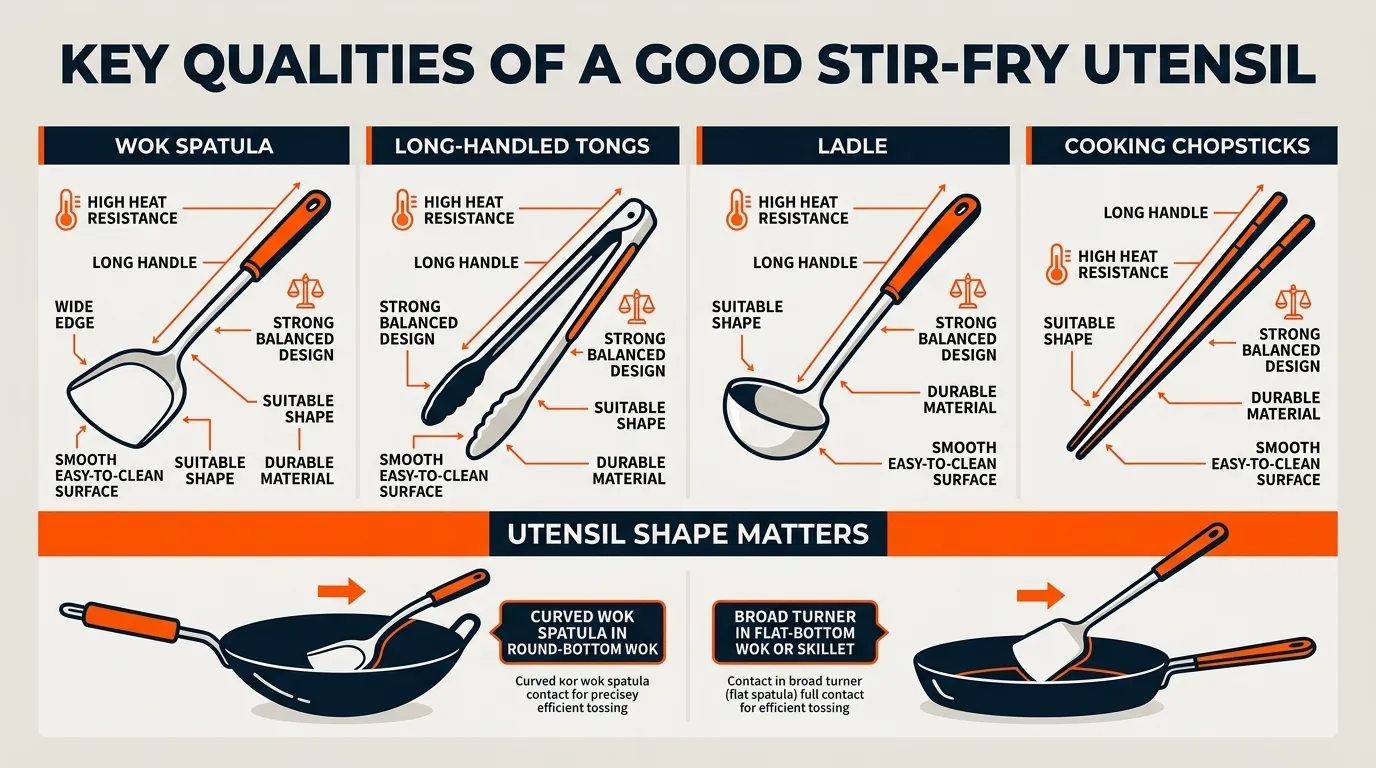
A good stir-fry utensil should have these qualities:
- High heat resistance
- A long handle for hand protection
- A wide edge for lifting and turning food
- A strong, balanced design
- A smooth surface that is easy to clean
- A shape that suits your wok or pan
- Materials that do not melt, chip, or rust
The tool should also feel comfortable. A utensil that is too heavy can slow you down. One that is too short can place your hand close to hot oil and steam.
In a traditional round-bottom wok, a curved spatula works well because it follows the shape of the pan. In a flat-bottom wok or skillet, a broad turner may offer better contact with the cooking surface.
The Best Utensils for Stir Fry Cooking

The best utensils for stir fry cooking are not always sold as one large set. In many cases, a few well-made tools are more useful than a dozen pieces you rarely use.
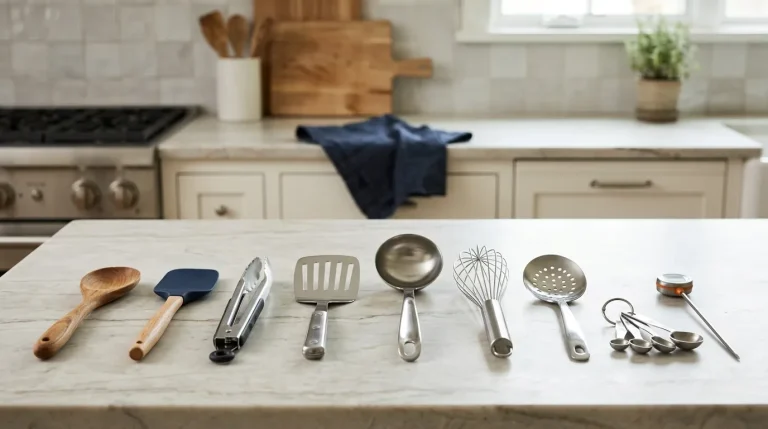
Here are the key utensils worth having:
1. Wok spatula
A wok spatula is the most important tool for stir-frying. It has a wide, slightly curved blade that fits against the sides of a wok.
Use it to:
- Toss vegetables
- Turn meat and tofu
- Scrape food from the cooking surface
- Stir sauces through noodles or rice
- Move food from the center to the cooler sides of the wok
A stainless steel wok spatula is a strong choice for carbon steel, cast iron, and stainless steel cookware. For nonstick pans, choose a silicone or nylon spatula marked for high-heat use.
2. Long cooking chopsticks
Long chopsticks offer excellent control. They work especially well for noodles, leafy greens, sliced meat, and delicate vegetables.
They let you separate noodles and turn small pieces without crushing them. Bamboo chopsticks are gentle on cookware, while stainless steel chopsticks are easy to sanitize and resist odors.
3. Long-handled tongs
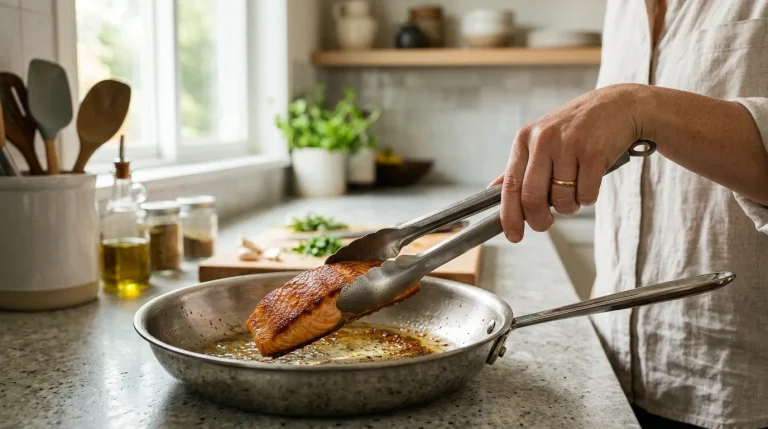
Tongs are useful when you need a firm grip. They work well for chicken strips, steak, shrimp, broccoli, and larger vegetables.
Choose tongs with scalloped tips and a locking mechanism. Silicone tips are best for nonstick pans. Stainless steel tips offer stronger control in uncoated woks.
4. Wok ladle
A wok ladle has a deep bowl and a long handle. It helps you add oil, pour sauce, scoop broth, and move liquid from the bottom of the wok.
A ladle is also useful for making stir-fry sauces. You can mix stock, soy sauce, rice vinegar, and cornstarch in a small bowl, then pour the mixture into the hot pan with control.
5. Slotted spoon
A slotted spoon helps lift fried ingredients while leaving excess oil behind. It is useful for fried tofu, blanched vegetables, or meat cooked in more oil.
A stainless steel slotted spoon is durable. A heat-safe nylon or silicone version is safer for nonstick cookware.
6. Spider strainer
A spider strainer has a wide wire basket and a long handle. It is useful for removing noodles, dumplings, fried vegetables, and blanched ingredients from hot water or oil.
It is not essential for every home cook. Still, it can save time when you prepare several ingredients before the final stir-fry.
7. Bench scraper
A bench scraper is not used directly in the wok, but it is one of the best utensils for stir fry cooking prep. It helps move chopped vegetables, garlic, ginger, and meat from the cutting board to small bowls.
A wide scraper also makes cleanup easier. You can collect scraps and transfer them to the compost or trash without using your hands.
Best Materials for Stir-Fry Utensils
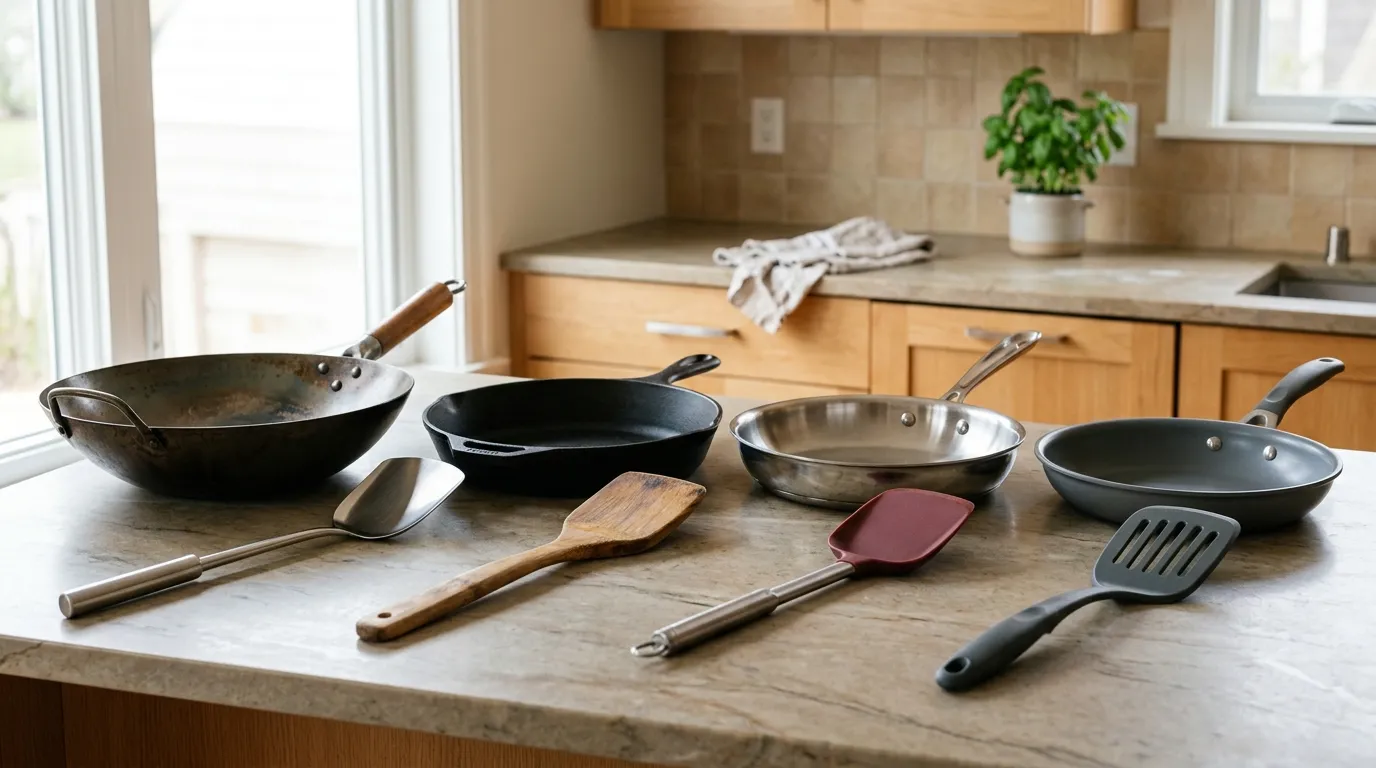
The material affects heat safety, durability, cleaning, and cookware protection. The best utensils for stir fry cooking depend partly on the pan you use.
Stainless steel
Stainless steel is strong, long-lasting, and easy to clean. It can handle high heat and will not absorb oil or food odors.
It is ideal for:
- Carbon steel woks
- Cast iron pans
- Stainless steel skillets
- Heavy-duty cooking
The main limitation is that stainless steel can scratch nonstick coatings. Use it only when the cookware maker allows it.
Wood and bamboo
Wood and bamboo utensils are gentle and comfortable. They are less likely to scratch a pan and do not become as hot as metal during short cooking sessions.
They work well for:
- Nonstick cookware
- Seasoned carbon steel
- Delicate vegetables
- Everyday home cooking
Wood can absorb oil, sauce, and odors. Wash it by hand, dry it well, and do not leave it soaking in water.
Silicone
Silicone utensils are flexible and safe for coated pans. Good silicone can resist high heat, but quality varies.
Look for food-grade silicone with a strong internal core. Very soft silicone may bend when lifting heavy food. Check the heat rating before using it in a very hot wok.
Nylon
Nylon is light and affordable. It is often found in spatulas, tongs, and turners made for nonstick cookware.
Nylon has a lower heat limit than stainless steel. It can melt or deform if left against the side of a hot wok. Use it for quick stirring, not for prolonged contact with high heat.
Choosing Utensils for Different Cookware
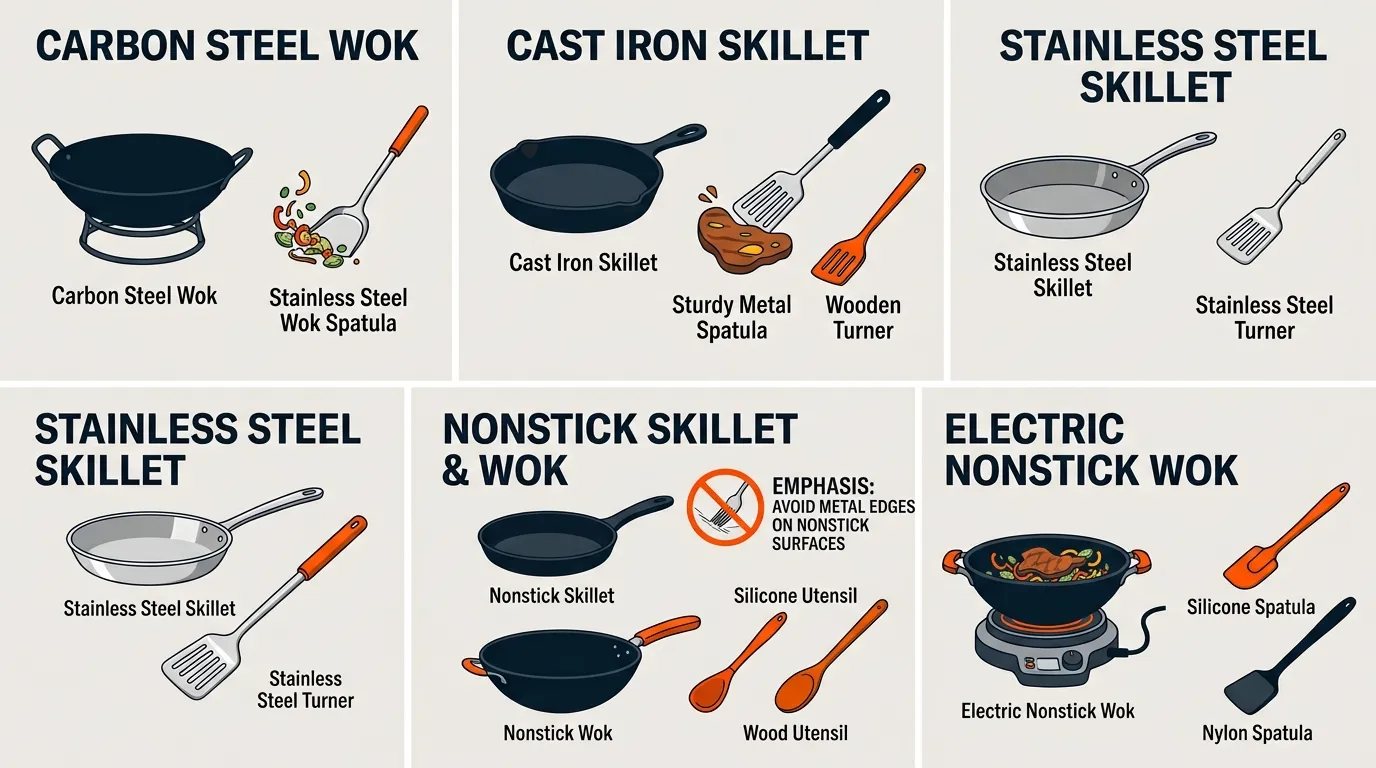
The best utensils for stir fry cooking should match your pan. Using the wrong tool can damage the surface or make cooking harder.
Carbon steel wok
A carbon steel wok can handle high heat and metal utensils. A stainless steel wok spatula is often the best match.
A metal spatula may leave light marks during early use. These marks are usually cosmetic, but avoid harsh scraping until the wok develops a strong seasoning layer.
Cast iron skillet
Cast iron works well for stir-frying small portions. Use a sturdy metal spatula or wooden turner to move food.
Because cast iron holds heat, food may cook quickly after the burner is lowered. Keep your ingredients ready and avoid using a tool with a short handle.
Stainless steel skillet
Stainless steel allows the use of metal tools. A flat stainless steel turner can lift food that sticks during browning.
Do not forcefully scrape food before it releases. Add a small amount of liquid and use a firm spatula to loosen browned bits.
Nonstick skillet or wok
Choose silicone, wood, or heat-safe nylon utensils. Avoid metal edges, sharp corners, and abrasive cleaning pads.
A silicone wok spatula is often the best option because it combines flexibility with gentle contact. Still, no utensil can prevent all damage if the pan is overheated or scratched.
Electric wok
Electric woks often have a smaller cooking surface and a nonstick coating. A shorter silicone spatula and medium-length tongs may be easier to control.
Check the appliance manual before using metal tools. Some electric wok surfaces can tolerate metal, while others cannot.
How to Choose the Right Wok Spatula
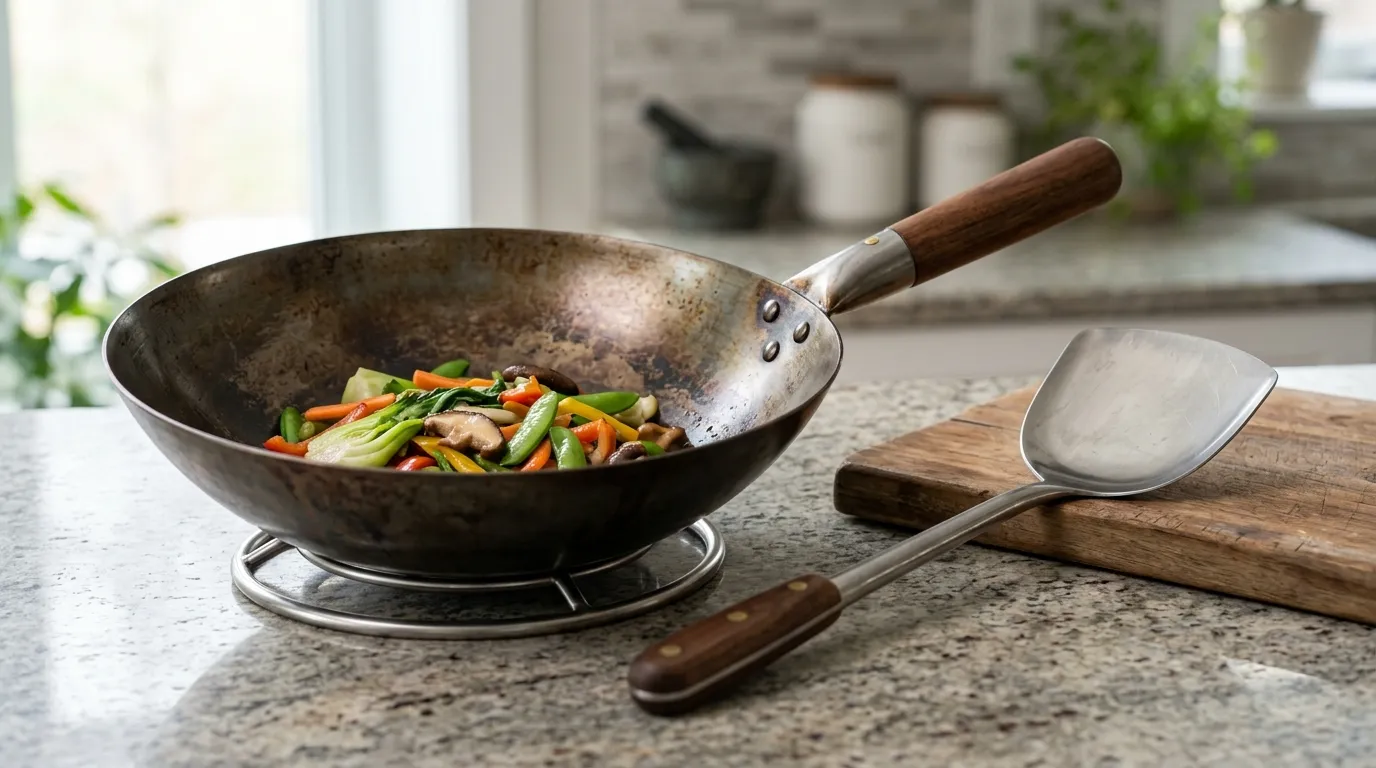
A wok spatula should feel like an extension of your hand. The best utensils for stir fry cooking give you control without forcing you to grip too tightly.
Consider these features:
- Blade width: A blade between about 3 and 5 inches works well for most home woks.
- Blade curve: A curved blade fits a round wok and helps scoop food from the sides.
- Handle length: A handle around 12 to 16 inches offers a useful balance of reach and control.
- Handle shape: A rounded or slightly textured handle is easier to hold with oily hands.
- Weight: A medium-weight tool gives strength without tiring your wrist.
- Edge: A thin edge slides under food, while a thicker edge is more durable.
When I first used a very large wok spatula, I assumed the bigger blade would make cooking easier. It did not. The tool pushed too much food at once and made it hard to toss small portions. A medium blade gave me much better control.
The Best Utensil Set for Beginners
If you are building a kitchen from scratch, start with a small set. You do not need every tool sold in a stir-fry kit.
A practical starter set includes:
- One wok spatula
- One pair of long tongs
- One wok ladle
- One pair of long cooking chopsticks
- One silicone scraper for cleaning and prep
For a carbon steel or cast iron wok, choose stainless steel tools. For a nonstick pan, choose silicone or wood.
A small set also makes storage easier. Keep the spatula, tongs, and ladle near the stove so you can reach them without leaving a hot pan unattended.
How to Use Stir-Fry Utensils Safely
High heat makes stir-frying fast, but it also increases the risk of burns and oil splashes. The best utensils for stir fry cooking should help you keep a safe distance from the pan.
Follow these habits:
- Use long handles when cooking over high heat.
- Keep the utensil inside the pan when tossing food.
- Add wet ingredients slowly to reduce splatter.
- Dry meat and vegetables before adding them to hot oil.
- Do not place plastic handles near an open flame.
- Keep a dry towel nearby for safe grip changes.
- Use an oven mitt when moving a hot wok.
- Turn off the burner before leaving the stove.
Avoid using a wet spatula in hot oil. Water turns into steam quickly and can push hot oil out of the pan.
Do not overcrowd the wok, either. When too much food releases water at once, the pan cools and the utensil has to move through a heavy pile. Cooking in batches gives you better browning and safer control.
Common Mistakes to Avoid
Even the best utensils for stir fry cooking cannot fix poor technique. A few simple mistakes can affect flavor, texture, and tool life.
Using the wrong tool for the pan
Metal tools can damage many nonstick surfaces. Always check the cookware instructions before choosing a stainless steel spatula.
Choosing a handle that is too short
A short handle may feel comfortable at first. During high-heat cooking, however, it places your hand close to steam, oil, and the hot rim of the wok.
Buying a very thin spatula
Thin metal can bend under the weight of meat or vegetables. Look for a blade with enough strength to lift food without flexing too much.
Leaving utensils in the wok
A utensil resting against a hot pan can become dangerously hot. Silicone may discolor, nylon may soften, and wood may scorch.
Ignoring cleaning needs
Food residue can build up around rivets, seams, and handle joints. Pick tools with smooth construction or removable parts when possible.
Using too many tools at once
Stir-frying is quick. Too many utensils on the counter can cause confusion and spills. Prepare ingredients first, then use one main spatula and one backup tool.
Cleaning and Maintaining Stir-Fry Utensils
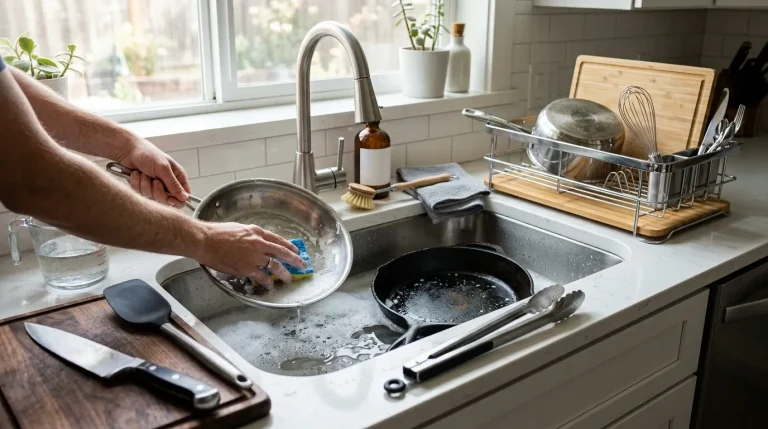
Proper care helps the best utensils for stir fry cooking last for years. Clean tools soon after cooking, especially after using sticky sauces with sugar or cornstarch.
Use these care tips:
- Wash stainless steel tools with warm, soapy water.
- Hand-wash bamboo and wood utensils.
- Dry wood fully before storing it.
- Check silicone for cracks, cuts, or loose edges.
- Keep nylon away from direct flame.
- Remove food from seams with a soft brush.
- Avoid strong bleach unless the manufacturer permits it.
- Replace tools that melt, split, rust, or lose their shape.
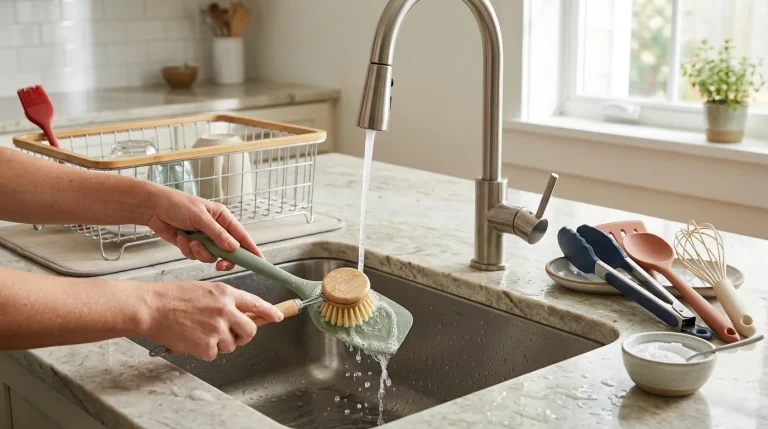
Dishwashers are convenient, but they can shorten the life of wood and some silicone tools. Check the product label. When in doubt, hand-washing is the safer choice.
If a wooden spatula develops a rough surface, lightly sand it with fine-grit sandpaper and apply a food-safe mineral oil. Do not use cooking oil for conditioning wood because it can become sticky or rancid.
What Professional Cooks Look For
Professional cooks often favor simple tools that respond quickly. They need a spatula that can scrape, lift, and turn food without extra effort.
In many Asian kitchens, the wok spatula is paired with a ladle or long chopsticks. This combination allows the cook to stir, scoop sauce, and separate ingredients in seconds.
The best utensils for stir fry cooking also support mise en place. This means preparing and arranging all ingredients before heating the wok. Since stir-fry cooking moves quickly, preparation matters just as much as the utensil.
Food safety matters too. Keep raw meat tools separate from tools used to serve cooked food. The USDA recommends using a food thermometer to verify safe internal temperatures, especially for poultry and ground meat. Utensils help with movement, but they cannot replace safe temperature checks.
A Simple Stir-Fry Tool Workflow
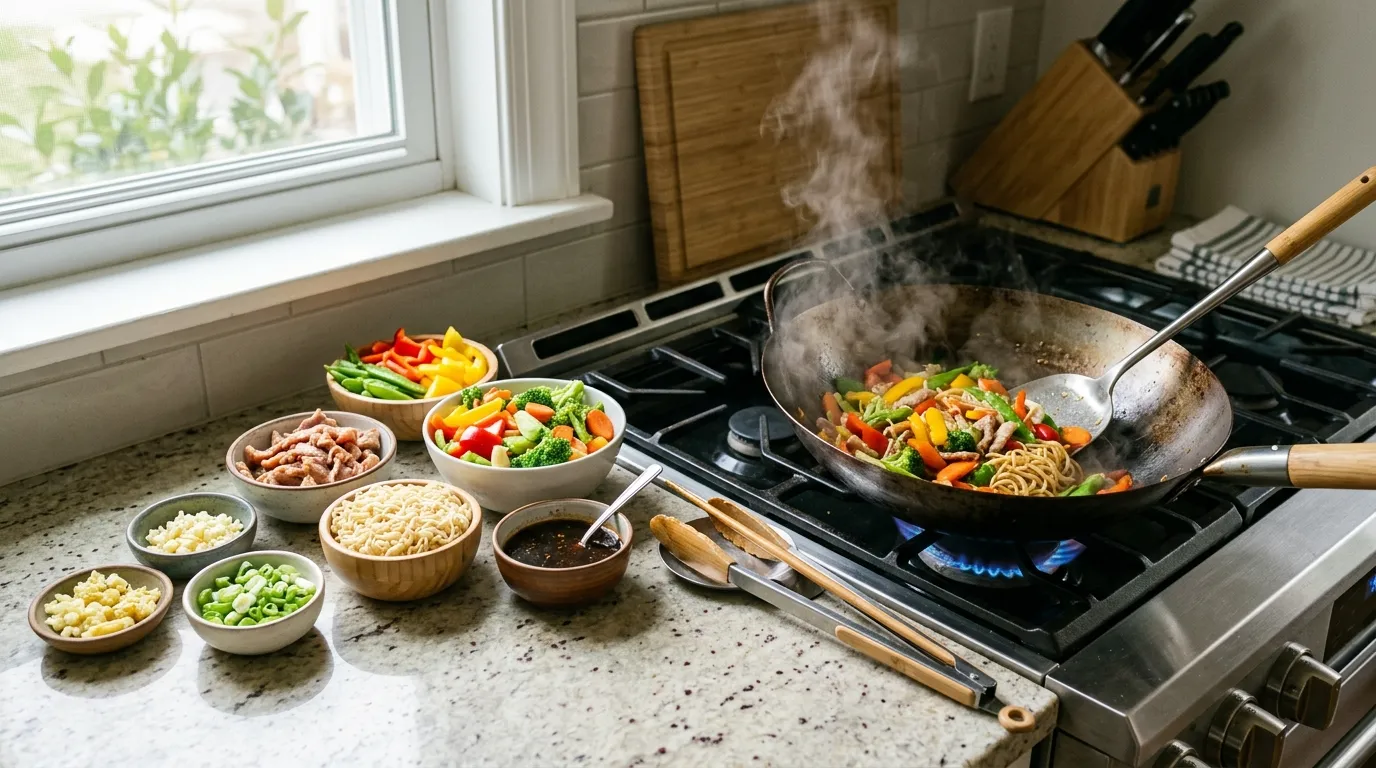
Use this workflow to get more value from your utensils:
- Chop all ingredients before heating the pan.
- Arrange ingredients in the order they will enter the wok.
- Heat the wok and add oil with a ladle or small heat-safe cup.
- Add aromatics and move them with the wok spatula.
- Cook meat in a single layer, then lift it with tongs.
- Add firm vegetables before soft vegetables.
- Use cooking chopsticks to separate noodles or leafy greens.
- Return the meat to the wok.
- Pour in sauce with the ladle.
- Toss everything with the wok spatula and serve at once.
This process reduces delays. It also prevents you from searching for a tool while oil is heating.
One lesson I learned through repeated cooking is that preparation makes a bigger difference than owning expensive equipment. A modest spatula used with good timing often performs better than a premium tool used without a plan.
Best Utensils for Stir Fry Cooking: Quick Buying Guide
Use this guide when comparing products:
| Your cookware | Best main utensil | Helpful second tool |
|---|---|---|
| Carbon steel wok | Stainless steel wok spatula | Wok ladle |
| Cast iron skillet | Strong metal turner | Long tongs |
| Stainless steel skillet | Stainless steel spatula | Slotted spoon |
| Nonstick wok | Silicone wok spatula | Silicone tongs |
| Electric nonstick wok | Silicone or nylon spatula | Short cooking chopsticks |
| Small skillet | Broad turner | Compact tongs |
Before buying, check the material, heat rating, handle length, cleaning instructions, and warranty. Product claims can vary, so the manufacturer’s instructions should guide your final choice.
Price is not the only sign of quality. A well-balanced mid-priced tool with a strong handle may serve you better than an expensive set with poor shape or weak joints.
Frequently Asked Questions About the Best Utensils for Stir Fry Cooking
What is the best spatula for a wok?
A curved wok spatula is usually the best choice because it follows the shape of the pan. Choose stainless steel for uncoated cookware and silicone for nonstick surfaces.
Can I use metal utensils in a nonstick wok?
Usually, you should avoid metal utensils in a nonstick wok because they may scratch the coating. Silicone, wood, or approved nylon tools are safer options.
Are wooden utensils good for stir-frying?
Yes, wooden utensils are gentle on cookware and comfortable to use. They are best for moderate use and require hand-washing and thorough drying.
Do I need a wok ladle?
You do not need one, but it is very useful for adding oil, sauce, stock, and other liquids. Its long handle also keeps your hand farther from high heat.
Are silicone utensils safe for high-heat cooking?
Quality silicone utensils are often safe for high heat, but the exact limit varies by product. Check the stated heat rating and keep the tool away from direct flames.
What size spatula is best for home stir-frying?
A medium spatula with a blade about 3 to 5 inches wide suits most home cooks. Very large spatulas can be harder to control in a small wok or skillet.
How many stir-fry utensils do I need?
Most cooks can manage with a wok spatula, tongs, ladle, and cooking chopsticks. Add a slotted spoon or spider strainer if you often cook noodles, fried foods, or blanched vegetables.
Conclusion
The best utensils for stir fry cooking give you control, speed, and safety. Start with a wok spatula, long tongs, a ladle, and cooking chopsticks, then match each tool to your cookware surface.
Choose stainless steel for carbon steel, cast iron, and stainless steel pans. Choose silicone, wood, or approved nylon for nonstick cookware. Keep your tools clean, use long handles, and prepare every ingredient before the wok gets hot.
A good utensil set can make stir-frying feel simple instead of rushed. Pick one reliable tool today, try it with your favorite recipe, and share your cooking results or favorite utensil in the comments.