
Use hot soapy water, scrub well, rinse, sanitize, air dry, and store.
If you want spotless, safe tools every day, you are in the right place. I have cleaned thousands of spoons, pans, and knives in busy kitchens and cozy homes. This guide shows How to Clean Utensils Properly with clear steps, simple science, and pro tips you can trust. Stick with me, and your gear will look new, last longer, and keep your food safe.
Why Cleaning Utensils Properly Matters
Clean utensils protect your health. Germs move fast from sink to plate to mouth. Safe cleaning lowers that risk and keeps flavors pure. It also protects your tools, so they do not chip, rust, or peel.
Food safety groups like CDC, USDA, and NSF agree on the basics. Use hot water, a good detergent, and the right sanitizer. Rinse well and let items air dry. These simple habits are the core of How to Clean Utensils Properly.
From my time managing a cafe, I learned one big lesson. Small steps done every day beat deep cleans done once a week. Make it a routine, and your kitchen runs smooth.
Tools and Safe Cleaners You Need
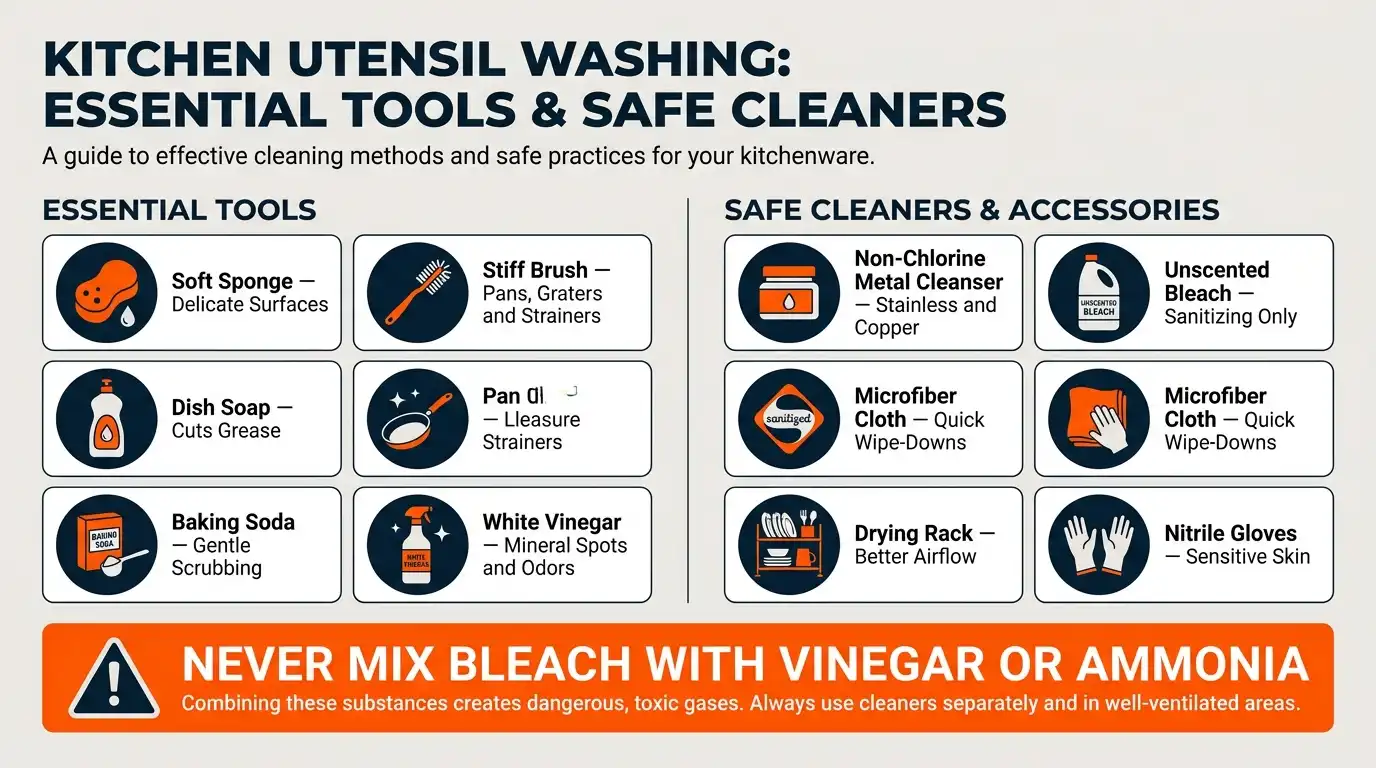
Set up a small, smart cleaning kit. It saves time and water.
- Soft sponges for delicate items
- Stiff brushes for pans, strainers, and graters
- Dish soap that cuts grease fast
- Baking soda for gentle scrub power
- White vinegar for hard water and odors
- Bar Keepers Friend or a non-chlorine scrub for stainless and copper
- Unscented chlorine bleach for sanitizing when needed
- Microfiber towels for quick wipe downs
- Drying rack with good airflow
- Nitrile gloves if you have sensitive skin
Important safety note: never mix bleach with vinegar or ammonia. That makes a toxic gas. Read labels and follow directions. Having the right tools is a big part of How to Clean Utensils Properly.
Step-by-Step: How to Clean Utensils Properly by Material
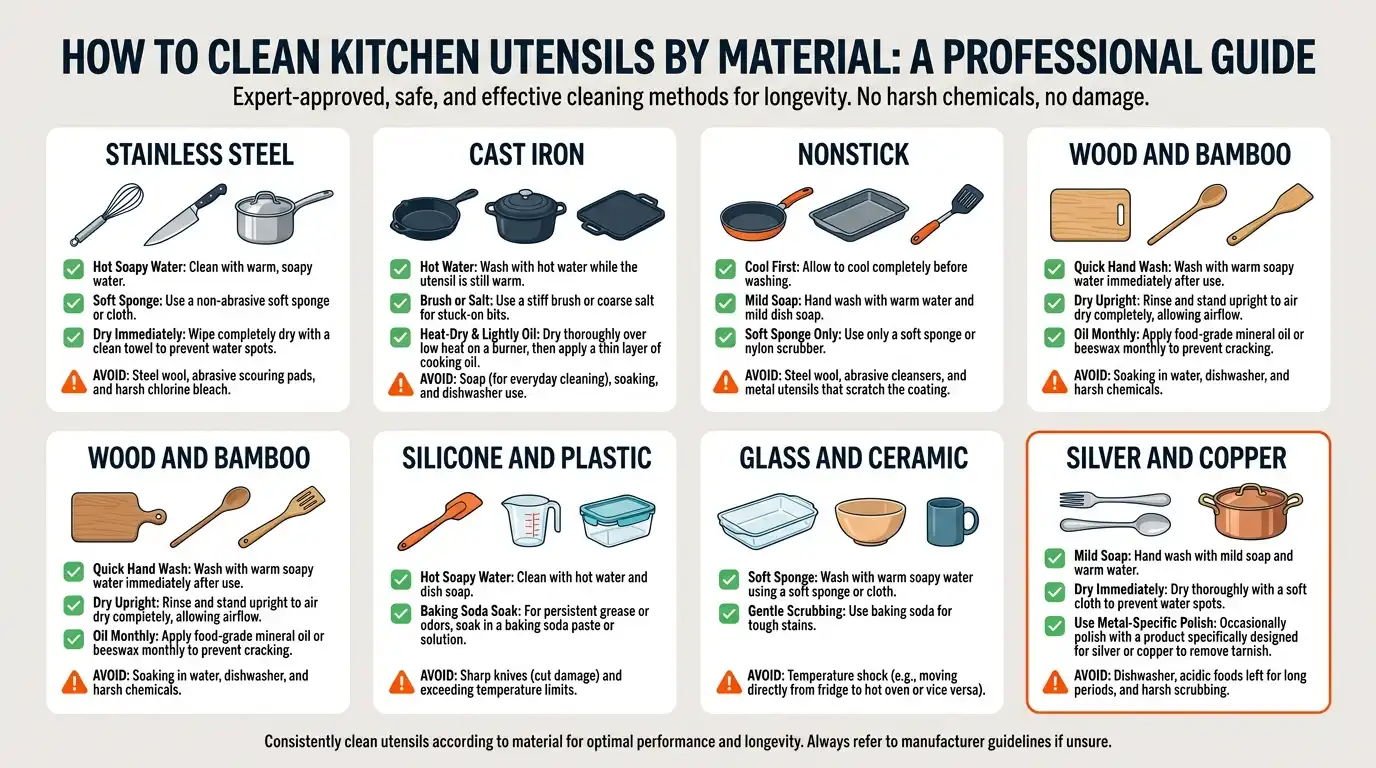
Each material needs a slightly different touch. Follow these fast, proven steps.
Stainless steel
- Rinse off food bits with warm water.
- Wash with hot soapy water and a soft sponge.
- For stuck spots, use a baking soda paste. Rub with the grain.
- Rinse well in hot water. Dry right away to prevent spots.
Pro tip: For rainbow tints, wipe with white vinegar, then rinse. This is How to Clean Utensils Properly without scratching.
Cast iron
- Wipe out oil and crumbs with a paper towel while the pan is warm.
- Add a splash of hot water and scrub with a brush or coarse salt.
- Dry on a low burner until all water is gone.
- Rub a thin layer of oil, then heat 1 to 2 minutes.
Never soak cast iron. Water is rust’s best friend.
Nonstick
- Let the pan cool. Rinse with warm water.
- Use a soft sponge and mild soap.
- Avoid steel wool and harsh powder.
- Rinse and towel dry.
If the coating is flaking, retire it. Flakes mean poor release and safety concerns.
Wood and bamboo
- Scrape off food. Wash fast with warm soapy water.
- Rinse. Wipe dry at once.
- Stand upright to air dry.
- Oil monthly with food-grade mineral oil.
Do not soak or put in the dishwasher. Wood swells and cracks if left wet.
Silicone and plastic
- Wash with hot soapy water.
- For greasy film, soak 15 minutes in hot water with a spoon of baking soda.
- Rinse, then air dry.
Silicone can hold odors. A vinegar rinse helps. This is a simple part of How to Clean Utensils Properly.
Glass and ceramic
- Use hot soapy water and a soft sponge.
- For tea or coffee stains, use a baking soda paste.
- Rinse well. Air dry to avoid lint.
Avoid sudden heat changes that can crack glass.
Silver and copper
- Wash with mild soap. Rinse and dry right away.
- For tarnish, use a polish made for that metal.
- For copper, lemon and salt lift stains. Rinse well.
Do not use bleach on these metals. It pits and dulls the surface.
How to Sanitize Utensils Safely
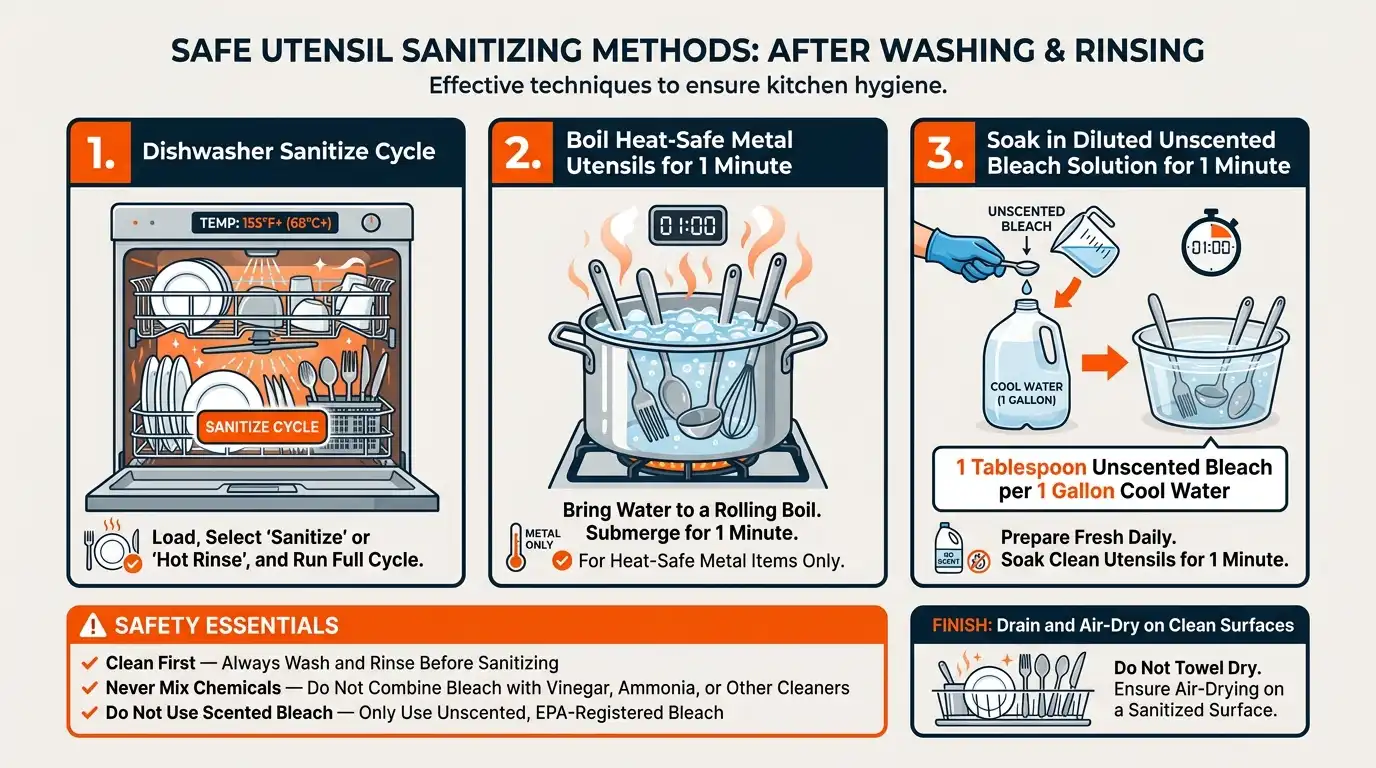
Cleaning removes grease and food. Sanitizing lowers germs to safe levels. Use one of these methods after washing and rinsing.
- Dishwasher sanitize cycle. The high heat does the work for you.
- Boiling water. Submerge metal utensils for 1 minute.
- Bleach solution. Mix 1 tablespoon unscented bleach in 1 gallon of cool water. Soak for 1 minute. Drain and air dry. No rinse needed on clean surfaces.
Food safety guidance from CDC and NSF supports these methods. Do not mix chemicals. Do not use scented bleach. How to Clean Utensils Properly means you clean first, then sanitize, then air dry.
Drying and Storage Best Practices
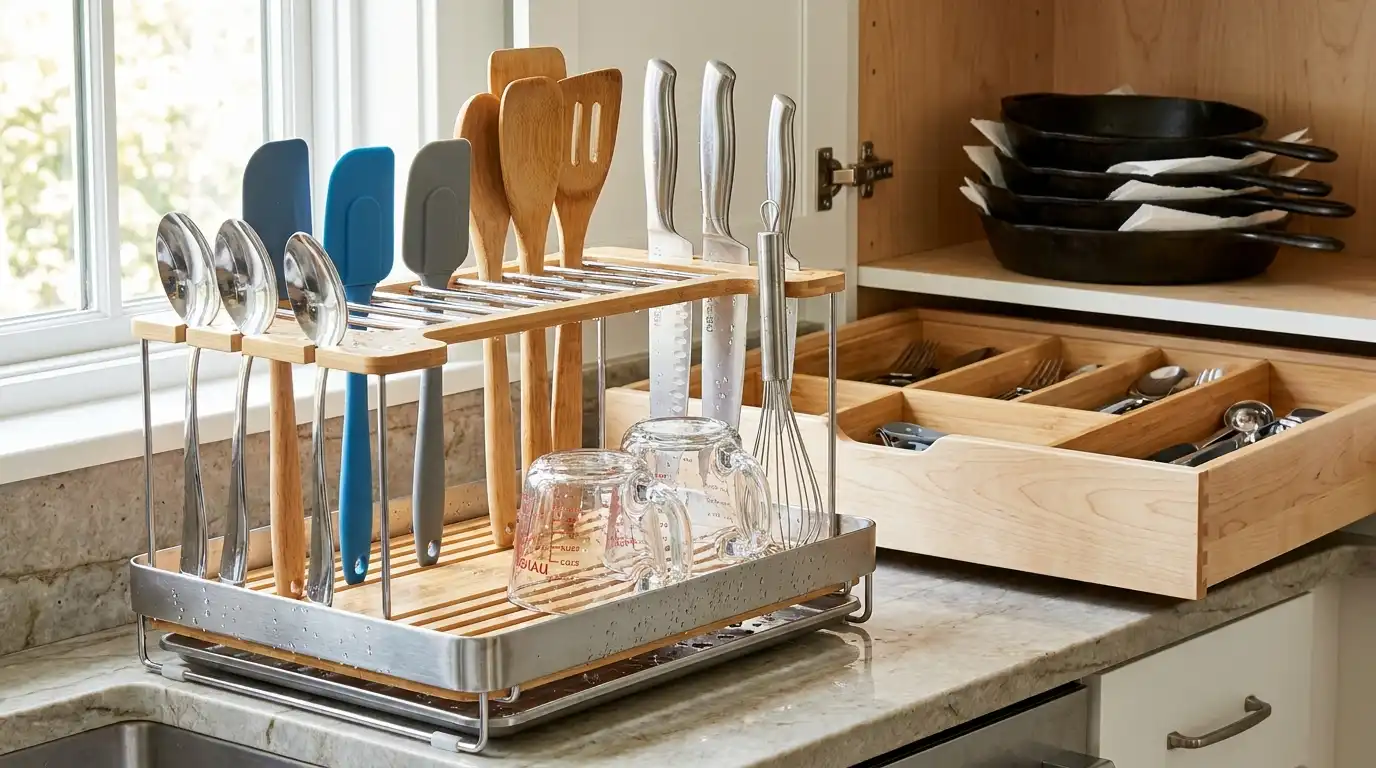
Air drying beats towel drying for hygiene. Towels can spread germs. Use a rack with space for airflow. Point handles up so water drains out.
Store clean tools in a dry spot. Use drawer dividers so items do not scrape each other. Keep wood away from steam. For cast iron, add a paper towel between pans to block moisture. How to Clean Utensils Properly ends with dry, safe storage.
Tough Stains, Odors, and Burnt-On Messes
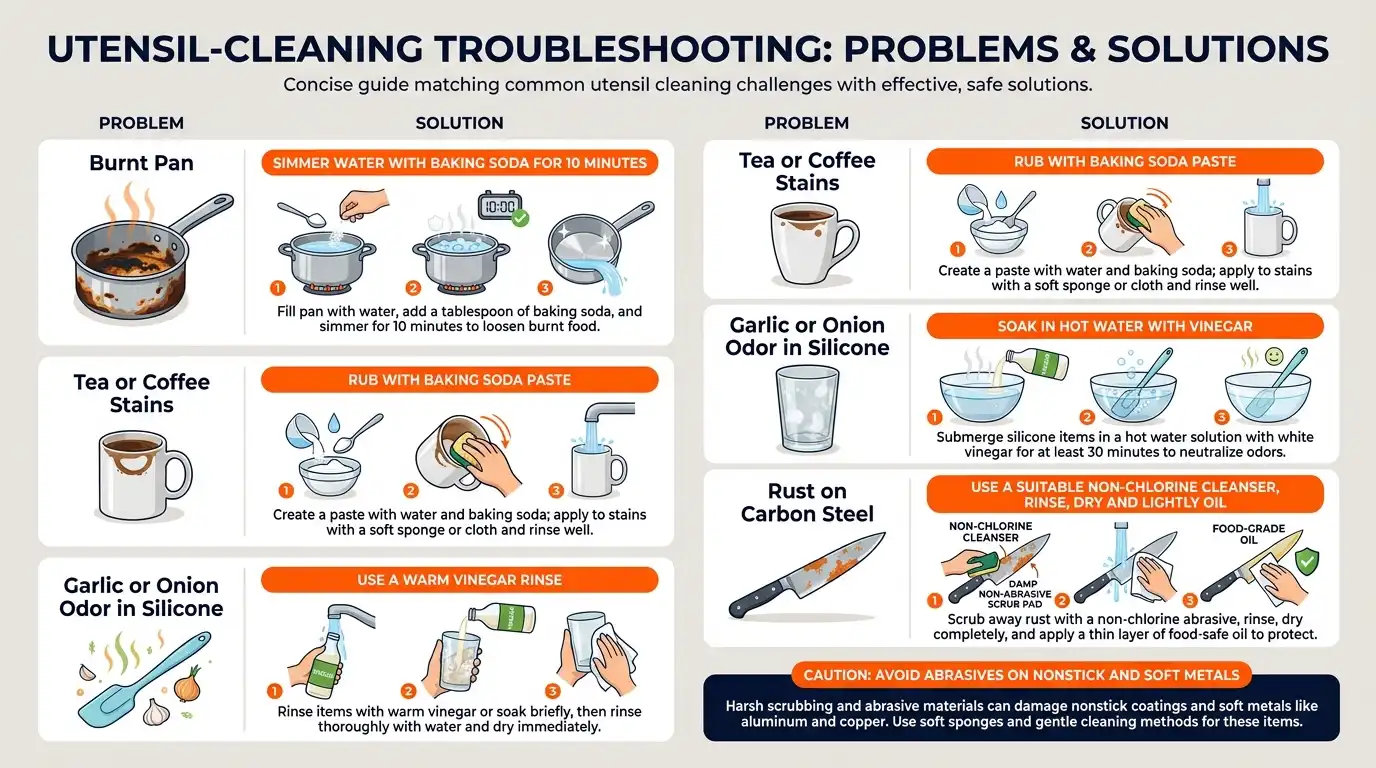
You can fix most problems with pantry items.
- Burnt pans. Simmer water with a spoon of baking soda for 10 minutes. Let cool. Scrape with a spatula. Repeat if needed.
- Tea and coffee stains. Make a paste of baking soda and water. Rub, then rinse.
- Garlic and onion odors. Soak silicone in hot water with vinegar for 20 minutes.
- Hard water spots. Rinse with warm vinegar. Then wash and dry.
- Rust on carbon steel. Rub with a paste of Bar Keepers Friend. Rinse. Dry. Oil light.
Avoid abrasives on nonstick or soft metals. Gentle is part of How to Clean Utensils Properly.
Common Mistakes to Avoid and How to Fix Them
I have made all of these at least once. Here is what to watch for.
- Letting food dry on tools. Fix: Soak in warm soapy water right after cooking.
- Using bleach on metal pans. Fix: Use bleach only for sanitizing plastic or stainless, then rinse or air dry.
- Scrubbing nonstick with steel wool. Fix: Use soft sponges and mild soap only.
- Mixing chemicals. Fix: Stick to one cleaner at a time. Rinse between steps.
- Rarely changing sponges. Fix: Replace weekly. Microwave a damp sponge for 1 minute to freshen, or run it in the dishwasher.
When you avoid these traps, you master How to Clean Utensils Properly with less effort.
Eco-Friendly and Time-Saving Habits
Save water and time with small shifts.
- Pre-scrape plates. Do not pre-rinse under running water.
- Soak smart. Fill one basin with hot soapy water. Dip and scrub there.
- Run full dishwasher loads. Use the eco cycle when you can.
- Choose concentrated soap. You need less product for the same job.
- Set a 10-minute reset timer after dinner. Clear, wash, rack, and done.
These habits make How to Clean Utensils Properly part of a green, easy routine.
Troubleshooting: Water Spots, Rust, and Cloudy Finishes
Water spots mean minerals left behind. Use hotter rinse water and dry right away. A vinegar rinse helps in hard water areas.
Rust shows up when bare steel meets moisture. Dry at once. Oil carbon steel and cast iron. If rust appears, scrub it off, dry, and re-season.
Cloudy glass can be hard water or etching. If vinegar does not fix it, the surface may be etched. Use a gentler detergent and skip high heat. This is a key detail in How to Clean Utensils Properly that many people miss.
Frequently Asked Questions
How often should I replace sponges and brushes?
Replace sponges weekly or sooner if they smell. Replace brushes every 1 to 3 months, or when bristles bend.
Can I wash wooden utensils in the dishwasher?
No. The heat and water can warp and crack wood. Hand wash fast, then dry and stand up to air dry.
What water temperature is best for hand washing?
Use water as hot as is comfortable, about 105 to 115°F. Hot water helps soap cut grease and speeds drying.
Do I need to pre-rinse dishes before loading the dishwasher?
No. Scrape off food, then load. Modern detergents work better with a bit of residue on the surface.
How can I sanitize baby utensils safely?
Use the dishwasher sanitize cycle or boil for 1 minute. Let items air dry on a clean rack.
Is bleach safe for stainless steel utensils?
Yes, in the right dilution for sanitizing after washing. Keep contact short, then air dry.
How do I prevent odors in silicone spatulas?
Soak in hot water with a little baking soda or vinegar. Wash again with soap, then air dry.
Conclusion
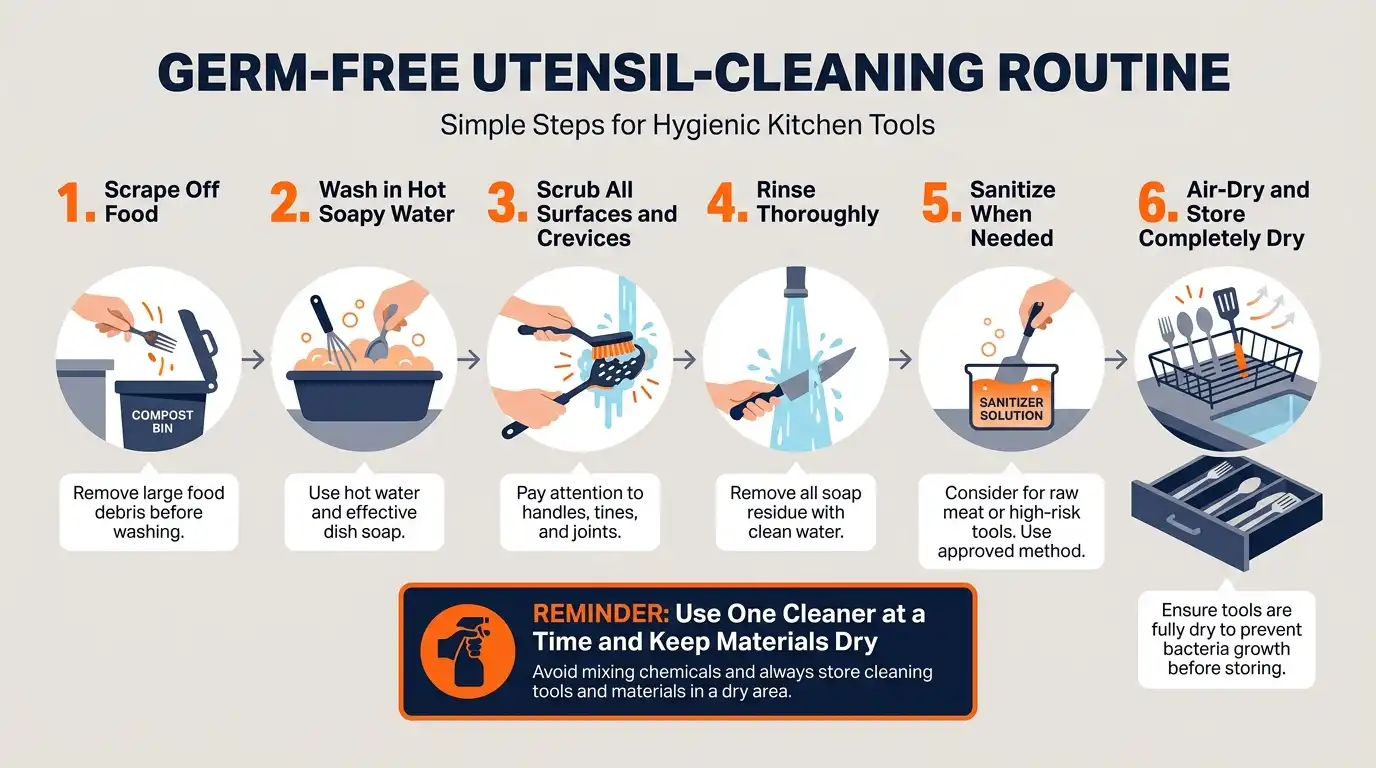
Clean tools make safe, tasty food and a calm kitchen. Now you know How to Clean Utensils Properly with simple steps, safe sanitizing, and smart storage. Pick one habit to start today, like air drying or a hot rinse, and build from there. Ready for more smart kitchen tips? Subscribe for updates, share this guide with a friend, or drop your questions in the comments.