A clean kitchen comes from steady habits, safe products, and clear zones.
Welcome to the Kitchen Cleaning Master Guide. I have spent years building, testing, and teaching real kitchen routines. This guide blends pro tips, simple science, and home hacks. If you want a spotless, safe space with less stress, the Kitchen Cleaning Master Guide is for you.
What This Kitchen Cleaning Master Guide Covers
A clean kitchen is more than looks. It is food safety, smart flow, and care for tools. In this Kitchen Cleaning Master Guide, we cover supplies, zones, and routines. We also share fast methods and honest limits.
You will learn:
- What to clean each day, week, and month
- How to clean sinks, counters, ovens, fridges, and floors
- How to sanitize the safe way
- How to remove stains and smells
- How to save time and costs
Use this Kitchen Cleaning Master Guide as your roadmap. Read once. Then keep it handy when you clean.
Safety First and Smart Supplies
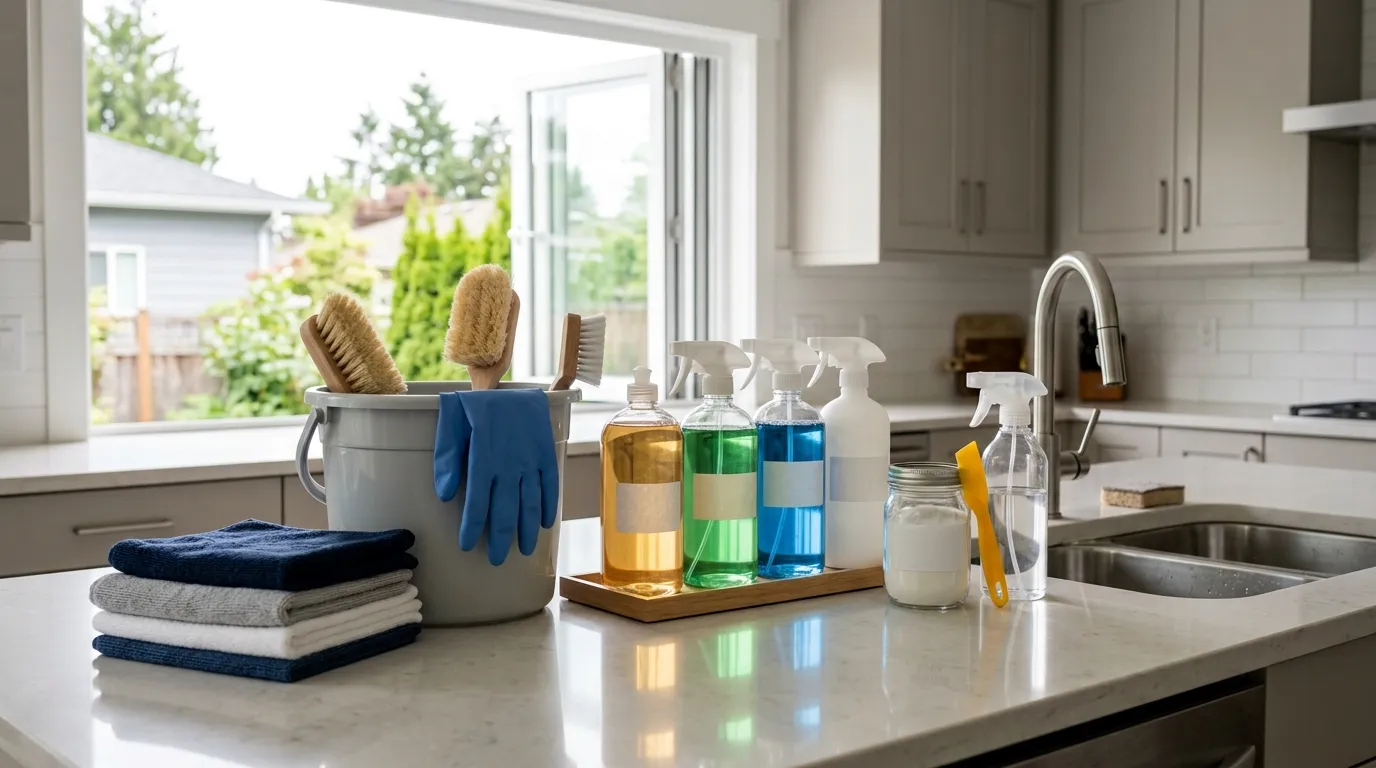
Safety is the base of this Kitchen Cleaning Master Guide. Keep windows open. Wear gloves. Tie hair back. Use stable step stools. Store chemicals high and locked.
Rules that never change:
- Read the label each time you use a product
- Do not mix bleach with ammonia or vinegar
- Keep cleaners off food and out of reach of kids and pets
- Test new products on a small, hidden spot
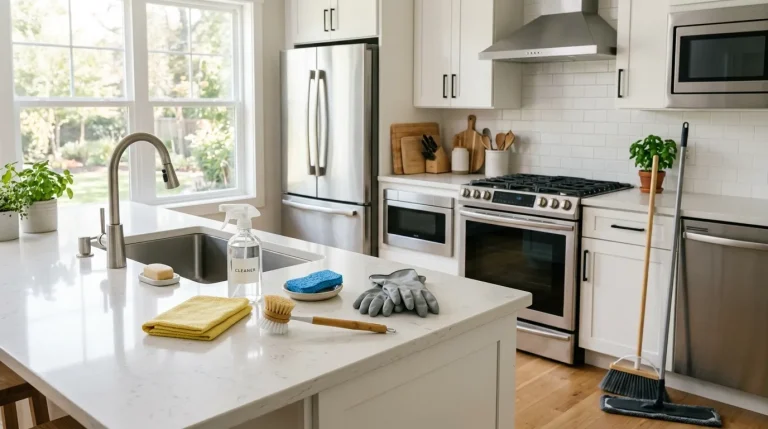
Helpful supplies:
- Microfiber cloths for dust, grease, and crumbs
- A soft brush and a grout brush
- A scraper with plastic blades
- Dish soap, an all-purpose cleaner, and a degreaser
- Disinfectant or sanitizer, per label
- Baking soda for mild scrub
- White vinegar for limescale on safe surfaces
- Trash bags and compost bags
- A bucket and a spray bottle set
Sanitize the right way:
- Clean first to remove dirt
- Apply sanitizer and keep the surface wet for the label time
- Typical wet time is 1 to 10 minutes
- For a mild chlorine sanitizer, many pros use about 1 tablespoon unscented bleach in 1 gallon of water for near 100–200 ppm. Check your label to be sure
This Kitchen Cleaning Master Guide favors safe steps over harsh tricks. When in doubt, follow the label.
Daily, Weekly, and Monthly Routines That Work
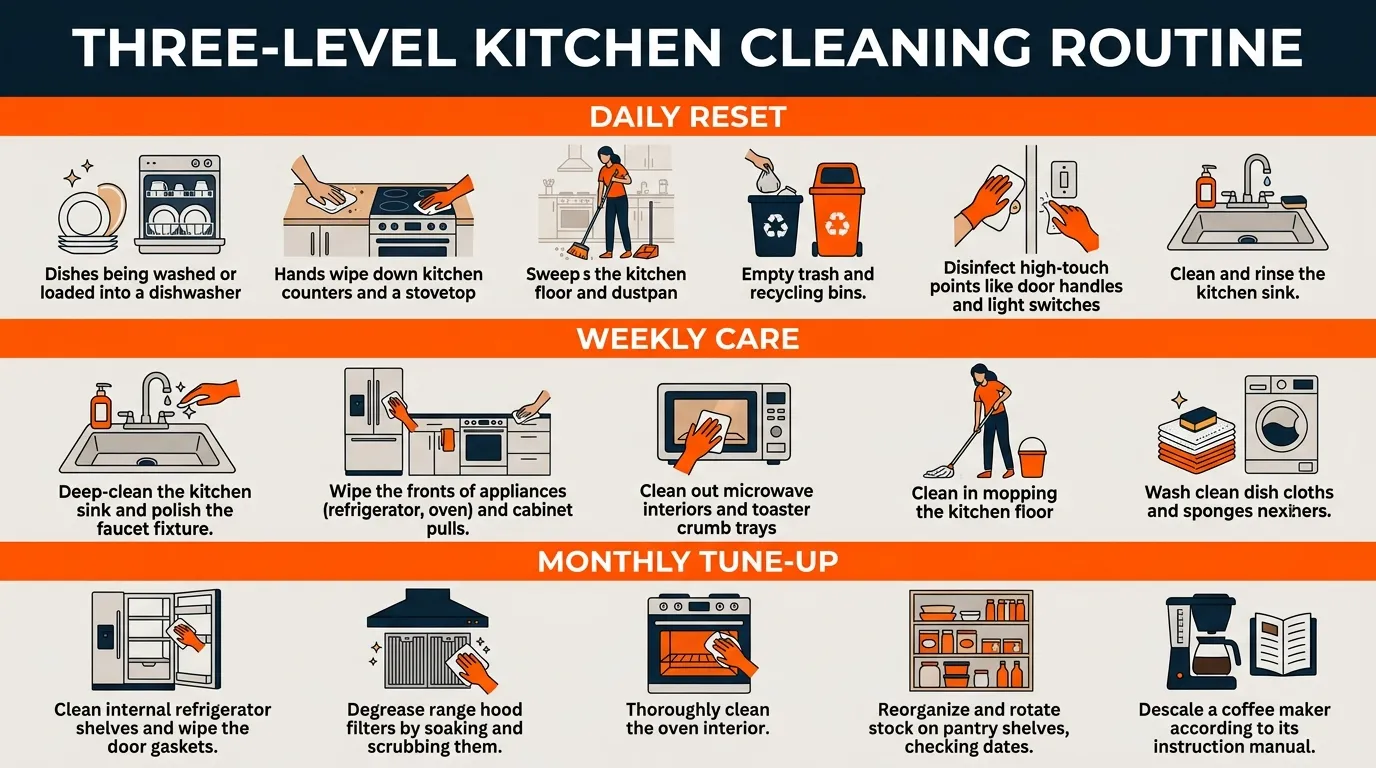
A steady rhythm makes a clean kitchen easy. Use this Kitchen Cleaning Master Guide to build habits that stick.
Daily reset:
- Wash and dry dishes or run the dishwasher
- Wipe counters, stove top, and table
- Sweep floors and empty full bins
- Disinfect high-touch points like handles and switches
- Shine the sink and run the disposal with cold water
Weekly care:
- Deep clean sink, faucet, and drain cover
- Wipe fronts of appliances and cabinet pulls
- Clean microwave and toaster trays
- Mop floors with the right cleaner
- Wash dish cloths and sponges on hot
Monthly tune-up:
- Clear and wipe fridge shelves and gaskets
- Degrease range hood filters
- Clean oven if needed
- Check pantry dates and rotate stock
- Descale coffee maker as the manual says
Make it easy. Pair tasks with habits. For example, wipe the stove after dinner. Your Kitchen Cleaning Master Guide works best when you do a little each day.
Zone Cleaning: Step-by-Step For Every Surface
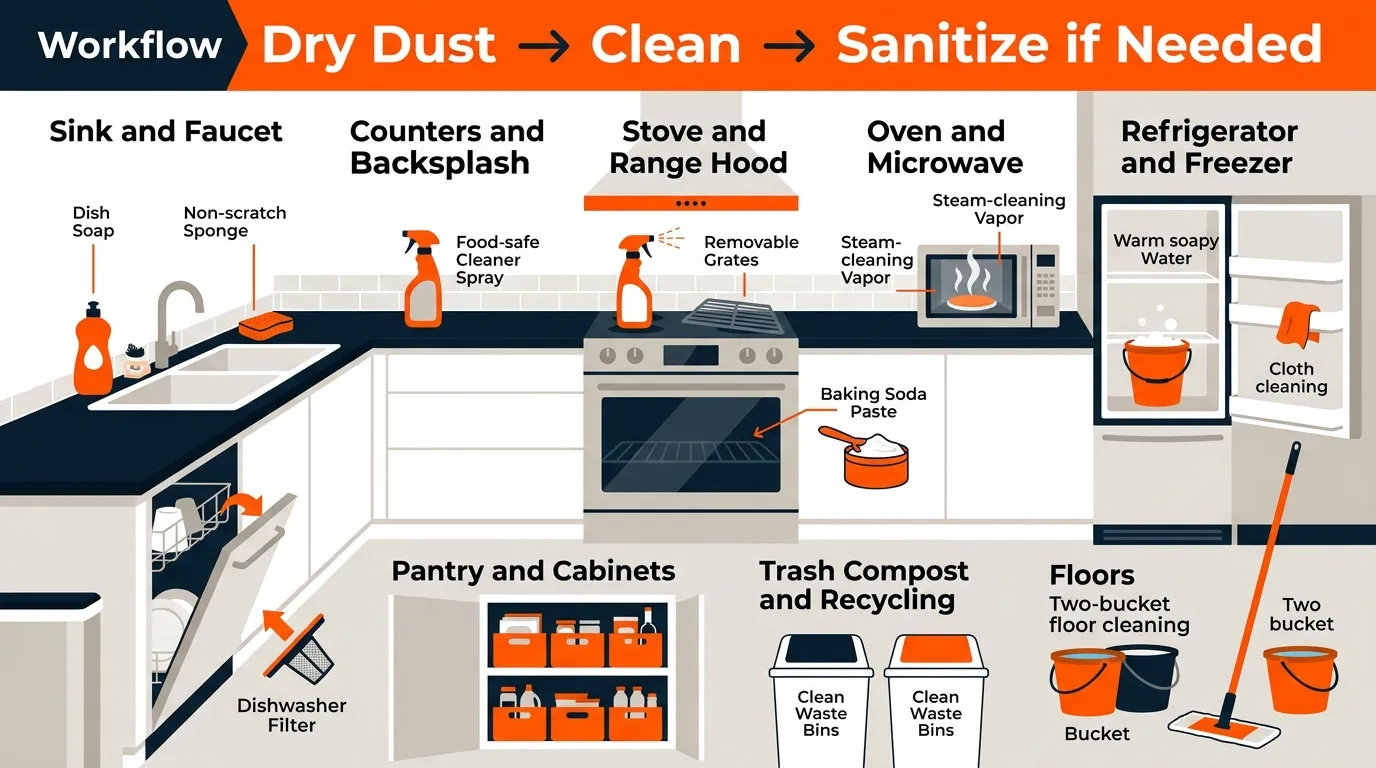
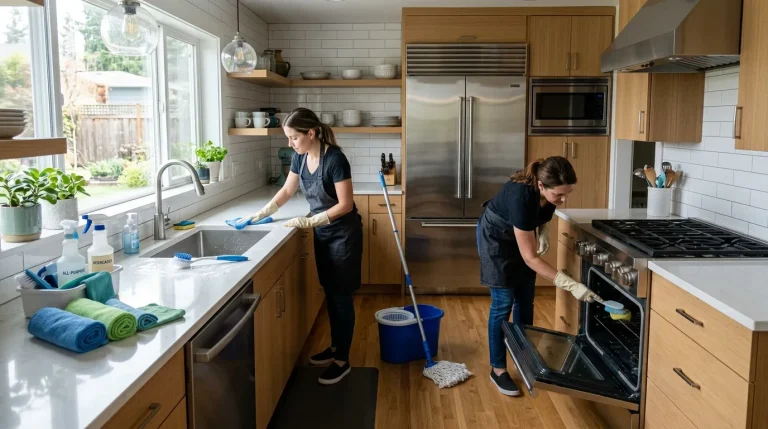
This Kitchen Cleaning Master Guide uses zones. Work left to right, top to bottom. Dry dust first. Then clean. Then sanitize if needed.
Sink and Faucet
- Clear dishes and racks
- Scrub with dish soap and a non-scratch sponge
- Use baking soda for stains; rinse well
- Polish with a dry cloth; clean aerator if flow is low
Counters and Backsplash
- Remove clutter; keep only daily tools
- Wipe crumbs first
- Clean with a food-safe cleaner
- For stone, use pH-neutral stone cleaner only
Stove and Range Hood
- Remove grates and knobs if safe; soak in hot soapy water
- Spray degreaser; let dwell for a few minutes
- Wipe top and control panel; dry well
- Wash range hood filters and let dry
Oven and Microwave
- For the oven, use the label method or a paste of baking soda and water on cool walls; avoid heating chemicals
- Wipe racks in the sink
- For the microwave, heat a bowl of water with lemon for steam, then wipe
Refrigerator and Freezer
- Toss old food; wipe spills first
- Clean shelves with warm soapy water; dry well
- Wipe door seals; keep them dry to prevent mold
- Vacuum coils if easy and safe
Dishwasher
- Remove and rinse the filter
- Run a hot cycle with a cleaner made for dishwashers
- Wipe the seal and the bottom edge of the door
Pantry and Cabinets
- Empty one shelf at a time
- Wipe with a mild cleaner; dry
- Use bins or labels; first in, first out
Trash, Compost, and Recycling
- Empty daily if full or smelly
- Wash bins with soapy water; sanitize and dry
- Use baking soda under liners to cut odor
Floors
- Sweep or vacuum edges first
- Mop with the right cleaner for the floor
- Use two buckets: one for clean, one for rinse
Move through zones in order. Do not jump around. This makes the Kitchen Cleaning Master Guide fast and calm.
Grease, Grime, and Germs: Methods That Save Time
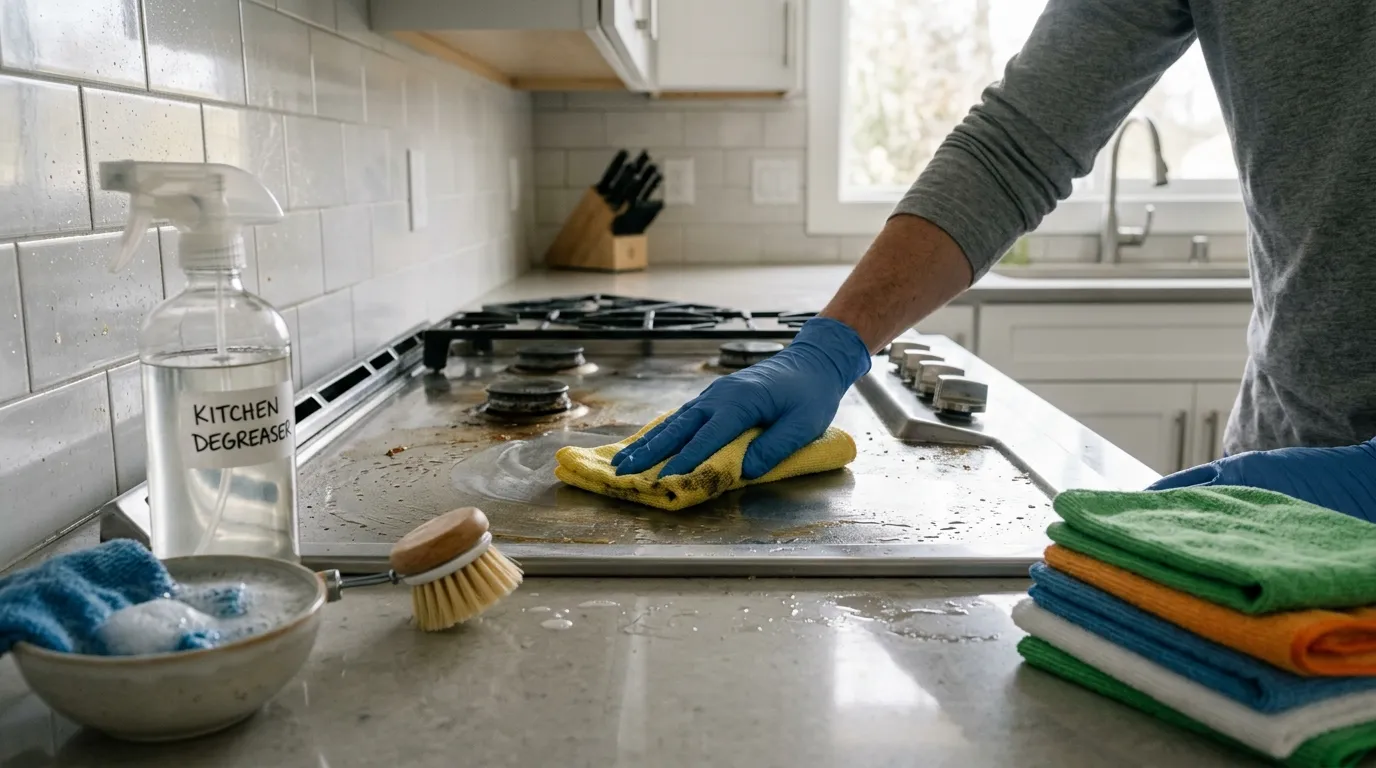
Grease loves heat and sticks to cool spots. Fight it with warm water and the right pH. Alkaline cleaners lift oils. Enzyme cleaners help with food soils. Use dwell time. Let the product sit. Then wipe.
Tips that work:
- Heat helps: warm water loosens grease
- Microfiber grabs tiny bits; fold and flip to use all sides
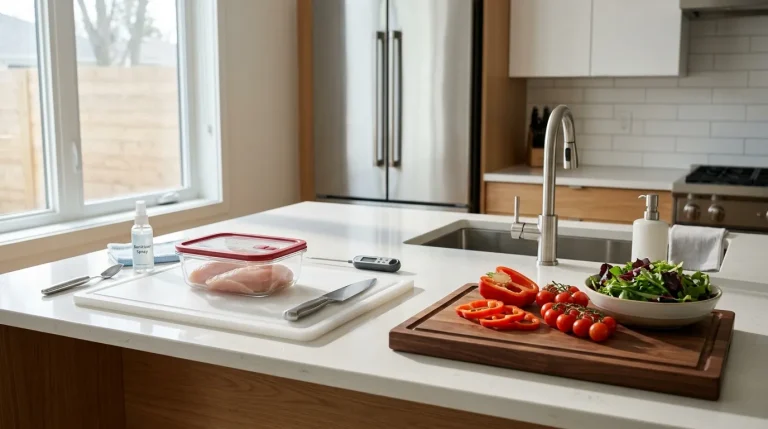
- Use color-coded cloths to avoid cross-contamination
- Clean first, then sanitize, for a true germ kill
- Keep surfaces wet for the full label time
Common truths from this Kitchen Cleaning Master Guide:
- Vinegar cuts limescale but does not disinfect like a registered product
- Bleach kills germs but can damage metals and fabrics
- Hydrogen peroxide is a good option for light color-safe disinfecting; follow the label
Let science do the work. Not your arms.
Eco-Friendly and Budget Options
You can clean well and be kind to the planet. This Kitchen Cleaning Master Guide shows simple swaps.
Try these:
- Use concentrated refills to cut plastic waste
- Choose microfiber you can wash 100+ times
- For limescale on safe surfaces, use vinegar. Do not use it on marble, travertine, or some grout
- Use baking soda for gentle scrub on sinks and pans
- Use fragrance-free products if you have asthma or allergies
Helpful notes:
- Castile soap is great for light tasks
- Rinse well after natural acids or soaps
- Always test first and follow labels
Eco can be easy, safe, and low-cost.
Stain and Odor Rescue
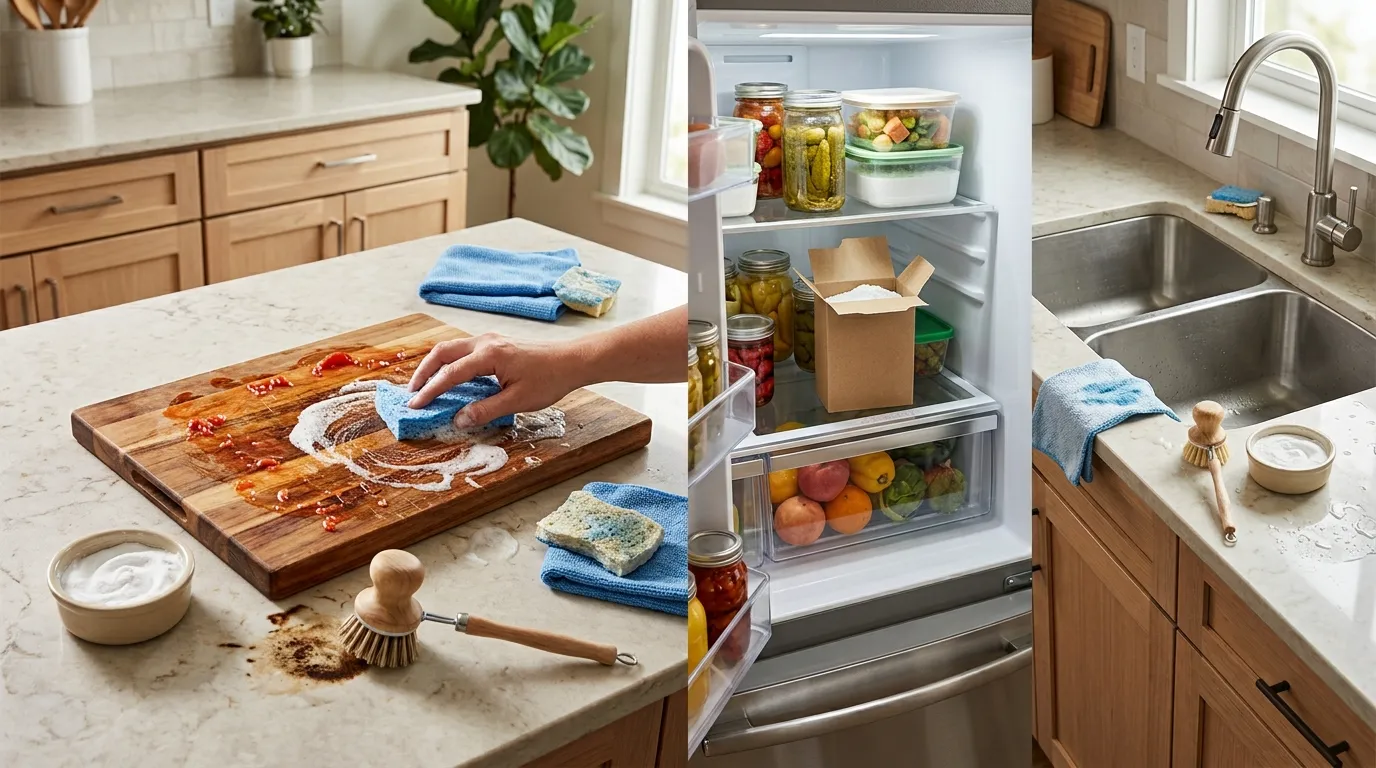
Spills set fast. Act fast. This Kitchen Cleaning Master Guide lists quick fixes.
Tough stains:
- Coffee or tea on counters: wipe, then use a paste of baking soda and water; rinse
- Turmeric on plastic: sun bleach with soapy wash, then place in sunlight
- Tomato on cutting boards: scrub with dish soap, rinse, then sanitize
Lingering smells:
- Fridge odor: wipe spills, then place an open box of baking soda
- Drain odor: flush with hot water, dish soap, and a cup of baking soda, then vinegar; rinse once fizzing stops
- Onion on hands: rub with stainless steel under cold water
Do not mask smells. Remove the source. Then clean and dry.
Time Management, Habits, and Checklists
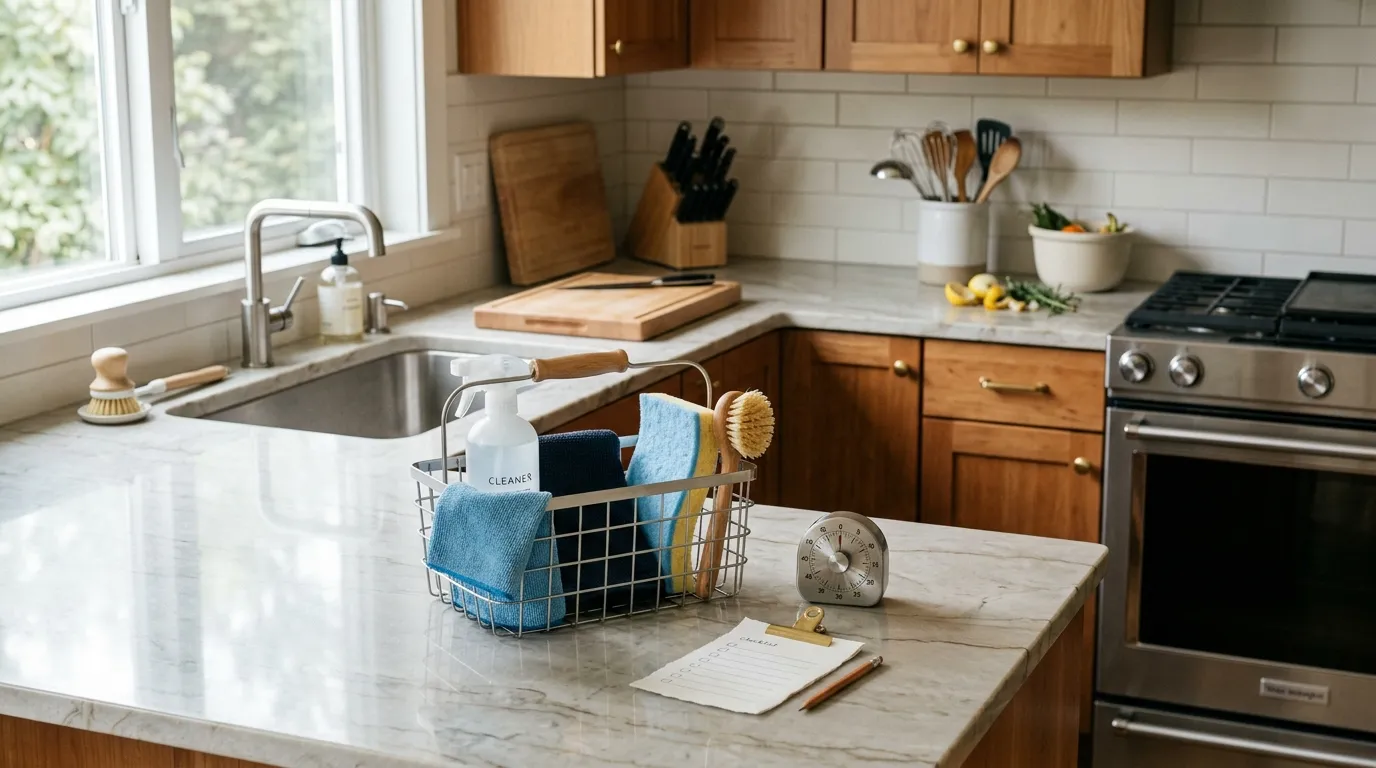
Busy day? Use short sprints. This Kitchen Cleaning Master Guide favors tiny wins.
Smart habits:
- Do a five-minute reset after each meal
- Start water to soak pans while you eat
- Keep a caddy with your top tools
- Use a timer and play one song per task
Checklists help:
- Daily: dishes, wipe, sweep, sink, touch points
- Weekly: floors, appliances, cloths, microwave
- Monthly: fridge deep clean, oven, hood filters
Share the load. Give each person one clear task. Keep it visible on the fridge.
Real-Life Lessons From the Field
In my first restaurant job, we cleaned the line in zones. We set a timer. We used fresh cloths for each area. The kitchen looked new each night. At home, I used the same plan. The mess felt smaller.
What I learned in this Kitchen Cleaning Master Guide:
- Clear clutter first. Cleaning goes fast when spaces are open
- Let products dwell. Wiping right away wastes time and cleaner
- Shine the sink last. A shiny sink makes the room feel done
Mistakes to avoid:
- Spraying too much. Use less, use it well
- Skipping rinse steps. Residue grabs dirt
- Mixing chemicals. Never do it. It is not worth it
Small steps, big wins. You can do this too.
Troubleshooting and Limits
This Kitchen Cleaning Master Guide is strong, but not magic. Some jobs need care or a pro.
Know the limits:
- Do not use vinegar or lemon on natural stone
- Do not use oven cleaner on self-clean coatings unless the label says it is safe
- Burnt-on carbon may need a scraper and heat
- Black mold on walls may need a licensed pro
- Fire soot and heavy grease in ducts need specialists
When unsure, stop and check the manual. Or ask a pro. Safety first, always.
Frequently Asked Questions of Kitchen Cleaning Master Guide
How often should I sanitize kitchen surfaces?
High-touch areas need daily care. Sanitize food-contact surfaces after raw meat prep and at least once a day.
What is the best way to clean stainless steel?
Wipe with a damp microfiber, then dry with a clean cloth. For shine, use a small amount of oil-based polish and buff with the grain.
Can I use vinegar on all kitchen surfaces?
No. Avoid vinegar on marble, natural stone, and some grouts. Use a pH-neutral cleaner for those.
How do I keep sponges sanitary?
Rinse well, squeeze dry, and store upright. Replace often or wash on hot with bleach per label.
What is the difference between cleaning and disinfecting?
Cleaning removes dirt and food soils. Disinfecting kills germs on clean surfaces when kept wet for the label time.
Conclusion
You now have a full Kitchen Cleaning Master Guide you can trust. Start small. Choose one zone. Build a daily reset. Let science and systems do the heavy lifting. Your kitchen will feel calm, clean, and safe.
Ready to take the next step? Download a checklist, set a five-minute timer, and begin. Share your wins or questions in the comments, and subscribe for more practical guides and updates.