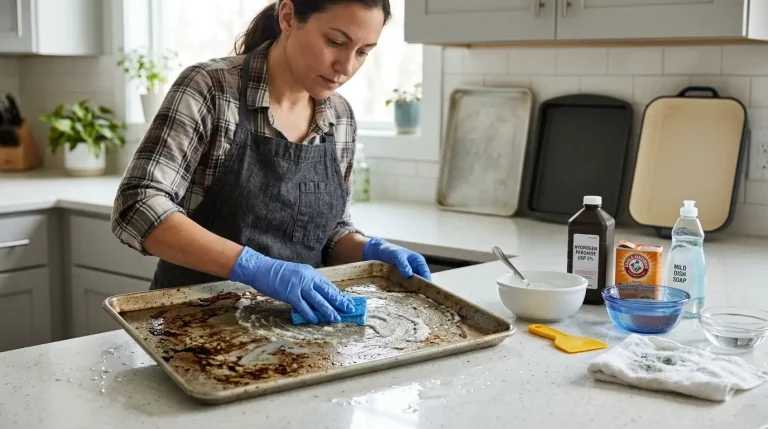
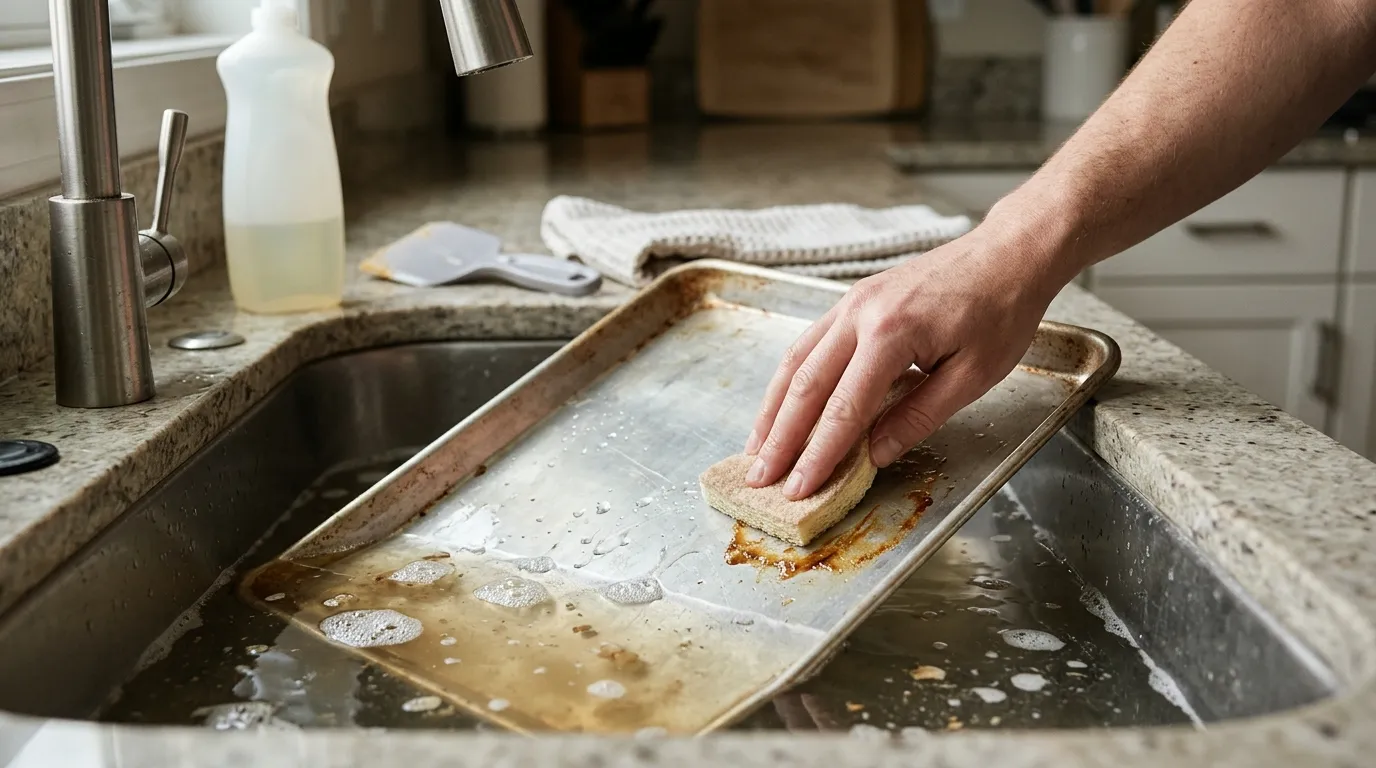
Sticky bakeware often has a mix of baked-on oil, sugar, food starch, and old cooking spray. In most cases, the safest fix is warm water, dish soap, soaking time, and a soft scrubber. For tough residue, use a baking soda paste only when the bakeware material allows it.
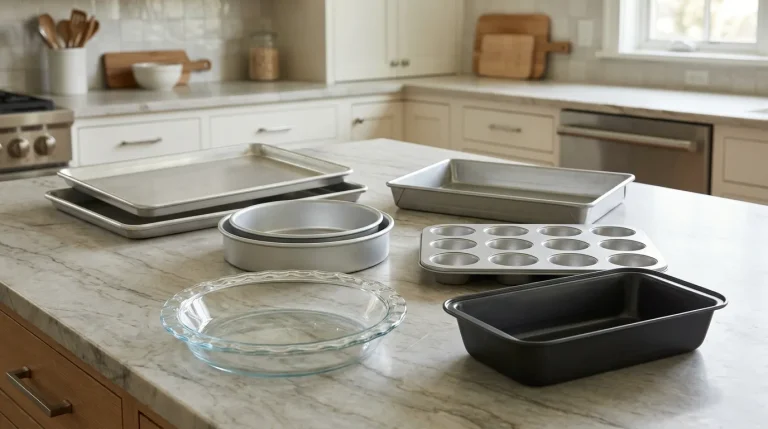
The best method depends on whether the pan is nonstick, aluminum, glass, stainless steel, cast iron, or silicone. Start with the gentlest method. Strong scrubbing can remove a nonstick coating, scratch aluminum, or strip seasoning from cast iron.
Introduction
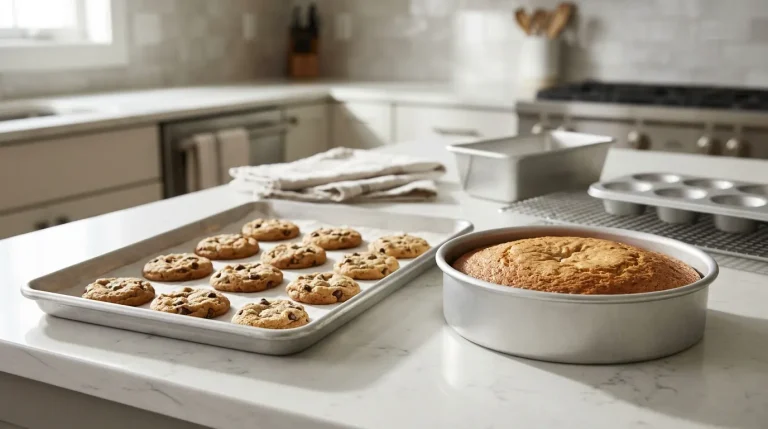
A sticky baking pan can make cookies tear, cakes release poorly, and cleanup feel much harder than it should. This guide is for home cooks in the United States who use common bakeware such as sheet pans, muffin tins, loaf pans, glass casserole dishes, and silicone molds.
You will learn how to remove fresh grease, old cooking spray, caramelized sugar, and stubborn baked-on oil. You will also learn which cleaners to avoid, how to clean different materials, and when a damaged pan should be replaced.
What Makes Bakeware Sticky?
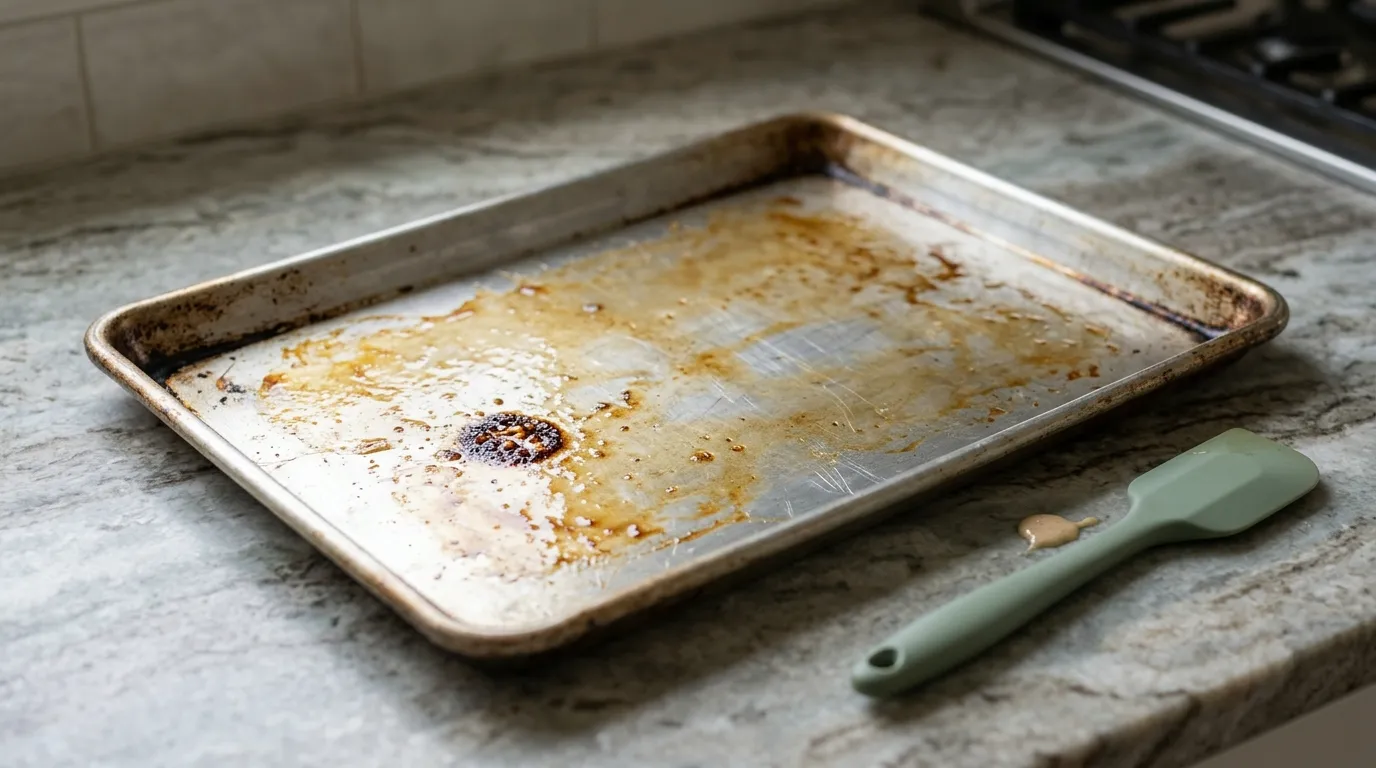
Sticky bakeware usually has a thin film of fat and food residue that has been heated again and again. Cooking oil, butter, shortening, sugar, and aerosol cooking spray can bond to the surface as they bake.
The residue may look brown, yellow, clear, or almost black. A pan can feel sticky even when it looks clean because a thin layer remains after washing.
Common causes include:
- Baked-on cooking spray
- Old oil or butter
- Caramelized sugar
- Egg or batter residue
- Grease trapped around corners and handles
- Incomplete rinsing after washing
- Repeated use at high heat
- A worn or damaged nonstick coating
A sticky surface is not always a sign that the pan is unsafe. However, peeling coatings, deep scratches, rust, cracks, and flaking finishes are warning signs.
The Basic Method for Cleaning Sticky Bakeware
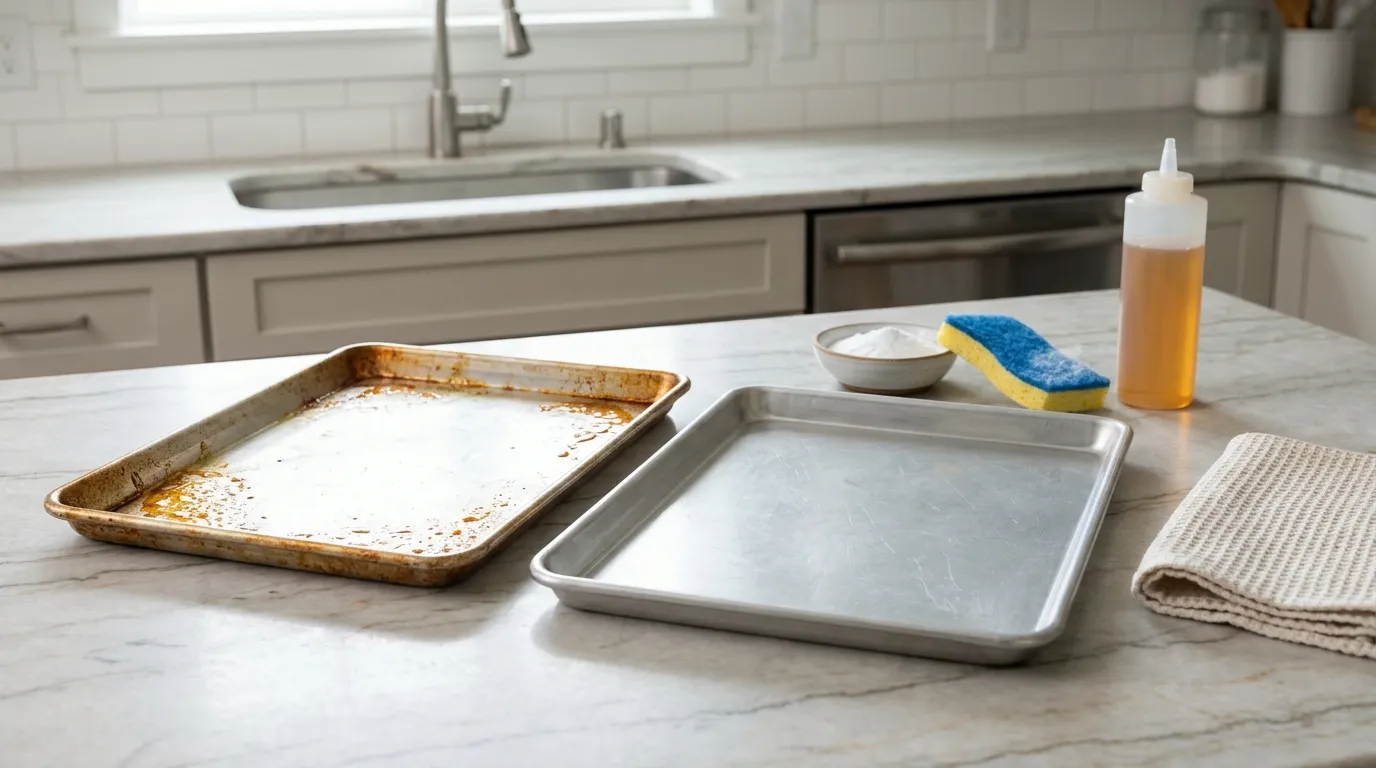
Use this method first for most metal, glass, and glazed bakeware. It removes fresh grease and many layers of old residue without harsh chemicals.
What you need
- Hot tap water
- Grease-cutting dish soap
- A soft sponge or nylon brush
- A plastic scraper or old plastic card
- A clean towel
- Baking soda, if needed
Do not pour boiling water into cold glass bakeware. Sudden temperature changes can cause thermal shock and may break the dish.
Step-by-step instructions
- Let the pan cool.
Do not place a hot baking pan in cold water. Set it on a heat-safe surface until it is warm, not hot. - Remove loose food.
Lift away crumbs and large bits with a silicone spatula or plastic scraper. Avoid knives and metal tools. - Add hot water and dish soap.
Fill the pan with hot tap water. Add about 1 teaspoon of dish soap for a standard 9-by-13-inch pan. Use enough water to cover the sticky area. - Soak the bakeware.
Leave it for 20 to 30 minutes. For thick, old residue, soak it for several hours or overnight if the material’s care guide allows it. - Scrub gently.
Use a soft sponge, nylon brush, or non-scratch pad. Work in small circles. Pay close attention to corners and ridges. - Lift remaining residue.
Use a plastic scraper at a low angle. Let the water and soap do most of the work. - Rinse well.
Soap left on the surface can attract more dust and may affect the taste of food. - Dry fully.
Wipe the pan with a clean towel. For metal bakeware, complete drying helps reduce water spots and rust.
How to tell if it worked
Run a clean, dry finger over the surface. It should feel smooth rather than tacky. A slight stain may remain on aluminum or glass even after the sticky film is gone. Staining is different from residue.
If the pan still feels sticky, repeat the soak before using a stronger method.
How to Remove Tough, Baked-On Grease
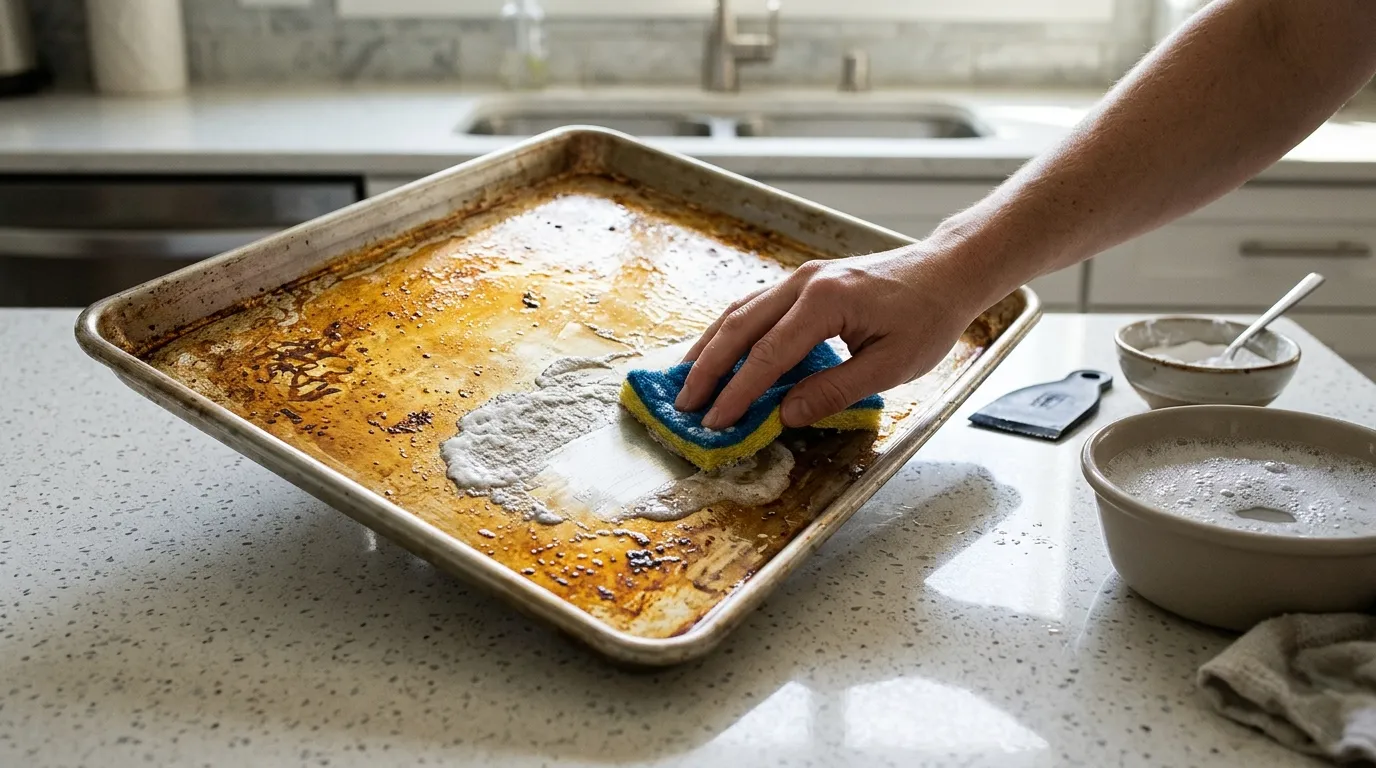
For heavy grease, make a soft paste with baking soda and water. This method works well on many stainless steel, enameled, glass, and uncoated metal pans.
Baking soda paste method
- Sprinkle baking soda over the sticky area.
- Add a small amount of water.
- Mix until the paste has the texture of soft frosting.
- Spread it over the residue.
- Let it sit for 15 to 30 minutes.
- Wipe with a damp, soft sponge.
- Rinse and dry the pan.
For very thick grease, cover the paste with a damp cloth. The moisture keeps the paste active while the residue softens.
Do not treat baking soda as a universal cleaner. It can dull or discolor some aluminum surfaces. It may also scratch delicate finishes when rubbed too hard. Test a small hidden area first.
When to use a commercial cleaner
A commercial degreaser may help with uncoated stainless steel or heavily soiled sheet pans. Read the label before use. The label should clearly state that the product is suitable for the material.
Do not use oven cleaner on nonstick bakeware, bare aluminum, silicone, or surfaces that the manufacturer excludes. Oven cleaner is caustic and can damage finishes. Wear the protective equipment listed on the label and keep the area well ventilated.
Never mix cleaning products. In particular, do not mix bleach with ammonia, acids, or other cleaners.
Material-Specific Cleaning Guide
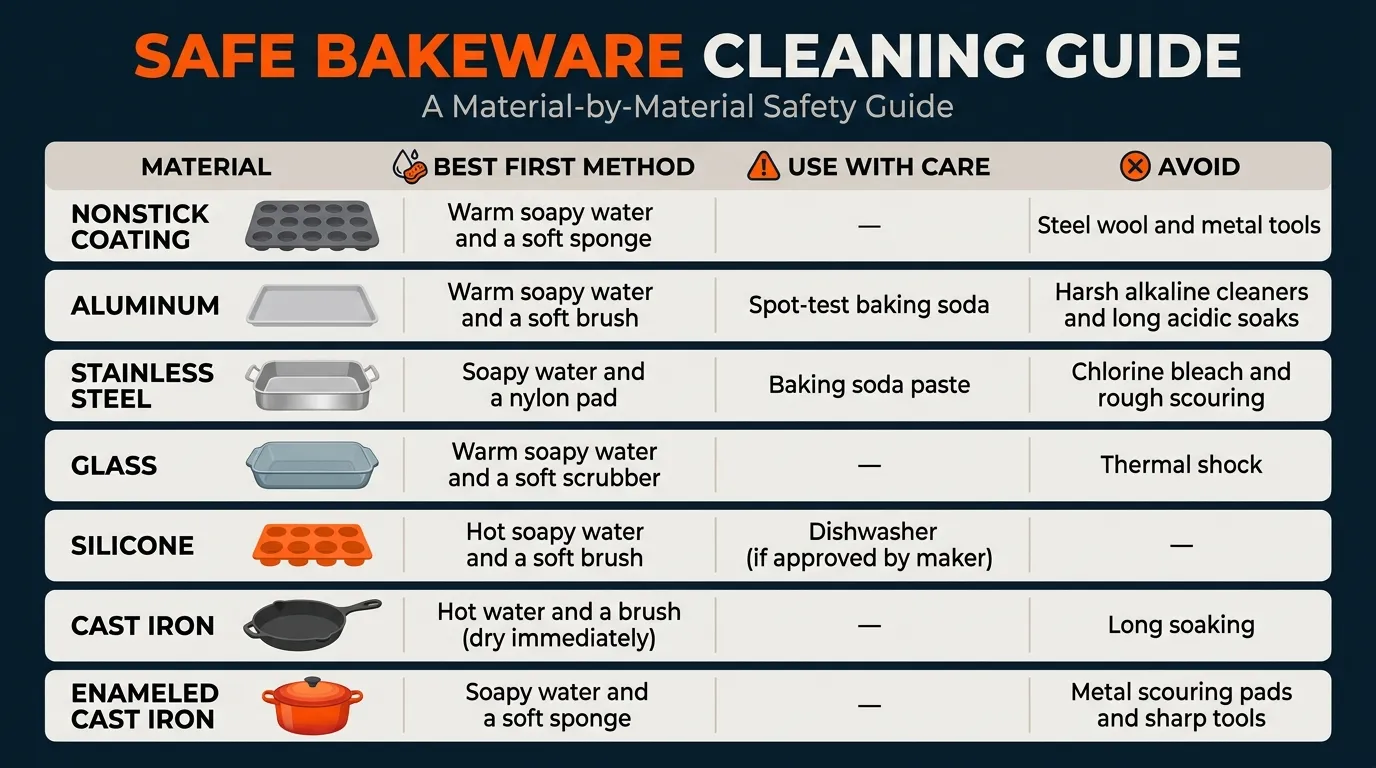
The safest way to clean sticky bakeware depends on the surface. Use the table below as a quick starting point, then follow the pan maker’s instructions.
| Bakeware material | Best first method | Use with care | Avoid |
|---|---|---|---|
| Nonstick coating | Warm soapy water and a soft sponge | Short soak; plastic scraper | Steel wool, metal tools, harsh abrasives |
| Aluminum | Warm soapy water and a soft brush | Baking soda only after a spot test | Long acidic soaks, harsh alkaline cleaners |
| Stainless steel | Soapy water, nylon pad, baking soda paste | Cleaner made for stainless steel | Chlorine bleach and rough scouring |
| Glass | Warm soapy water and a soft scrubber | Baking soda paste for residue | Thermal shock and sudden temperature changes |
| Silicone | Hot soapy water and a soft brush | Dishwasher if the maker allows it | Greasy wipes that spread oil |
| Cast iron | Hot water, brush, and quick drying | A small amount of mild soap | Long soaking and air drying |
| Enameled cast iron | Soapy water and a soft sponge | Baking soda paste for stains | Metal scouring pads and sharp tools |
Nonstick bakeware
Use warm water, dish soap, and a soft sponge. A plastic scraper can remove softened batter or grease.
Do not use steel wool, powdered scouring cleanser, abrasive pads, or metal knives. These can scratch the coating. Do not place nonstick bakeware in the dishwasher unless the manufacturer specifically says it is dishwasher safe.
If the coating is peeling, bubbling, or flaking, replace the pan. Cleaning cannot restore a damaged nonstick surface.
Aluminum bakeware
Aluminum can develop dark marks or a dull finish when exposed to strong alkaline cleaners or long soaks. Start with dish soap and warm water.
For stubborn residue, use a small amount of baking soda paste on a test area. Rub lightly and rinse soon after. Do not use oven cleaner unless the manufacturer specifically approves it for that pan.
Glass bakeware
Glass usually tolerates soaking and gentle baking soda cleaning. The main risk is thermal shock.
Let hot glass cool before washing. Do not place cold glass on a hot burner or add boiling water to a cold dish. Inspect glass bakeware for chips, cracks, or deep scratches before using it.
Silicone bakeware
Silicone can hold onto a greasy film, especially after contact with oil spray. Wash it with hot water and grease-cutting dish soap. Use a soft brush to clean folds, seams, and small shapes.
If the silicone still feels oily, wash it again rather than applying a harsh solvent. A dishwasher may help, but check the product instructions first. Dry silicone fully before storing it.
Cast iron bakeware
Cast iron should not sit in soapy water for a long time. Scrape away food, wash it briefly with hot water and a brush, then dry it at once.
After drying, apply a very thin layer of cooking oil if the pan’s seasoning needs protection. Excess oil can become sticky, so wipe the surface until it looks nearly dry.
Enameled bakeware
Enameled surfaces are more resistant than bare cast iron but can still chip. Use a soft sponge and avoid metal tools. Baking soda paste can help with brown stains and cooked-on food.
How to Clean Sticky Cooking Spray From a Baking Sheet
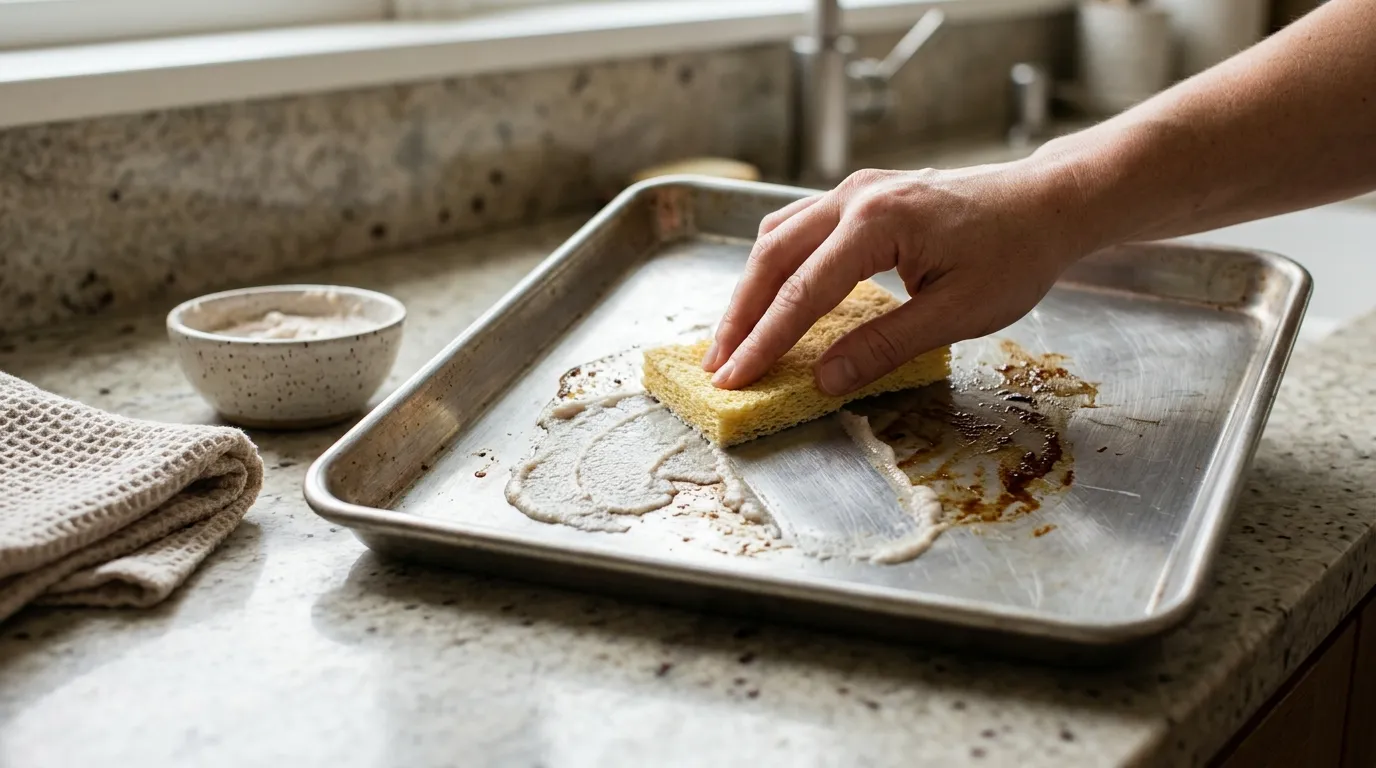
Aerosol cooking spray can leave a stubborn amber film. The spray may contain oil plus propellants and other ingredients that bake onto the surface.
For an uncoated metal or stainless steel sheet pan:
- Cover the area with hot water and dish soap.
- Soak for 30 minutes.
- Scrape gently with a plastic tool.
- Apply baking soda paste to the remaining film.
- Wipe with a nylon pad.
- Rinse and dry.
For a nonstick sheet pan, stop at the soft sponge and plastic scraper. Do not try to sand or scour away the film. If the pan remains sticky after several gentle cleanings, the coating may be worn or damaged.
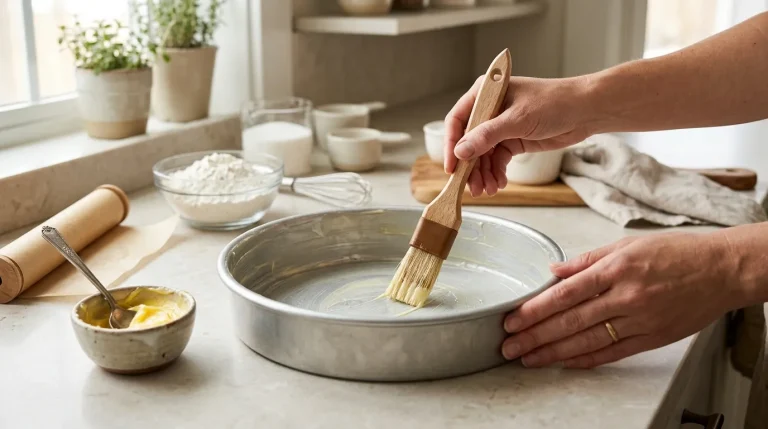
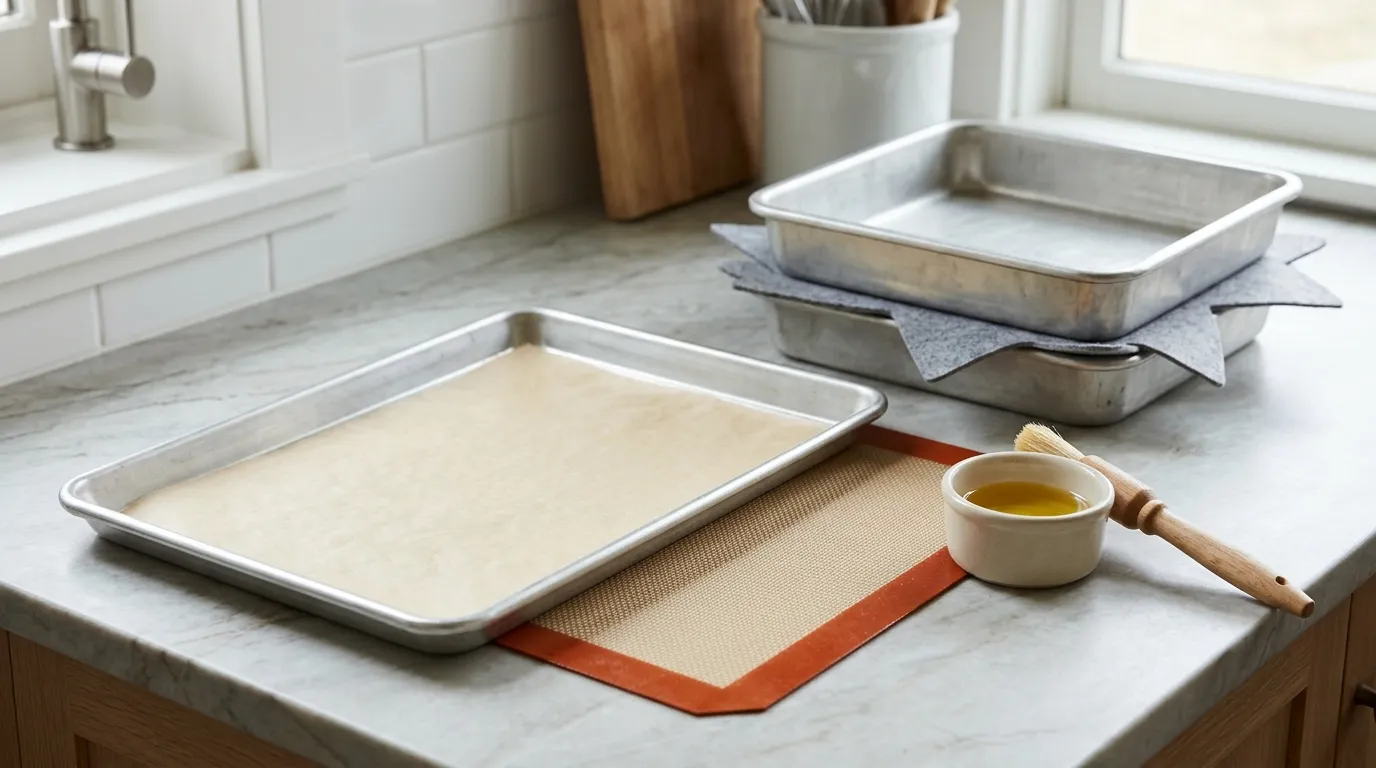
To prevent the problem, use parchment paper, a silicone baking mat, or a light coat of oil applied with a brush. Do not spray aerosol oil near an open gas flame.
What to Do When the Pan Is Still Sticky
If the residue remains after one cleaning, identify the problem before using a stronger cleaner.
The pan feels greasy
The soap may not have cut through the oil. Wash again with hotter tap water and a grease-cutting dish soap. Use a clean sponge. A sponge that already contains grease can spread it across the pan.
The pan has a hard brown film
This is often baked-on oil or sugar. Repeat the baking soda paste method if the material allows it. Several mild treatments are safer than one aggressive scrub.
The pan has a cloudy white film
Mineral deposits from hard water can look like grease. On compatible glass or stainless steel, a short soak with diluted white vinegar may help. Rinse well afterward.
Do not use vinegar on every material. Avoid long acidic soaks on aluminum, cast iron, and surfaces with care instructions that exclude acids.
The surface feels rough or uneven
The surface may be scratched, corroded, or coated with baked-on residue. Do not scrape hard until you know which one it is. A rough nonstick surface or flaking finish is a replacement issue, not a cleaning issue.
The pan smells rancid
Old oil may have oxidized. Wash the pan with hot water and dish soap, then rinse and dry it well. If the odor remains, repeat the wash. A porous or damaged surface may hold odor permanently.
Cleaning Mistakes to Avoid
Avoid these common shortcuts:
- Do not use metal knives to scrape food. They can scratch metal finishes and nonstick coatings.
- Do not use steel wool on nonstick, glass, enamel, or polished surfaces.
- Do not put hot glass under cold water.
- Do not soak cast iron for hours.
- Do not use oven cleaner on a material that the label excludes.
- Do not mix bleach, ammonia, vinegar, or other cleaning products.
- Do not assume “dishwasher safe” means every cycle is suitable.
- Do not leave wet metal pans stacked together.
- Do not keep using bakeware with peeling coating, cracks, sharp chips, or heavy rust.
A pan does not need to look brand new to be clean. A harmless stain can remain after the sticky layer is gone.
How to Prevent Sticky Bakeware
Prevention is easier than removing baked-on grease.
- Use parchment paper for sticky dough, fruit fillings, and sugary bakes.
- Use a silicone baking mat when it fits the pan and recipe.
- Apply only a thin layer of oil or shortening.
- Wipe excess cooking spray from the rim and outside of the pan.
- Wash bakeware soon after it cools.
- Avoid storing pans while they are damp.
- Place paper towels or cloth liners between stacked pans.
- Follow the temperature limit for nonstick and silicone bakeware.
- Replace pans when the coating begins to peel or blister.
Do not add extra grease simply because a pan has become sticky. Too much oil can create more residue and may cause food to slide or brown unevenly.
Key Takeaways
- Start with hot tap water, dish soap, soaking, and a soft scrubber.
- Use a baking soda paste for tough residue only when the material can handle it.
- Protect nonstick, glass, aluminum, silicone, and cast iron in different ways.
- Avoid metal tools, harsh abrasives, and unapproved oven cleaners.
- Replace bakeware with peeling coatings, cracks, chips, or severe corrosion.
- Prevent sticky buildup with parchment, light oiling, prompt washing, and proper storage.
Frequently Asked Questions
Can I use baking soda to clean all bakeware?
No. Baking soda is mild, but it can dull or discolor aluminum and may scratch delicate finishes if rubbed hard. Use a small test area first and follow the manufacturer’s care instructions.
Can I put sticky bakeware in the dishwasher?
Only if the bakeware is labeled dishwasher safe. Dishwasher detergent and heat may damage nonstick coatings, aluminum finishes, cast iron seasoning, or some silicone products. Hand washing is the safer default when instructions are unclear.
How do I clean sticky silicone bakeware?
Wash it with hot water, grease-cutting dish soap, and a soft brush. Clean folds and seams carefully. Rinse well, dry completely, and repeat the wash if the silicone still feels oily.
How do I remove burnt sugar from a baking pan?
Let the pan cool, then soak it in hot tap water and dish soap. Once the sugar softens, lift it with a plastic scraper. Use baking soda paste on compatible materials. Do not pour cold water onto hot glass.
Should I throw away a baking pan that is sticky?
Not always. Sticky residue can often be removed. Replace the pan if it has peeling nonstick coating, cracks, sharp chips, deep rust, severe corrosion, or a surface that continues to shed material after gentle cleaning.
Conclusion
The safest way to clean sticky bakeware is to begin gently and match the method to the material. Soak the pan in hot water with dish soap, loosen the residue with a soft tool, and use baking soda paste only when appropriate.
If the surface is damaged rather than dirty, more scrubbing will not solve the problem. Clean the pan once more with a mild method, inspect it closely, and replace it when the coating or structure is no longer sound.